
A SOP Template for Parent-Teacher Communication provides a clear and structured framework to ensure consistent, effective, and professional interactions between educators and parents. This template outlines standardized procedures for scheduling meetings, sharing student progress, and addressing concerns promptly. Implementing this template fosters transparency and collaboration, enhancing the overall educational experience for students.
Initial Communication Protocols.
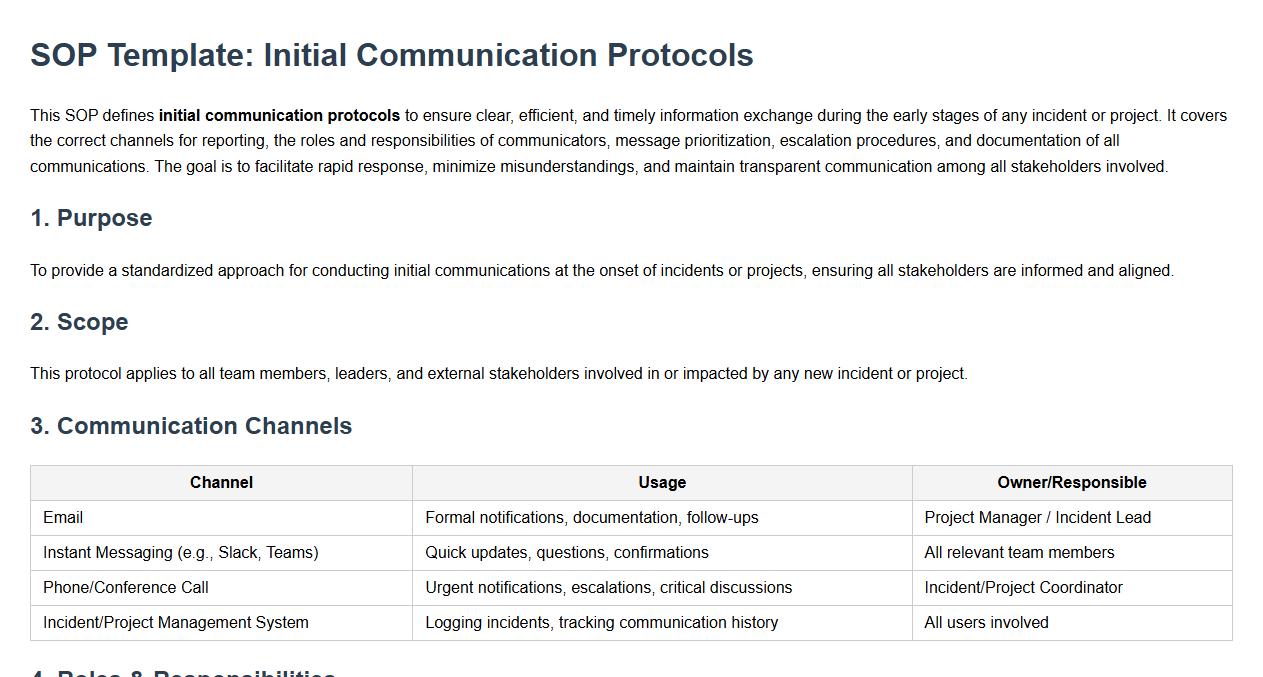
This SOP defines initial communication protocols to ensure clear, efficient, and timely information exchange during the early stages of any incident or project. It covers the correct channels for reporting, the roles and responsibilities of communicators, message prioritization, escalation procedures, and documentation of all communications. The goal is to facilitate rapid response, minimize misunderstandings, and maintain transparent communication among all stakeholders involved.
Scheduling Parent-Teacher Meetings.
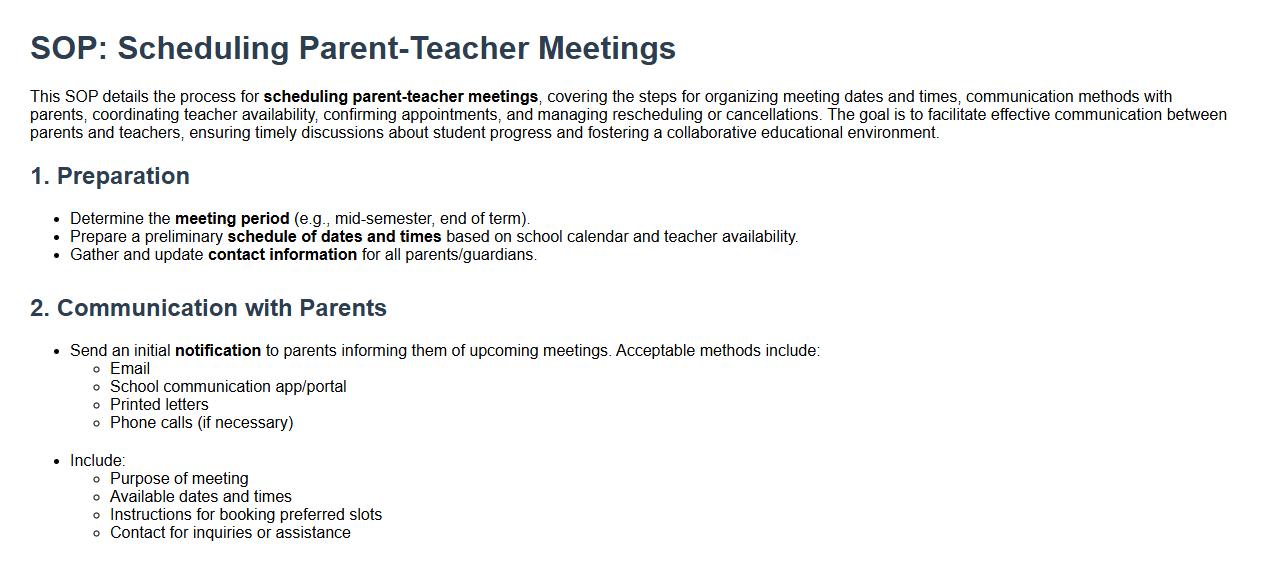
This SOP details the process for scheduling parent-teacher meetings, covering the steps for organizing meeting dates and times, communication methods with parents, coordinating teacher availability, confirming appointments, and managing rescheduling or cancellations. The goal is to facilitate effective communication between parents and teachers, ensuring timely discussions about student progress and fostering a collaborative educational environment.
Confidentiality and Privacy Standards.
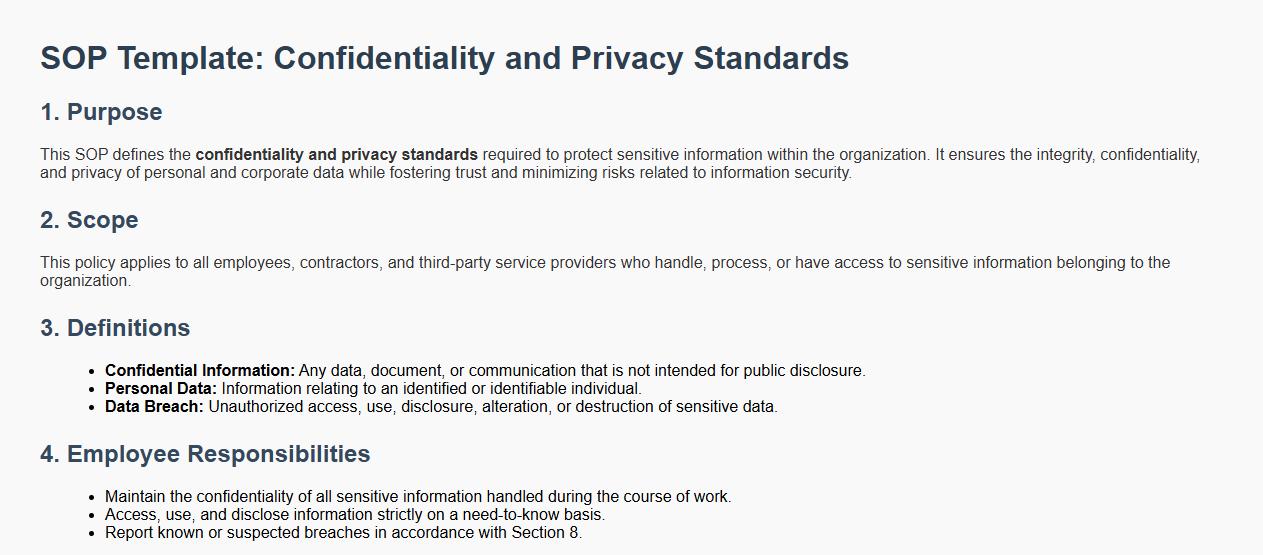
This SOP defines the confidentiality and privacy standards required to protect sensitive information within the organization. It covers data handling practices, employee responsibilities, secure storage and transmission methods, access controls, compliance with legal and regulatory requirements, breach reporting protocols, and training programs. The purpose is to ensure the integrity, confidentiality, and privacy of personal and corporate data while fostering trust and minimizing risks related to information security.
Guidelines for Written Communication (emails, notes).
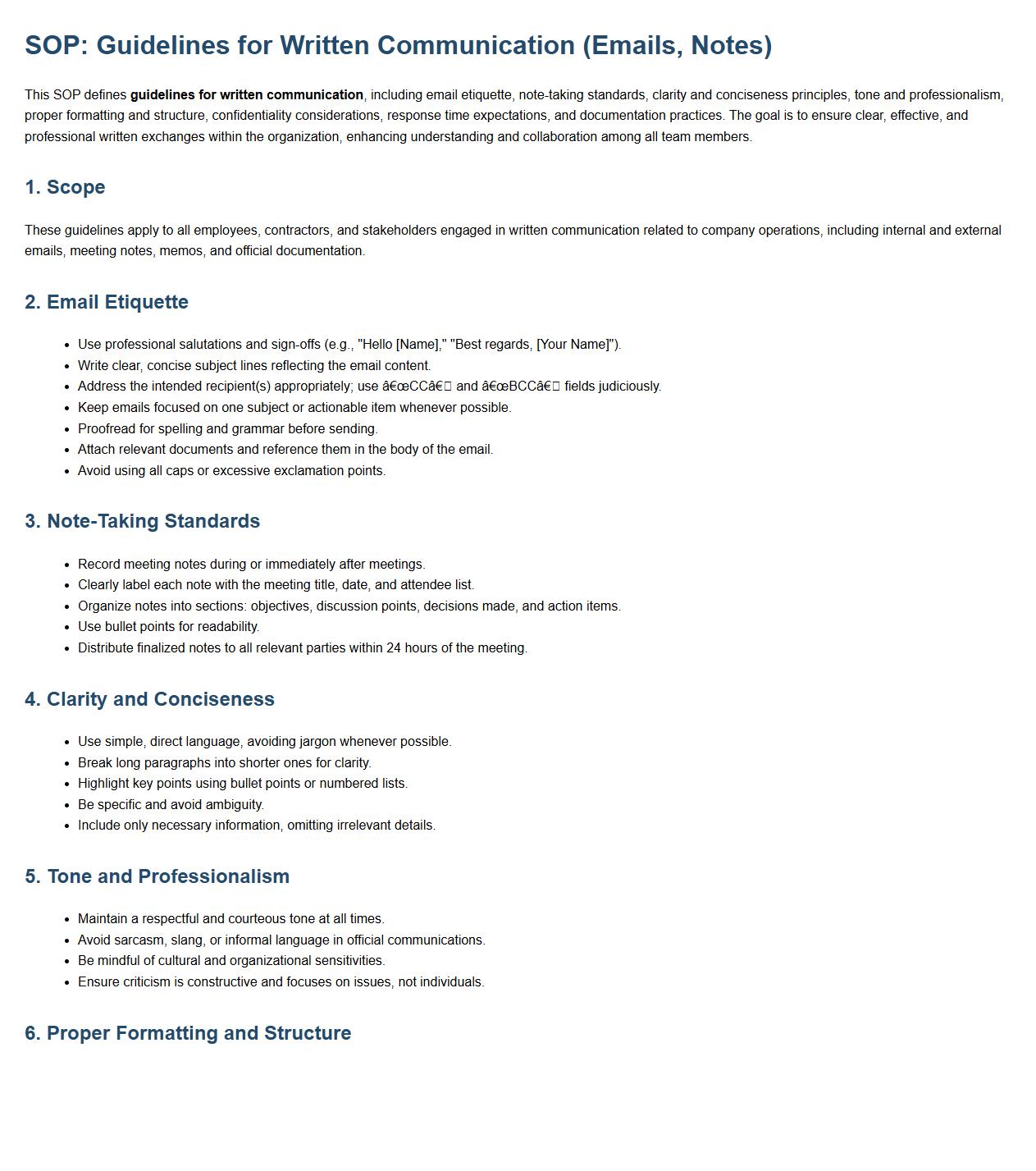
This SOP defines guidelines for written communication, including email etiquette, note-taking standards, clarity and conciseness principles, tone and professionalism, proper formatting and structure, confidentiality considerations, response time expectations, and documentation practices. The goal is to ensure clear, effective, and professional written exchanges within the organization, enhancing understanding and collaboration among all team members.
Phone and Virtual Meeting Procedures.
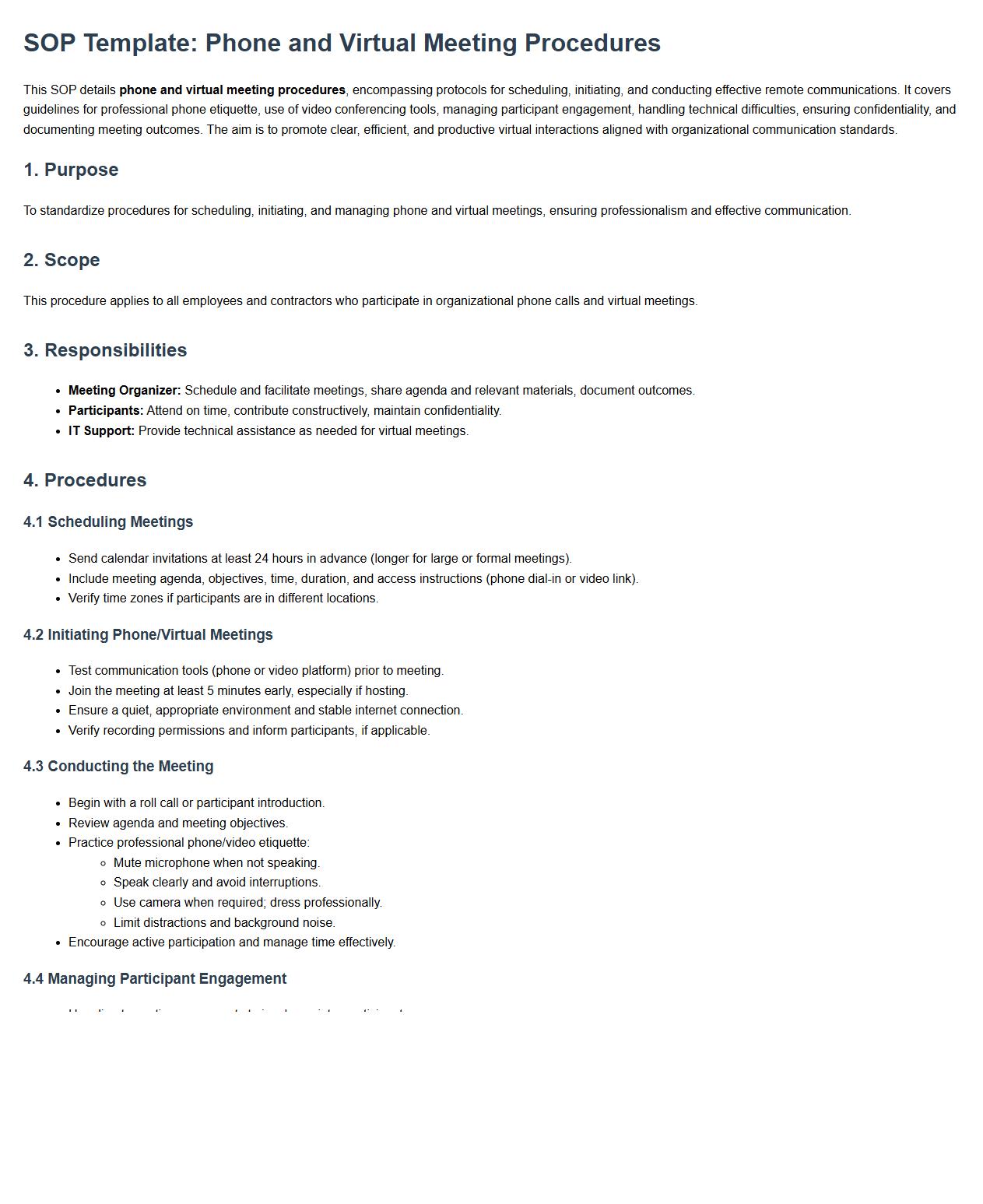
This SOP details phone and virtual meeting procedures, encompassing protocols for scheduling, initiating, and conducting effective remote communications. It covers guidelines for professional phone etiquette, use of video conferencing tools, managing participant engagement, handling technical difficulties, ensuring confidentiality, and documenting meeting outcomes. The aim is to promote clear, efficient, and productive virtual interactions aligned with organizational communication standards.
Responding to Parental Inquiries.
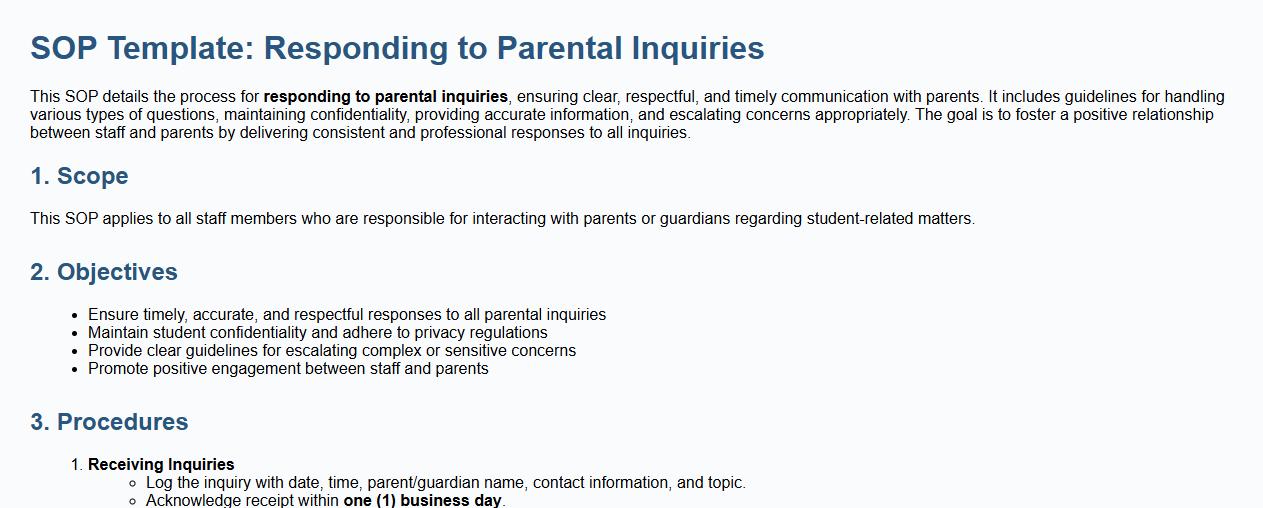
This SOP details the process for responding to parental inquiries, ensuring clear, respectful, and timely communication with parents. It includes guidelines for handling various types of questions, maintaining confidentiality, providing accurate information, and escalating concerns appropriately. The goal is to foster a positive relationship between staff and parents by delivering consistent and professional responses to all inquiries.
Documenting Communication and Follow-Ups.
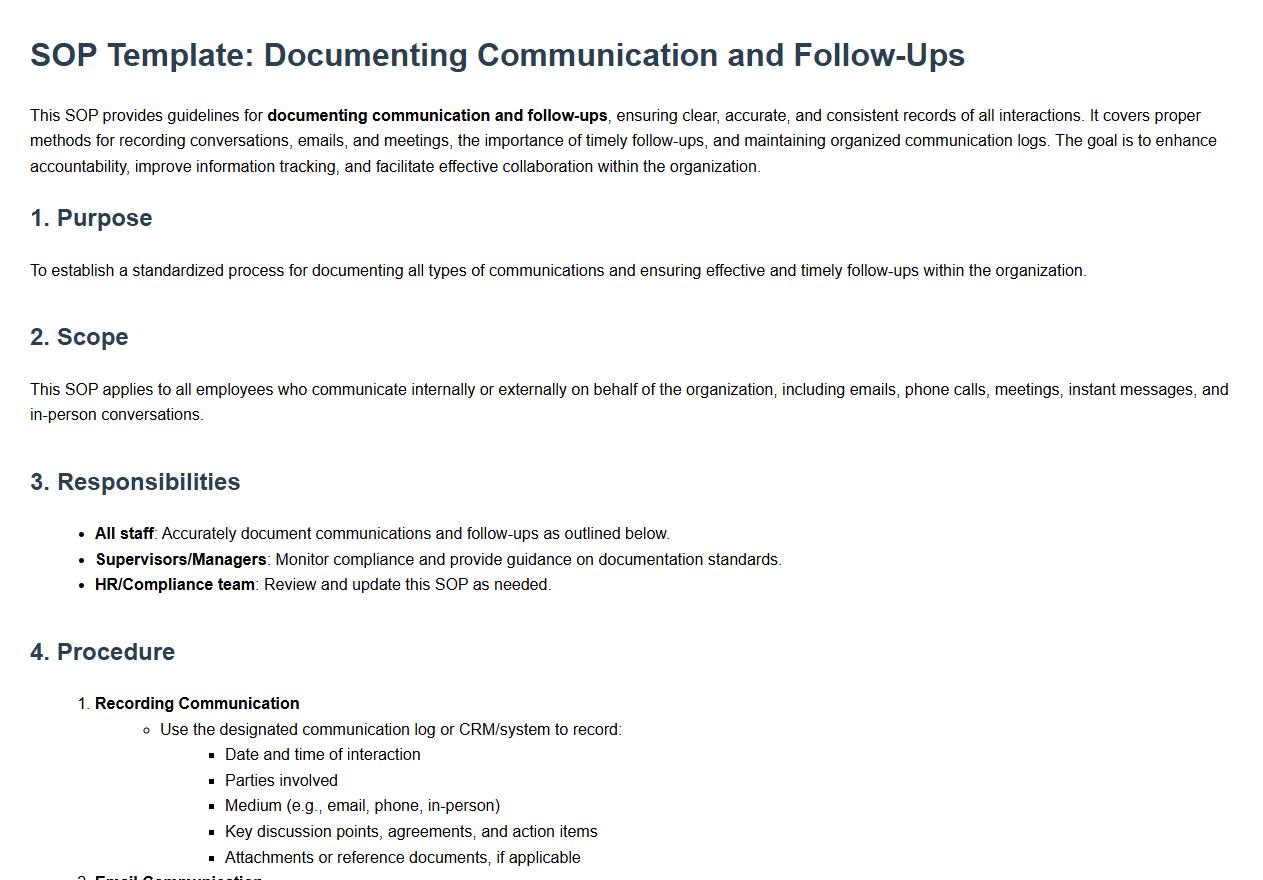
This SOP provides guidelines for documenting communication and follow-ups, ensuring clear, accurate, and consistent records of all interactions. It covers proper methods for recording conversations, emails, and meetings, the importance of timely follow-ups, and maintaining organized communication logs. The goal is to enhance accountability, improve information tracking, and facilitate effective collaboration within the organization.
Dealing with Concerns and Escalation Process.
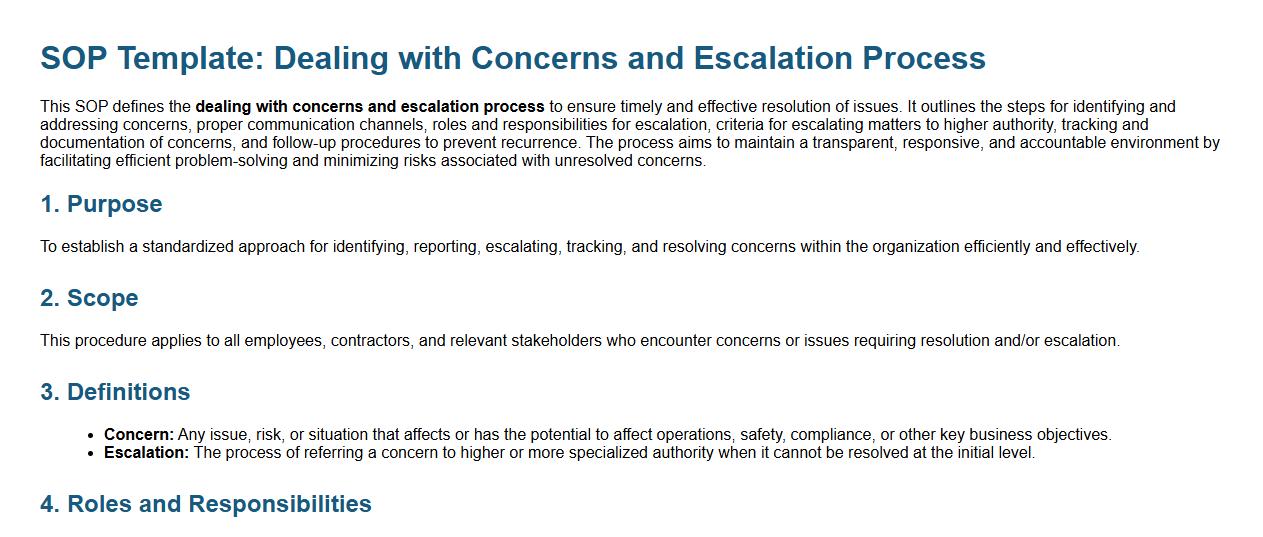
This SOP defines the dealing with concerns and escalation process to ensure timely and effective resolution of issues. It outlines the steps for identifying and addressing concerns, proper communication channels, roles and responsibilities for escalation, criteria for escalating matters to higher authority, tracking and documentation of concerns, and follow-up procedures to prevent recurrence. The process aims to maintain a transparent, responsive, and accountable environment by facilitating efficient problem-solving and minimizing risks associated with unresolved concerns.
Language and Accessibility Accommodations.
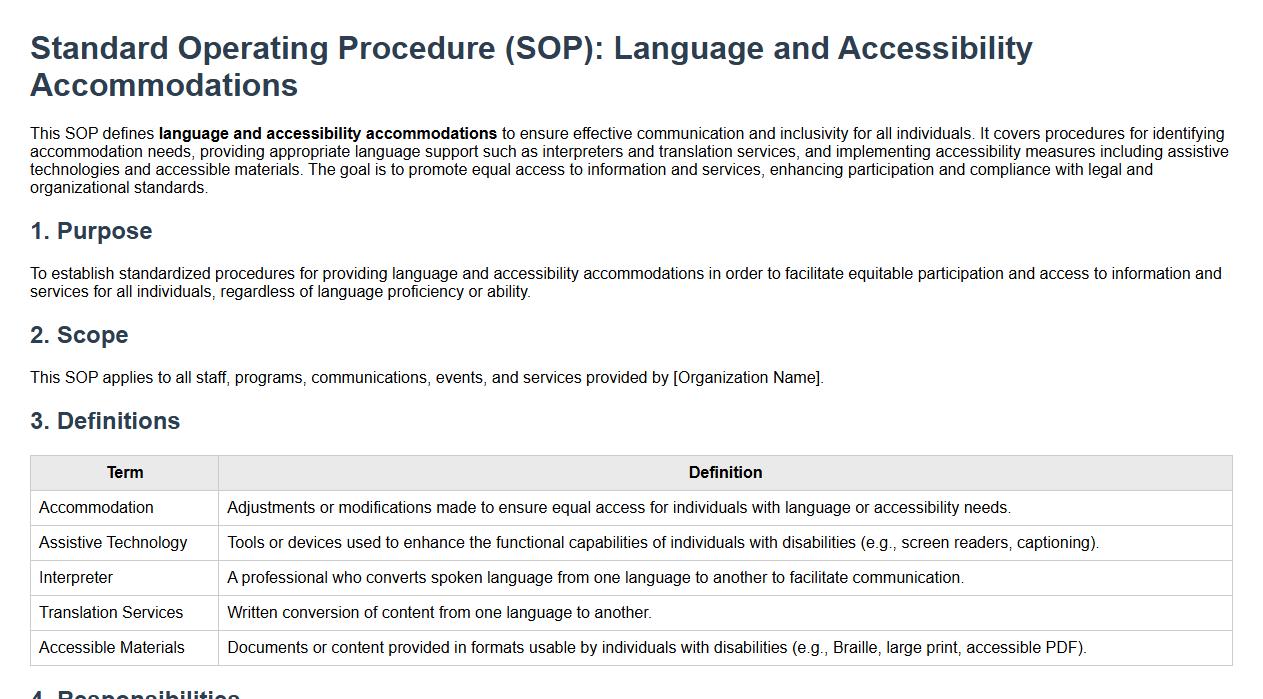
This SOP defines language and accessibility accommodations to ensure effective communication and inclusivity for all individuals. It covers procedures for identifying accommodation needs, providing appropriate language support such as interpreters and translation services, and implementing accessibility measures including assistive technologies and accessible materials. The goal is to promote equal access to information and services, enhancing participation and compliance with legal and organizational standards.
Feedback Collection and Continuous Improvement.
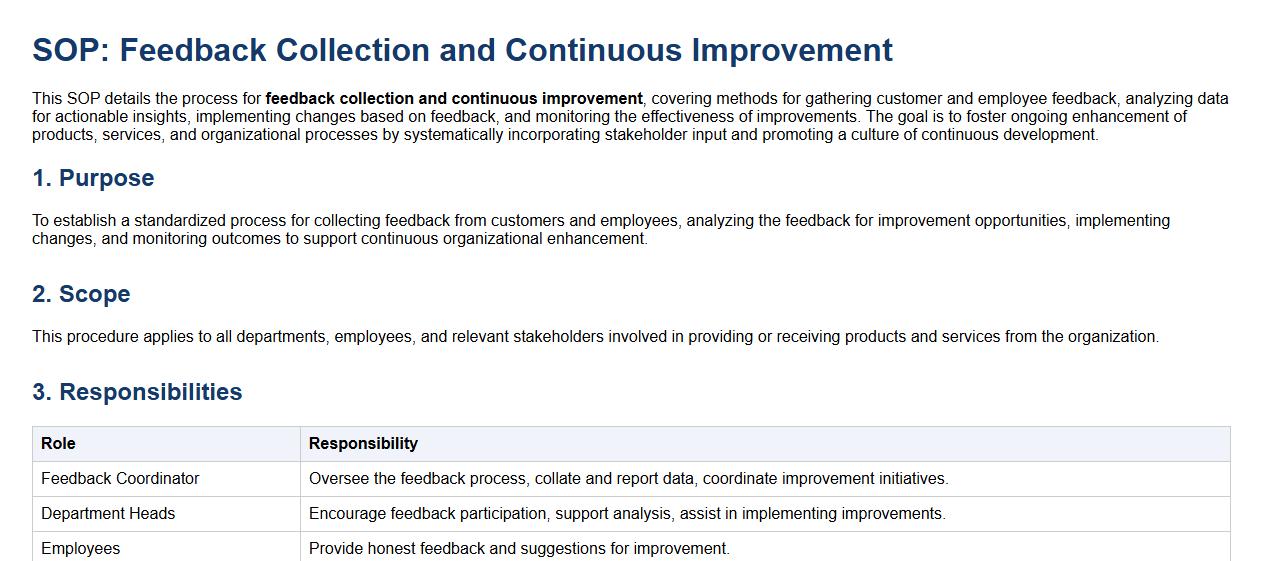
This SOP details the process for feedback collection and continuous improvement, covering methods for gathering customer and employee feedback, analyzing data for actionable insights, implementing changes based on feedback, and monitoring the effectiveness of improvements. The goal is to foster ongoing enhancement of products, services, and organizational processes by systematically incorporating stakeholder input and promoting a culture of continuous development.
What are the key objectives outlined in the SOP for Parent-Teacher Communication?
The SOP aims to establish clear and consistent communication between parents and teachers to support student development. It promotes collaborative problem-solving to enhance the educational experience. Ensuring transparency and mutual respect is a primary objective of this protocol.
Which communication channels are specified for regular updates between parents and teachers?
The SOP specifies multiple communication channels including emails, phone calls, and scheduled meetings. Additionally, it encourages the use of digital platforms for timely updates. This approach ensures that parents remain well-informed about student progress.
What are the procedures for escalating unresolved concerns as per the SOP?
Unresolved concerns should be escalated to the designated school administration as outlined in the SOP. The protocol requires documentation of previous communications before escalation. This ensures accountability and systematic resolution of issues.
How does the SOP define response timeframes for parent or teacher inquiries?
The SOP mandates a response timeframe of 48 hours for all parent or teacher inquiries during school days. Timely communication is emphasized to maintain effective collaboration. Exceptions are considered only under extraordinary circumstances.
What confidentiality and privacy guidelines are emphasized in the communication protocol?
The SOP highlights the importance of maintaining confidentiality regarding student information during all communications. It requires adherence to privacy laws and school policies. Ensuring trust and respect in parent-teacher interactions is key to this guideline.