
A SOP Template for Exam Administration provides a structured framework to ensure consistent and efficient management of examination processes. It outlines clear procedures for exam preparation, invigilation, and post-exam evaluations to maintain integrity and fairness. Using this template helps institutions streamline operations and minimize errors during exam sessions.
Exam scheduling and venue preparation.
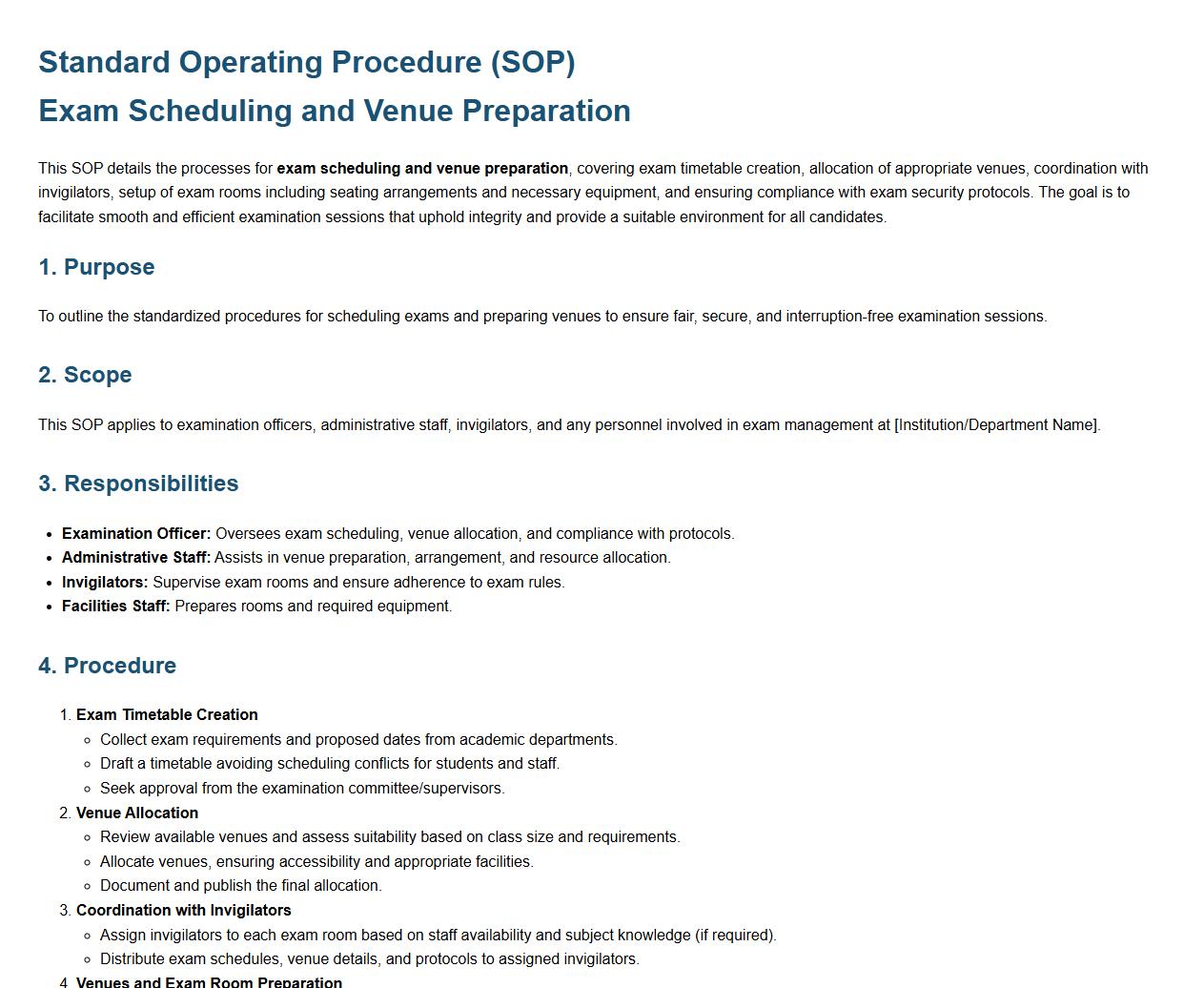
This SOP details the processes for exam scheduling and venue preparation, covering exam timetable creation, allocation of appropriate venues, coordination with invigilators, setup of exam rooms including seating arrangements and necessary equipment, and ensuring compliance with exam security protocols. The goal is to facilitate smooth and efficient examination sessions that uphold integrity and provide a suitable environment for all candidates.
Exam materials security and distribution procedures.
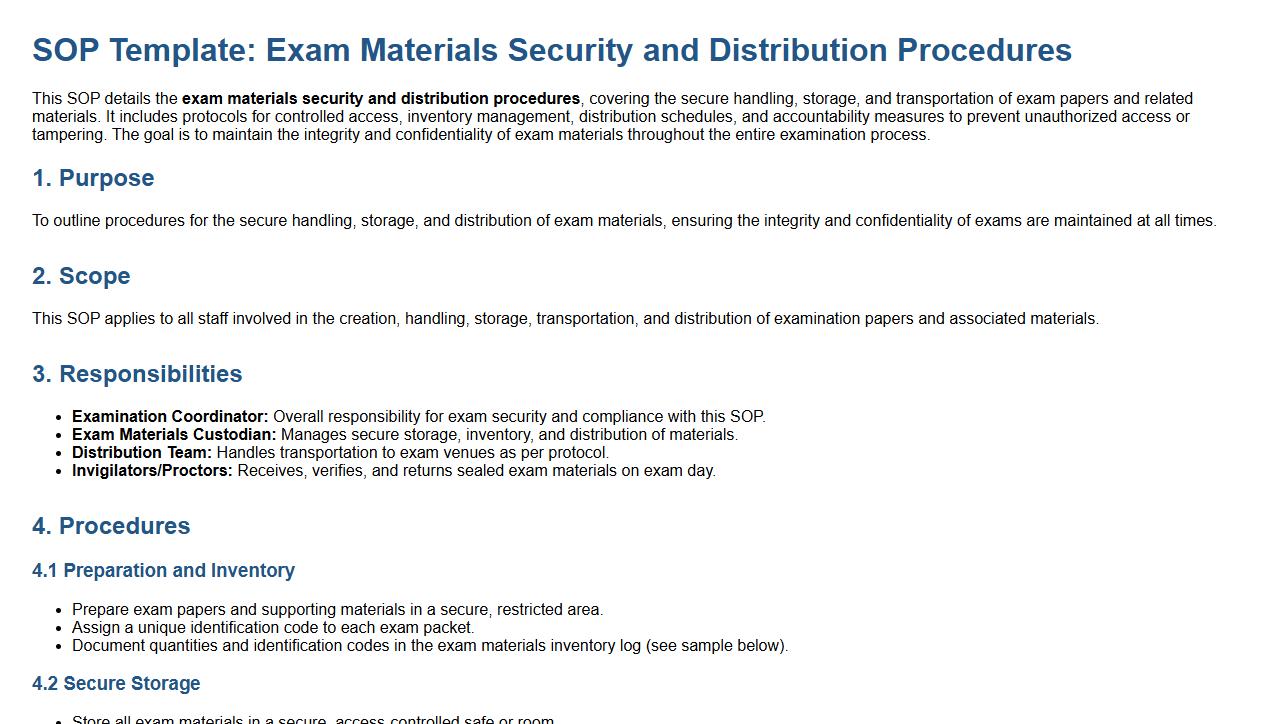
This SOP details the exam materials security and distribution procedures, covering the secure handling, storage, and transportation of exam papers and related materials. It includes protocols for controlled access, inventory management, distribution schedules, and accountability measures to prevent unauthorized access or tampering. The goal is to maintain the integrity and confidentiality of exam materials throughout the entire examination process.
Candidate identification and registration verification.
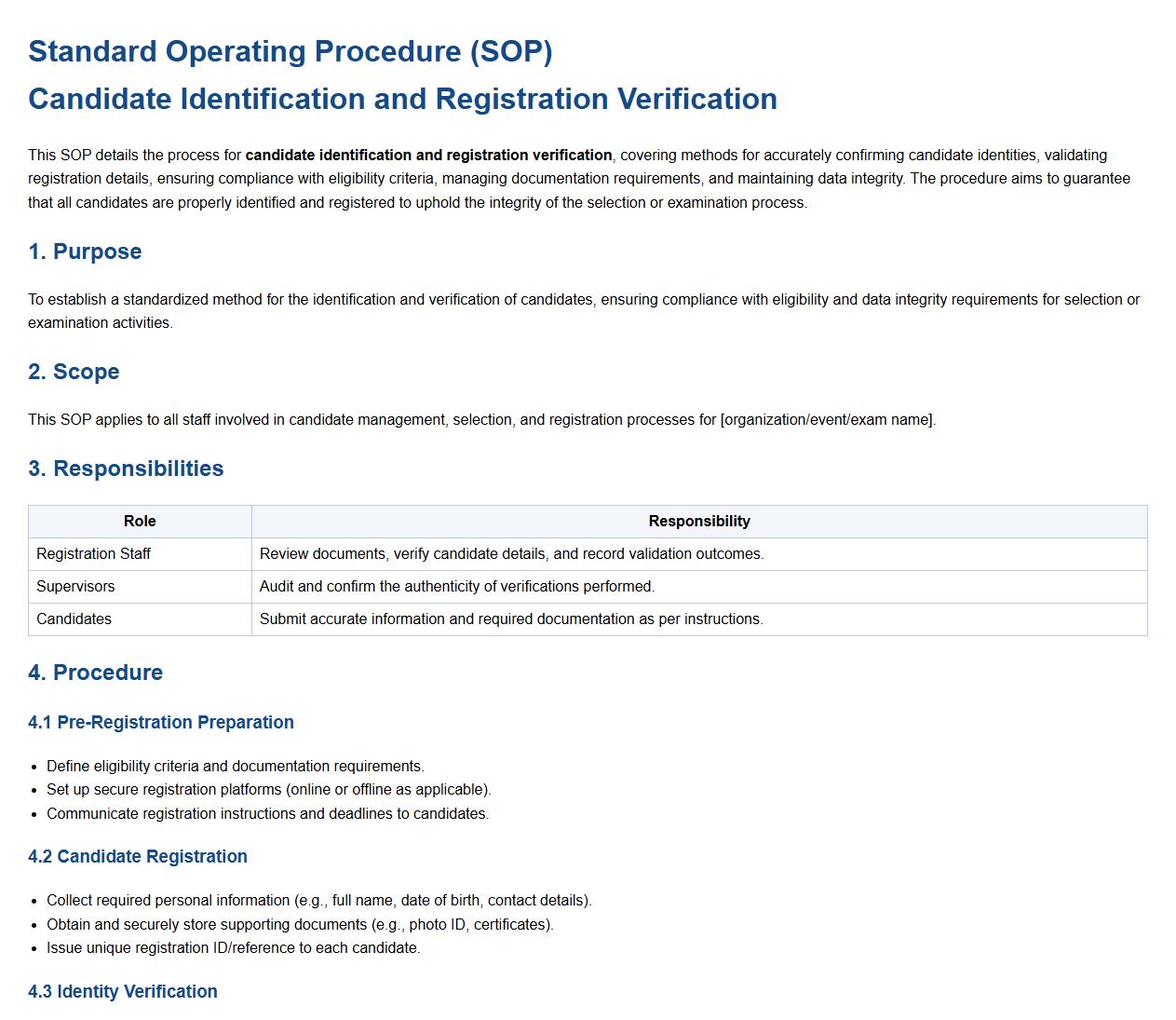
This SOP details the process for candidate identification and registration verification, covering methods for accurately confirming candidate identities, validating registration details, ensuring compliance with eligibility criteria, managing documentation requirements, and maintaining data integrity. The procedure aims to guarantee that all candidates are properly identified and registered to uphold the integrity of the selection or examination process.
Exam room setup and seating arrangement.
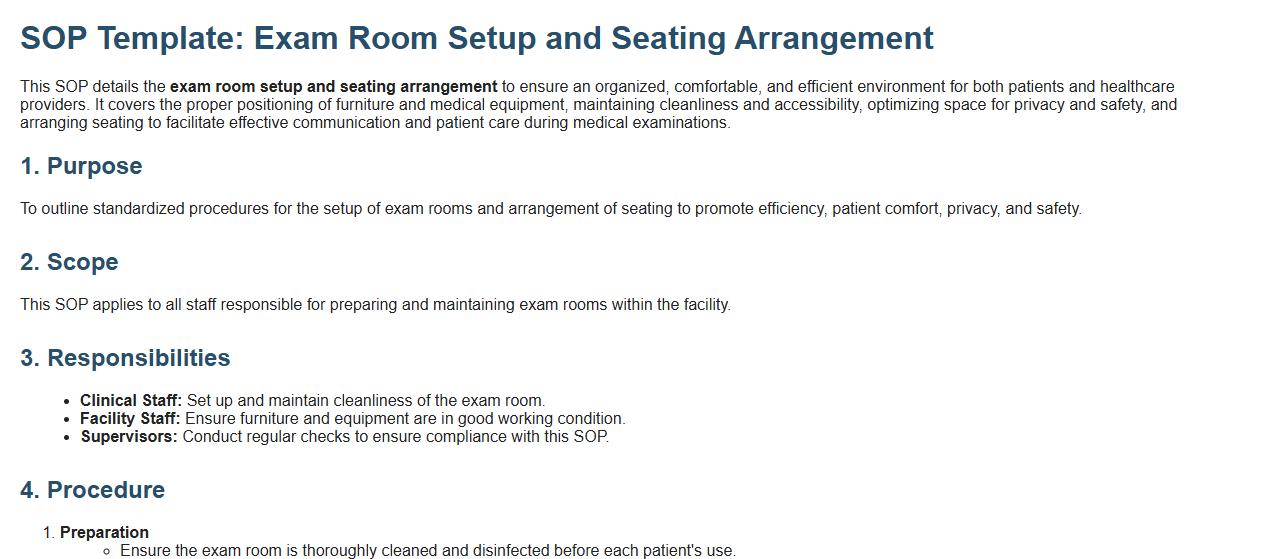
This SOP details the exam room setup and seating arrangement to ensure an organized, comfortable, and efficient environment for both patients and healthcare providers. It covers the proper positioning of furniture and medical equipment, maintaining cleanliness and accessibility, optimizing space for privacy and safety, and arranging seating to facilitate effective communication and patient care during medical examinations.
Proctor/invigilator responsibilities and conduct guidelines.
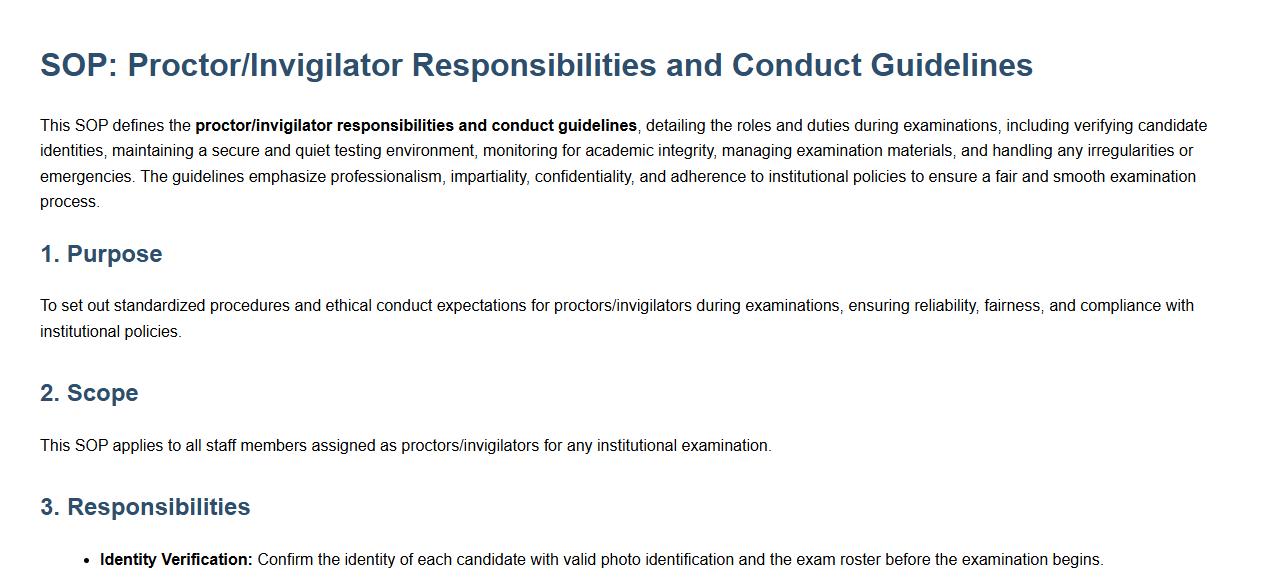
This SOP defines the proctor/invigilator responsibilities and conduct guidelines, detailing the roles and duties during examinations, including verifying candidate identities, maintaining a secure and quiet testing environment, monitoring for academic integrity, managing examination materials, and handling any irregularities or emergencies. The guidelines emphasize professionalism, impartiality, confidentiality, and adherence to institutional policies to ensure a fair and smooth examination process.
Examination timing and timekeeping protocols.
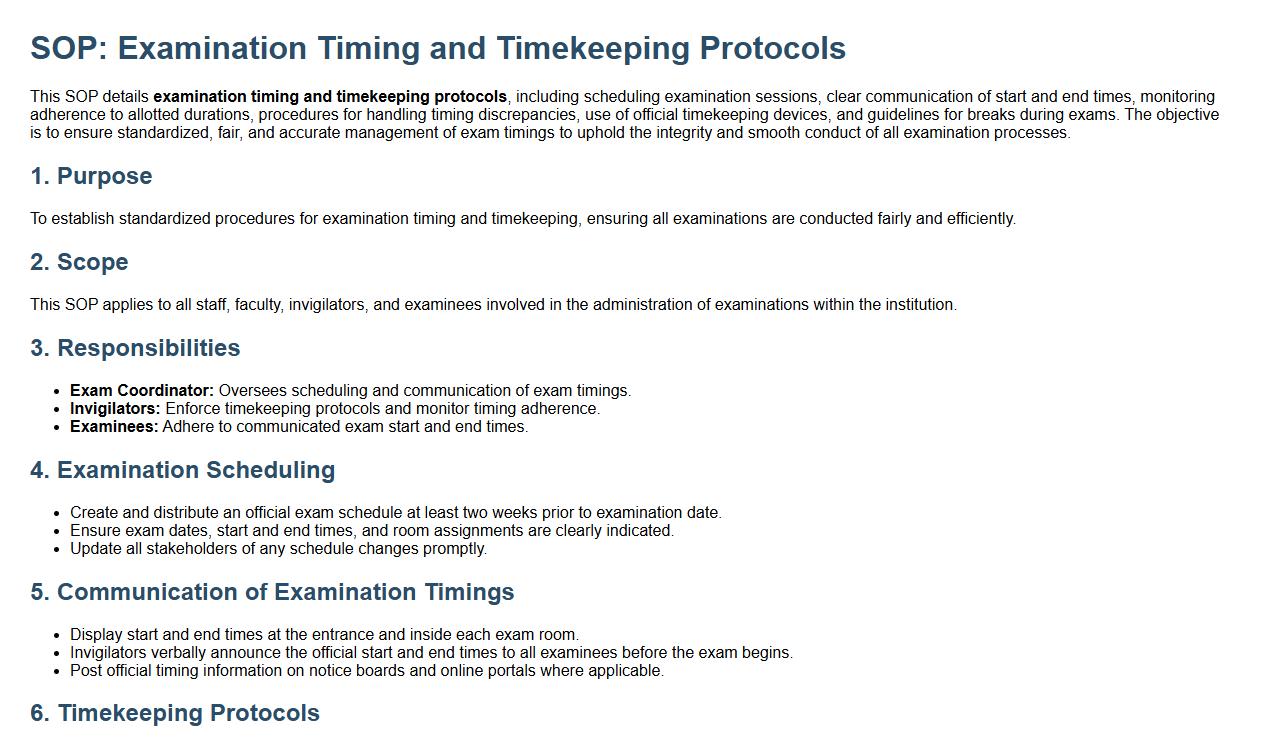
This SOP details examination timing and timekeeping protocols, including scheduling examination sessions, clear communication of start and end times, monitoring adherence to allotted durations, procedures for handling timing discrepancies, use of official timekeeping devices, and guidelines for breaks during exams. The objective is to ensure standardized, fair, and accurate management of exam timings to uphold the integrity and smooth conduct of all examination processes.
Management of candidate misconduct and incident reporting.
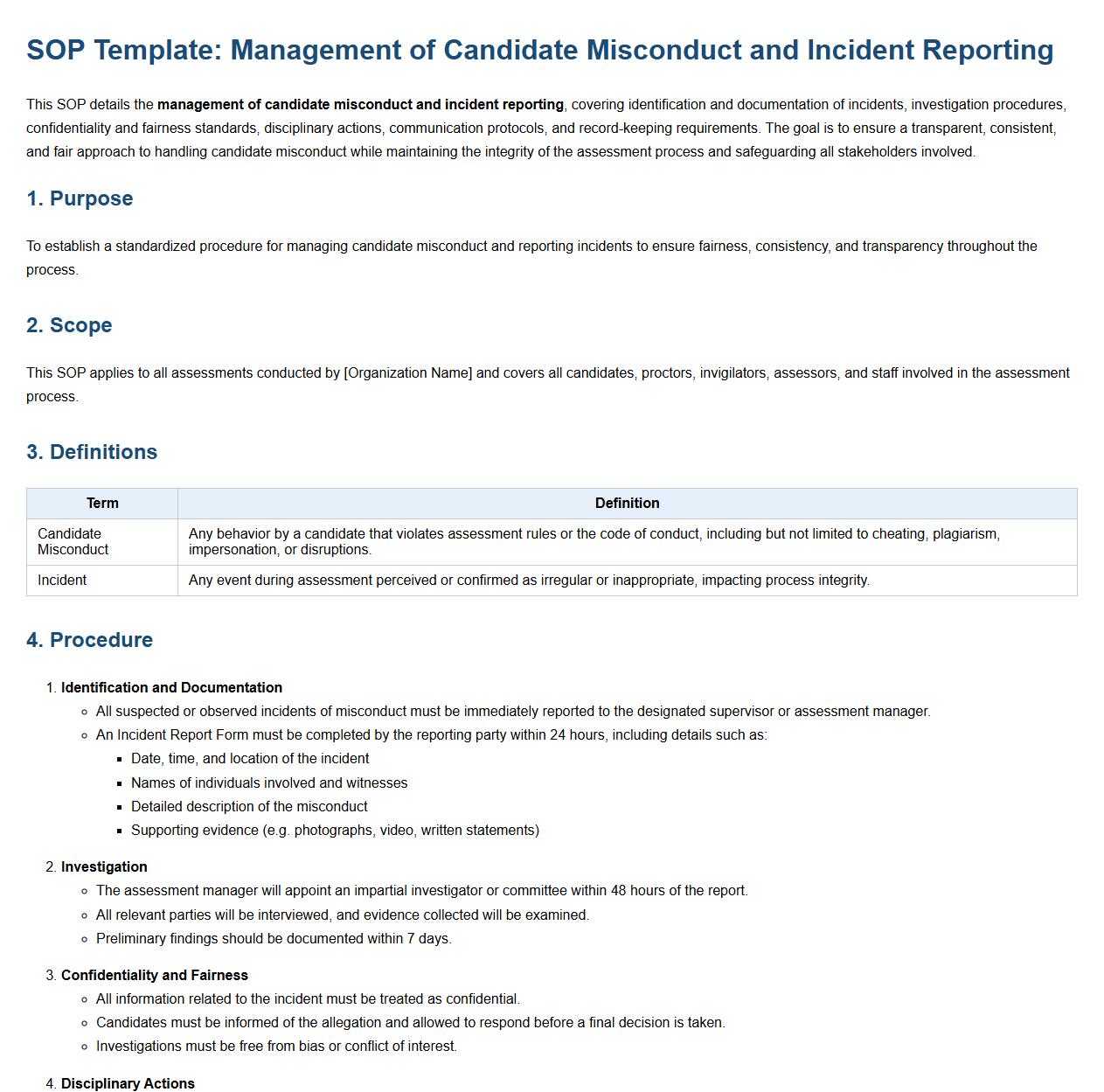
This SOP details the management of candidate misconduct and incident reporting, covering identification and documentation of incidents, investigation procedures, confidentiality and fairness standards, disciplinary actions, communication protocols, and record-keeping requirements. The goal is to ensure a transparent, consistent, and fair approach to handling candidate misconduct while maintaining the integrity of the assessment process and safeguarding all stakeholders involved.
Collection, counting, and return of exam scripts.
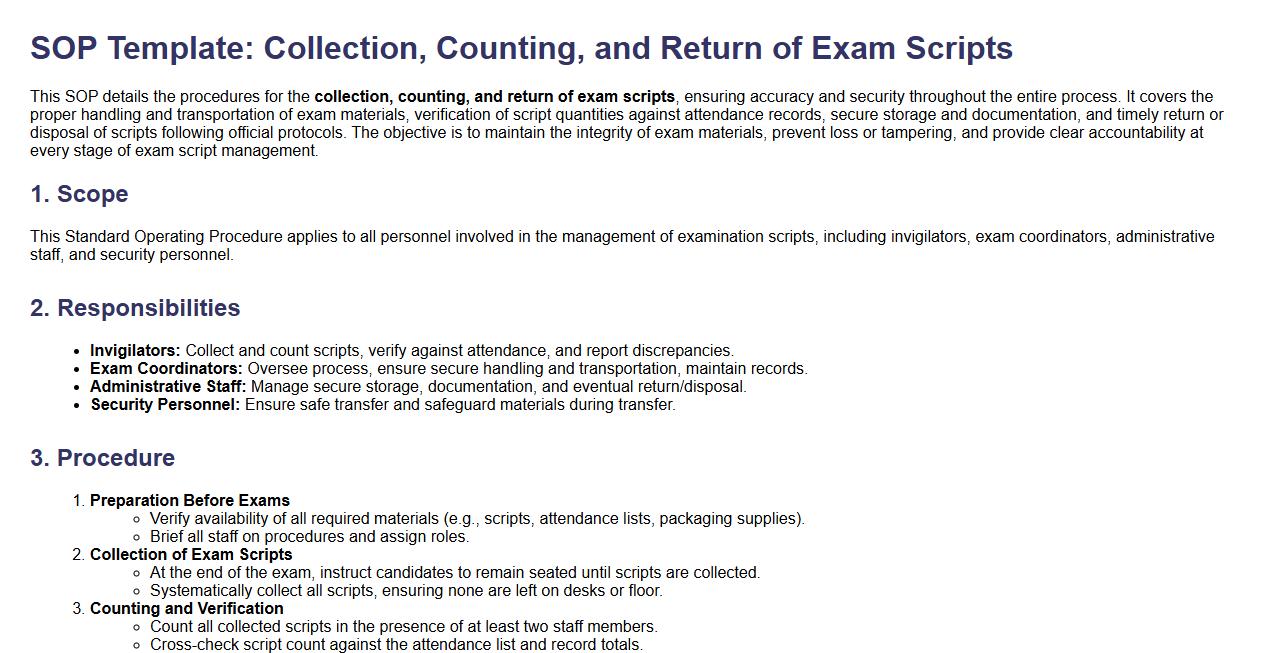
This SOP details the procedures for the collection, counting, and return of exam scripts, ensuring accuracy and security throughout the entire process. It covers the proper handling and transportation of exam materials, verification of script quantities against attendance records, secure storage and documentation, and timely return or disposal of scripts following official protocols. The objective is to maintain the integrity of exam materials, prevent loss or tampering, and provide clear accountability at every stage of exam script management.
Post-exam handling and secure storage of materials.
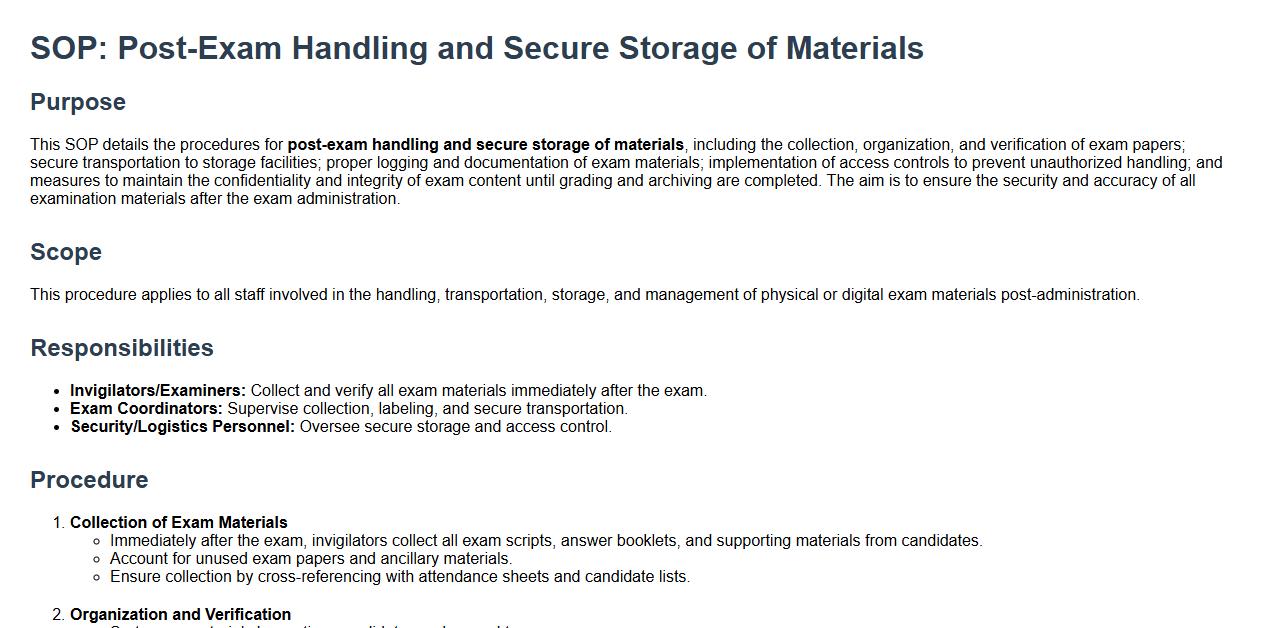
This SOP details the procedures for post-exam handling and secure storage of materials, including the collection, organization, and verification of exam papers; secure transportation to storage facilities; proper logging and documentation of exam materials; implementation of access controls to prevent unauthorized handling; and measures to maintain the confidentiality and integrity of exam content until grading and archiving are completed. The aim is to ensure the security and accuracy of all examination materials after the exam administration.
Results processing and documentation procedures.
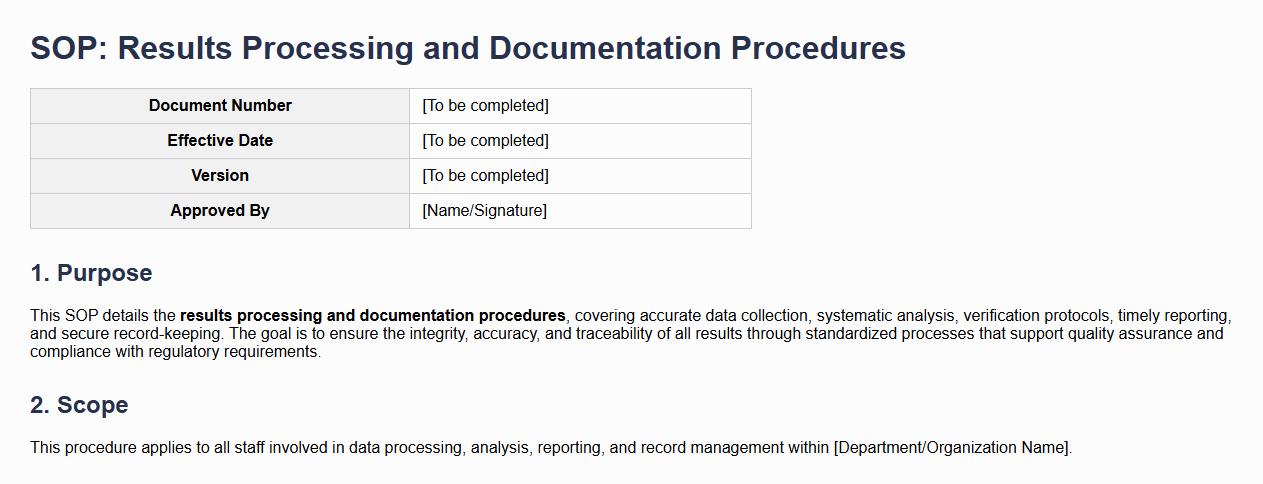
This SOP details the results processing and documentation procedures, covering accurate data collection, systematic analysis, verification protocols, timely reporting, and secure record-keeping. The goal is to ensure the integrity, accuracy, and traceability of all results through standardized processes that support quality assurance and compliance with regulatory requirements.
What is the primary objective of the SOP for Exam Administration?
The primary objective of the SOP for Exam Administration is to ensure a consistent and fair examination process. It establishes clear guidelines that maintain exam integrity and security. This objective helps prevent discrepancies and promotes a standardized approach across all exam sessions.
What are the standardized procedures for securing and distributing examination materials?
The SOP mandates strict security measures for handling examination materials before, during, and after exams. Materials must be stored in locked, monitored environments and only accessed by authorized personnel. Distribution protocols ensure timely and controlled delivery to exam centers, minimizing risks of leaks or tampering.
Which roles and responsibilities are defined for staff involved in exam administration?
The SOP clearly outlines the roles and responsibilities of exam administrators, invigilators, and support staff. Each role is assigned specific tasks to maintain order and compliance during the examination. This division of duties ensures smooth operation and accountability throughout the exam process.
How does the SOP address the management and reporting of exam irregularities or incidents?
The SOP requires immediate reporting and documentation of any exam irregularities or incidents by authorized staff. It provides a structured process for investigating and addressing such issues to uphold exam integrity. These measures help mitigate risks and support transparent resolution procedures.
What protocols are specified for post-exam documentation and result handling?
The SOP details exact protocols for post-exam documentation, including secure collection and retention of exam scripts and records. It also prescribes secure result processing and confidential dissemination to authorized recipients. These protocols ensure data integrity and privacy are maintained after exam completion.