
A SOP Template for School Transport Services outlines standardized procedures to ensure the safety and efficiency of student transportation. It details guidelines for driver responsibilities, vehicle maintenance, and emergency protocols to maintain consistent service quality. This template aids schools in complying with regulatory requirements and enhancing overall transport management.
Student pick-up and drop-off scheduling and routing.
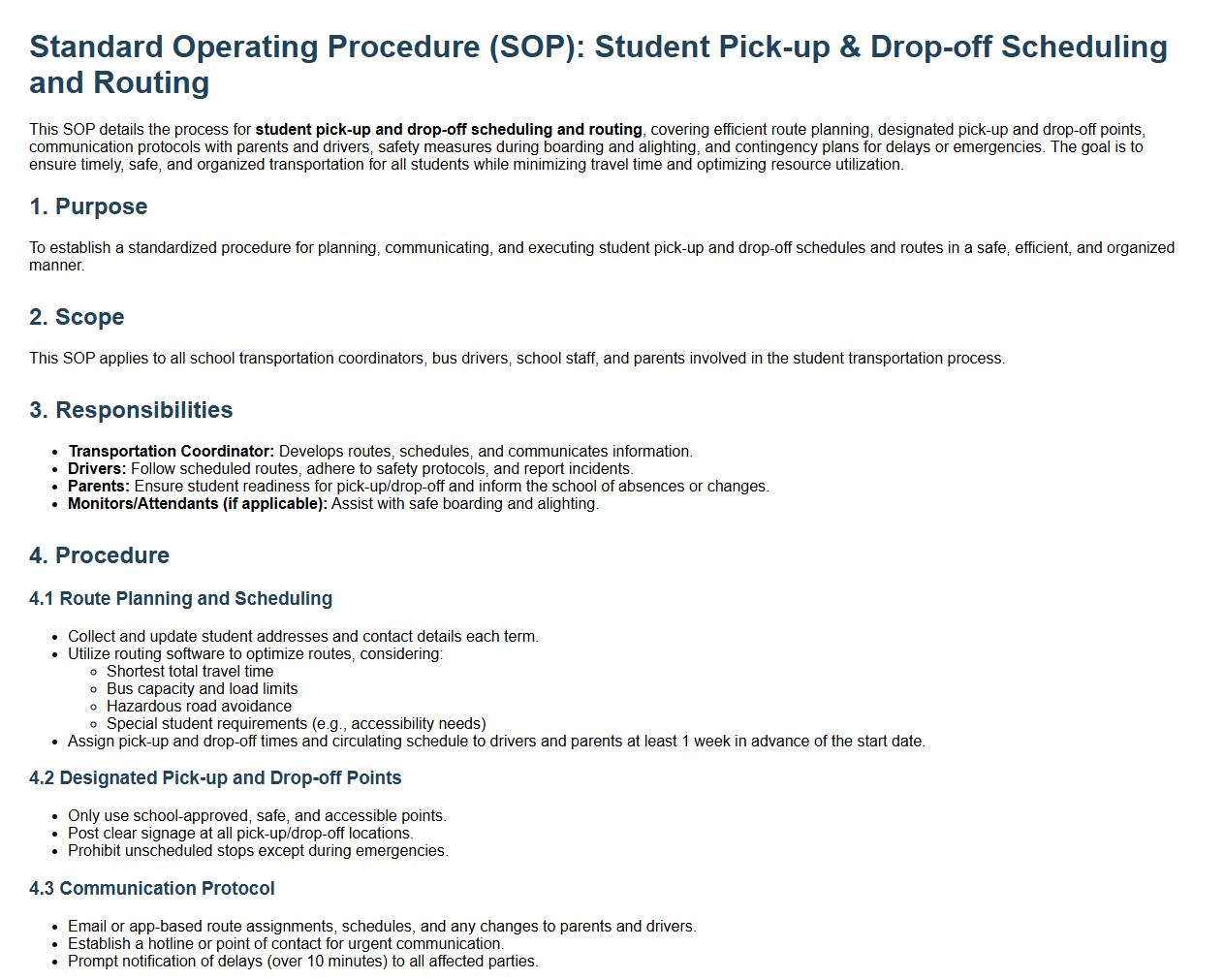
This SOP details the process for student pick-up and drop-off scheduling and routing, covering efficient route planning, designated pick-up and drop-off points, communication protocols with parents and drivers, safety measures during boarding and alighting, and contingency plans for delays or emergencies. The goal is to ensure timely, safe, and organized transportation for all students while minimizing travel time and optimizing resource utilization.
Driver recruitment, training, and certification requirements.
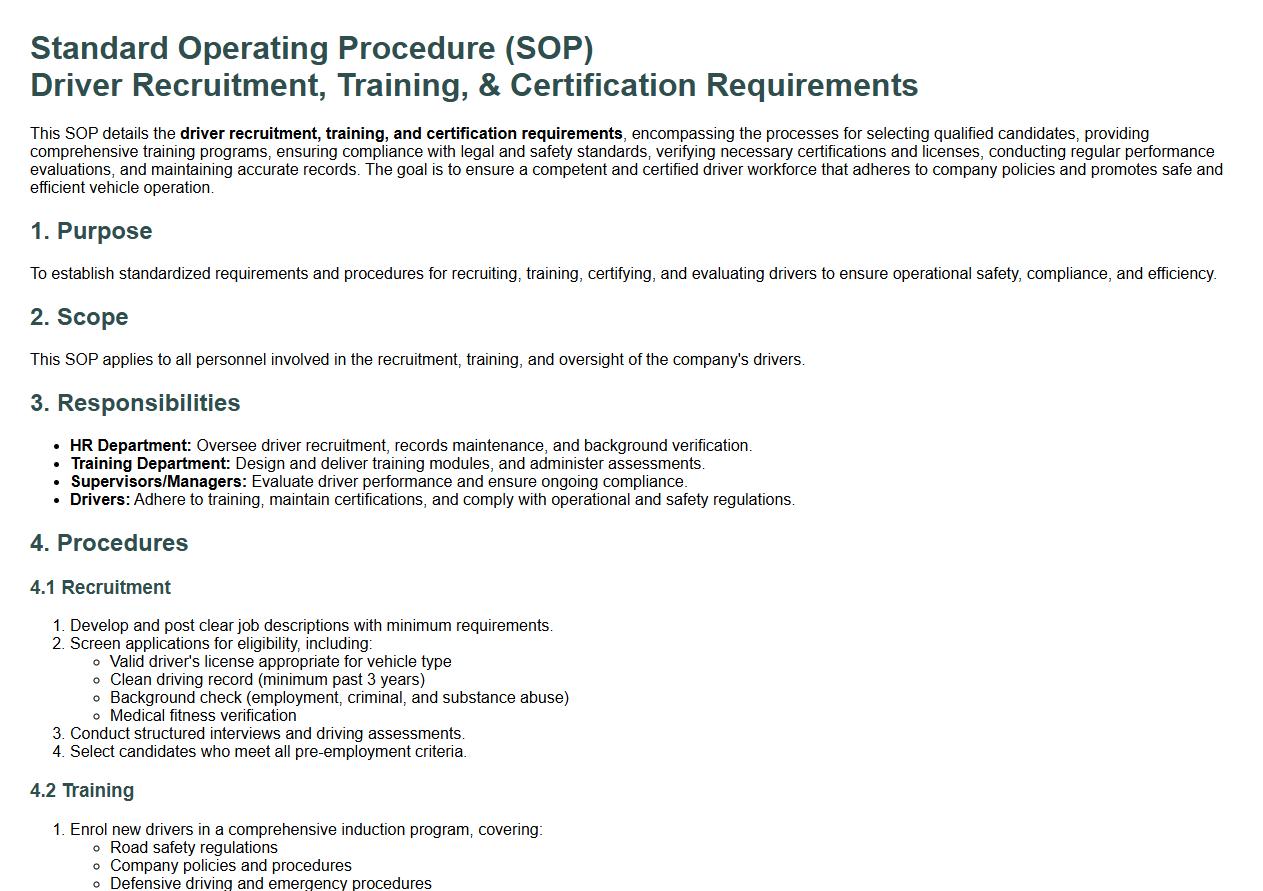
This SOP details the driver recruitment, training, and certification requirements, encompassing the processes for selecting qualified candidates, providing comprehensive training programs, ensuring compliance with legal and safety standards, verifying necessary certifications and licenses, conducting regular performance evaluations, and maintaining accurate records. The goal is to ensure a competent and certified driver workforce that adheres to company policies and promotes safe and efficient vehicle operation.
Daily vehicle inspection and maintenance procedures.
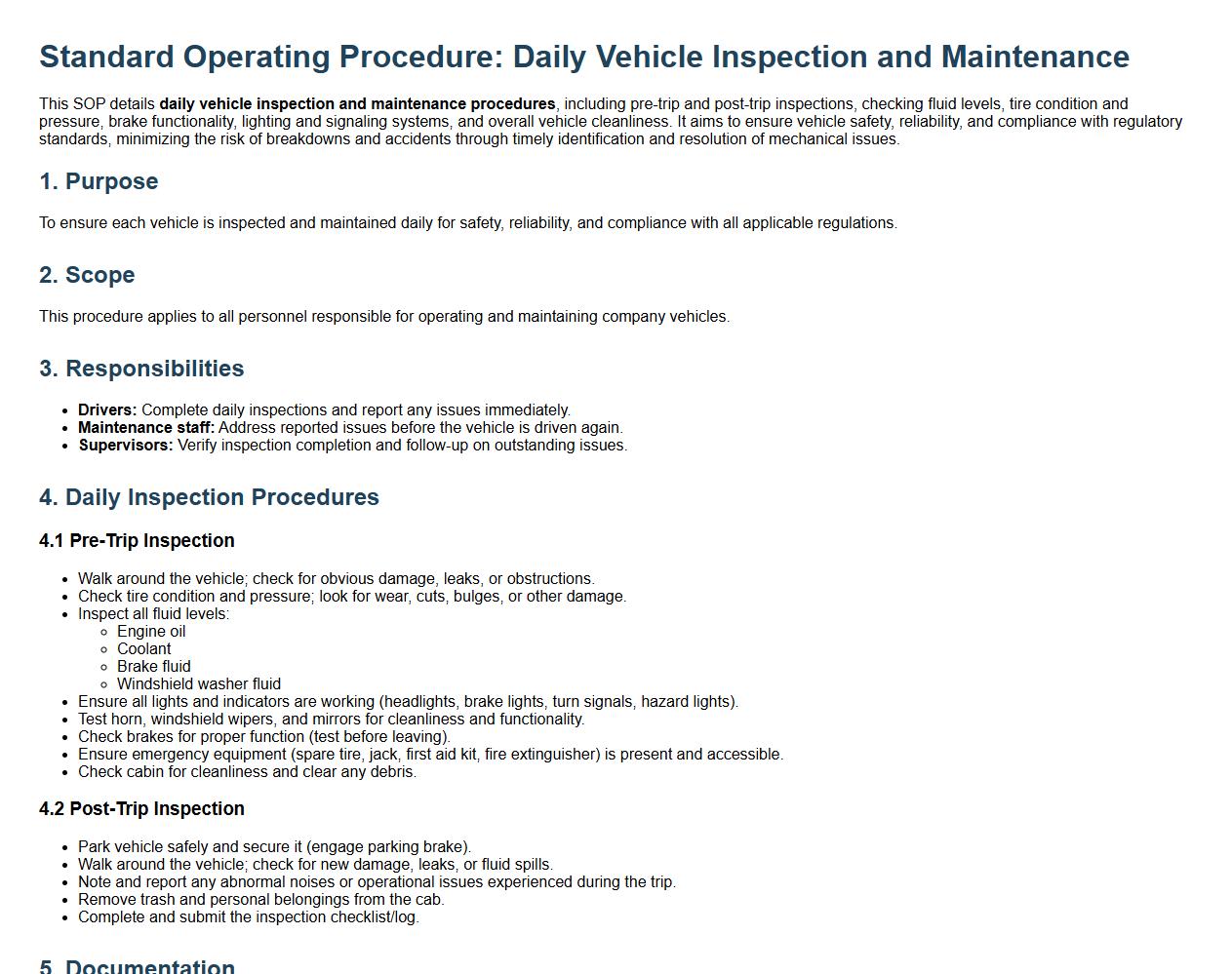
This SOP details daily vehicle inspection and maintenance procedures, including pre-trip and post-trip inspections, checking fluid levels, tire condition and pressure, brake functionality, lighting and signaling systems, and overall vehicle cleanliness. It aims to ensure vehicle safety, reliability, and compliance with regulatory standards, minimizing the risk of breakdowns and accidents through timely identification and resolution of mechanical issues.
Student attendance and boarding protocols.
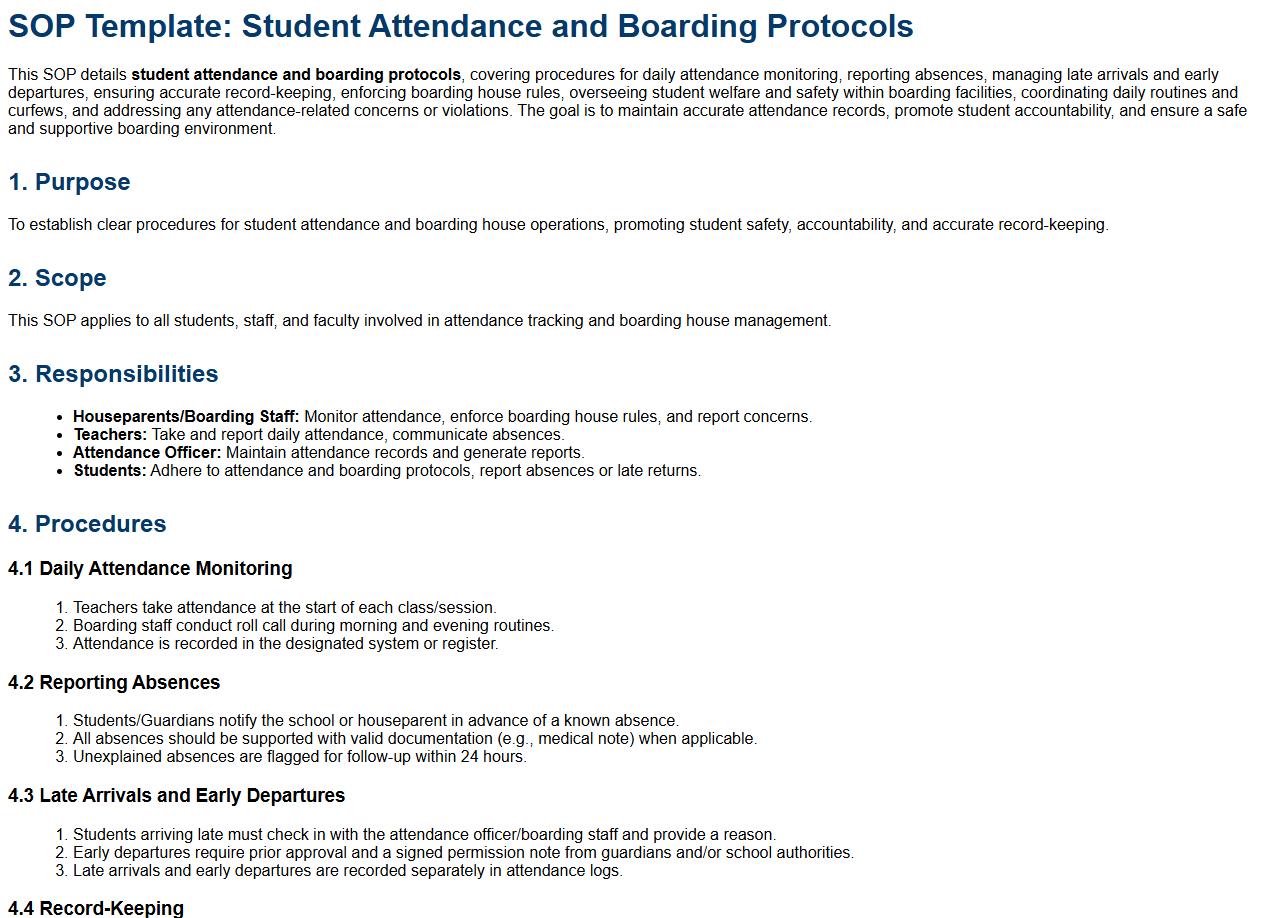
This SOP details student attendance and boarding protocols, covering procedures for daily attendance monitoring, reporting absences, managing late arrivals and early departures, ensuring accurate record-keeping, enforcing boarding house rules, overseeing student welfare and safety within boarding facilities, coordinating daily routines and curfews, and addressing any attendance-related concerns or violations. The goal is to maintain accurate attendance records, promote student accountability, and ensure a safe and supportive boarding environment.
Emergency response and incident management procedures.
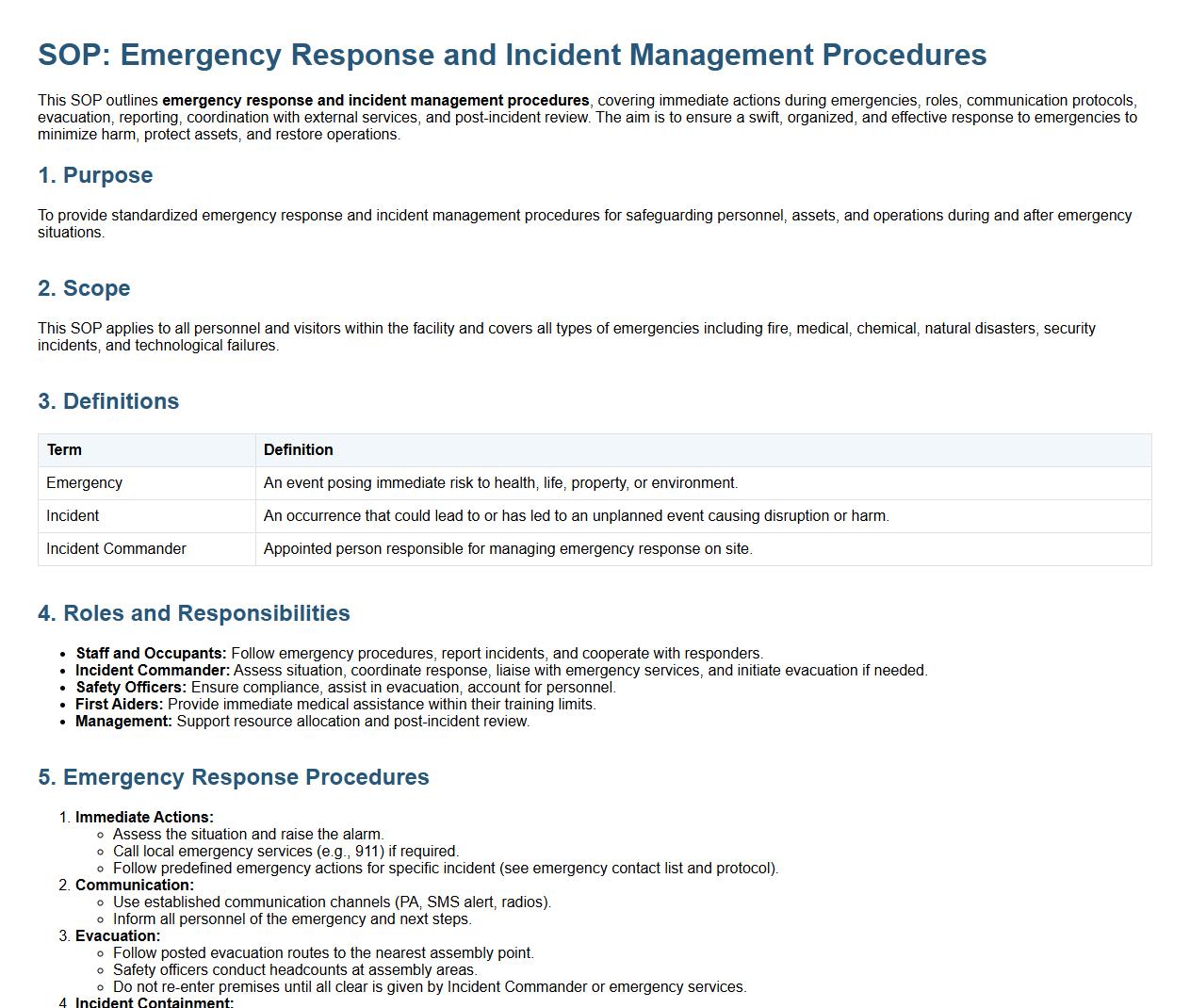
This SOP details emergency response and incident management procedures, covering immediate actions during emergencies, roles and responsibilities, communication protocols, evacuation plans, incident reporting and documentation, coordination with emergency services, and post-incident review and analysis. The aim is to ensure a swift, organized, and effective response to emergencies to minimize harm to personnel, protect assets, and restore normal operations promptly.
Bus cleanliness, sanitation, and hygiene standards.
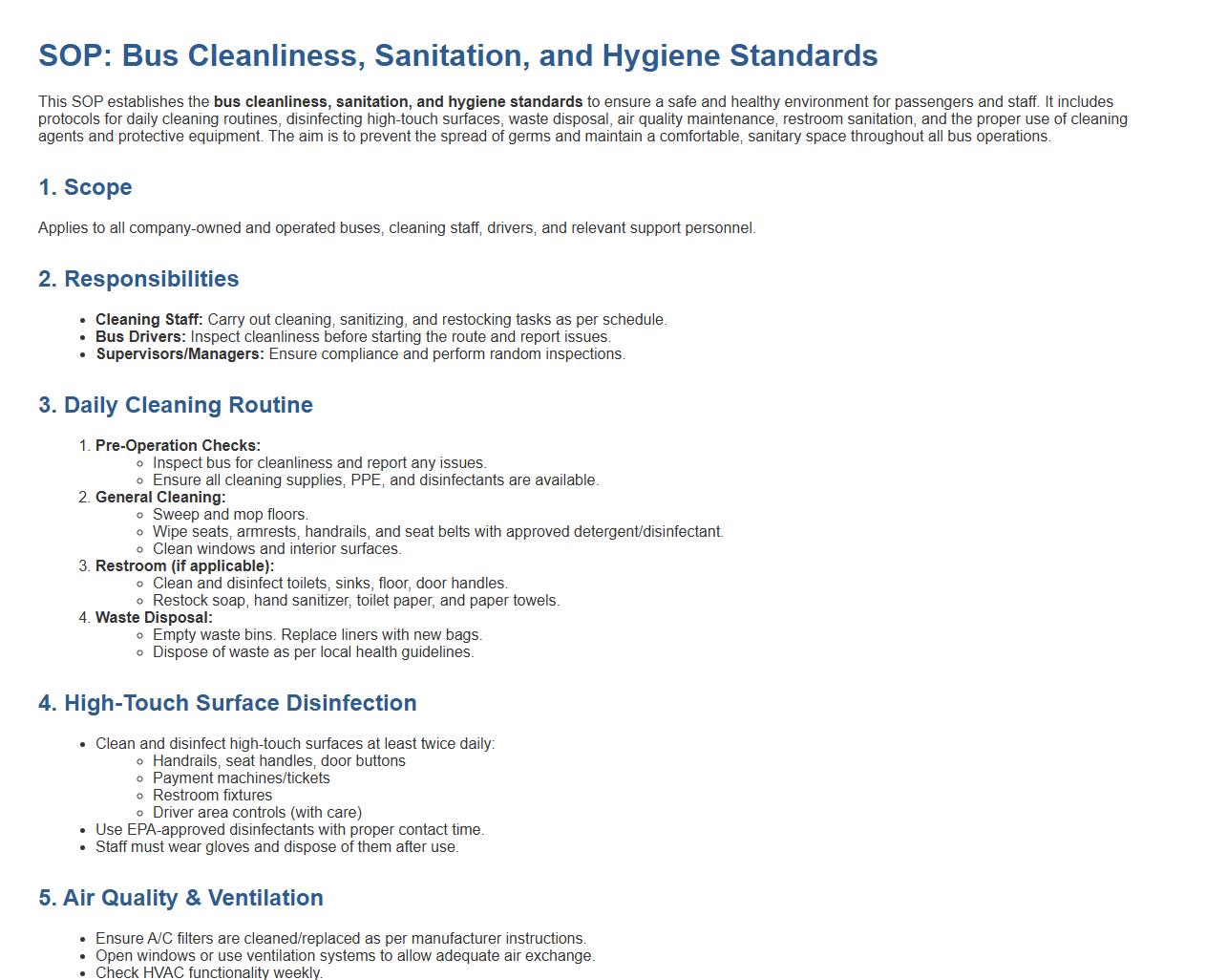
This SOP establishes the bus cleanliness, sanitation, and hygiene standards to ensure a safe and healthy environment for passengers and staff. It includes protocols for daily cleaning routines, disinfecting high-touch surfaces, waste disposal, air quality maintenance, restroom sanitation, and the proper use of cleaning agents and protective equipment. The aim is to prevent the spread of germs and maintain a comfortable, sanitary space throughout all bus operations.
Security checks and student safety guidelines.
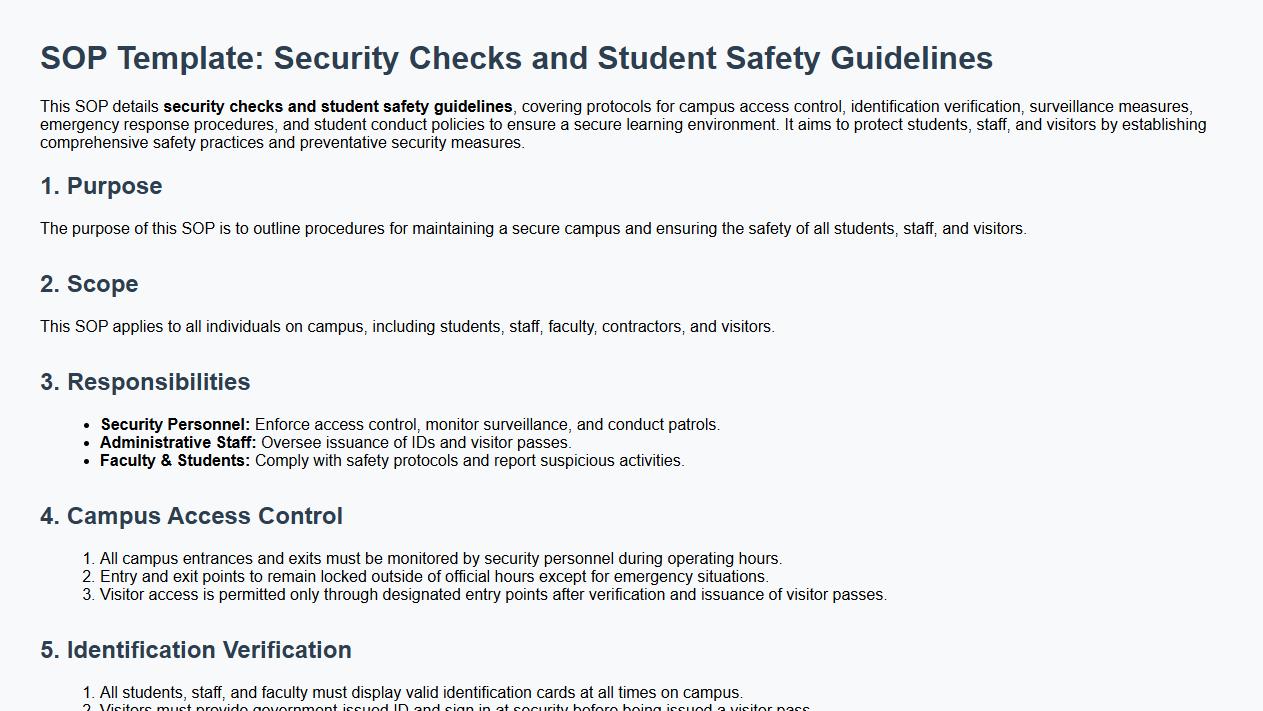
This SOP details security checks and student safety guidelines, covering protocols for campus access control, identification verification, surveillance measures, emergency response procedures, and student conduct policies to ensure a secure learning environment. It aims to protect students, staff, and visitors by establishing comprehensive safety practices and preventative security measures.
Parent communication and notification protocols.
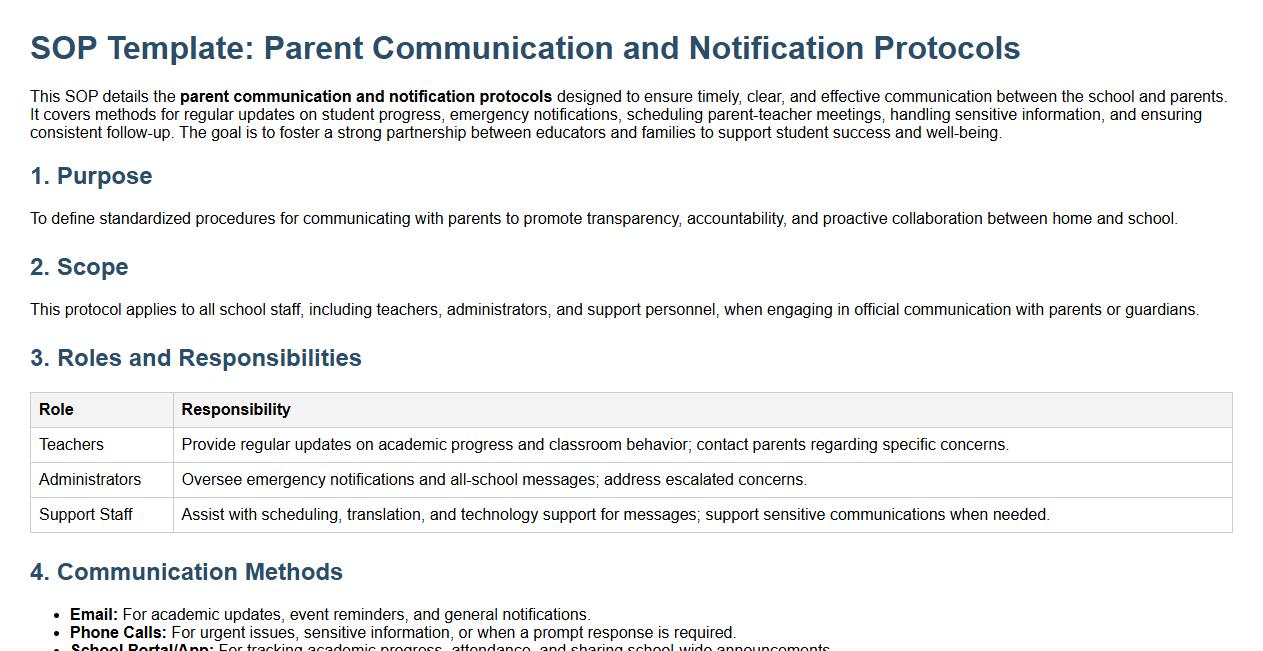
This SOP details the parent communication and notification protocols designed to ensure timely, clear, and effective communication between the school and parents. It covers methods for regular updates on student progress, emergency notifications, scheduling parent-teacher meetings, handling sensitive information, and ensuring consistent follow-up. The goal is to foster a strong partnership between educators and families to support student success and well-being.
Fueling, mileage logging, and trip documentation.
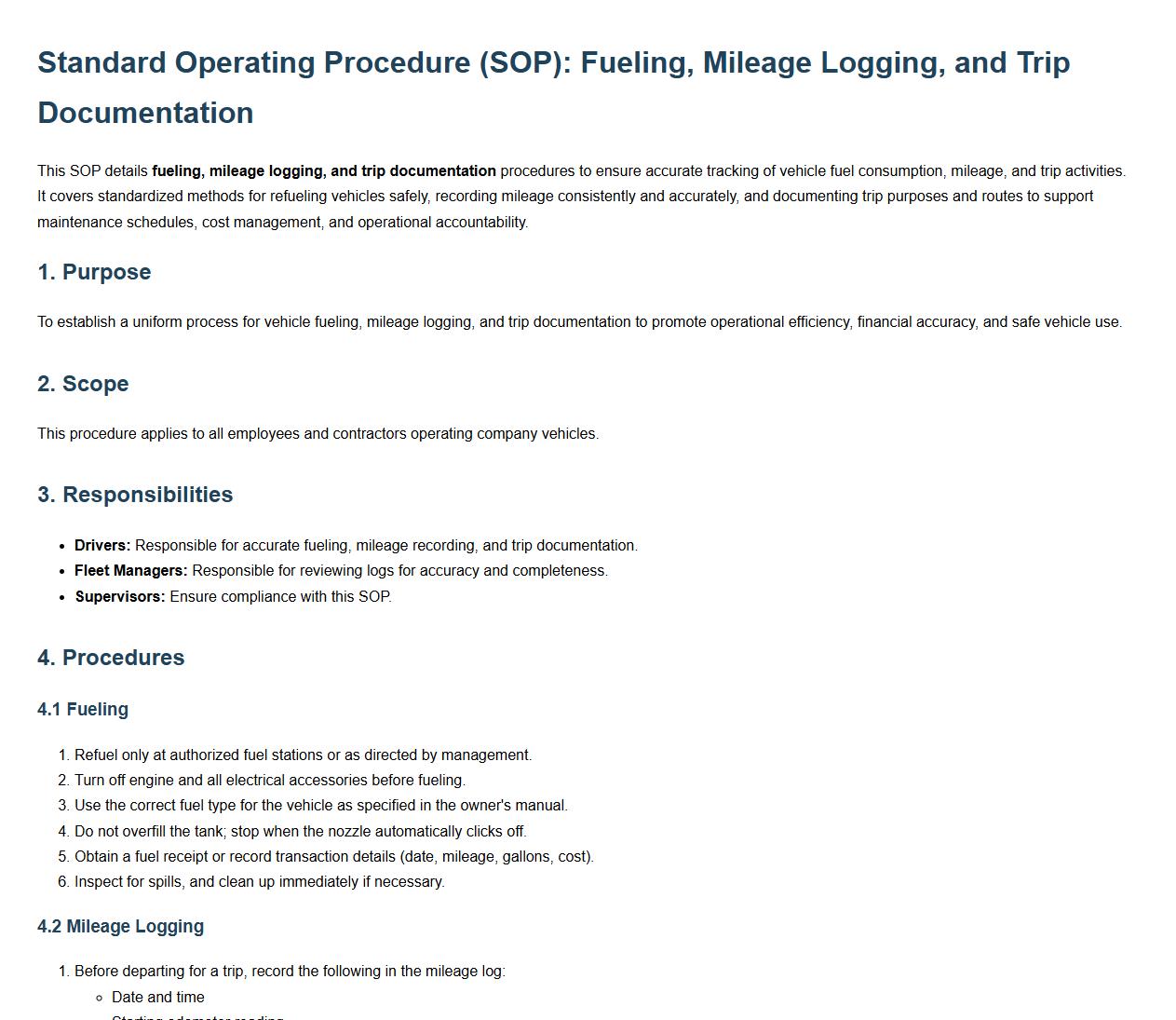
This SOP details fueling, mileage logging, and trip documentation procedures to ensure accurate tracking of vehicle fuel consumption, mileage, and trip activities. It covers standardized methods for refueling vehicles safely, recording mileage consistently and accurately, and documenting trip purposes and routes to support maintenance schedules, cost management, and operational accountability.
Compliance with local transportation regulations and reporting.
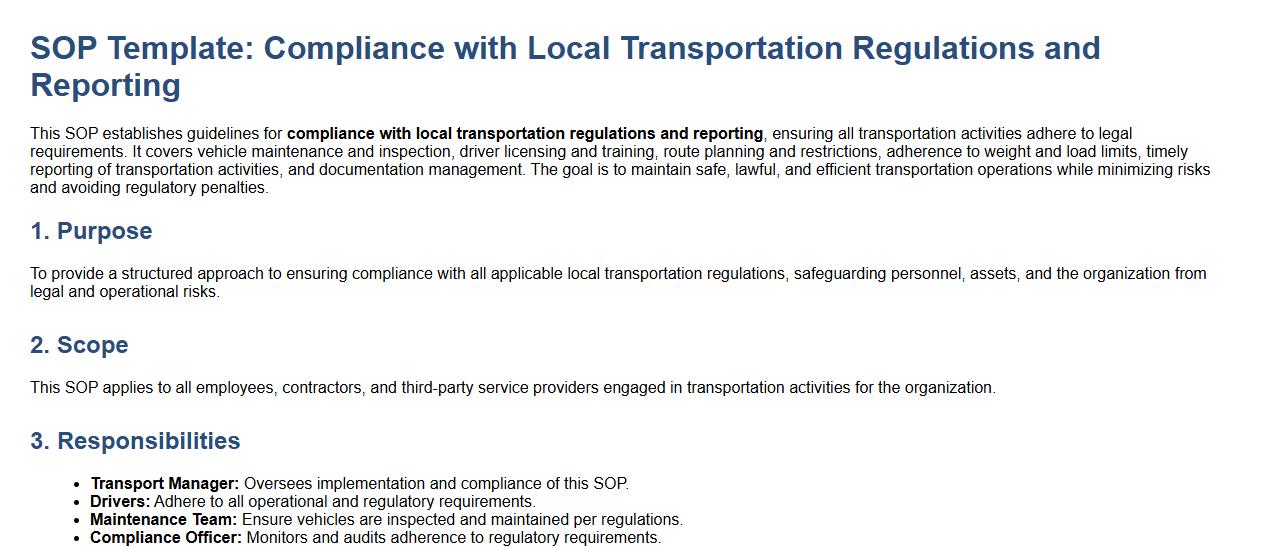
This SOP establishes guidelines for compliance with local transportation regulations and reporting, ensuring all transportation activities adhere to legal requirements. It covers vehicle maintenance and inspection, driver licensing and training, route planning and restrictions, adherence to weight and load limits, timely reporting of transportation activities, and documentation management. The goal is to maintain safe, lawful, and efficient transportation operations while minimizing risks and avoiding regulatory penalties.
What are the key responsibilities of staff outlined in the School Transport Services SOP?
Staff are required to ensure the safe and timely transportation of all students according to the scheduled routes. They must verify student identities and maintain accurate attendance records during pick-up and drop-off. Additionally, staff are responsible for supervising student behavior to promote a secure travel environment.
Which safety measures are mandated in the SOP for student pick-up and drop-off procedures?
The SOP mandates strict adherence to designated pick-up and drop-off zones to prevent traffic hazards and ensure student safety. Staff must perform a headcount before departure and confirm that all students have boarded or exited the vehicle. Use of seat belts and constant supervision during these procedures are also emphasized to minimize risks.
What protocols does the SOP specify for vehicle maintenance and inspection?
The SOP requires a regular maintenance schedule including pre-trip inspections to ensure vehicles are roadworthy and safe for student transport. Staff must document maintenance activities and report any mechanical issues promptly. Vehicles are also subject to periodic safety audits to comply with local and national regulations.
How does the SOP address incident reporting and emergency response during transport?
In the event of an incident, staff must follow a clear reporting protocol that includes immediate notification to the transport supervisor and emergency services if needed. The SOP details step-by-step emergency response actions to ensure student safety and minimize harm. Documentation of all incidents and follow-up reviews are required to improve future safety measures.
What guidelines does the SOP set for driver qualification and conduct?
Drivers must possess a valid commercial driver's license and undergo background checks to meet qualification standards. The SOP emphasizes professional conduct, including adherence to traffic laws and respectful interaction with students and staff. Ongoing training in safety procedures and student management is mandatory to maintain high service standards.