
A SOP Template for Library Management in Schools provides a clear framework for organizing library operations, ensuring efficient cataloging, borrowing, and maintenance of resources. This template helps staff maintain consistency in managing book inventories, member registrations, and daily library activities. Implementing such an SOP improves resource accessibility and supports effective learning environments for students.
Book acquisition and cataloging procedures.
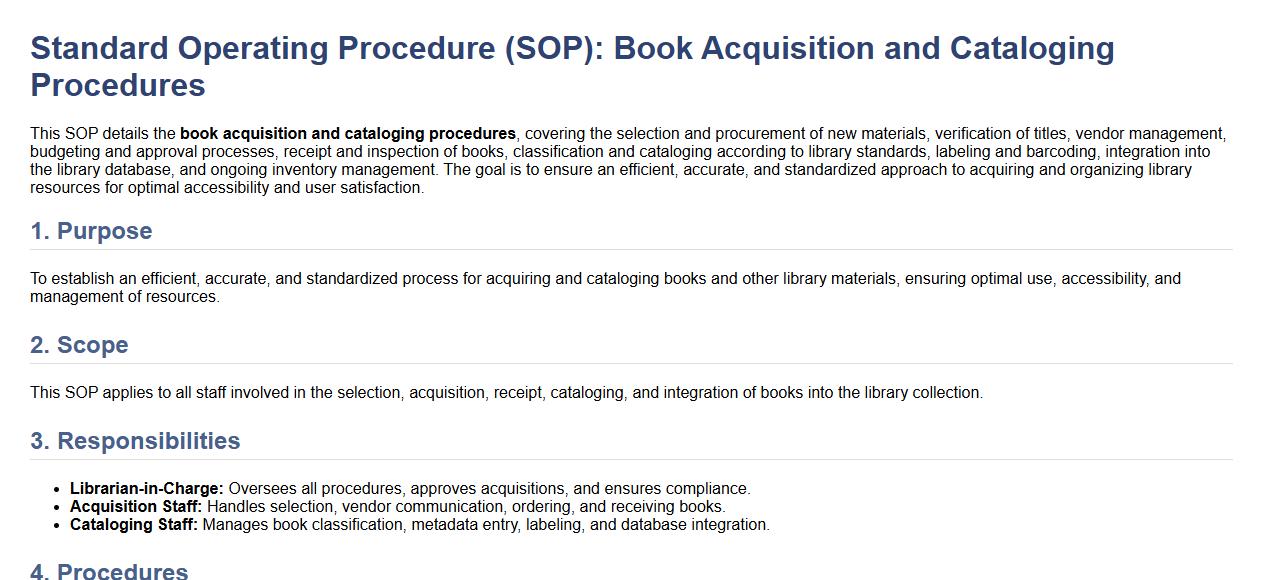
This SOP details the book acquisition and cataloging procedures, covering the selection and procurement of new materials, verification of titles, vendor management, budgeting and approval processes, receipt and inspection of books, classification and cataloging according to library standards, labeling and barcoding, integration into the library database, and ongoing inventory management. The goal is to ensure an efficient, accurate, and standardized approach to acquiring and organizing library resources for optimal accessibility and user satisfaction.
Book borrowing and return process.
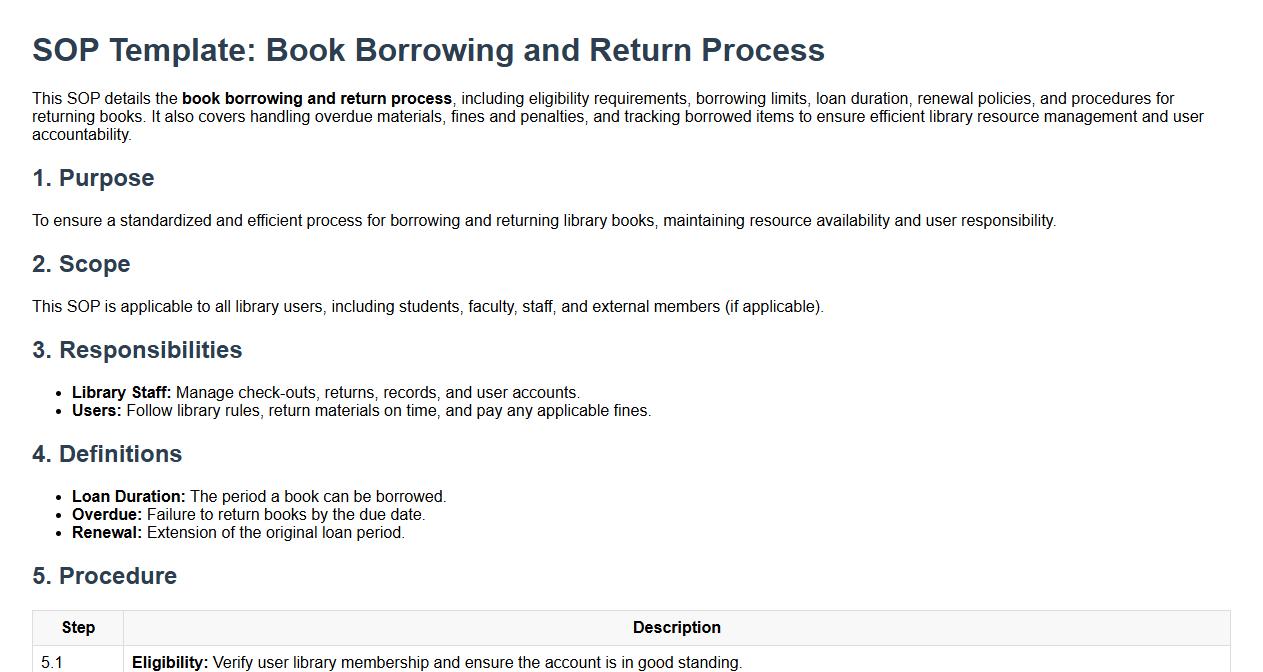
This SOP details the book borrowing and return process, including eligibility requirements, borrowing limits, loan duration, renewal policies, and procedures for returning books. It also covers handling overdue materials, fines and penalties, and tracking borrowed items to ensure efficient library resource management and user accountability.
Library membership registration and management.
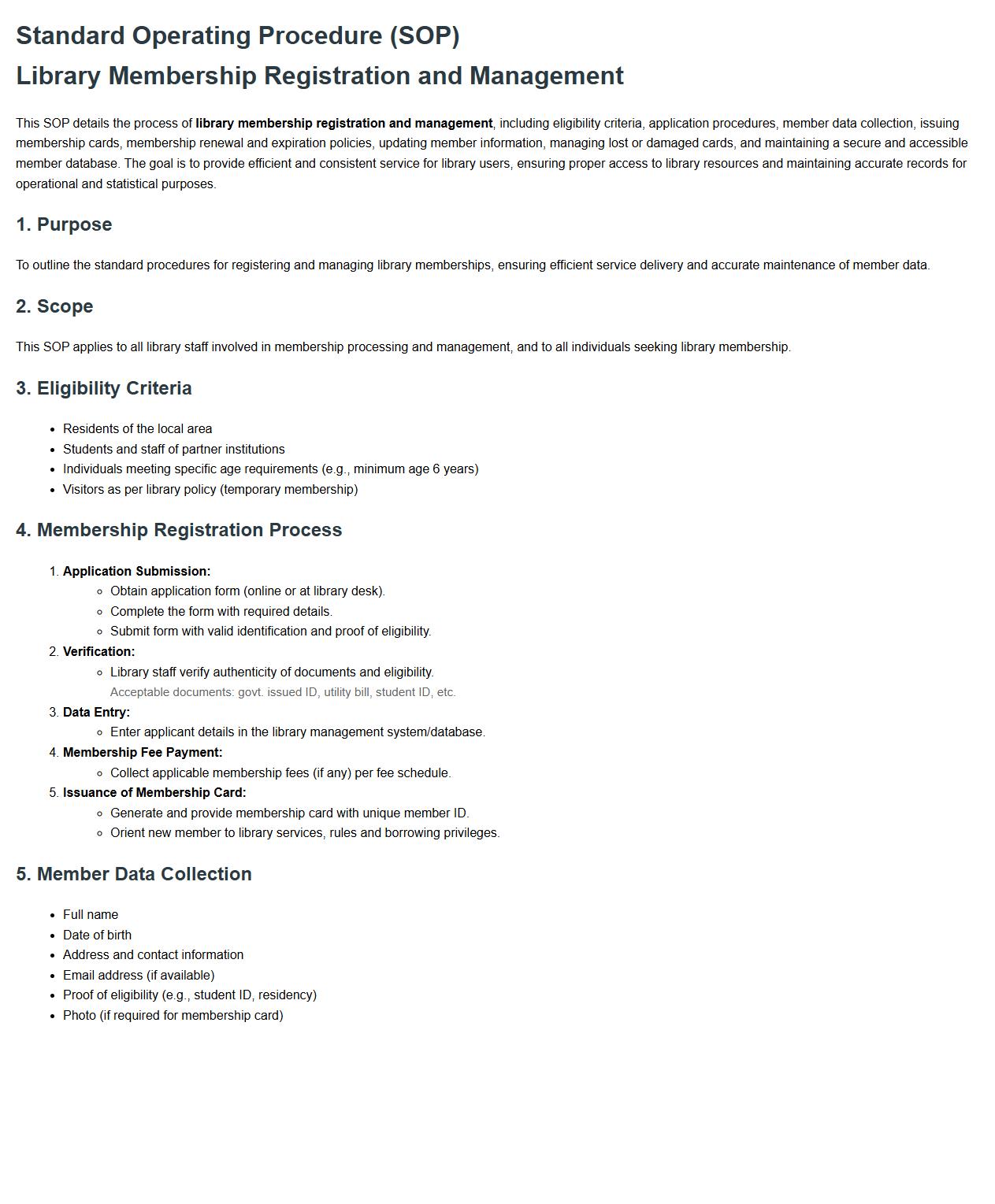
This SOP details the process of library membership registration and management, including eligibility criteria, application procedures, member data collection, issuing membership cards, membership renewal and expiration policies, updating member information, managing lost or damaged cards, and maintaining a secure and accessible member database. The goal is to provide efficient and consistent service for library users, ensuring proper access to library resources and maintaining accurate records for operational and statistical purposes.
Library opening, closing, and access control.
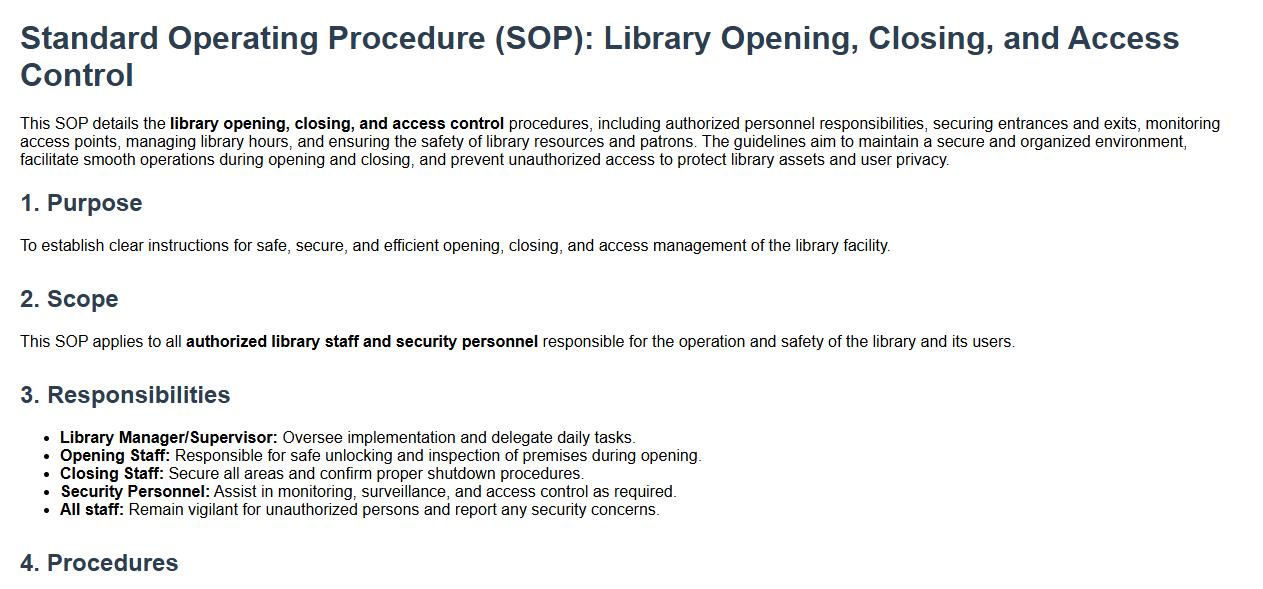
This SOP details the library opening, closing, and access control procedures, including authorized personnel responsibilities, securing entrances and exits, monitoring access points, managing library hours, and ensuring the safety of library resources and patrons. The guidelines aim to maintain a secure and organized environment, facilitate smooth operations during opening and closing, and prevent unauthorized access to protect library assets and user privacy.
Shelving, organization, and inventory checks.
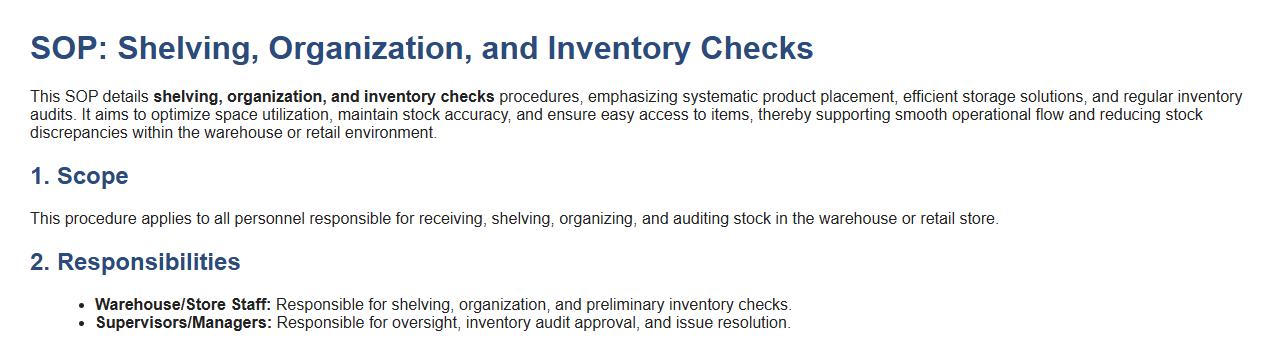
This SOP details shelving, organization, and inventory checks procedures, emphasizing systematic product placement, efficient storage solutions, and regular inventory audits. It aims to optimize space utilization, maintain stock accuracy, and ensure easy access to items, thereby supporting smooth operational flow and reducing stock discrepancies within the warehouse or retail environment.
Digital resource access and usage guidelines.
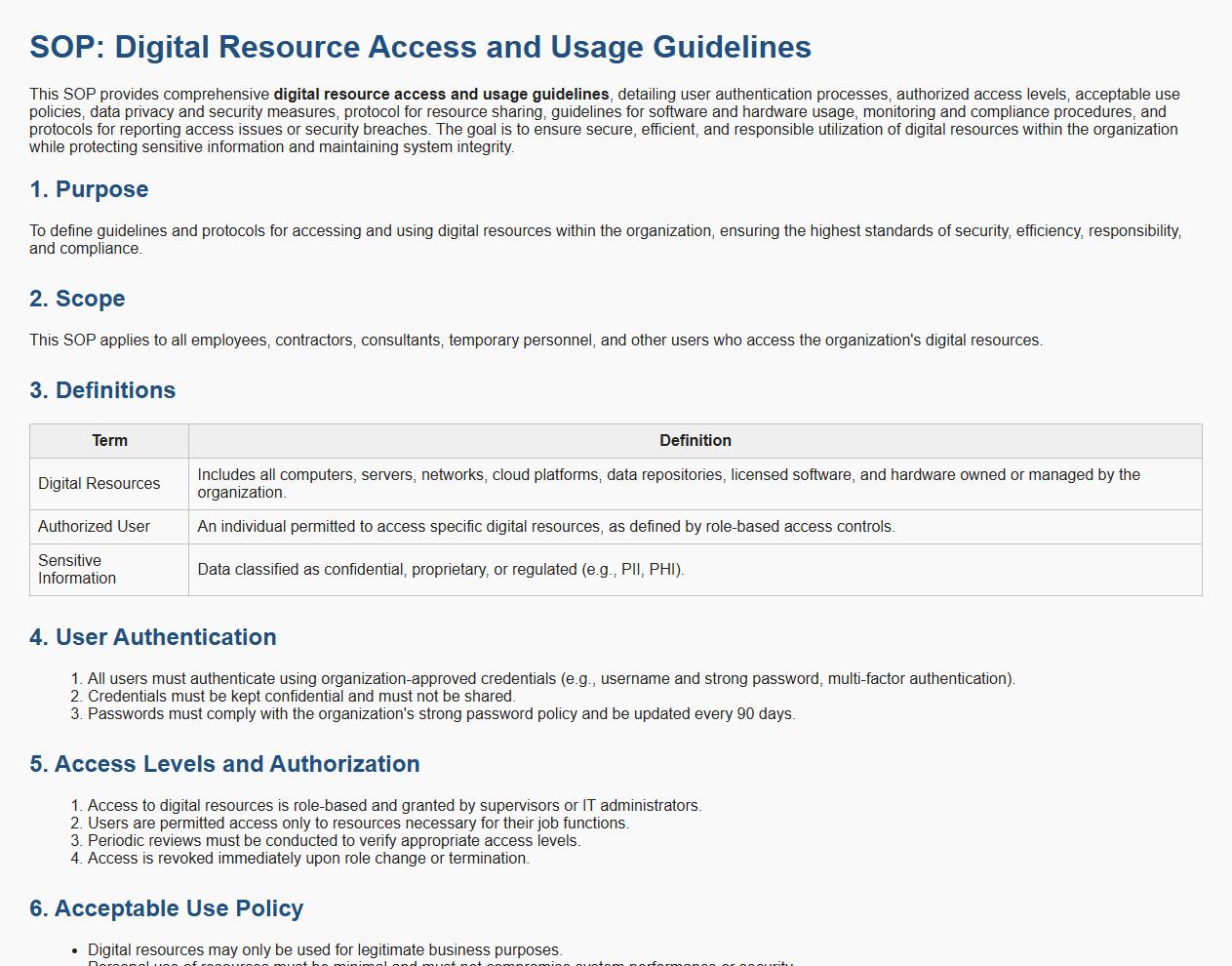
This SOP provides comprehensive digital resource access and usage guidelines, detailing user authentication processes, authorized access levels, acceptable use policies, data privacy and security measures, protocol for resource sharing, guidelines for software and hardware usage, monitoring and compliance procedures, and protocols for reporting access issues or security breaches. The goal is to ensure secure, efficient, and responsible utilization of digital resources within the organization while protecting sensitive information and maintaining system integrity.
Lost, damaged, or overdue book management.
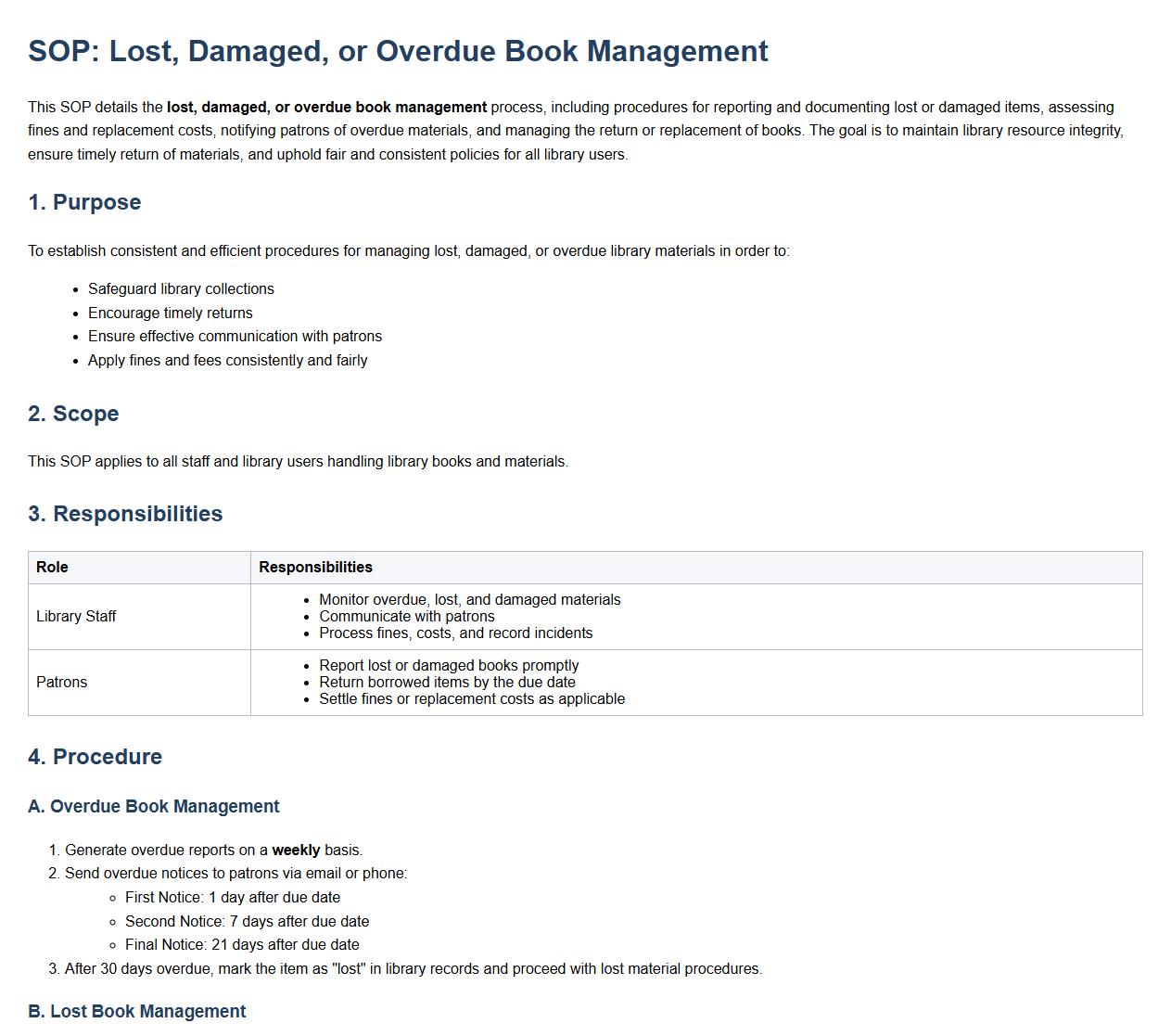
This SOP details the lost, damaged, or overdue book management process, including procedures for reporting and documenting lost or damaged items, assessing fines and replacement costs, notifying patrons of overdue materials, and managing the return or replacement of books. The goal is to maintain library resource integrity, ensure timely return of materials, and uphold fair and consistent policies for all library users.
Library event planning and execution.
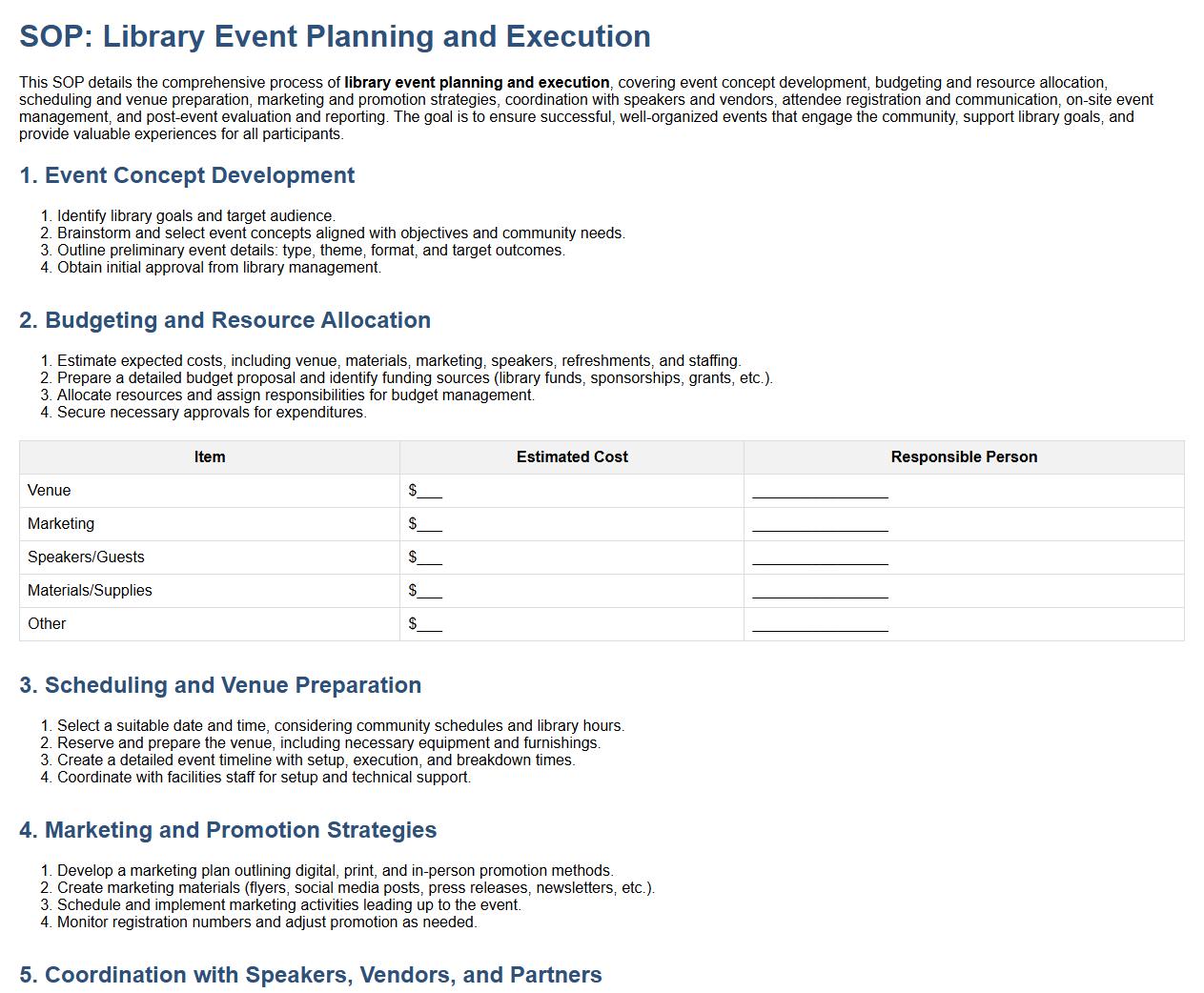
This SOP details the comprehensive process of library event planning and execution, covering event concept development, budgeting and resource allocation, scheduling and venue preparation, marketing and promotion strategies, coordination with speakers and vendors, attendee registration and communication, on-site event management, and post-event evaluation and reporting. The goal is to ensure successful, well-organized events that engage the community, support library goals, and provide valuable experiences for all participants.
Library staff roles and daily task allocation.
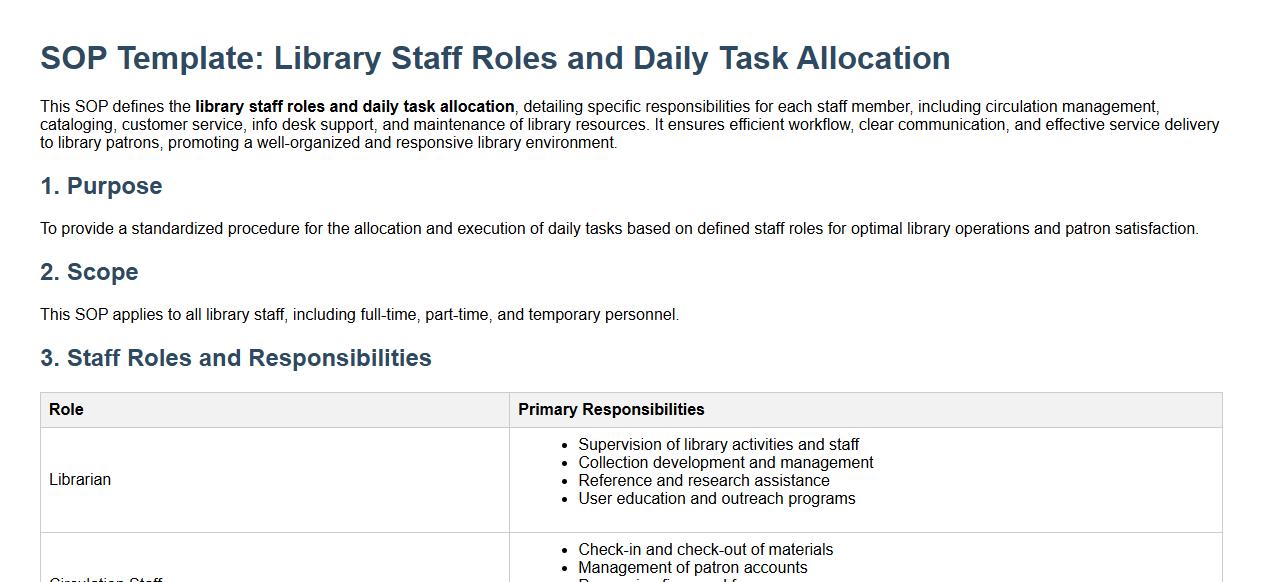
This SOP defines the library staff roles and daily task allocation, detailing specific responsibilities for each staff member, including circulation management, cataloging, customer service, info desk support, and maintenance of library resources. It ensures efficient workflow, clear communication, and effective service delivery to library patrons, promoting a well-organized and responsive library environment.
Cleaning, safety, and emergency procedures in the library.
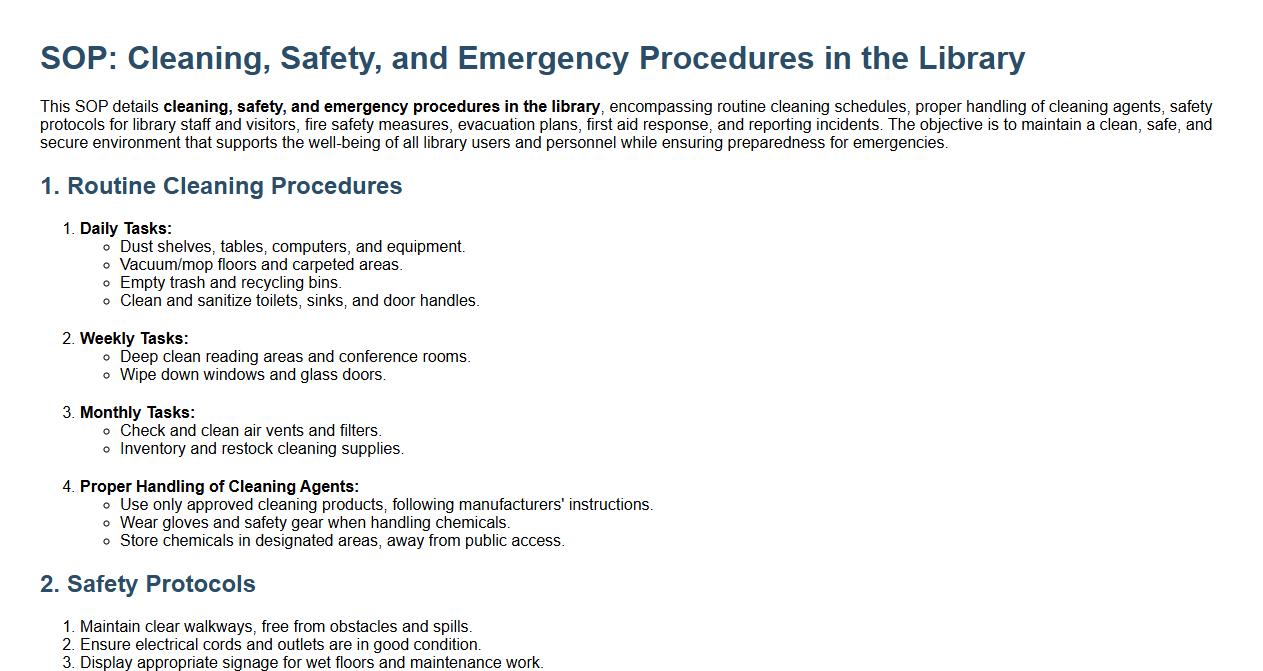
This SOP details cleaning, safety, and emergency procedures in the library, encompassing routine cleaning schedules, proper handling of cleaning agents, safety protocols for library staff and visitors, fire safety measures, evacuation plans, first aid response, and reporting incidents. The objective is to maintain a clean, safe, and secure environment that supports the well-being of all library users and personnel while ensuring preparedness for emergencies.
What are the main objectives outlined in the SOP for Library Management in Schools?
The primary objectives of the SOP for Library Management focus on creating a well-organized, accessible, and resource-rich environment for students and staff. It aims to enhance students' learning experiences by providing up-to-date materials and support services. Additionally, the SOP emphasizes maintaining systematic records to ensure efficient library operations.
Which procedures are specified for book acquisition and cataloguing in the SOP?
The SOP specifies a detailed procedure for book acquisition involving selection criteria, budget approval, and supplier verification to ensure quality resources. Cataloguing procedures include classifying new materials using standard library classification systems and entering them into the digital catalog for easy retrieval. This systematic approach ensures all books are accurately recorded and accessible to users.
How does the SOP address guidelines for student and staff borrowing privileges?
According to the SOP, borrowing privileges differ between students and staff with clear policies on the number of items, borrowing periods, and renewal conditions. It enforces rules to promote responsible use and timely return of materials to maintain resource availability. The SOP also outlines consequences for late returns or violations to encourage compliance.
What steps does the SOP prescribe for inventory management and stock verification?
The SOP prescribes regular inventory management through scheduled stock checks to identify lost or misplaced items. It requires maintaining an updated database to track check-outs, returns, and condition of library materials. These measures ensure accurate stock verification and assist in effective resource planning.
Which protocols are established in the SOP for handling damaged or lost library materials?
The SOP establishes clear protocols for damaged or lost materials, including reporting procedures and assessment of damage severity. It mandates fines or replacement by borrowers responsible for lost or irreparably damaged items. This policy helps preserve the library's collection quality and accountability.