

A SOP Template for Educational Field Trips provides a structured guideline to ensure the safety, organization, and educational value of student excursions. It outlines clear procedures for preparation, risk assessment, and emergency protocols, ensuring all participants understand their roles. This template enhances communication between educators, students, and parents while maintaining compliance with school and legal requirements.
Pre-trip planning and approval procedures.
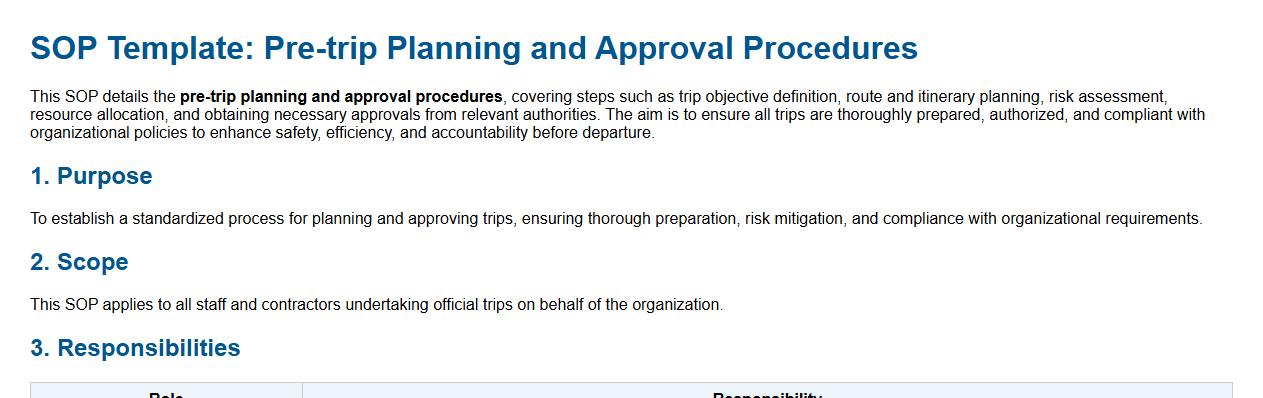
This SOP details the pre-trip planning and approval procedures, covering steps such as trip objective definition, route and itinerary planning, risk assessment, resource allocation, and obtaining necessary approvals from relevant authorities. The aim is to ensure all trips are thoroughly prepared, authorized, and compliant with organizational policies to enhance safety, efficiency, and accountability before departure.
Risk assessment and emergency protocols.
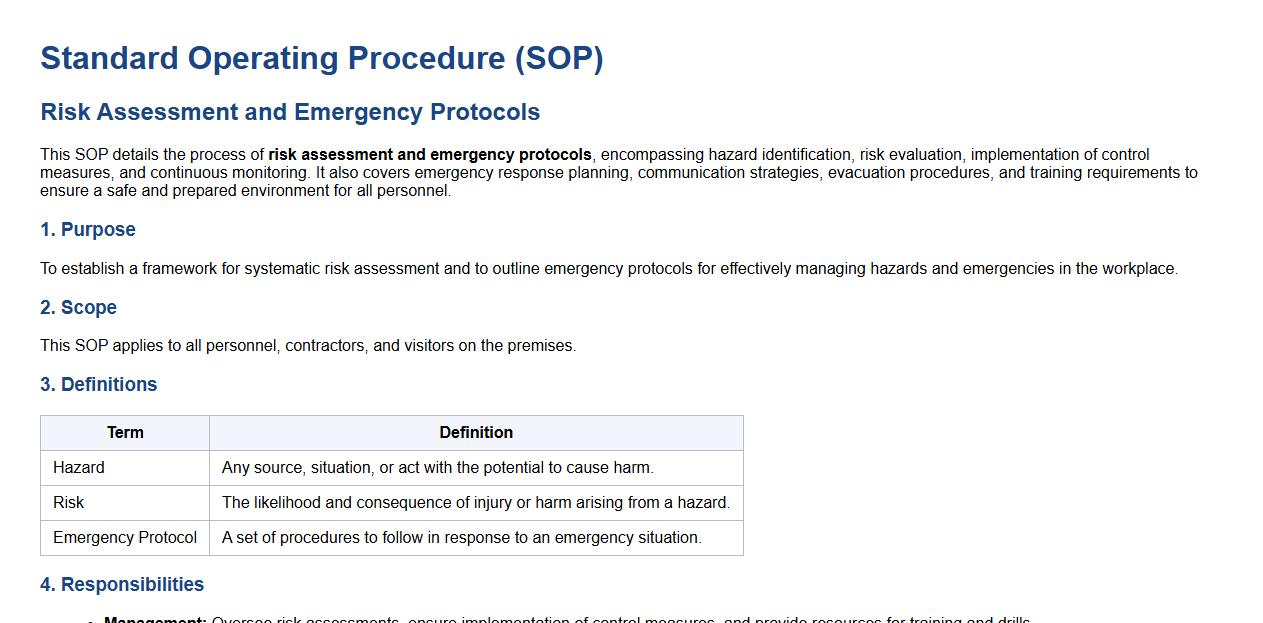
This SOP details the process of risk assessment and emergency protocols, encompassing hazard identification, risk evaluation, implementation of control measures, and continuous monitoring. It also covers emergency response planning, communication strategies, evacuation procedures, and training requirements to ensure a safe and prepared environment for all personnel.
Parental consent and communication process.
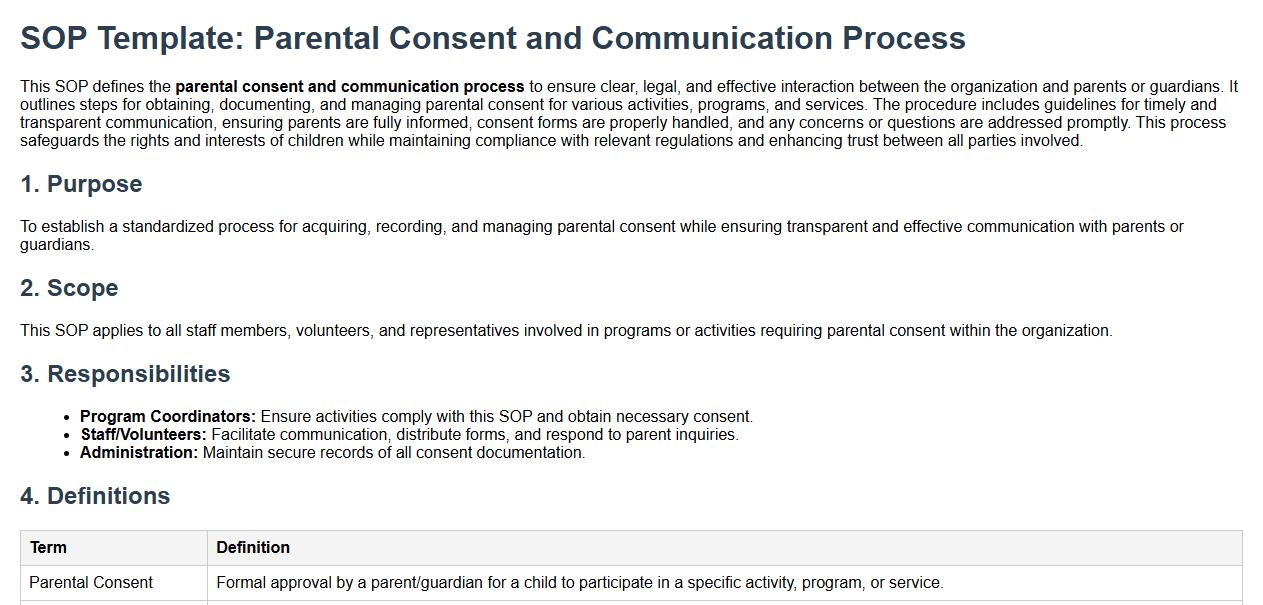
This SOP defines the parental consent and communication process to ensure clear, legal, and effective interaction between the organization and parents or guardians. It outlines steps for obtaining, documenting, and managing parental consent for various activities, programs, and services. The procedure includes guidelines for timely and transparent communication, ensuring parents are fully informed, consent forms are properly handled, and any concerns or questions are addressed promptly. This process safeguards the rights and interests of children while maintaining compliance with relevant regulations and enhancing trust between all parties involved.
Student registration and attendance tracking.
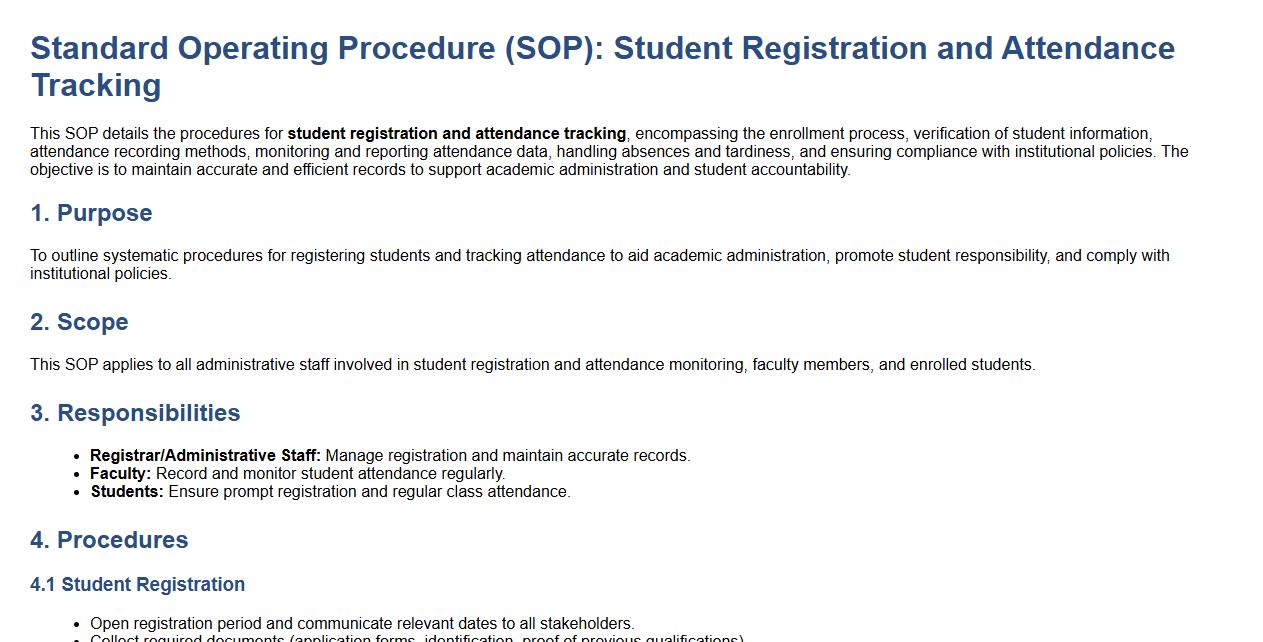
This SOP details the procedures for student registration and attendance tracking, encompassing the enrollment process, verification of student information, attendance recording methods, monitoring and reporting attendance data, handling absences and tardiness, and ensuring compliance with institutional policies. The objective is to maintain accurate and efficient records to support academic administration and student accountability.
Transportation arrangements and supervision ratios.
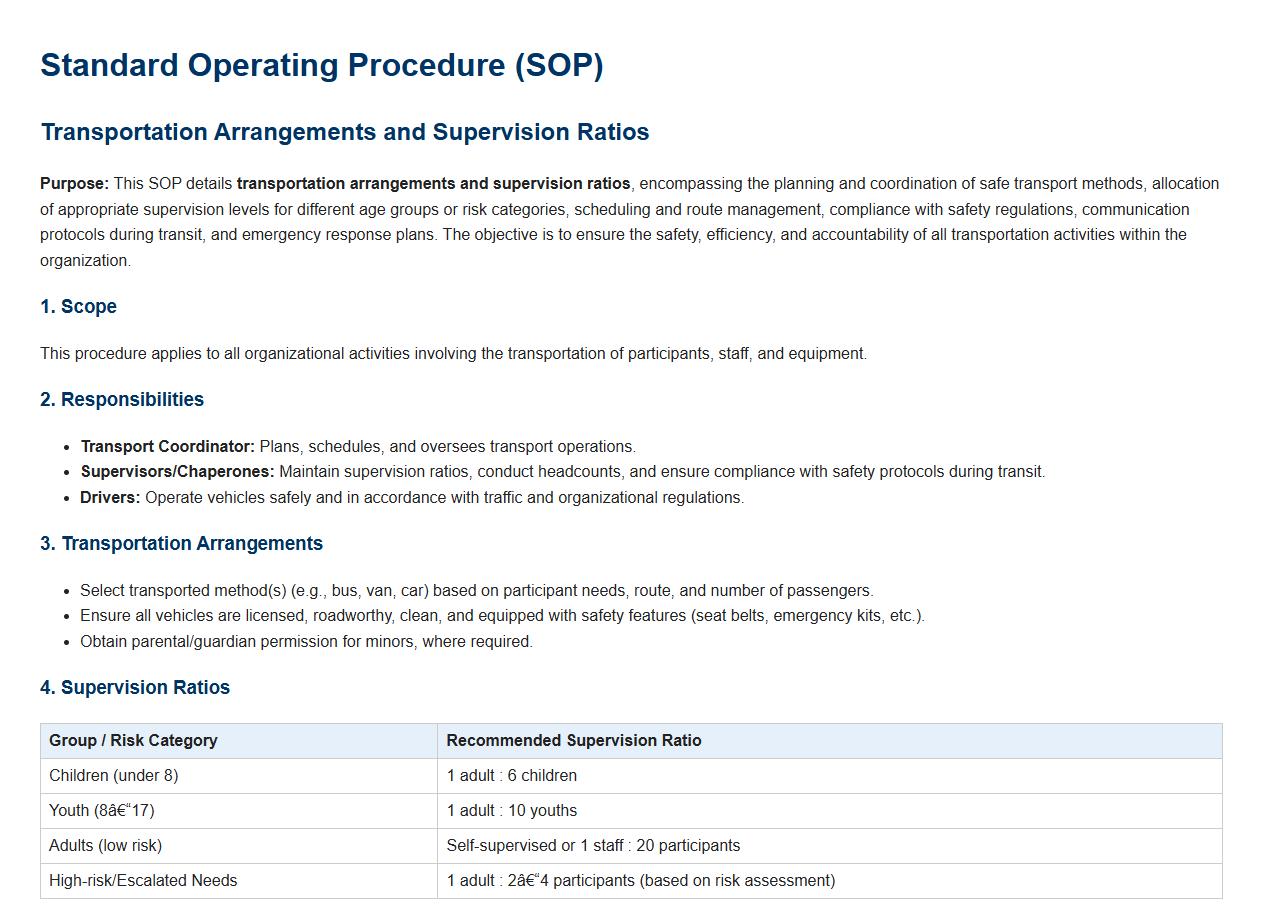
This SOP details transportation arrangements and supervision ratios, encompassing the planning and coordination of safe transport methods, allocation of appropriate supervision levels for different age groups or risk categories, scheduling and route management, compliance with safety regulations, communication protocols during transit, and emergency response plans. The objective is to ensure the safety, efficiency, and accountability of all transportation activities within the organization.
Itinerary development and activity scheduling.
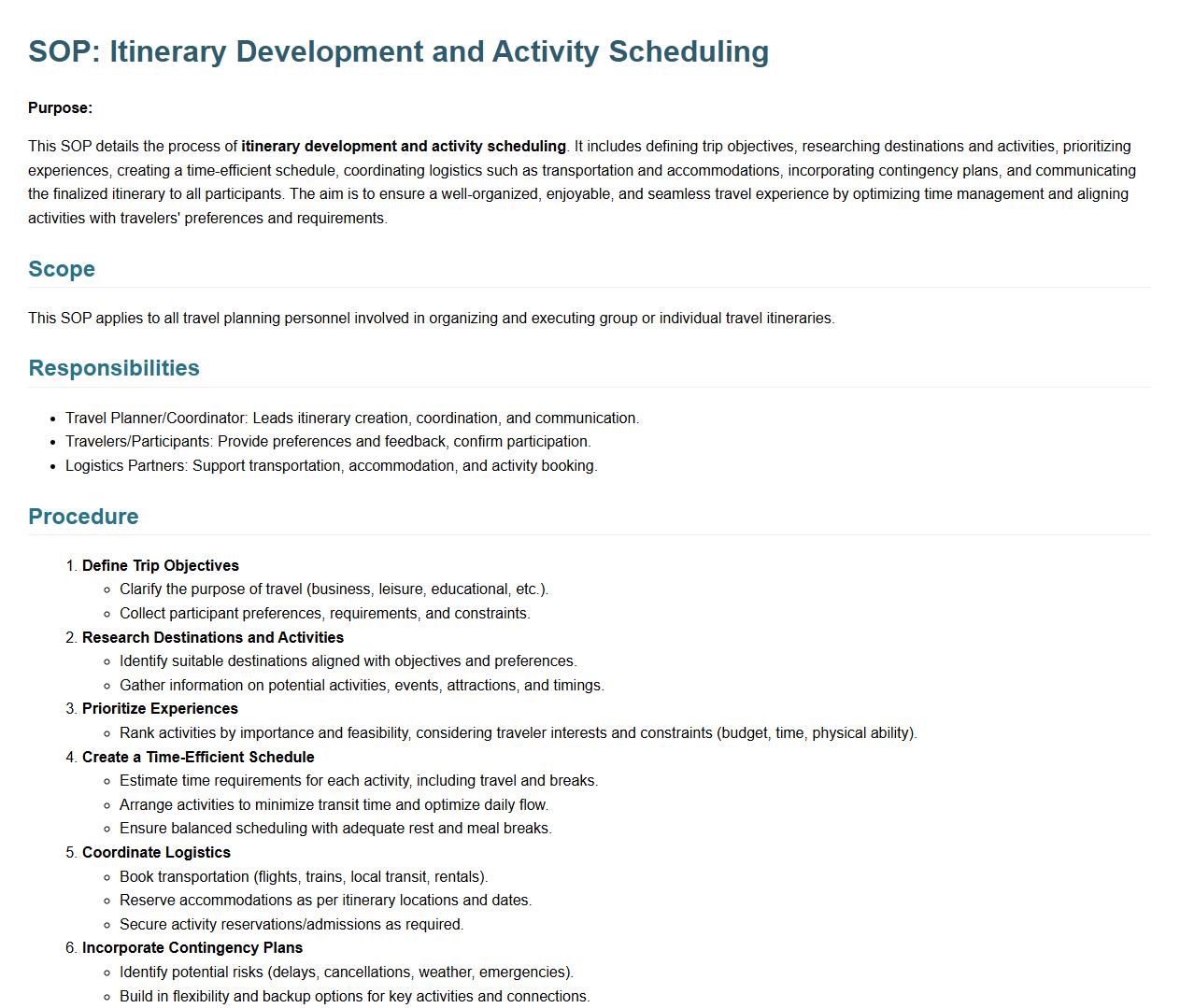
This SOP details the process of itinerary development and activity scheduling, including defining trip objectives, researching destinations and activities, prioritizing experiences, creating a time-efficient schedule, coordinating logistics such as transportation and accommodations, incorporating contingency plans, and communicating the finalized itinerary to all participants. The aim is to ensure a well-organized, enjoyable, and seamless travel experience by optimizing time management and aligning activities with travelers' preferences and requirements.
Chaperone roles and responsibilities.
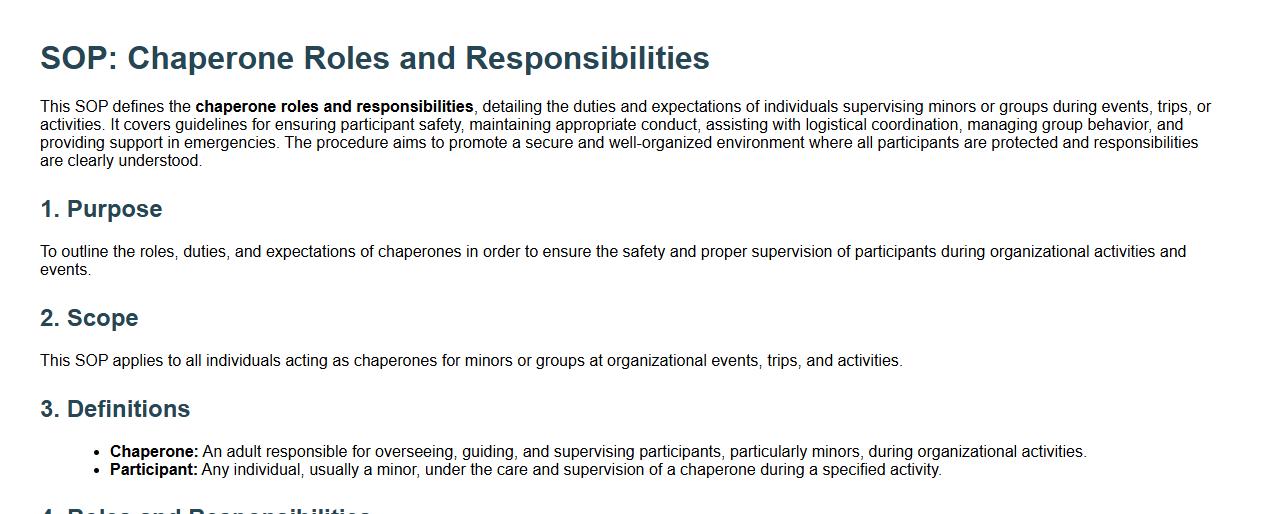
This SOP defines the chaperone roles and responsibilities, detailing the duties and expectations of individuals supervising minors or groups during events, trips, or activities. It covers guidelines for ensuring participant safety, maintaining appropriate conduct, assisting with logistical coordination, managing group behavior, and providing support in emergencies. The procedure aims to promote a secure and well-organized environment where all participants are protected and responsibilities are clearly understood.
On-site safety guidelines and incident reporting.
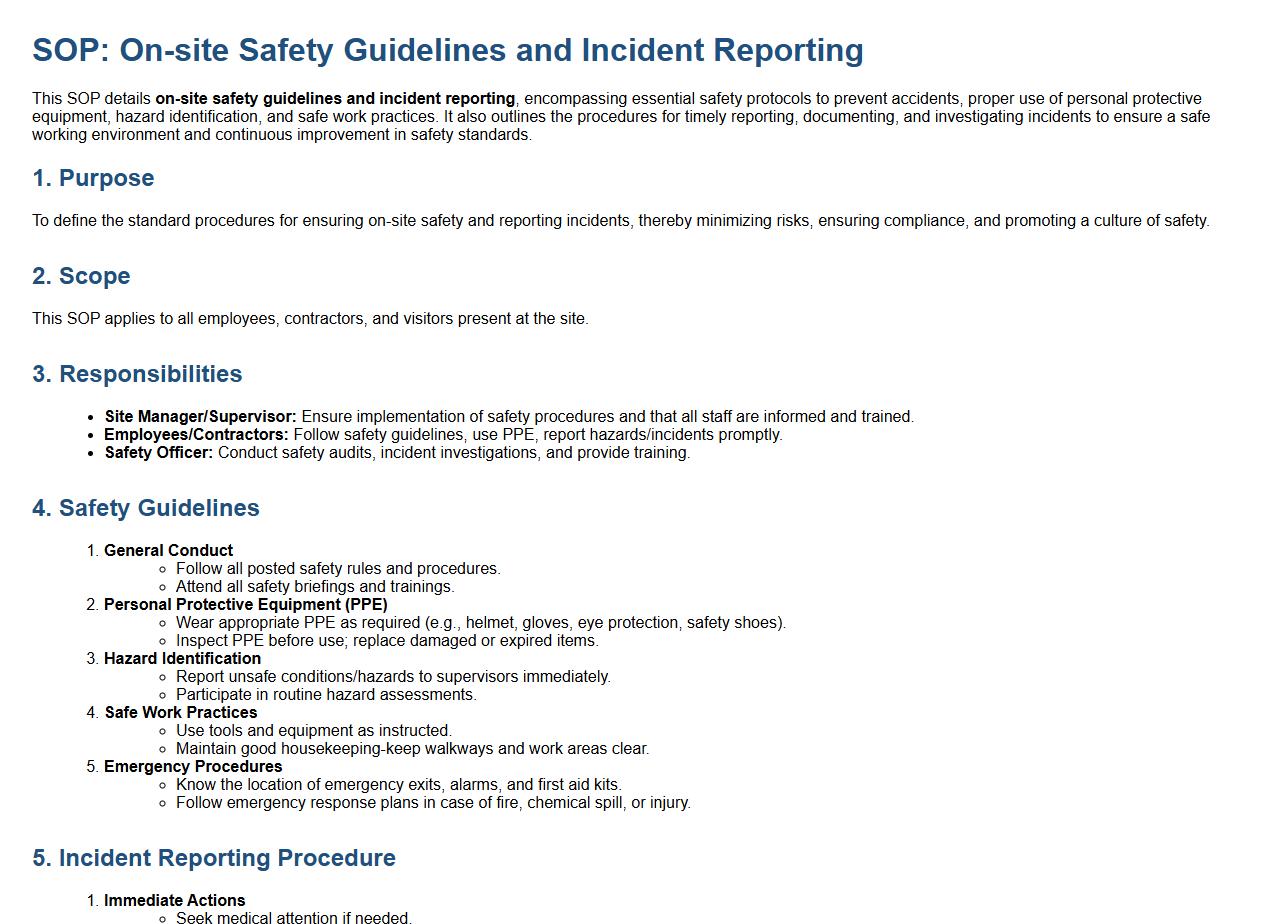
This SOP details on-site safety guidelines and incident reporting, encompassing essential safety protocols to prevent accidents, proper use of personal protective equipment, hazard identification, and safe work practices. It also outlines the procedures for timely reporting, documenting, and investigating incidents to ensure a safe working environment and continuous improvement in safety standards.
Student behavior expectations and disciplinary actions.
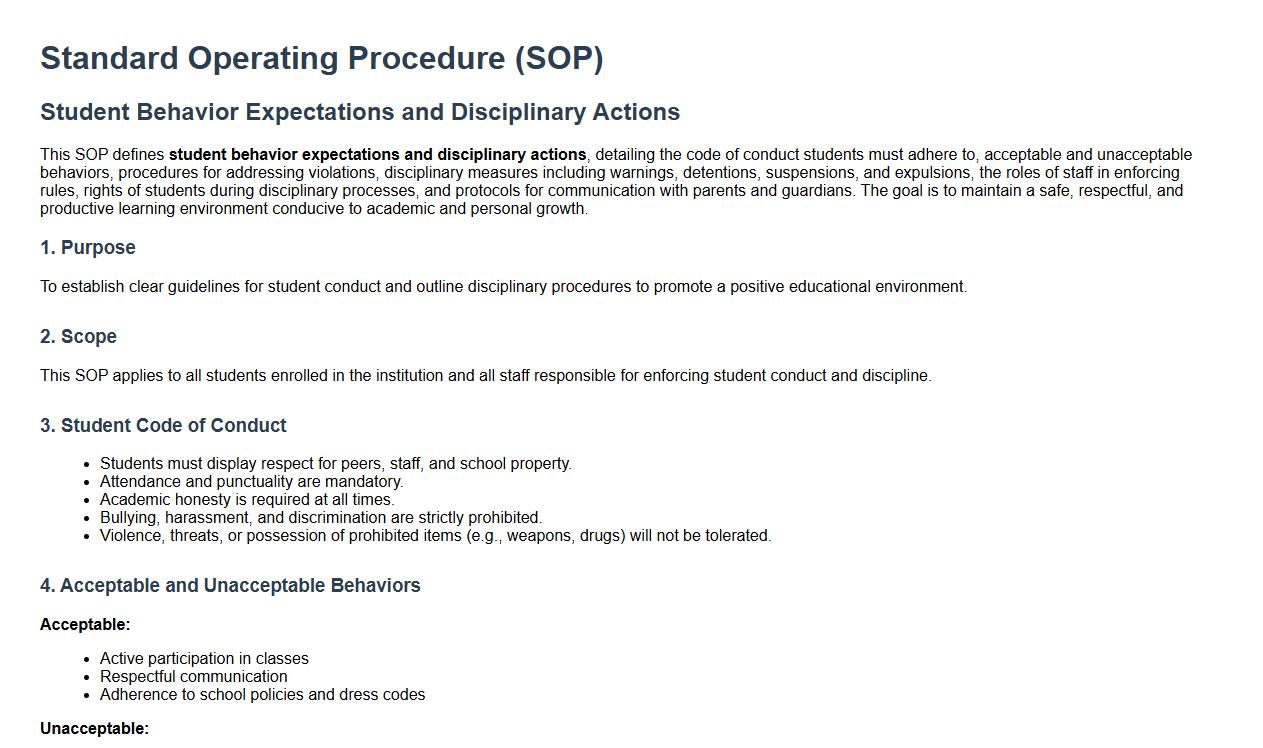
This SOP defines student behavior expectations and disciplinary actions, detailing the code of conduct students must adhere to, acceptable and unacceptable behaviors, procedures for addressing violations, disciplinary measures including warnings, detentions, suspensions, and expulsions, the roles of staff in enforcing rules, rights of students during disciplinary processes, and protocols for communication with parents and guardians. The goal is to maintain a safe, respectful, and productive learning environment conducive to academic and personal growth.
Post-trip evaluation and feedback collection.
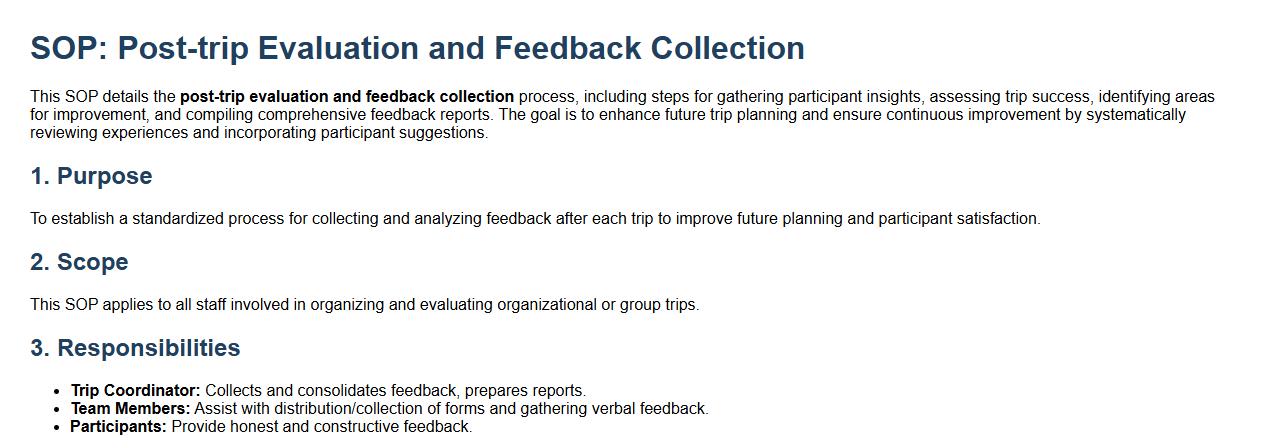
This SOP details the post-trip evaluation and feedback collection process, including steps for gathering participant insights, assessing trip success, identifying areas for improvement, and compiling comprehensive feedback reports. The goal is to enhance future trip planning and ensure continuous improvement by systematically reviewing experiences and incorporating participant suggestions.
What is the primary purpose of the SOP for Educational Field Trips?
The primary purpose of the SOP for Educational Field Trips is to provide a clear framework that ensures the safety and educational value of the trip. It aims to standardize procedures to minimize risks and enhance learning outcomes. By setting consistent guidelines, the SOP helps organizers plan and execute trips effectively.
Who are the key personnel responsible for implementing and overseeing the SOP?
The key personnel responsible include the trip coordinator, educational supervisors, and safety officers. These individuals are tasked with planning, monitoring, and managing all aspects of the trip. Their roles are essential to ensuring compliance with the SOP and the welfare of all participants.
What are the mandatory safety and risk assessment procedures outlined in the SOP?
The SOP mandates comprehensive safety and risk assessments before the trip, including site evaluations and emergency planning. It requires identifying potential hazards and establishing mitigation strategies. Regular safety briefings and monitoring during the trip are also integral components.
How are parental consent and student information managed according to the SOP?
Parental consent must be obtained in writing prior to the trip, ensuring parents are fully informed. Student information, including emergency contacts and medical details, is securely collected and maintained. This data management is critical for both safety and communication purposes.
What documentation and reporting requirements are specified in the SOP for educational field trips?
The SOP requires detailed documentation such as trip plans, risk assessments, and attendance records to be maintained. Post-trip reports evaluating the trip's success and any incidents are also mandatory. This ensures accountability and continuous improvement of future field trips.