

A SOP Template for Internal Communication Protocols ensures consistent and clear messaging within an organization by outlining standardized procedures for information sharing. It enhances efficiency, reduces misunderstandings, and supports smooth collaboration across departments. Implementing this template promotes accountability and timely updates in all internal communications.
Internal communication hierarchy and chain of command.
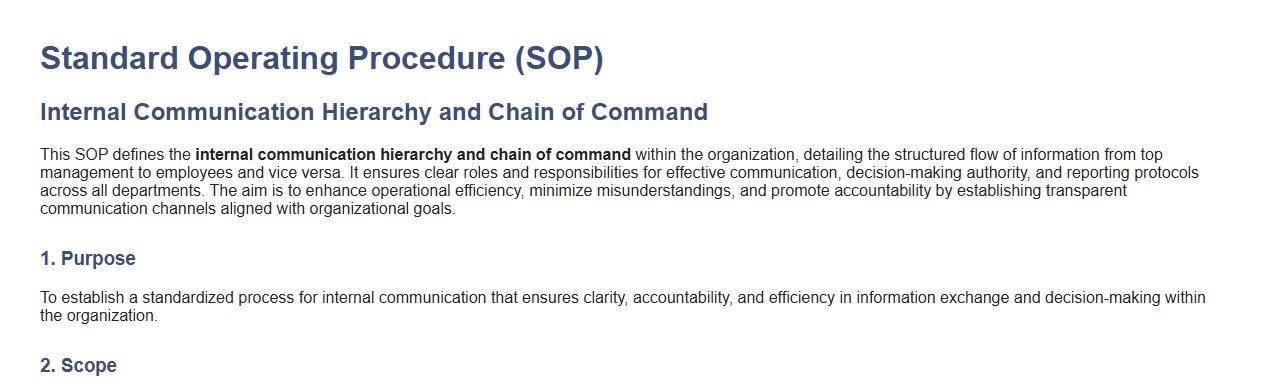
This SOP defines the internal communication hierarchy and chain of command within the organization, detailing the structured flow of information from top management to employees and vice versa. It ensures clear roles and responsibilities for effective communication, decision-making authority, and reporting protocols across all departments. The aim is to enhance operational efficiency, minimize misunderstandings, and promote accountability by establishing transparent communication channels aligned with organizational goals.
Standardized email and messaging formats.
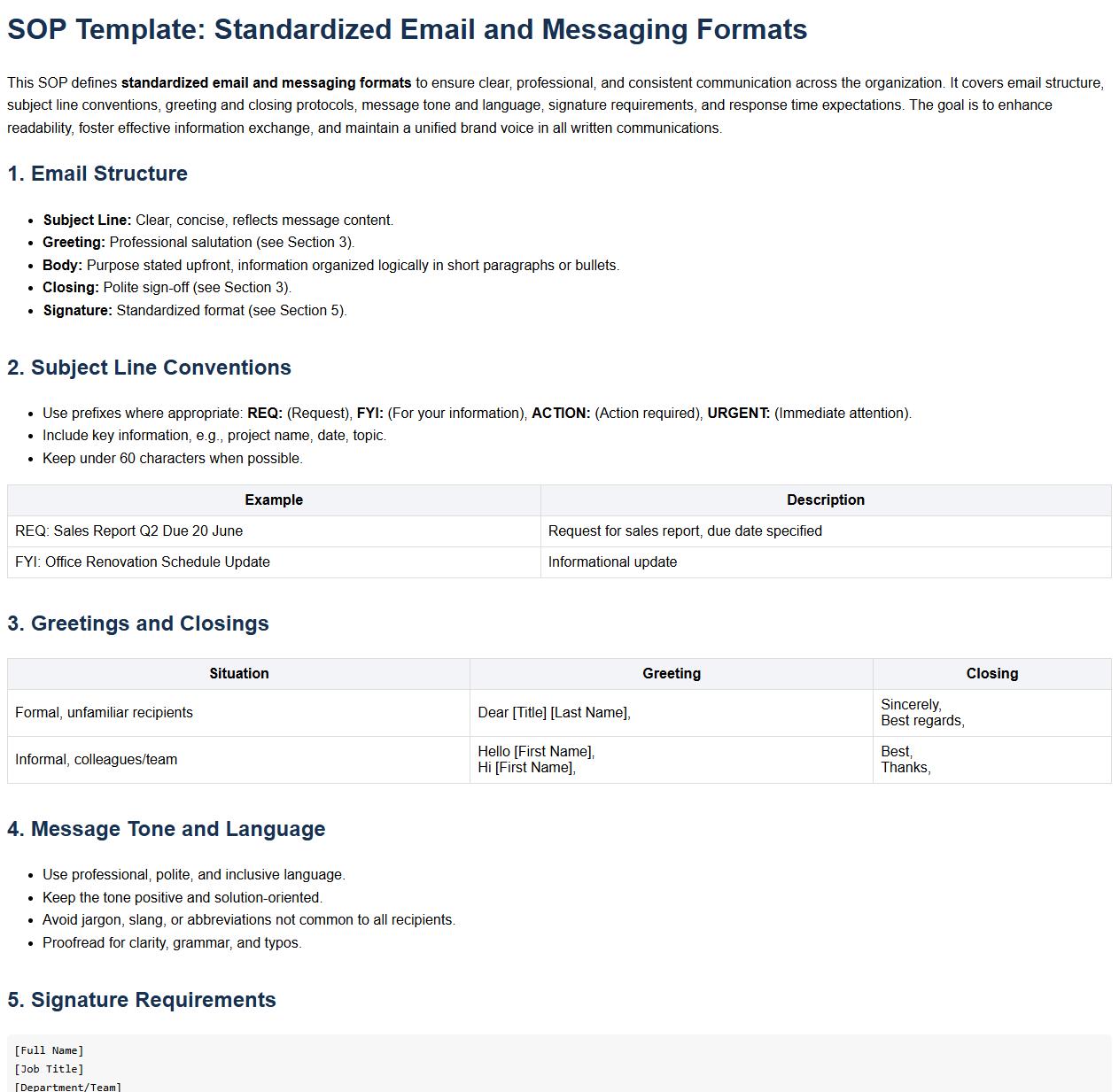
This SOP defines standardized email and messaging formats to ensure clear, professional, and consistent communication across the organization. It covers email structure, subject line conventions, greeting and closing protocols, message tone and language, signature requirements, and response time expectations. The goal is to enhance readability, foster effective information exchange, and maintain a unified brand voice in all written communications.
Meeting scheduling, agenda setting, and follow-up procedures.
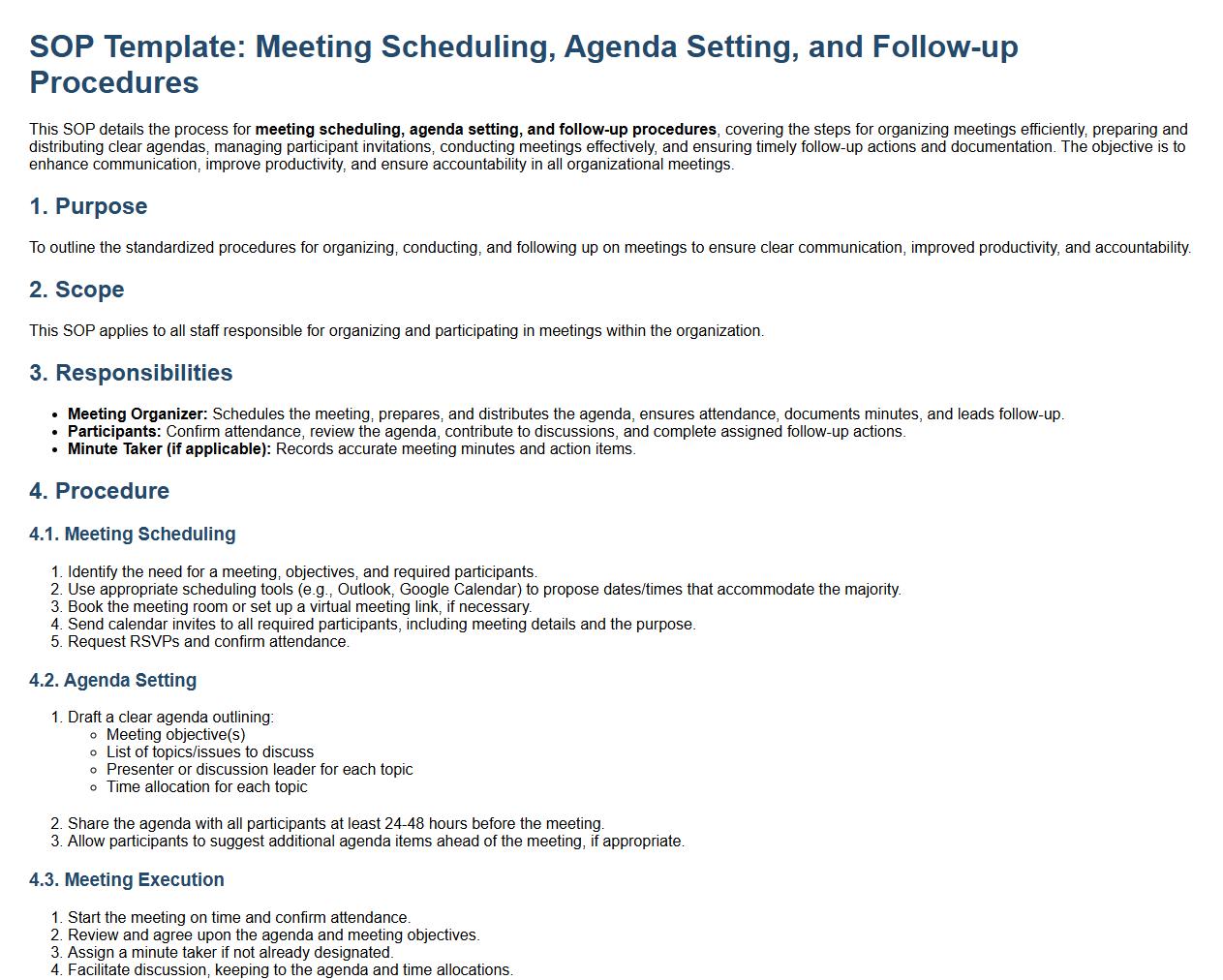
This SOP details the process for meeting scheduling, agenda setting, and follow-up procedures, covering the steps for organizing meetings efficiently, preparing and distributing clear agendas, managing participant invitations, conducting meetings effectively, and ensuring timely follow-up actions and documentation. The objective is to enhance communication, improve productivity, and ensure accountability in all organizational meetings.
Protocol for urgent and emergency communications.
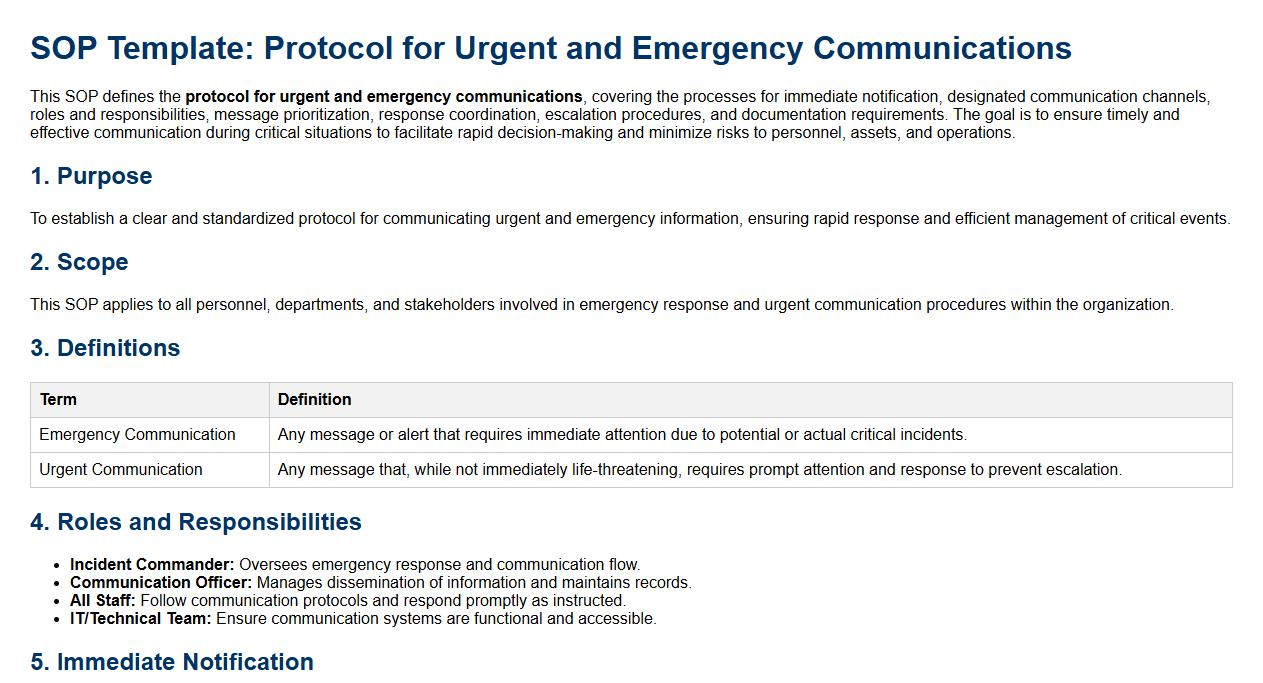
This SOP defines the protocol for urgent and emergency communications, covering the processes for immediate notification, designated communication channels, roles and responsibilities, message prioritization, response coordination, escalation procedures, and documentation requirements. The goal is to ensure timely and effective communication during critical situations to facilitate rapid decision-making and minimize risks to personnel, assets, and operations.
Guidelines for information confidentiality and data privacy.
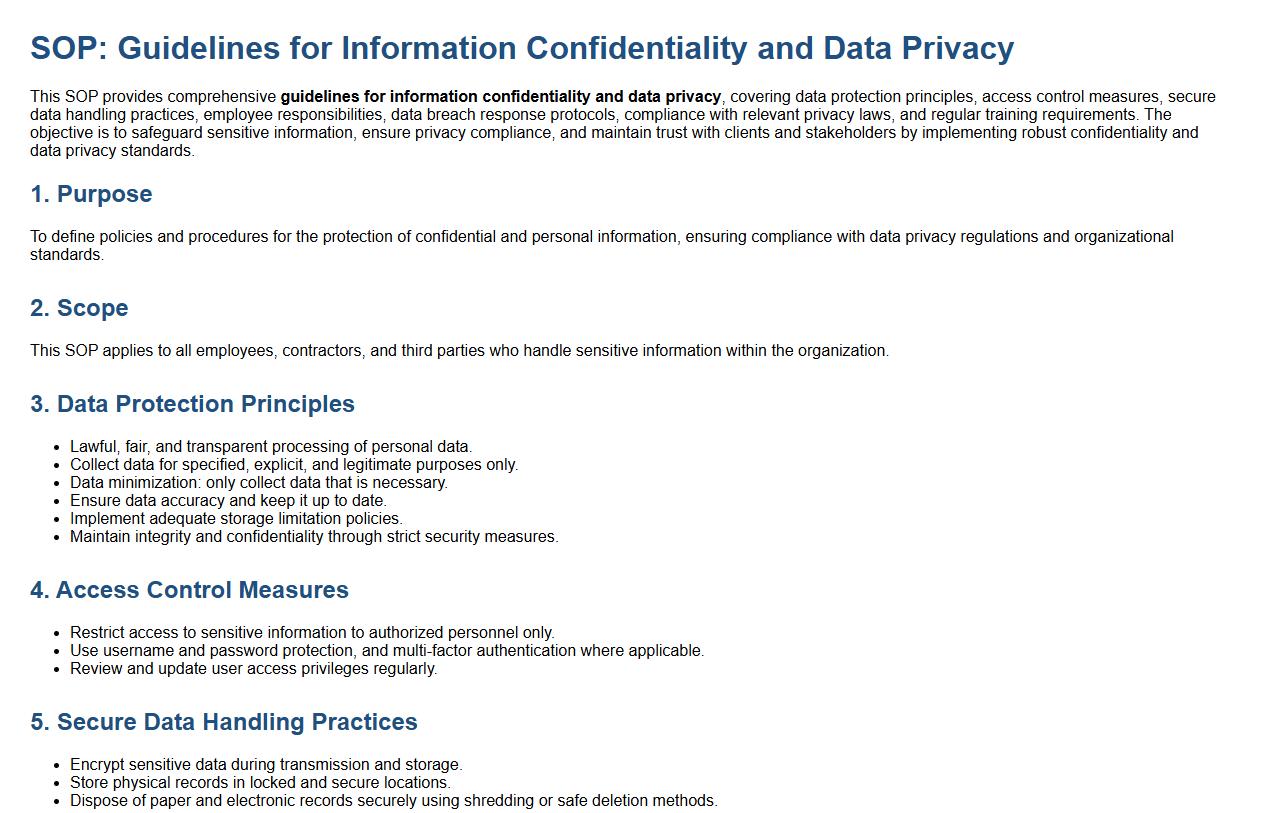
This SOP provides comprehensive guidelines for information confidentiality and data privacy, covering data protection principles, access control measures, secure data handling practices, employee responsibilities, data breach response protocols, compliance with relevant privacy laws, and regular training requirements. The objective is to safeguard sensitive information, ensure privacy compliance, and maintain trust with clients and stakeholders by implementing robust confidentiality and data privacy standards.
Standard procedure for interdepartmental updates and reporting.
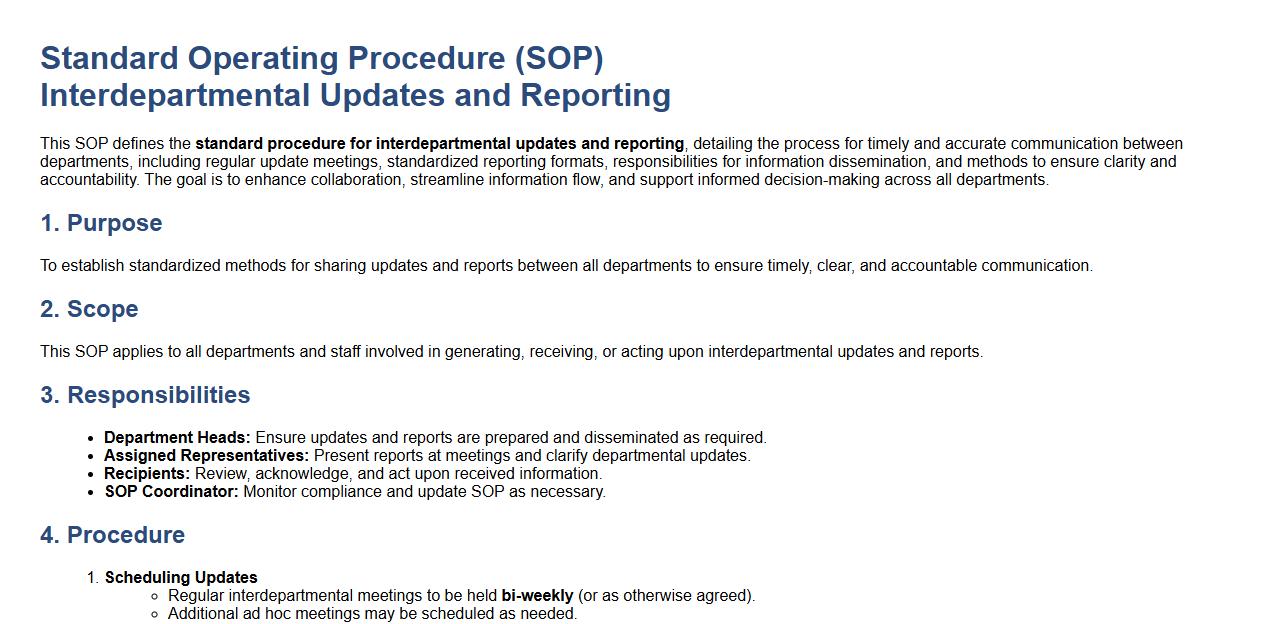
This SOP defines the standard procedure for interdepartmental updates and reporting, detailing the process for timely and accurate communication between departments, including regular update meetings, standardized reporting formats, responsibilities for information dissemination, and methods to ensure clarity and accountability. The goal is to enhance collaboration, streamline information flow, and support informed decision-making across all departments.
Communication tools and platform usage policy.
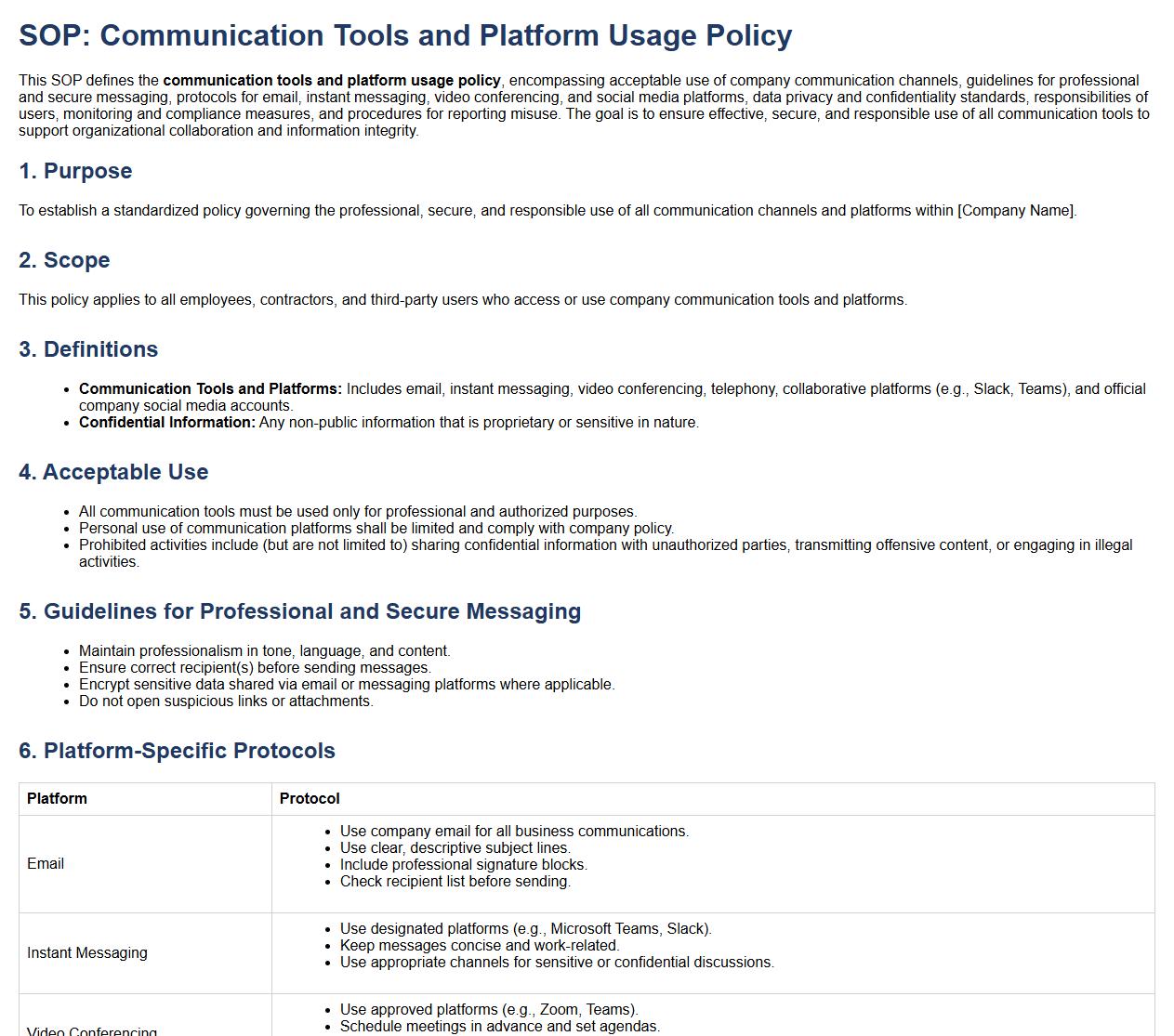
This SOP defines the communication tools and platform usage policy, encompassing acceptable use of company communication channels, guidelines for professional and secure messaging, protocols for email, instant messaging, video conferencing, and social media platforms, data privacy and confidentiality standards, responsibilities of users, monitoring and compliance measures, and procedures for reporting misuse. The goal is to ensure effective, secure, and responsible use of all communication tools to support organizational collaboration and information integrity.
Documentation and archiving of internal correspondence.
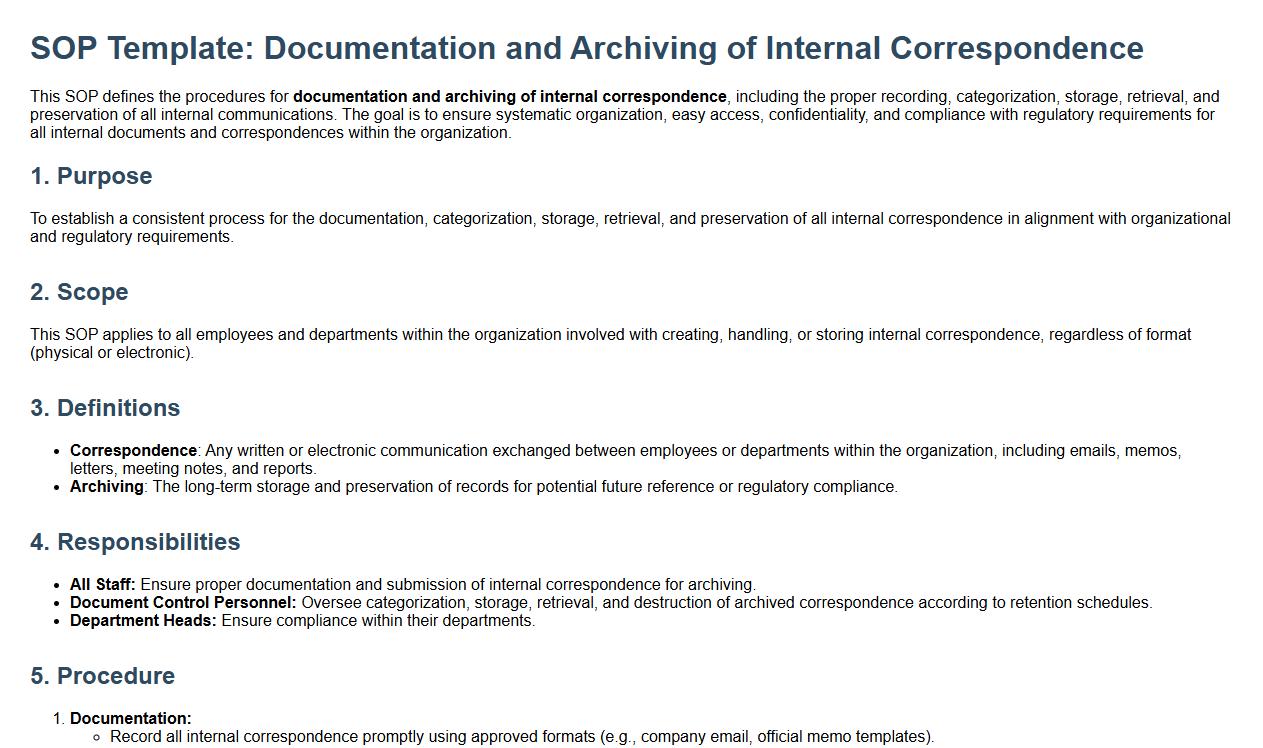
This SOP defines the procedures for documentation and archiving of internal correspondence, including the proper recording, categorization, storage, retrieval, and preservation of all internal communications. The goal is to ensure systematic organization, easy access, confidentiality, and compliance with regulatory requirements for all internal documents and correspondences within the organization.
Feedback and grievance reporting mechanisms.
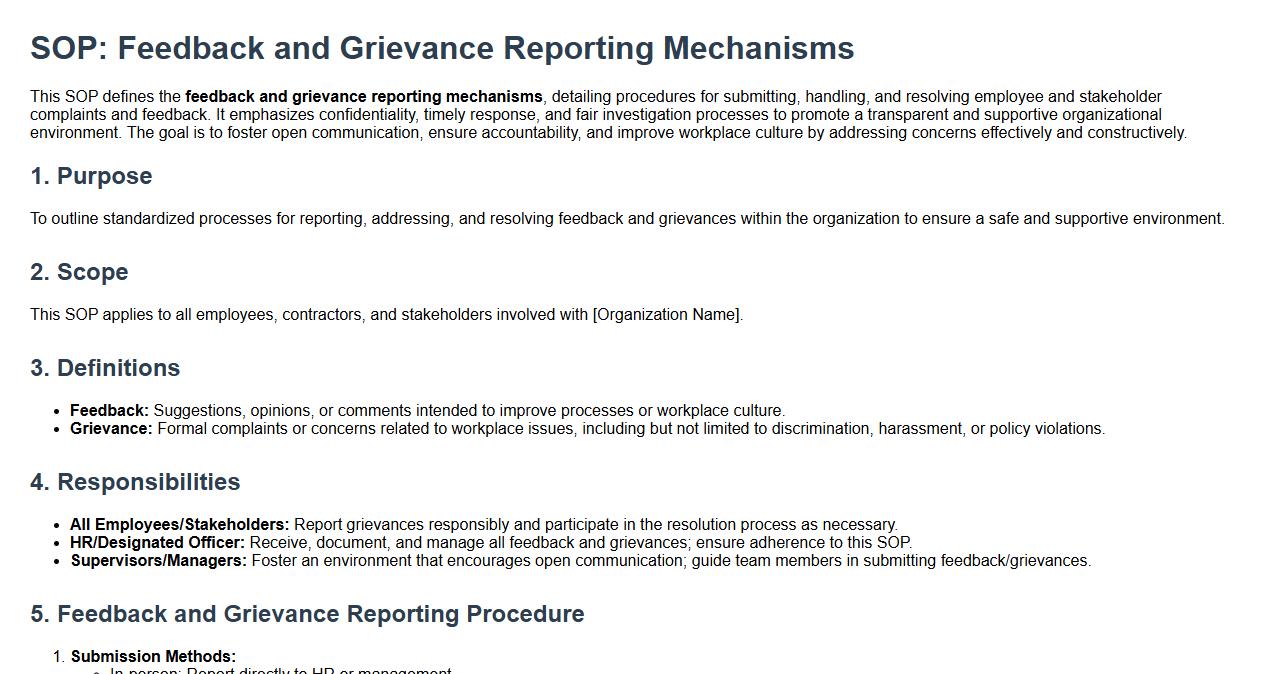
This SOP defines the feedback and grievance reporting mechanisms, detailing procedures for submitting, handling, and resolving employee and stakeholder complaints and feedback. It emphasizes confidentiality, timely response, and fair investigation processes to promote a transparent and supportive organizational environment. The goal is to foster open communication, ensure accountability, and improve workplace culture by addressing concerns effectively and constructively.
Regular review and update of communication protocols.
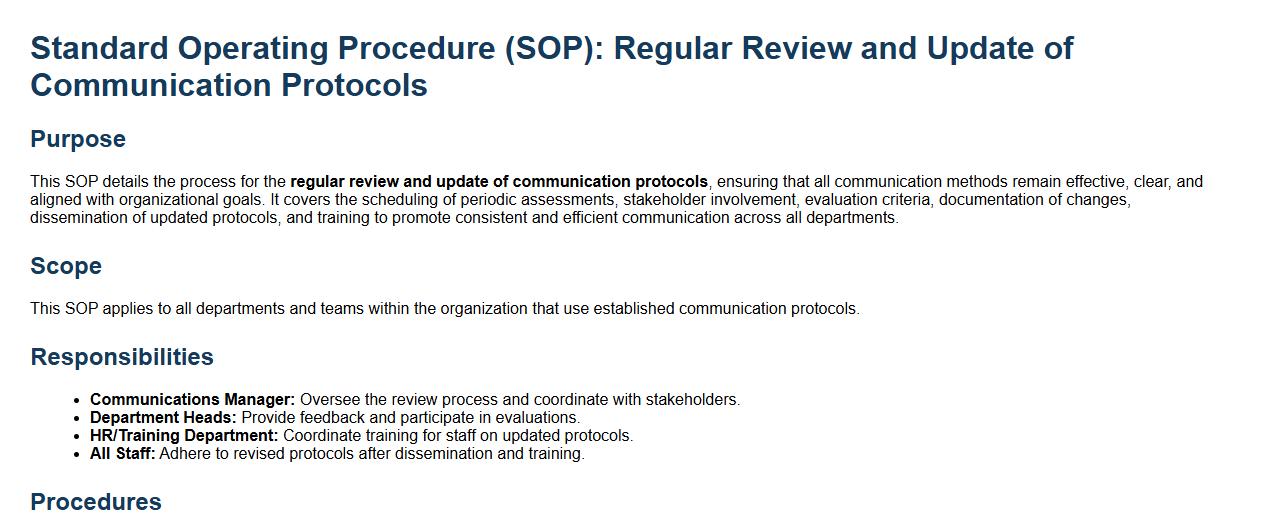
This SOP details the process for the regular review and update of communication protocols, ensuring that all communication methods remain effective, clear, and aligned with organizational goals. It covers the scheduling of periodic assessments, stakeholder involvement, evaluation criteria, documentation of changes, dissemination of updated protocols, and training to promote consistent and efficient communication across all departments.
Designated Communication Channels for Internal Correspondence
The SOP specifies email, internal messaging platforms, and official memos as the primary communication channels for internal correspondence. These channels ensure messages are delivered securely and efficiently within the organization. Adhering to these designated methods promotes consistent and streamlined communication.
Authorized Team Members for Initiating Official Internal Communications
Only department heads, project managers, and designated communication officers are authorized to initiate official internal communications. This restriction helps maintain message accuracy and accountability. Unauthorized personnel are advised to relay their communications through approved channels.
Required Response Time for Internal Communications
The SOP mandates a standard response time of 24 hours for all internal communications. This timeframe ensures timely information exchange and supports efficient workflow. Urgent messages must be addressed more promptly as outlined in the escalation procedures.
Handling and Communicating Confidential Information Internally
Confidential information must be communicated via encrypted emails or secure internal platforms only. The SOP requires all team members to follow strict confidentiality protocols to protect sensitive data. Unauthorized sharing or mishandling of confidential information is strictly prohibited.
Procedures for Escalating Urgent Internal Communication Issues
Urgent internal communication issues are escalated by notifying the immediate supervisor, followed by senior management if unresolved. The SOP outlines a clear chain of command and timely escalation steps to address critical matters. This ensures rapid resolution and minimizes operational disruption.