

A SOP Template for Meeting Scheduling provides a standardized procedure to efficiently organize and coordinate meetings. It outlines clear steps for setting agendas, selecting suitable times, and notifying participants to ensure seamless communication. This template enhances productivity by minimizing scheduling conflicts and streamlining the entire meeting preparation process.
Meeting request initiation and purpose clarification.
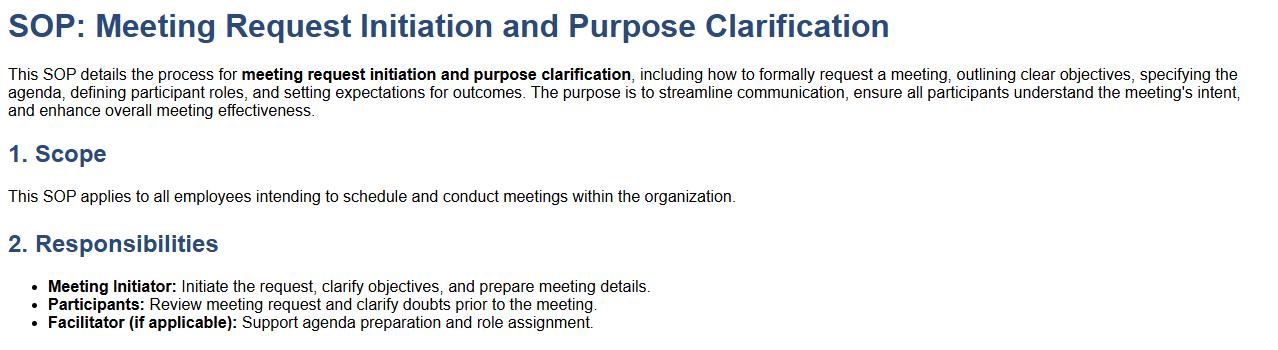
This SOP details the process for meeting request initiation and purpose clarification, including how to formally request a meeting, outlining clear objectives, specifying the agenda, defining participant roles, and setting expectations for outcomes. The purpose is to streamline communication, ensure all participants understand the meeting's intent, and enhance overall meeting effectiveness.
Participant identification and invitation list creation.
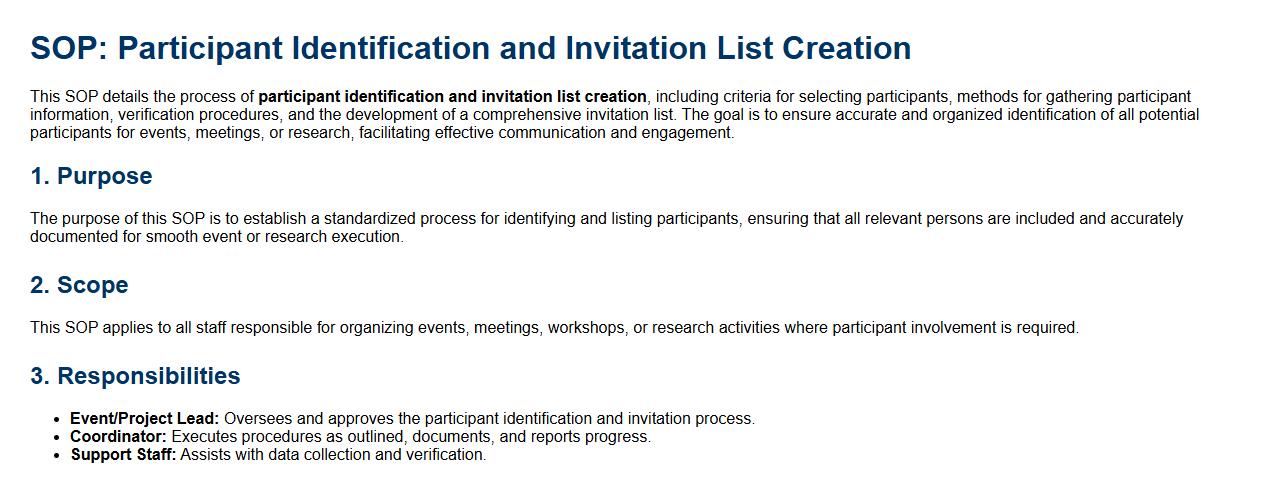
This SOP details the process of participant identification and invitation list creation, including criteria for selecting participants, methods for gathering participant information, verification procedures, and the development of a comprehensive invitation list. The goal is to ensure accurate and organized identification of all potential participants for events, meetings, or research, facilitating effective communication and engagement.
Proposed date, time, and location selection.
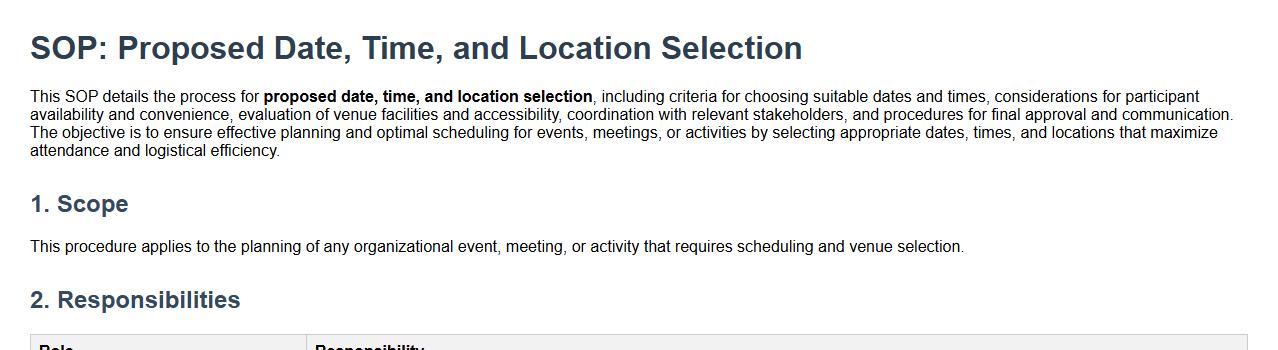
This SOP details the process for proposed date, time, and location selection, including criteria for choosing suitable dates and times, considerations for participant availability and convenience, evaluation of venue facilities and accessibility, coordination with relevant stakeholders, and procedures for final approval and communication. The objective is to ensure effective planning and optimal scheduling for events, meetings, or activities by selecting appropriate dates, times, and locations that maximize attendance and logistical efficiency.
Circulation of meeting agenda and relevant documents.

This SOP details the process for circulation of meeting agenda and relevant documents, ensuring timely distribution of the agenda and all necessary materials to participants prior to meetings. It covers the preparation, approval, and dissemination of agendas, the inclusion of supporting documents, communication channels, and deadlines to promote efficient and productive meetings.
Confirmation of participant availability and attendance.

This SOP details the process for confirmation of participant availability and attendance, including initial communication protocols, scheduling coordination, reminders, and attendance verification methods. The goal is to ensure accurate tracking of participant engagement and optimize event or meeting planning by confirming availability and recording attendance systematically.
Booking of meeting room or setup of virtual meeting platform.

This SOP details the booking of meeting rooms and setup of virtual meeting platforms, including the process for reserving physical meeting spaces, selecting appropriate venues based on meeting requirements, coordinating schedules to avoid conflicts, and ensuring necessary equipment and amenities are available. It also covers the setup and configuration of virtual meeting platforms, such as video conferencing tools, managing invitations and access links, troubleshooting common technical issues, and adhering to organizational communication protocols to facilitate smooth and efficient meetings.
Issuance of formal meeting invitation and calendar event.

This SOP details the process for the issuance of formal meeting invitations and calendar events, ensuring clear communication and proper scheduling. It covers drafting professional invitations, selecting appropriate recipients, specifying meeting objectives, date, time, and venue, and sending calendar invites through digital platforms. The procedure aims to streamline meeting coordination, enhance attendance, and maintain organized records of all meeting schedules.
Pre-meeting follow-up and reminders to participants.

This SOP details the process for pre-meeting follow-up and reminders to participants, including preparing and distributing reminder messages, confirming attendance, providing agenda and relevant materials, addressing participant questions, and ensuring timely communication to enhance meeting preparedness and engagement. The goal is to maximize participant readiness and meeting efficiency through systematic reminders and follow-up actions.
Designation of meeting roles: facilitator, note-taker, time-keeper.

This SOP defines the designation of meeting roles including the facilitator, note-taker, and time-keeper. It outlines the responsibilities of each role to ensure meetings are productive and efficient. The facilitator guides discussions and maintains focus, the note-taker records key points and action items, and the time-keeper monitors the agenda to manage time effectively. Clear role assignment enhances collaboration, accountability, and meeting outcomes.
Post-meeting distribution of minutes and action items.

This SOP details the post-meeting distribution of minutes and action items, outlining the process for accurately documenting meeting discussions, identifying key decisions and action points, compiling comprehensive minutes, and promptly distributing them to all relevant participants. The purpose is to ensure clear communication, accountability, and timely follow-up on assigned tasks to enhance meeting effectiveness and organizational productivity.
What is the primary purpose of the SOP for meeting scheduling?
The primary purpose of the SOP for meeting scheduling is to establish a clear and consistent process for organizing meetings efficiently. It ensures all participants are informed and prepared, reducing scheduling conflicts. This standardization improves overall communication and productivity within the organization.
Who is responsible for initiating and confirming meeting requests?
The meeting organizer is responsible for initiating meeting requests by proposing suitable times and agendas. Once participants confirm their availability, the organizer finalizes and sends out the confirmation. This accountability ensures meetings are scheduled promptly and with consensus.
What are the required steps for documenting meeting agendas and participants?
The meeting agenda must be clearly outlined, with all key topics listed to guide the discussion effectively. A participant list should include names and roles to track attendance and responsibilities. Both agenda and participant details are typically recorded in a shared document for transparency and follow-up.
How should changes or cancellations to scheduled meetings be communicated?
Any changes or cancellations should be communicated as soon as possible to all invited participants. This is often done via email or through the calendar invite system to ensure timely notifications. Clear communication minimizes confusion and allows attendees to adjust their schedules accordingly.
What are the standard timelines for sending meeting invitations and reminders?
Meeting invitations are generally sent at least 3 to 5 business days before the scheduled date to allow sufficient preparation time. Reminders are typically issued 24 hours in advance to help participants remember and confirm attendance. Adhering to these timelines enhances punctuality and engagement for the meeting.