
A SOP Template for Staff Leave and Attendance Management streamlines the process of tracking employee absences and work hours to ensure accurate record-keeping and compliance with company policies. This template outlines clear procedures for submitting leave requests, approving time off, and monitoring attendance to maintain operational efficiency. Implementing this SOP reduces errors and promotes transparency within the workforce.
Leave application submission process.
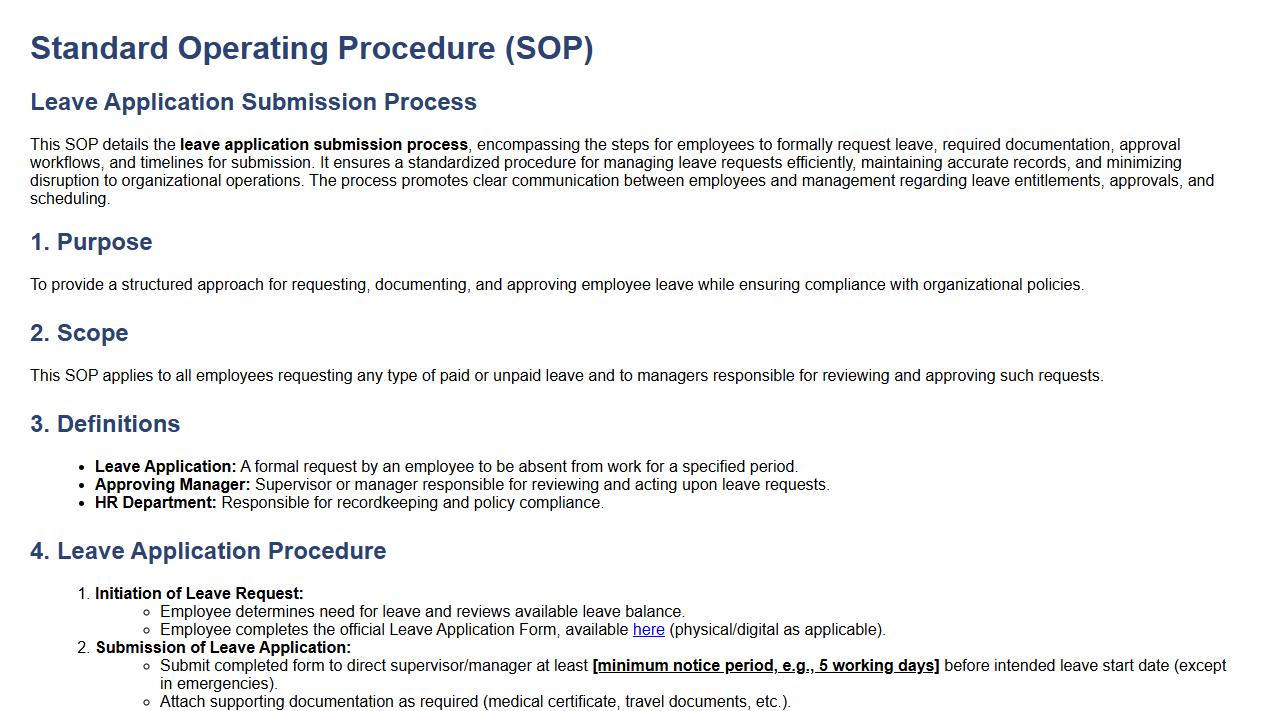
This SOP details the leave application submission process, encompassing the steps for employees to formally request leave, required documentation, approval workflows, and timelines for submission. It ensures a standardized procedure for managing leave requests efficiently, maintaining accurate records, and minimizing disruption to organizational operations. The process promotes clear communication between employees and management regarding leave entitlements, approvals, and scheduling.
Attendance recording and monitoring guidelines.
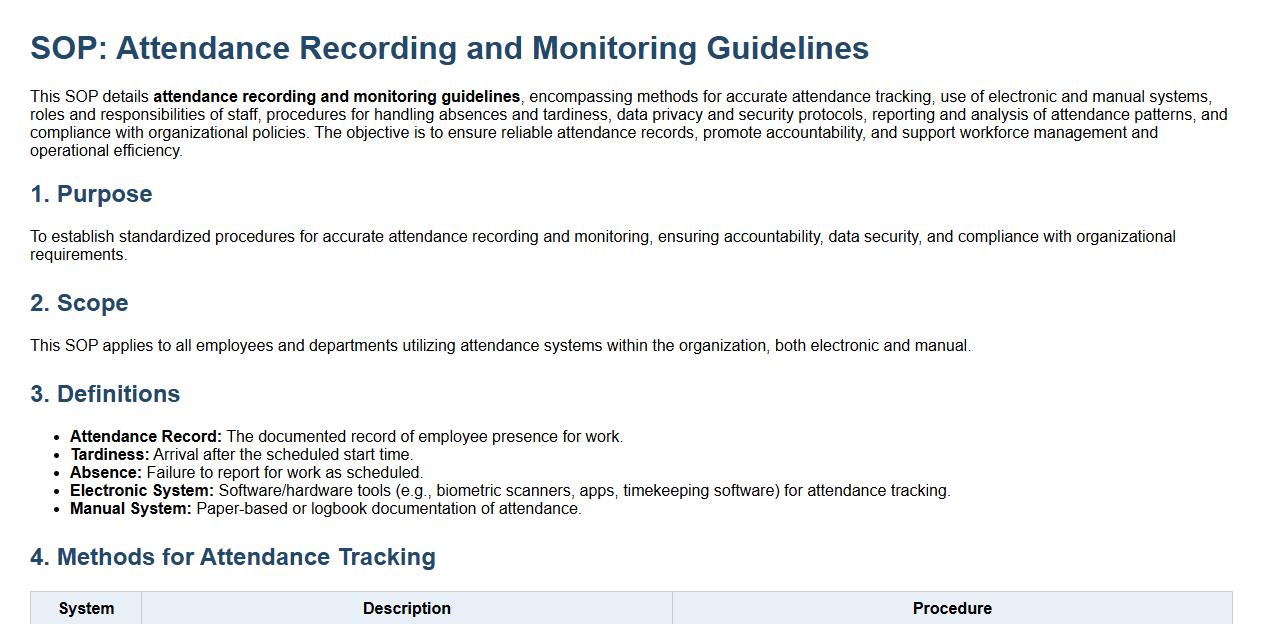
This SOP details attendance recording and monitoring guidelines, encompassing methods for accurate attendance tracking, use of electronic and manual systems, roles and responsibilities of staff, procedures for handling absences and tardiness, data privacy and security protocols, reporting and analysis of attendance patterns, and compliance with organizational policies. The objective is to ensure reliable attendance records, promote accountability, and support workforce management and operational efficiency.
Leave approval workflow and authorization hierarchy.
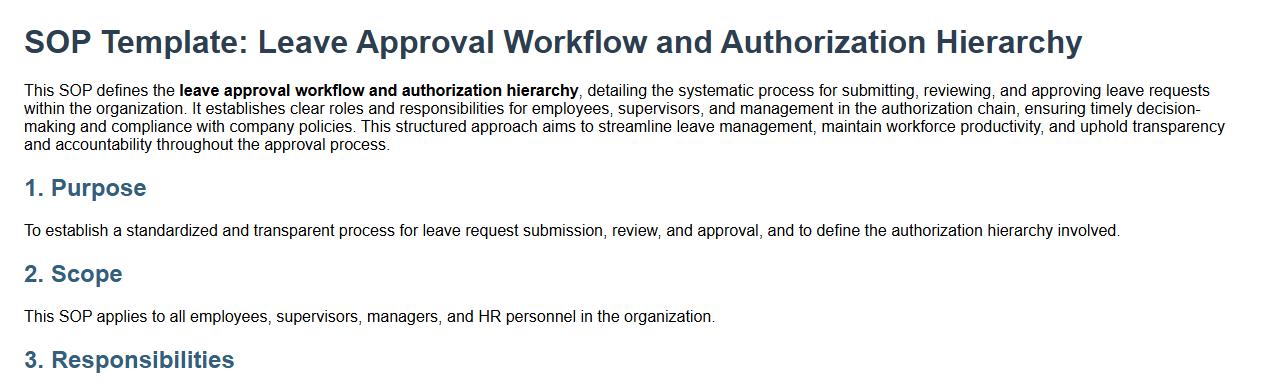
This SOP defines the leave approval workflow and authorization hierarchy, detailing the systematic process for submitting, reviewing, and approving leave requests within the organization. It establishes clear roles and responsibilities for employees, supervisors, and management in the authorization chain, ensuring timely decision-making and compliance with company policies. This structured approach aims to streamline leave management, maintain workforce productivity, and uphold transparency and accountability throughout the approval process.
Sick leave and emergency leave procedures.
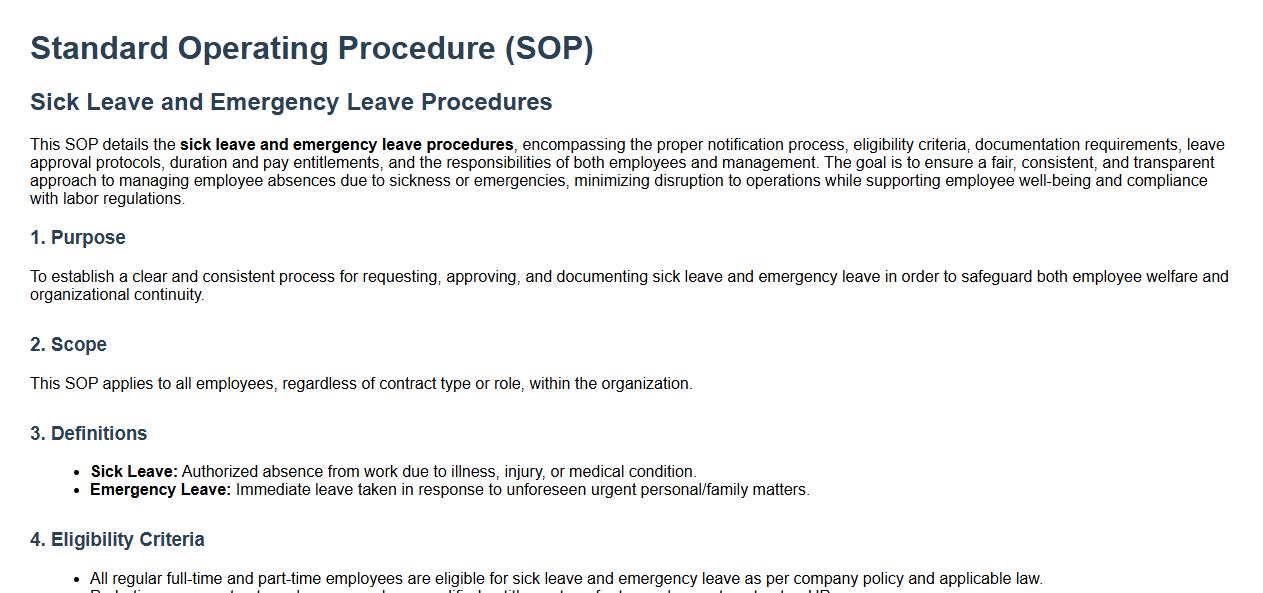
This SOP details the sick leave and emergency leave procedures, encompassing the proper notification process, eligibility criteria, documentation requirements, leave approval protocols, duration and pay entitlements, and the responsibilities of both employees and management. The goal is to ensure a fair, consistent, and transparent approach to managing employee absences due to sickness or emergencies, minimizing disruption to operations while supporting employee well-being and compliance with labor regulations.
Daily attendance reconciliation and verification.
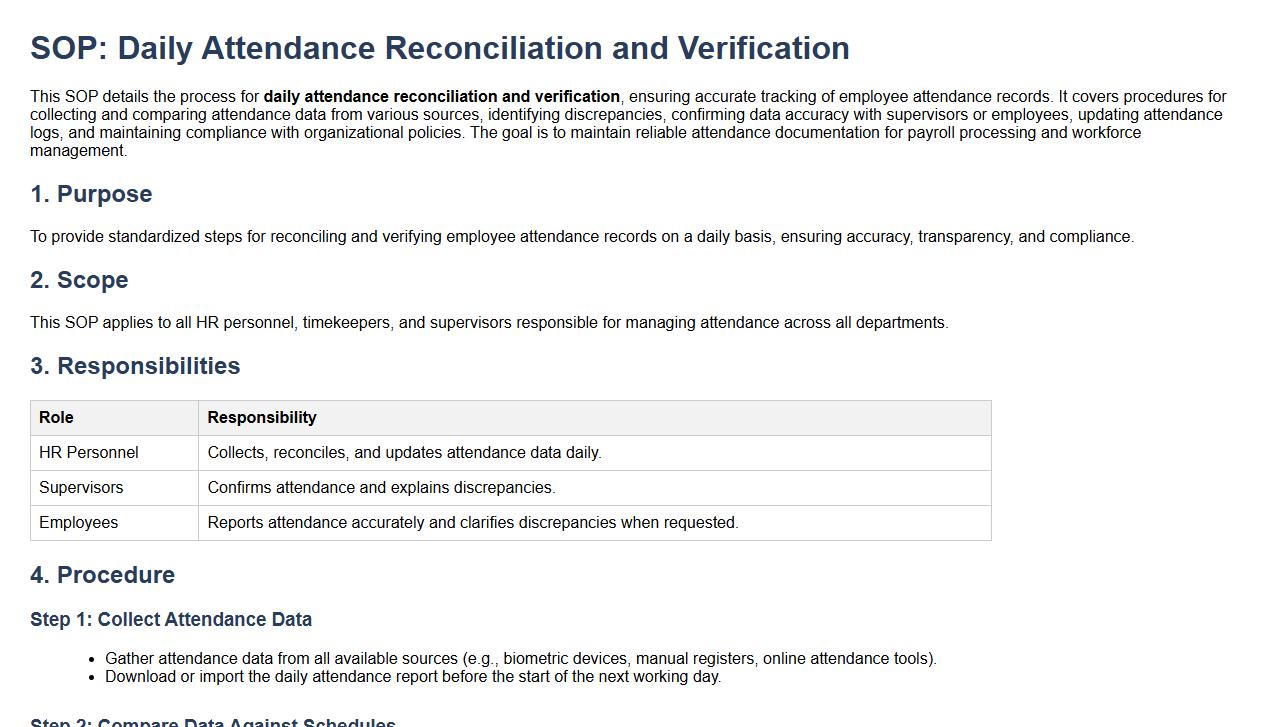
This SOP details the process for daily attendance reconciliation and verification, ensuring accurate tracking of employee attendance records. It covers procedures for collecting and comparing attendance data from various sources, identifying discrepancies, confirming data accuracy with supervisors or employees, updating attendance logs, and maintaining compliance with organizational policies. The goal is to maintain reliable attendance documentation for payroll processing and workforce management.
Return-to-work process after leave.
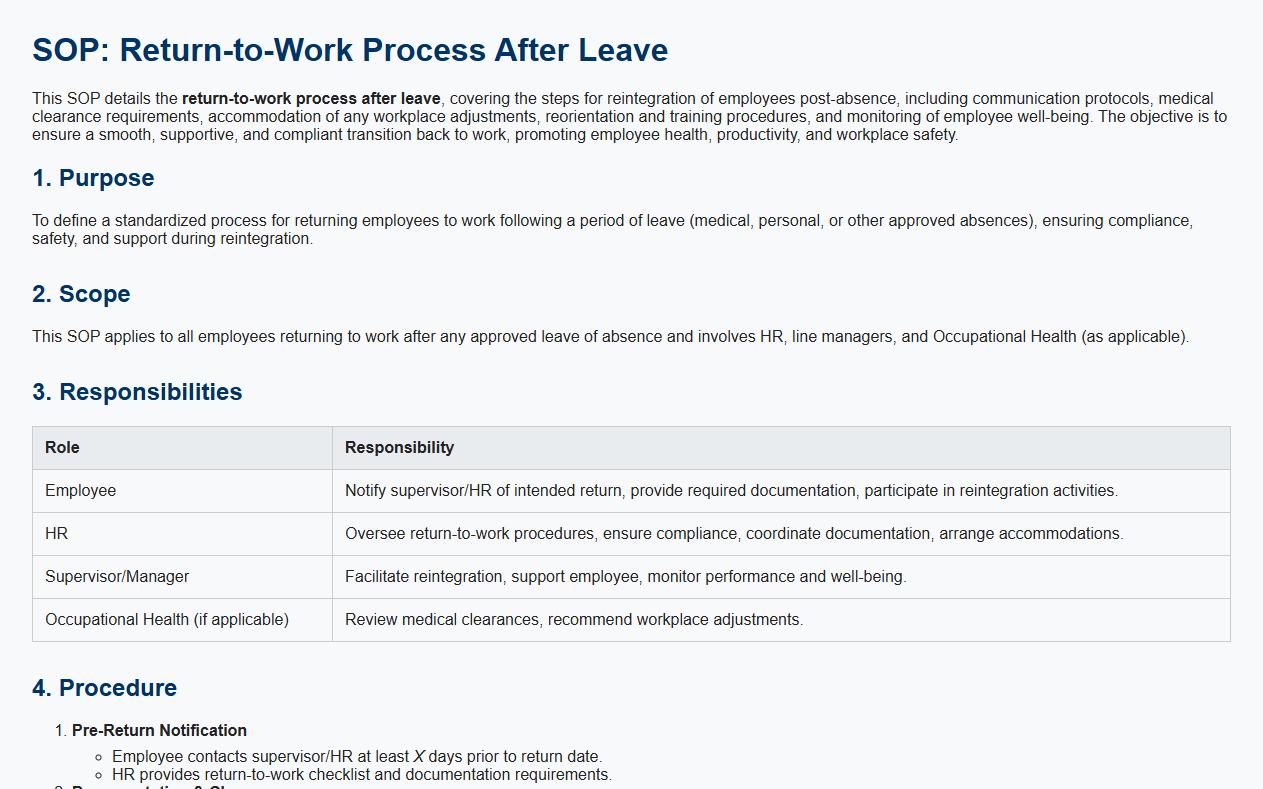
This SOP details the return-to-work process after leave, covering the steps for reintegration of employees post-absence, including communication protocols, medical clearance requirements, accommodation of any workplace adjustments, reorientation and training procedures, and monitoring of employee well-being. The objective is to ensure a smooth, supportive, and compliant transition back to work, promoting employee health, productivity, and workplace safety.
Policy for unauthorised absences and disciplinary actions.
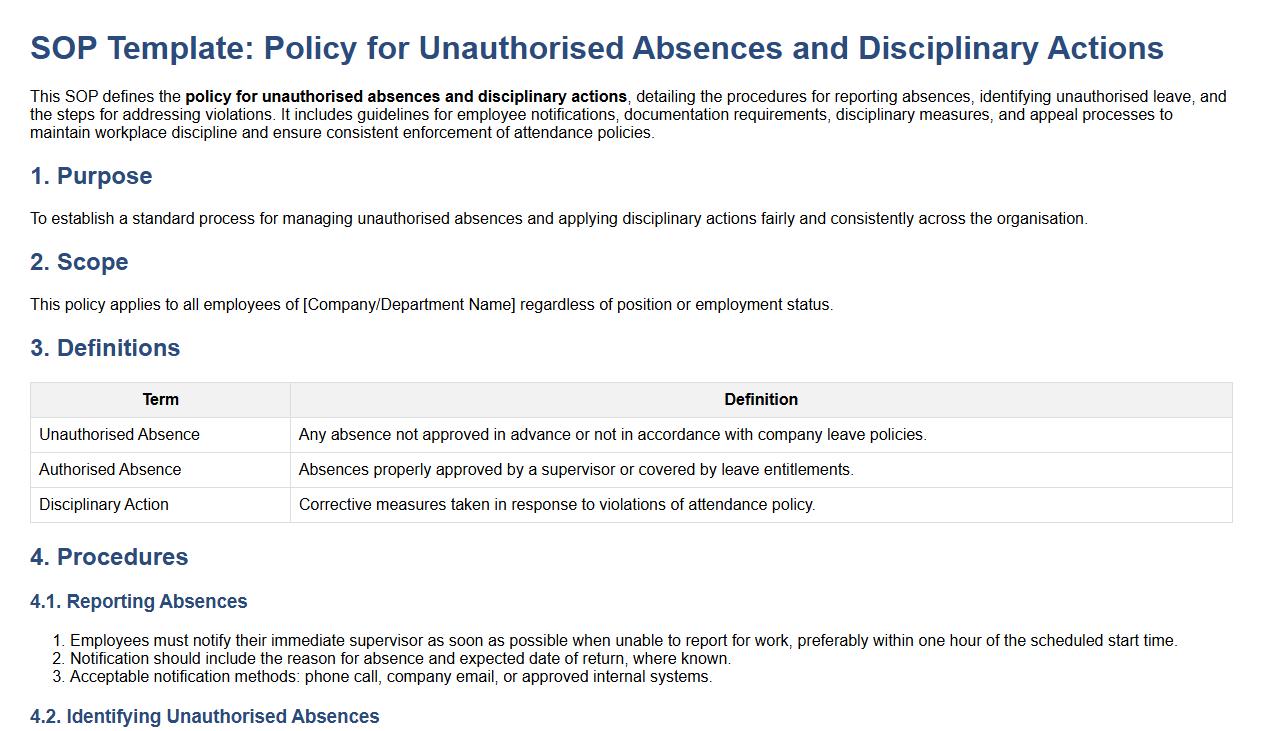
This SOP defines the policy for unauthorised absences and disciplinary actions, detailing the procedures for reporting absences, identifying unauthorised leave, and the steps for addressing violations. It includes guidelines for employee notifications, documentation requirements, disciplinary measures, and appeal processes to maintain workplace discipline and ensure consistent enforcement of attendance policies.
Overtime and compensatory time-off documentation.
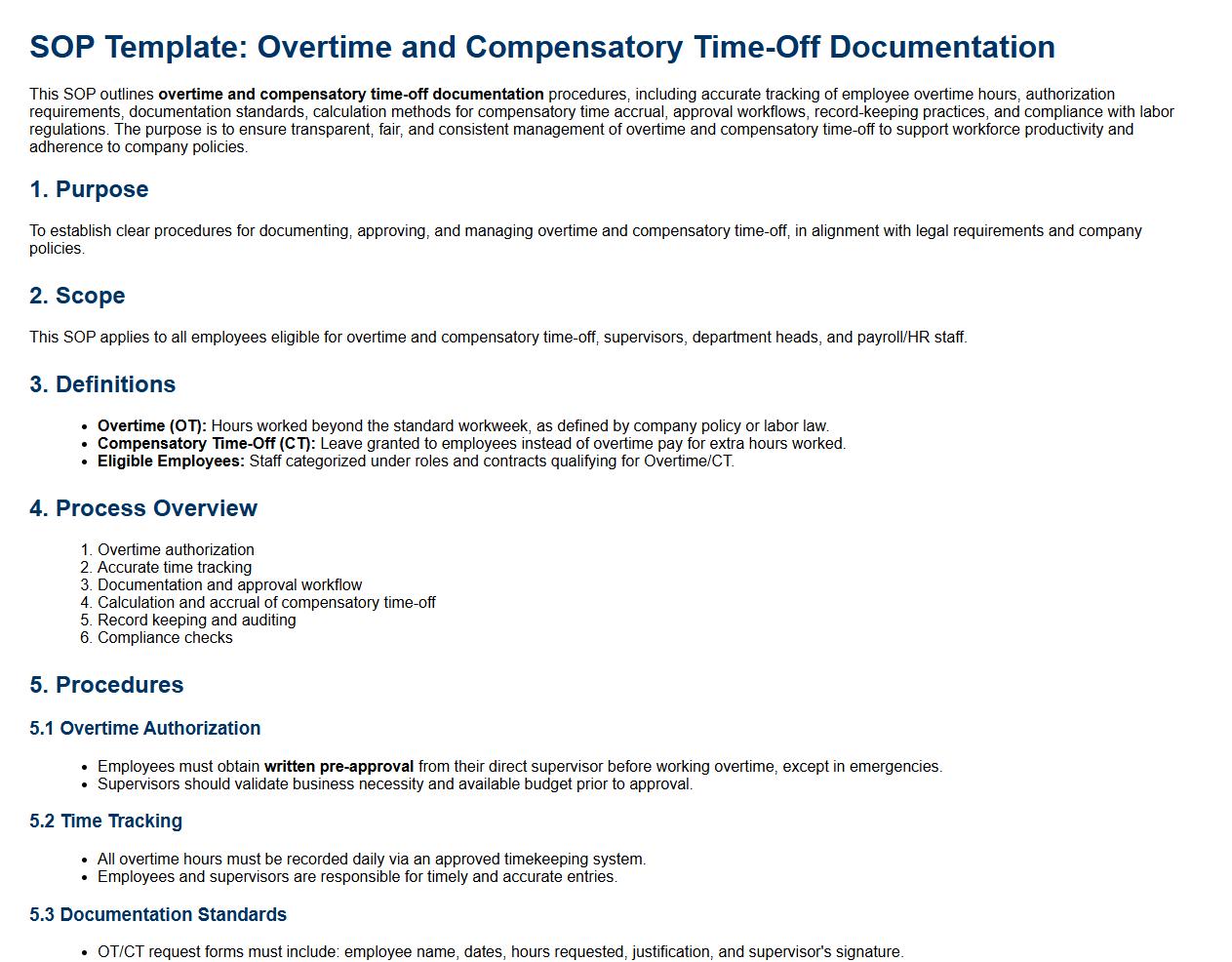
This SOP outlines overtime and compensatory time-off documentation procedures, including accurate tracking of employee overtime hours, authorization requirements, documentation standards, calculation methods for compensatory time accrual, approval workflows, record-keeping practices, and compliance with labor regulations. The purpose is to ensure transparent, fair, and consistent management of overtime and compensatory time-off to support workforce productivity and adherence to company policies.
Leave record maintenance and reporting.
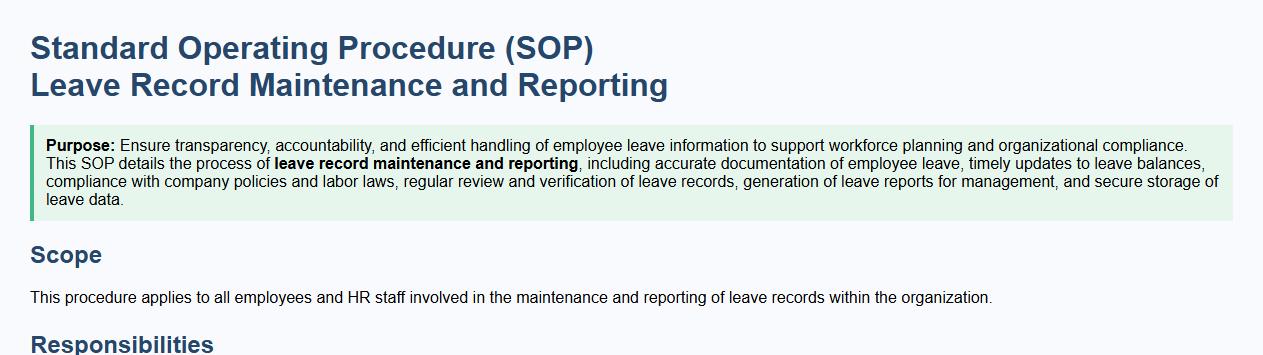
This SOP details the process of leave record maintenance and reporting, including accurate documentation of employee leave, timely updates to leave balances, compliance with company policies and labor laws, regular review and verification of leave records, generation of leave reports for management, and secure storage of leave data. The purpose is to ensure transparency, accountability, and efficient handling of employee leave information to support workforce planning and organizational compliance.
Annual leave planning and scheduling protocol.
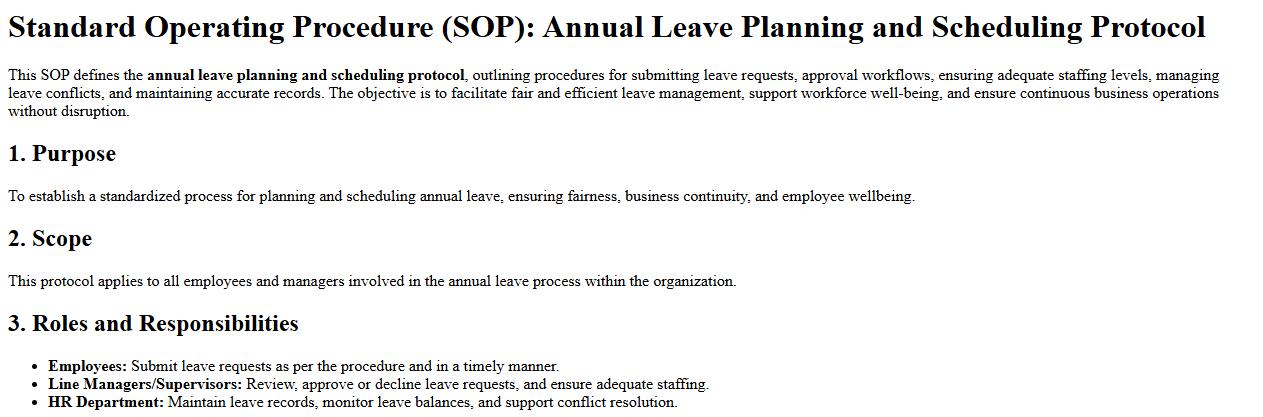
This SOP defines the annual leave planning and scheduling protocol, outlining procedures for submitting leave requests, approval workflows, ensuring adequate staffing levels, managing leave conflicts, and maintaining accurate records. The objective is to facilitate fair and efficient leave management, support workforce well-being, and ensure continuous business operations without disruption.
What procedures must staff follow to apply for leave according to the SOP?
Staff must submit a formal leave application through the designated system or form. The application should include accurate dates and a valid reason for the leave requested. Following submission, employees are required to await approval before finalizing any leave plans.
How does the SOP define and handle unauthorized absenteeism?
Unauthorized absenteeism is defined as absence without prior approval or valid justification. The SOP outlines immediate reporting requirements and possible disciplinary action for such cases. Continuous monitoring and documentation are essential to address and minimize unauthorized absences.
Which documentation is required by the SOP for different types of leave requests?
The SOP mandates specific supporting documents based on leave type, such as medical certificates for sick leave or official notices for personal leave. All documentation must be authentic, timely submitted, and attached to the leave request. Proper documentation ensures transparency and facilitates smooth approval processes.
What is the approval workflow for leave requests as outlined in the SOP?
Leave requests are reviewed by the immediate supervisor who verifies eligibility and operational feasibility. Upon supervisor approval, requests are forwarded to the HR department for final validation and record entry. This hierarchical approval workflow ensures accountability and effective leave management.
How does the SOP specify the process for recording and tracking staff attendance?
The SOP requires daily attendance recording through electronic or manual registers maintained by each department. Staff attendance data are regularly reviewed to detect patterns and ensure compliance with work schedules. The system provides a transparent tracking mechanism for efficient workforce management.