
A SOP Template for Office Administration provides a standardized framework to document essential administrative procedures, ensuring consistency and efficiency in daily operations. It outlines step-by-step guidelines for tasks such as scheduling, record-keeping, and communication management. Utilizing this template helps streamline workflows and improves overall office productivity.
Document control and version management.
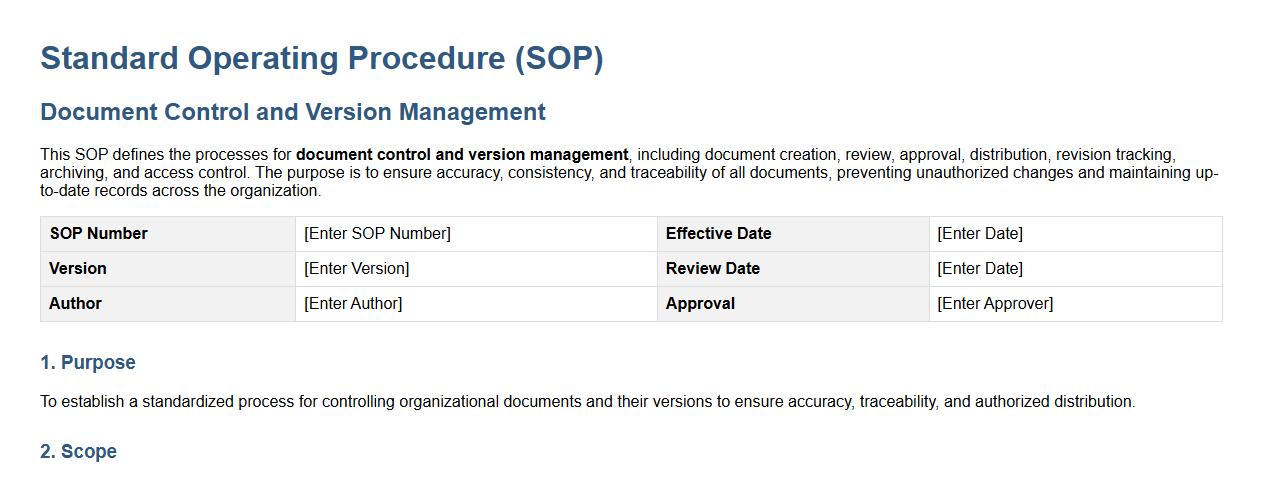
This SOP defines the processes for document control and version management, including document creation, review, approval, distribution, revision tracking, archiving, and access control. The purpose is to ensure accuracy, consistency, and traceability of all documents, preventing unauthorized changes and maintaining up-to-date records across the organization.
Reception and visitor management procedures.
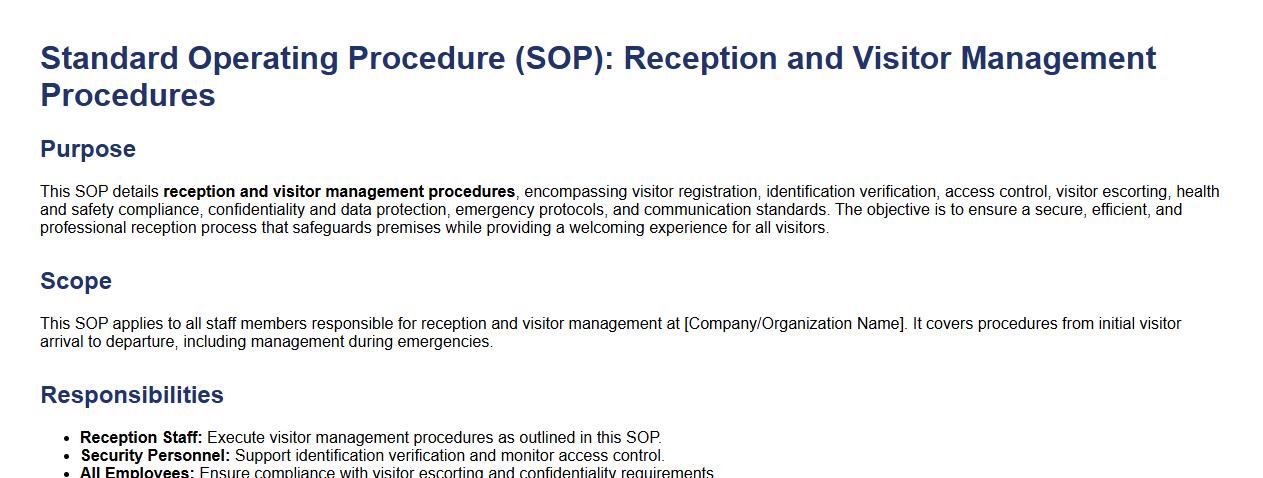
This SOP details reception and visitor management procedures, encompassing visitor registration, identification verification, access control, visitor escorting, health and safety compliance, confidentiality and data protection, emergency protocols, and communication standards. The objective is to ensure a secure, efficient, and professional reception process that safeguards premises while providing a welcoming experience for all visitors.
Correspondence handling (mail, email, courier).
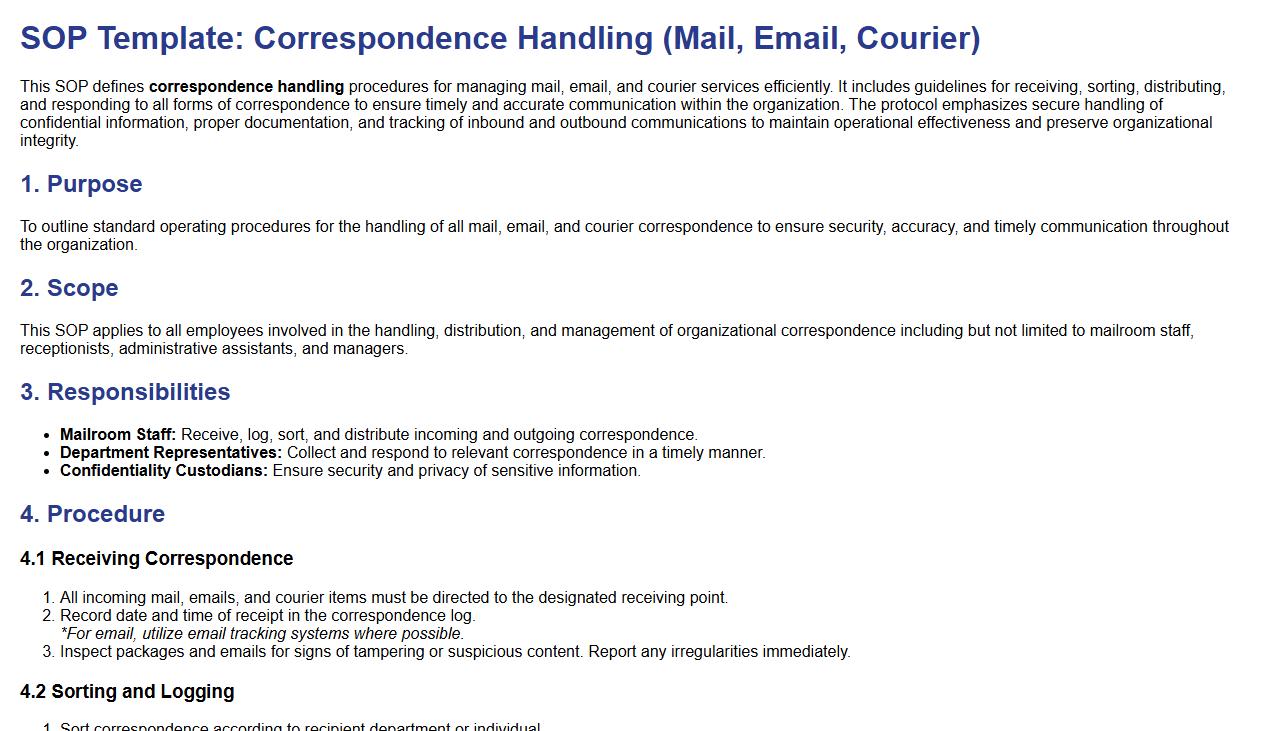
This SOP defines correspondence handling procedures for managing mail, email, and courier services efficiently. It includes guidelines for receiving, sorting, distributing, and responding to all forms of correspondence to ensure timely and accurate communication within the organization. The protocol emphasizes secure handling of confidential information, proper documentation, and tracking of inbound and outbound communications to maintain operational effectiveness and preserve organizational integrity.
Scheduling and calendar management.
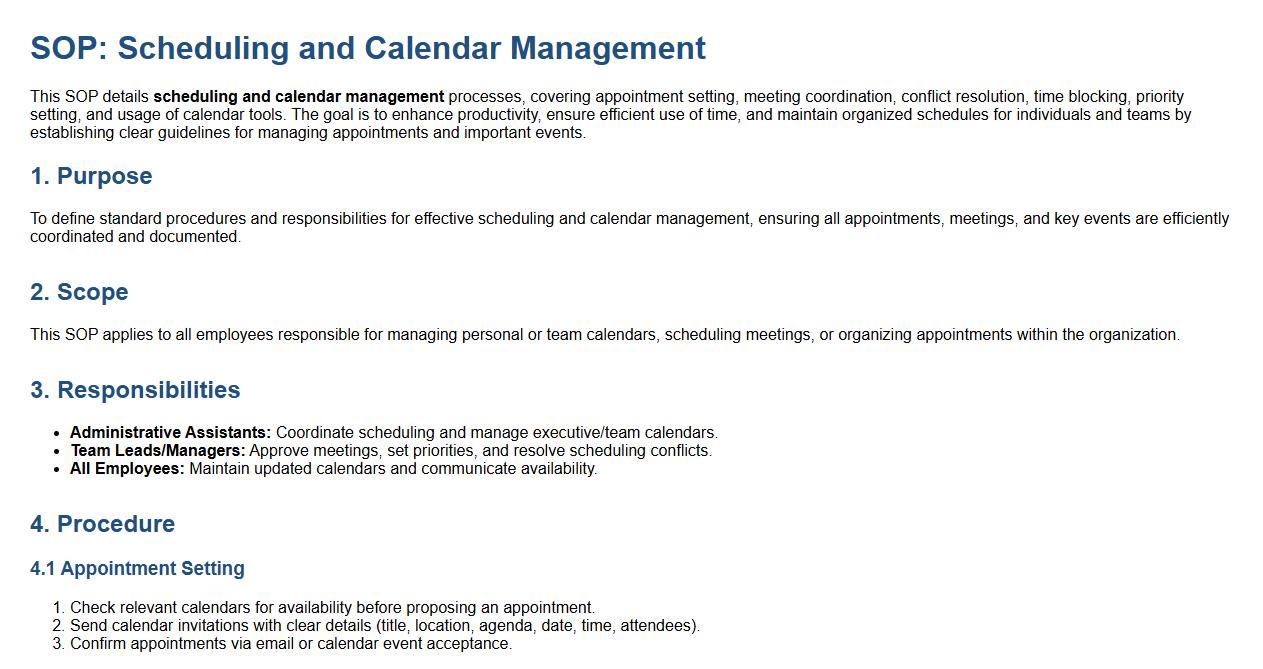
This SOP details scheduling and calendar management processes, covering appointment setting, meeting coordination, conflict resolution, time blocking, priority setting, and usage of calendar tools. The goal is to enhance productivity, ensure efficient use of time, and maintain organized schedules for individuals and teams by establishing clear guidelines for managing appointments and important events.
Office supply procurement and inventory control.
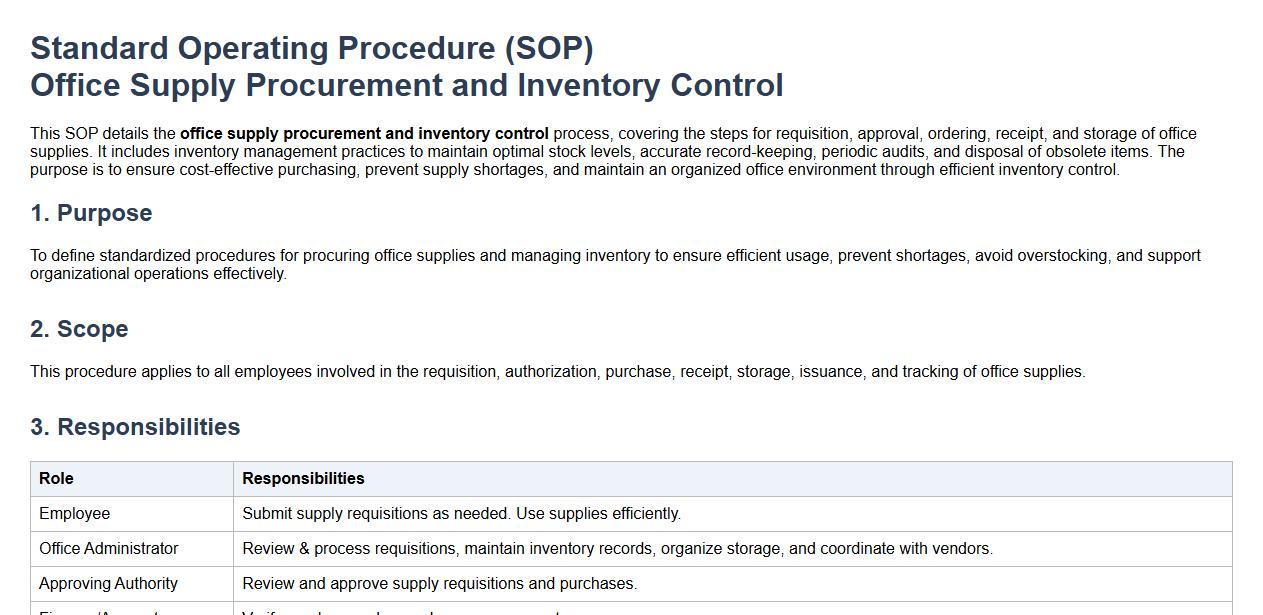
This SOP details the office supply procurement and inventory control process, covering the steps for requisition, approval, ordering, receipt, and storage of office supplies. It includes inventory management practices to maintain optimal stock levels, accurate record-keeping, periodic audits, and disposal of obsolete items. The purpose is to ensure cost-effective purchasing, prevent supply shortages, and maintain an organized office environment through efficient inventory control.
Document filing and records retention.
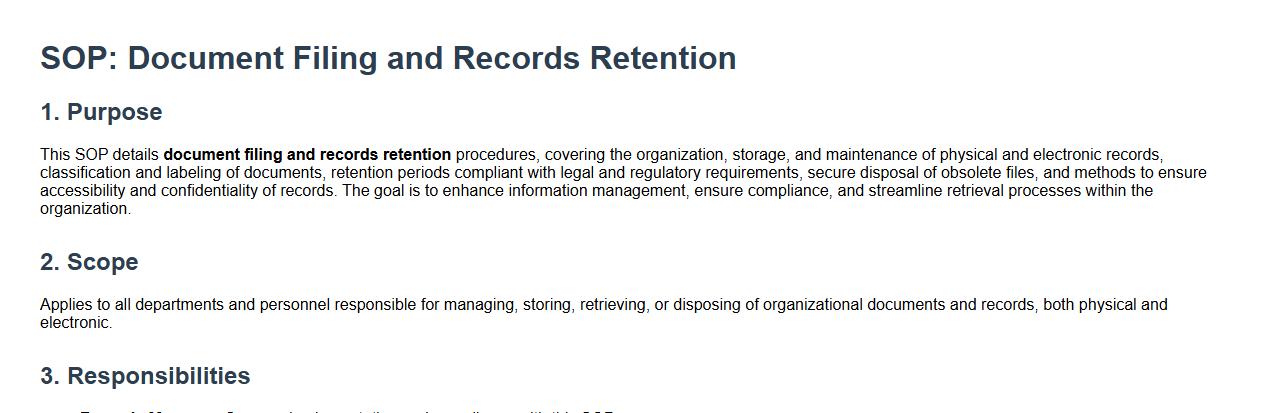
This SOP details document filing and records retention procedures, covering the organization, storage, and maintenance of physical and electronic records, classification and labeling of documents, retention periods compliant with legal and regulatory requirements, secure disposal of obsolete files, and methods to ensure accessibility and confidentiality of records. The goal is to enhance information management, ensure compliance, and streamline retrieval processes within the organization.
Meeting coordination and minute-taking processes.
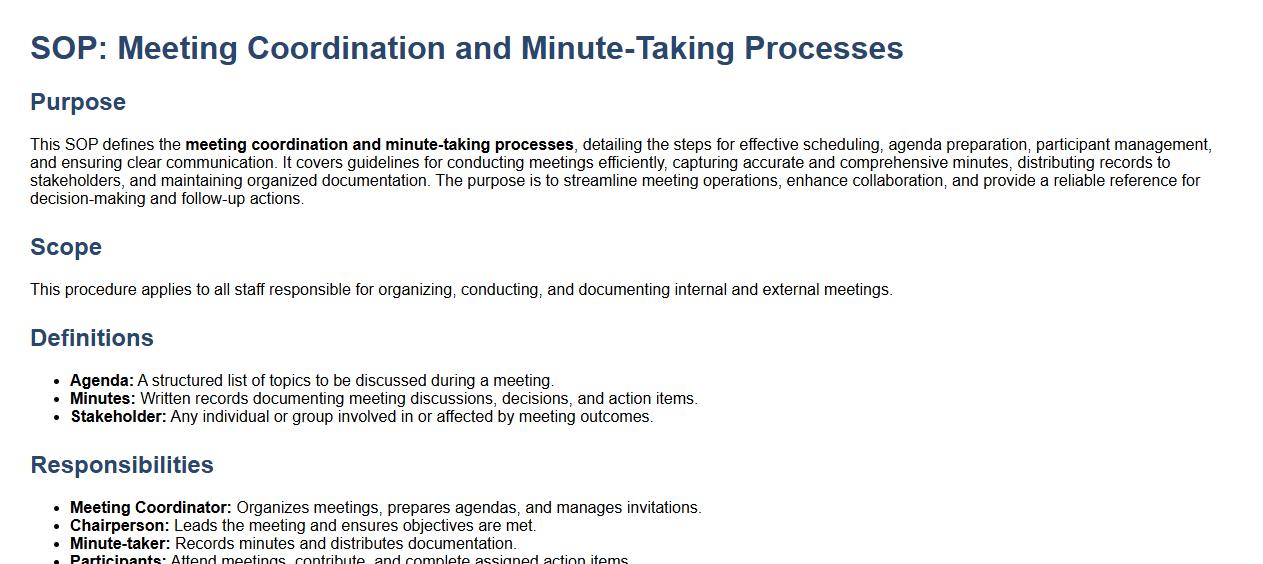
This SOP defines the meeting coordination and minute-taking processes, detailing the steps for effective scheduling, agenda preparation, participant management, and ensuring clear communication. It covers guidelines for conducting meetings efficiently, capturing accurate and comprehensive minutes, distributing records to stakeholders, and maintaining organized documentation. The purpose is to streamline meeting operations, enhance collaboration, and provide a reliable reference for decision-making and follow-up actions.
Data privacy and confidentiality protocols.
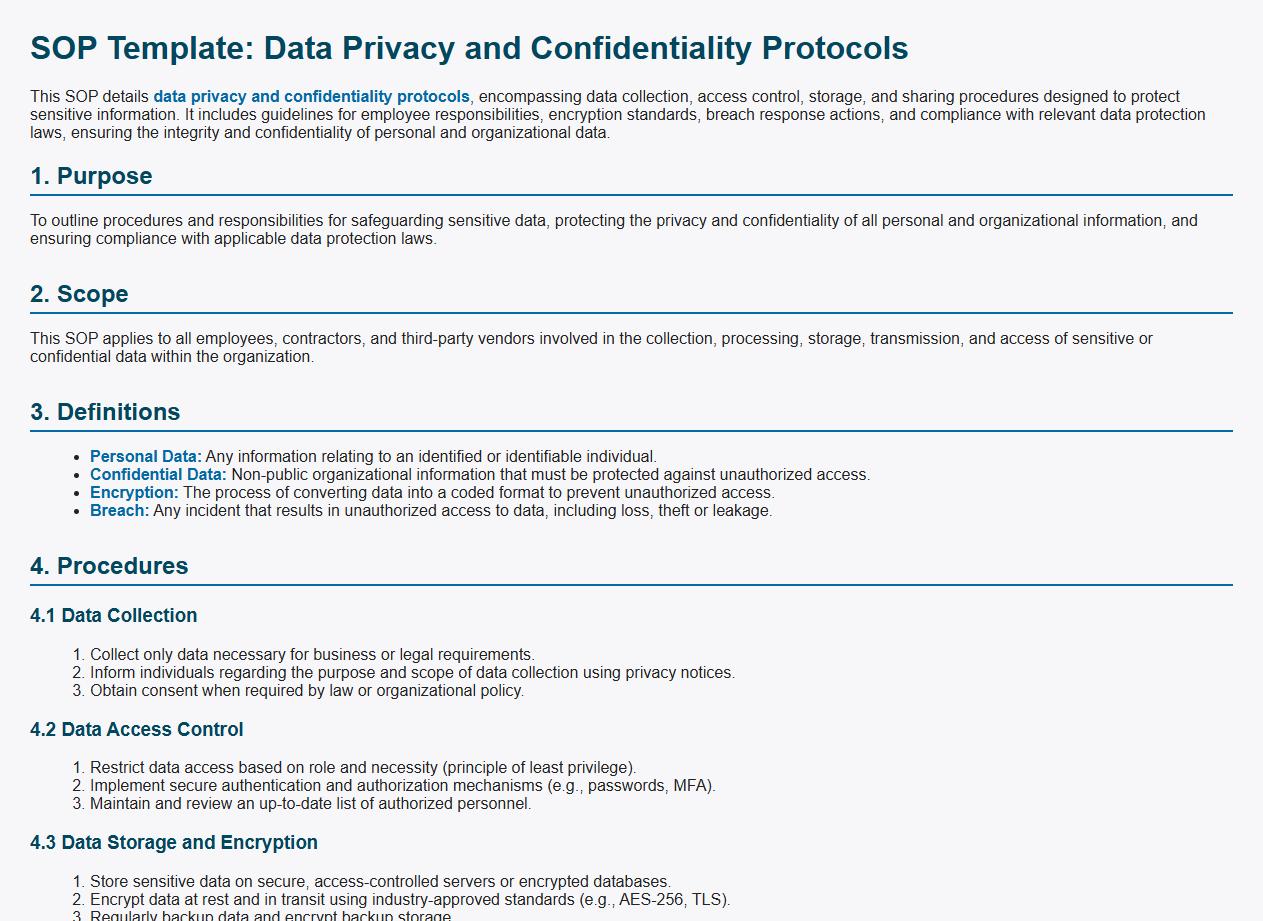
This SOP details data privacy and confidentiality protocols, encompassing data collection, access control, storage, and sharing procedures designed to protect sensitive information. It includes guidelines for employee responsibilities, encryption standards, breach response actions, and compliance with relevant data protection laws, ensuring the integrity and confidentiality of personal and organizational data.
Staff onboarding and orientation tasks.
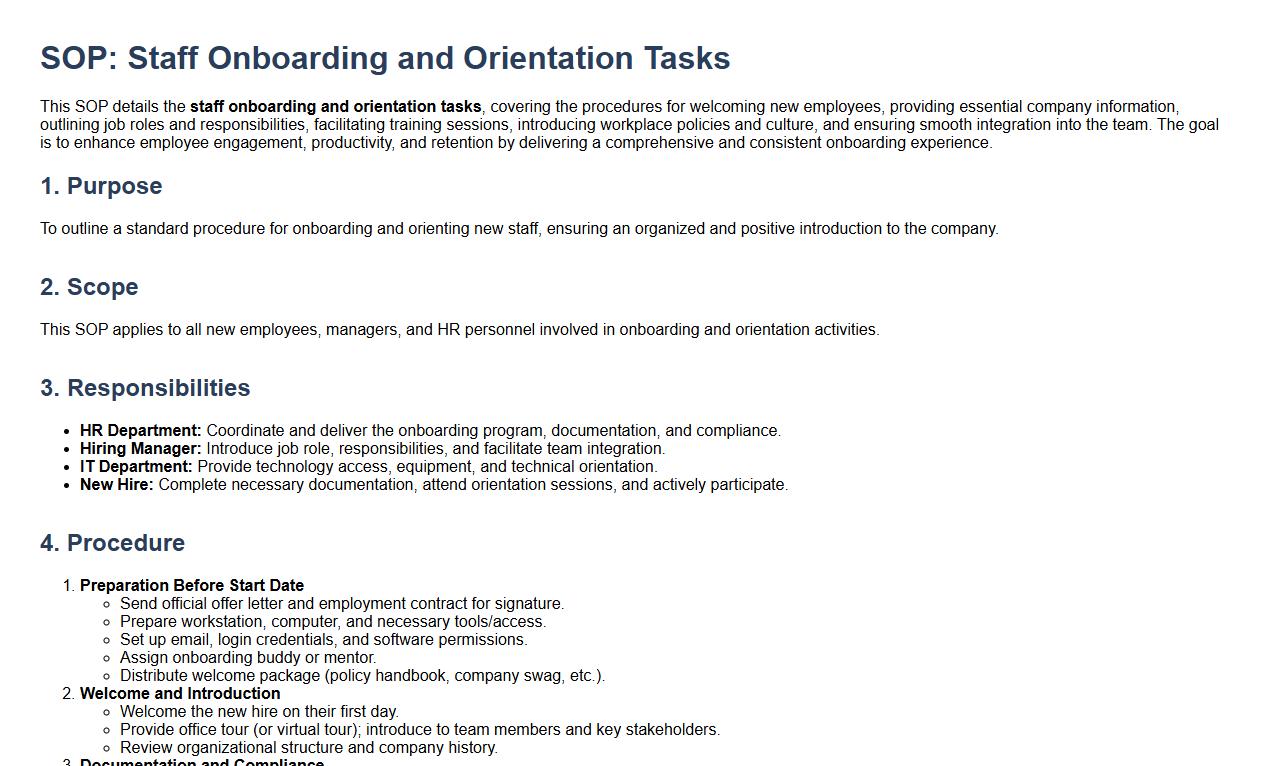
This SOP details the staff onboarding and orientation tasks, covering the procedures for welcoming new employees, providing essential company information, outlining job roles and responsibilities, facilitating training sessions, introducing workplace policies and culture, and ensuring smooth integration into the team. The goal is to enhance employee engagement, productivity, and retention by delivering a comprehensive and consistent onboarding experience.
Workplace health, safety, and emergency measures.
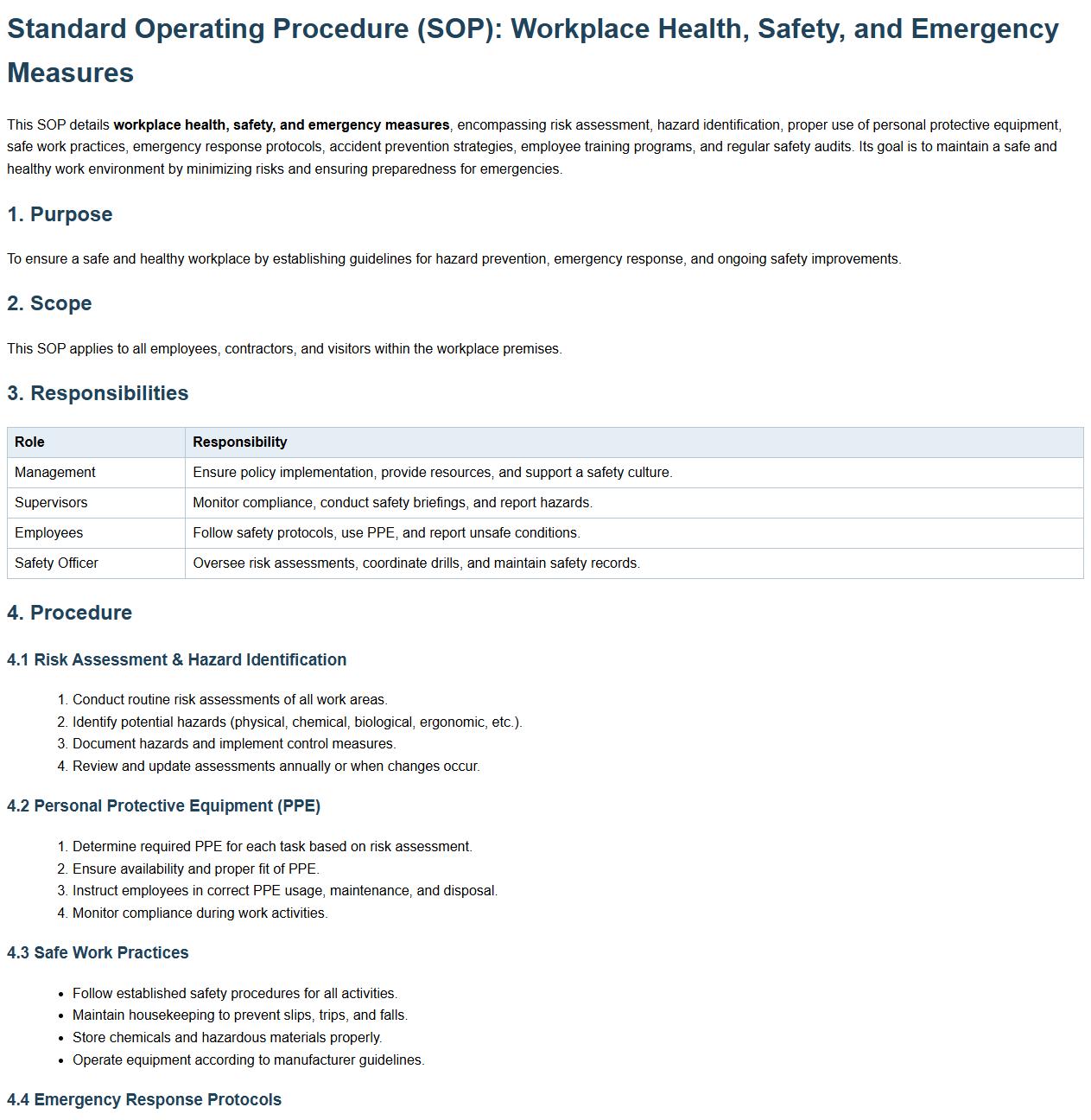
This SOP details workplace health, safety, and emergency measures, encompassing risk assessment, hazard identification, proper use of personal protective equipment, safe work practices, emergency response protocols, accident prevention strategies, employee training programs, and regular safety audits. Its goal is to maintain a safe and healthy work environment by minimizing risks and ensuring preparedness for emergencies.
What is the primary purpose of the SOP for Office Administration?
The primary purpose of the SOP for Office Administration is to ensure standardized and efficient office operations. It aims to streamline administrative processes to improve productivity. Consistency in performing routine tasks is also a core objective.
Which roles or personnel are responsible for implementing the procedures outlined in the SOP?
The SOP designates specific roles and personnel such as office managers, administrative assistants, and support staff for implementation. These individuals are tasked with adhering to and enforcing the procedures. Clear assignment of responsibilities ensures accountability and smooth workflows.
What key steps are required in the daily office opening and closing procedures as per the SOP?
Key steps for daily office opening include checking security systems, preparing workstations, and verifying office supplies. Closing procedures involve securing confidential documents, shutting down equipment, and ensuring all premises are locked. These steps are critical for office safety and readiness.
How does the SOP address the handling and storage of confidential documents?
The SOP mandates that confidential documents be handled with strict security protocols. It requires secure storage in locked cabinets and controlled access only to authorized personnel. The procedures also emphasize regular audits and proper disposal of sensitive information.
What protocols are included in the SOP for managing office equipment maintenance?
The SOP outlines regular inspection schedules and timely servicing of all office equipment. It includes guidelines for reporting faults and keeping maintenance logs. Adhering to these protocols helps in prolonging equipment lifespan and minimizing disruptions.