

A SOP Template for Handling Incoming Mail streamlines the process of managing all received correspondence efficiently. It outlines standardized steps to sort, distribute, and record incoming mail, ensuring accuracy and timely delivery. This template enhances organizational workflow by minimizing errors and improving communication.
Mail receipt and logging procedures.
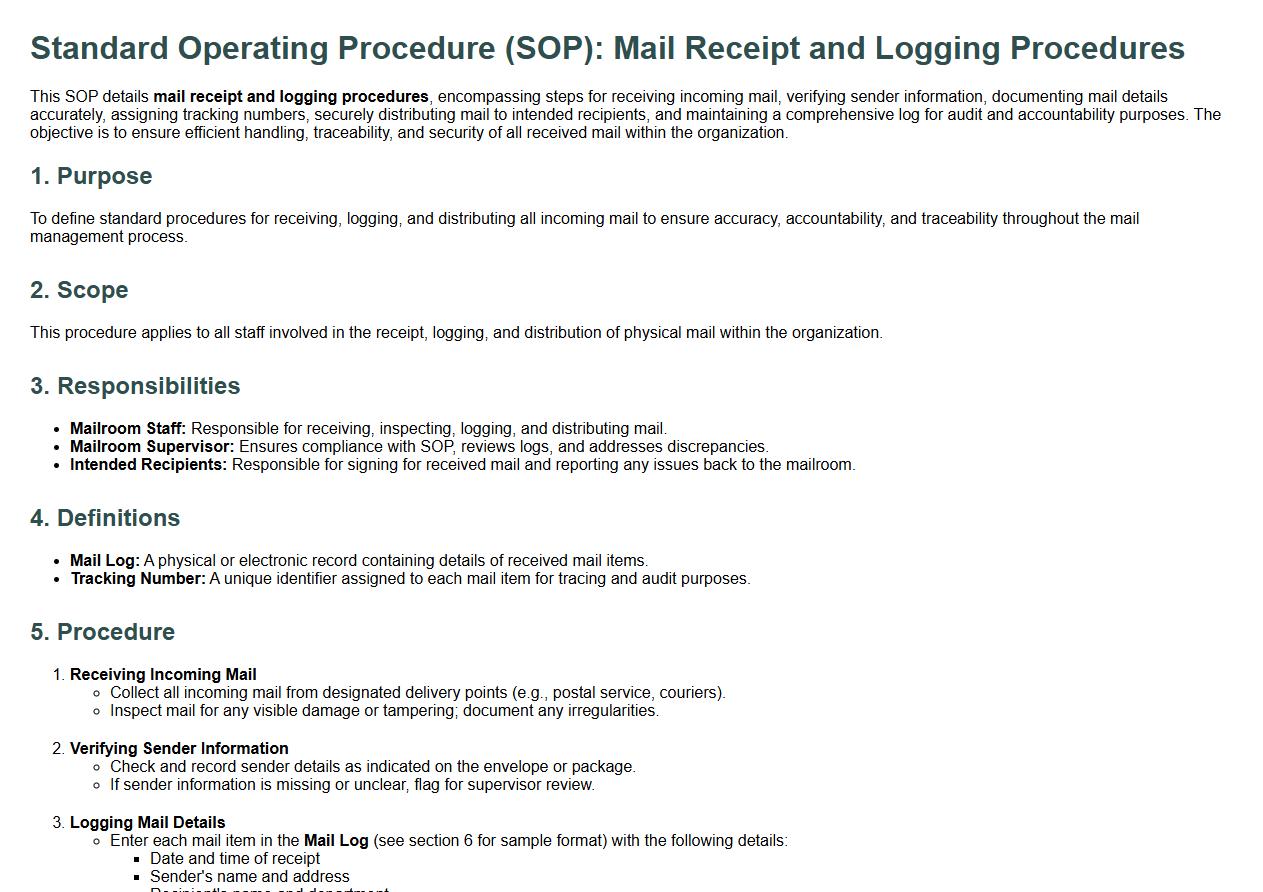
This SOP details mail receipt and logging procedures, encompassing steps for receiving incoming mail, verifying sender information, documenting mail details accurately, assigning tracking numbers, securely distributing mail to intended recipients, and maintaining a comprehensive log for audit and accountability purposes. The objective is to ensure efficient handling, traceability, and security of all received mail within the organization.
Mail sorting and categorization guidelines.
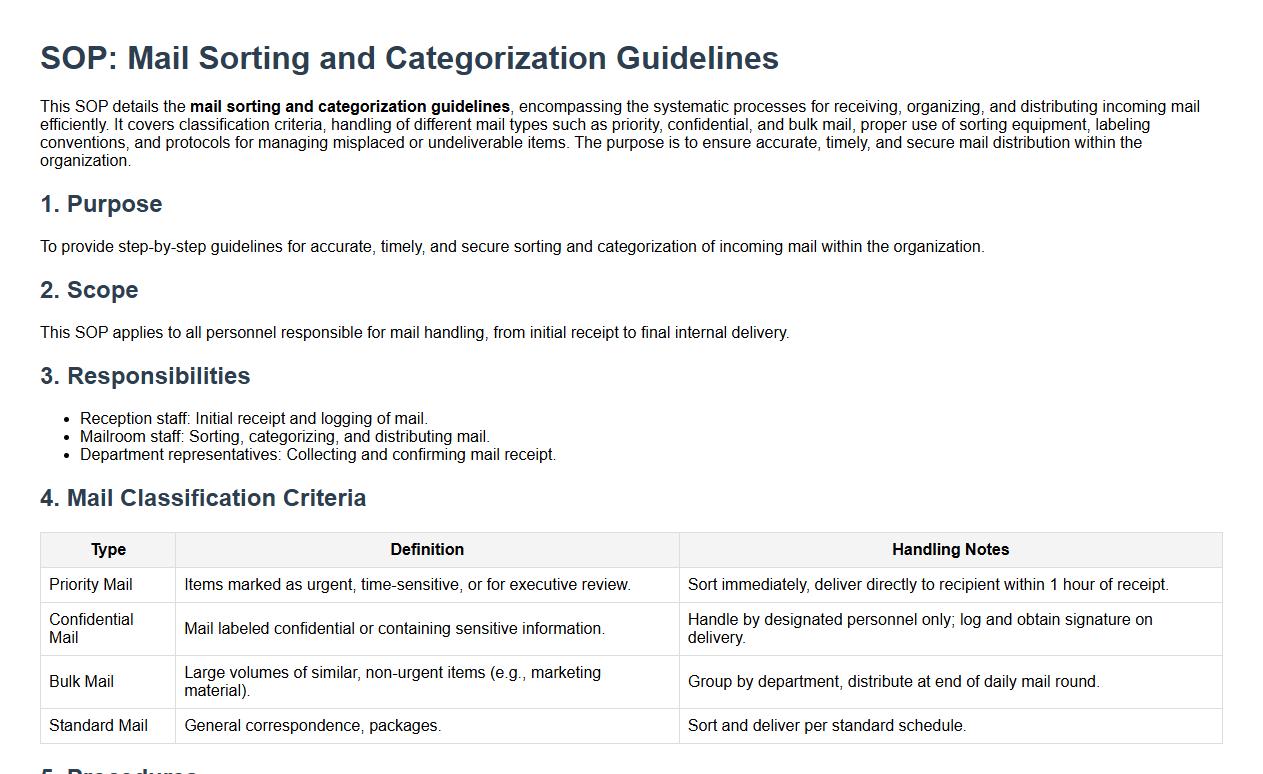
This SOP details the mail sorting and categorization guidelines, encompassing the systematic processes for receiving, organizing, and distributing incoming mail efficiently. It covers classification criteria, handling of different mail types such as priority, confidential, and bulk mail, proper use of sorting equipment, labeling conventions, and protocols for managing misplaced or undeliverable items. The purpose is to ensure accurate, timely, and secure mail distribution within the organization.
Inspection protocol for suspicious or damaged mail.
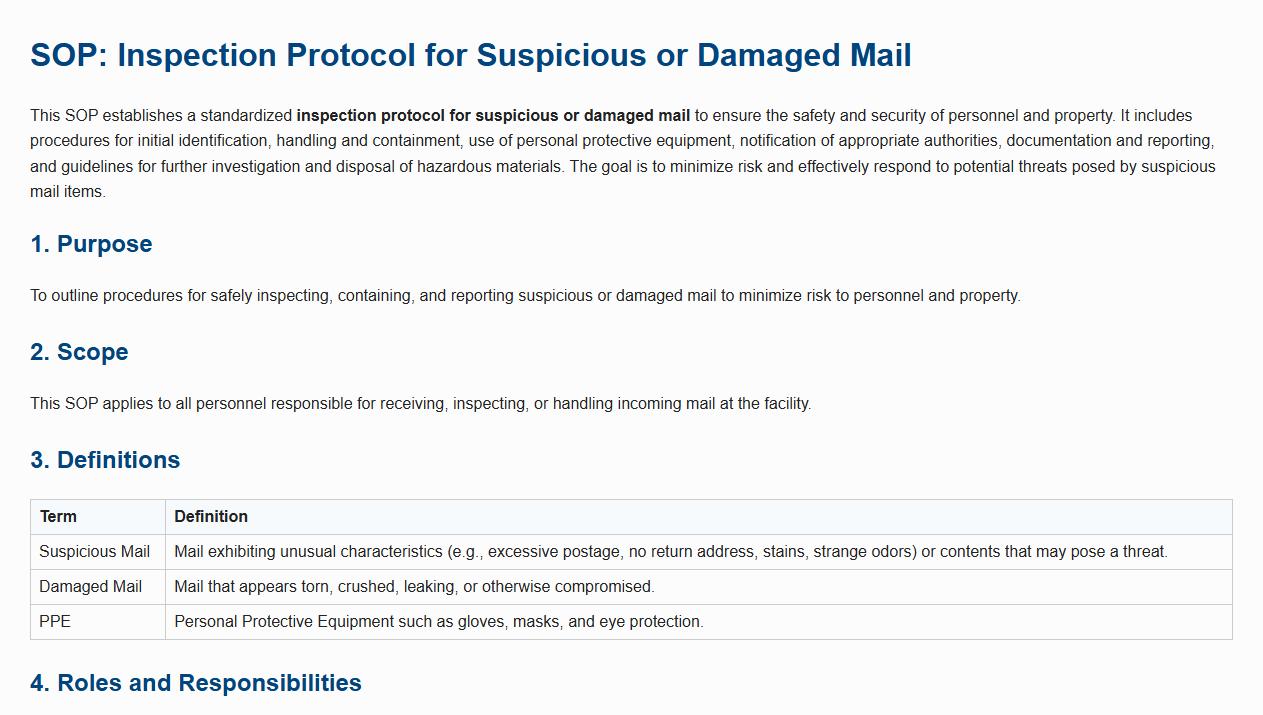
This SOP establishes a standardized inspection protocol for suspicious or damaged mail to ensure the safety and security of personnel and property. It includes procedures for initial identification, handling and containment, use of personal protective equipment, notification of appropriate authorities, documentation and reporting, and guidelines for further investigation and disposal of hazardous materials. The goal is to minimize risk and effectively respond to potential threats posed by suspicious mail items.
Confidential and sensitive mail handling.
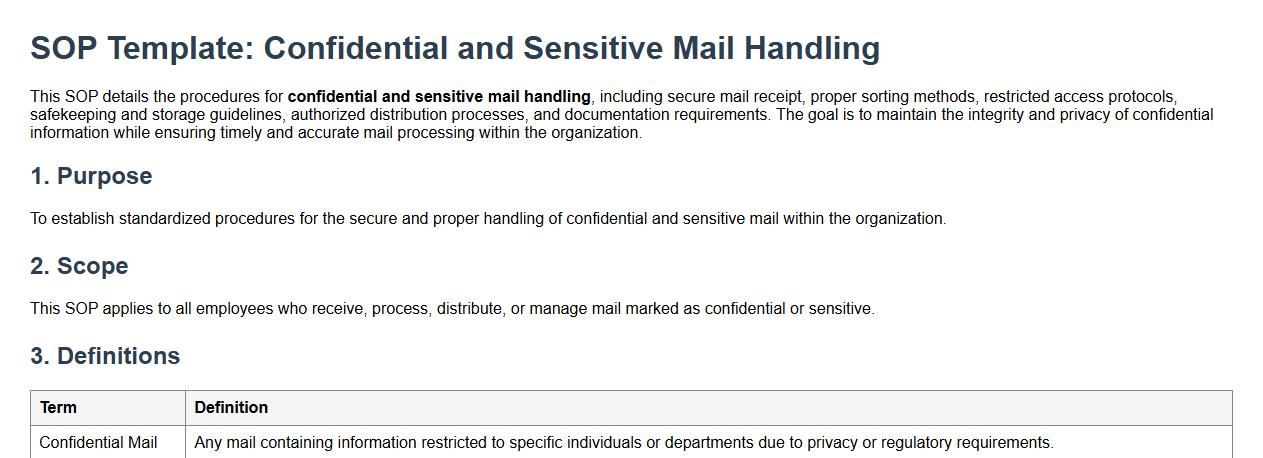
This SOP details the procedures for confidential and sensitive mail handling, including secure mail receipt, proper sorting methods, restricted access protocols, safekeeping and storage guidelines, authorized distribution processes, and documentation requirements. The goal is to maintain the integrity and privacy of confidential information while ensuring timely and accurate mail processing within the organization.
Distribution schedule and timelines.
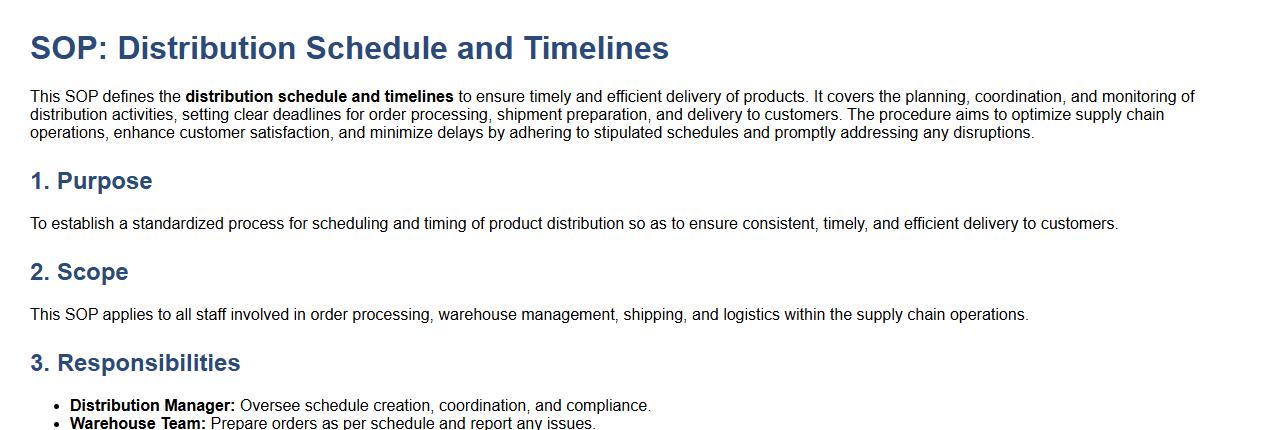
This SOP defines the distribution schedule and timelines to ensure timely and efficient delivery of products. It covers the planning, coordination, and monitoring of distribution activities, setting clear deadlines for order processing, shipment preparation, and delivery to customers. The procedure aims to optimize supply chain operations, enhance customer satisfaction, and minimize delays by adhering to stipulated schedules and promptly addressing any disruptions.
Responsible personnel and access control.
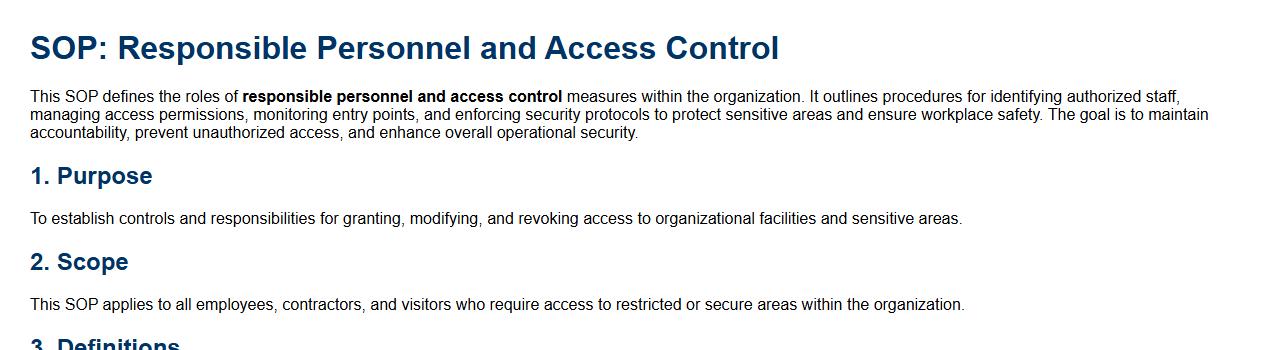
This SOP defines the roles of responsible personnel and access control measures within the organization. It outlines procedures for identifying authorized staff, managing access permissions, monitoring entry points, and enforcing security protocols to protect sensitive areas and ensure workplace safety. The goal is to maintain accountability, prevent unauthorized access, and enhance overall operational security.
Procedures for forwarding or redirecting mail.
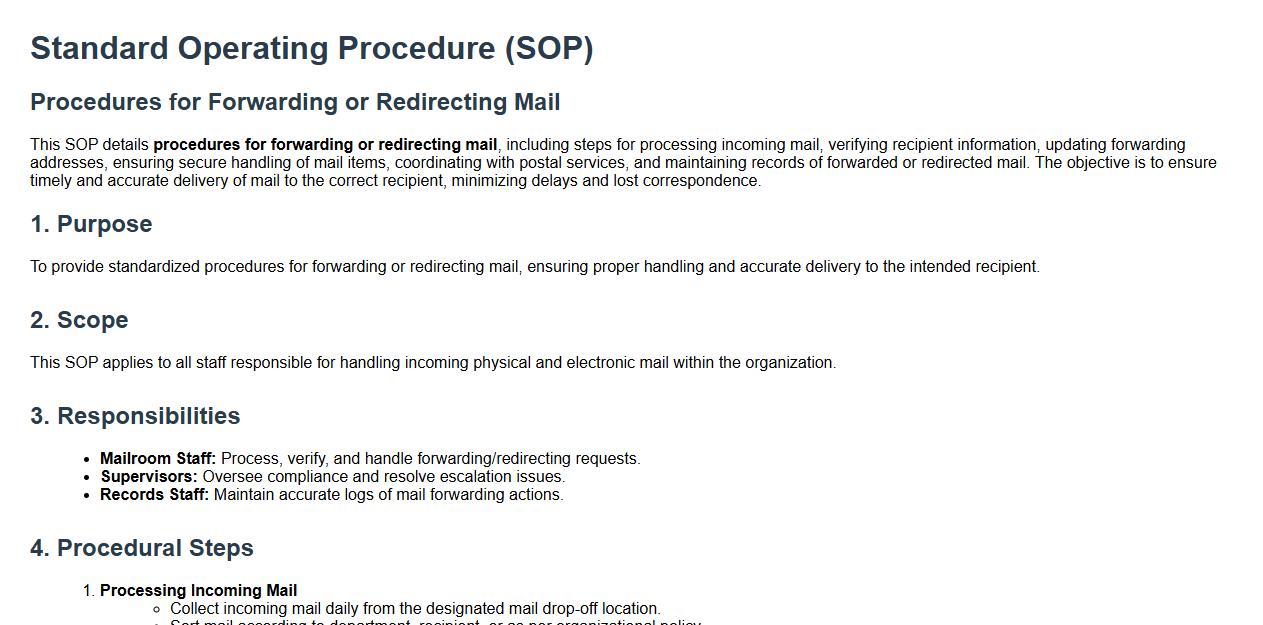
This SOP details procedures for forwarding or redirecting mail, including steps for processing incoming mail, verifying recipient information, updating forwarding addresses, ensuring secure handling of mail items, coordinating with postal services, and maintaining records of forwarded or redirected mail. The objective is to ensure timely and accurate delivery of mail to the correct recipient, minimizing delays and lost correspondence.
Undeliverable or misdirected mail management.
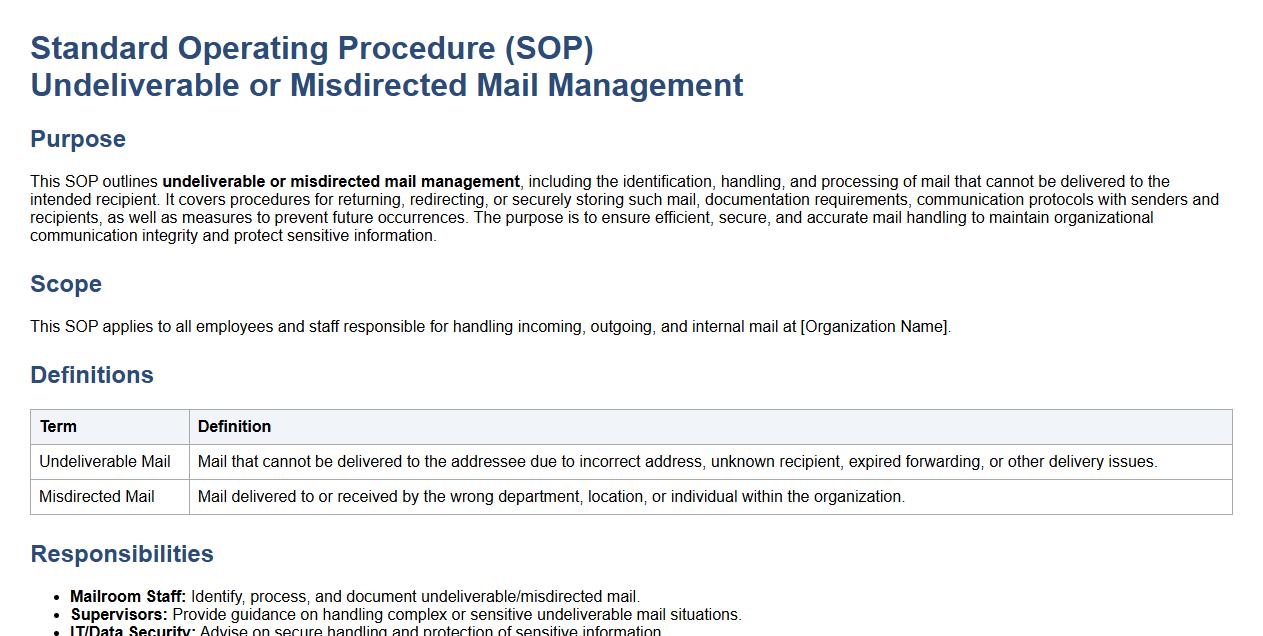
This SOP outlines undeliverable or misdirected mail management, including the identification, handling, and processing of mail that cannot be delivered to the intended recipient. It covers procedures for returning, redirecting, or securely storing such mail, documentation requirements, communication protocols with senders and recipients, as well as measures to prevent future occurrences. The purpose is to ensure efficient, secure, and accurate mail handling to maintain organizational communication integrity and protect sensitive information.
Temporary mail storage and secure archiving.
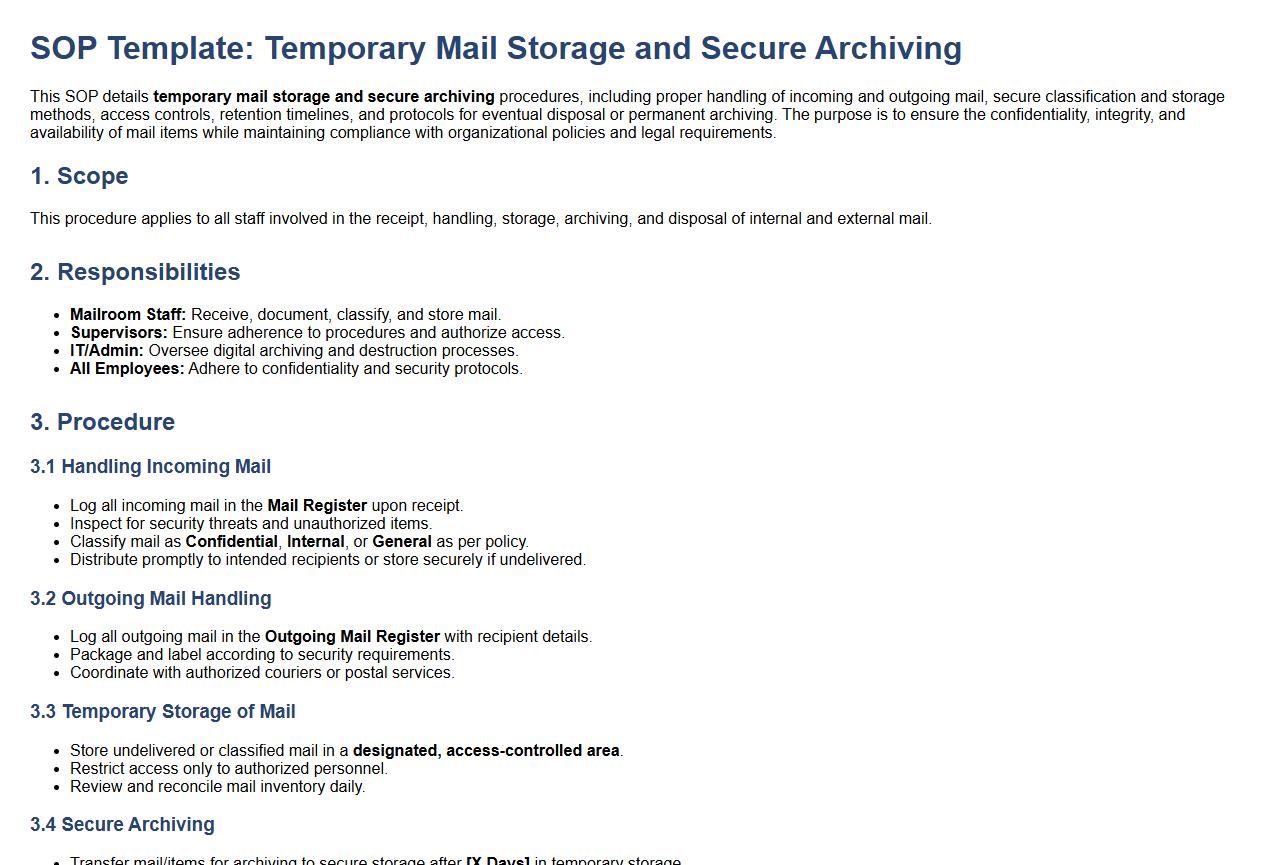
This SOP details temporary mail storage and secure archiving procedures, including proper handling of incoming and outgoing mail, secure classification and storage methods, access controls, retention timelines, and protocols for eventual disposal or permanent archiving. The purpose is to ensure the confidentiality, integrity, and availability of mail items while maintaining compliance with organizational policies and legal requirements.
Record-keeping and documentation requirements.
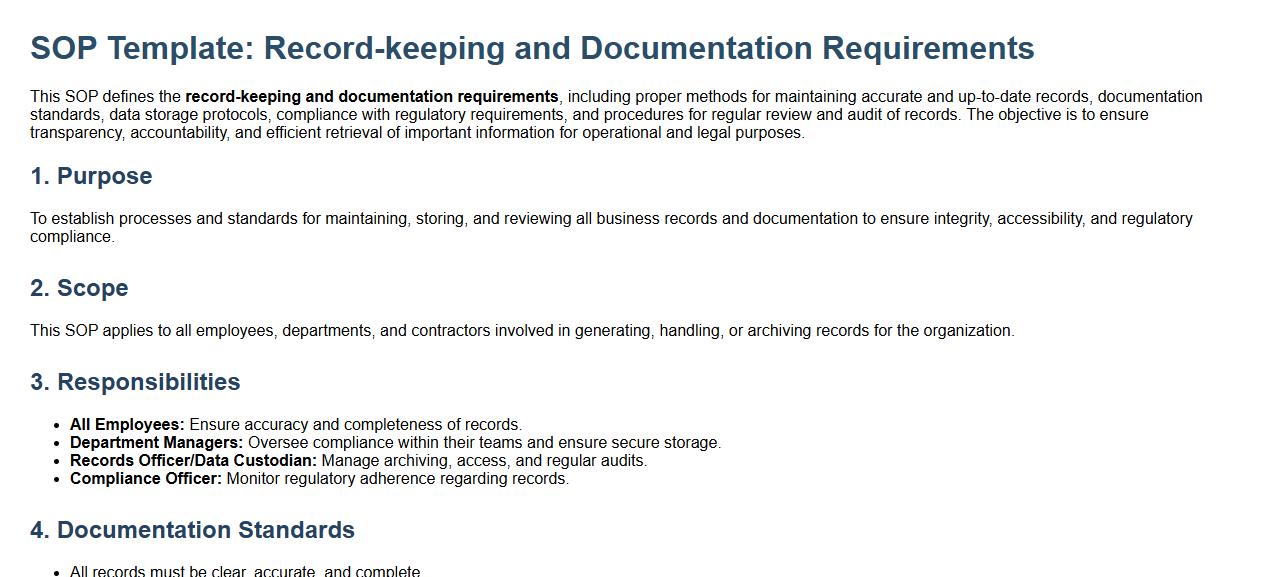
This SOP defines the record-keeping and documentation requirements, including proper methods for maintaining accurate and up-to-date records, documentation standards, data storage protocols, compliance with regulatory requirements, and procedures for regular review and audit of records. The objective is to ensure transparency, accountability, and efficient retrieval of important information for operational and legal purposes.
What are the required steps for receiving and logging incoming mail according to the SOP?
The first step in receiving mail involves verifying the sender and contents upon arrival. Each piece of mail must be logged into the tracking system with details such as date, time, and recipient. This process ensures accurate record-keeping and accountability.
How should confidential or sensitive mail be identified and processed?
Confidential or sensitive mail must be clearly marked and handled separately from regular correspondence. Only authorized personnel should access this type of mail to maintain privacy and security. Additionally, these items should be logged with extra precautions noted in the record.
What safety guidelines must be followed when handling suspicious or damaged mail items?
Suspicious or damaged mail requires immediate isolation to avoid potential hazards. Personnel should follow established safety protocols such as not opening the item and notifying security or appropriate authorities. Proper protective equipment must be used when handling such mail to prevent risks.
Who is responsible for distributing incoming mail to respective departments or individuals?
Designated mailroom staff or appointed mail handlers are responsible for the accurate distribution of incoming mail. They ensure that all mail is delivered promptly to the correct departments or individuals. This step is crucial for maintaining workflow and organizational efficiency.
What procedures are outlined for documenting and reporting lost or unclaimed incoming mail?
Lost or unclaimed mail must be documented immediately in the system with detailed notes. Notifications should be sent to intended recipients and supervisors to assist in locating the mail. If mail remains unclaimed after a specific period, further escalation procedures are followed according to the SOP.