

A SOP Template for Office Event Planning streamlines the process of organizing corporate events by providing clear, step-by-step guidelines. This template ensures efficient coordination, task delegation, and resource management to deliver successful office gatherings. Utilizing a standardized approach reduces errors and enhances communication among team members.
Event concept development and approval process.
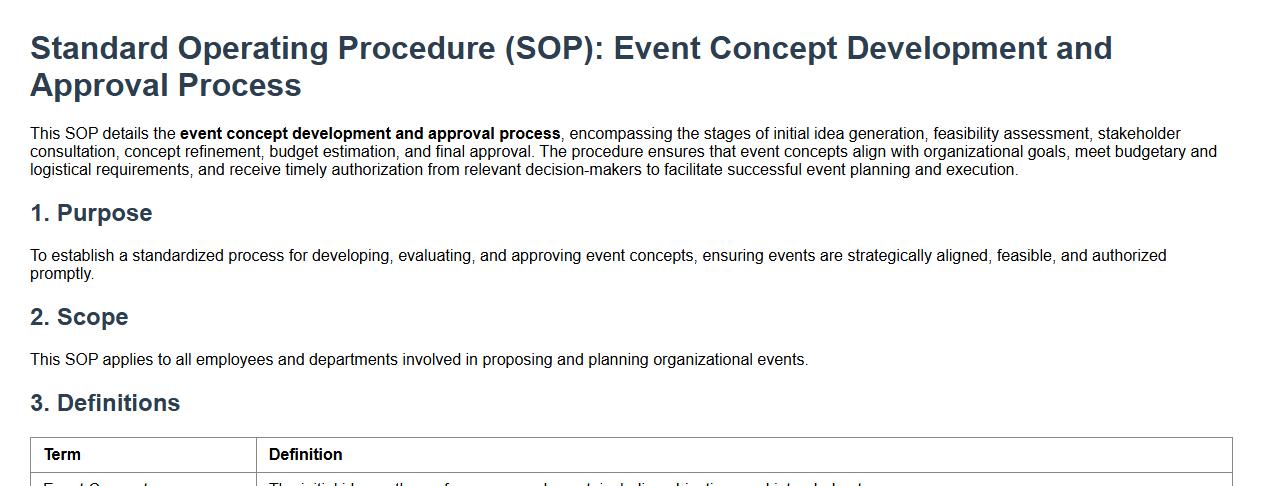
This SOP details the event concept development and approval process, encompassing the stages of initial idea generation, feasibility assessment, stakeholder consultation, concept refinement, budget estimation, and final approval. The procedure ensures that event concepts align with organizational goals, meet budgetary and logistical requirements, and receive timely authorization from relevant decision-makers to facilitate successful event planning and execution.
Budget planning and expense tracking procedures.
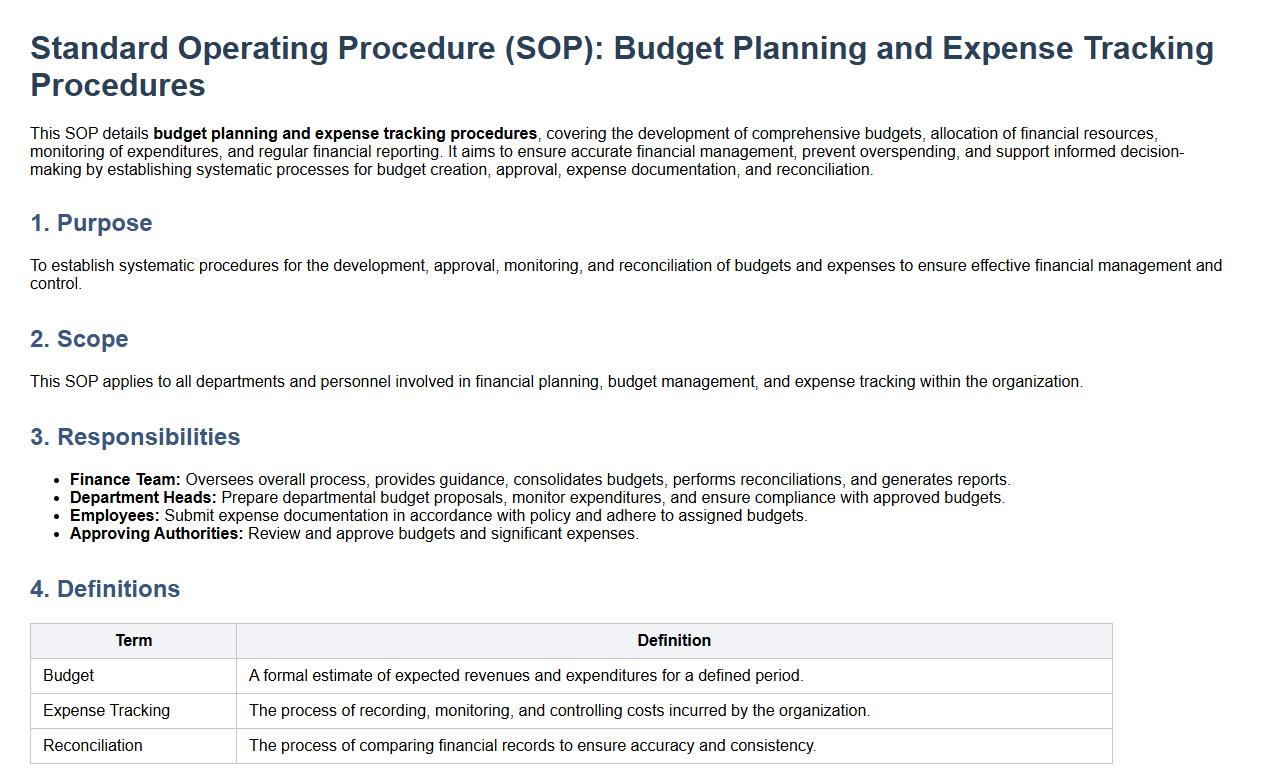
This SOP details budget planning and expense tracking procedures, covering the development of comprehensive budgets, allocation of financial resources, monitoring of expenditures, and regular financial reporting. It aims to ensure accurate financial management, prevent overspending, and support informed decision-making by establishing systematic processes for budget creation, approval, expense documentation, and reconciliation.
Venue selection and booking protocols.
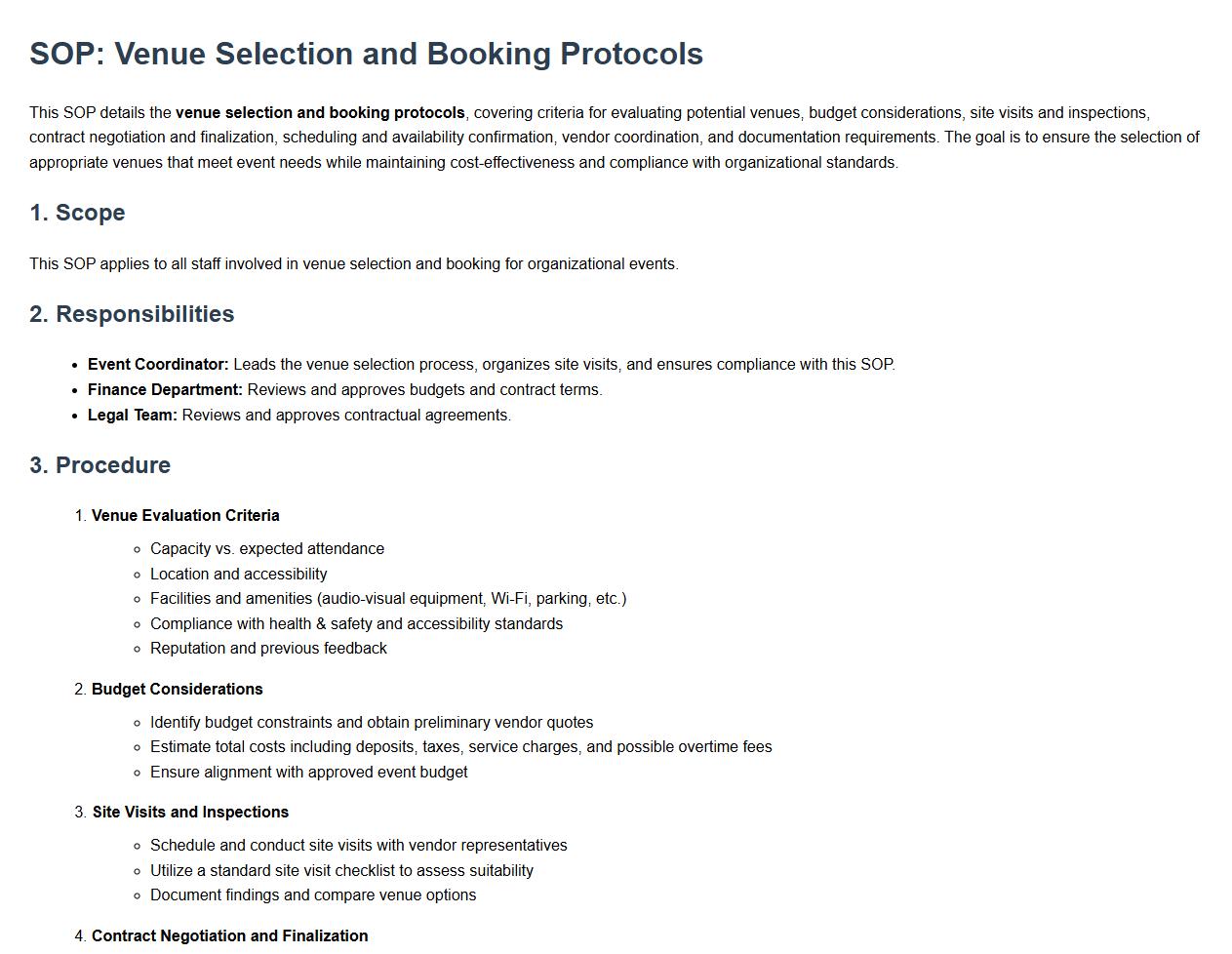
This SOP details the venue selection and booking protocols, covering criteria for evaluating potential venues, budget considerations, site visits and inspections, contract negotiation and finalization, scheduling and availability confirmation, vendor coordination, and documentation requirements. The goal is to ensure the selection of appropriate venues that meet event needs while maintaining cost-effectiveness and compliance with organizational standards.
Vendor identification, vetting, and contract management.
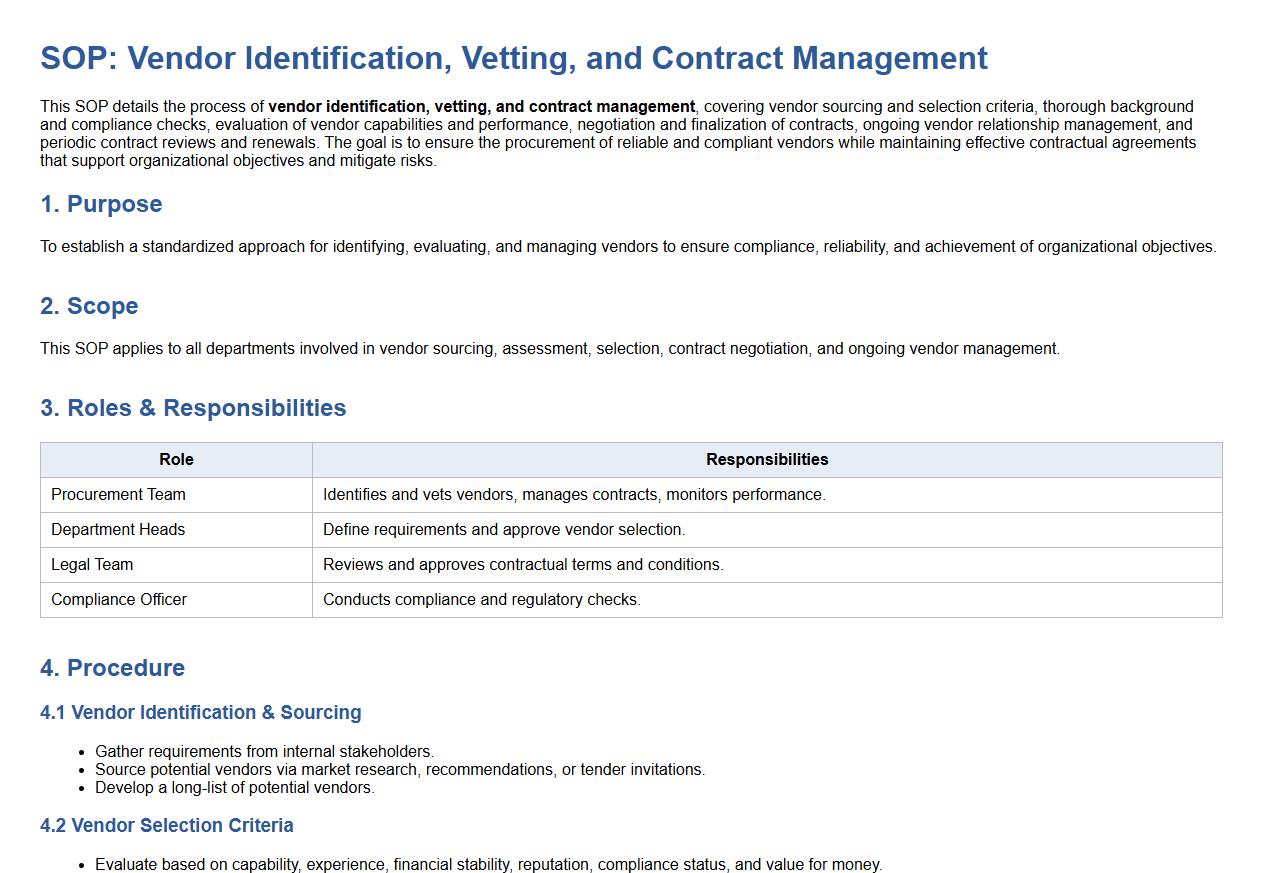
This SOP details the process of vendor identification, vetting, and contract management, covering vendor sourcing and selection criteria, thorough background and compliance checks, evaluation of vendor capabilities and performance, negotiation and finalization of contracts, ongoing vendor relationship management, and periodic contract reviews and renewals. The goal is to ensure the procurement of reliable and compliant vendors while maintaining effective contractual agreements that support organizational objectives and mitigate risks.
Guest list compilation and invitation distribution.
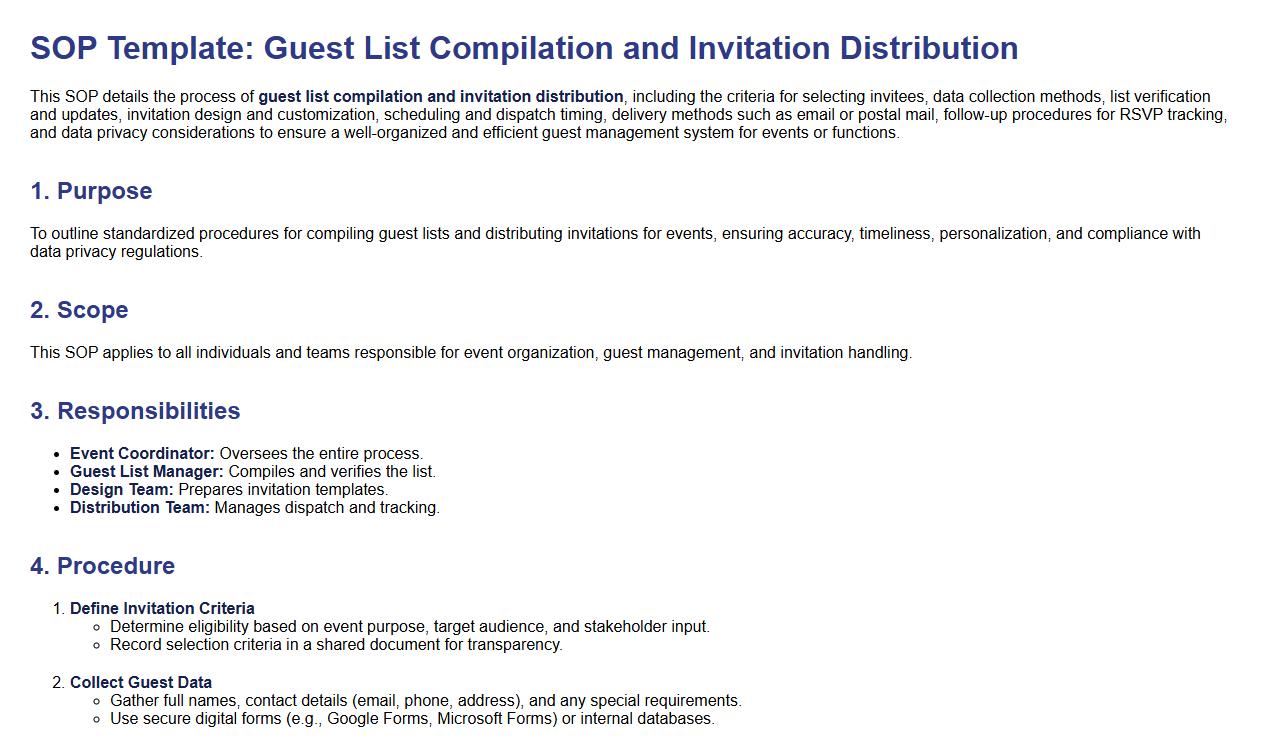
This SOP details the process of guest list compilation and invitation distribution, including the criteria for selecting invitees, data collection methods, list verification and updates, invitation design and customization, scheduling and dispatch timing, delivery methods such as email or postal mail, follow-up procedures for RSVP tracking, and data privacy considerations to ensure a well-organized and efficient guest management system for events or functions.
Event scheduling and timeline coordination.
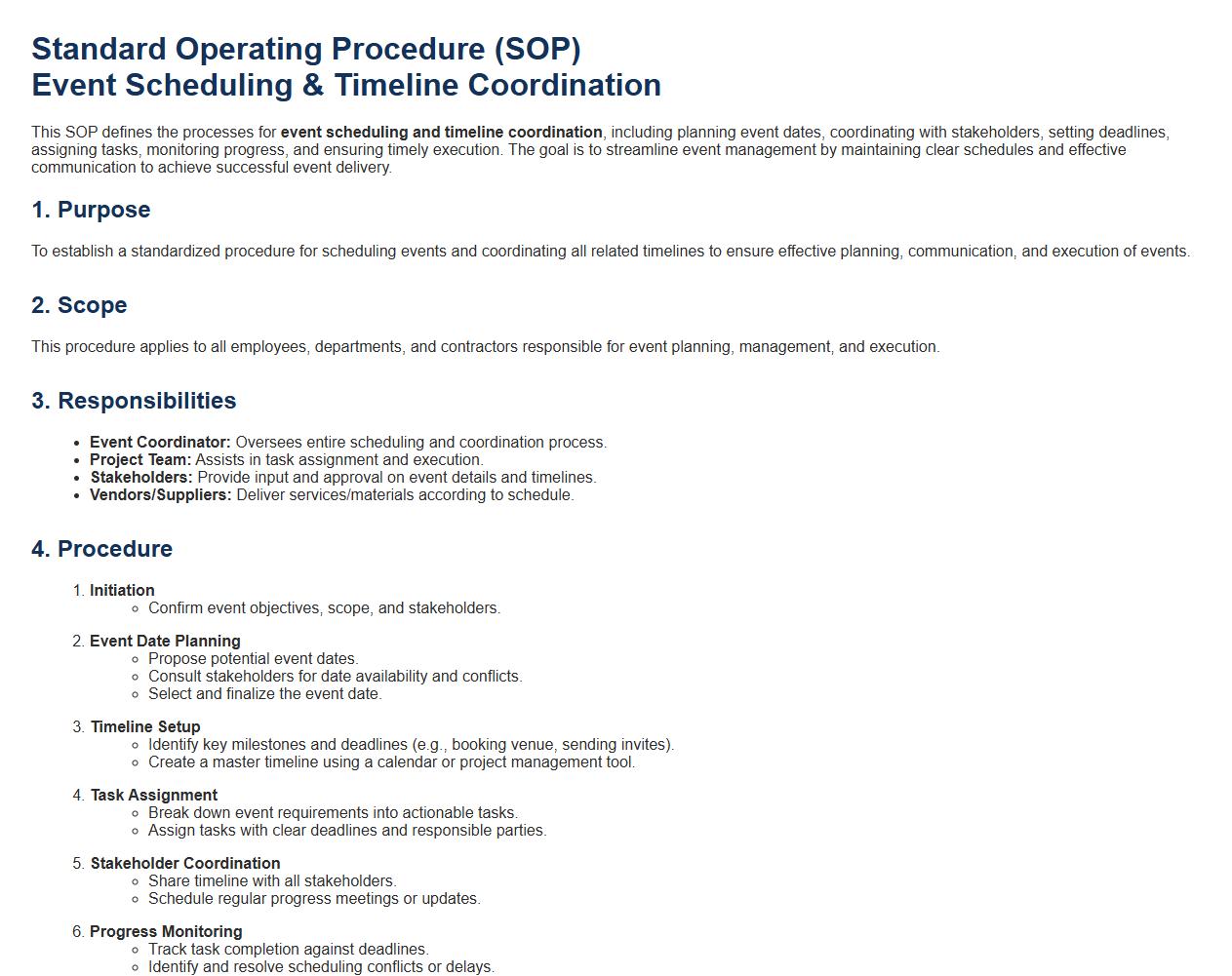
This SOP defines the processes for event scheduling and timeline coordination, including planning event dates, coordinating with stakeholders, setting deadlines, assigning tasks, monitoring progress, and ensuring timely execution. The goal is to streamline event management by maintaining clear schedules and effective communication to achieve successful event delivery.
Catering selection and menu confirmation process.
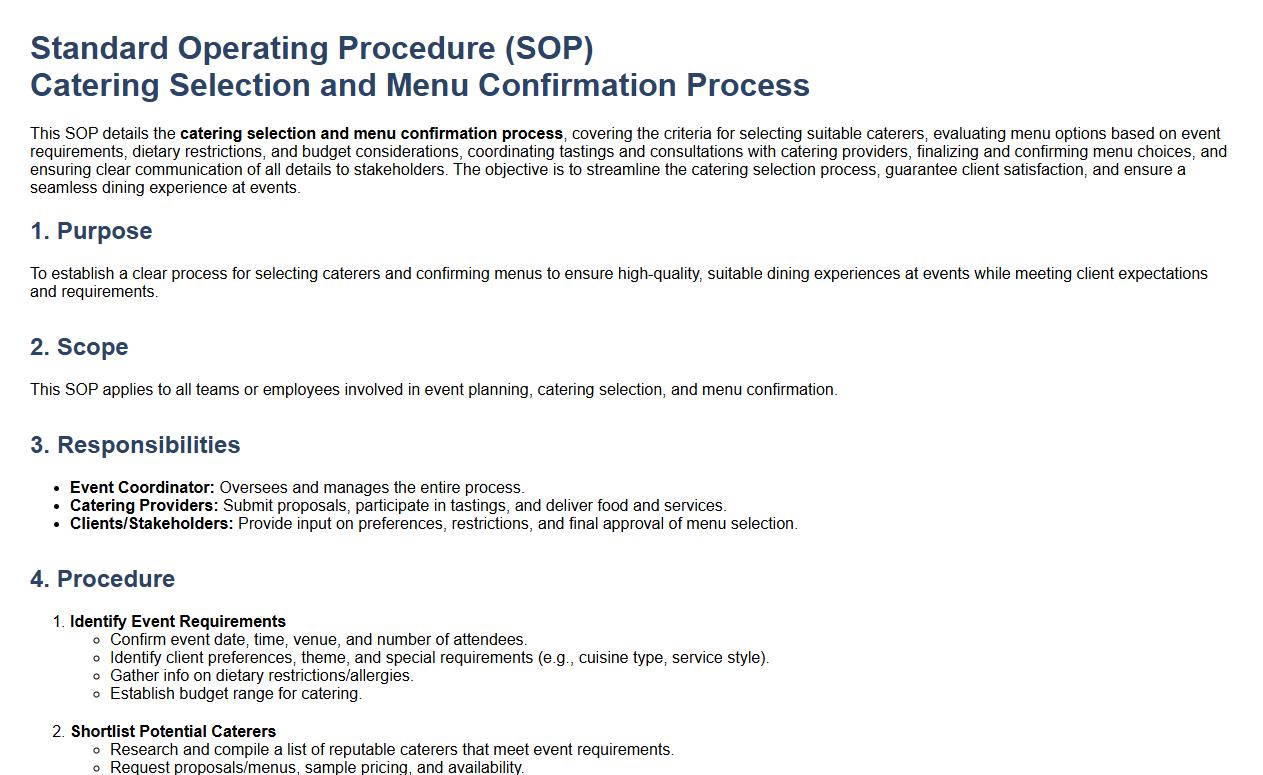
This SOP details the catering selection and menu confirmation process, covering the criteria for selecting suitable caterers, evaluating menu options based on event requirements, dietary restrictions, and budget considerations, coordinating tastings and consultations with catering providers, finalizing and confirming menu choices, and ensuring clear communication of all details to stakeholders. The objective is to streamline the catering selection process, guarantee client satisfaction, and ensure a seamless dining experience at events.
Onsite logistics and equipment setup instructions.
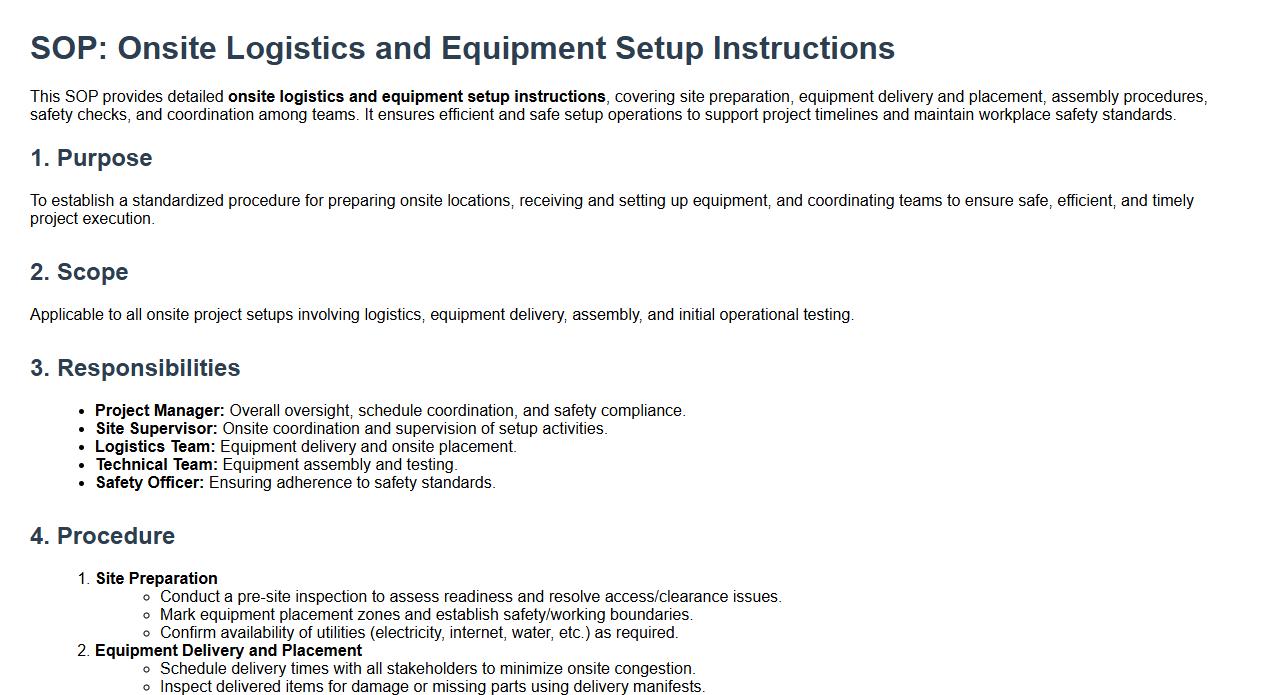
This SOP provides detailed onsite logistics and equipment setup instructions, covering site preparation, equipment delivery and placement, assembly procedures, safety checks, and coordination among teams. It ensures efficient and safe setup operations to support project timelines and maintain workplace safety standards.
Health, safety, and emergency contingency guidelines.
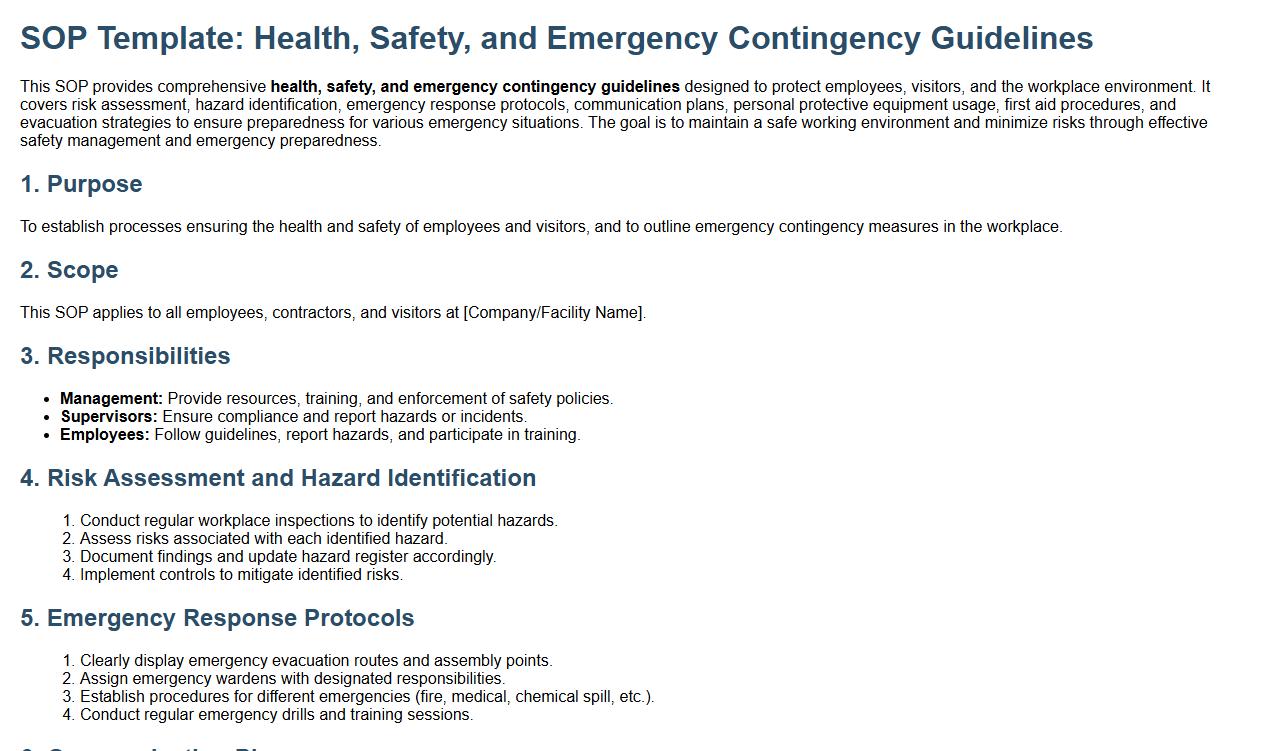
This SOP provides comprehensive health, safety, and emergency contingency guidelines designed to protect employees, visitors, and the workplace environment. It covers risk assessment, hazard identification, emergency response protocols, communication plans, personal protective equipment usage, first aid procedures, and evacuation strategies to ensure preparedness for various emergency situations. The goal is to maintain a safe working environment and minimize risks through effective safety management and emergency preparedness.
Post-event feedback collection and reporting procedures.
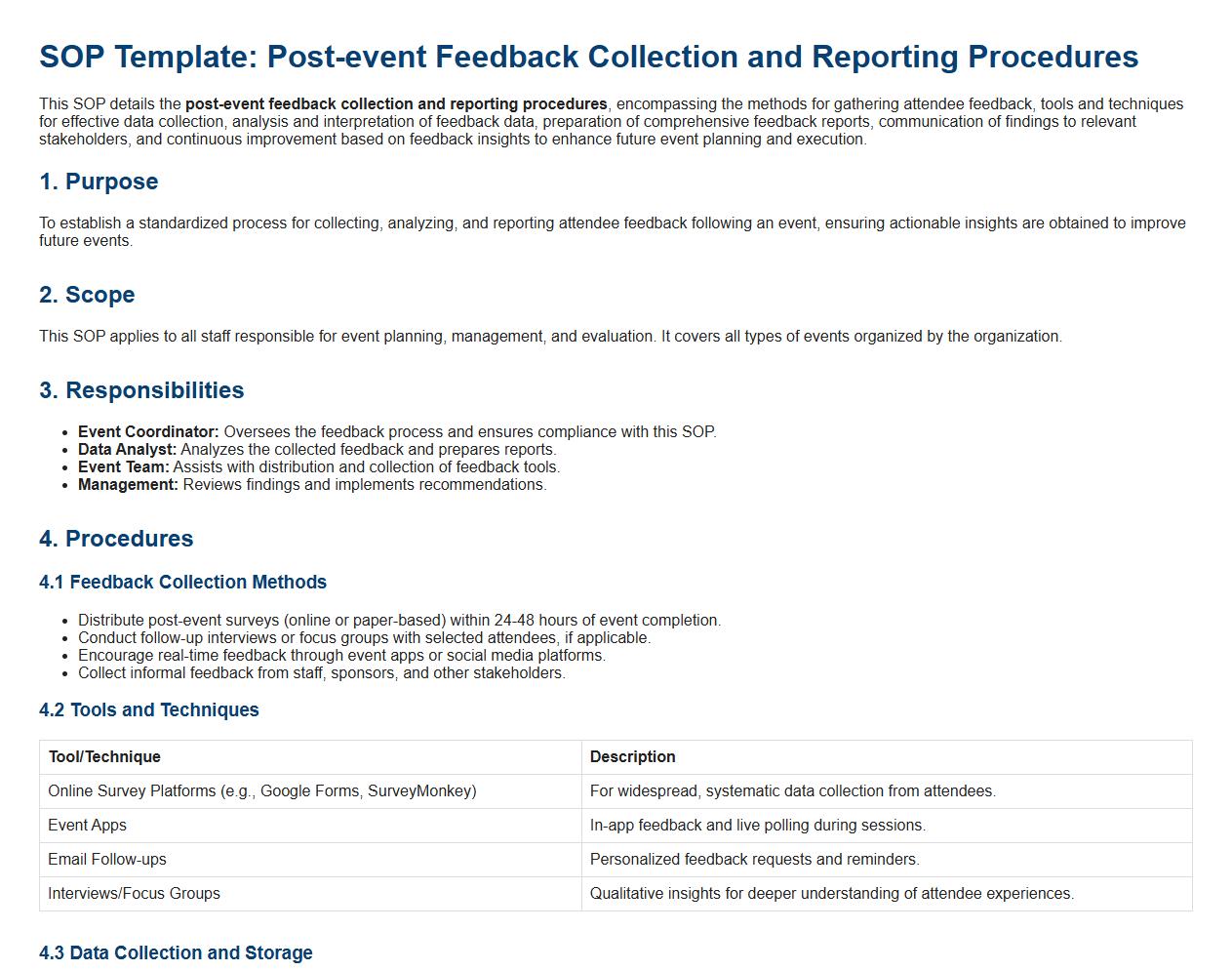
This SOP details the post-event feedback collection and reporting procedures, encompassing the methods for gathering attendee feedback, tools and techniques for effective data collection, analysis and interpretation of feedback data, preparation of comprehensive feedback reports, communication of findings to relevant stakeholders, and continuous improvement based on feedback insights to enhance future event planning and execution.
What are the mandatory steps outlined in the SOP for initiating office event planning?
The first mandatory step in the SOP for office event planning is to identify the event objectives clearly. Next, a detailed event proposal must be drafted and submitted for preliminary review. Finally, the proposal must receive approval from the designated authorities before proceeding.
Which stakeholders must be consulted according to the SOP before finalizing event logistics?
The SOP mandates consultation with key stakeholders such as department heads, finance officers, and the HR team. Additionally, it requires involving the facilities management team to ensure venue readiness. Collaborating with these stakeholders ensures all logistical needs and constraints are addressed effectively.
How does the SOP specify the process for vendor selection and contracting?
The SOP requires issuing a formal request for proposal (RFP) to potential vendors outlining all event requirements. After receiving bids, a comparative evaluation must be conducted based on cost, quality, and reliability. The selected vendor's contract must then be reviewed and signed by the legal department to ensure compliance.
What documentation and approvals are required as per the SOP before event execution?
Prior to event execution, the SOP demands comprehensive documentation, including the finalized event plan, budget approval, and vendor contracts. All documents must be reviewed and authorized by the event approval committee. This ensures transparency and accountability in the event planning process.
How does the SOP address risk management and contingency planning for office events?
The SOP emphasizes the development of a risk management plan identifying potential risks and mitigation strategies. It also requires establishing clear contingency plans, including backup venues and emergency response protocols. Regular reviews and drills are mandated to prepare the team for any unforeseen circumstances.