

A SOP Template for Office Documentation Management streamlines the process of organizing, storing, and retrieving office documents efficiently. It ensures consistency and compliance by outlining clear procedures for document handling, version control, and access permissions. Implementing this template boosts productivity and minimizes errors in managing critical office records.
Document creation and version control procedures.
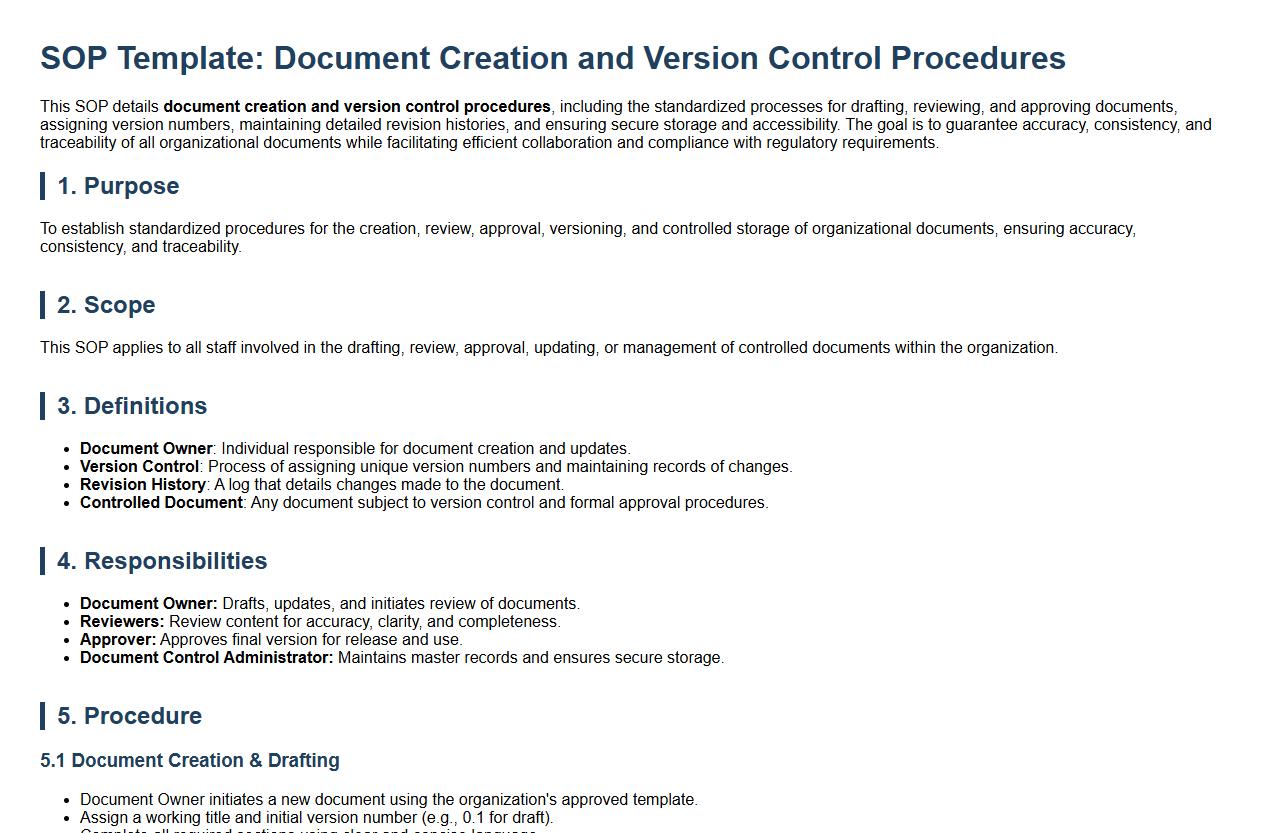
This SOP details document creation and version control procedures, including the standardized processes for drafting, reviewing, and approving documents, assigning version numbers, maintaining detailed revision histories, and ensuring secure storage and accessibility. The goal is to guarantee accuracy, consistency, and traceability of all organizational documents while facilitating efficient collaboration and compliance with regulatory requirements.
Standardized file naming conventions.
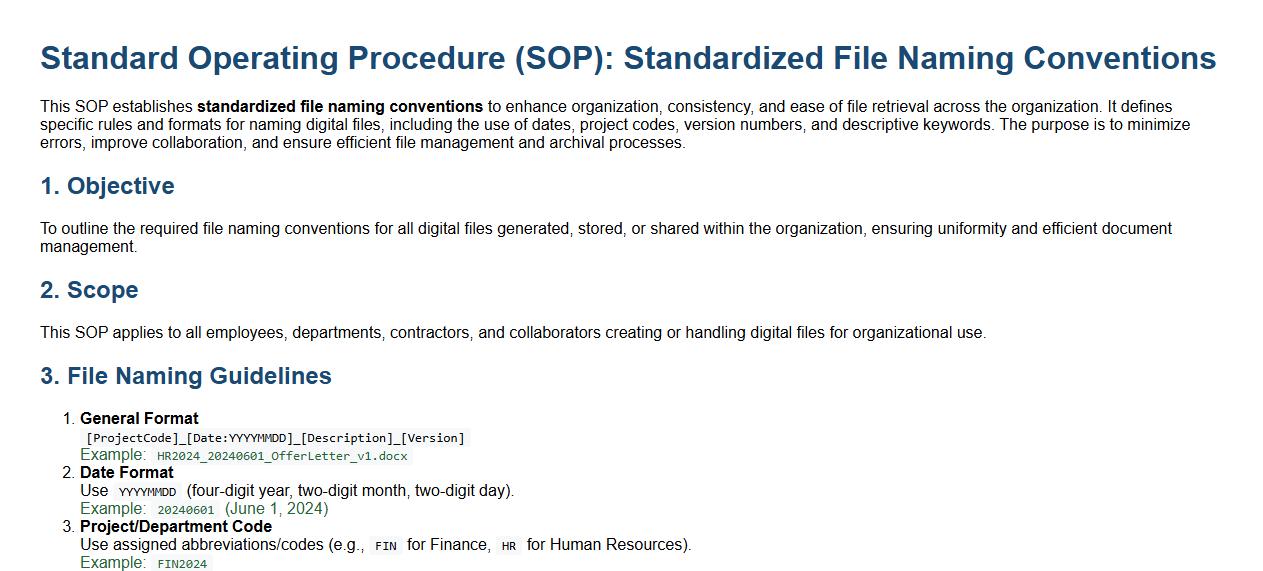
This SOP establishes standardized file naming conventions to enhance organization, consistency, and ease of file retrieval across the organization. It defines specific rules and formats for naming digital files, including the use of dates, project codes, version numbers, and descriptive keywords. The purpose is to minimize errors, improve collaboration, and ensure efficient file management and archival processes.
Document review and approval workflows.
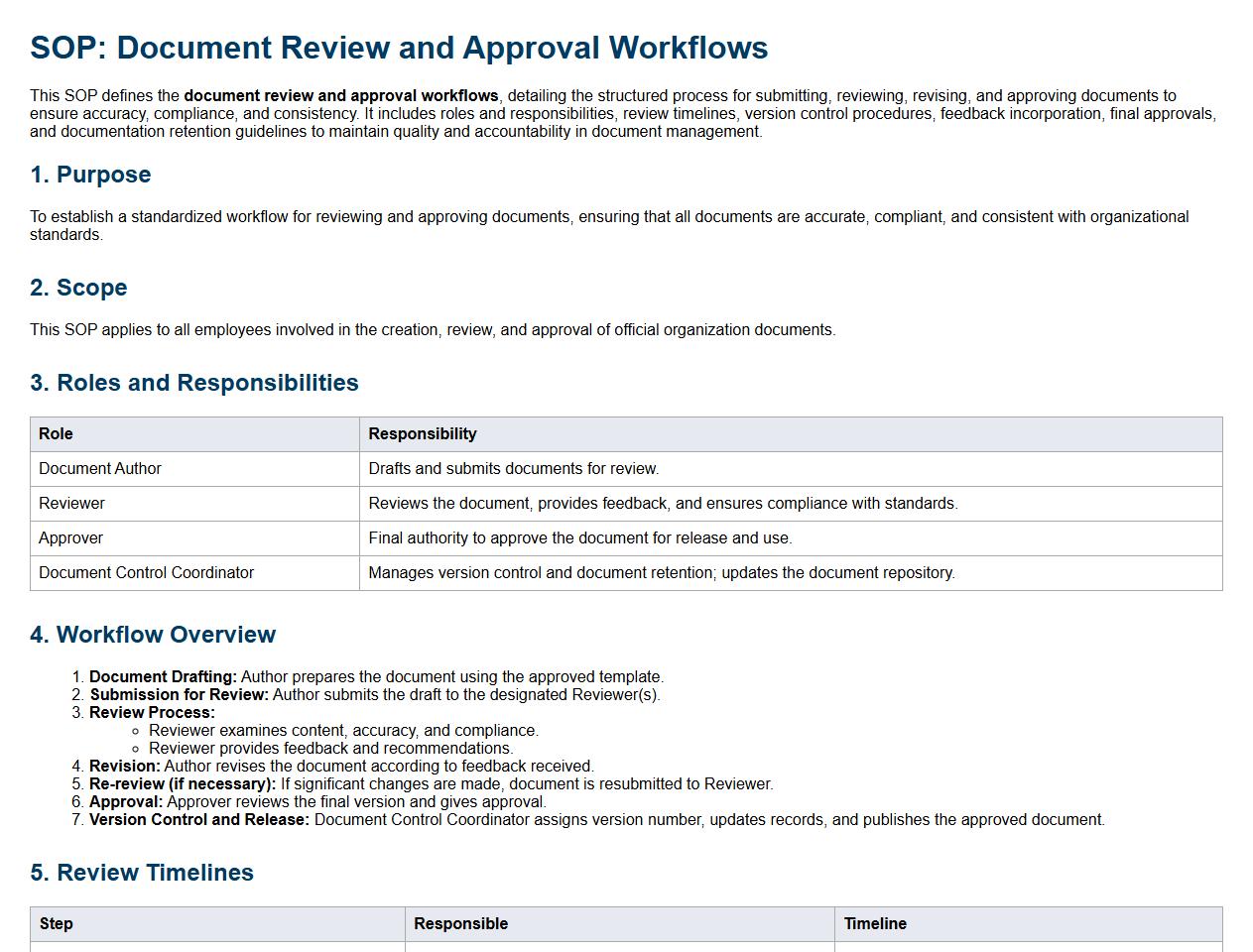
This SOP defines the document review and approval workflows, detailing the structured process for submitting, reviewing, revising, and approving documents to ensure accuracy, compliance, and consistency. It includes roles and responsibilities, review timelines, version control procedures, feedback incorporation, final approvals, and documentation retention guidelines to maintain quality and accountability in document management.
Data entry and accuracy verification steps.
This SOP defines data entry and accuracy verification steps to ensure precise and reliable data management. It covers procedures for systematic data input, validation techniques, error detection and correction, consistency checks, and documentation of verification processes. The objective is to maintain data integrity, reduce errors, and support informed decision-making through rigorous accuracy controls.
Secure document storage and access control.
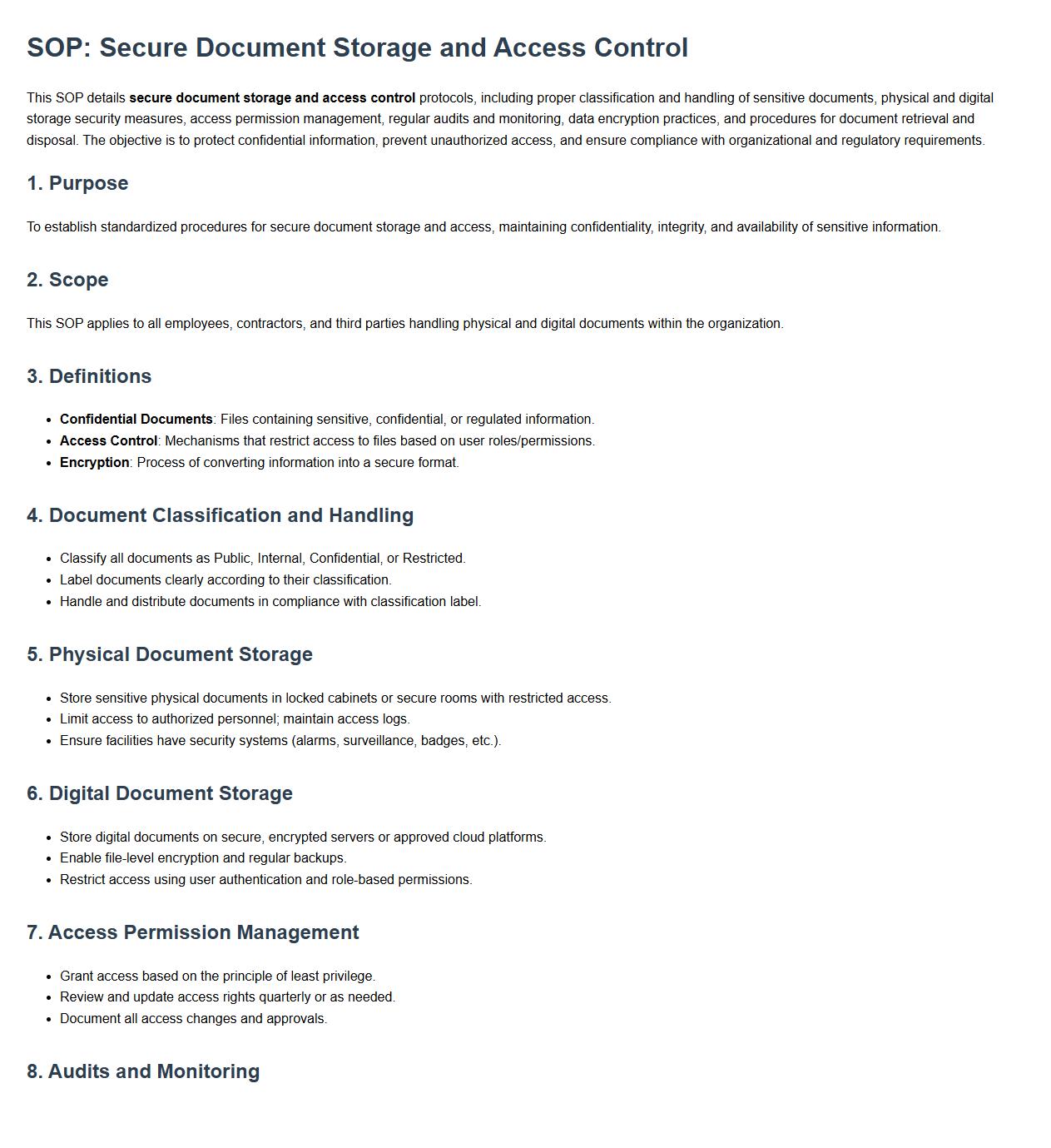
This SOP details secure document storage and access control protocols, including proper classification and handling of sensitive documents, physical and digital storage security measures, access permission management, regular audits and monitoring, data encryption practices, and procedures for document retrieval and disposal. The objective is to protect confidential information, prevent unauthorized access, and ensure compliance with organizational and regulatory requirements.
Regular document backup protocols.
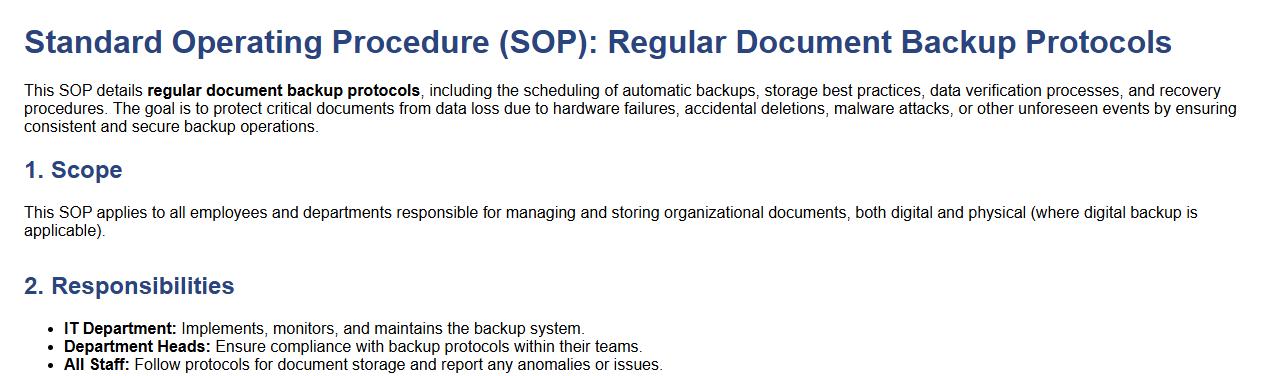
This SOP details regular document backup protocols, including the scheduling of automatic backups, storage best practices, data verification processes, and recovery procedures. The goal is to protect critical documents from data loss due to hardware failures, accidental deletions, malware attacks, or other unforeseen events by ensuring consistent and secure backup operations.
Confidential document handling and shredding processes.
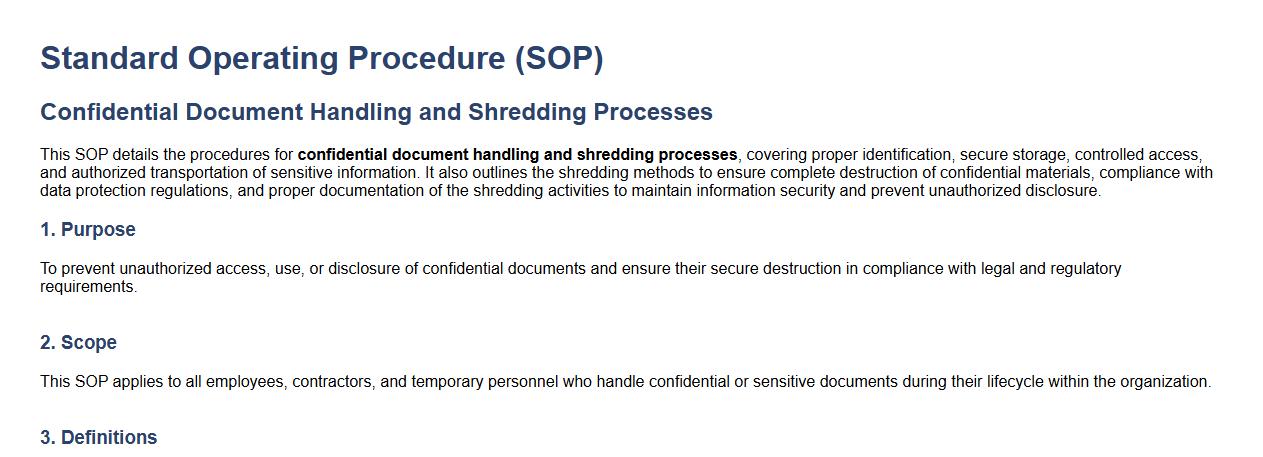
This SOP details the procedures for confidential document handling and shredding processes, covering proper identification, secure storage, controlled access, and authorized transportation of sensitive information. It also outlines the shredding methods to ensure complete destruction of confidential materials, compliance with data protection regulations, and proper documentation of the shredding activities to maintain information security and prevent unauthorized disclosure.
Document retrieval and distribution guidelines.
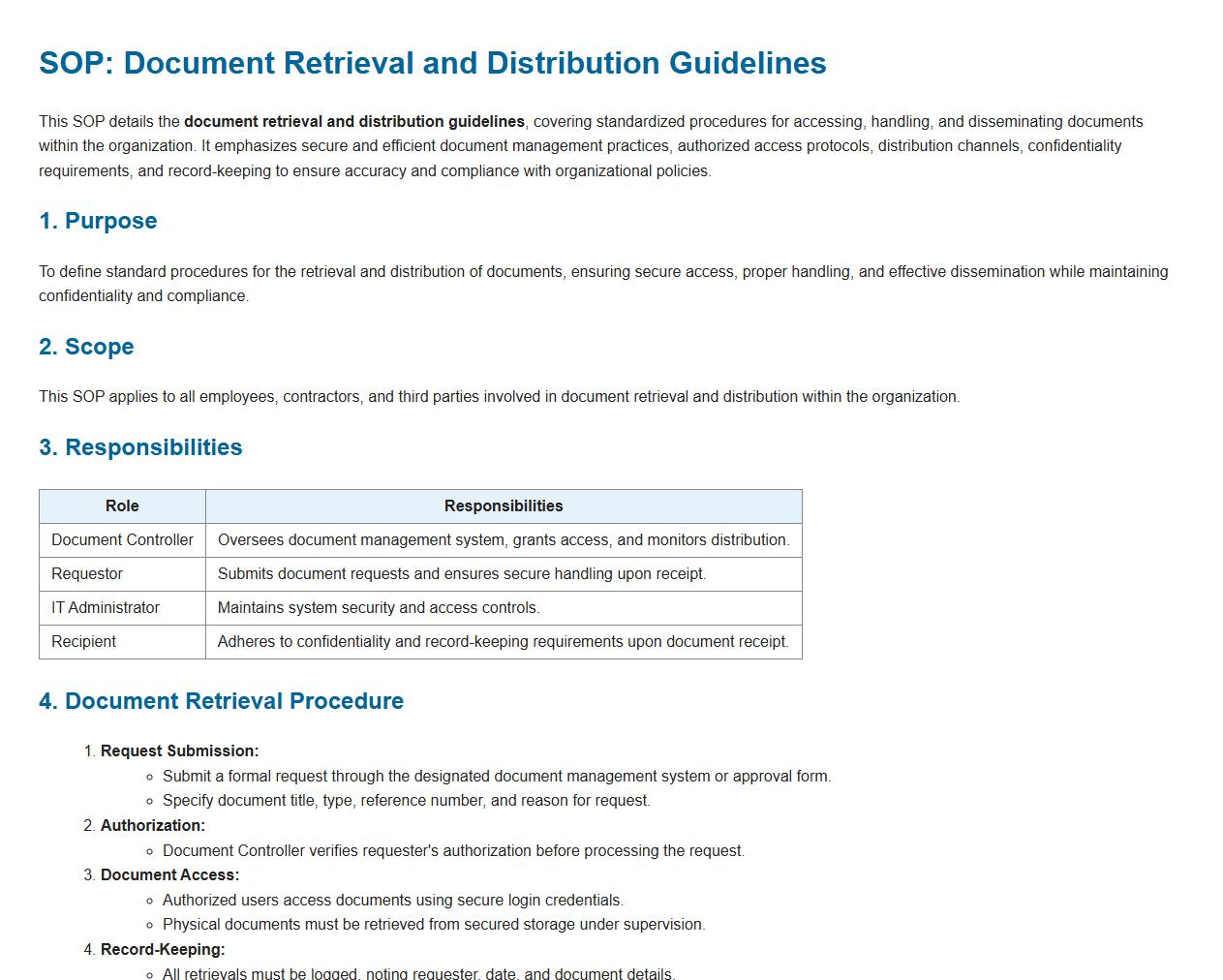
This SOP details the document retrieval and distribution guidelines, covering standardized procedures for accessing, handling, and disseminating documents within the organization. It emphasizes secure and efficient document management practices, authorized access protocols, distribution channels, confidentiality requirements, and record-keeping to ensure accuracy and compliance with organizational policies.
Archiving and retention schedules.
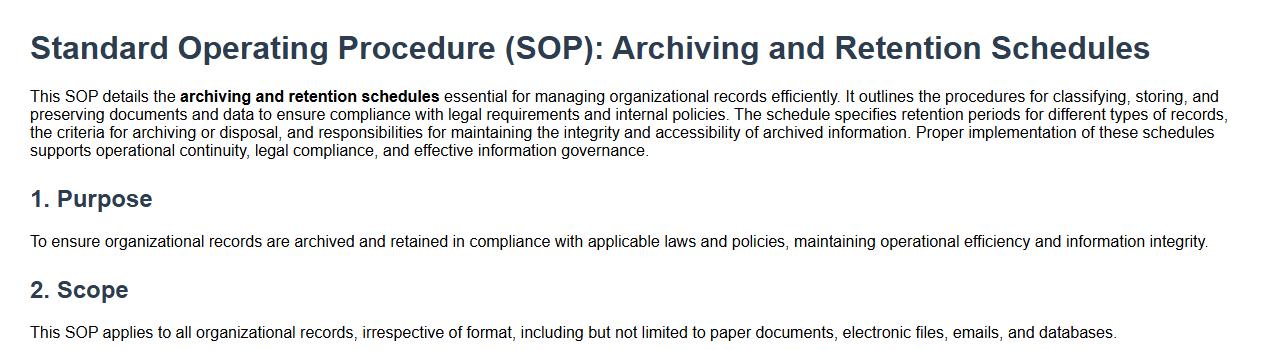
This SOP details the archiving and retention schedules essential for managing organizational records efficiently. It outlines the procedures for classifying, storing, and preserving documents and data to ensure compliance with legal requirements and internal policies. The schedule specifies retention periods for different types of records, the criteria for archiving or disposal, and responsibilities for maintaining the integrity and accessibility of archived information. Proper implementation of these schedules supports operational continuity, legal compliance, and effective information governance.
Periodic audit and compliance checks for documentation.
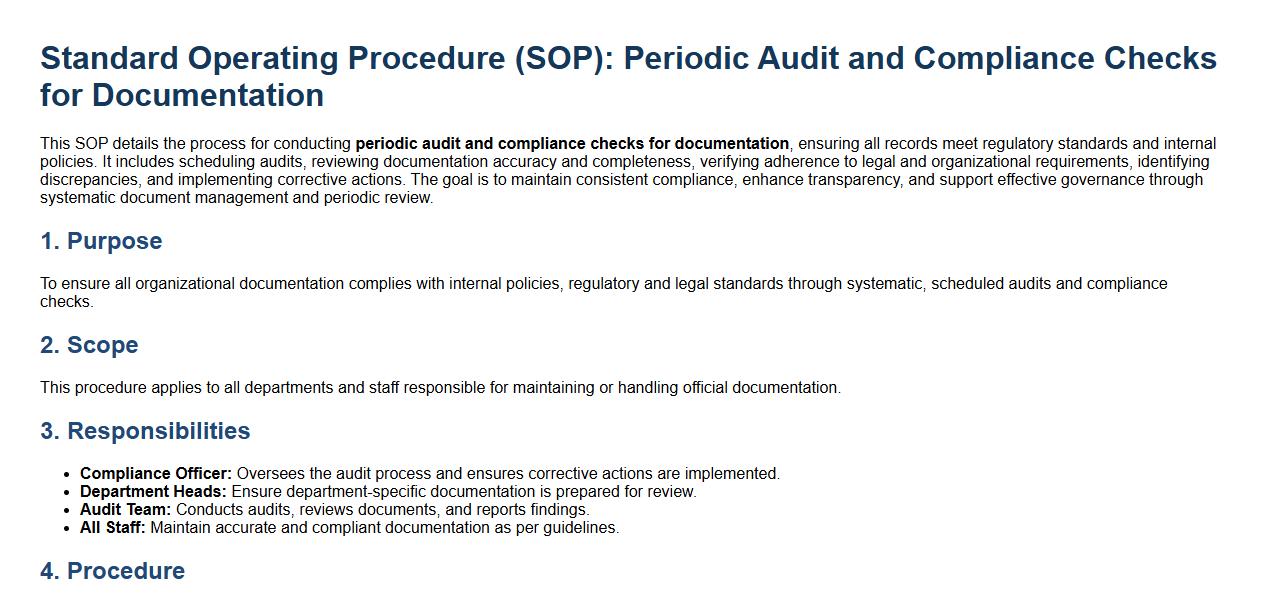
This SOP details the process for conducting periodic audit and compliance checks for documentation, ensuring all records meet regulatory standards and internal policies. It includes scheduling audits, reviewing documentation accuracy and completeness, verifying adherence to legal and organizational requirements, identifying discrepancies, and implementing corrective actions. The goal is to maintain consistent compliance, enhance transparency, and support effective governance through systematic document management and periodic review.
What is the primary objective of the SOP for Office Documentation Management?
The primary objective of the SOP for Office Documentation Management is to establish a standardized process for handling all office documents efficiently. It ensures accuracy, accessibility, and security of documentation across the organization. This SOP aims to minimize errors and streamline document-related workflows.
Which roles are responsible for maintaining document confidentiality and integrity?
Document confidentiality and integrity are primarily maintained by document controllers, managers, and authorized personnel. These roles are tasked with implementing access controls and monitoring document usage. They ensure compliance with company policies and data protection regulations.
What are the standard procedures for filing, retrieving, and archiving documents?
Standard procedures include categorizing and labeling documents during filing to facilitate easy retrieval. Retrieval follows predefined indexing systems to ensure quick and accurate access. Archiving involves storing documents securely for long-term preservation and future reference.
How does the SOP address version control and document updates?
The SOP enforces strict version control by tracking revisions and maintaining a version history log. Document updates require approval workflows to validate changes before finalizing. This process prevents unauthorized edits and preserves document integrity.
What steps are required for the secure disposal or destruction of obsolete documents?
Secure disposal begins with identifying documents eligible for destruction according to retention policies. The SOP mandates methods such as shredding or electronic wiping to ensure data is irrecoverable. Proper documentation of the disposal process is maintained for audit purposes.