

A SOP Template for Administrative Complaint Resolution outlines a standardized process for addressing and resolving complaints within an organization efficiently and fairly. This template ensures consistent handling of issues by detailing steps for complaint intake, investigation, and resolution. Implementing this SOP enhances accountability and promotes transparent communication between the administration and complainants.
**SOP Template for Administrative Complaint Resolution:**
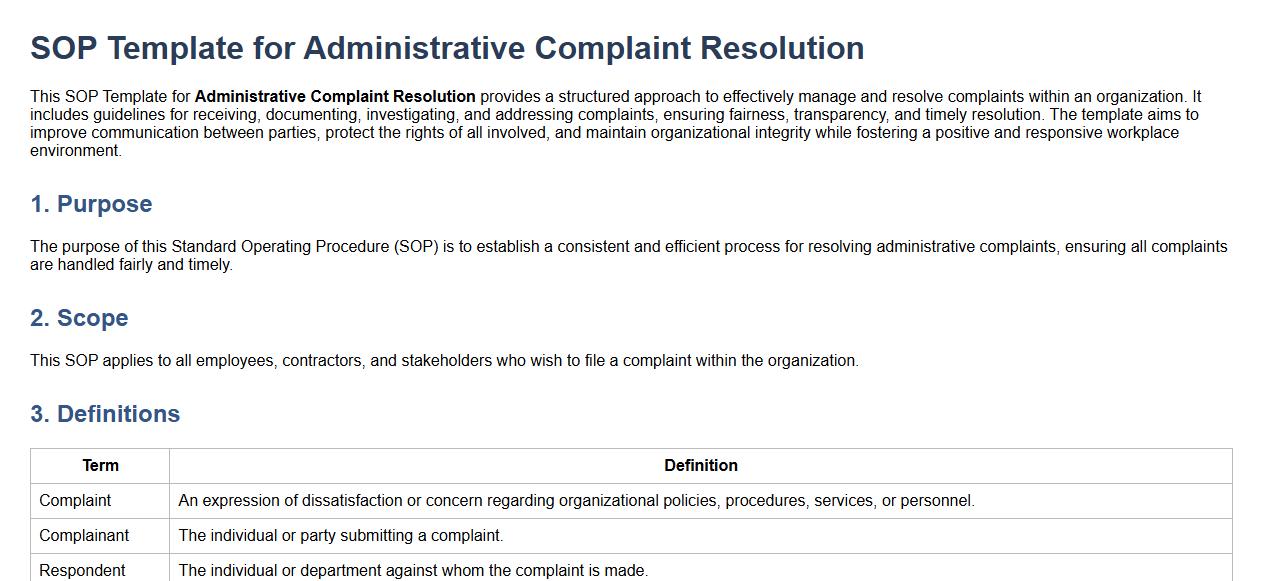
This SOP Template for Administrative Complaint Resolution provides a structured approach to effectively manage and resolve complaints within an organization. It includes guidelines for receiving, documenting, investigating, and addressing complaints, ensuring fairness, transparency, and timely resolution. The template aims to improve communication between parties, protect the rights of all involved, and maintain organizational integrity while fostering a positive and responsive workplace environment.
Intake and Registration of Complaints.
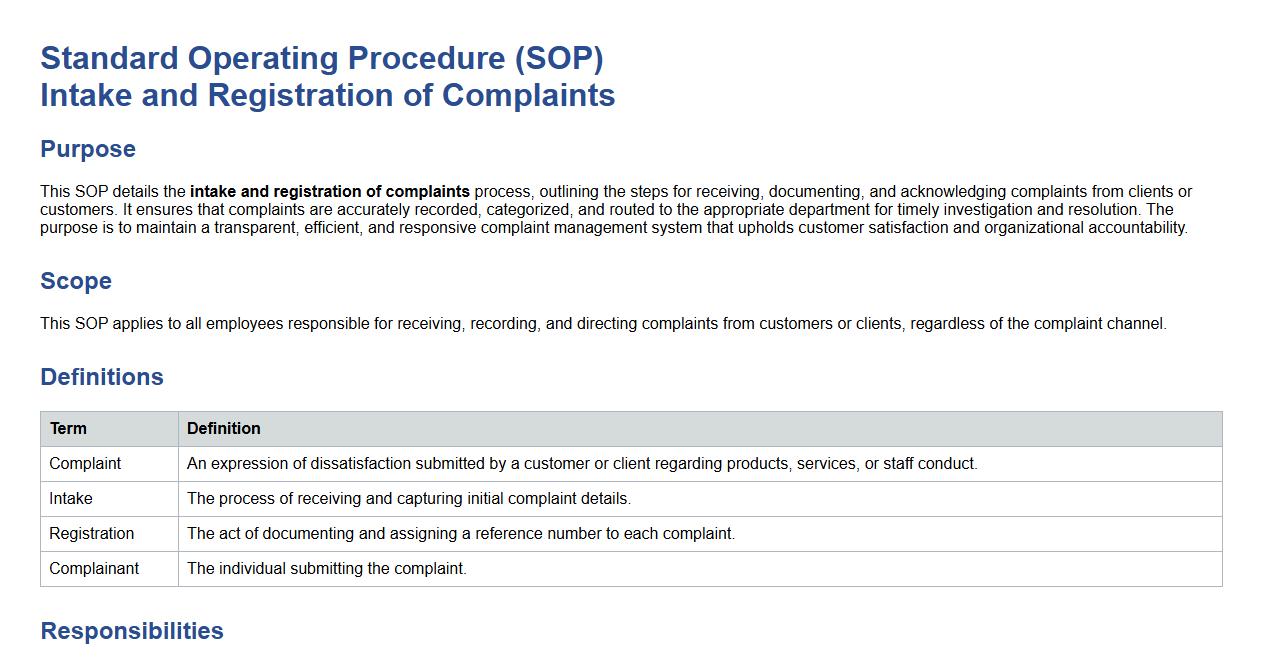
This SOP details the intake and registration of complaints process, outlining the steps for receiving, documenting, and acknowledging complaints from clients or customers. It ensures that complaints are accurately recorded, categorized, and routed to the appropriate department for timely investigation and resolution. The purpose is to maintain a transparent, efficient, and responsive complaint management system that upholds customer satisfaction and organizational accountability.
Verification and Initial Assessment of Complaint Validity.
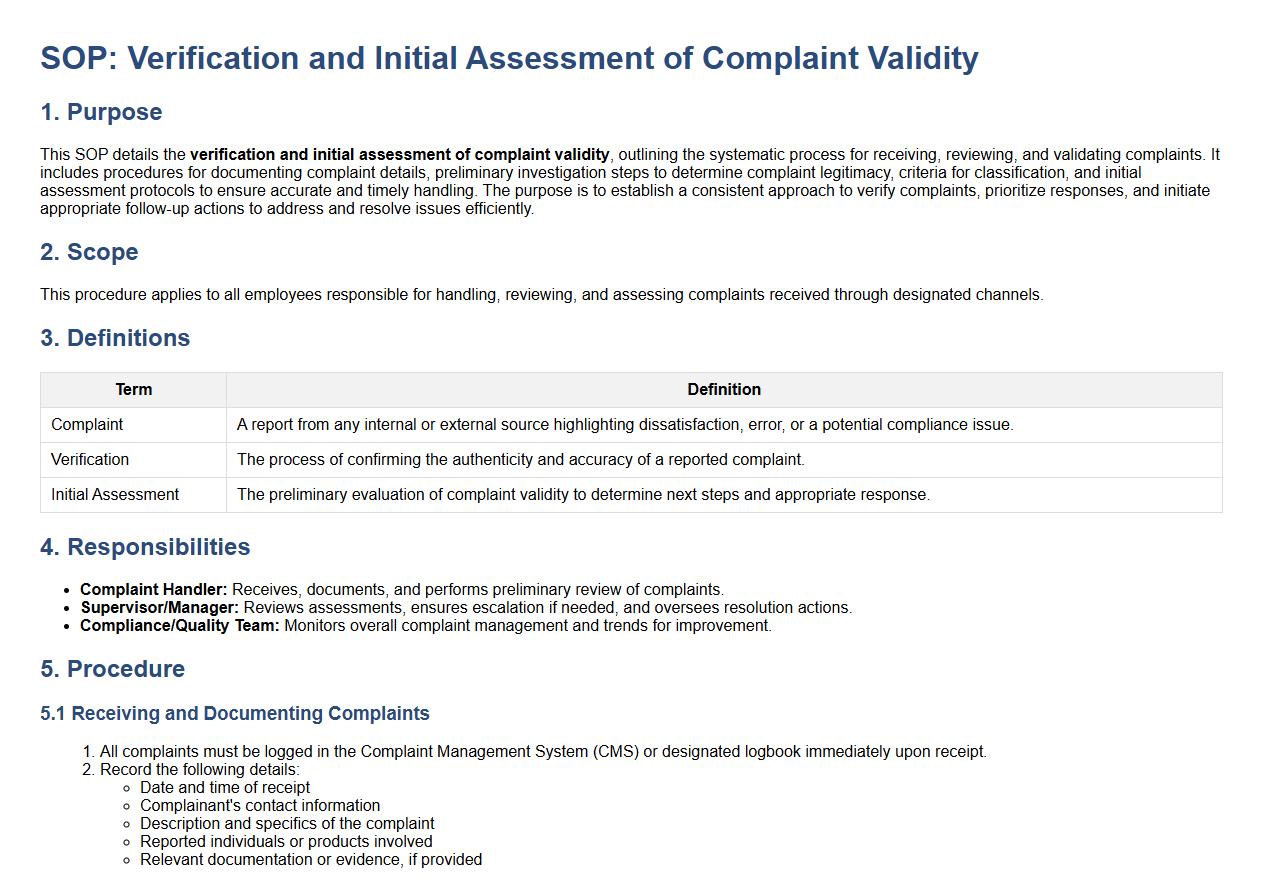
This SOP details the verification and initial assessment of complaint validity, outlining the systematic process for receiving, reviewing, and validating complaints. It includes procedures for documenting complaint details, preliminary investigation steps to determine complaint legitimacy, criteria for classification, and initial assessment protocols to ensure accurate and timely handling. The purpose is to establish a consistent approach to verify complaints, prioritize responses, and initiate appropriate follow-up actions to address and resolve issues efficiently.
Assignment of Investigation Officer or Committee.
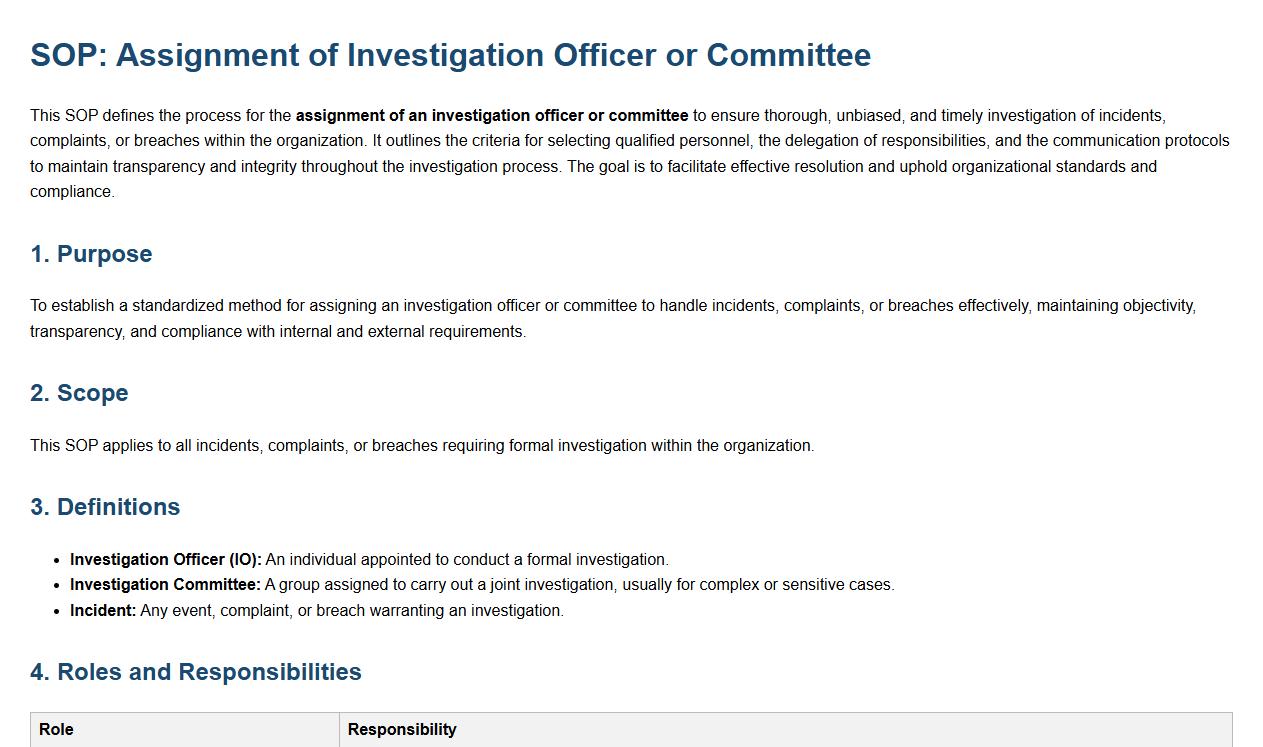
This SOP defines the process for the assignment of an investigation officer or committee to ensure thorough, unbiased, and timely investigation of incidents, complaints, or breaches within the organization. It outlines the criteria for selecting qualified personnel, the delegation of responsibilities, and the communication protocols to maintain transparency and integrity throughout the investigation process. The goal is to facilitate effective resolution and uphold organizational standards and compliance.
Notification to Respondent(s) and Stakeholders.
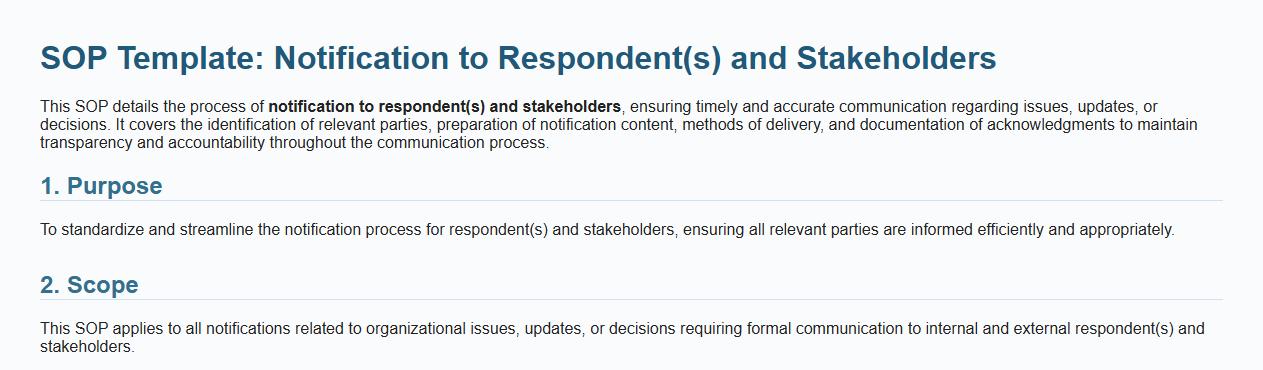
This SOP details the process of notification to respondent(s) and stakeholders, ensuring timely and accurate communication regarding issues, updates, or decisions. It covers the identification of relevant parties, preparation of notification content, methods of delivery, and documentation of acknowledgments to maintain transparency and accountability throughout the communication process.
Gathering and Documentation of Evidence.
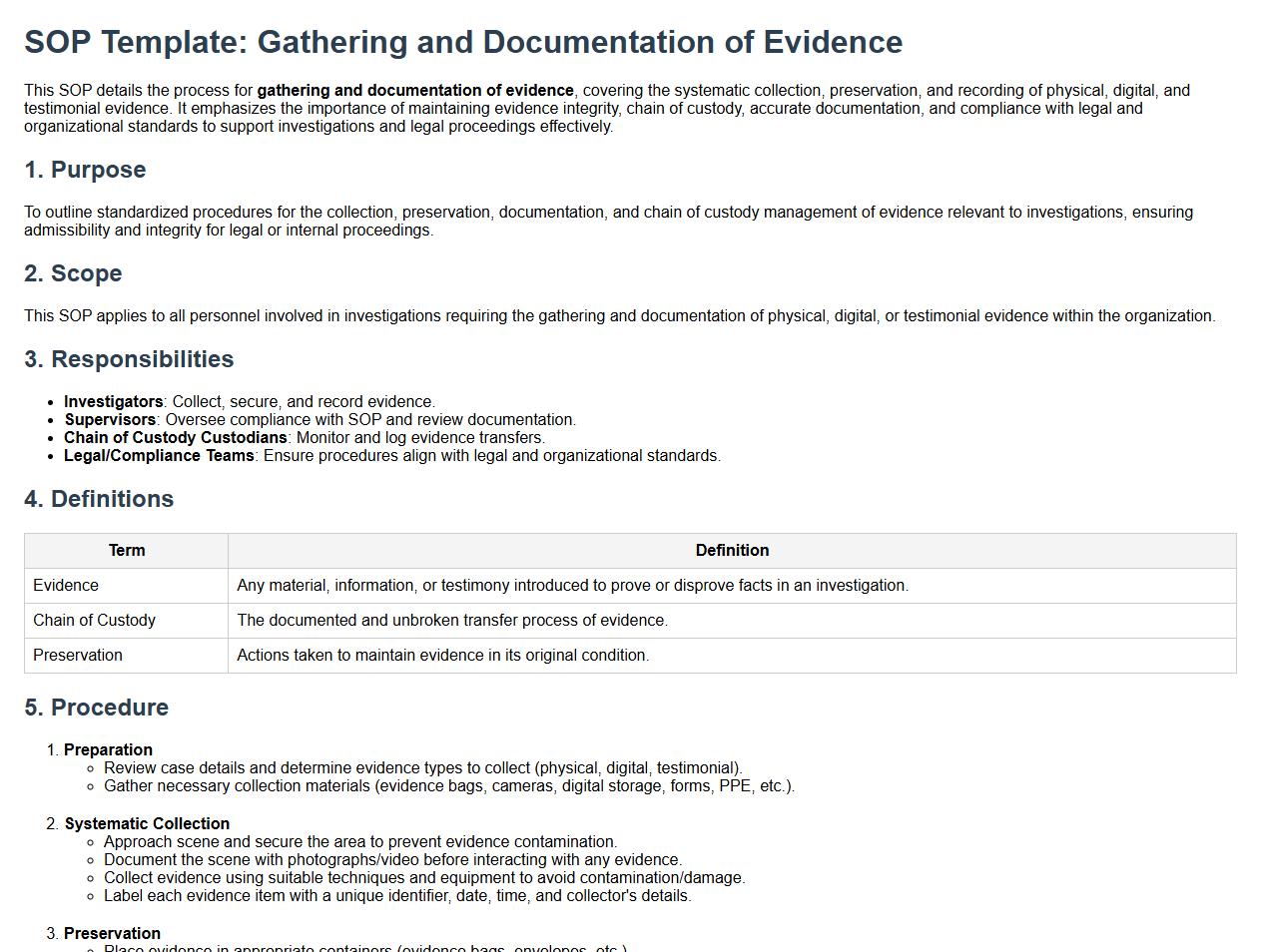
This SOP details the process for gathering and documentation of evidence, covering the systematic collection, preservation, and recording of physical, digital, and testimonial evidence. It emphasizes the importance of maintaining evidence integrity, chain of custody, accurate documentation, and compliance with legal and organizational standards to support investigations and legal proceedings effectively.
Conduct of Hearings or Clarificatory Meetings.
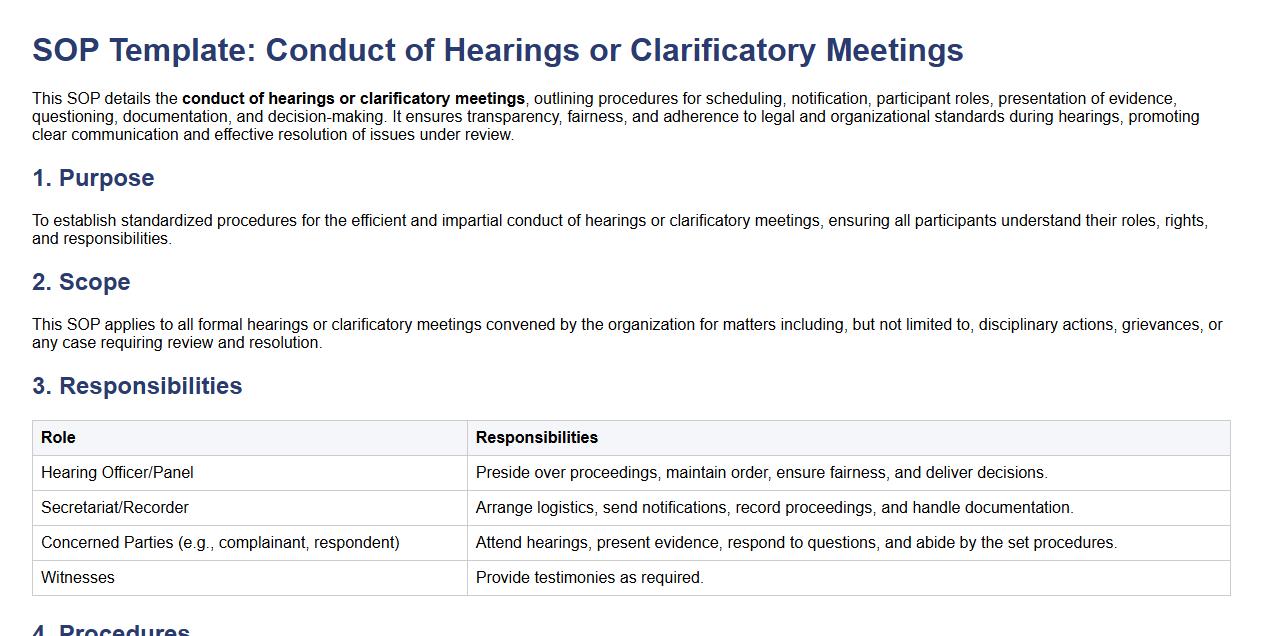
This SOP details the conduct of hearings or clarificatory meetings, outlining procedures for scheduling, notification, participant roles, presentation of evidence, questioning, documentation, and decision-making. It ensures transparency, fairness, and adherence to legal and organizational standards during hearings, promoting clear communication and effective resolution of issues under review.
Preparation and Submission of Investigation Report.
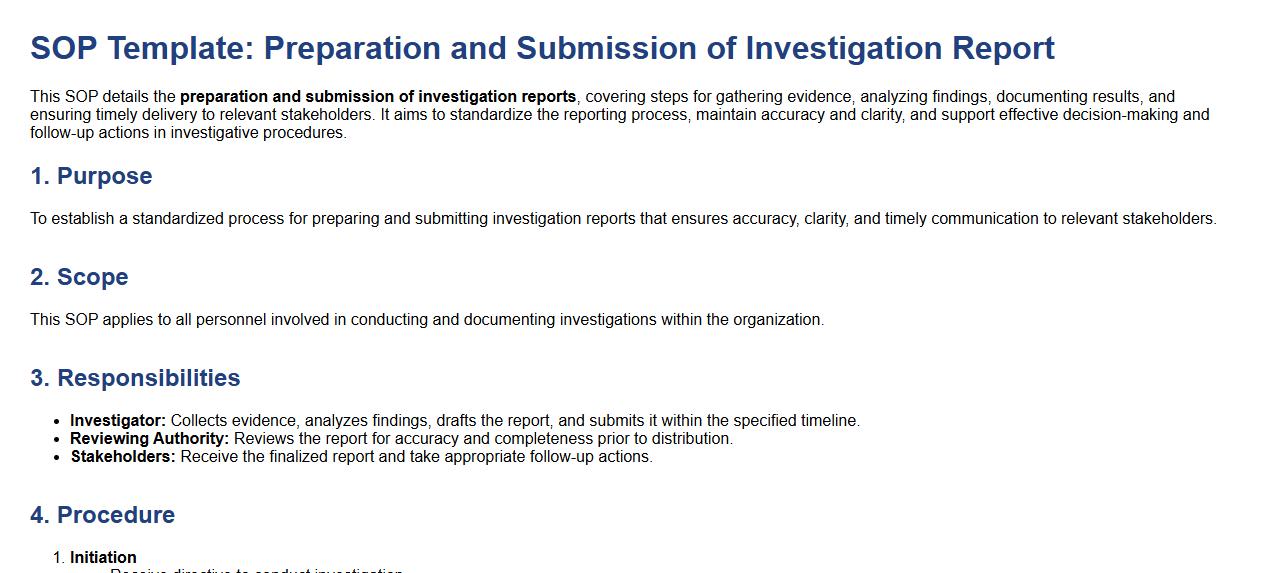
This SOP details the preparation and submission of investigation reports, covering steps for gathering evidence, analyzing findings, documenting results, and ensuring timely delivery to relevant stakeholders. It aims to standardize the reporting process, maintain accuracy and clarity, and support effective decision-making and follow-up actions in investigative procedures.
Deliberation and Decision-Making by Authorized Body.
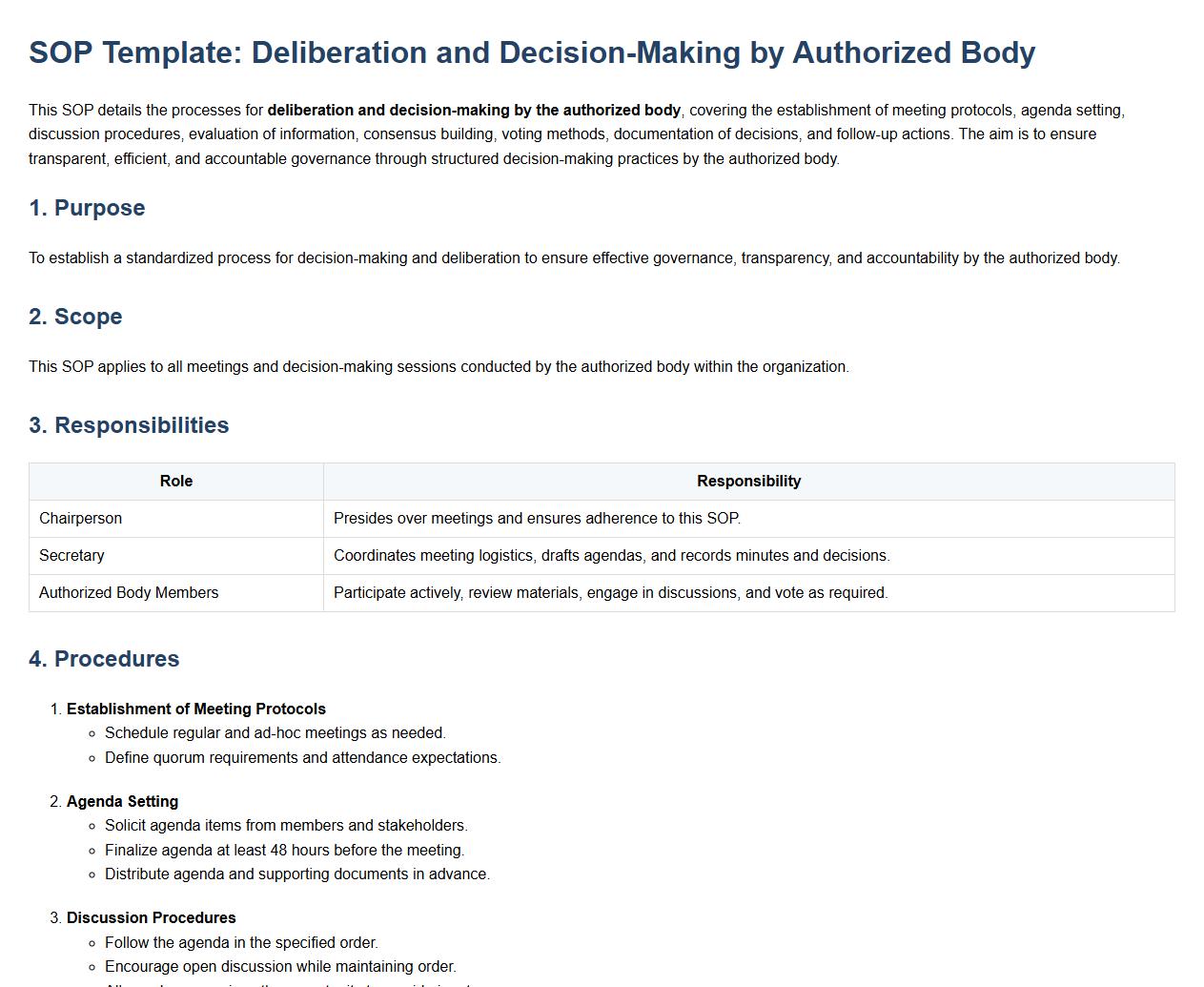
This SOP details the processes for deliberation and decision-making by the authorized body, covering the establishment of meeting protocols, agenda setting, discussion procedures, evaluation of information, consensus building, voting methods, documentation of decisions, and follow-up actions. The aim is to ensure transparent, efficient, and accountable governance through structured decision-making practices by the authorized body.
Issuance and Communication of Resolution or Decision.
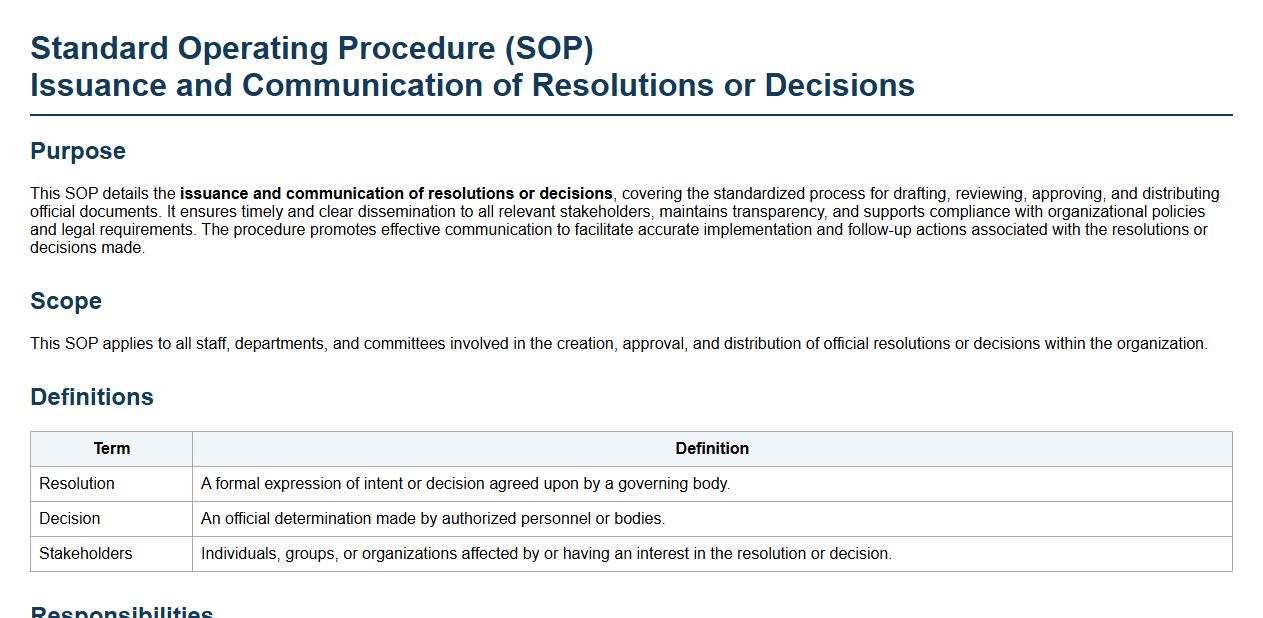
This SOP details the issuance and communication of resolutions or decisions, covering the standardized process for drafting, reviewing, approving, and distributing official documents. It ensures timely and clear dissemination to all relevant stakeholders, maintains transparency, and supports compliance with organizational policies and legal requirements. The procedure promotes effective communication to facilitate accurate implementation and follow-up actions associated with the resolutions or decisions made.
Implementation, Monitoring, and Archiving of Case Records.
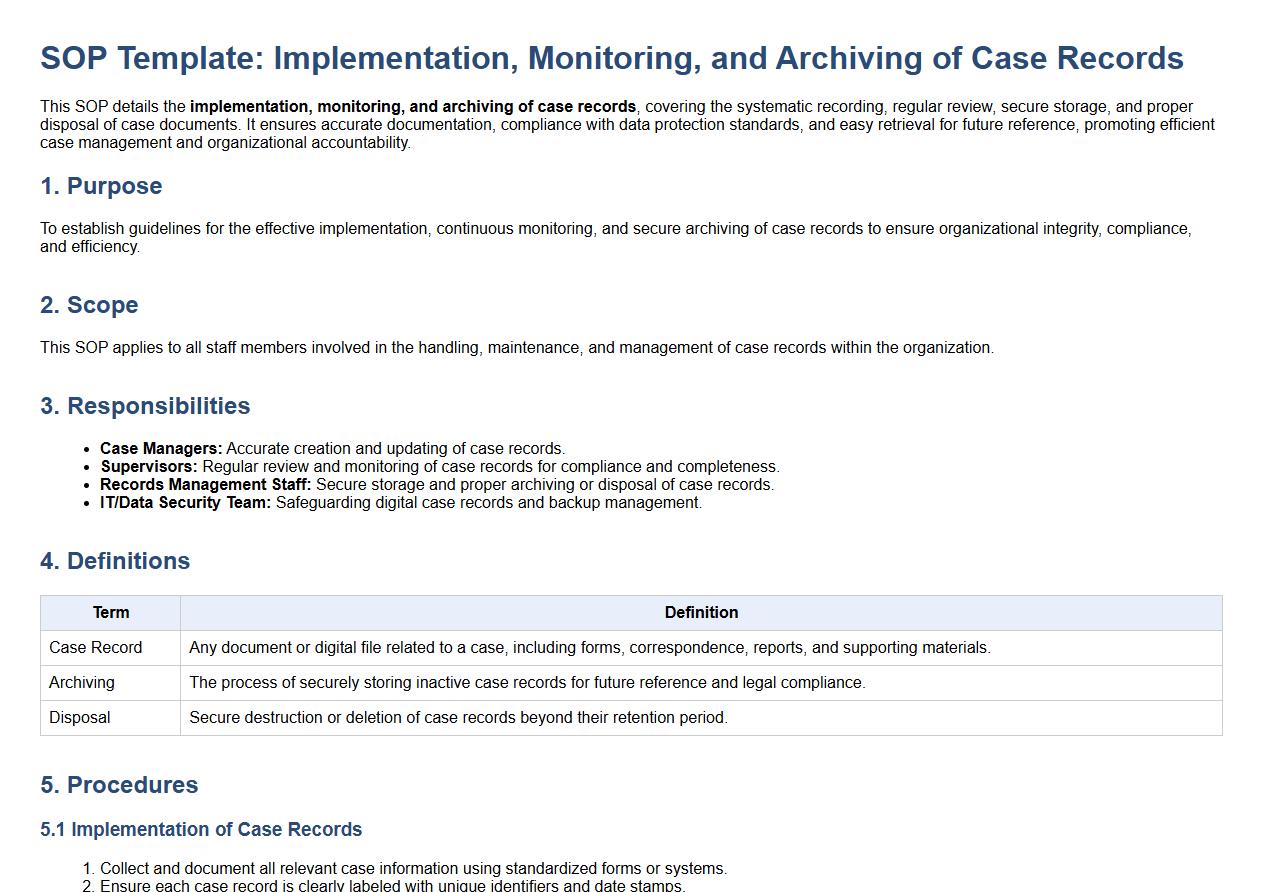
This SOP details the implementation, monitoring, and archiving of case records, covering the systematic recording, regular review, secure storage, and proper disposal of case documents. It ensures accurate documentation, compliance with data protection standards, and easy retrieval for future reference, promoting efficient case management and organizational accountability.
Complaint intake and initial documentation procedures.
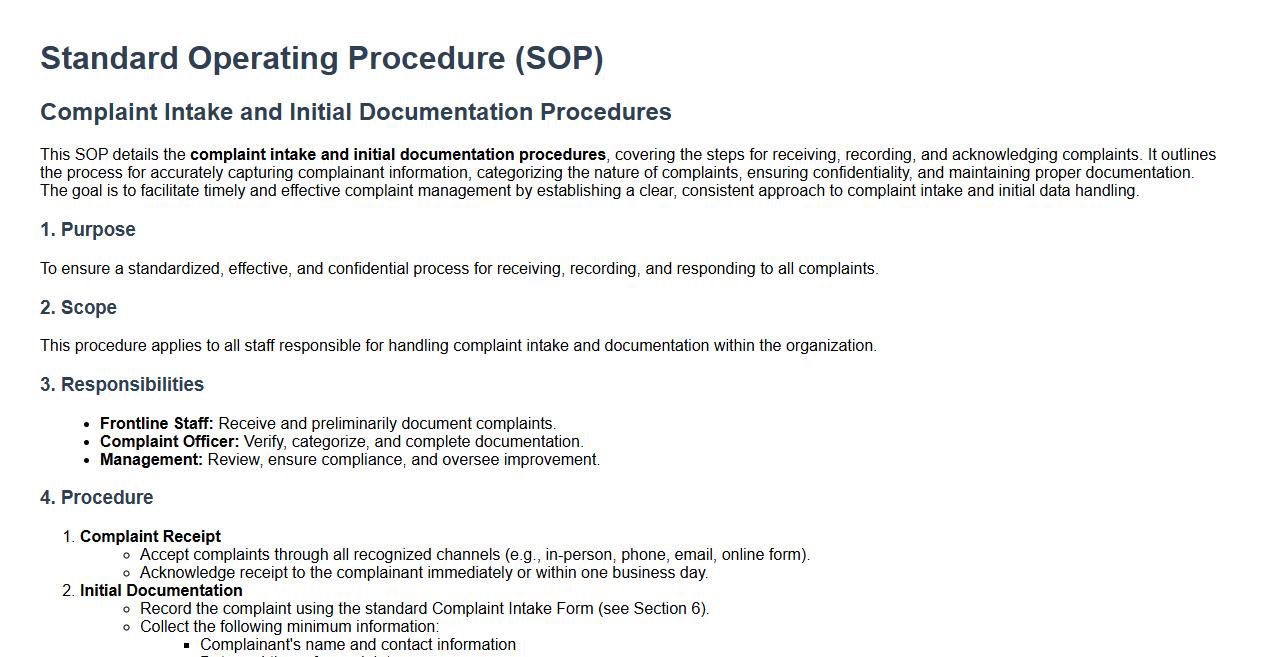
This SOP details the complaint intake and initial documentation procedures, covering the steps for receiving, recording, and acknowledging complaints. It outlines the process for accurately capturing complainant information, categorizing the nature of complaints, ensuring confidentiality, and maintaining proper documentation. The goal is to facilitate timely and effective complaint management by establishing a clear, consistent approach to complaint intake and initial data handling.
Complaint validation and eligibility assessment.
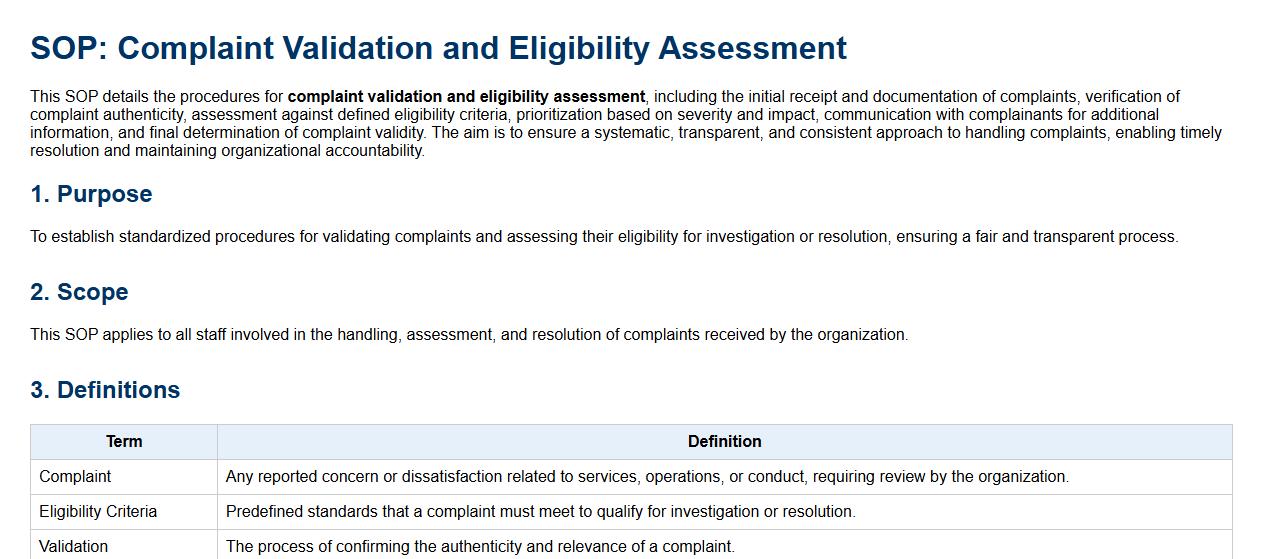
This SOP details the procedures for complaint validation and eligibility assessment, including the initial receipt and documentation of complaints, verification of complaint authenticity, assessment against defined eligibility criteria, prioritization based on severity and impact, communication with complainants for additional information, and final determination of complaint validity. The aim is to ensure a systematic, transparent, and consistent approach to handling complaints, enabling timely resolution and maintaining organizational accountability.
Notification of receipt to involved parties.
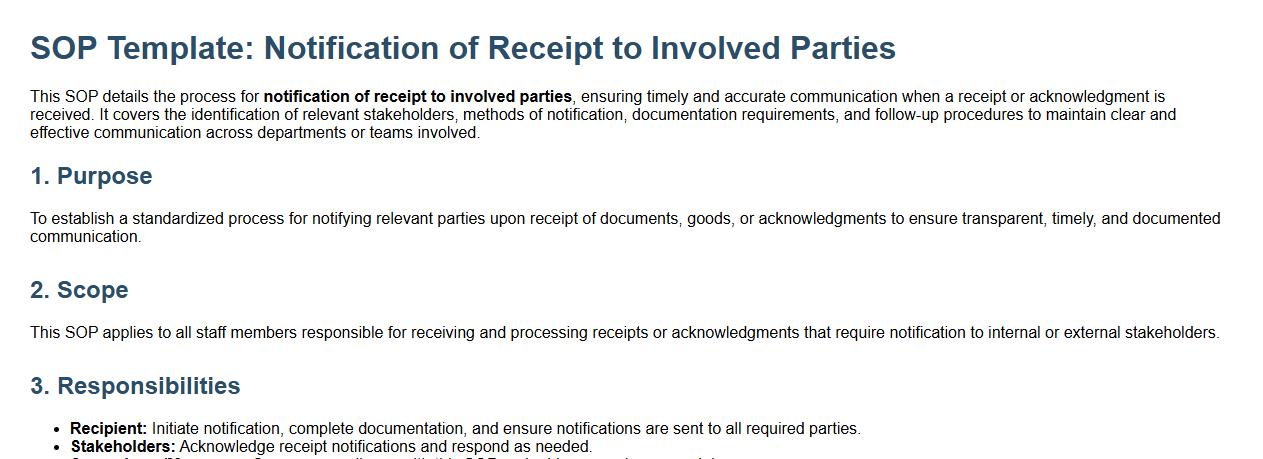
This SOP details the process for notification of receipt to involved parties, ensuring timely and accurate communication when a receipt or acknowledgment is received. It covers the identification of relevant stakeholders, methods of notification, documentation requirements, and follow-up procedures to maintain clear and effective communication across departments or teams involved.
Assignment of investigation officer or committee.
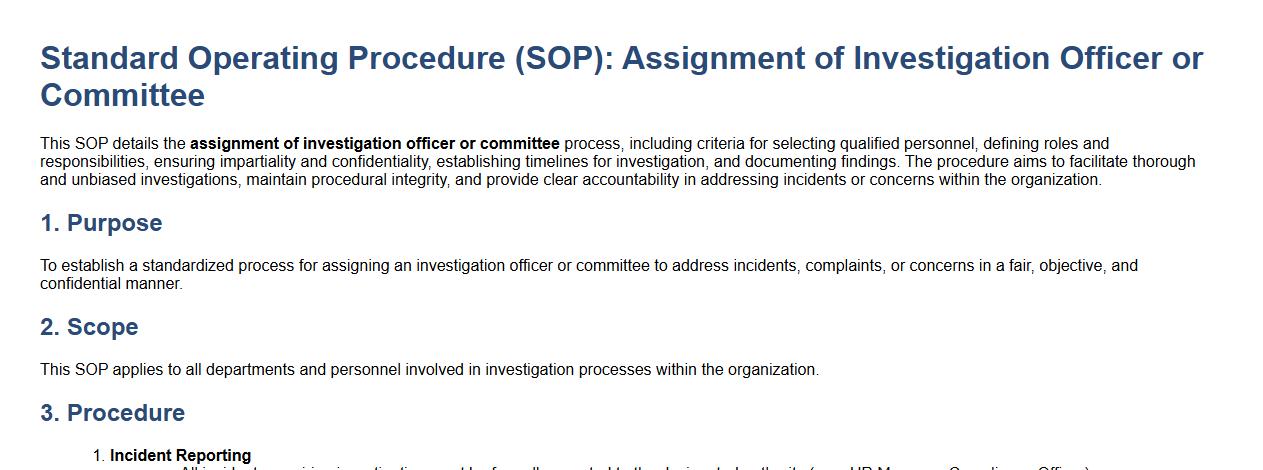
This SOP details the assignment of investigation officer or committee process, including criteria for selecting qualified personnel, defining roles and responsibilities, ensuring impartiality and confidentiality, establishing timelines for investigation, and documenting findings. The procedure aims to facilitate thorough and unbiased investigations, maintain procedural integrity, and provide clear accountability in addressing incidents or concerns within the organization.
Investigation planning and evidence collection protocols.
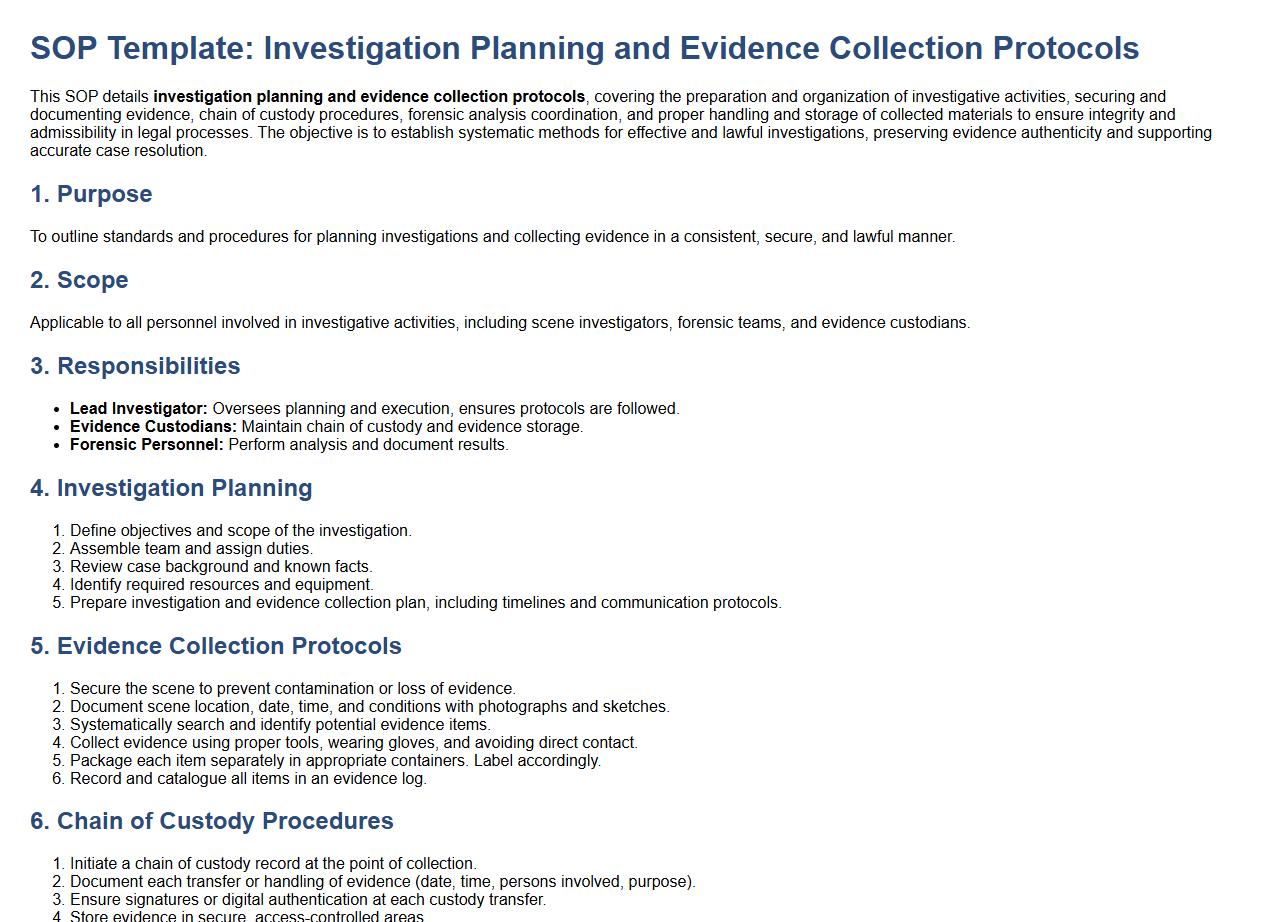
This SOP details investigation planning and evidence collection protocols, covering the preparation and organization of investigative activities, securing and documenting evidence, chain of custody procedures, forensic analysis coordination, and proper handling and storage of collected materials to ensure integrity and admissibility in legal processes. The objective is to establish systematic methods for effective and lawful investigations, preserving evidence authenticity and supporting accurate case resolution.
Interview guidelines for complainant, respondent, and witnesses.
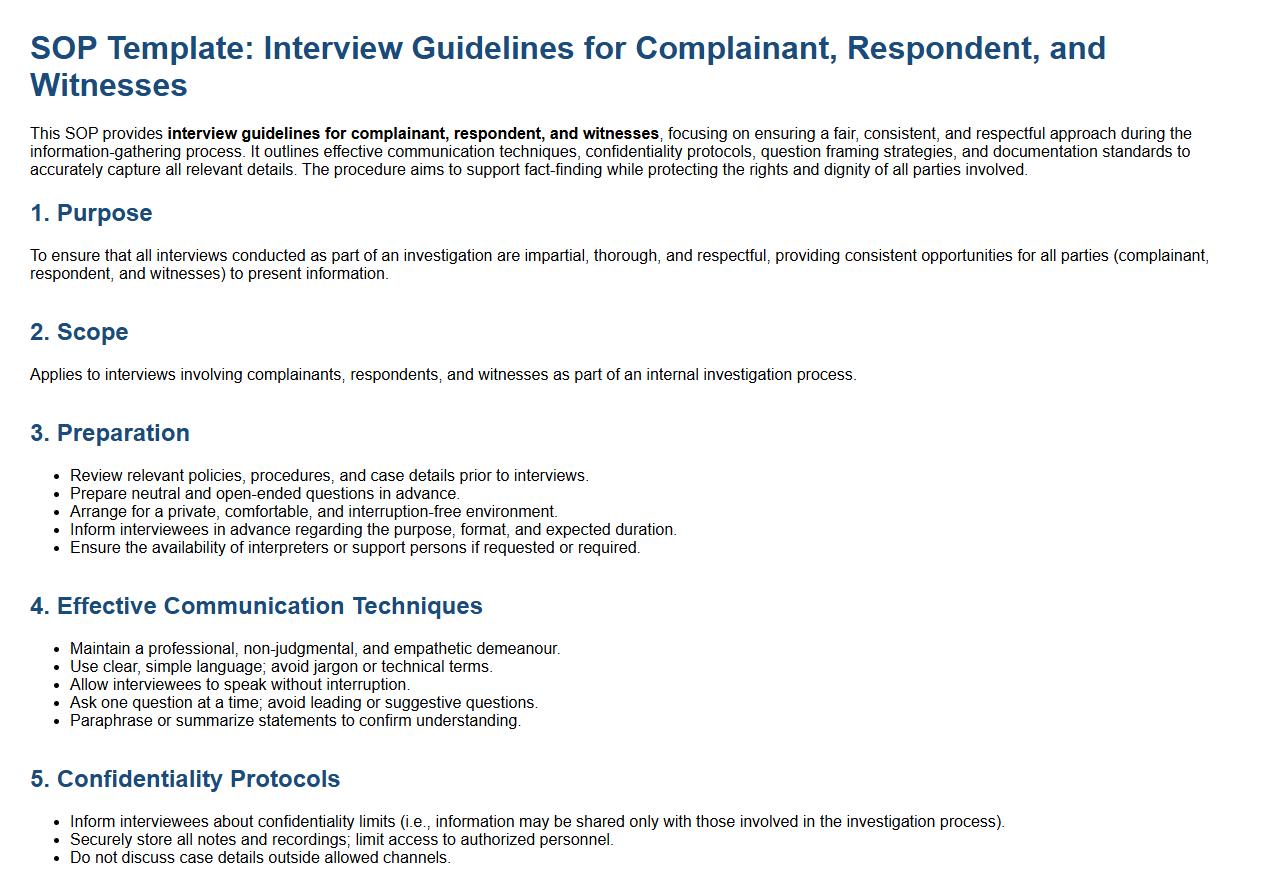
This SOP provides interview guidelines for complainant, respondent, and witnesses, focusing on ensuring a fair, consistent, and respectful approach during the information-gathering process. It outlines effective communication techniques, confidentiality protocols, question framing strategies, and documentation standards to accurately capture all relevant details. The procedure aims to support fact-finding while protecting the rights and dignity of all parties involved.
Analysis and findings compilation standards.
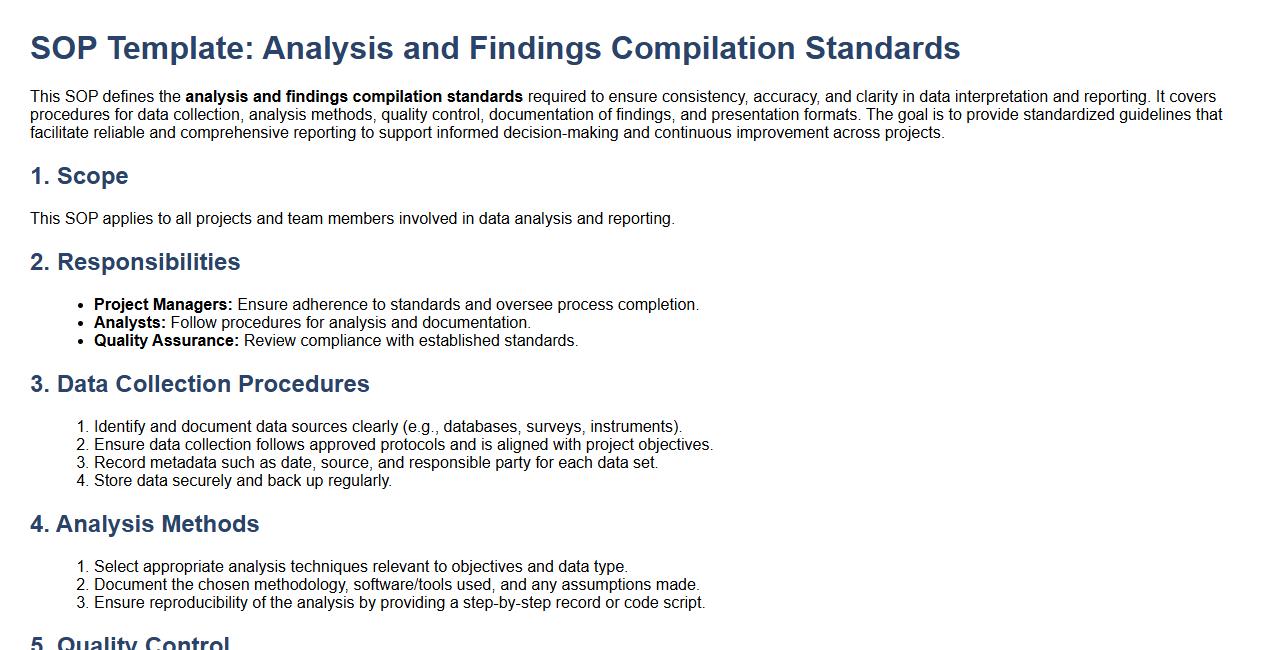
This SOP defines the analysis and findings compilation standards required to ensure consistency, accuracy, and clarity in data interpretation and reporting. It covers procedures for data collection, analysis methods, quality control, documentation of findings, and presentation formats. The goal is to provide standardized guidelines that facilitate reliable and comprehensive reporting to support informed decision-making and continuous improvement across projects.
Drafting, review, and issuance of decision or resolution.
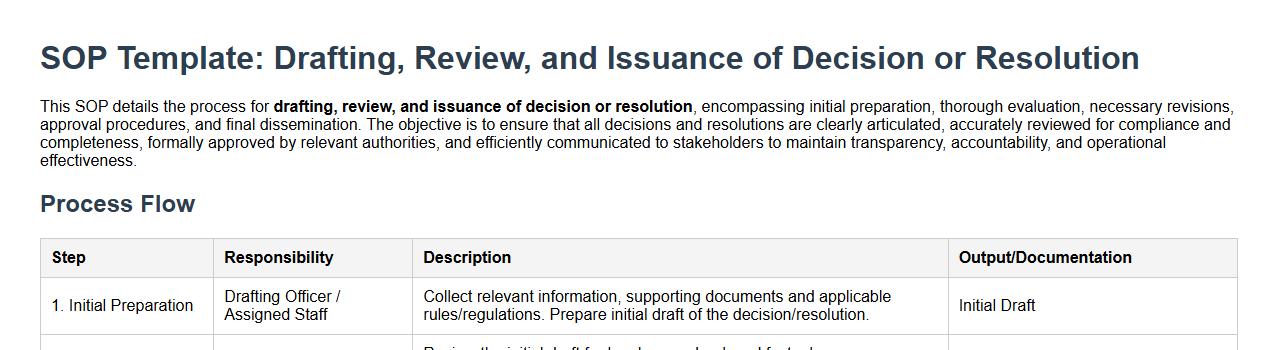
This SOP details the process for drafting, review, and issuance of decision or resolution, encompassing initial preparation, thorough evaluation, necessary revisions, approval procedures, and final dissemination. The objective is to ensure that all decisions and resolutions are clearly articulated, accurately reviewed for compliance and completeness, formally approved by relevant authorities, and efficiently communicated to stakeholders to maintain transparency, accountability, and operational effectiveness.
Appeals and reconsideration procedures.
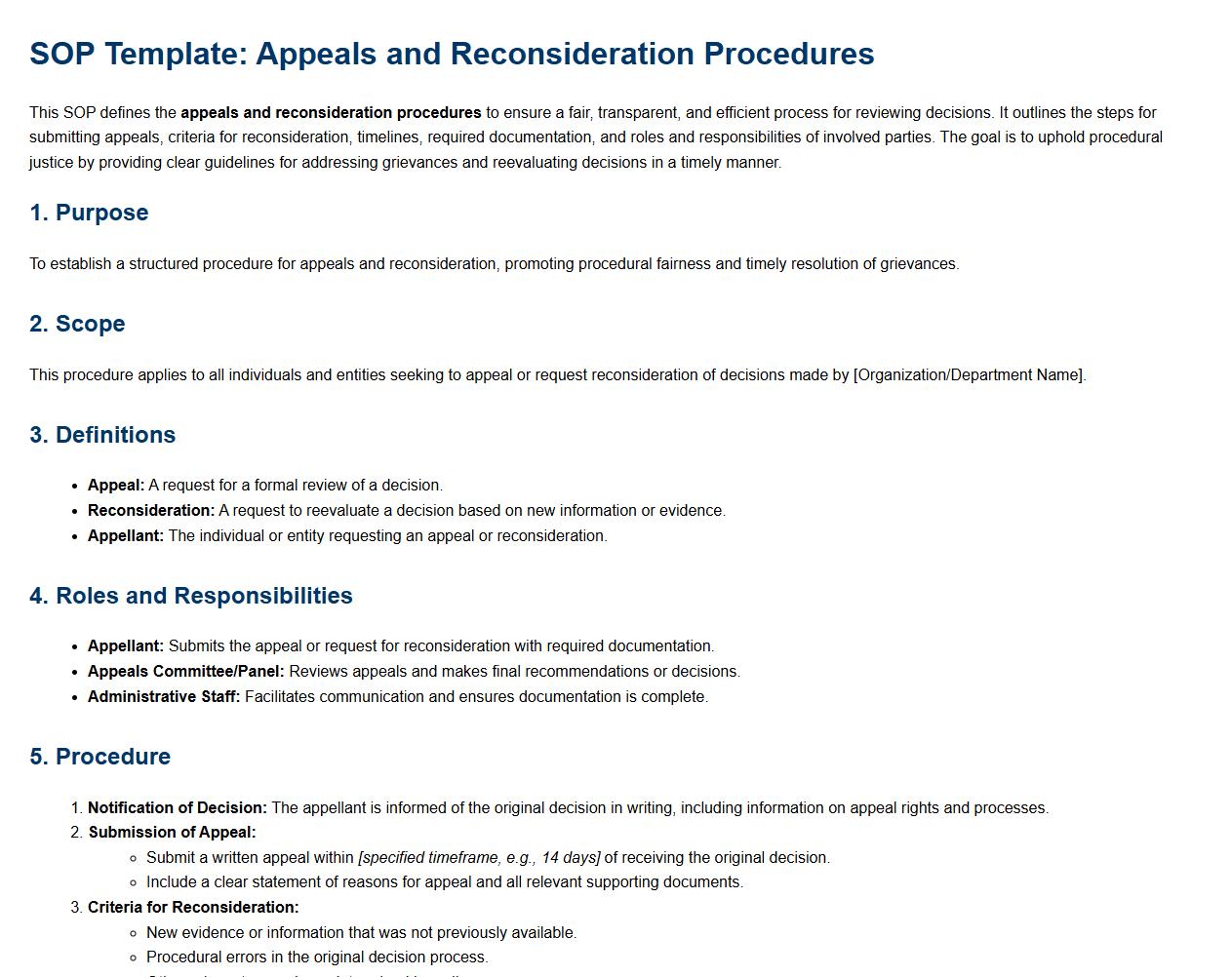
This SOP defines the appeals and reconsideration procedures to ensure a fair, transparent, and efficient process for reviewing decisions. It outlines the steps for submitting appeals, criteria for reconsideration, timelines, required documentation, and roles and responsibilities of involved parties. The goal is to uphold procedural justice by providing clear guidelines for addressing grievances and reevaluating decisions in a timely manner.
Confidential record-keeping and case closure process.
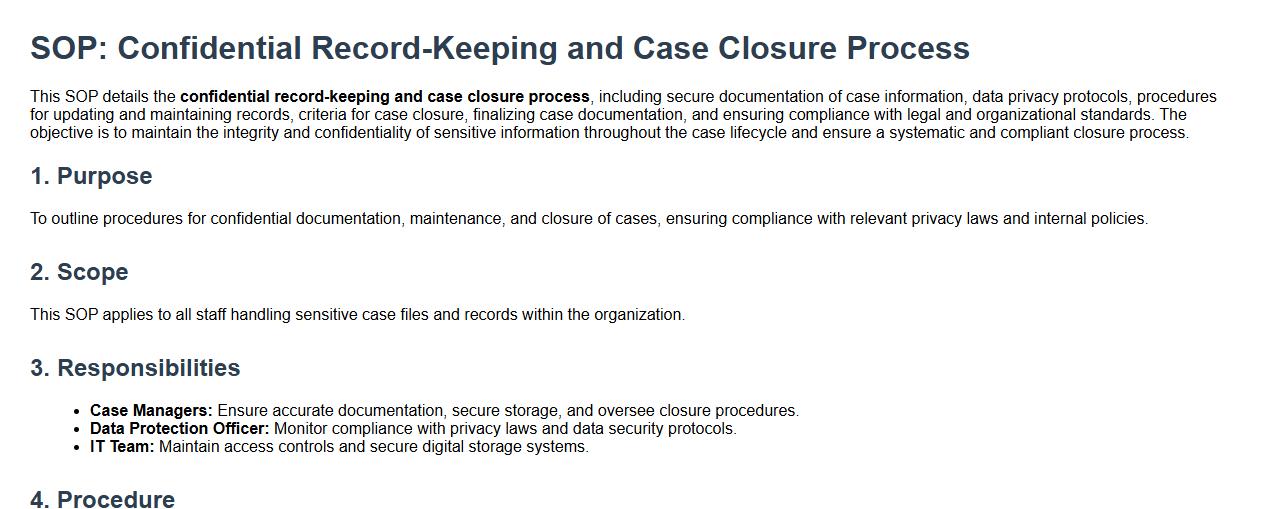
This SOP details the confidential record-keeping and case closure process, including secure documentation of case information, data privacy protocols, procedures for updating and maintaining records, criteria for case closure, finalizing case documentation, and ensuring compliance with legal and organizational standards. The objective is to maintain the integrity and confidentiality of sensitive information throughout the case lifecycle and ensure a systematic and compliant closure process.
Intake and Acknowledgment of Complaint.
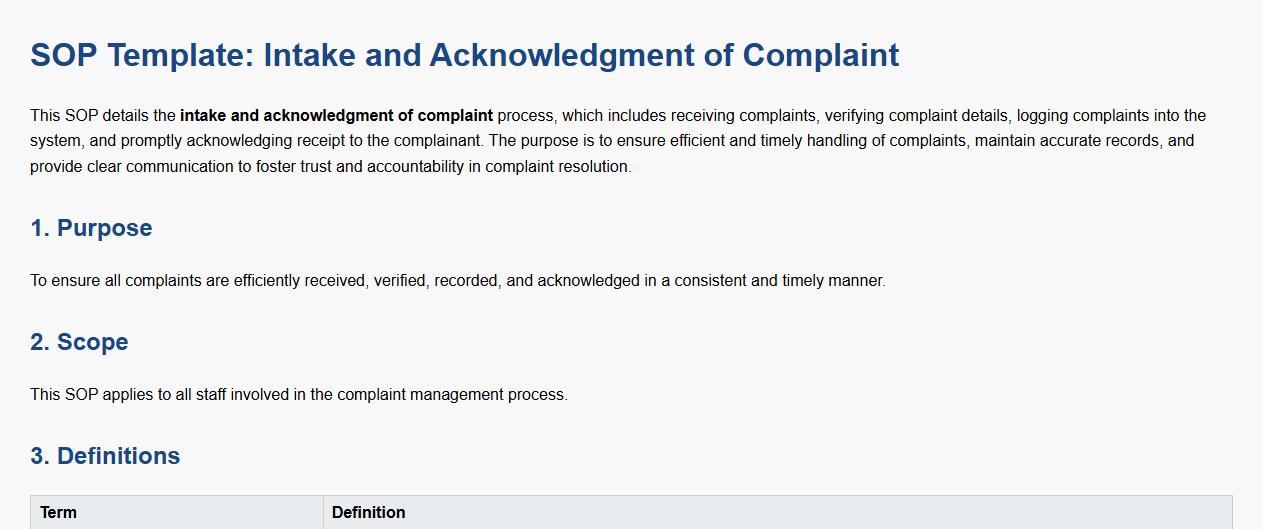
This SOP details the intake and acknowledgment of complaint process, which includes receiving complaints, verifying complaint details, logging complaints into the system, and promptly acknowledging receipt to the complainant. The purpose is to ensure efficient and timely handling of complaints, maintain accurate records, and provide clear communication to foster trust and accountability in complaint resolution.
Verification of Complainant’s Identity and Authorization.
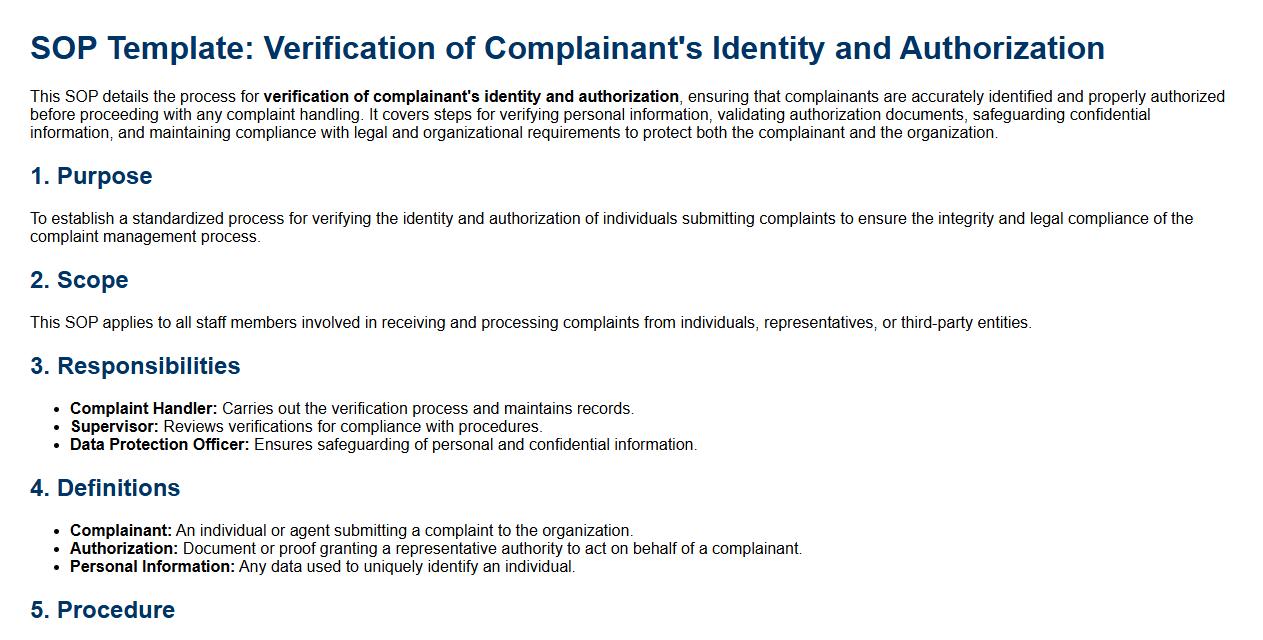
This SOP details the process for verification of complainant's identity and authorization, ensuring that complainants are accurately identified and properly authorized before proceeding with any complaint handling. It covers steps for verifying personal information, validating authorization documents, safeguarding confidential information, and maintaining compliance with legal and organizational requirements to protect both the complainant and the organization.
Initial Assessment and Case Categorization.
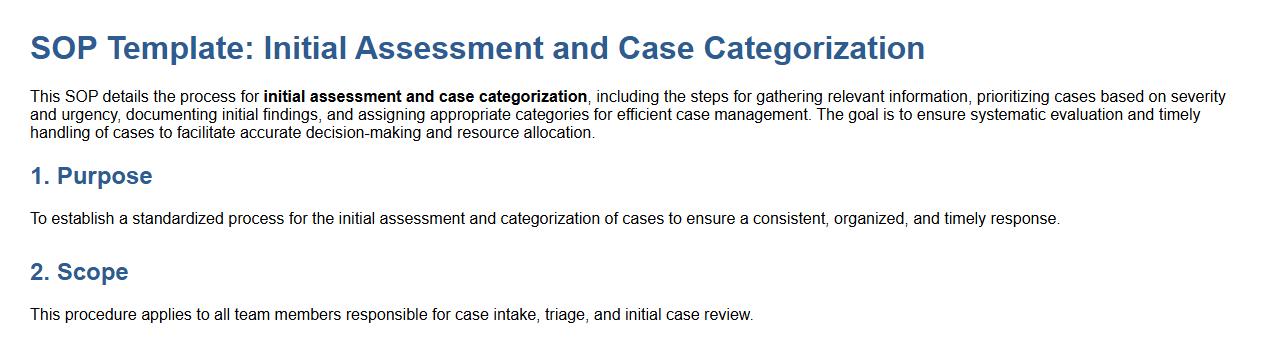
This SOP details the process for initial assessment and case categorization, including the steps for gathering relevant information, prioritizing cases based on severity and urgency, documenting initial findings, and assigning appropriate categories for efficient case management. The goal is to ensure systematic evaluation and timely handling of cases to facilitate accurate decision-making and resource allocation.
Notification to Relevant Departments/Parties.
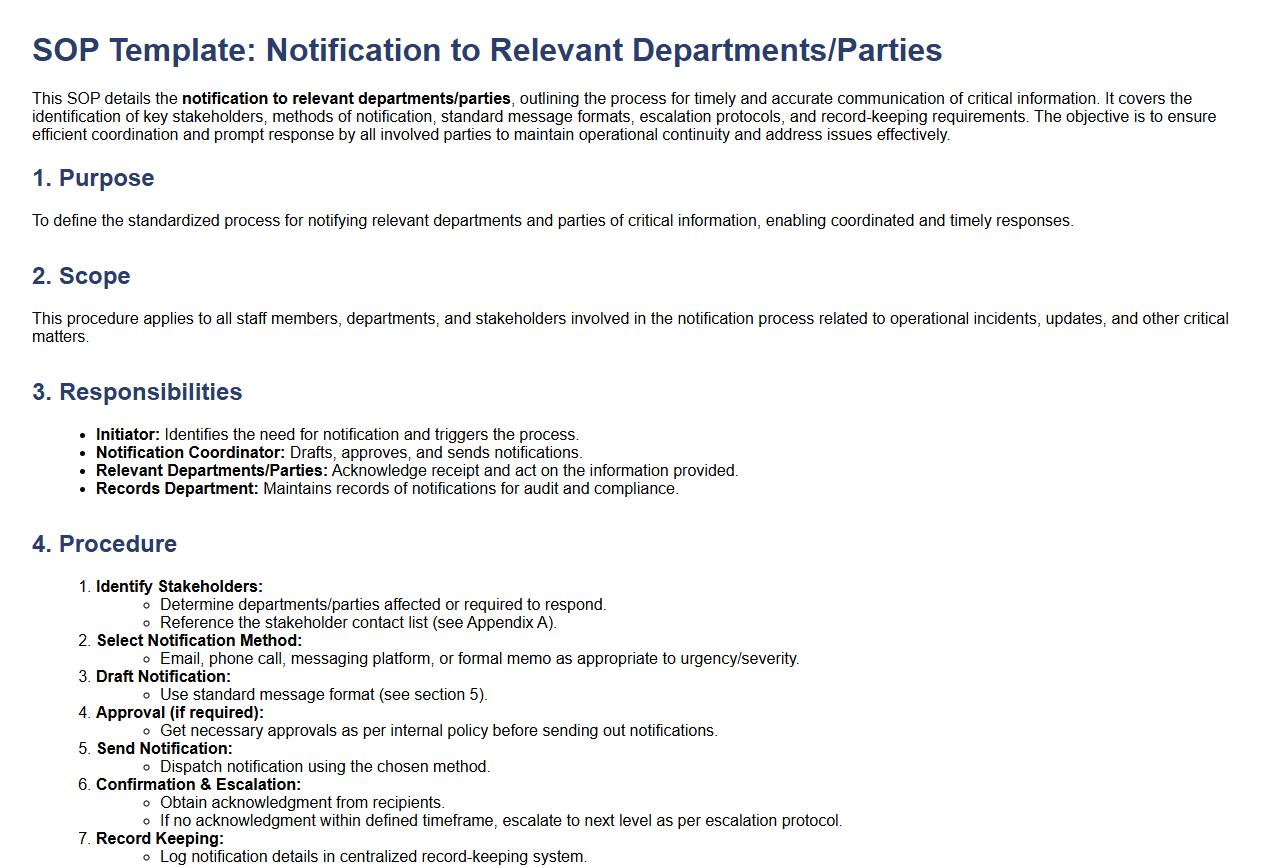
This SOP details the notification to relevant departments/parties, outlining the process for timely and accurate communication of critical information. It covers the identification of key stakeholders, methods of notification, standard message formats, escalation protocols, and record-keeping requirements. The objective is to ensure efficient coordination and prompt response by all involved parties to maintain operational continuity and address issues effectively.
Assignment of Case Handler or Resolution Officer.
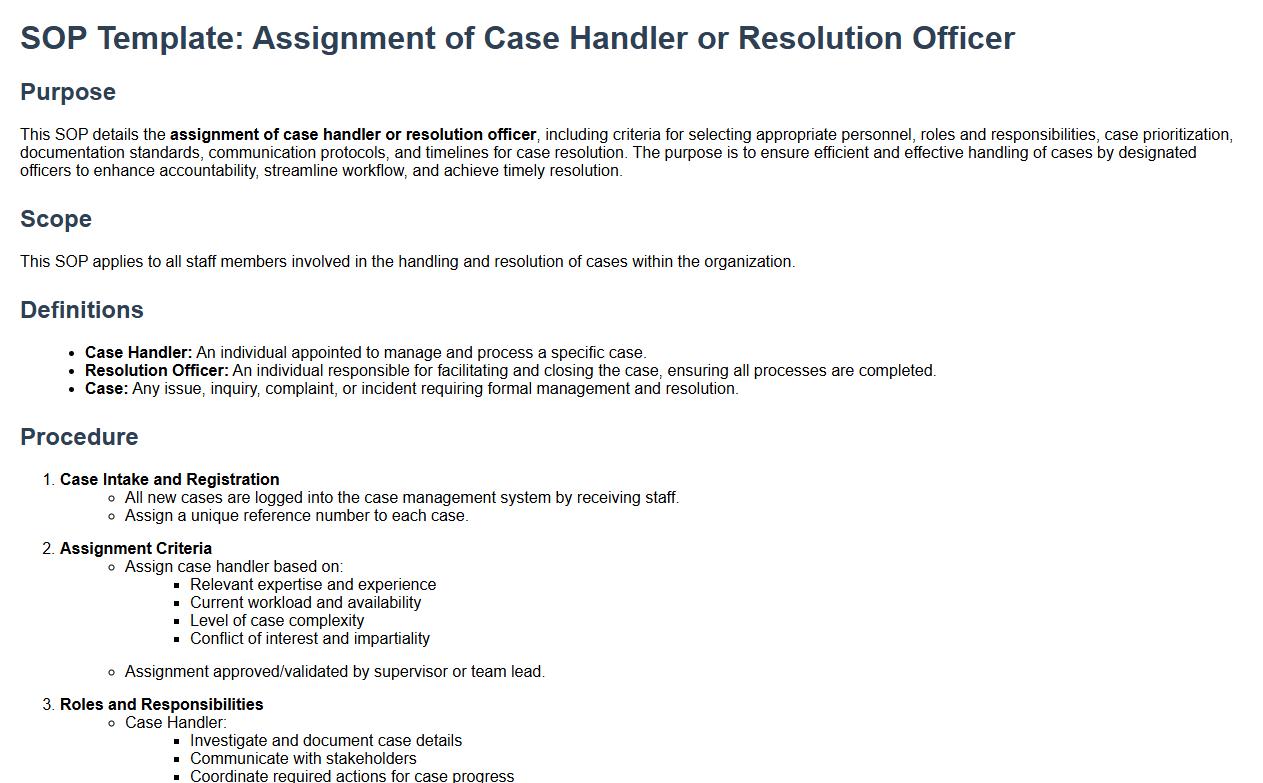
This SOP details the assignment of case handler or resolution officer, including criteria for selecting appropriate personnel, roles and responsibilities, case prioritization, documentation standards, communication protocols, and timelines for case resolution. The purpose is to ensure efficient and effective handling of cases by designated officers to enhance accountability, streamline workflow, and achieve timely resolution.
Collection and Review of Supporting Documents/Evidence.
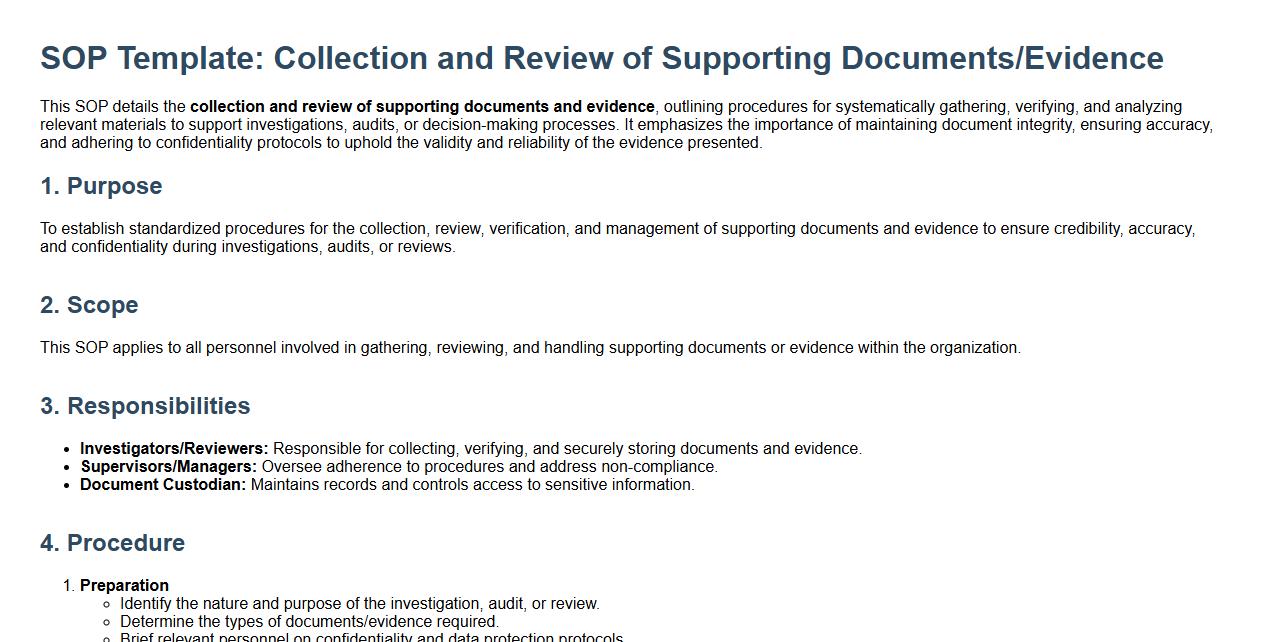
This SOP details the collection and review of supporting documents and evidence, outlining procedures for systematically gathering, verifying, and analyzing relevant materials to support investigations, audits, or decision-making processes. It emphasizes the importance of maintaining document integrity, ensuring accuracy, and adhering to confidentiality protocols to uphold the validity and reliability of the evidence presented.
Formal Investigation and Fact-Finding Procedures.
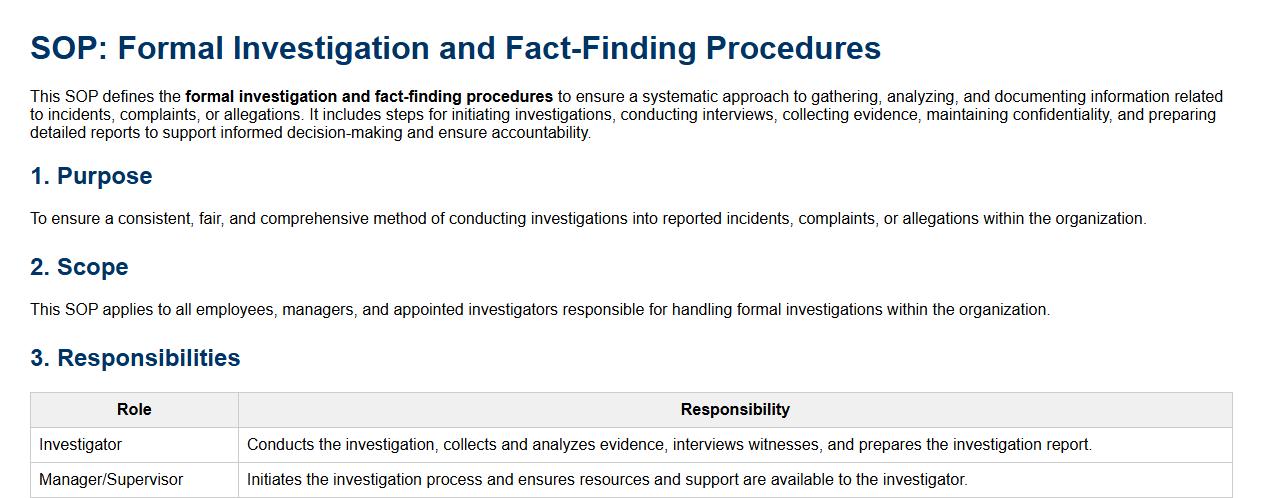
This SOP defines the formal investigation and fact-finding procedures to ensure a systematic approach to gathering, analyzing, and documenting information related to incidents, complaints, or allegations. It includes steps for initiating investigations, conducting interviews, collecting evidence, maintaining confidentiality, and preparing detailed reports to support informed decision-making and ensure accountability.
Drafting and Issuance of Resolution or Decision Memo.
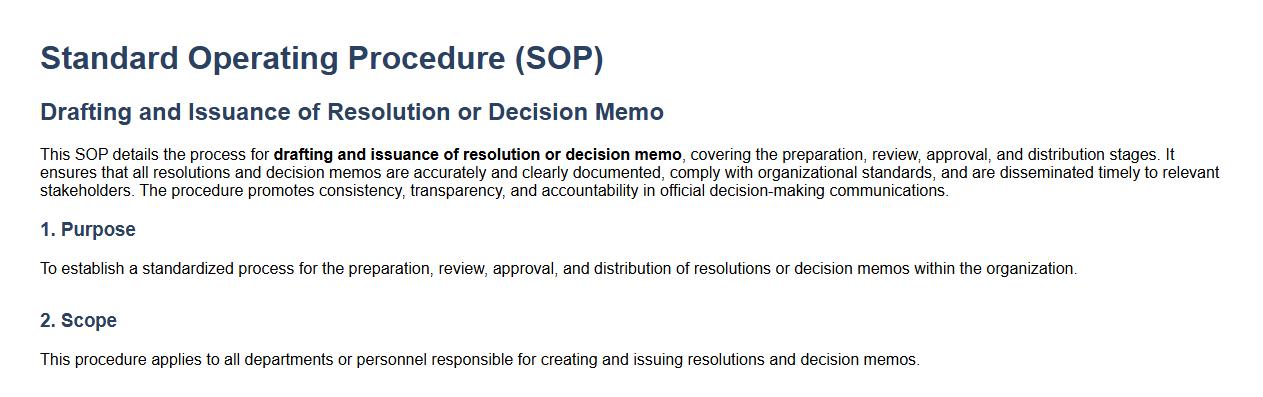
This SOP details the process for drafting and issuance of resolution or decision memo, covering the preparation, review, approval, and distribution stages. It ensures that all resolutions and decision memos are accurately and clearly documented, comply with organizational standards, and are disseminated timely to relevant stakeholders. The procedure promotes consistency, transparency, and accountability in official decision-making communications.
Communication of Outcome to Parties Involved.
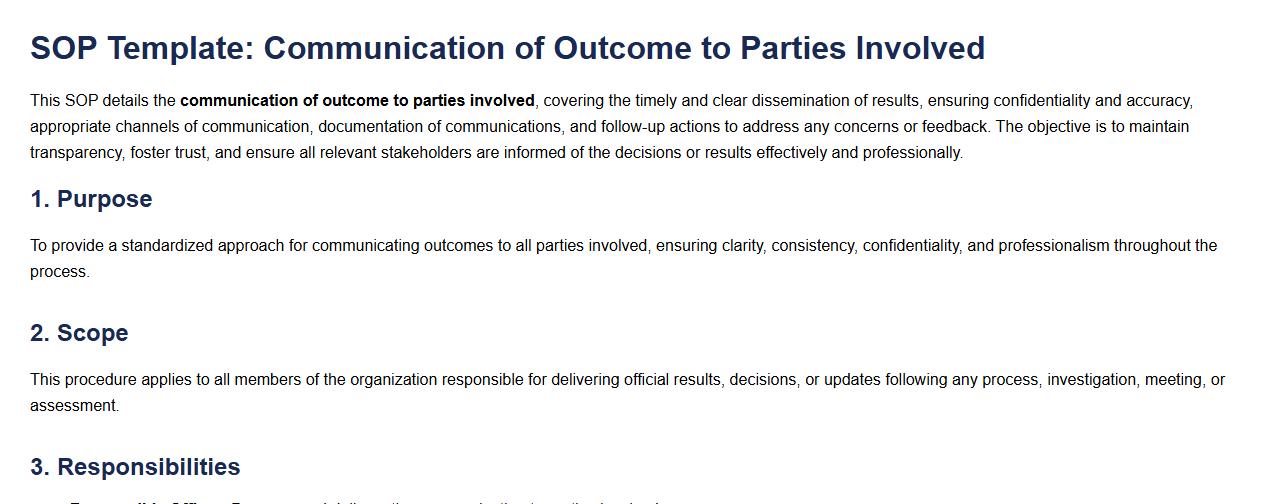
This SOP details the communication of outcome to parties involved, covering the timely and clear dissemination of results, ensuring confidentiality and accuracy, appropriate channels of communication, documentation of communications, and follow-up actions to address any concerns or feedback. The objective is to maintain transparency, foster trust, and ensure all relevant stakeholders are informed of the decisions or results effectively and professionally.
Closure, Documentation, and Archival of Case Records.
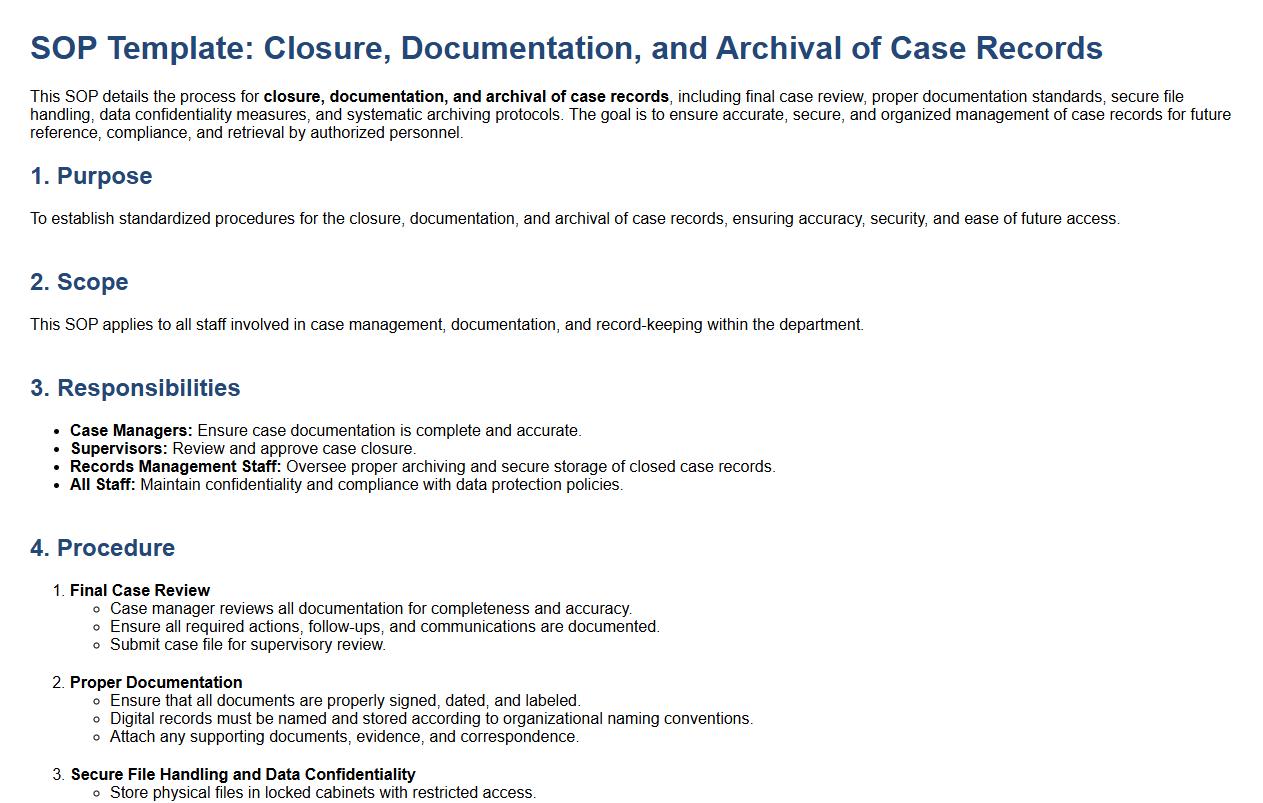
This SOP details the process for closure, documentation, and archival of case records, including final case review, proper documentation standards, secure file handling, data confidentiality measures, and systematic archiving protocols. The goal is to ensure accurate, secure, and organized management of case records for future reference, compliance, and retrieval by authorized personnel.
Intake and Logging of Complaints.
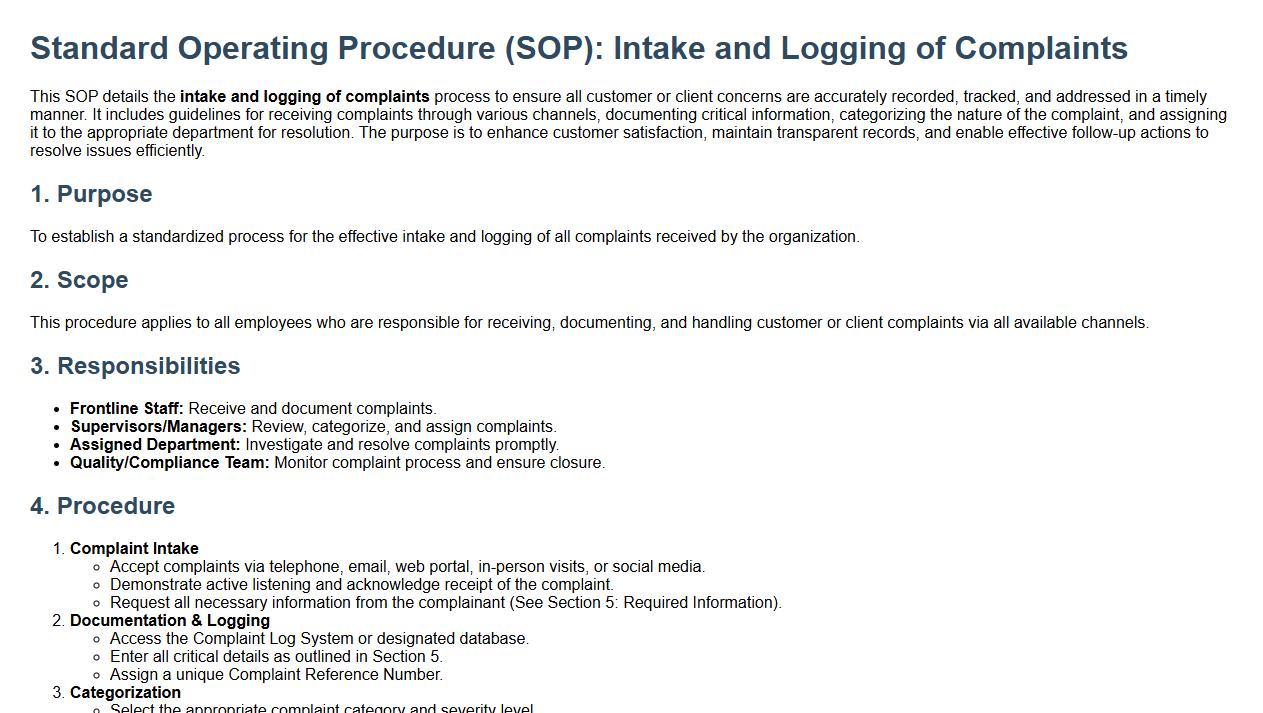
This SOP details the intake and logging of complaints process to ensure all customer or client concerns are accurately recorded, tracked, and addressed in a timely manner. It includes guidelines for receiving complaints through various channels, documenting critical information, categorizing the nature of the complaint, and assigning it to the appropriate department for resolution. The purpose is to enhance customer satisfaction, maintain transparent records, and enable effective follow-up actions to resolve issues efficiently.
Complaint Acknowledgment and Case Number Assignment.
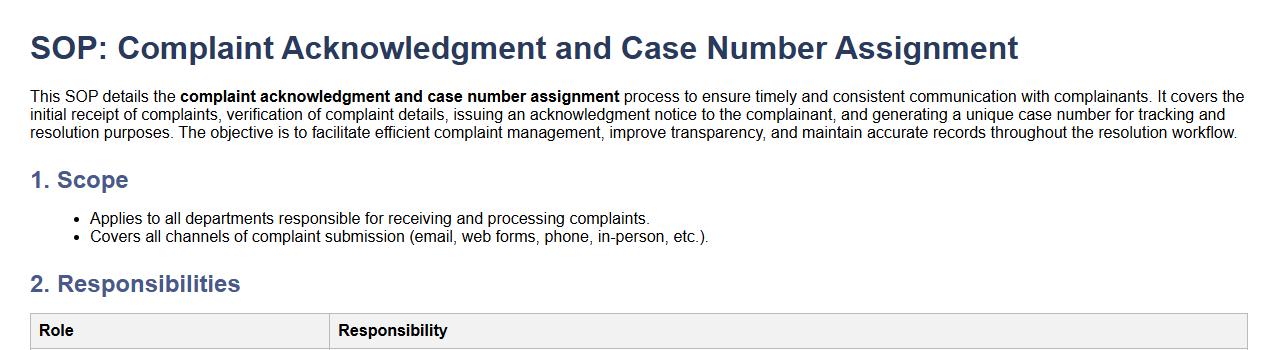
This SOP details the complaint acknowledgment and case number assignment process to ensure timely and consistent communication with complainants. It covers the initial receipt of complaints, verification of complaint details, issuing an acknowledgment notice to the complainant, and generating a unique case number for tracking and resolution purposes. The objective is to facilitate efficient complaint management, improve transparency, and maintain accurate records throughout the resolution workflow.
Initial Complaint Assessment and Classification.
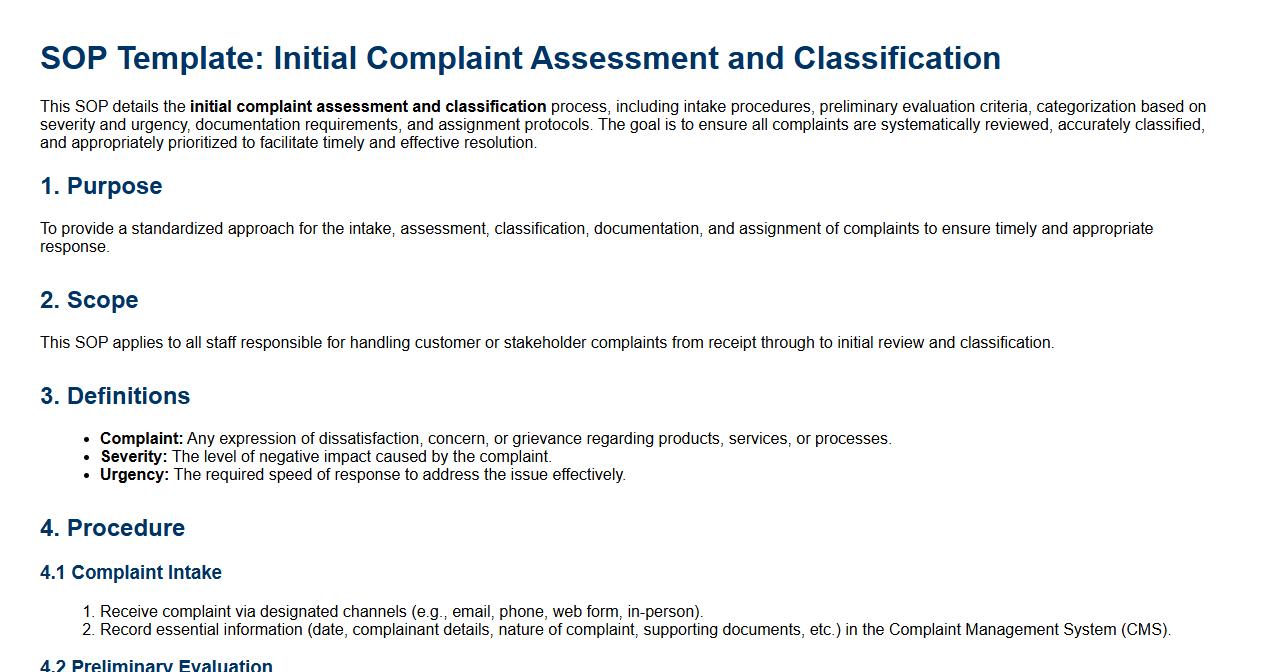
This SOP details the initial complaint assessment and classification process, including intake procedures, preliminary evaluation criteria, categorization based on severity and urgency, documentation requirements, and assignment protocols. The goal is to ensure all complaints are systematically reviewed, accurately classified, and appropriately prioritized to facilitate timely and effective resolution.
Notification to Respondent and Relevant Parties.
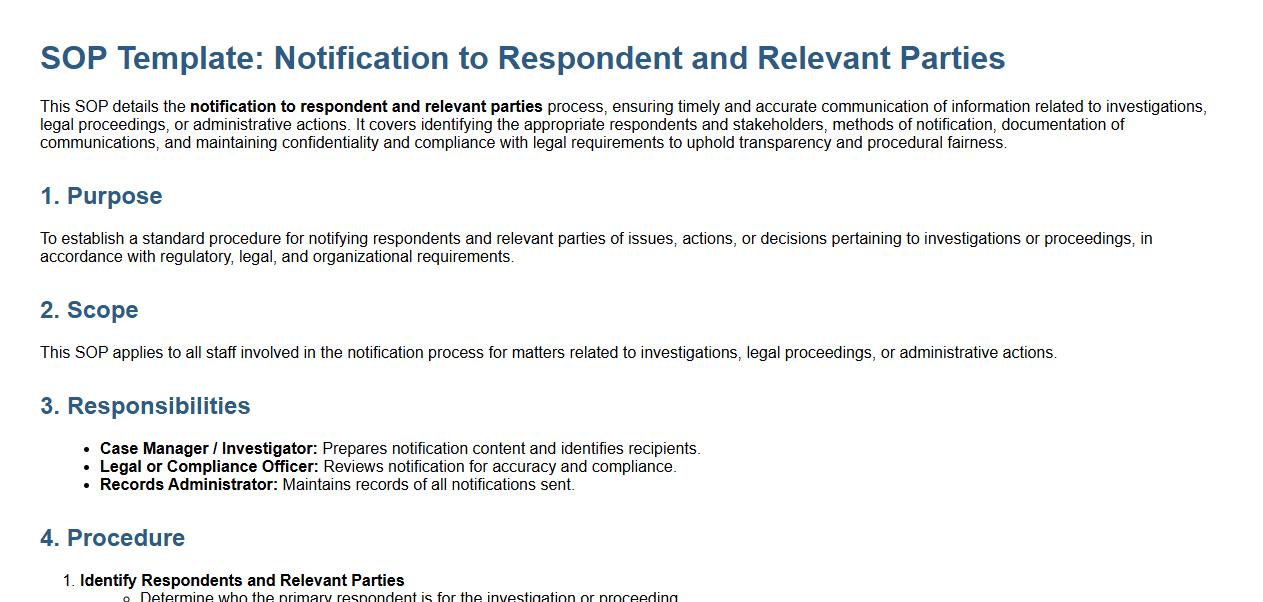
This SOP details the notification to respondent and relevant parties process, ensuring timely and accurate communication of information related to investigations, legal proceedings, or administrative actions. It covers identifying the appropriate respondents and stakeholders, methods of notification, documentation of communications, and maintaining confidentiality and compliance with legal requirements to uphold transparency and procedural fairness.
Evidence Collection and Documentation Procedures.
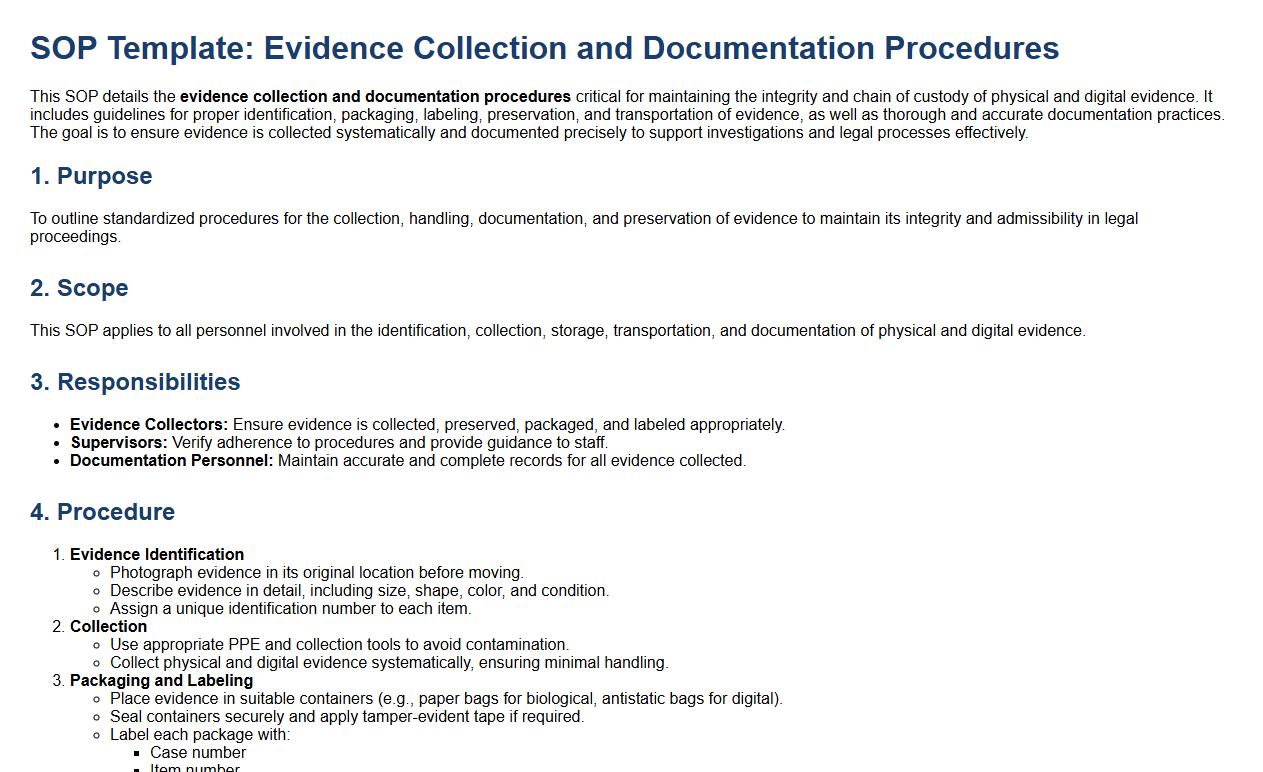
This SOP details the evidence collection and documentation procedures critical for maintaining the integrity and chain of custody of physical and digital evidence. It includes guidelines for proper identification, packaging, labeling, preservation, and transportation of evidence, as well as thorough and accurate documentation practices. The goal is to ensure evidence is collected systematically and documented precisely to support investigations and legal processes effectively.
Timelines and Scheduling of Resolution Activities.
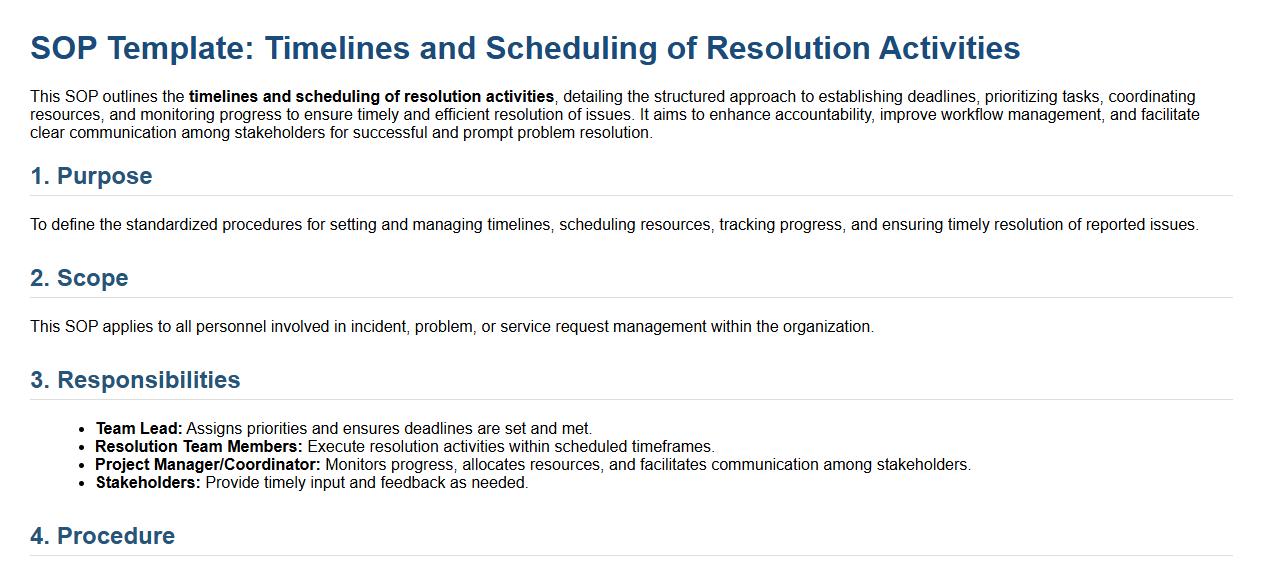
This SOP outlines the timelines and scheduling of resolution activities, detailing the structured approach to establishing deadlines, prioritizing tasks, coordinating resources, and monitoring progress to ensure timely and efficient resolution of issues. It aims to enhance accountability, improve workflow management, and facilitate clear communication among stakeholders for successful and prompt problem resolution.
Conducting Hearings or Investigative Meetings.
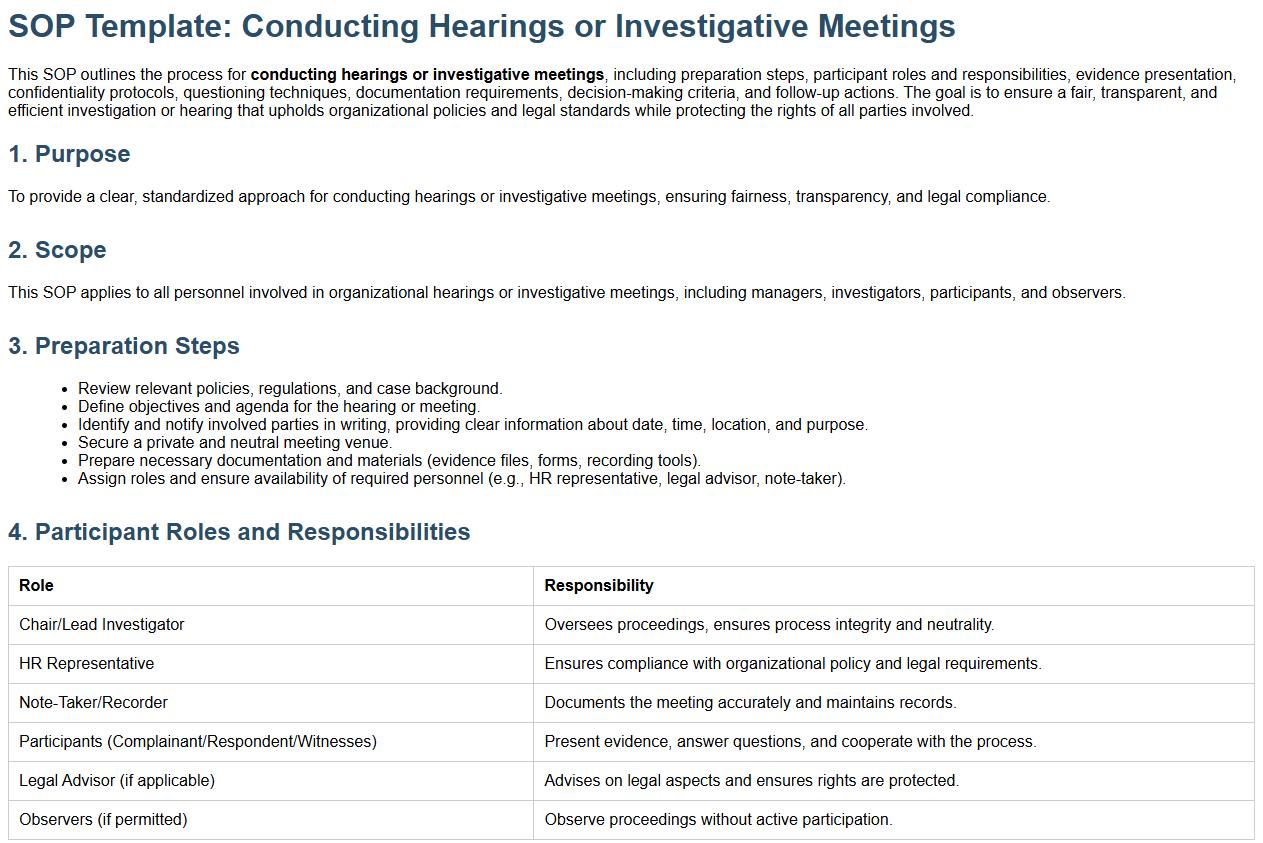
This SOP outlines the process for conducting hearings or investigative meetings, including preparation steps, participant roles and responsibilities, evidence presentation, confidentiality protocols, questioning techniques, documentation requirements, decision-making criteria, and follow-up actions. The goal is to ensure a fair, transparent, and efficient investigation or hearing that upholds organizational policies and legal standards while protecting the rights of all parties involved.
Decision-Making and Drafting of Resolution.
This SOP details the decision-making and drafting of resolution process, covering the systematic approach to analyzing issues, gathering relevant information, consulting stakeholders, and formulating clear and effective resolutions. It ensures decisions are made transparently, logically, and in alignment with organizational goals, followed by the precise drafting, review, approval, and documentation of resolutions to facilitate implementation and accountability.
Communication of Resolution to Parties Involved.
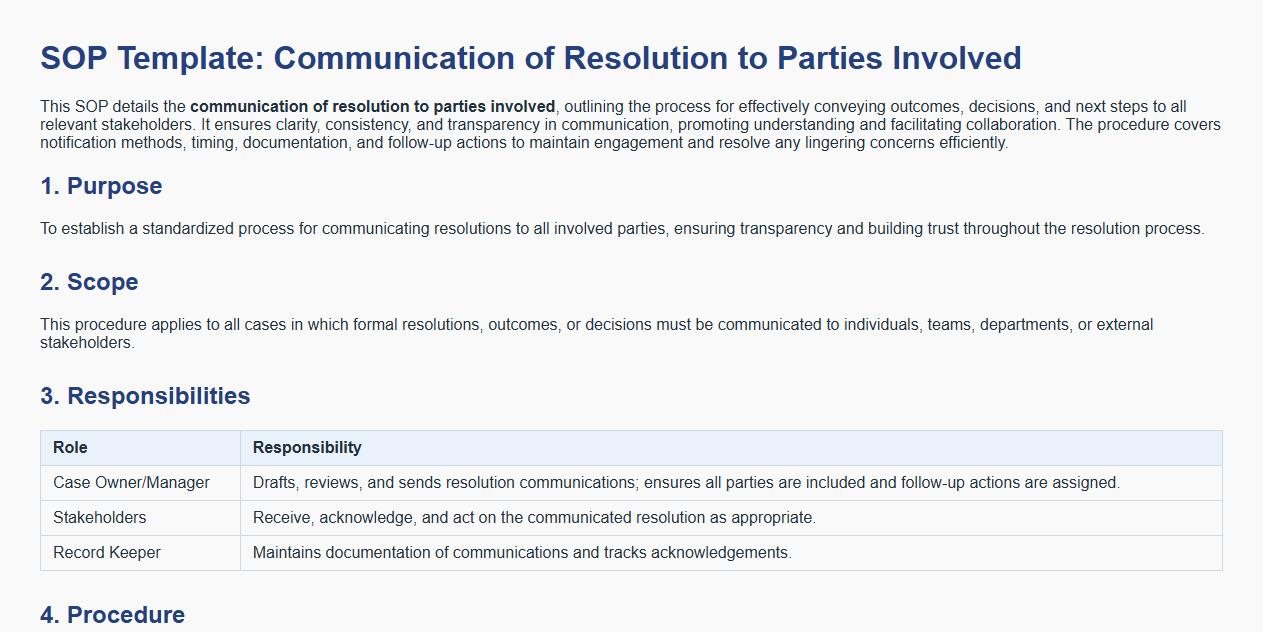
This SOP details the communication of resolution to parties involved, outlining the process for effectively conveying outcomes, decisions, and next steps to all relevant stakeholders. It ensures clarity, consistency, and transparency in communication, promoting understanding and facilitating collaboration. The procedure covers notification methods, timing, documentation, and follow-up actions to maintain engagement and resolve any lingering concerns efficiently.
Closure, Filing, and Archival of Case Records.
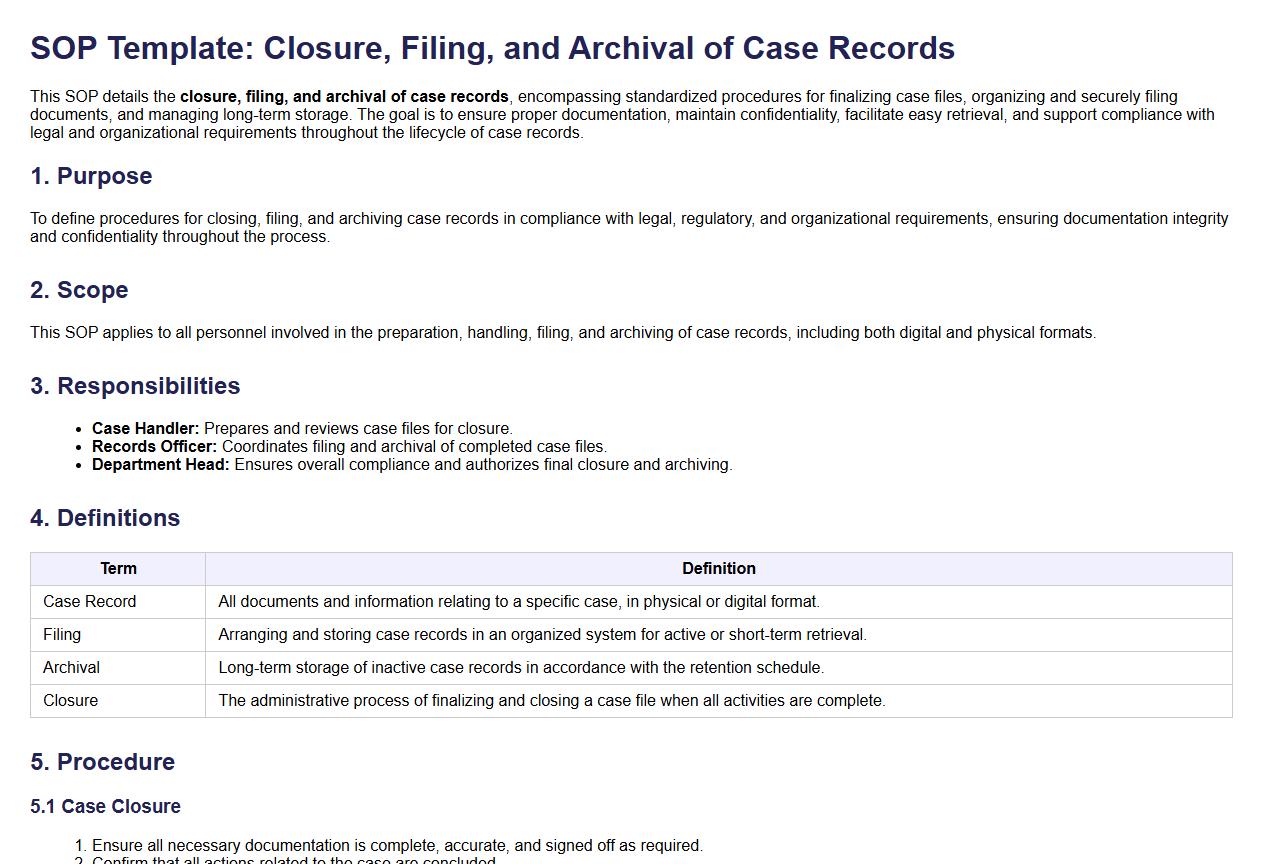
This SOP details the closure, filing, and archival of case records, encompassing standardized procedures for finalizing case files, organizing and securely filing documents, and managing long-term storage. The goal is to ensure proper documentation, maintain confidentiality, facilitate easy retrieval, and support compliance with legal and organizational requirements throughout the lifecycle of case records.
Receiving and logging complaints.
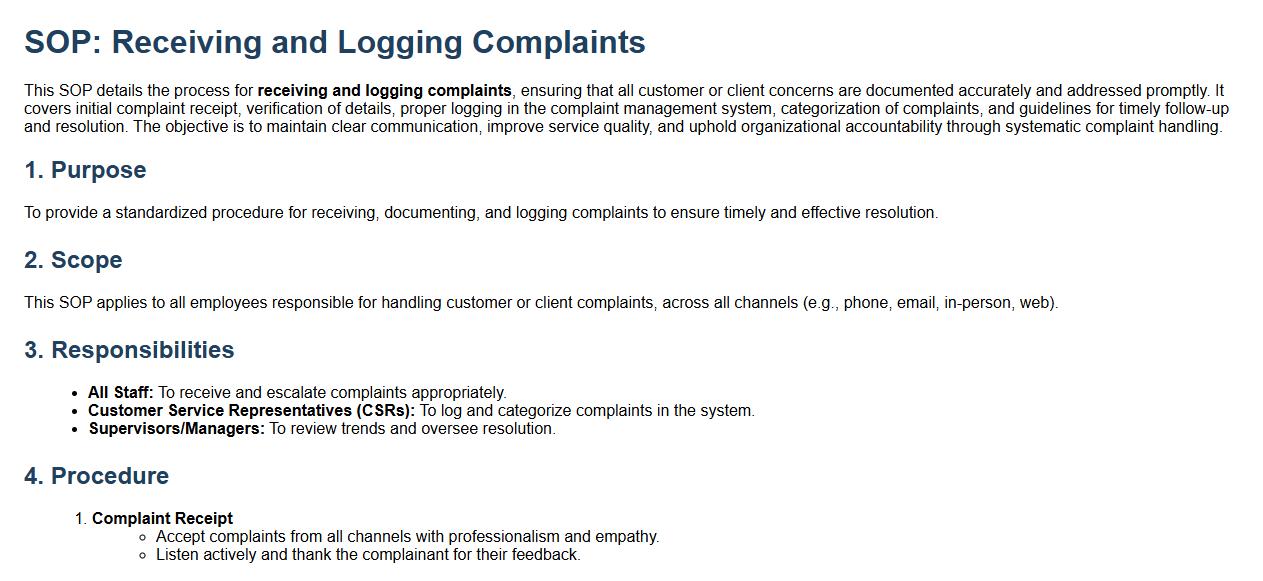
This SOP details the process for receiving and logging complaints, ensuring that all customer or client concerns are documented accurately and addressed promptly. It covers initial complaint receipt, verification of details, proper logging in the complaint management system, categorization of complaints, and guidelines for timely follow-up and resolution. The objective is to maintain clear communication, improve service quality, and uphold organizational accountability through systematic complaint handling.
Initial review for completeness and jurisdiction.
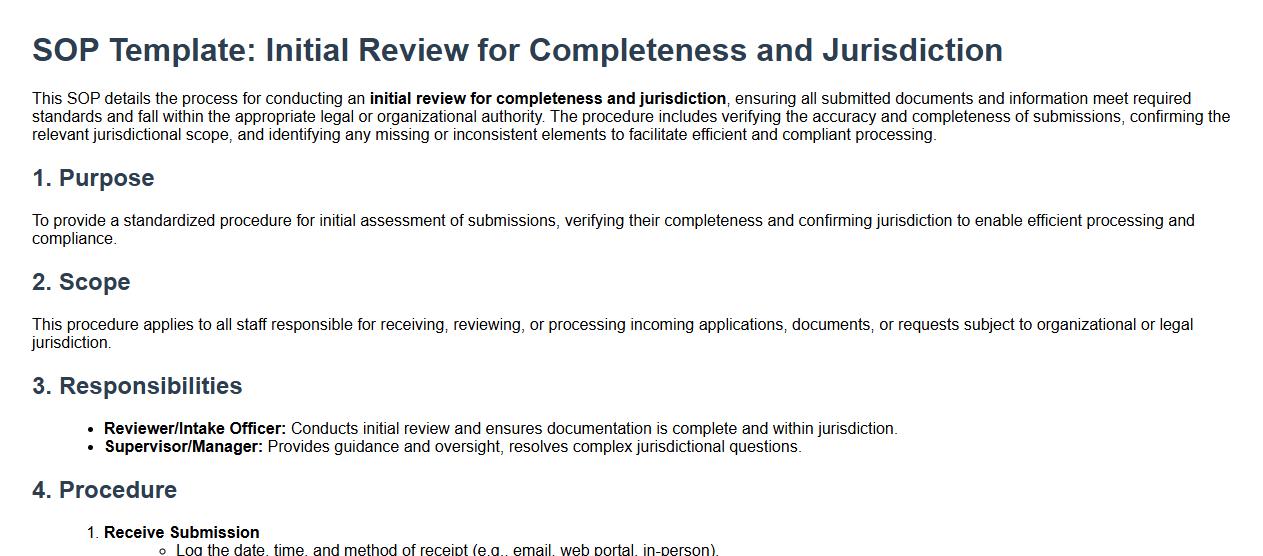
This SOP details the process for conducting an initial review for completeness and jurisdiction, ensuring all submitted documents and information meet required standards and fall within the appropriate legal or organizational authority. The procedure includes verifying the accuracy and completeness of submissions, confirming the relevant jurisdictional scope, and identifying any missing or inconsistent elements to facilitate efficient and compliant processing.
Assignment of case officer or responsible staff.
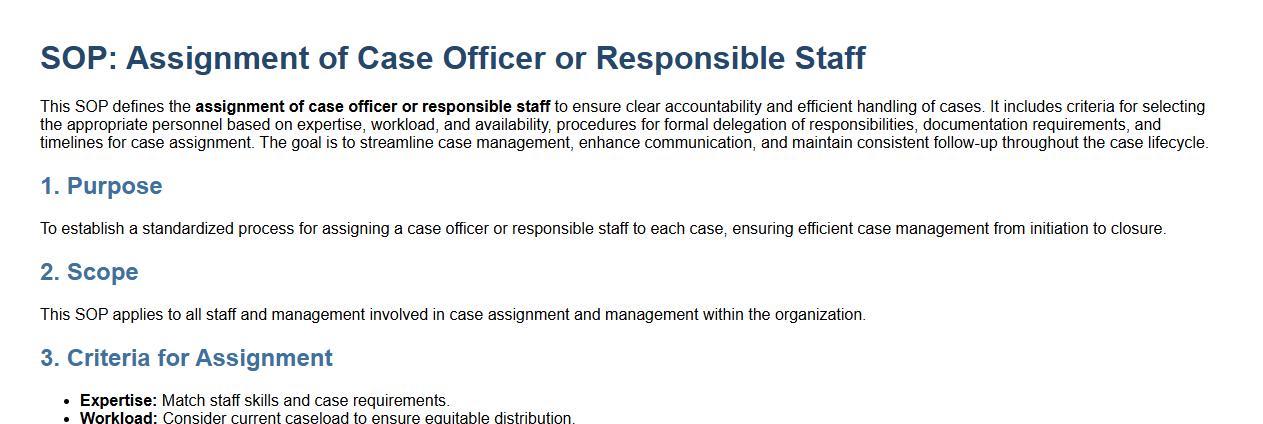
This SOP defines the assignment of case officer or responsible staff to ensure clear accountability and efficient handling of cases. It includes criteria for selecting the appropriate personnel based on expertise, workload, and availability, procedures for formal delegation of responsibilities, documentation requirements, and timelines for case assignment. The goal is to streamline case management, enhance communication, and maintain consistent follow-up throughout the case lifecycle.
Notification to respondent and acknowledgement to complainant.
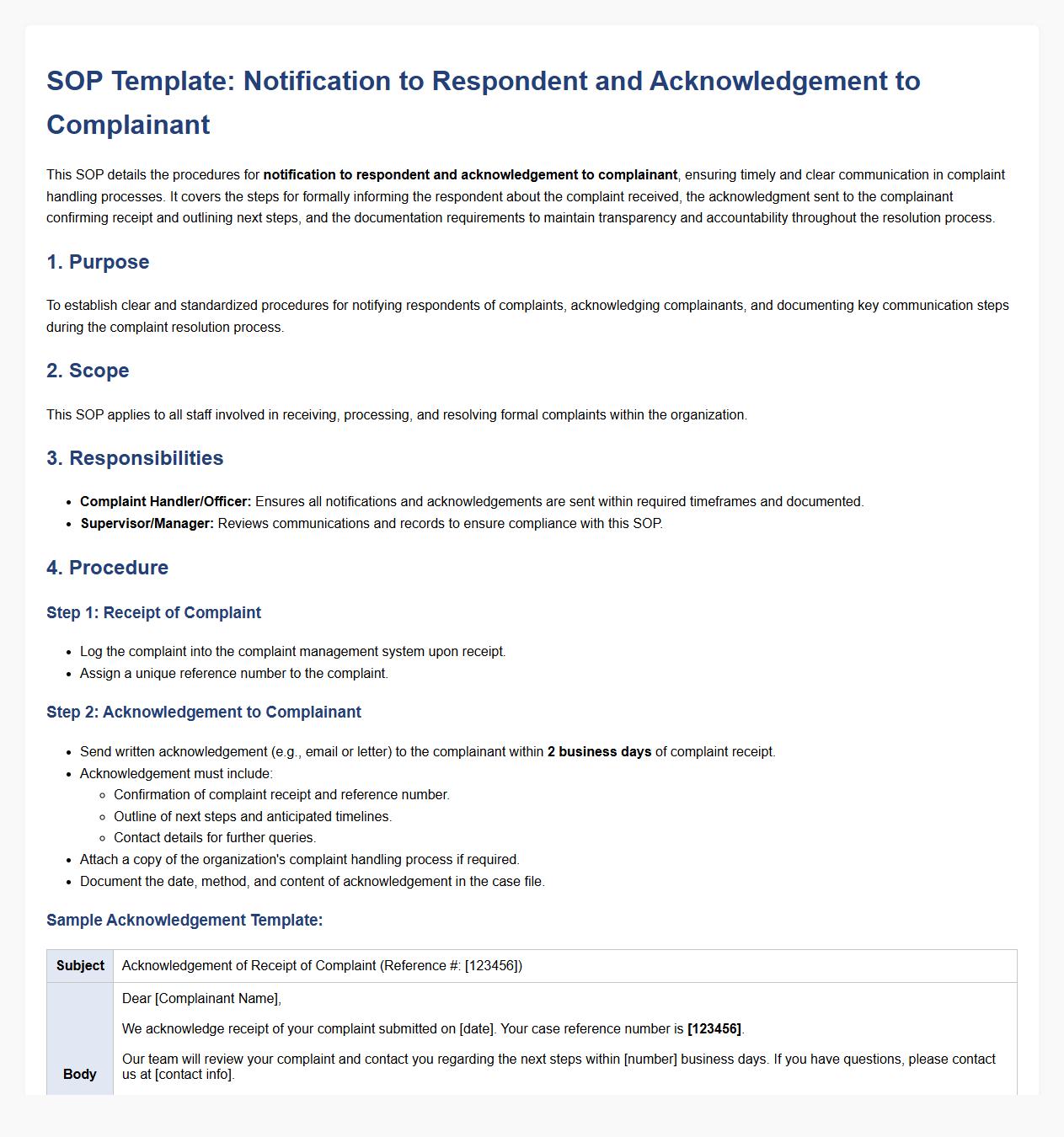
This SOP details the procedures for notification to respondent and acknowledgement to complainant, ensuring timely and clear communication in complaint handling processes. It covers the steps for formally informing the respondent about the complaint received, the acknowledgment sent to the complainant confirming receipt and outlining next steps, and the documentation requirements to maintain transparency and accountability throughout the resolution process.
Fact-finding and information gathering procedures.
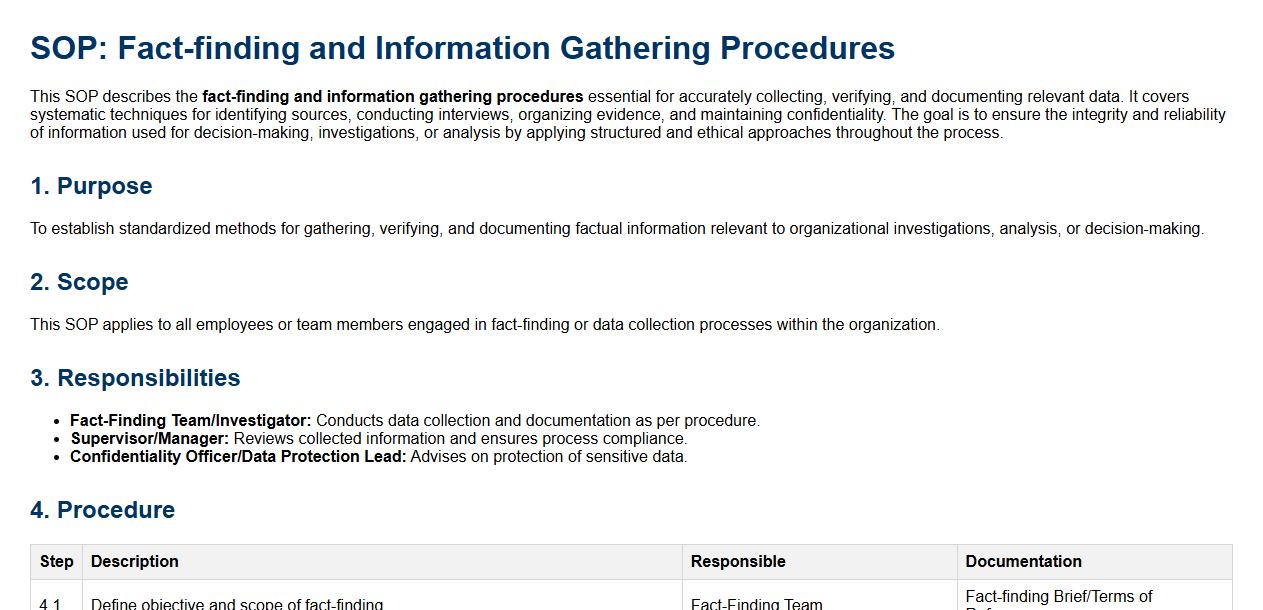
This SOP describes the fact-finding and information gathering procedures essential for accurately collecting, verifying, and documenting relevant data. It covers systematic techniques for identifying sources, conducting interviews, organizing evidence, and maintaining confidentiality. The goal is to ensure the integrity and reliability of information used for decision-making, investigations, or analysis by applying structured and ethical approaches throughout the process.
Scheduling and conducting formal hearings or meetings.
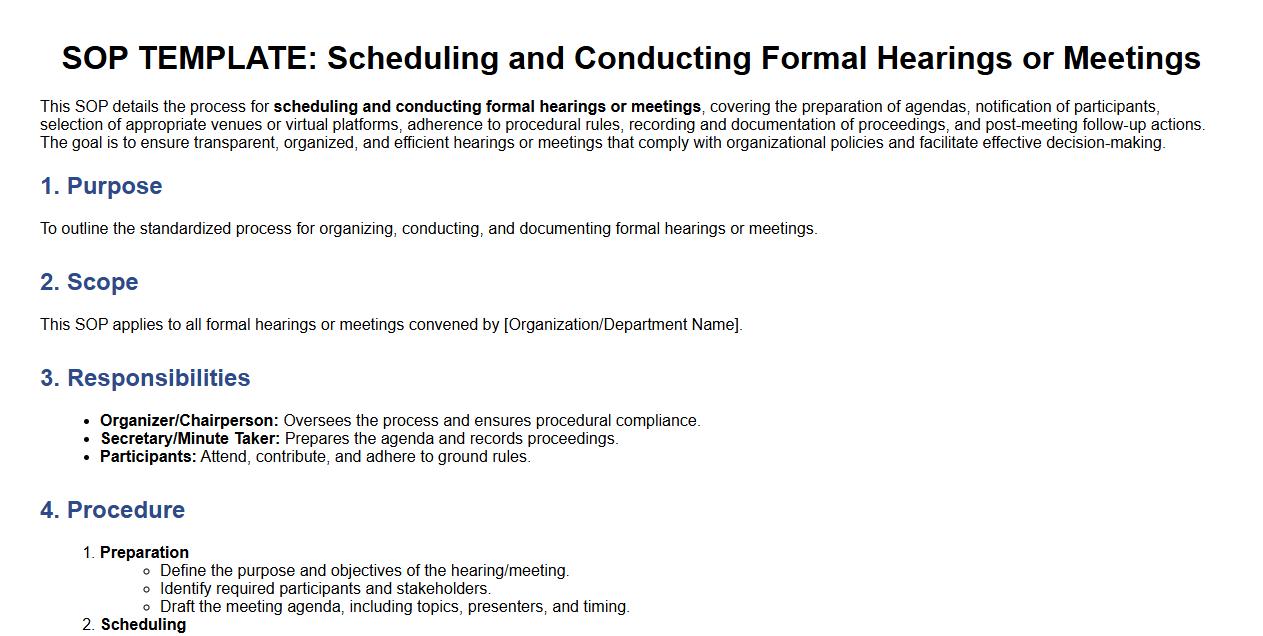
This SOP details the process for scheduling and conducting formal hearings or meetings, covering the preparation of agendas, notification of participants, selection of appropriate venues or virtual platforms, adherence to procedural rules, recording and documentation of proceedings, and post-meeting follow-up actions. The goal is to ensure transparent, organized, and efficient hearings or meetings that comply with organizational policies and facilitate effective decision-making.
Documentation and evidence management protocols.
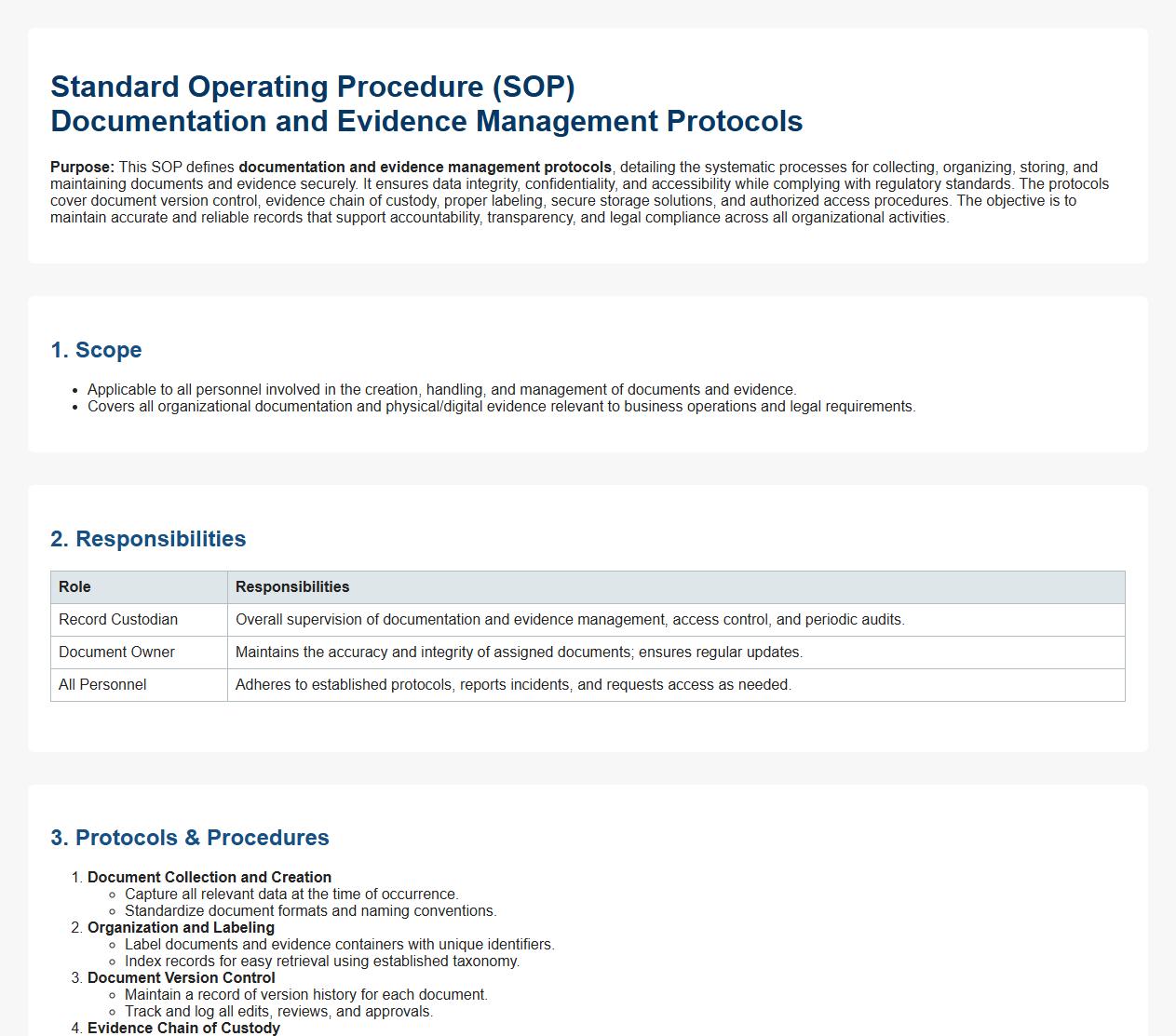
This SOP defines documentation and evidence management protocols, detailing the systematic processes for collecting, organizing, storing, and maintaining documents and evidence securely. It ensures data integrity, confidentiality, and accessibility while complying with regulatory standards. The protocols cover document version control, evidence chain of custody, proper labeling, secure storage solutions, and authorized access procedures. The objective is to maintain accurate and reliable records that support accountability, transparency, and legal compliance across all organizational activities.
Resolution drafting and approval process.
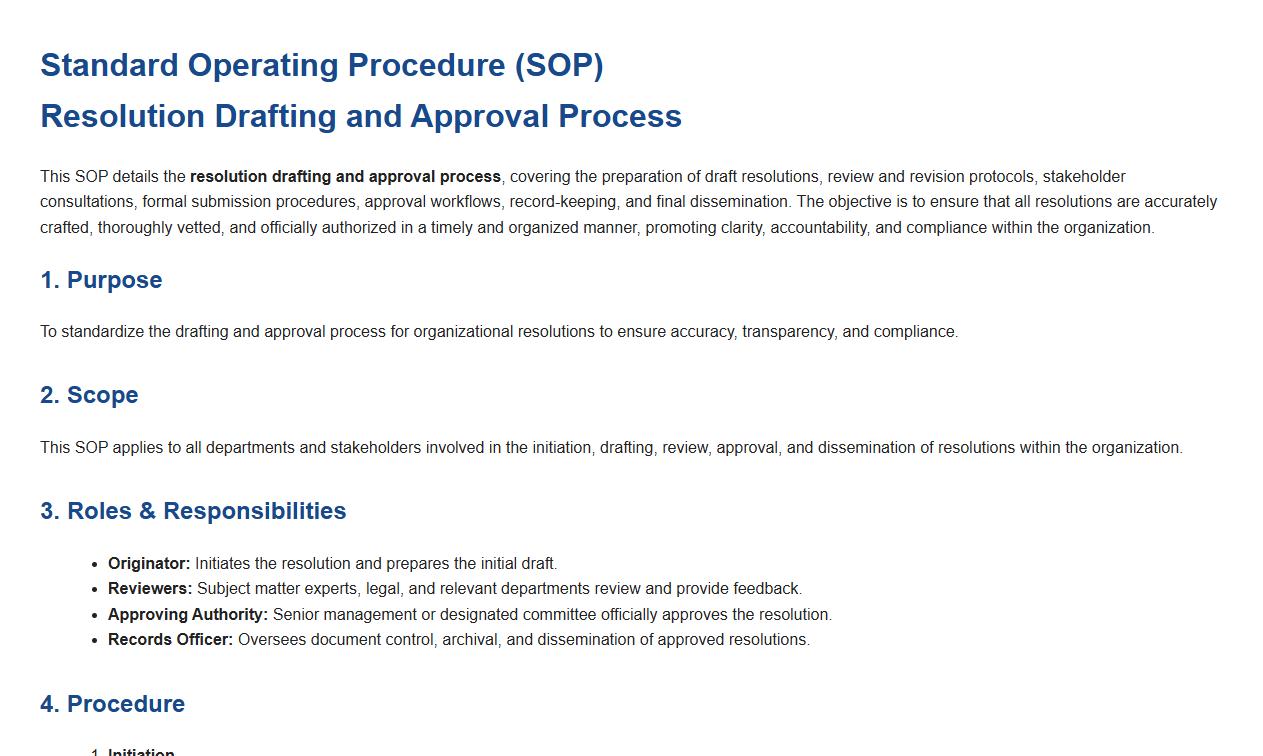
This SOP details the resolution drafting and approval process, covering the preparation of draft resolutions, review and revision protocols, stakeholder consultations, formal submission procedures, approval workflows, record-keeping, and final dissemination. The objective is to ensure that all resolutions are accurately crafted, thoroughly vetted, and officially authorized in a timely and organized manner, promoting clarity, accountability, and compliance within the organization.
Communication of resolution to parties involved.
This SOP details the process for communication of resolution to parties involved, ensuring timely and clear dissemination of outcomes to all relevant stakeholders. It covers notification methods, documentation of communications, confirmation of receipt and understanding, and follow-up procedures to address any further questions or concerns. The objective is to maintain transparency, foster trust, and facilitate effective resolution management within the organization.
Steps for Receiving and Documenting Administrative Complaints
The SOP outlines a clear procedure for receiving all administrative complaints promptly. Complaints must be documented accurately using standardized forms to ensure all relevant information is captured. This documentation serves as the official record for tracking and resolving the complaint efficiently.
Roles and Responsibilities of Personnel in Complaint Resolution
The SOP clearly defines roles for each staff member involved in complaint handling, ensuring accountability at every stage. It assigns primary responsibility to designated officers for investigating and addressing complaints. Support personnel are tasked with assisting and maintaining records as per the procedural guidelines.
Criteria for Classifying and Prioritizing Complaints
The SOP specifies criteria such as severity, urgency, and the nature of the complaint to classify and prioritize cases. Higher priority is given to complaints involving critical administrative breaches or urgent issues affecting service delivery. This classification system ensures that resources are appropriately allocated to resolve complaints effectively.
Timelines and Escalation Procedures for Resolving Complaints
The SOP establishes strict timelines for initial response and final resolution to maintain efficiency. If complaints remain unresolved within the set timeframe, formal escalation procedures are triggered to higher authority levels. This process guarantees timely follow-up and prevents delays in complaint management.
Methods for Communicating Resolution Outcomes to Complainants
The SOP standardizes communication methods such as official letters, emails, or phone calls to inform complainants of resolution outcomes. It mandates clear, concise, and respectful communication to ensure complainants understand the decisions made. Additionally, provisions for feedback channels are included to enhance transparency and trust.