

A SOP Template for Vendor and Contractor Coordination streamlines communication and project management by clearly defining roles, responsibilities, and procedures. This template ensures consistent workflow, minimizes misunderstandings, and enhances timely delivery of services. Using a standardized approach improves collaboration and compliance with contractual requirements.
Vendor and contractor onboarding procedures.
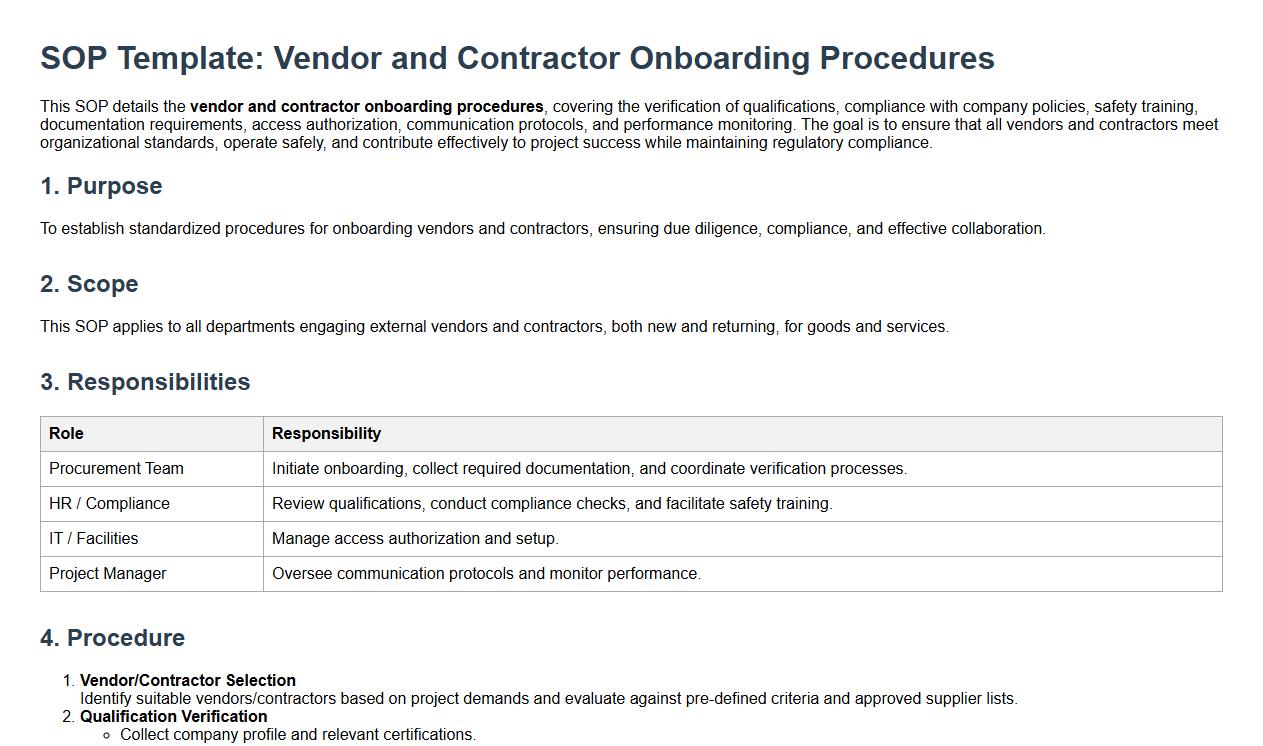
This SOP details the vendor and contractor onboarding procedures, covering the verification of qualifications, compliance with company policies, safety training, documentation requirements, access authorization, communication protocols, and performance monitoring. The goal is to ensure that all vendors and contractors meet organizational standards, operate safely, and contribute effectively to project success while maintaining regulatory compliance.
Pre-qualification and documentation requirements.
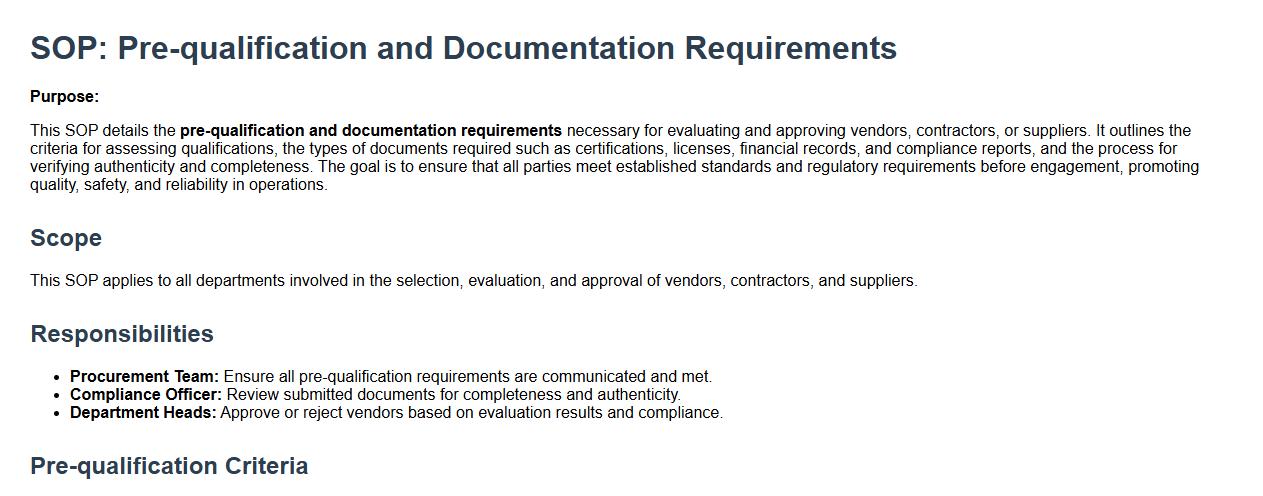
This SOP details the pre-qualification and documentation requirements necessary for evaluating and approving vendors, contractors, or suppliers. It outlines the criteria for assessing qualifications, the types of documents required such as certifications, licenses, financial records, and compliance reports, and the process for verifying authenticity and completeness. The goal is to ensure that all parties meet established standards and regulatory requirements before engagement, promoting quality, safety, and reliability in operations.
Work scope definition and agreement protocols.
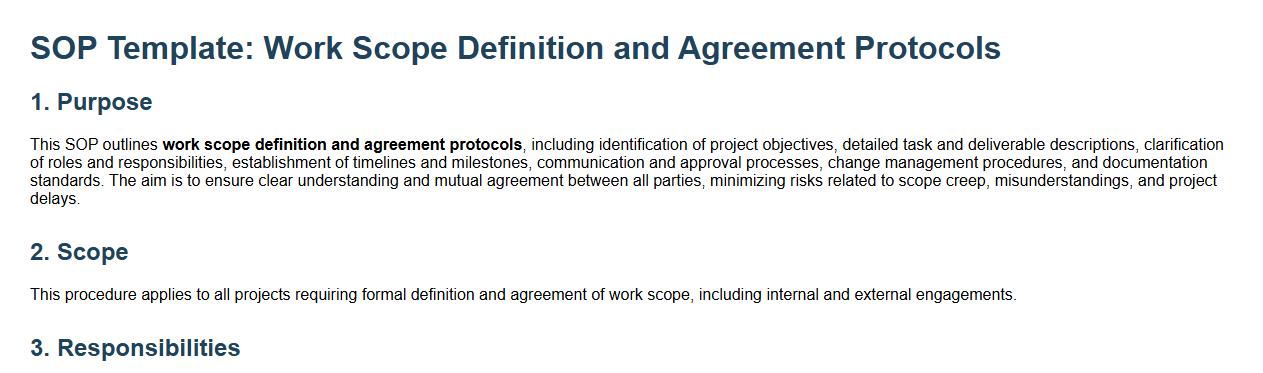
This SOP details work scope definition and agreement protocols, including the identification of project objectives, detailed task and deliverable descriptions, roles and responsibilities clarification, timeline and milestone establishment, communication and approval processes, change management procedures, and documentation standards. The purpose is to ensure clear understanding and mutual agreement between all parties, minimizing risks of scope creep, misunderstandings, and project delays by providing a structured framework for defining and agreeing on work scope.
Health, safety, and security compliance checks.
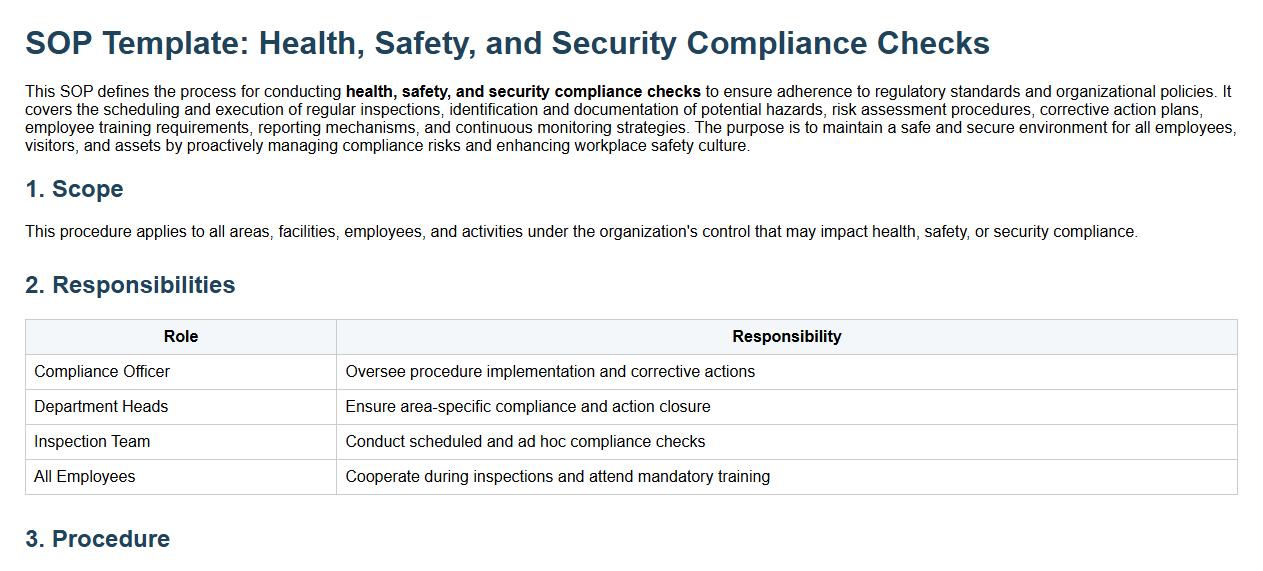
This SOP defines the process for conducting health, safety, and security compliance checks to ensure adherence to regulatory standards and organizational policies. It covers the scheduling and execution of regular inspections, identification and documentation of potential hazards, risk assessment procedures, corrective action plans, employee training requirements, reporting mechanisms, and continuous monitoring strategies. The purpose is to maintain a safe and secure environment for all employees, visitors, and assets by proactively managing compliance risks and enhancing workplace safety culture.
Site access control and sign-in/out procedures.
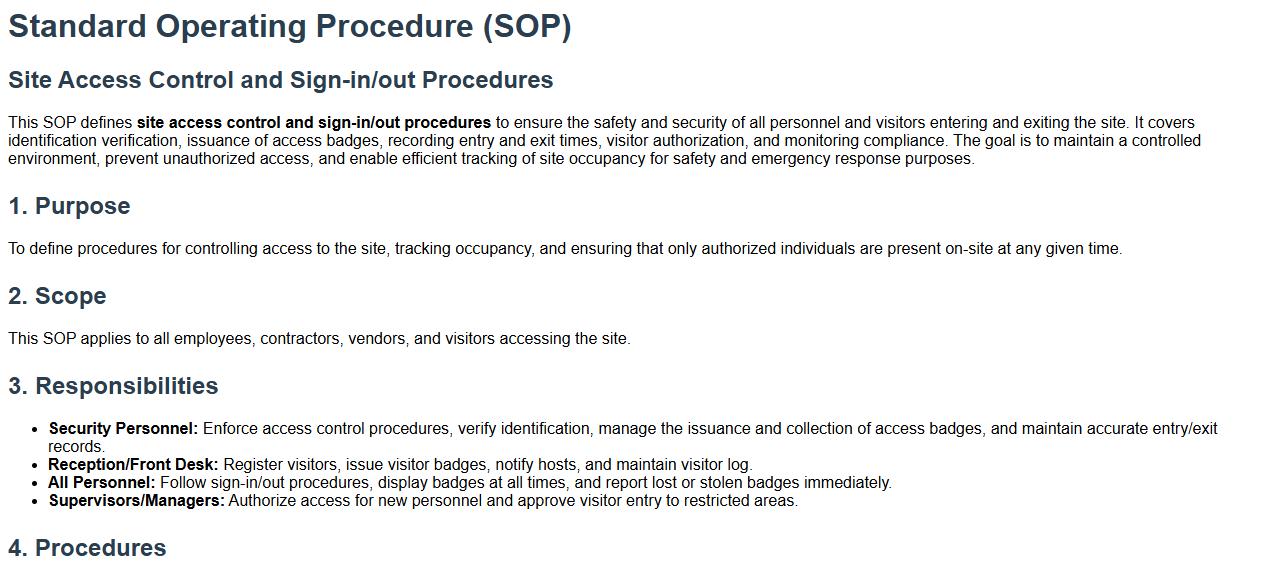
This SOP defines site access control and sign-in/out procedures to ensure the safety and security of all personnel and visitors entering and exiting the site. It covers identification verification, issuance of access badges, recording entry and exit times, visitor authorization, and monitoring compliance. The goal is to maintain a controlled environment, prevent unauthorized access, and enable efficient tracking of site occupancy for safety and emergency response purposes.
Communication and reporting channels.
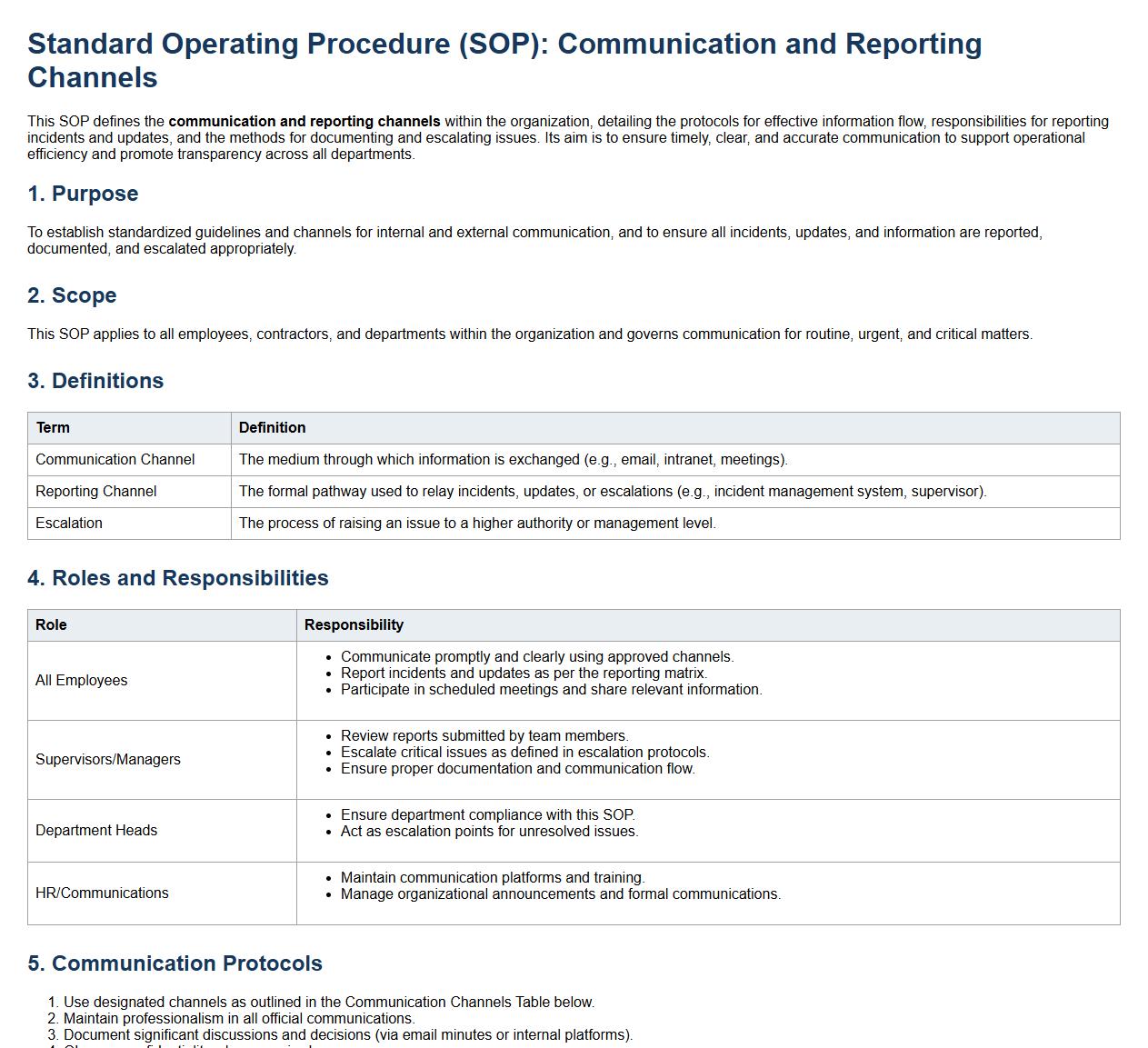
This SOP defines the communication and reporting channels within the organization, detailing the protocols for effective information flow, responsibilities for reporting incidents and updates, and the methods for documenting and escalating issues. Its aim is to ensure timely, clear, and accurate communication to support operational efficiency and promote transparency across all departments.
Quality assurance and work inspection guidelines.
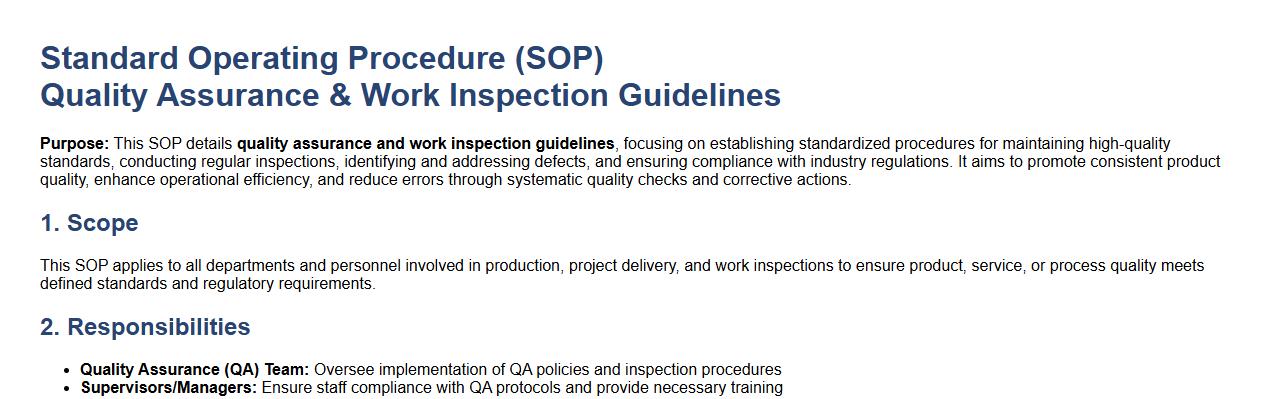
This SOP details quality assurance and work inspection guidelines, focusing on establishing standardized procedures for maintaining high-quality standards, conducting regular inspections, identifying and addressing defects, and ensuring compliance with industry regulations. It aims to promote consistent product quality, enhance operational efficiency, and reduce errors through systematic quality checks and corrective actions.
Incident reporting and resolution procedures.
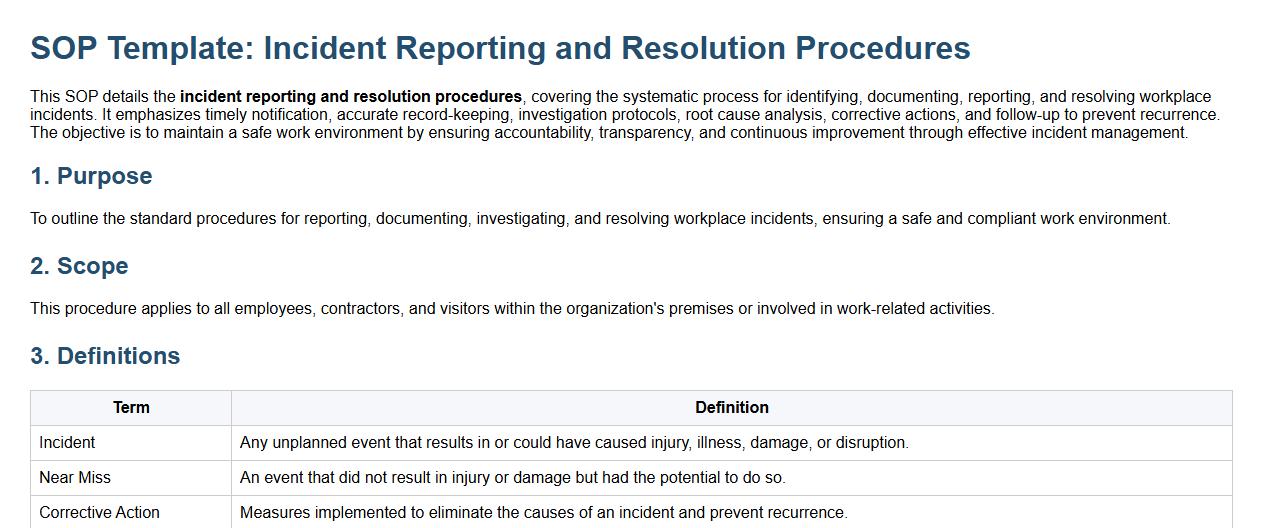
This SOP details the incident reporting and resolution procedures, covering the systematic process for identifying, documenting, reporting, and resolving workplace incidents. It emphasizes timely notification, accurate record-keeping, investigation protocols, root cause analysis, corrective actions, and follow-up to prevent recurrence. The objective is to maintain a safe work environment by ensuring accountability, transparency, and continuous improvement through effective incident management.
Performance monitoring and feedback mechanisms.
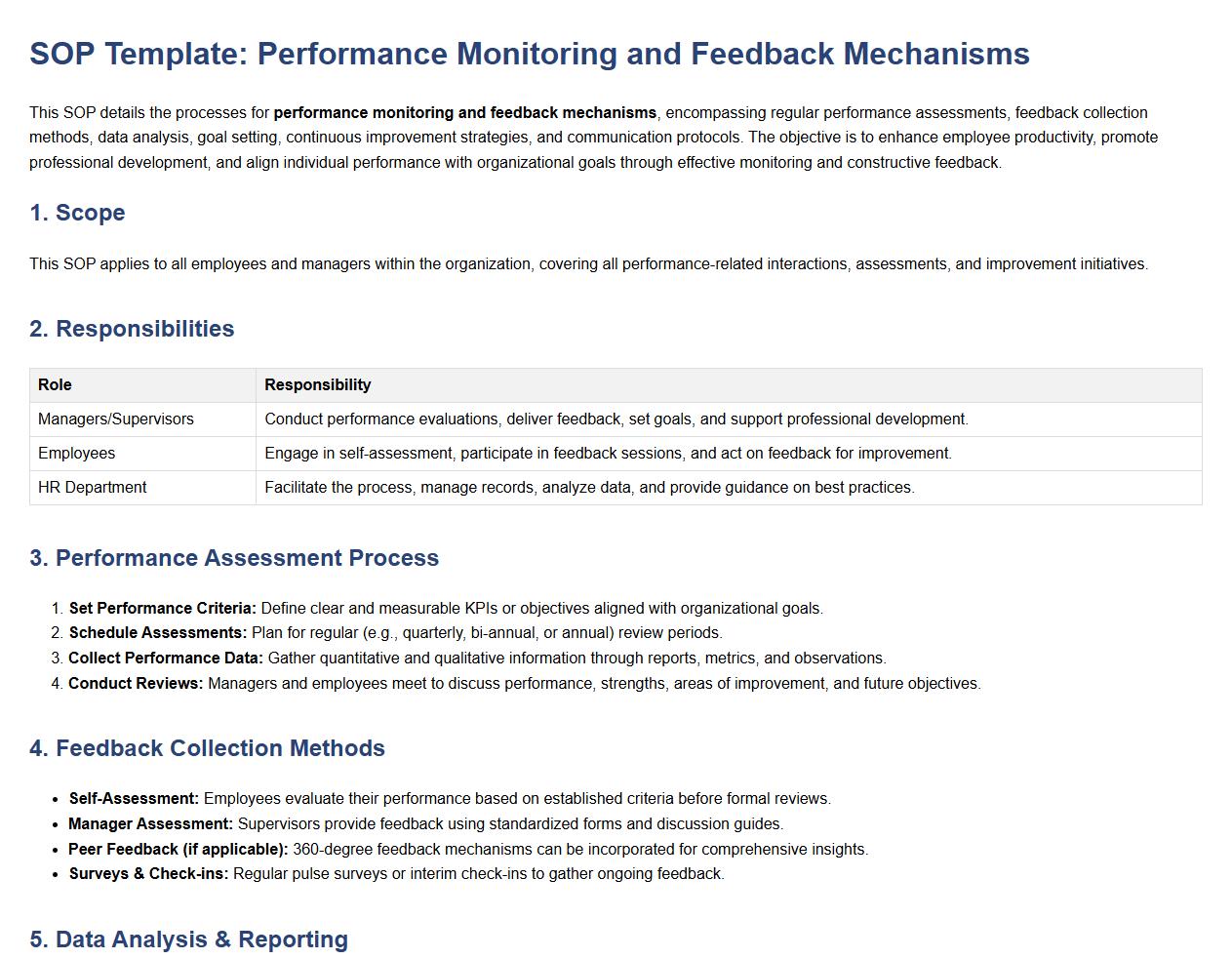
This SOP details the processes for performance monitoring and feedback mechanisms, encompassing regular performance assessments, feedback collection methods, data analysis, goal setting, continuous improvement strategies, and communication protocols. The objective is to enhance employee productivity, promote professional development, and align individual performance with organizational goals through effective monitoring and constructive feedback.
Vendor and contractor offboarding and evaluation.
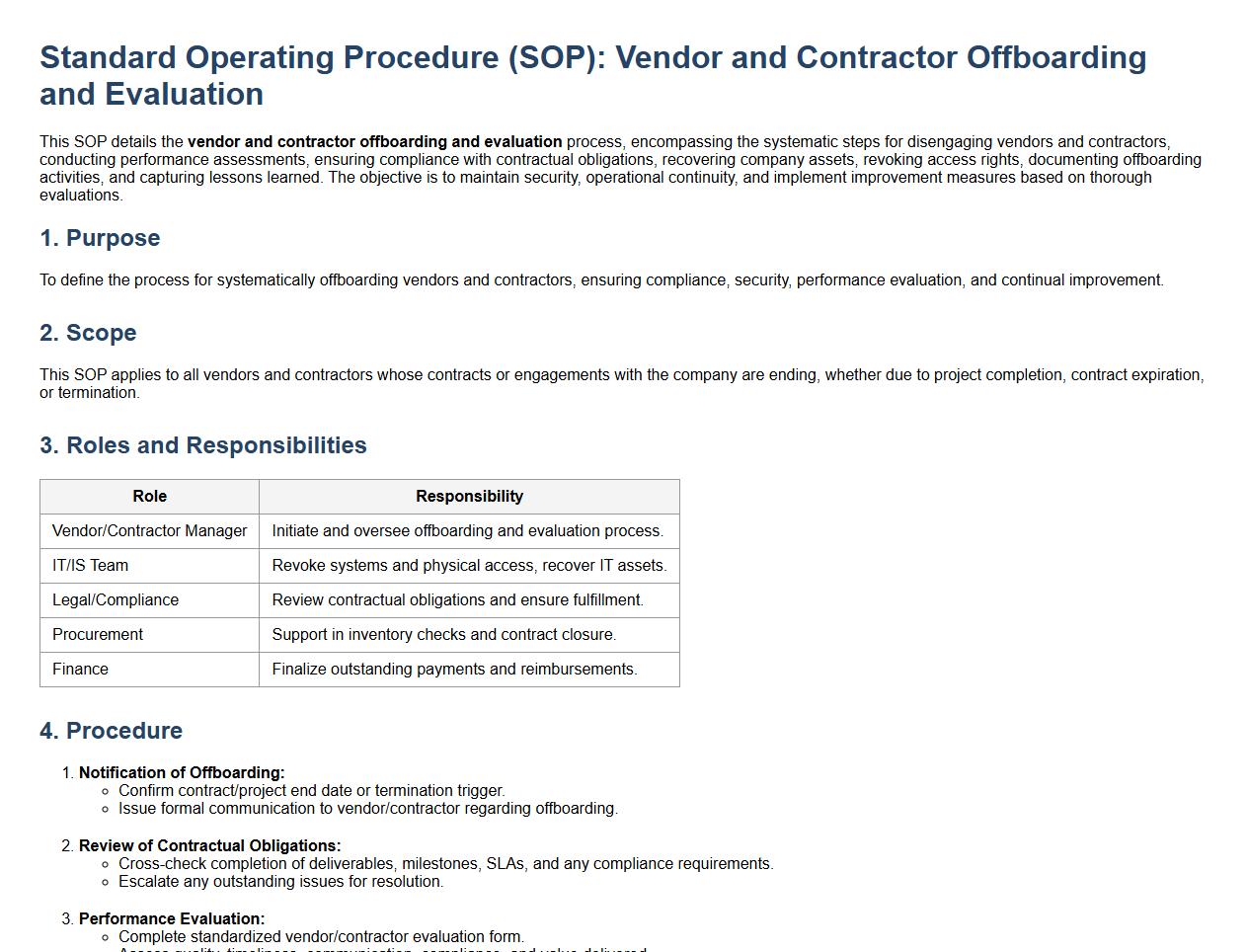
This SOP details the vendor and contractor offboarding and evaluation process, encompassing the systematic steps for disengaging vendors and contractors, conducting performance assessments, ensuring compliance with contractual obligations, recovering company assets, revoking access rights, documenting offboarding activities, and capturing lessons learned. The objective is to maintain security, operational continuity, and implement improvement measures based on thorough evaluations.
What criteria are used to select and approve vendors and contractors according to the SOP?
The SOP establishes strict selection criteria based on vendor reliability, financial stability, and compliance with industry standards. Vendors must demonstrate a proven track record and provide all necessary certifications for approval. This ensures only qualified and trustworthy vendors are engaged to maintain operational excellence.
Which communication protocols must be followed for coordination between internal teams and external vendors/contractors?
The SOP mandates the use of formal communication channels such as scheduled meetings, email updates, and documented reports. All communication shall be clear, timely, and documented to avoid misunderstandings. This protocol fosters transparency and effective collaboration between teams and vendors.
What are the standardized procedures for onboarding and orientation of vendors and contractors as per the SOP?
The SOP specifies a structured onboarding process that includes background checks, contract reviews, and orientation sessions covering company policies. Vendors and contractors must complete mandatory training to align with organizational standards. This standardized approach ensures smooth integration and compliance from the onset.
How does the SOP define documentation and record-keeping requirements for vendor and contractor interactions?
The SOP requires comprehensive documentation of all interactions, including contracts, communications, and performance evaluations. Records must be maintained in a secure and easily retrievable format for audit and compliance purposes. This practice supports accountability and traceability throughout the vendor lifecycle.
What are the escalation procedures in case of vendor or contractor non-compliance as outlined in the SOP?
The SOP outlines a clear escalation protocol starting with immediate issue reporting, followed by remedial actions and formal warnings. Persistent non-compliance leads to senior management intervention and possible contract termination. These procedures ensure swift resolution and uphold organizational standards.