
A SOP Template for Classroom Cleaning and Sanitization outlines standardized procedures to ensure a safe and hygienic learning environment. It details step-by-step instructions for thorough cleaning, disinfecting surfaces, and maintaining hygiene protocols. This template helps schools comply with health regulations and minimize the risk of infections.
Classroom cleaning schedule and frequency.
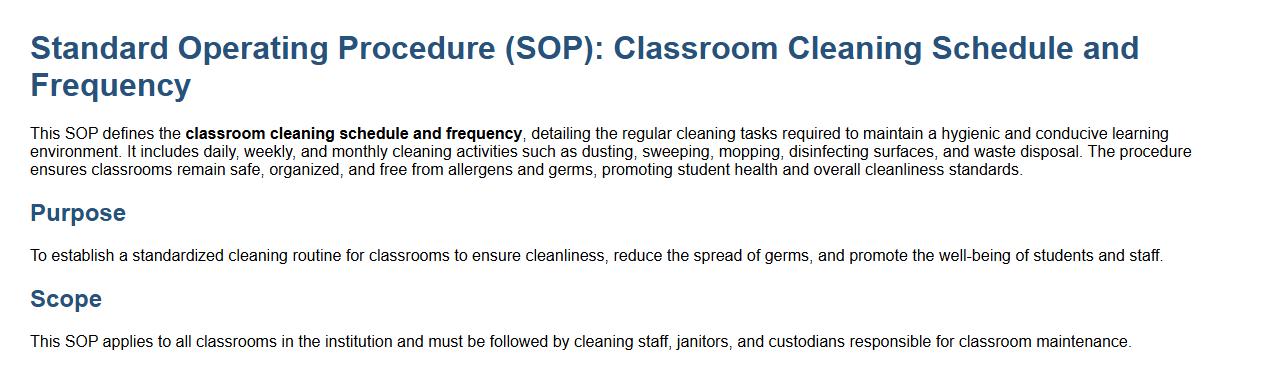
This SOP defines the classroom cleaning schedule and frequency, detailing the regular cleaning tasks required to maintain a hygienic and conducive learning environment. It includes daily, weekly, and monthly cleaning activities such as dusting, sweeping, mopping, disinfecting surfaces, and waste disposal. The procedure ensures classrooms remain safe, organized, and free from allergens and germs, promoting student health and overall cleanliness standards.
Assignment of cleaning staff roles and responsibilities.
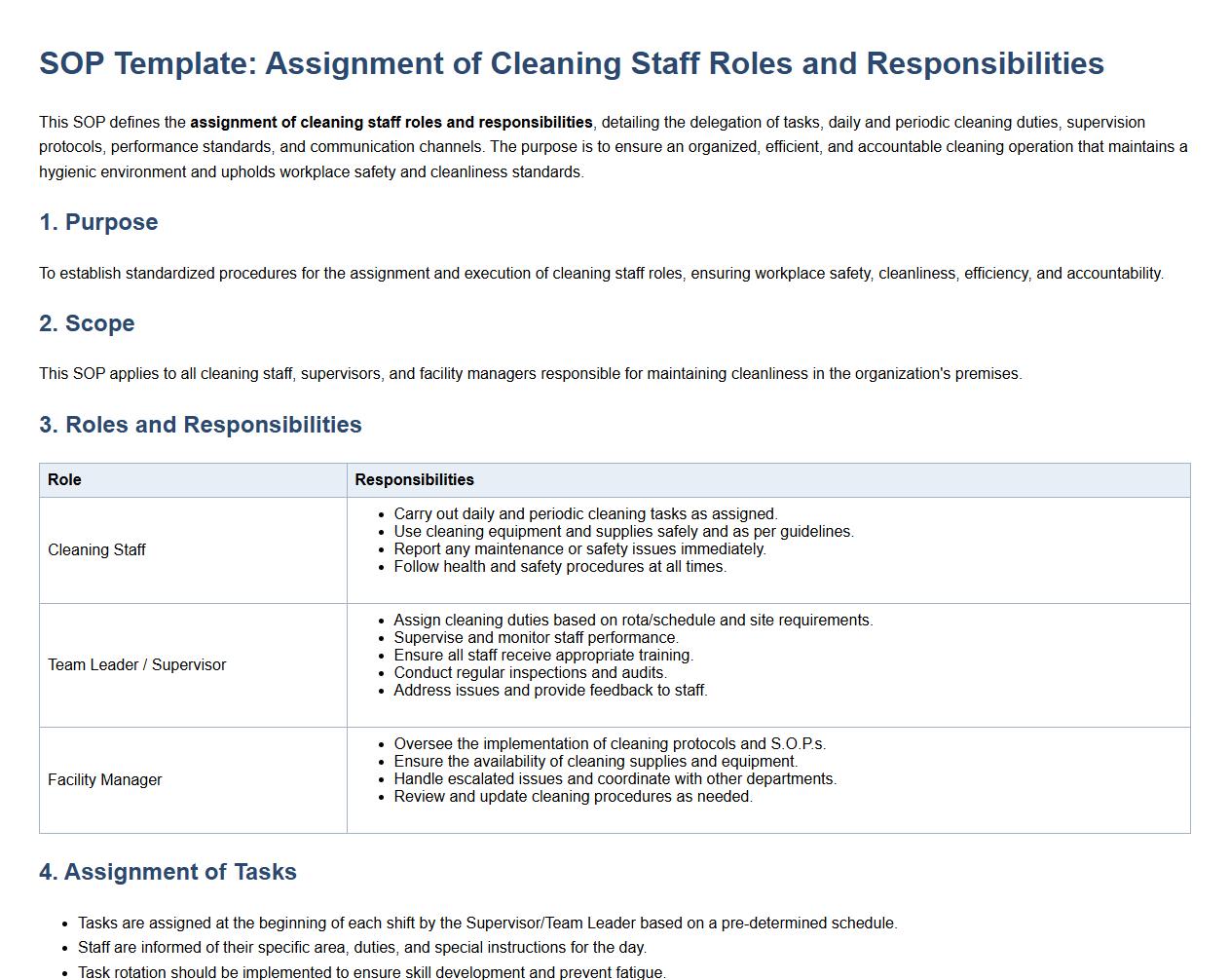
This SOP defines the assignment of cleaning staff roles and responsibilities, detailing the delegation of tasks, daily and periodic cleaning duties, supervision protocols, performance standards, and communication channels. The purpose is to ensure an organized, efficient, and accountable cleaning operation that maintains a hygienic environment and upholds workplace safety and cleanliness standards.
Checklist for surface cleaning and disinfecting (desks, chairs, door handles).
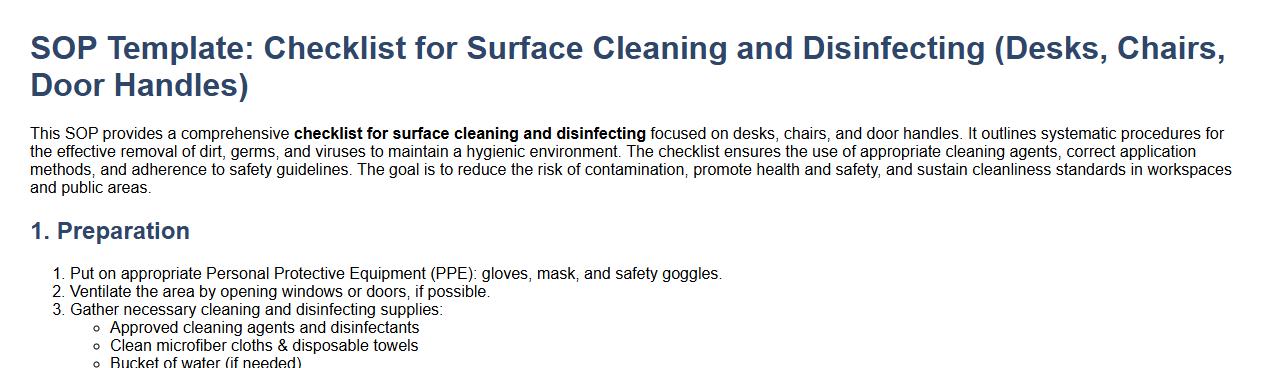
This SOP provides a comprehensive checklist for surface cleaning and disinfecting focused on desks, chairs, and door handles. It outlines systematic procedures for the effective removal of dirt, germs, and viruses to maintain a hygienic environment. The checklist ensures the use of appropriate cleaning agents, correct application methods, and adherence to safety guidelines. The goal is to reduce the risk of contamination, promote health and safety, and sustain cleanliness standards in workspaces and public areas.
Proper procedures for sweeping, mopping, and vacuuming floors.
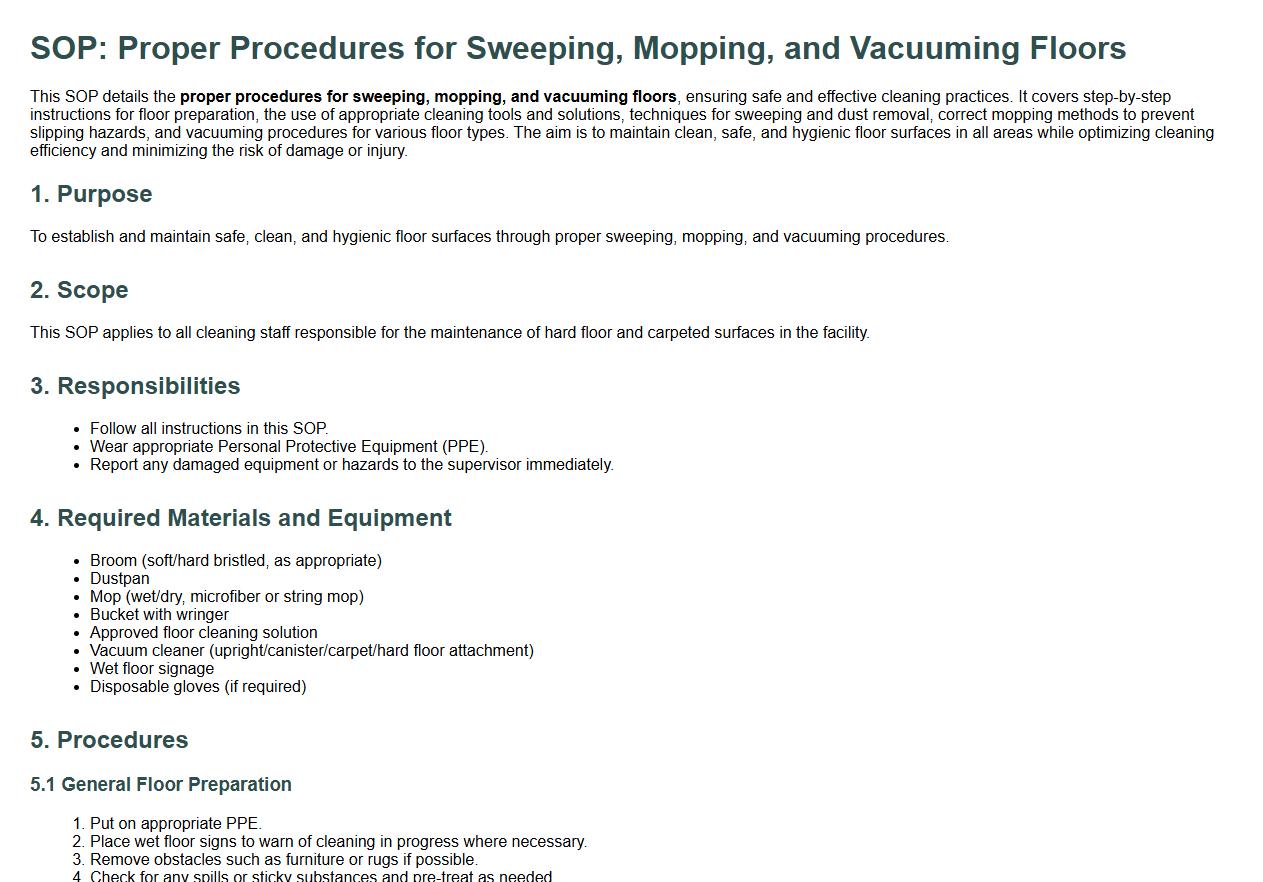
This SOP details the proper procedures for sweeping, mopping, and vacuuming floors, ensuring safe and effective cleaning practices. It covers step-by-step instructions for floor preparation, the use of appropriate cleaning tools and solutions, techniques for sweeping and dust removal, correct mopping methods to prevent slipping hazards, and vacuuming procedures for various floor types. The aim is to maintain clean, safe, and hygienic floor surfaces in all areas while optimizing cleaning efficiency and minimizing the risk of damage or injury.
Disinfecting high-touch areas and shared equipment.
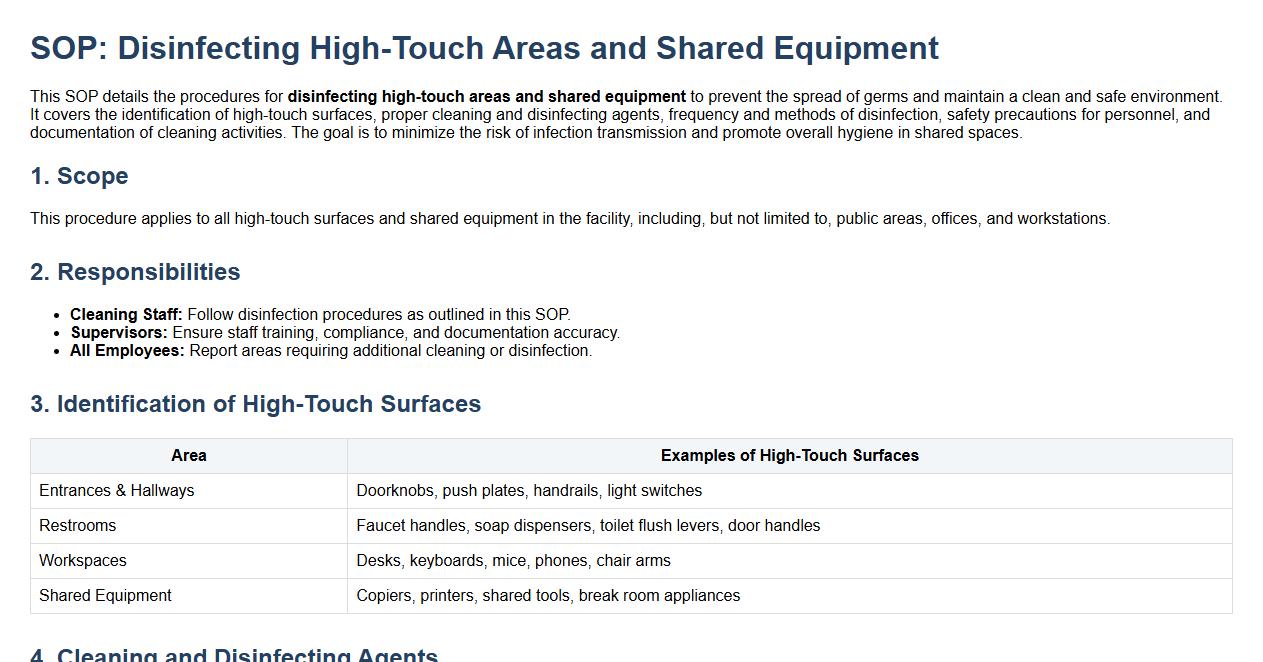
This SOP details the procedures for disinfecting high-touch areas and shared equipment to prevent the spread of germs and maintain a clean and safe environment. It covers the identification of high-touch surfaces, proper cleaning and disinfecting agents, frequency and methods of disinfection, safety precautions for personnel, and documentation of cleaning activities. The goal is to minimize the risk of infection transmission and promote overall hygiene in shared spaces.
Guidelines for trash collection and disposal.
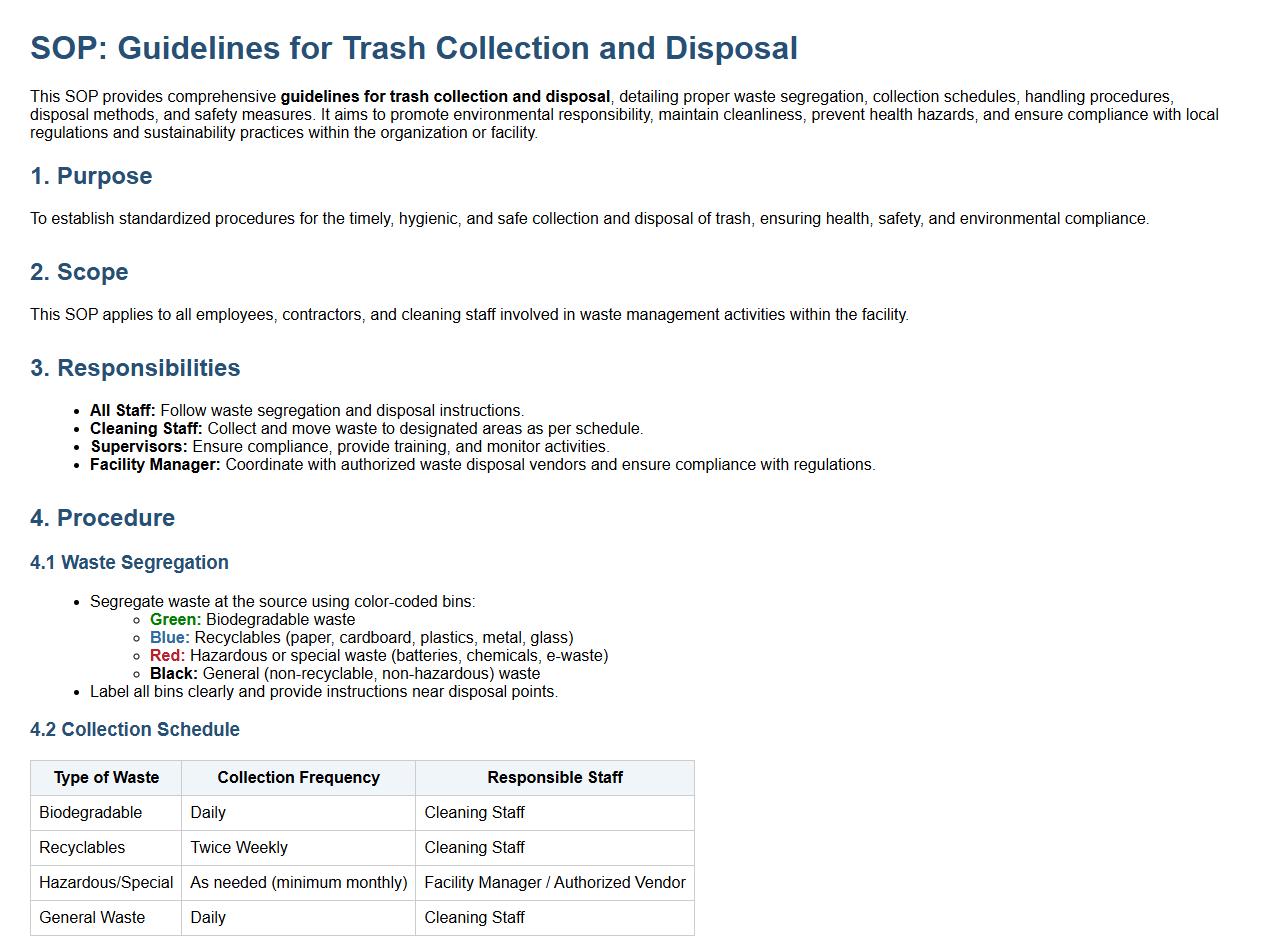
This SOP provides comprehensive guidelines for trash collection and disposal, detailing proper waste segregation, collection schedules, handling procedures, disposal methods, and safety measures. It aims to promote environmental responsibility, maintain cleanliness, prevent health hazards, and ensure compliance with local regulations and sustainability practices within the organization or facility.
Restocking cleaning supplies and sanitizers.
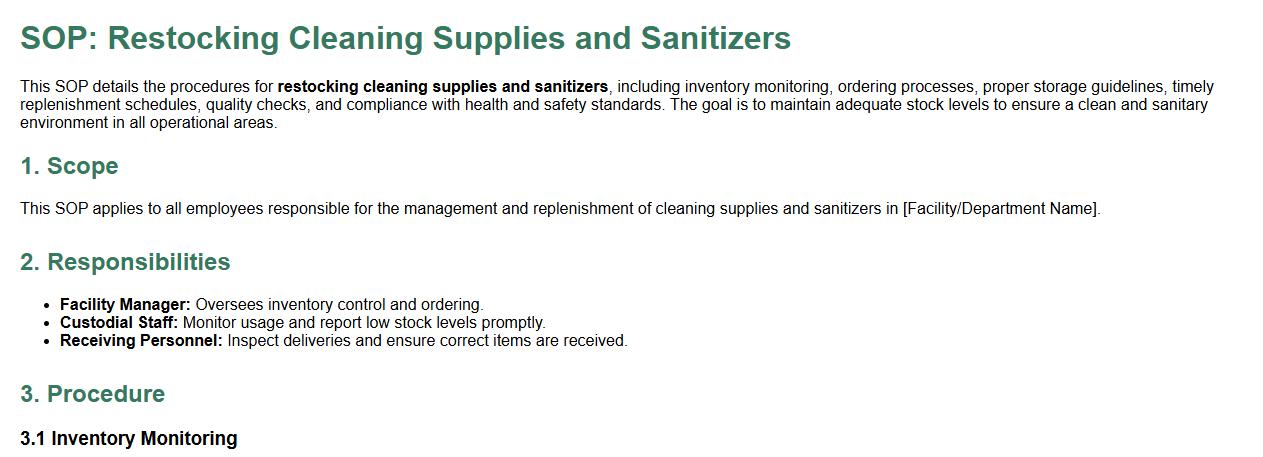
This SOP details the procedures for restocking cleaning supplies and sanitizers, including inventory monitoring, ordering processes, proper storage guidelines, timely replenishment schedules, quality checks, and compliance with health and safety standards. The goal is to maintain adequate stock levels to ensure a clean and sanitary environment in all operational areas.
Ventilation and air quality checks.
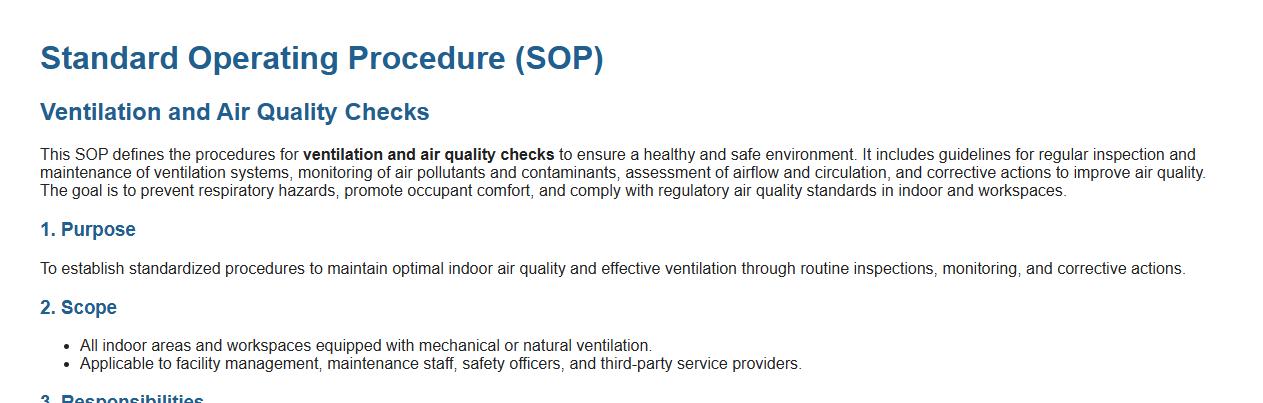
This SOP defines the procedures for ventilation and air quality checks to ensure a healthy and safe environment. It includes guidelines for regular inspection and maintenance of ventilation systems, monitoring of air pollutants and contaminants, assessment of airflow and circulation, and corrective actions to improve air quality. The goal is to prevent respiratory hazards, promote occupant comfort, and comply with regulatory air quality standards in indoor and workspaces.
Personal protective equipment (PPE) usage protocols.
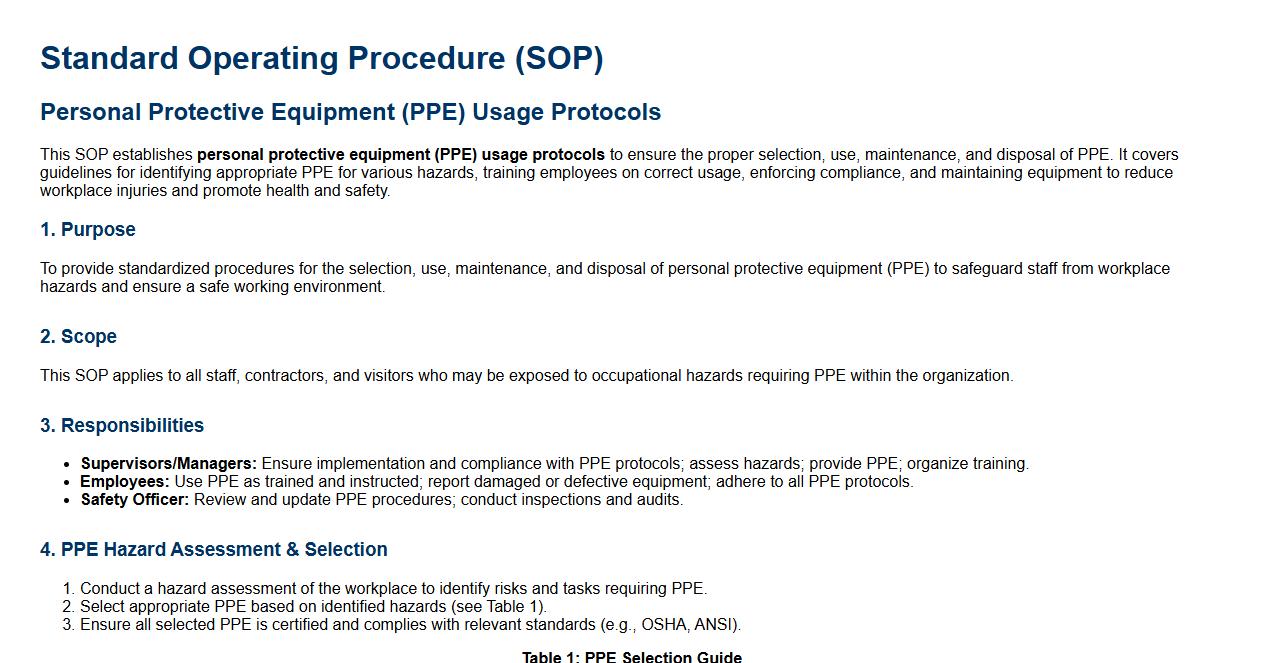
This SOP establishes personal protective equipment (PPE) usage protocols to ensure the proper selection, use, maintenance, and disposal of PPE. It covers guidelines for identifying appropriate PPE for various hazards, training employees on correct usage, enforcing compliance, and maintaining equipment to reduce workplace injuries and promote health and safety.
Incident reporting and documentation for cleaning activities.
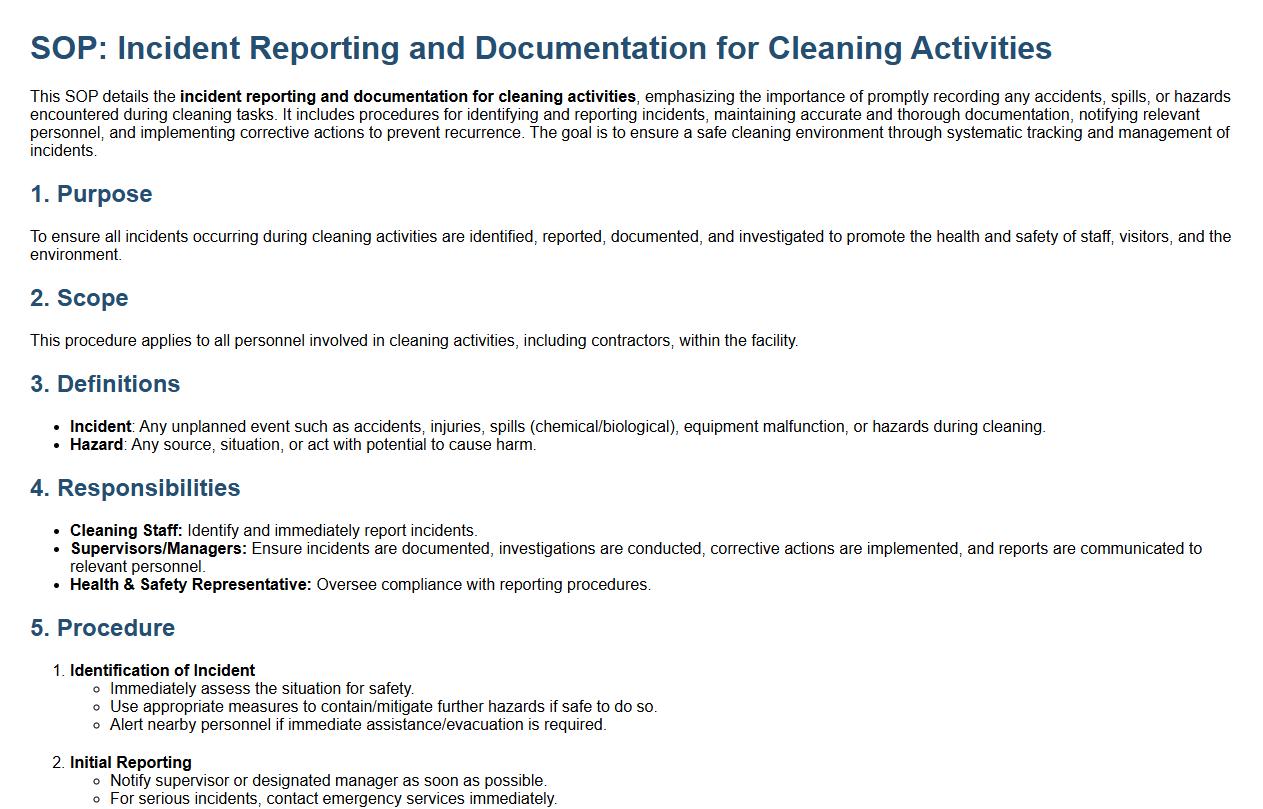
This SOP details the incident reporting and documentation for cleaning activities, emphasizing the importance of promptly recording any accidents, spills, or hazards encountered during cleaning tasks. It includes procedures for identifying and reporting incidents, maintaining accurate and thorough documentation, notifying relevant personnel, and implementing corrective actions to prevent recurrence. The goal is to ensure a safe cleaning environment through systematic tracking and management of incidents.
What is the primary objective of the SOP for Classroom Cleaning and Sanitization?
The primary objective of the SOP for Classroom Cleaning and Sanitization is to ensure a safe and hygienic learning environment for students and staff. This SOP aims to reduce the risk of infections and maintain high standards of cleanliness. It establishes clear guidelines to standardize cleaning practices across classrooms.
Which cleaning agents and equipment are mandated in this SOP for sanitizing classrooms?
The SOP mandates the use of EPA-approved disinfectants effective against viruses and bacteria. Cleaning equipment includes microfiber cloths, mop systems, and dispensers for sanitizing solutions. Proper use of these agents and tools ensures thorough sanitization and prevents cross-contamination.
What is the frequency and schedule required for classroom cleaning and sanitization as per the SOP?
Classroom cleaning and sanitization must be performed at least daily after school hours, with additional cleaning during breaks if needed. High-traffic areas receive more frequent attention to maintain hygiene consistently throughout the day. The SOP outlines a strict schedule to optimize cleaning efficiency and effectiveness.
Which critical high-touch surfaces are identified in the SOP for special cleaning attention?
The SOP highlights high-touch surfaces such as desks, doorknobs, light switches, and electronic devices for special cleaning attention. These surfaces are common vectors for germ transmission and require thorough disinfection. Focused cleaning on these areas helps minimize infection risks.
What documentation or verification processes are outlined in the SOP for confirming cleaning completion?
The SOP requires detailed cleaning logs and checklists to be completed by custodial staff after each cleaning session. Supervisors perform regular audits to verify compliance and ensure standards are met. This documentation provides accountability and supports continuous improvement in cleaning practices.