

A SOP Template for Student Feedback Collection outlines a standardized process to gather, analyze, and utilize student feedback effectively. This template ensures consistency in collecting opinions, improving course quality, and enhancing the overall learning experience. Schools and educators use it to create actionable insights from students' responses systematically.
Student feedback survey scheduling and timeline management.
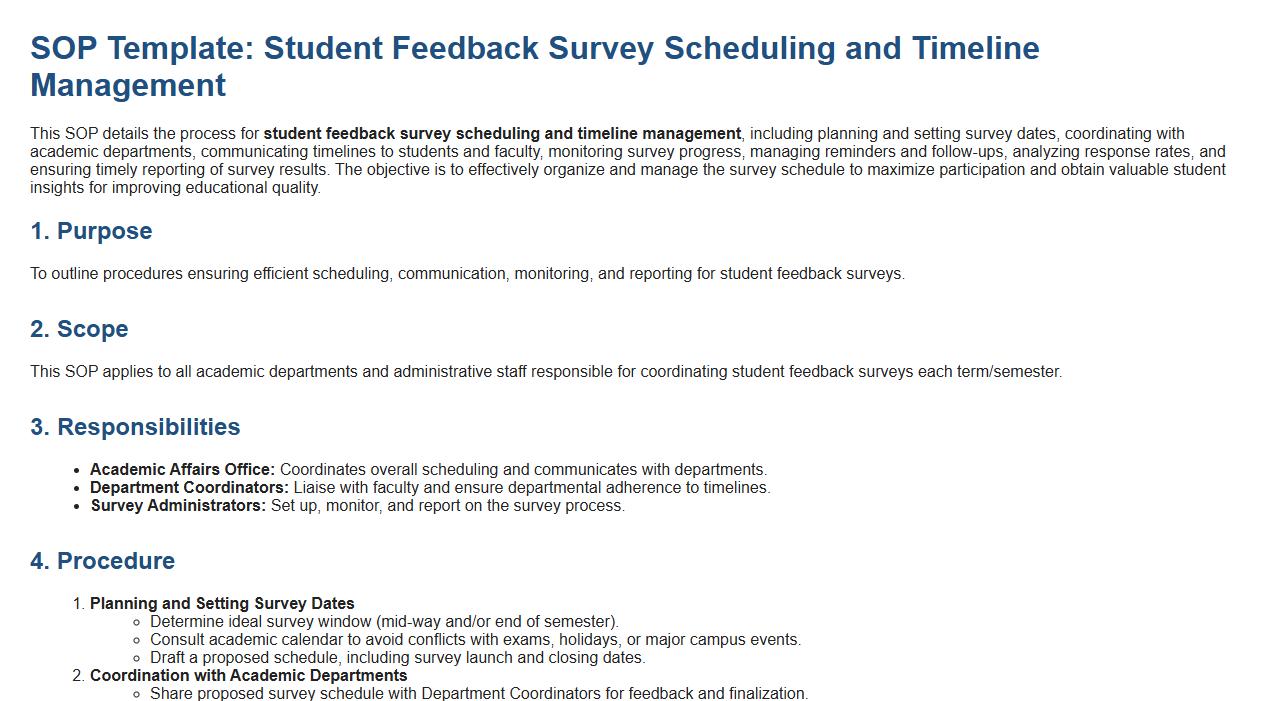
This SOP details the process for student feedback survey scheduling and timeline management, including planning and setting survey dates, coordinating with academic departments, communicating timelines to students and faculty, monitoring survey progress, managing reminders and follow-ups, analyzing response rates, and ensuring timely reporting of survey results. The objective is to effectively organize and manage the survey schedule to maximize participation and obtain valuable student insights for improving educational quality.
Development and approval of feedback questionnaire.
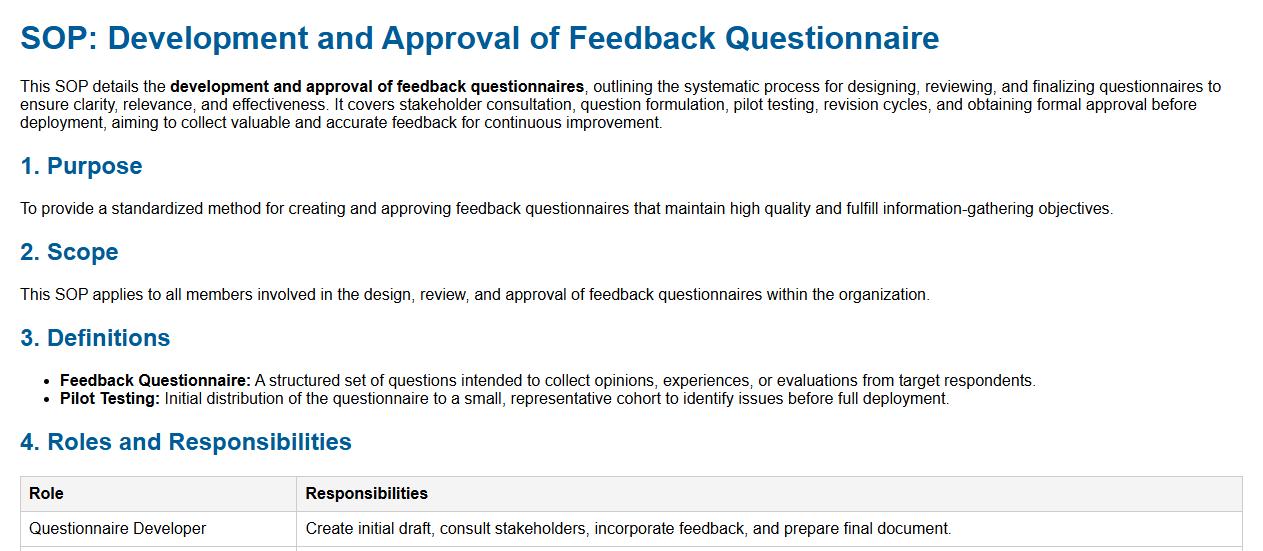
This SOP details the development and approval of feedback questionnaires, outlining the systematic process for designing, reviewing, and finalizing questionnaires to ensure clarity, relevance, and effectiveness. It covers stakeholder consultation, question formulation, pilot testing, revision cycles, and obtaining formal approval before deployment, aiming to collect valuable and accurate feedback for continuous improvement.
Distribution methods and communication guidelines.
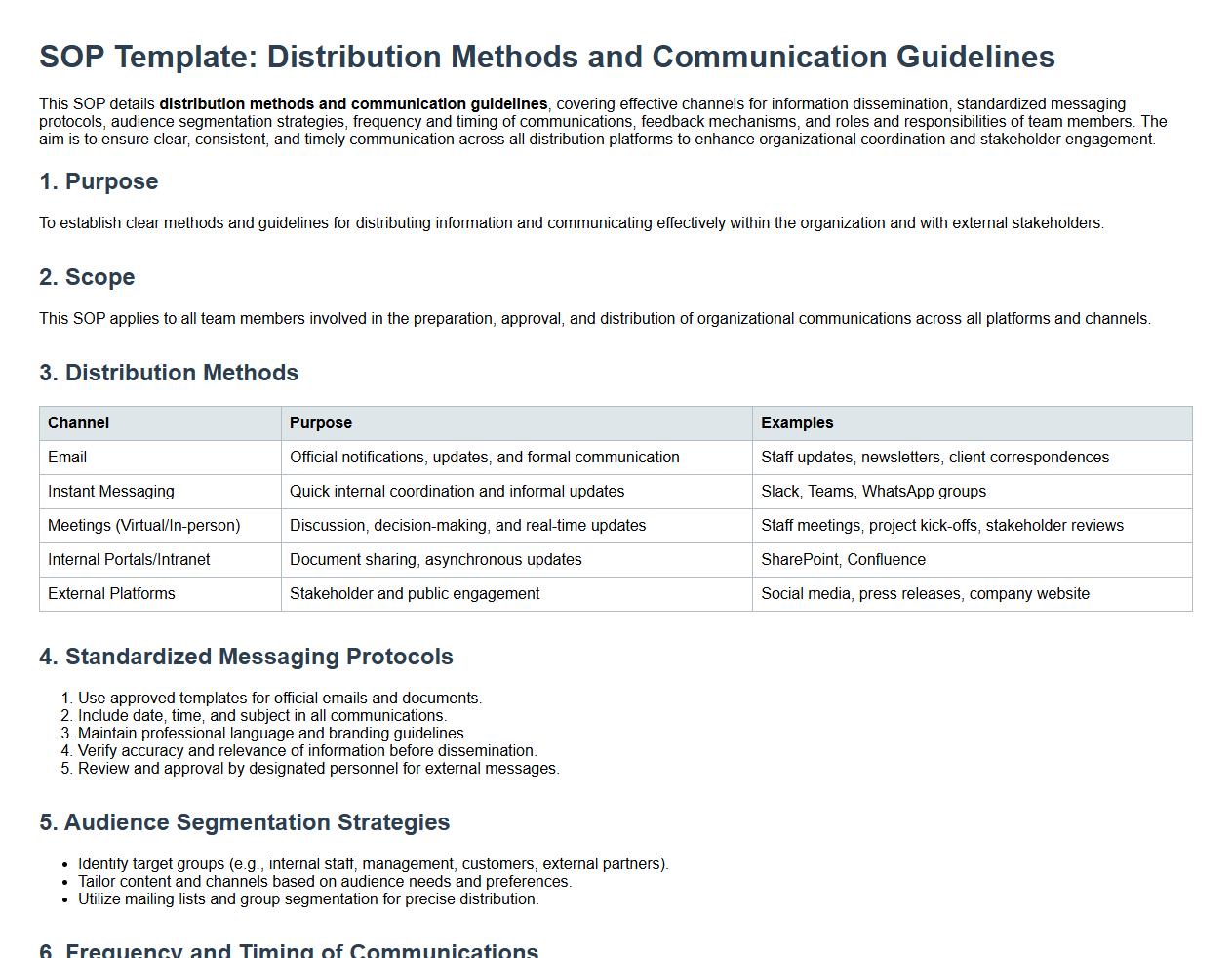
This SOP details distribution methods and communication guidelines, covering effective channels for information dissemination, standardized messaging protocols, audience segmentation strategies, frequency and timing of communications, feedback mechanisms, and roles and responsibilities of team members. The aim is to ensure clear, consistent, and timely communication across all distribution platforms to enhance organizational coordination and stakeholder engagement.
Student anonymity and confidentiality procedures.
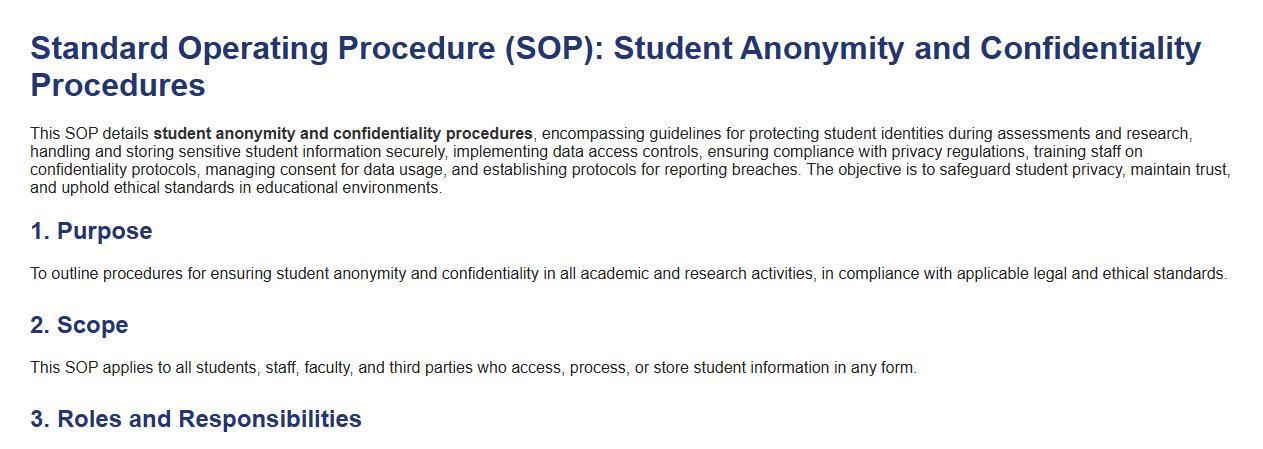
This SOP details student anonymity and confidentiality procedures, encompassing guidelines for protecting student identities during assessments and research, handling and storing sensitive student information securely, implementing data access controls, ensuring compliance with privacy regulations, training staff on confidentiality protocols, managing consent for data usage, and establishing protocols for reporting breaches. The objective is to safeguard student privacy, maintain trust, and uphold ethical standards in educational environments.
Feedback collection process and monitoring.
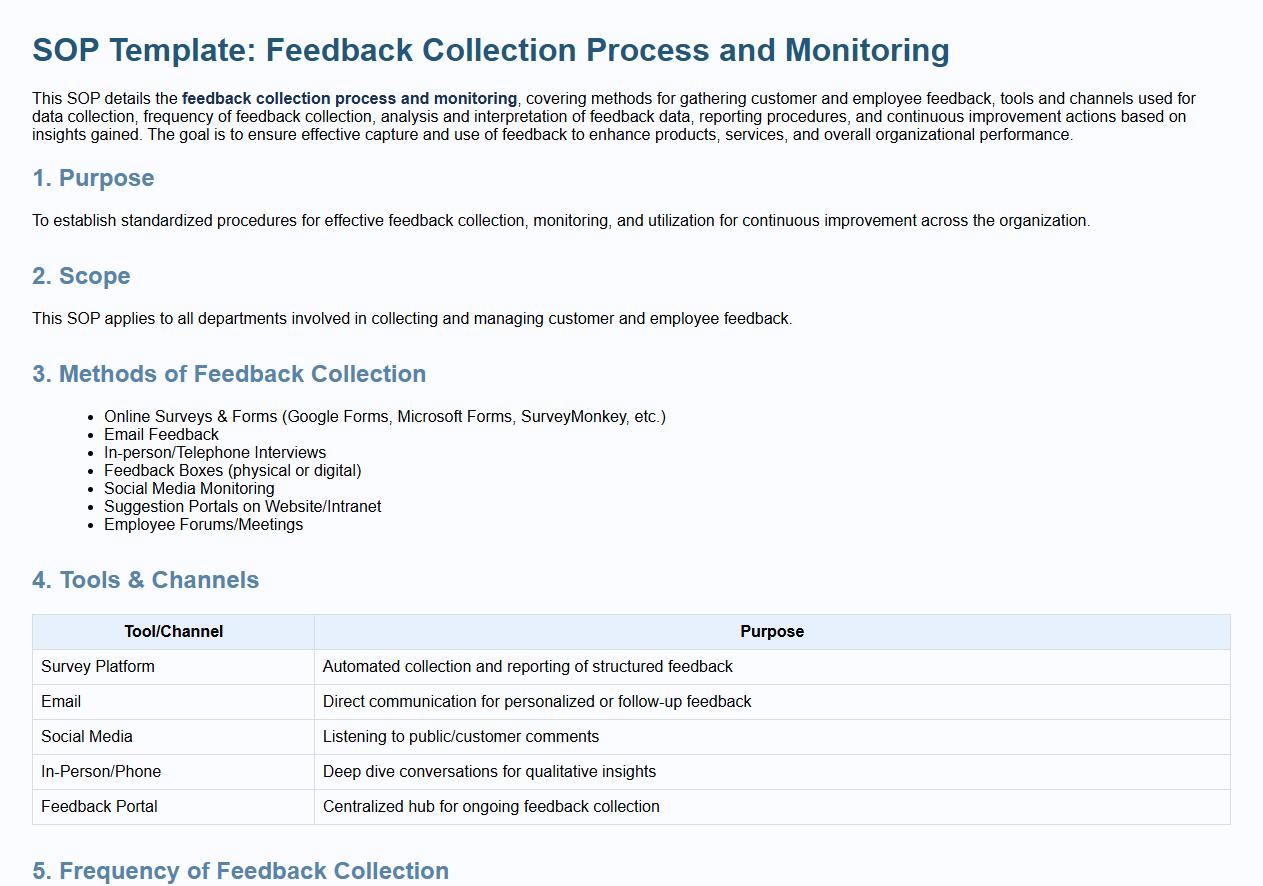
This SOP details the feedback collection process and monitoring, covering methods for gathering customer and employee feedback, tools and channels used for data collection, frequency of feedback collection, analysis and interpretation of feedback data, reporting procedures, and continuous improvement actions based on insights gained. The goal is to ensure effective capture and use of feedback to enhance products, services, and overall organizational performance.
Handling and storage of completed feedback forms.
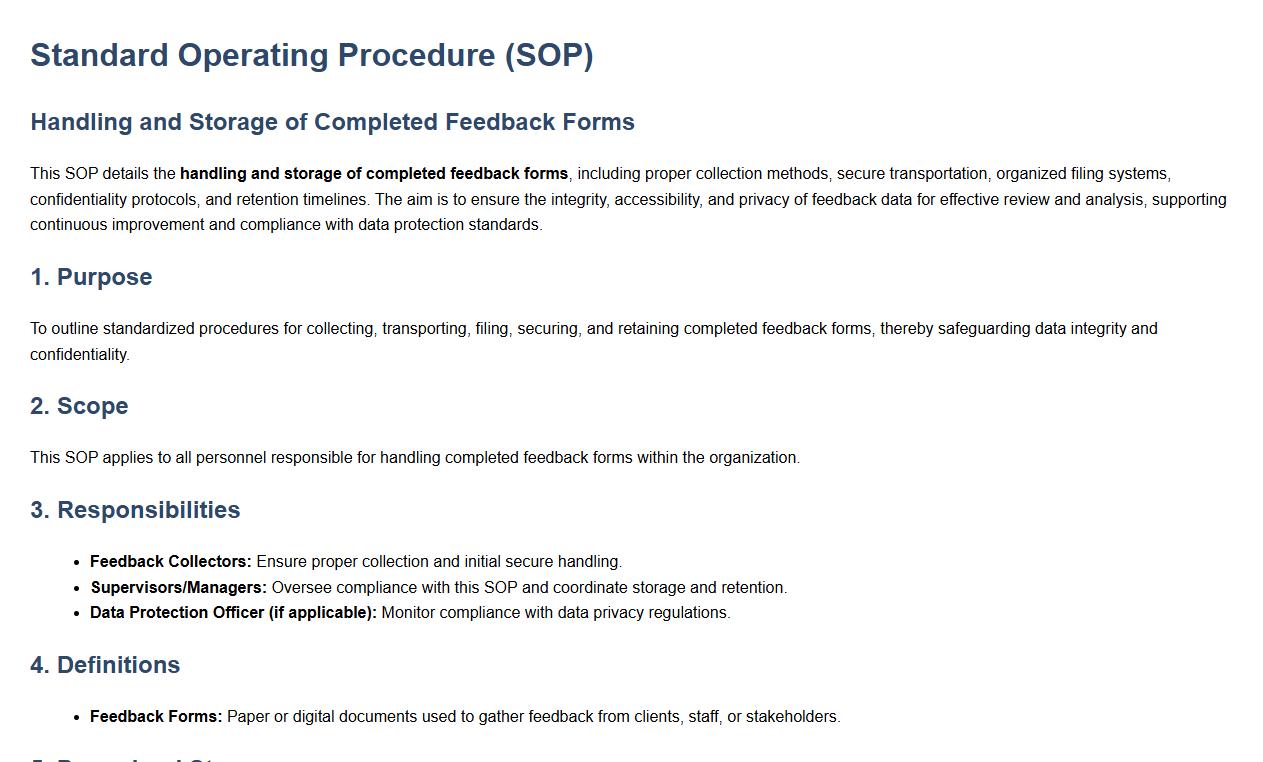
This SOP details the handling and storage of completed feedback forms, including proper collection methods, secure transportation, organized filing systems, confidentiality protocols, and retention timelines. The aim is to ensure the integrity, accessibility, and privacy of feedback data for effective review and analysis, supporting continuous improvement and compliance with data protection standards.
Data aggregation and analysis protocols.
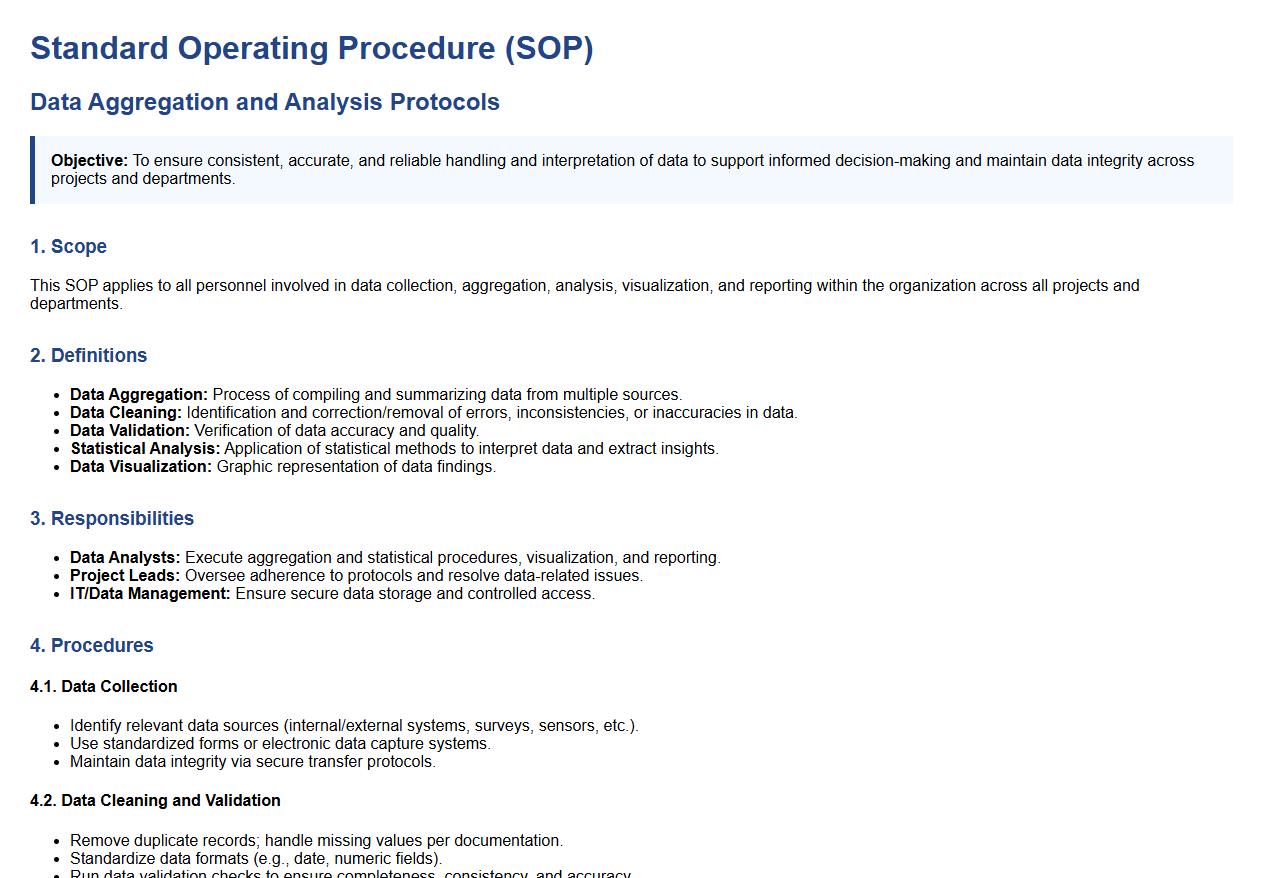
This SOP details data aggregation and analysis protocols, covering methods for data collection, data cleaning and validation, aggregation techniques, statistical analysis procedures, data visualization standards, and reporting guidelines. The objective is to ensure consistent, accurate, and reliable handling and interpretation of data to support informed decision-making and maintain data integrity across projects and departments.
Reporting and dissemination of survey results.
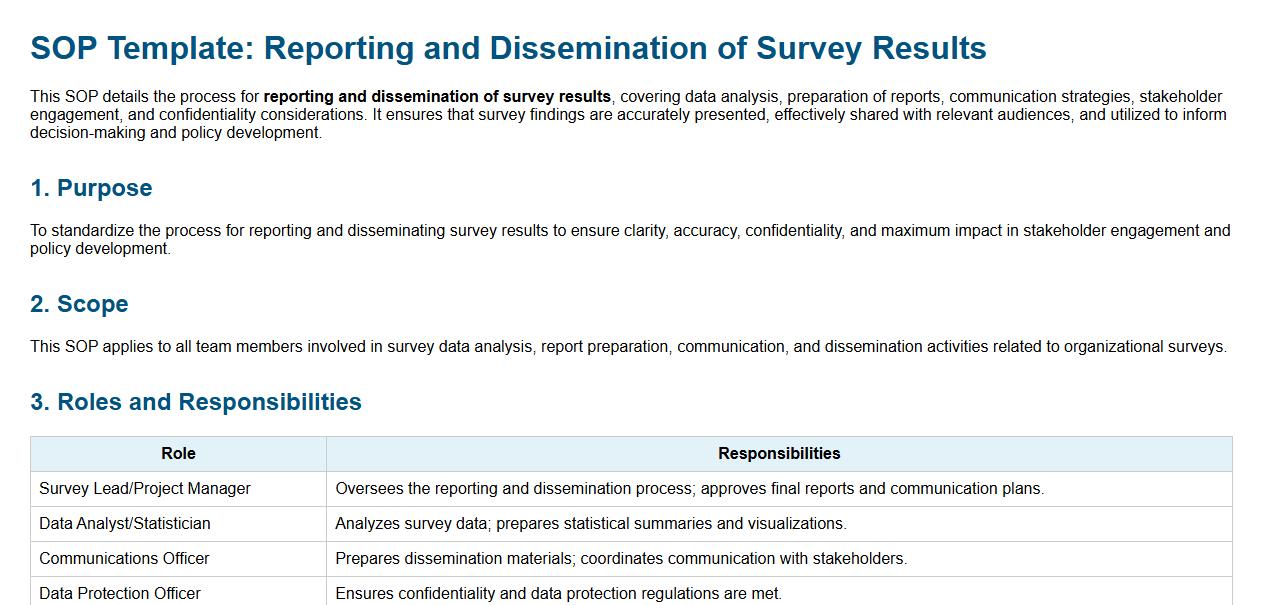
This SOP details the process for reporting and dissemination of survey results, covering data analysis, preparation of reports, communication strategies, stakeholder engagement, and confidentiality considerations. It ensures that survey findings are accurately presented, effectively shared with relevant audiences, and utilized to inform decision-making and policy development.
Follow-up actions and response planning.
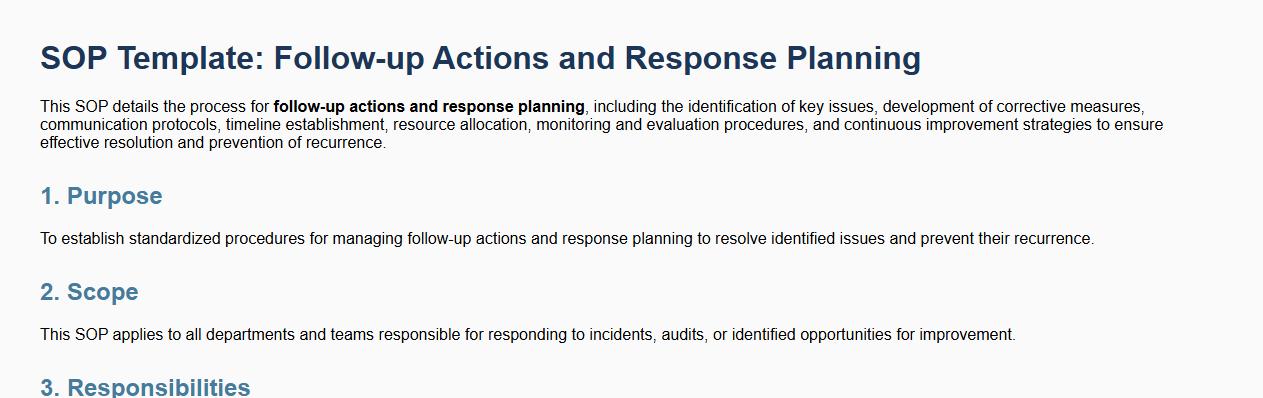
This SOP details the process for follow-up actions and response planning, including the identification of key issues, development of corrective measures, communication protocols, timeline establishment, resource allocation, monitoring and evaluation procedures, and continuous improvement strategies to ensure effective resolution and prevention of recurrence.
Archiving and reviewing feedback for continuous improvement.
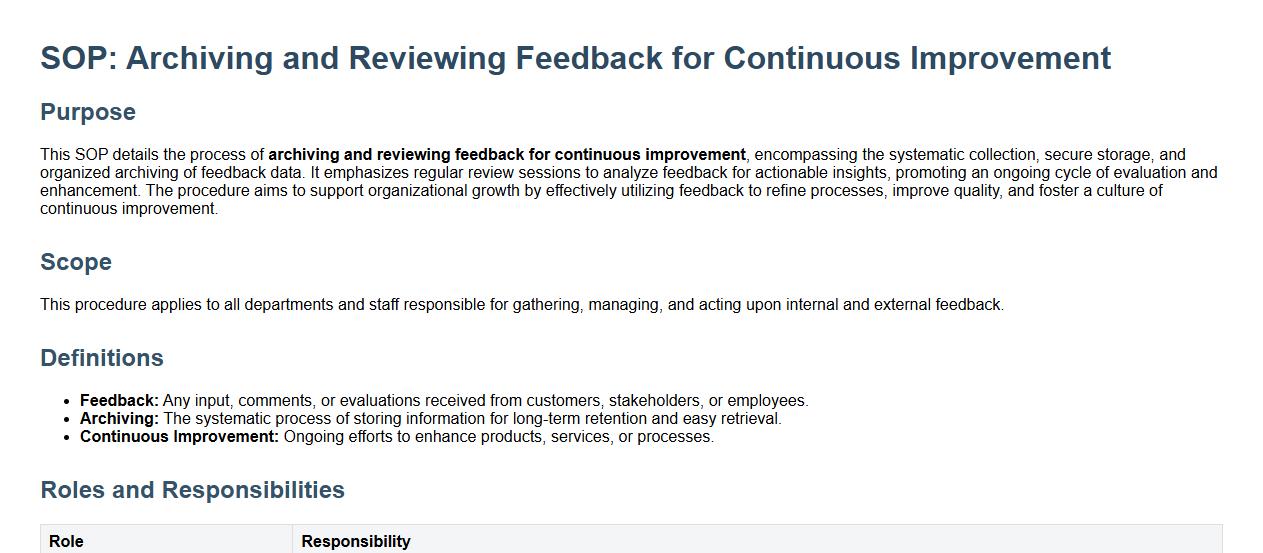
This SOP details the process of archiving and reviewing feedback for continuous improvement, encompassing the systematic collection, secure storage, and organized archiving of feedback data. It emphasizes regular review sessions to analyze feedback for actionable insights, promoting an ongoing cycle of evaluation and enhancement. The procedure aims to support organizational growth by effectively utilizing feedback to refine processes, improve quality, and foster a culture of continuous improvement.
What is the primary objective of the SOP for Student Feedback Collection?
The primary objective of the SOP for Student Feedback Collection is to systematically gather students' opinions and experiences regarding academic programs. This process aims to enhance the quality of education by identifying areas for improvement. Ultimately, it supports informed decision-making to foster a better learning environment.
Which stakeholders are responsible for initiating and managing the feedback collection process according to the SOP?
The SOP assigns responsibility primarily to faculty members and administrative staff for initiating and managing the feedback collection process. These stakeholders coordinate the distribution and collection of feedback forms or digital surveys. Their role ensures the smooth execution of feedback activities in alignment with institutional policies.
What methods and tools are specified in the SOP for gathering student feedback?
The SOP specifies various methods and tools such as online surveys, feedback forms, and focus group discussions for gathering student feedback. These approaches are chosen for their effectiveness in capturing comprehensive and honest responses. The use of digital platforms is emphasized to facilitate easier and quicker data collection.
How does the SOP ensure the confidentiality and anonymity of student responses?
The SOP ensures confidentiality and anonymity by implementing procedures that prevent the identification of individual respondents. This includes using anonymous survey tools and secure data storage methods. Protecting student privacy encourages honest and uninhibited feedback.
What are the procedural steps outlined in the SOP for analyzing and utilizing the collected feedback?
The procedural steps involve collating the collected data, performing qualitative and quantitative analysis, and preparing a comprehensive report. Stakeholders then review the findings to identify trends and actionable insights. Finally, the feedback is used to implement improvements aimed at enhancing educational quality and student satisfaction.