
A SOP Template for Educational Event Planning outlines a clear, step-by-step process for organizing and managing academic events efficiently. This template ensures consistent quality by detailing tasks such as venue selection, speaker coordination, and participant communication. Following this SOP helps streamline event logistics and enhances the overall learning experience for attendees.
Pre-event needs assessment and goal setting.
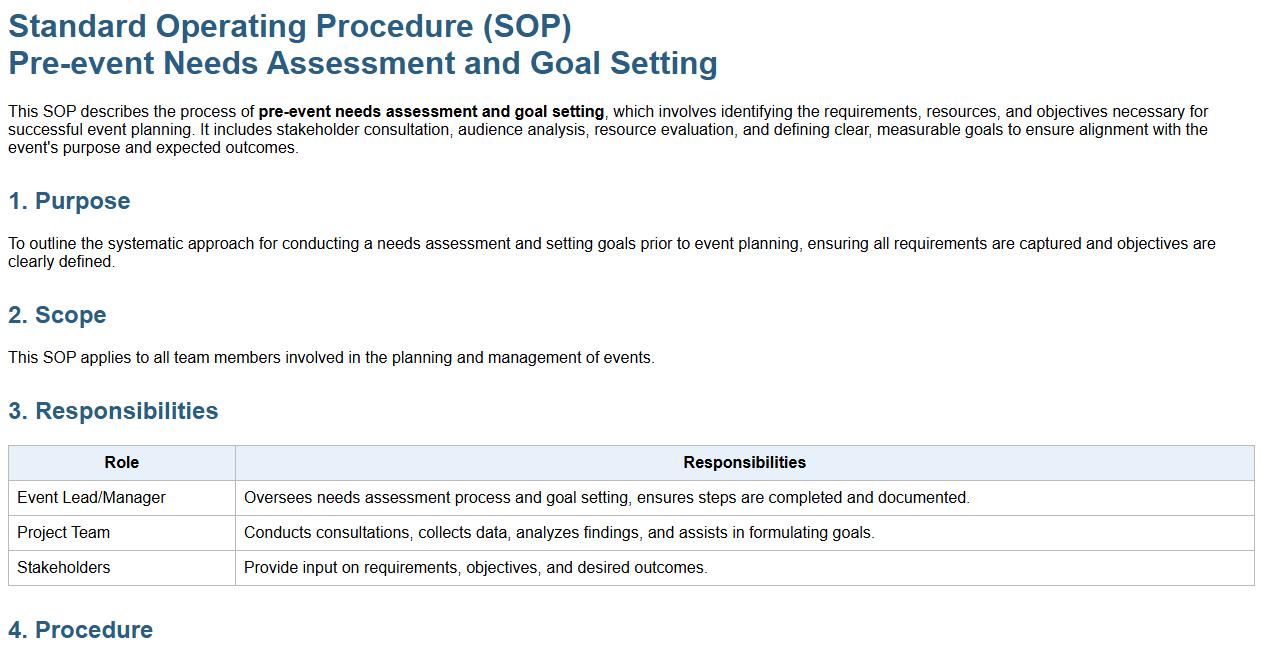
This SOP describes the process of pre-event needs assessment and goal setting, which involves identifying the requirements, resources, and objectives necessary for successful event planning. It includes stakeholder consultation, audience analysis, resource evaluation, and defining clear, measurable goals to ensure alignment with the event's purpose and expected outcomes.
Budget creation and resource allocation.
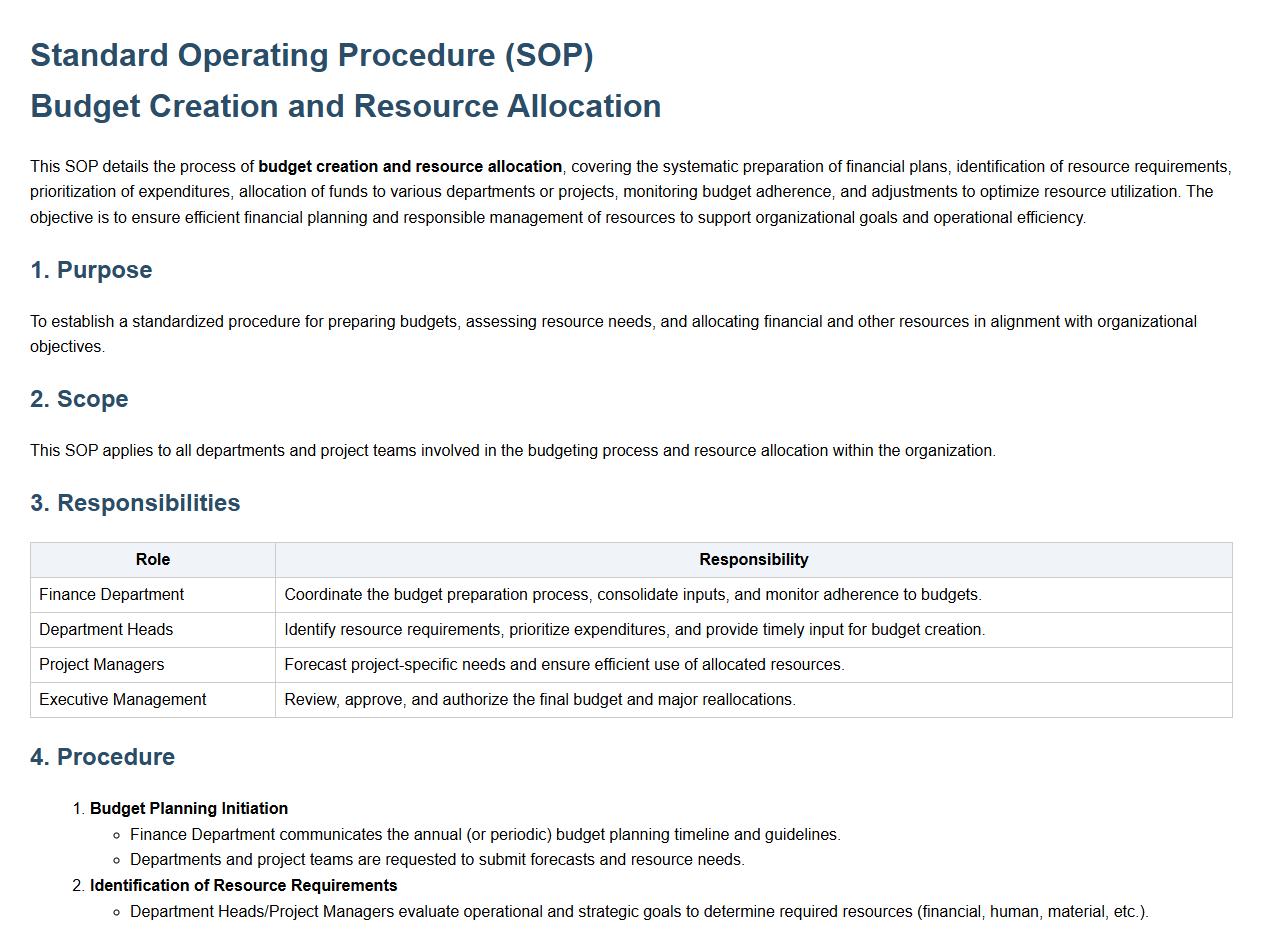
This SOP details the process of budget creation and resource allocation, covering the systematic preparation of financial plans, identification of resource requirements, prioritization of expenditures, allocation of funds to various departments or projects, monitoring budget adherence, and adjustments to optimize resource utilization. The objective is to ensure efficient financial planning and responsible management of resources to support organizational goals and operational efficiency.
Detailed event schedule and timeline development.
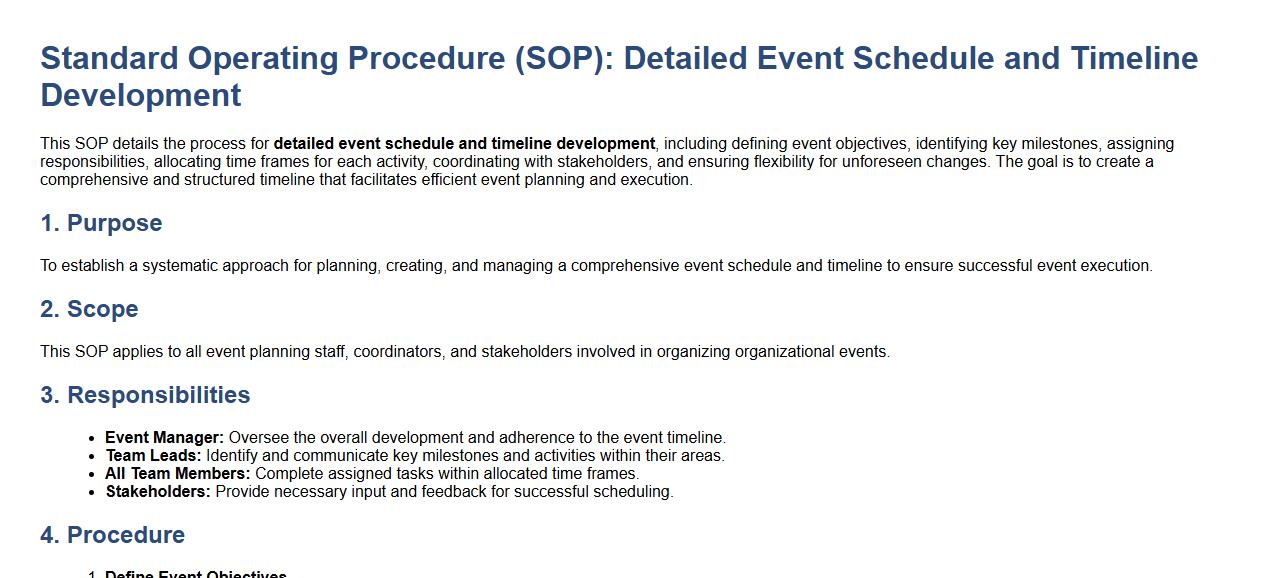
This SOP details the process for detailed event schedule and timeline development, including defining event objectives, identifying key milestones, assigning responsibilities, allocating time frames for each activity, coordinating with stakeholders, and ensuring flexibility for unforeseen changes. The goal is to create a comprehensive and structured timeline that facilitates efficient event planning and execution.
Venue selection and booking procedures.
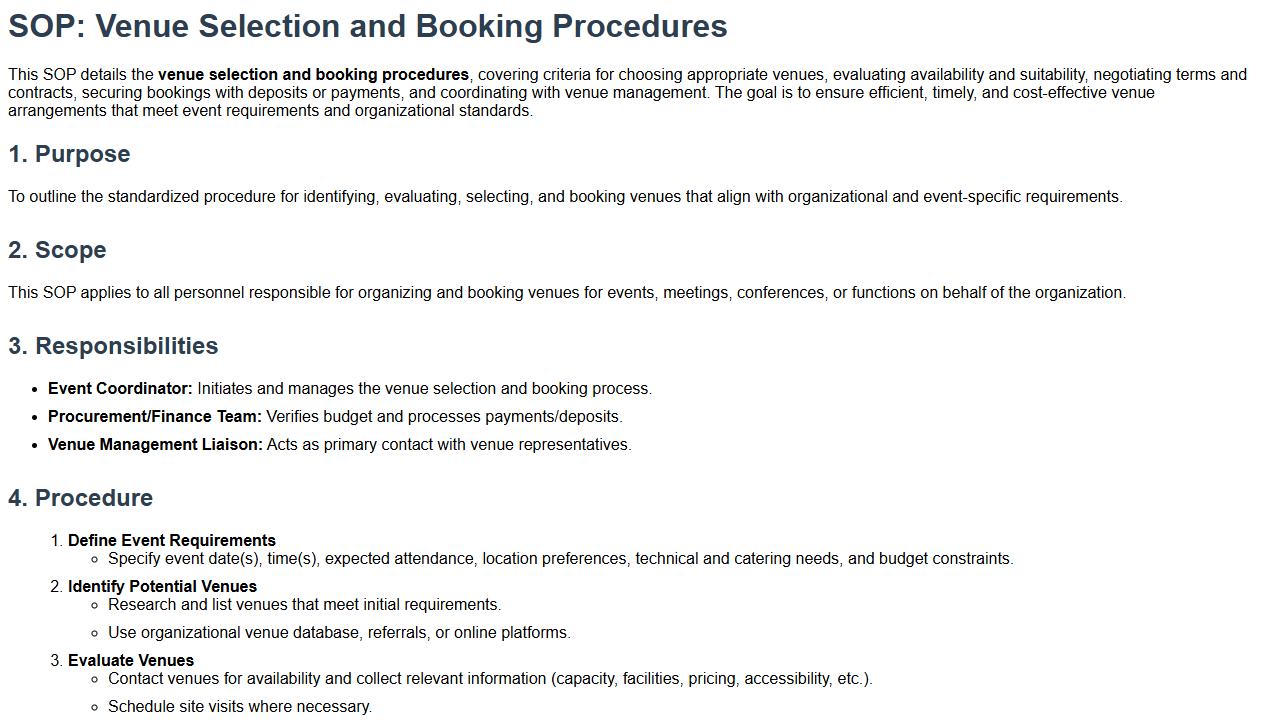
This SOP details the venue selection and booking procedures, covering criteria for choosing appropriate venues, evaluating availability and suitability, negotiating terms and contracts, securing bookings with deposits or payments, and coordinating with venue management. The goal is to ensure efficient, timely, and cost-effective venue arrangements that meet event requirements and organizational standards.
Speaker, facilitator, and guest coordination protocols.
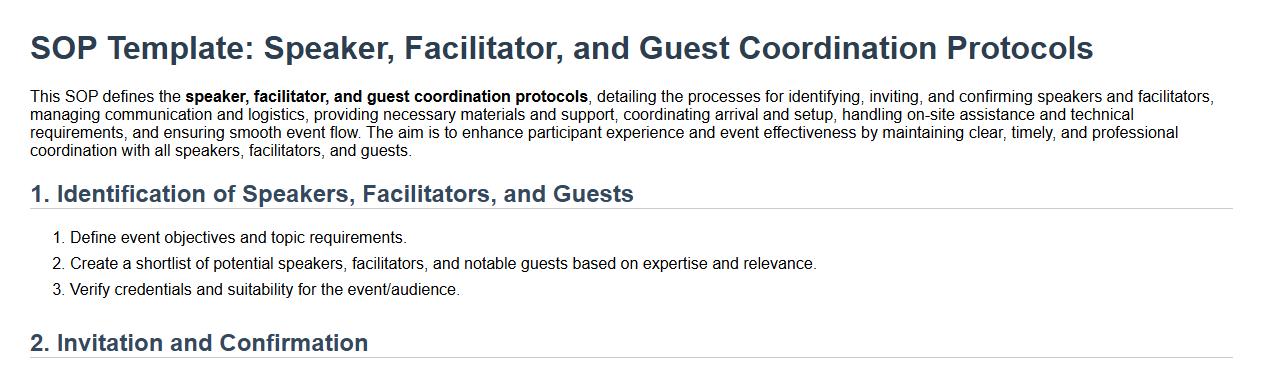
This SOP defines the speaker, facilitator, and guest coordination protocols, detailing the processes for identifying, inviting, and confirming speakers and facilitators, managing communication and logistics, providing necessary materials and support, coordinating arrival and setup, handling on-site assistance and technical requirements, and ensuring smooth event flow. The aim is to enhance participant experience and event effectiveness by maintaining clear, timely, and professional coordination with all speakers, facilitators, and guests.
Promotion, marketing, and participant registration processes.
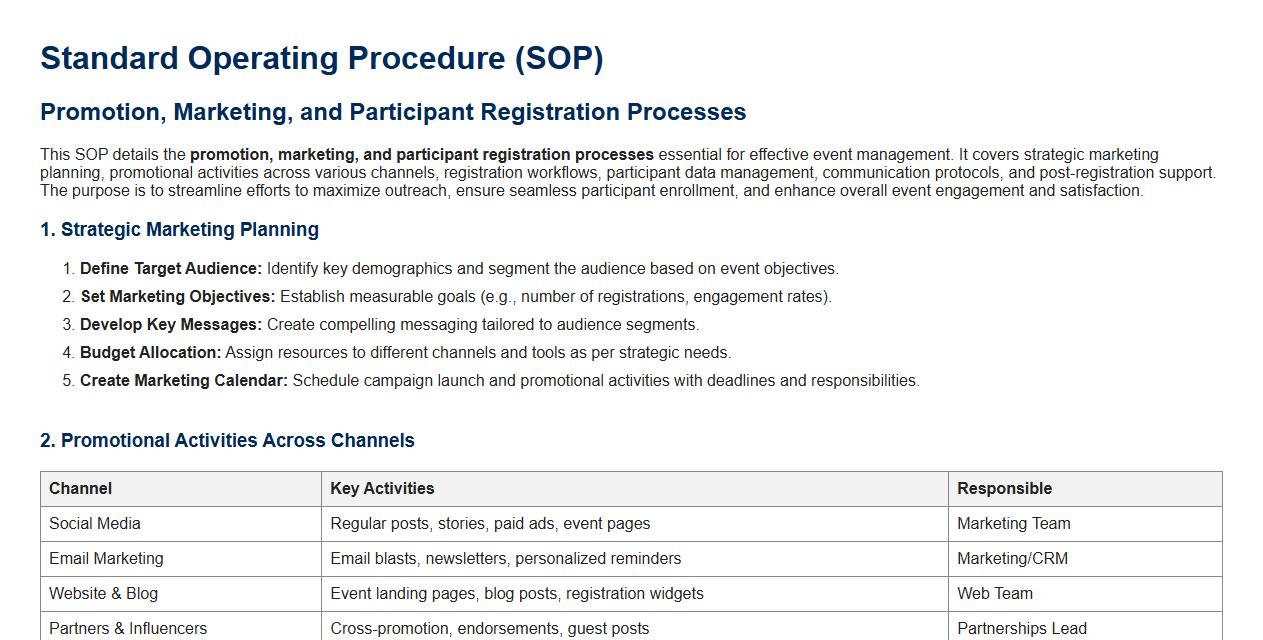
This SOP details the promotion, marketing, and participant registration processes essential for effective event management. It covers strategic marketing planning, promotional activities across various channels, registration workflows, participant data management, communication protocols, and post-registration support. The purpose is to streamline efforts to maximize outreach, ensure seamless participant enrollment, and enhance overall event engagement and satisfaction.
Audio-visual equipment and materials preparation checklist.
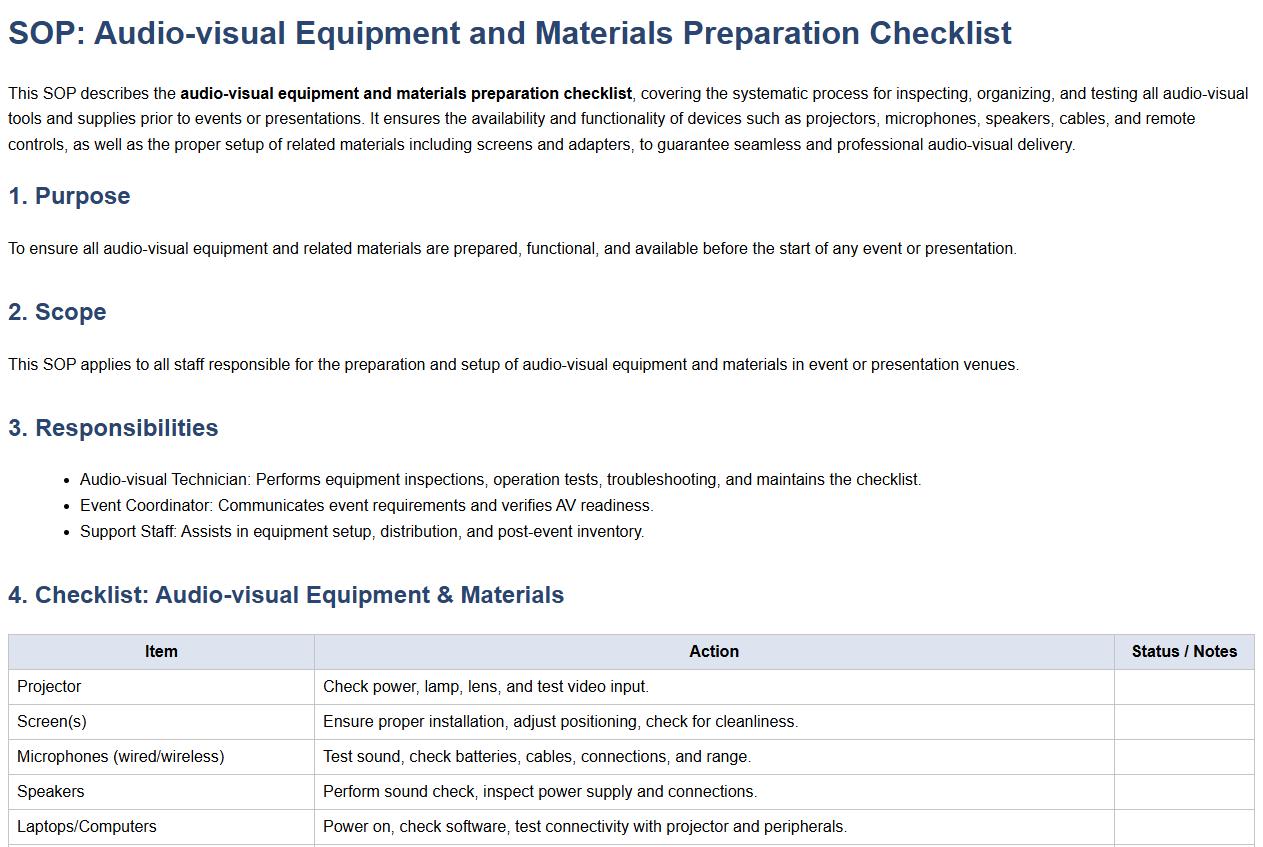
This SOP describes the audio-visual equipment and materials preparation checklist, covering the systematic process for inspecting, organizing, and testing all audio-visual tools and supplies prior to events or presentations. It ensures the availability and functionality of devices such as projectors, microphones, speakers, cables, and remote controls, as well as the proper setup of related materials including screens and adapters, to guarantee seamless and professional audio-visual delivery.
On-site event setup and logistics management.
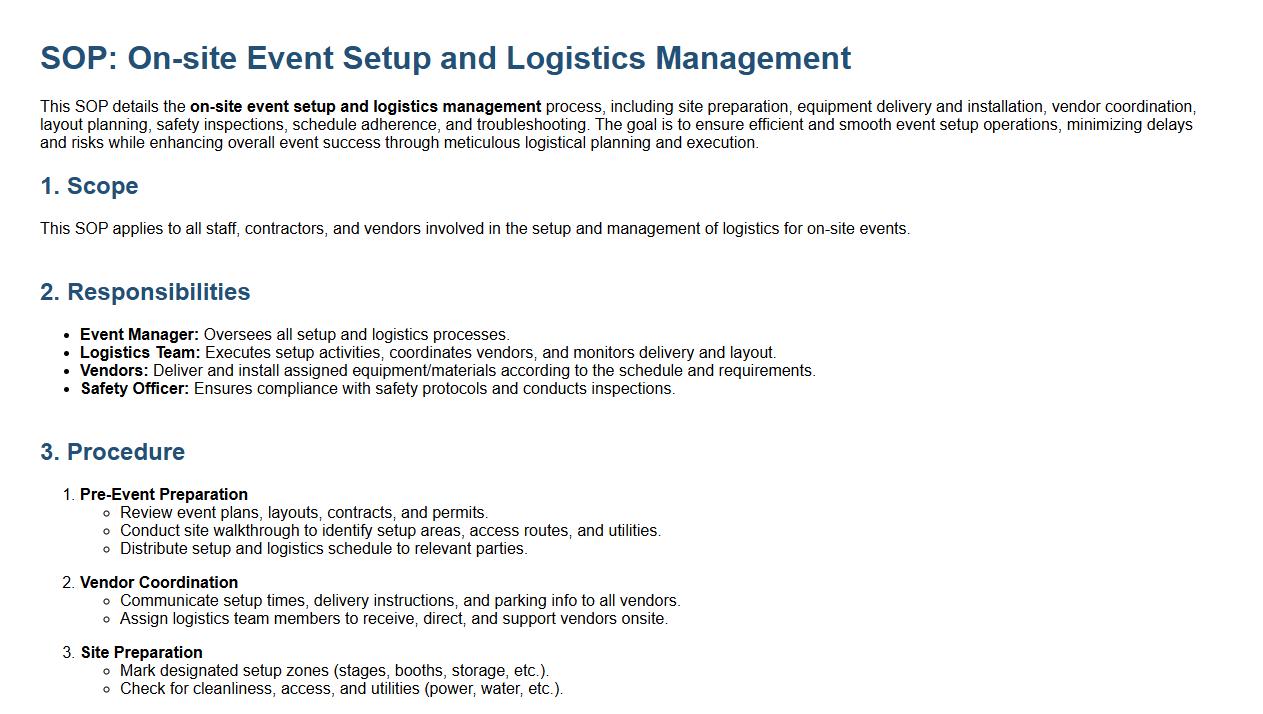
This SOP details the on-site event setup and logistics management process, including site preparation, equipment delivery and installation, vendor coordination, layout planning, safety inspections, schedule adherence, and troubleshooting. The goal is to ensure efficient and smooth event setup operations, minimizing delays and risks while enhancing overall event success through meticulous logistical planning and execution.
Attendee support and feedback collection methods.
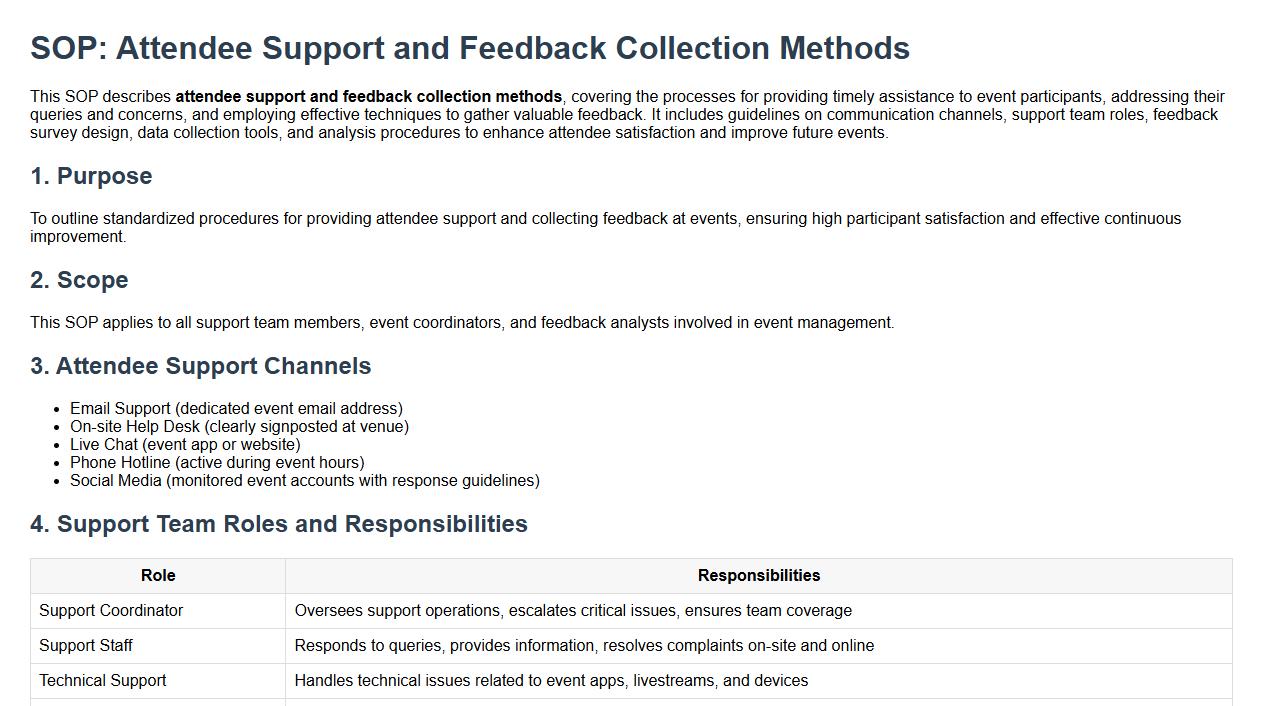
This SOP describes attendee support and feedback collection methods, covering the processes for providing timely assistance to event participants, addressing their queries and concerns, and employing effective techniques to gather valuable feedback. It includes guidelines on communication channels, support team roles, feedback survey design, data collection tools, and analysis procedures to enhance attendee satisfaction and improve future events.
Post-event evaluation, reporting, and documentation.
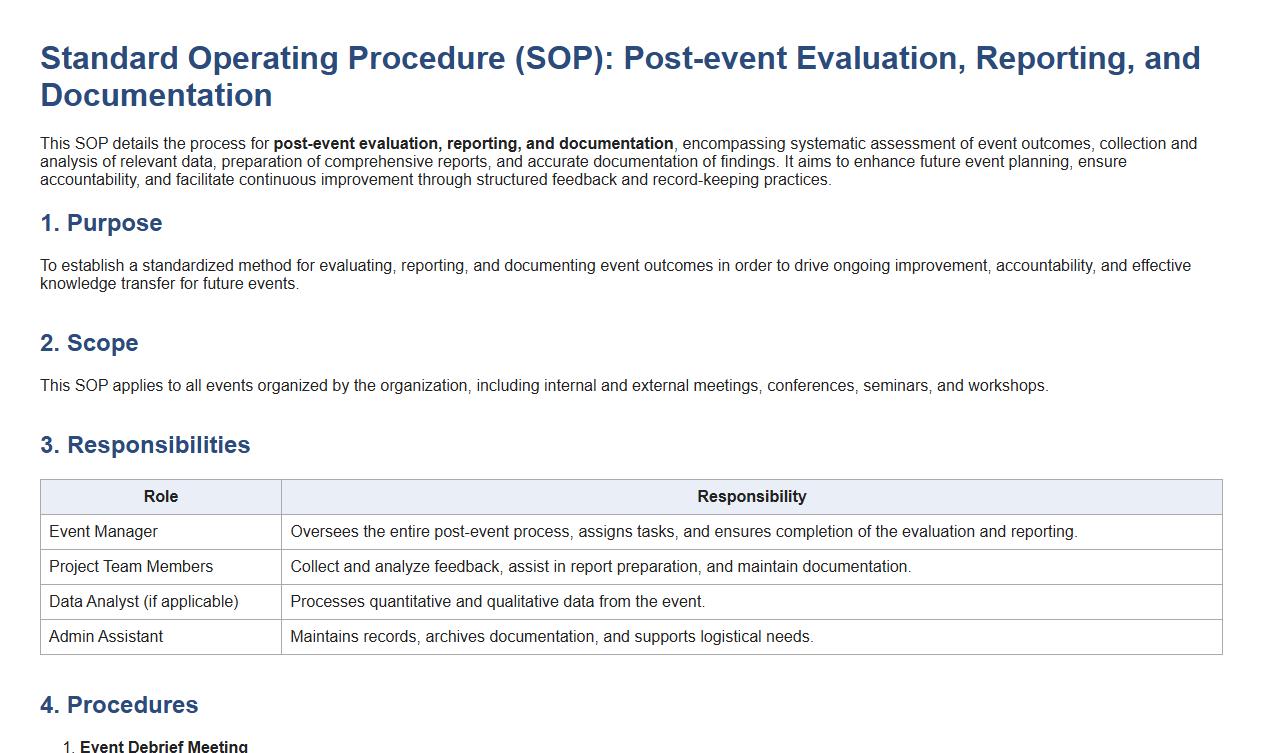
This SOP details the process for post-event evaluation, reporting, and documentation, encompassing systematic assessment of event outcomes, collection and analysis of relevant data, preparation of comprehensive reports, and accurate documentation of findings. It aims to enhance future event planning, ensure accountability, and facilitate continuous improvement through structured feedback and record-keeping practices.
What are the primary objectives outlined in the SOP for educational event planning?
The primary objectives of the SOP focus on ensuring seamless coordination and effective delivery of educational events. It emphasizes maintaining high-quality standards while adhering to budget and timeline constraints. The SOP also aims to enhance participant engagement and learning outcomes.
Which stakeholder roles and responsibilities are specified in the SOP?
The SOP clearly defines the roles of event coordinators, facilitators, and administrative staff. Each stakeholder is assigned specific duties, such as logistics management, content delivery, and participant communication. This structure ensures accountability and smooth collaboration throughout the event.
What approval processes are mandated in the SOP for event execution?
The SOP mandates a multi-tier approval process involving initial concept validation, budget approval, and final event execution clearance. Approvals are required from department heads and finance teams to ensure compliance and resource allocation. This structured process minimizes risks and aligns event goals with organizational policies.
Which documentation and reporting requirements are detailed in the SOP?
The SOP requires detailed documentation of event plans, participant lists, and feedback reports. Post-event reporting includes analysis of attendance, budget utilization, and participant satisfaction. These records support continuous improvement and accountability in future educational events.
What risk assessment and contingency measures are included in the SOP?
The SOP outlines comprehensive risk assessment protocols to identify potential issues such as technical failures or participant safety concerns. It includes contingency plans like backup venues, alternative timelines, and emergency contacts. These measures ensure preparedness and minimize disruptions during the event.