

A SOP Template for Teacher Evaluation provides a structured framework to assess teacher performance consistently and fairly. It outlines clear criteria, evaluation methods, and standardized procedures to ensure transparent feedback and professional development. Using this template helps educational institutions maintain high teaching standards and promote continuous improvement.
Teacher evaluation criteria and performance standards.
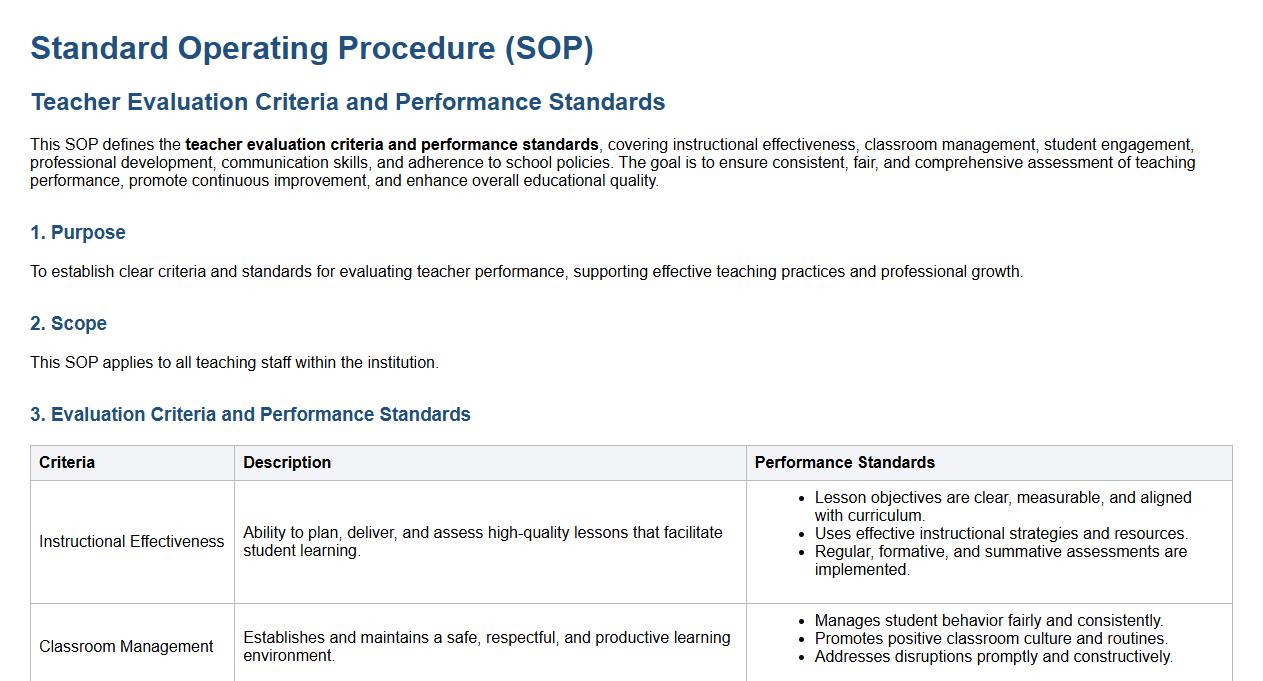
This SOP defines the teacher evaluation criteria and performance standards, covering instructional effectiveness, classroom management, student engagement, professional development, communication skills, and adherence to school policies. The goal is to ensure consistent, fair, and comprehensive assessment of teaching performance, promote continuous improvement, and enhance overall educational quality.
Scheduling and notification of evaluation periods.
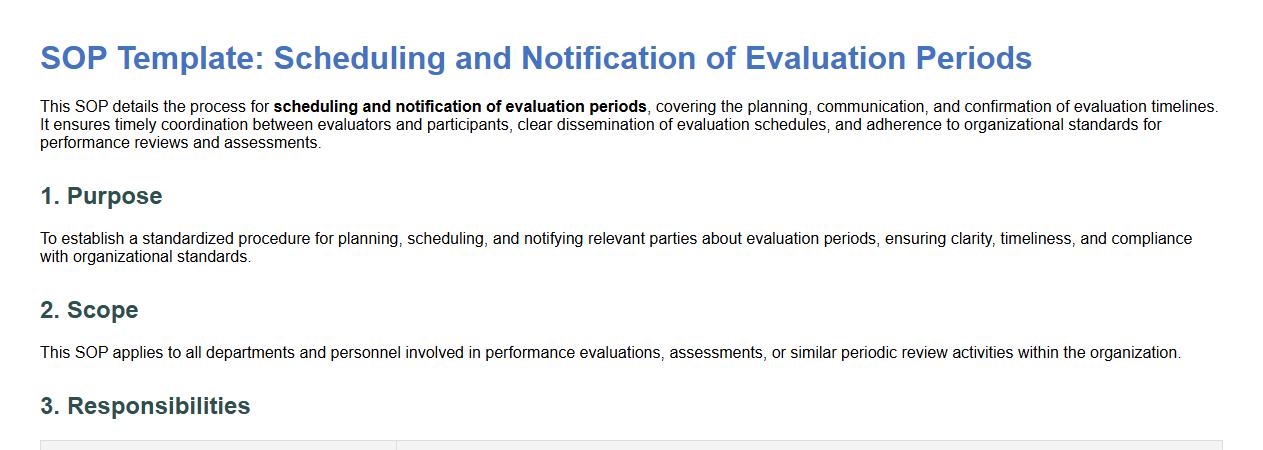
This SOP details the process for scheduling and notification of evaluation periods, covering the planning, communication, and confirmation of evaluation timelines. It ensures timely coordination between evaluators and participants, clear dissemination of evaluation schedules, and adherence to organizational standards for performance reviews and assessments.
Classroom observation procedures and protocols.
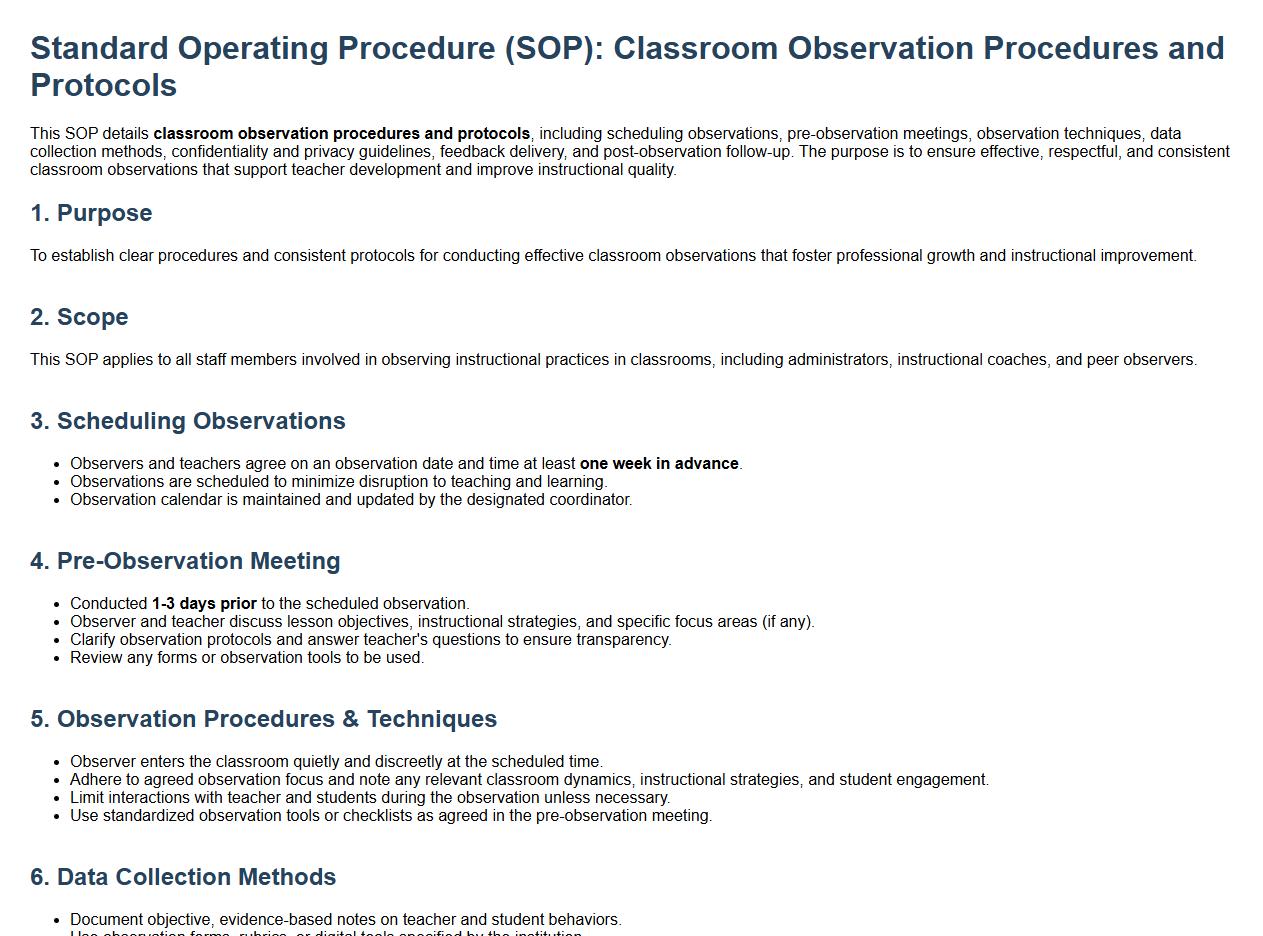
This SOP details classroom observation procedures and protocols, including scheduling observations, pre-observation meetings, observation techniques, data collection methods, confidentiality and privacy guidelines, feedback delivery, and post-observation follow-up. The purpose is to ensure effective, respectful, and consistent classroom observations that support teacher development and improve instructional quality.
Documentation and evidence collection guidelines.
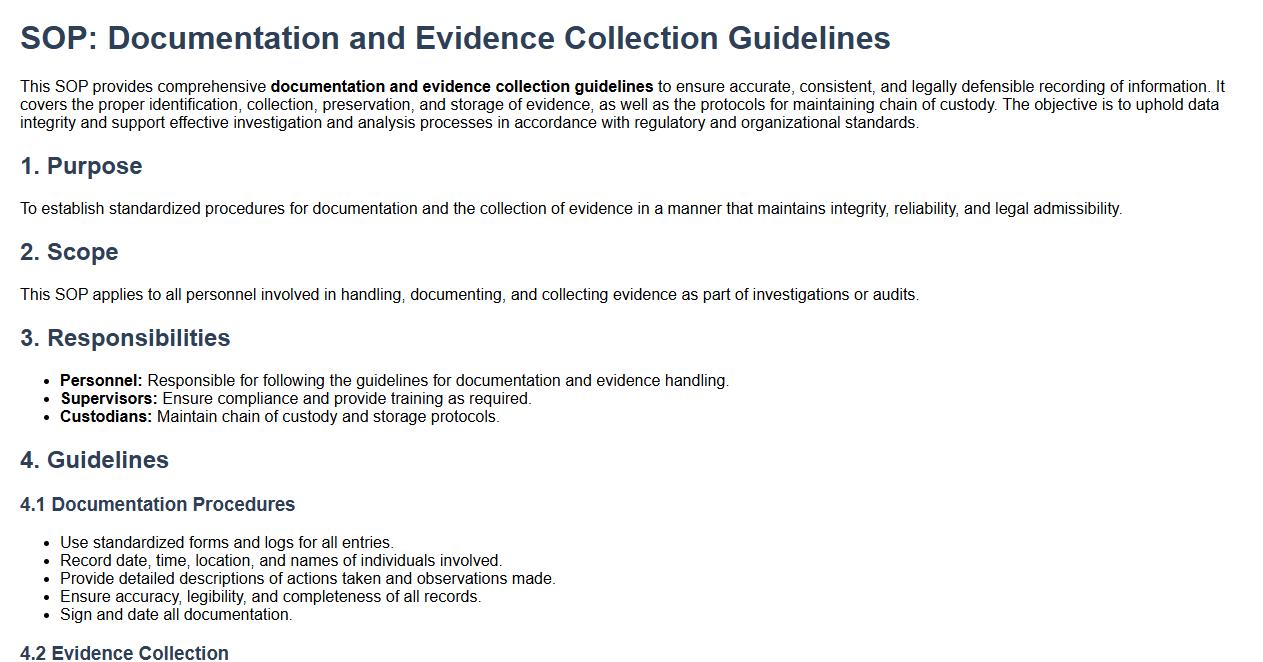
This SOP provides comprehensive documentation and evidence collection guidelines to ensure accurate, consistent, and legally defensible recording of information. It covers the proper identification, collection, preservation, and storage of evidence, as well as the protocols for maintaining chain of custody. The objective is to uphold data integrity and support effective investigation and analysis processes in accordance with regulatory and organizational standards.
Feedback methods and post-observation meetings.
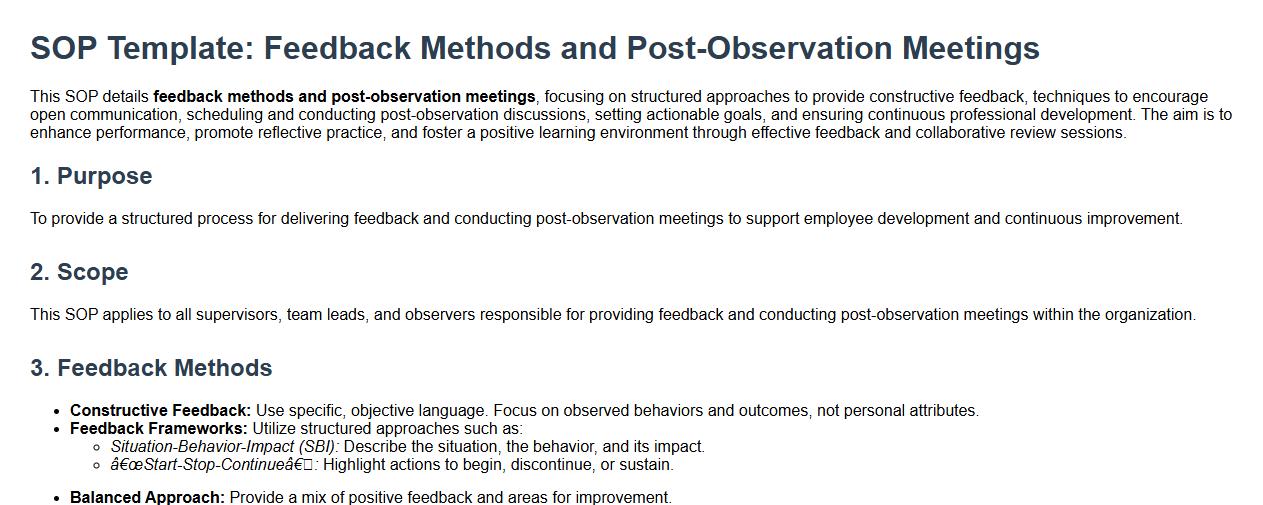
This SOP details feedback methods and post-observation meetings, focusing on structured approaches to provide constructive feedback, techniques to encourage open communication, scheduling and conducting post-observation discussions, setting actionable goals, and ensuring continuous professional development. The aim is to enhance performance, promote reflective practice, and foster a positive learning environment through effective feedback and collaborative review sessions.
Professional development and improvement planning.
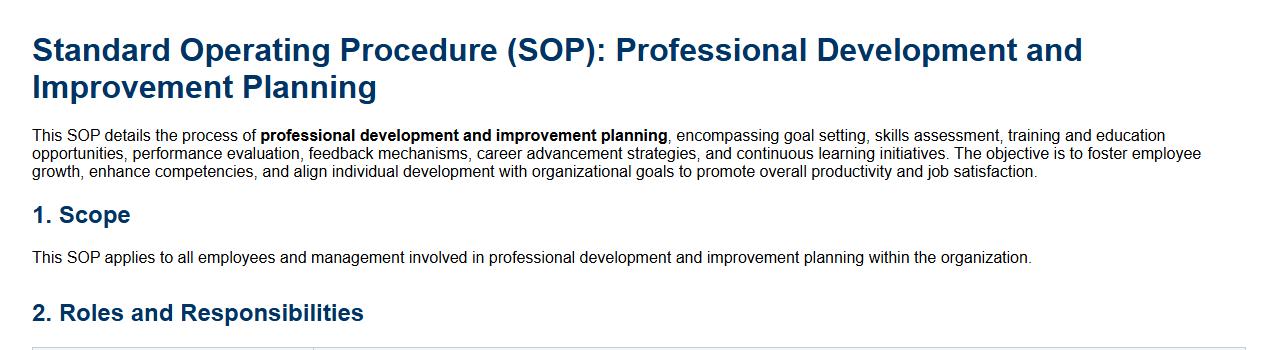
This SOP details the process of professional development and improvement planning, encompassing goal setting, skills assessment, training and education opportunities, performance evaluation, feedback mechanisms, career advancement strategies, and continuous learning initiatives. The objective is to foster employee growth, enhance competencies, and align individual development with organizational goals to promote overall productivity and job satisfaction.
Confidentiality and data handling procedures.
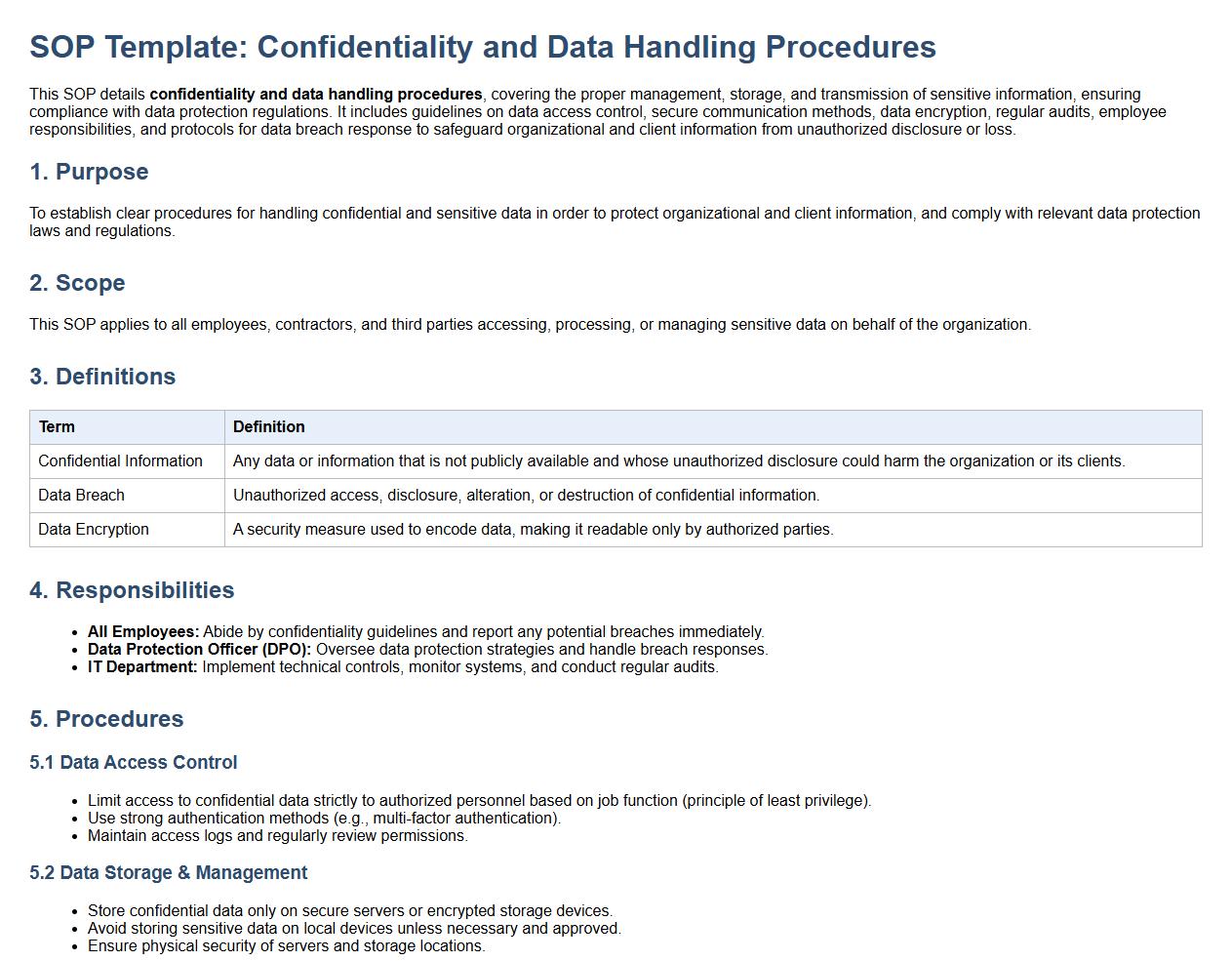
This SOP details confidentiality and data handling procedures, covering the proper management, storage, and transmission of sensitive information, ensuring compliance with data protection regulations. It includes guidelines on data access control, secure communication methods, data encryption, regular audits, employee responsibilities, and protocols for data breach response to safeguard organizational and client information from unauthorized disclosure or loss.
Appeals and grievance process.
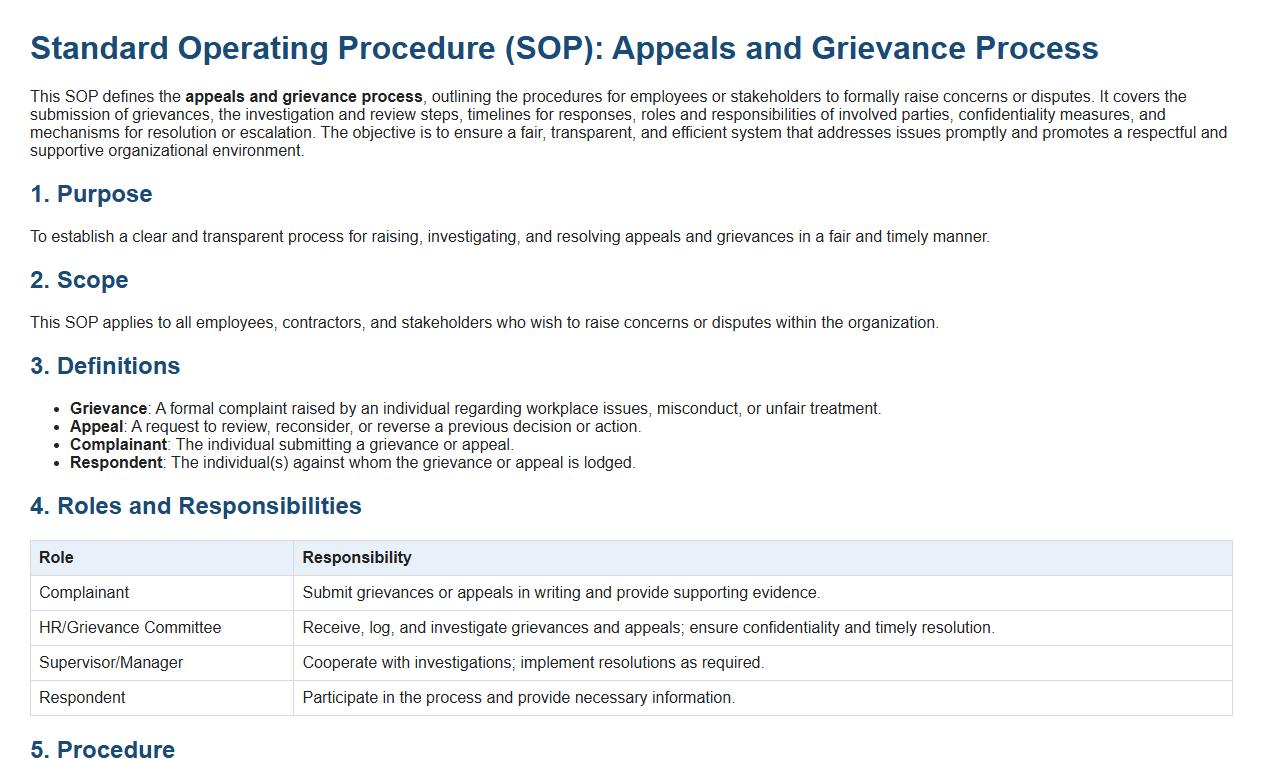
This SOP defines the appeals and grievance process, outlining the procedures for employees or stakeholders to formally raise concerns or disputes. It covers the submission of grievances, the investigation and review steps, timelines for responses, roles and responsibilities of involved parties, confidentiality measures, and mechanisms for resolution or escalation. The objective is to ensure a fair, transparent, and efficient system that addresses issues promptly and promotes a respectful and supportive organizational environment.
Evaluator training and calibration standards.
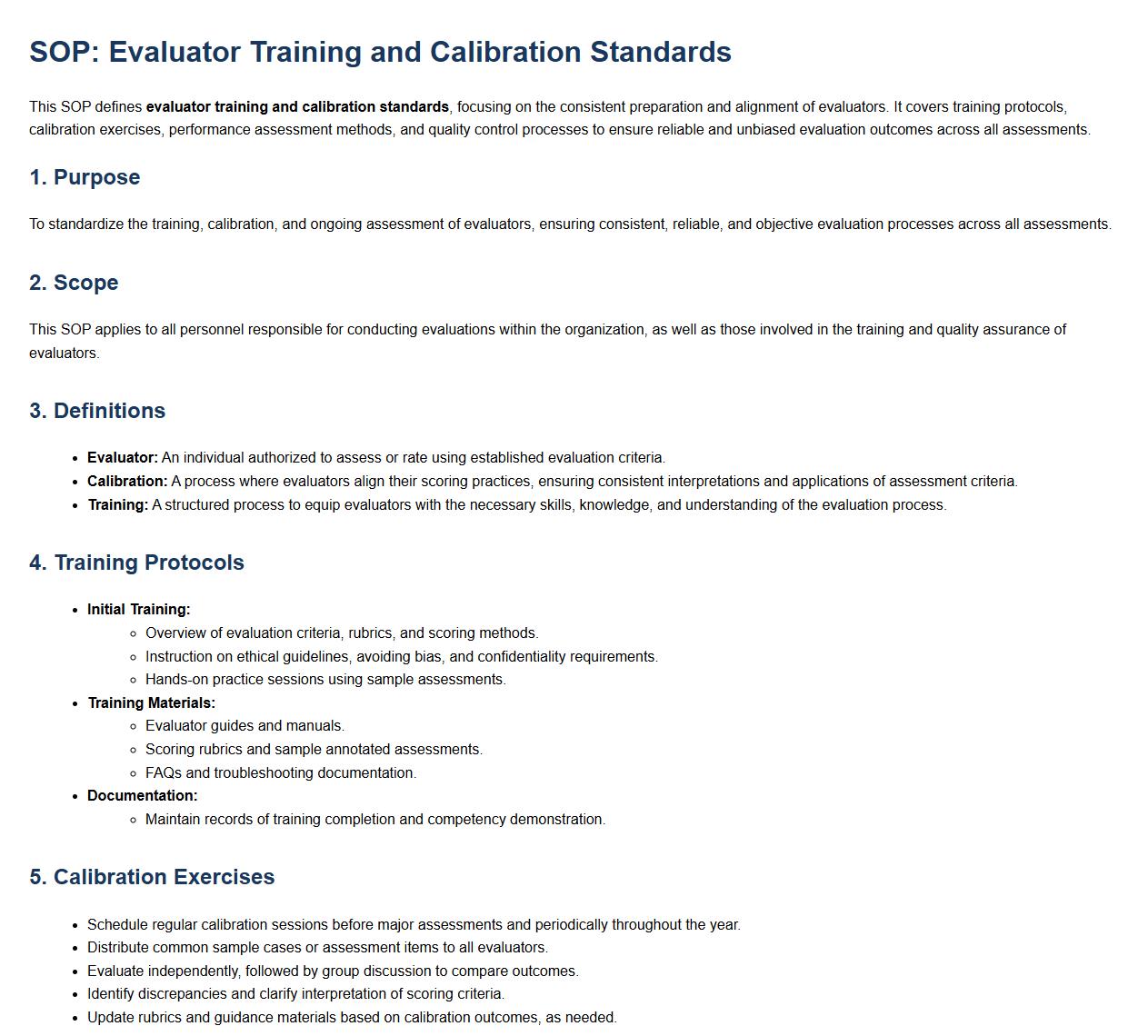
This SOP defines evaluator training and calibration standards, focusing on the consistent preparation and alignment of evaluators. It covers training protocols, calibration exercises, performance assessment methods, and quality control processes to ensure reliable and unbiased evaluation outcomes across all assessments.
Review and revision timeline of evaluation tools.
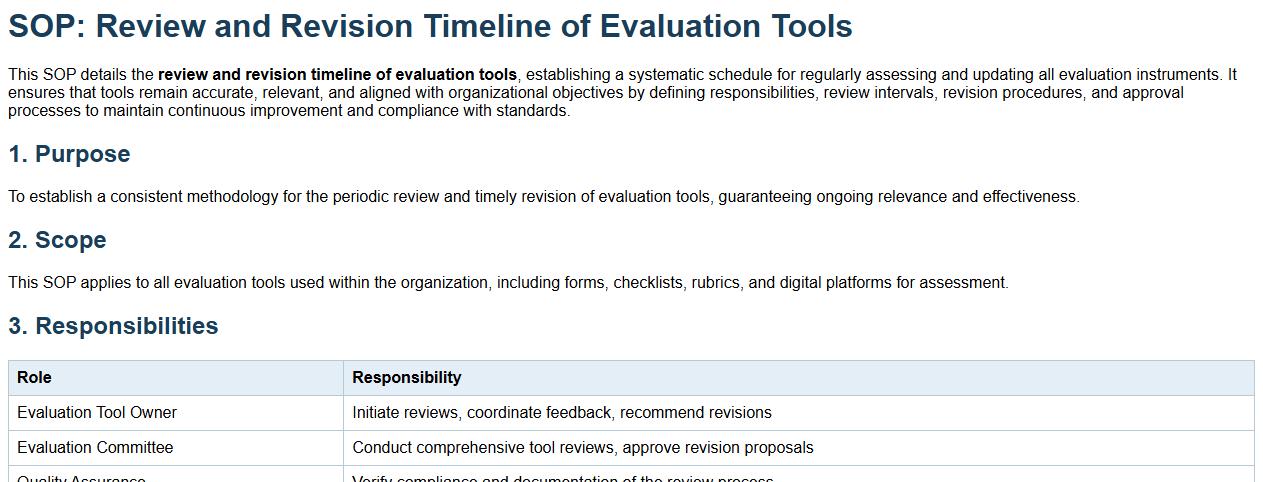
This SOP details the review and revision timeline of evaluation tools, establishing a systematic schedule for regularly assessing and updating all evaluation instruments. It ensures that tools remain accurate, relevant, and aligned with organizational objectives by defining responsibilities, review intervals, revision procedures, and approval processes to maintain continuous improvement and compliance with standards.
What is the primary objective of the SOP for Teacher Evaluation as outlined in the document?
The primary objective of the SOP for Teacher Evaluation is to ensure consistent and fair assessment of teaching staff. It aims to enhance the quality of education by identifying strengths and areas for improvement. This process supports professional development and accountability within the educational institution.
Which criteria and metrics are used to assess teacher performance according to the SOP?
The SOP uses various criteria and metrics such as classroom performance, student engagement, and instructional effectiveness. Teacher knowledge, lesson planning, and compliance with curriculum standards are also evaluated. Quantitative and qualitative data are combined to provide a comprehensive performance overview.
What are the roles and responsibilities of evaluators specified in the SOP for Teacher Evaluation?
Evaluators are responsible for conducting objective and thorough assessments based on defined standards. They must provide constructive feedback and document evaluation findings accurately. Ensuring confidentiality and supporting teacher growth are also key responsibilities outlined in the SOP.
What is the frequency and timeline for conducting teacher evaluations under this SOP?
Teacher evaluations are conducted on an annual basis according to the SOP guidelines. Specific timelines for initial, mid-term, and final reviews are established to maintain consistency. The schedule allows for timely feedback and follow-up actions to support continuous improvement.
What procedures are in place for teachers to review or appeal their evaluation results according to the SOP?
The SOP provides a clear procedure for teachers to review and appeal their evaluation outcomes. Teachers can request a formal meeting to discuss the evaluation within a set timeframe. An appeal process is available to ensure transparency and fairness in addressing any disputes.