

A SOP Template for Lesson Planning provides a clear and structured framework for educators to design effective lessons systematically. It ensures consistency in teaching methods by outlining objectives, materials, procedures, and assessment criteria. Using this template helps improve lesson quality and enhances student learning outcomes.
Learning objectives identification and alignment.
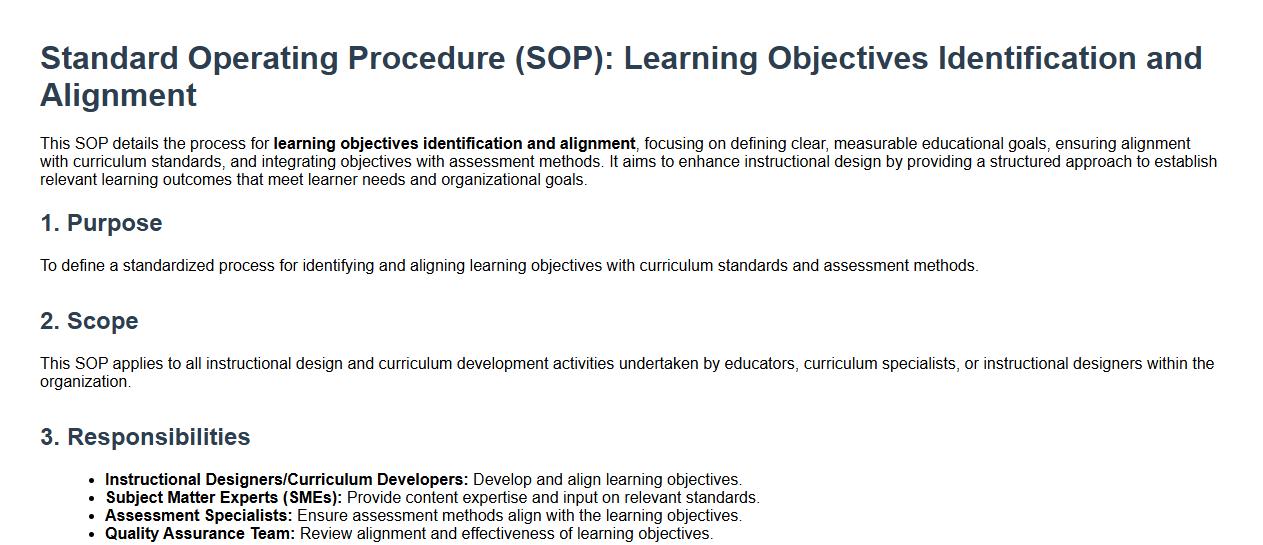
This SOP details the process for learning objectives identification and alignment, focusing on defining clear, measurable educational goals, ensuring alignment with curriculum standards, and integrating objectives with assessment methods. It aims to enhance instructional design by providing a structured approach to establish relevant learning outcomes that meet learner needs and organizational goals.
Curriculum standards and syllabus review.
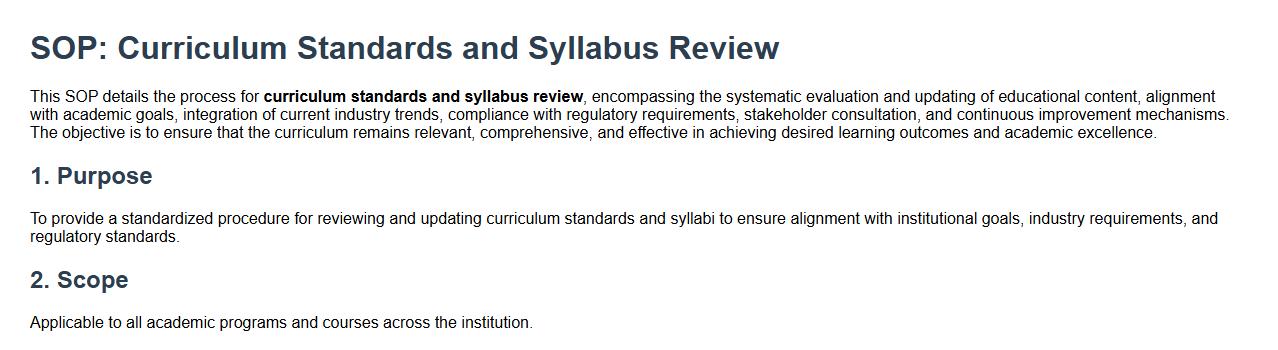
This SOP details the process for curriculum standards and syllabus review, encompassing the systematic evaluation and updating of educational content, alignment with academic goals, integration of current industry trends, compliance with regulatory requirements, stakeholder consultation, and continuous improvement mechanisms. The objective is to ensure that the curriculum remains relevant, comprehensive, and effective in achieving desired learning outcomes and academic excellence.
Selection of instructional materials and resources.
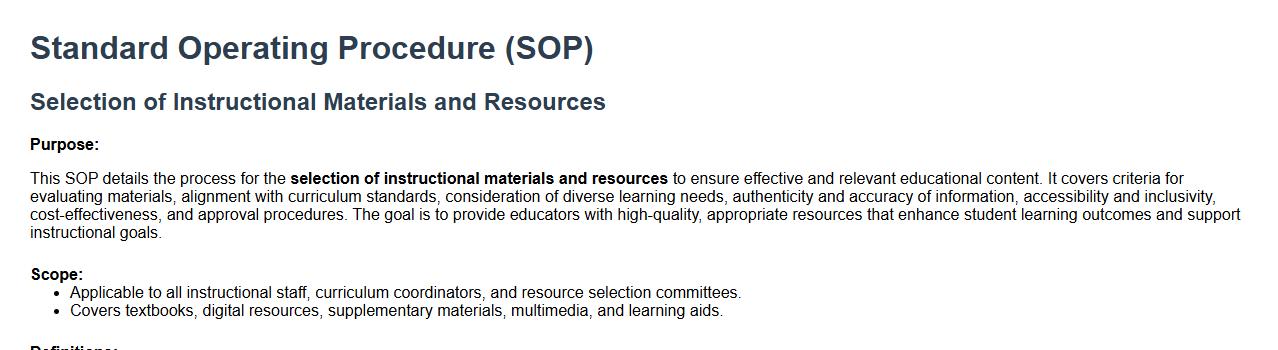
This SOP details the process for the selection of instructional materials and resources to ensure effective and relevant educational content. It covers criteria for evaluating materials, alignment with curriculum standards, consideration of diverse learning needs, authenticity and accuracy of information, accessibility and inclusivity, cost-effectiveness, and approval procedures. The goal is to provide educators with high-quality, appropriate resources that enhance student learning outcomes and support instructional goals.
Lesson content organization and sequencing.
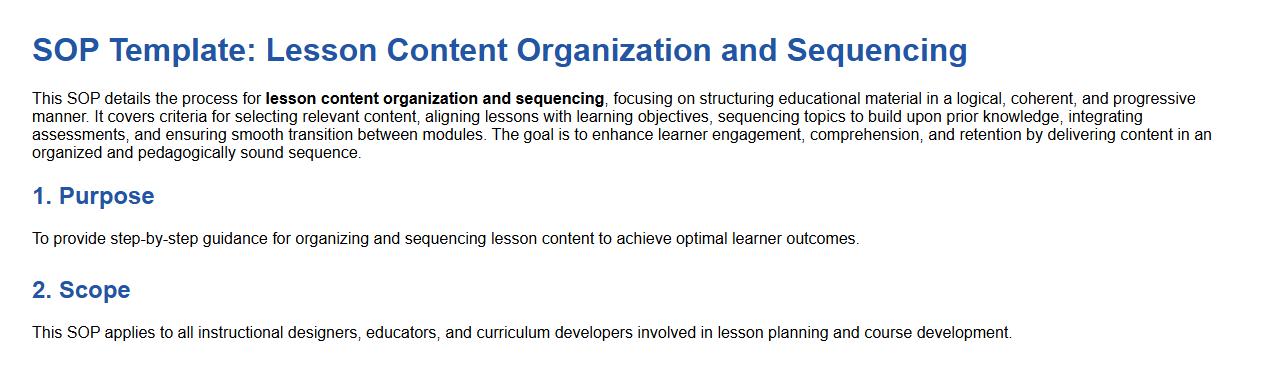
This SOP details the process for lesson content organization and sequencing, focusing on structuring educational material in a logical, coherent, and progressive manner. It covers criteria for selecting relevant content, aligning lessons with learning objectives, sequencing topics to build upon prior knowledge, integrating assessments, and ensuring smooth transition between modules. The goal is to enhance learner engagement, comprehension, and retention by delivering content in an organized and pedagogically sound sequence.
Teaching methodologies and instructional strategies.
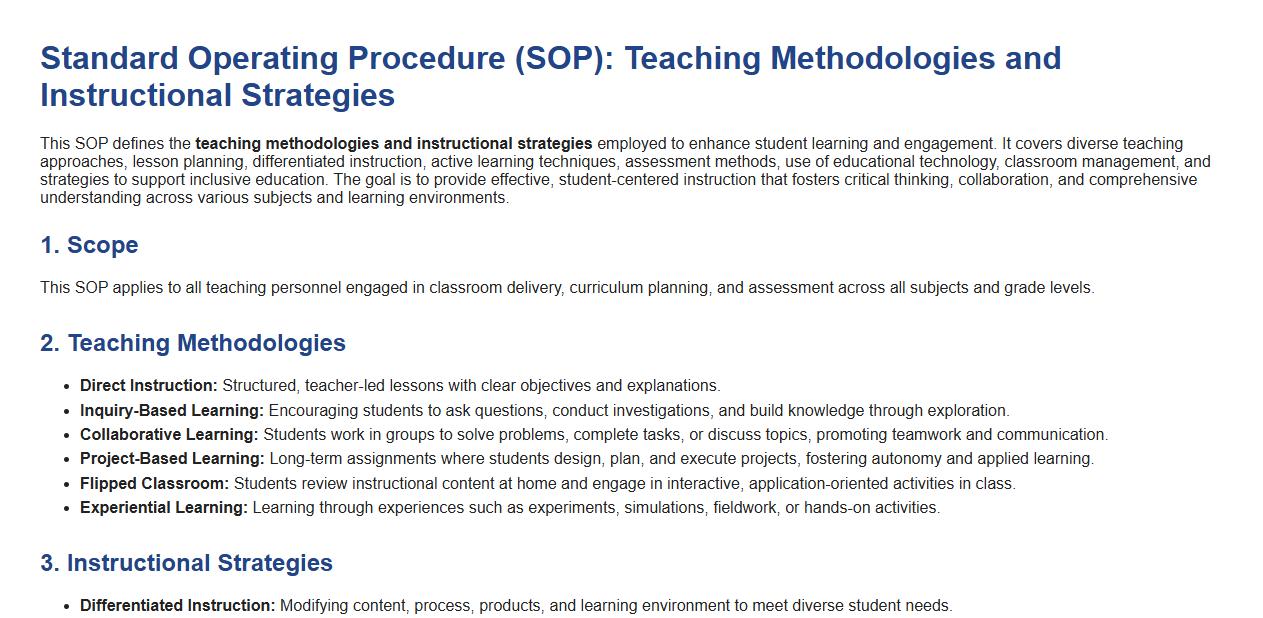
This SOP defines the teaching methodologies and instructional strategies employed to enhance student learning and engagement. It covers diverse teaching approaches, lesson planning, differentiated instruction, active learning techniques, assessment methods, use of educational technology, classroom management, and strategies to support inclusive education. The goal is to provide effective, student-centered instruction that fosters critical thinking, collaboration, and comprehensive understanding across various subjects and learning environments.
Assessment and evaluation planning.
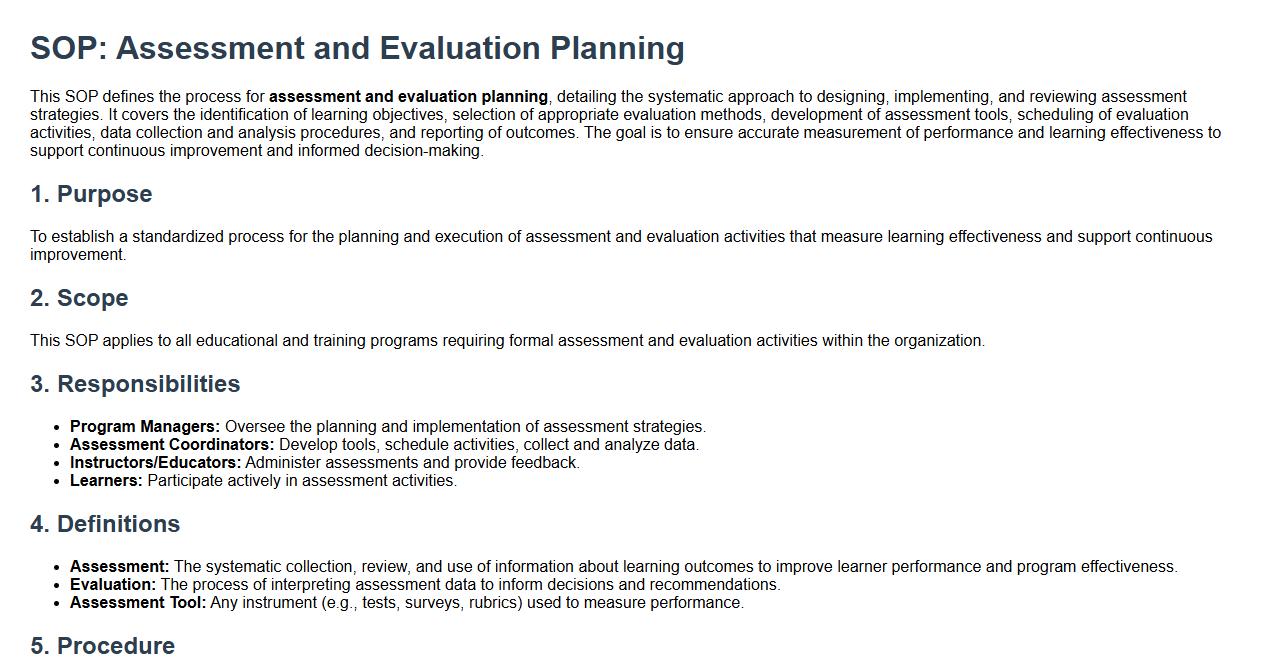
This SOP defines the process for assessment and evaluation planning, detailing the systematic approach to designing, implementing, and reviewing assessment strategies. It covers the identification of learning objectives, selection of appropriate evaluation methods, development of assessment tools, scheduling of evaluation activities, data collection and analysis procedures, and reporting of outcomes. The goal is to ensure accurate measurement of performance and learning effectiveness to support continuous improvement and informed decision-making.
Adaptation for diverse learners and inclusion.
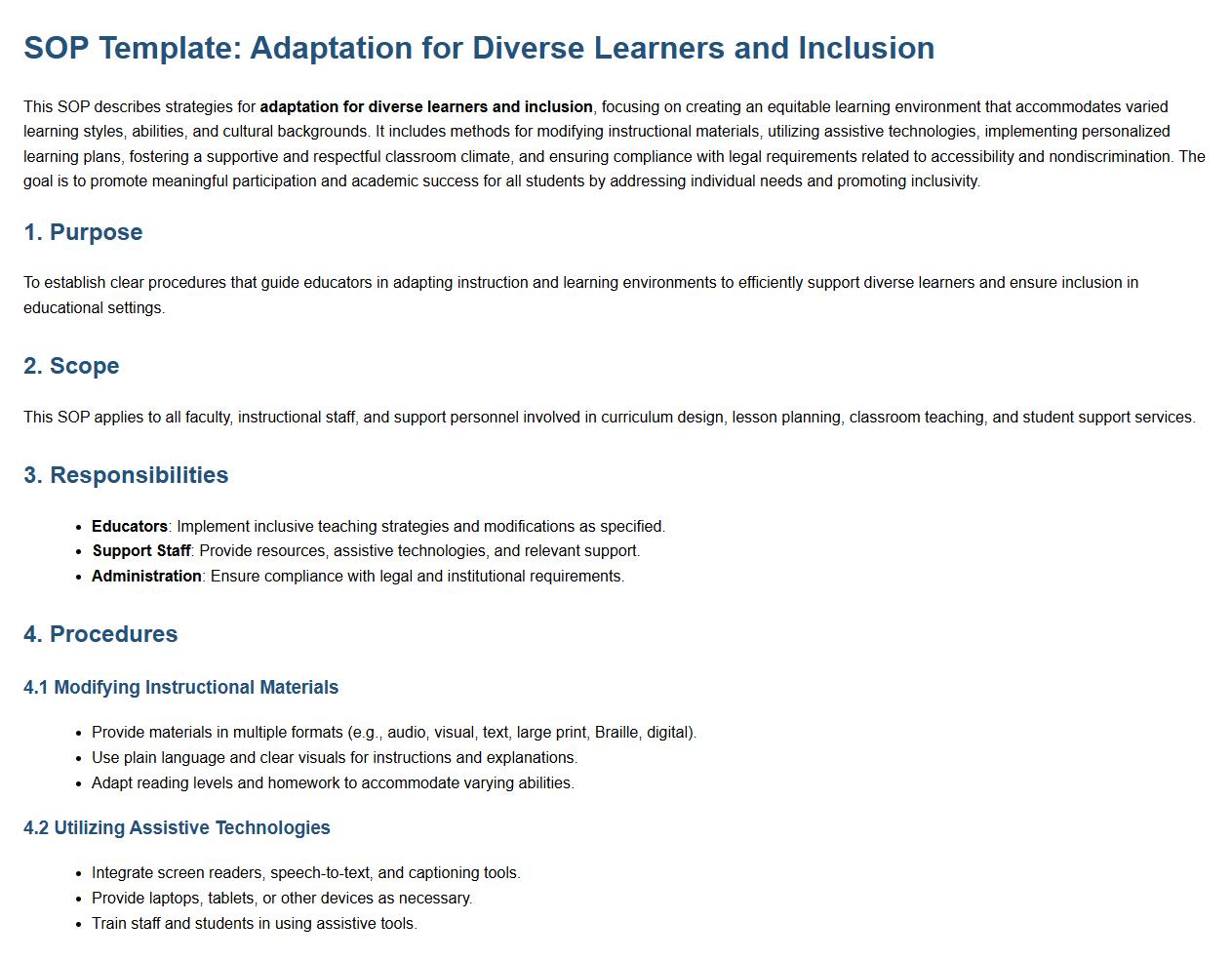
This SOP describes strategies for adaptation for diverse learners and inclusion, focusing on creating an equitable learning environment that accommodates varied learning styles, abilities, and cultural backgrounds. It includes methods for modifying instructional materials, utilizing assistive technologies, implementing personalized learning plans, fostering a supportive and respectful classroom climate, and ensuring compliance with legal requirements related to accessibility and nondiscrimination. The goal is to promote meaningful participation and academic success for all students by addressing individual needs and promoting inclusivity.
Time allocation and lesson pacing.
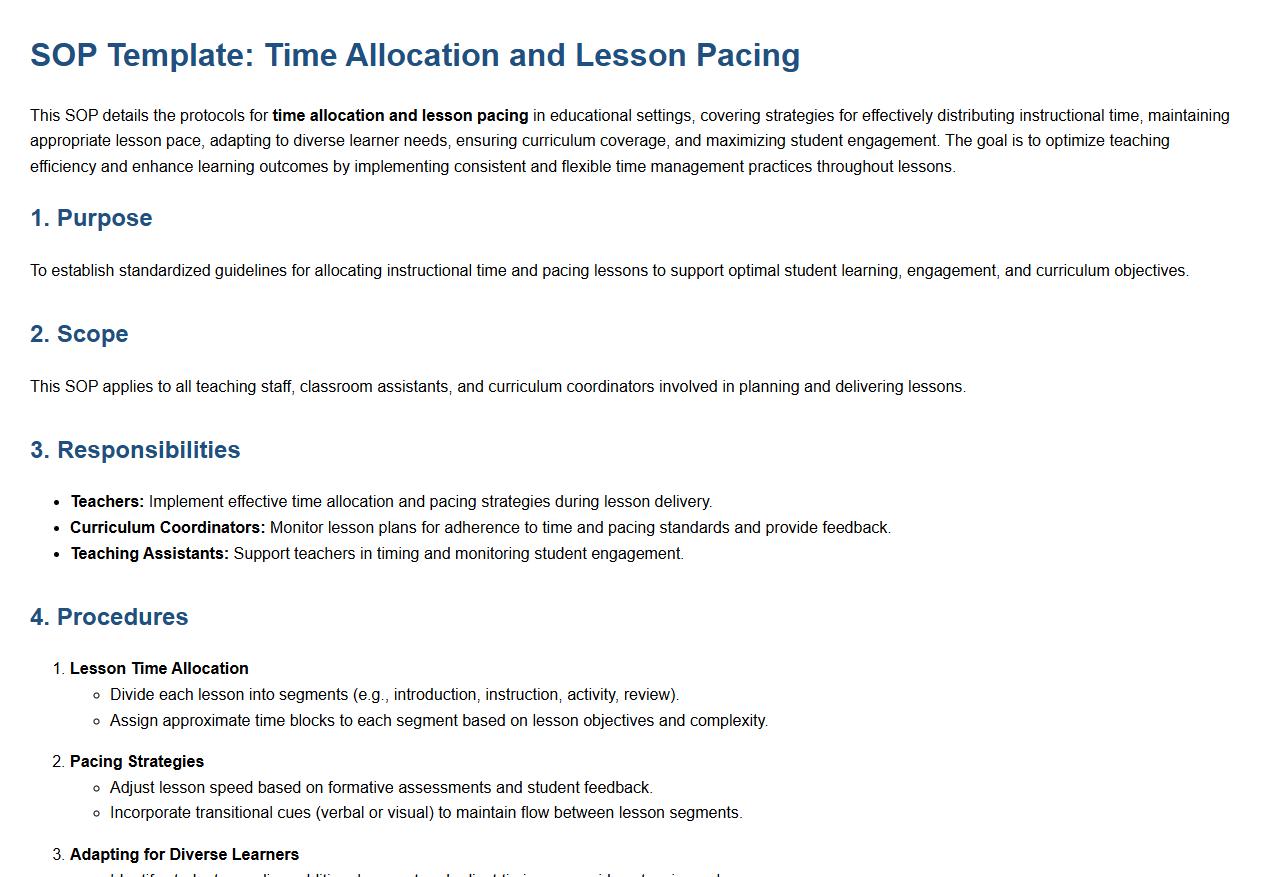
This SOP details the protocols for time allocation and lesson pacing in educational settings, covering strategies for effectively distributing instructional time, maintaining appropriate lesson pace, adapting to diverse learner needs, ensuring curriculum coverage, and maximizing student engagement. The goal is to optimize teaching efficiency and enhance learning outcomes by implementing consistent and flexible time management practices throughout lessons.
Classroom management and engagement techniques.
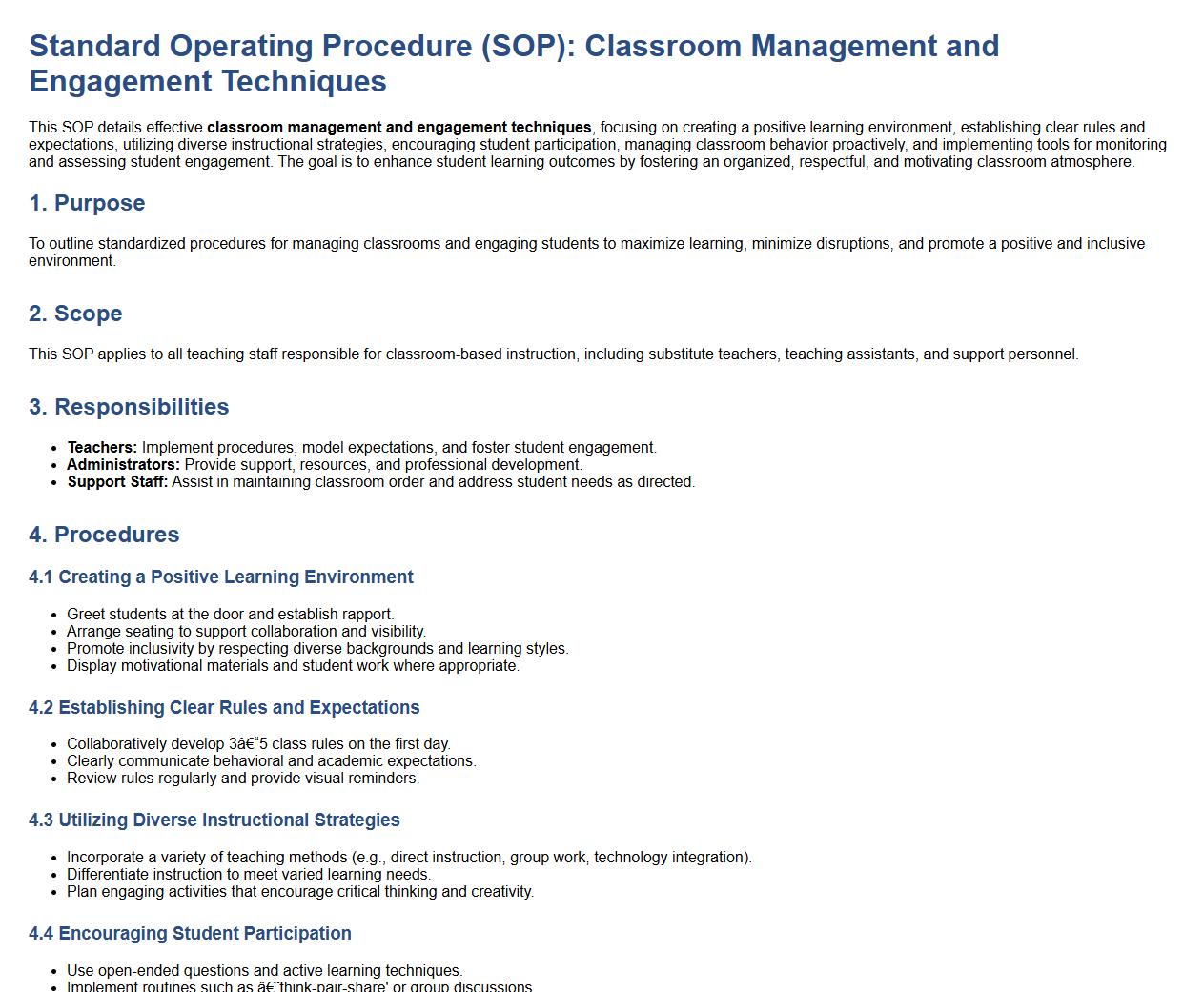
This SOP details effective classroom management and engagement techniques, focusing on creating a positive learning environment, establishing clear rules and expectations, utilizing diverse instructional strategies, encouraging student participation, managing classroom behavior proactively, and implementing tools for monitoring and assessing student engagement. The goal is to enhance student learning outcomes by fostering an organized, respectful, and motivating classroom atmosphere.
Lesson reflection and continuous improvement documentation.
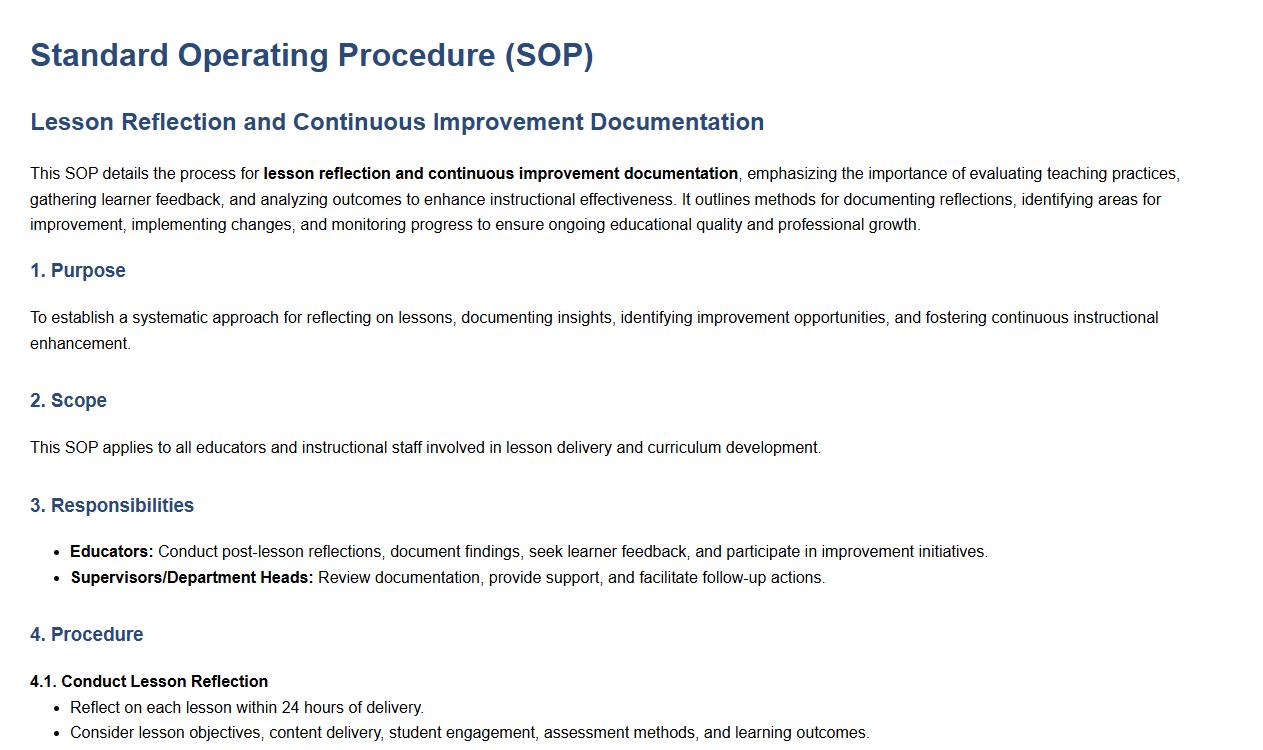
This SOP details the process for lesson reflection and continuous improvement documentation, emphasizing the importance of evaluating teaching practices, gathering learner feedback, and analyzing outcomes to enhance instructional effectiveness. It outlines methods for documenting reflections, identifying areas for improvement, implementing changes, and monitoring progress to ensure ongoing educational quality and professional growth.
Required Components Specified in the SOP for Each Lesson Plan
The SOP mandates that each lesson plan must include clear objectives, detailed instructional materials, and a defined assessment method. Teachers are required to outline the learning activities alongside the estimated duration for each segment. Additionally, the plan must specify the resources needed to conduct the lesson efficiently.
Process for Lesson Plan Approval and Revision Defined by the SOP
The SOP outlines a systematic approval process involving review by curriculum coordinators or department heads. Upon initial submission, lesson plans are evaluated for alignment and quality, with feedback provided for necessary revisions. Teachers then resubmit updated plans for final approval before implementation.
Timeline for Lesson Plan Submission According to the SOP
Teachers must submit their lesson plans at least two weeks before the scheduled lesson date. This timeline ensures there is adequate time for review and necessary adjustments by the approving authority. Late submissions are discouraged to maintain a streamlined educational process.
Documentation Standards for Lesson Planning Outlined in the SOP
The SOP requires lesson plans to be documented in a standardized format accessible via the institution's learning management system. All lesson plans must be clearly labeled with the date, teacher's name, and subject for easy tracking. Accurate and thorough documentation supports transparency and consistency in teaching practices.
Lesson Plan Alignment with Curriculum Objectives as Addressed by the SOP
The SOP emphasizes that each lesson plan must directly correspond with the curriculum objectives set for the course. Teachers are instructed to map learning activities and assessments to these objectives to ensure educational goals are met. This alignment is critical for maintaining coherence across the educational program.