

A SOP Template for Teacher Onboarding provides a structured guide to ensure new educators are smoothly integrated into the school environment. This template outlines essential steps such as orientation, training, and resource allocation to help teachers understand their roles and responsibilities efficiently. Using a standardized onboarding process improves consistency and supports teacher retention.
New hire orientation and campus tour procedures.
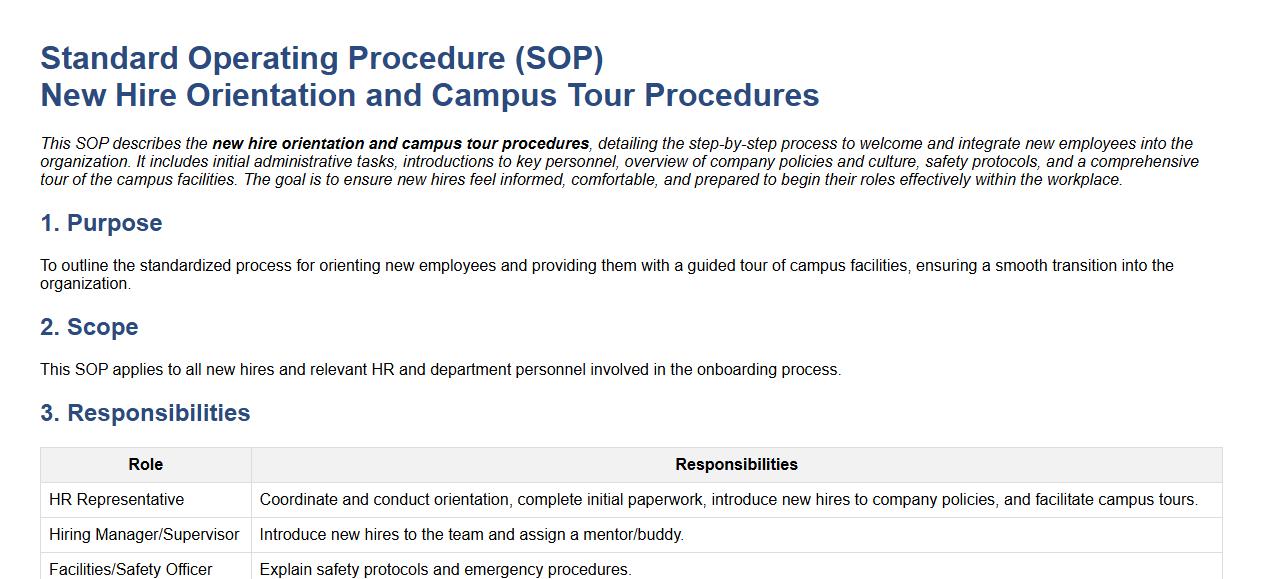
This SOP describes the new hire orientation and campus tour procedures, detailing the step-by-step process to welcome and integrate new employees into the organization. It includes initial administrative tasks, introductions to key personnel, overview of company policies and culture, safety protocols, and a comprehensive tour of the campus facilities. The goal is to ensure new hires feel informed, comfortable, and prepared to begin their roles effectively within the workplace.
Document verification and credential checks.
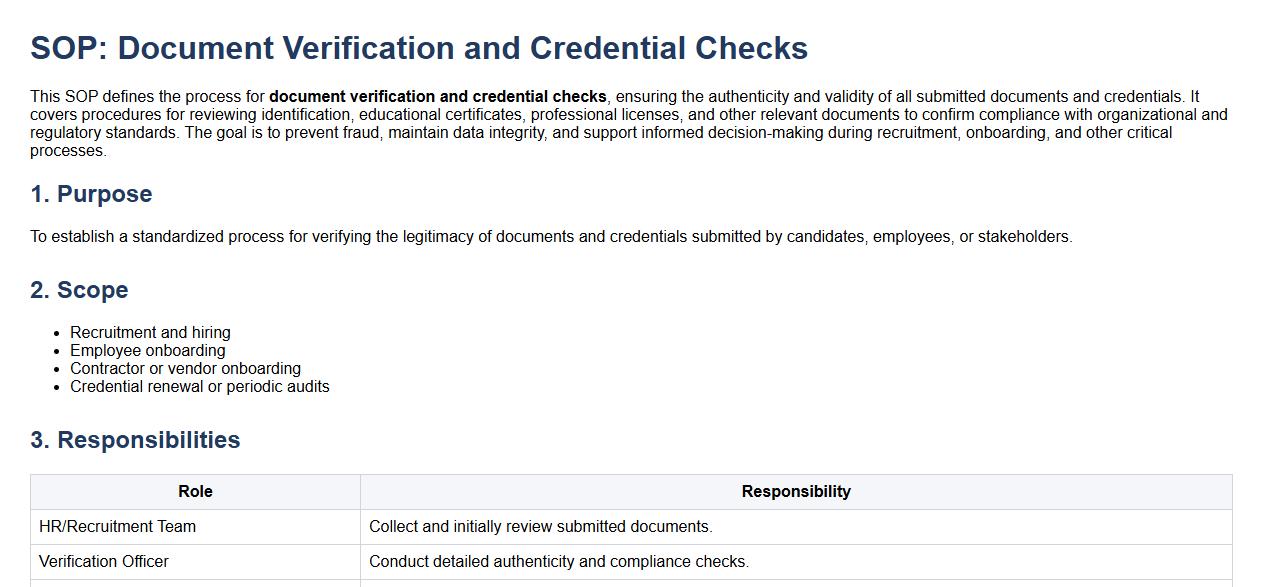
This SOP defines the process for document verification and credential checks, ensuring the authenticity and validity of all submitted documents and credentials. It covers procedures for reviewing identification, educational certificates, professional licenses, and other relevant documents to confirm compliance with organizational and regulatory standards. The goal is to prevent fraud, maintain data integrity, and support informed decision-making during recruitment, onboarding, and other critical processes.
Introduction to school policies and code of conduct.
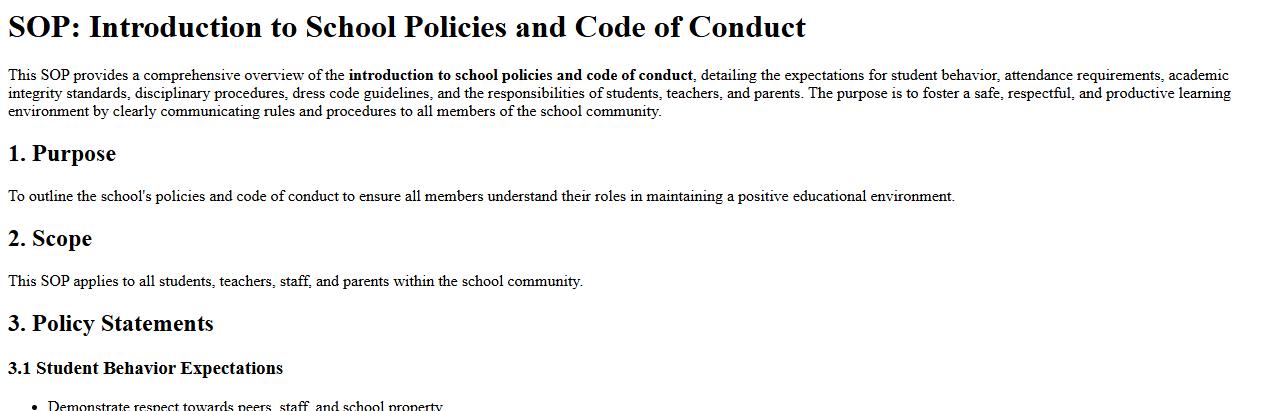
This SOP provides a comprehensive overview of the introduction to school policies and code of conduct, detailing the expectations for student behavior, attendance requirements, academic integrity standards, disciplinary procedures, dress code guidelines, and the responsibilities of students, teachers, and parents. The purpose is to foster a safe, respectful, and productive learning environment by clearly communicating rules and procedures to all members of the school community.
Classroom setup and resource allocation guidelines.
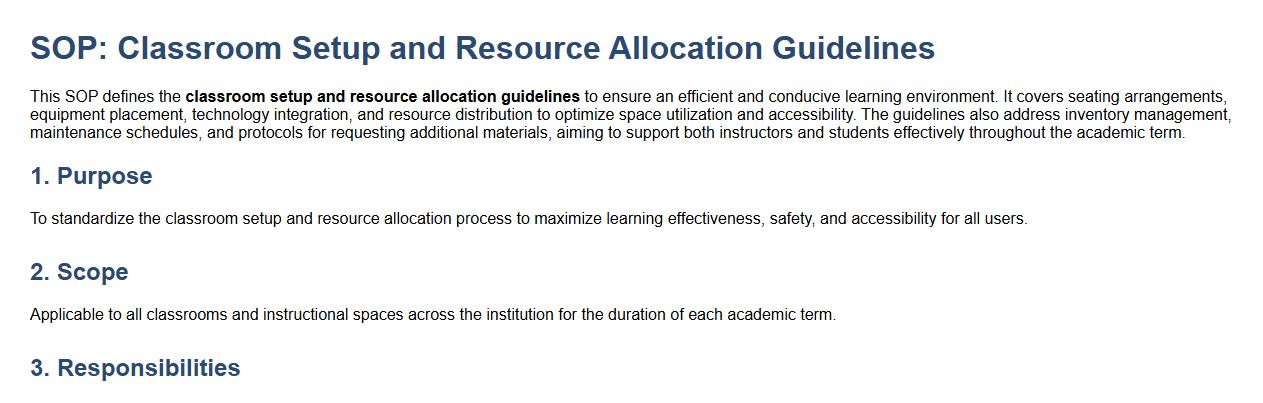
This SOP defines the classroom setup and resource allocation guidelines to ensure an efficient and conducive learning environment. It covers seating arrangements, equipment placement, technology integration, and resource distribution to optimize space utilization and accessibility. The guidelines also address inventory management, maintenance schedules, and protocols for requesting additional materials, aiming to support both instructors and students effectively throughout the academic term.
Technology and learning management system (LMS) training.
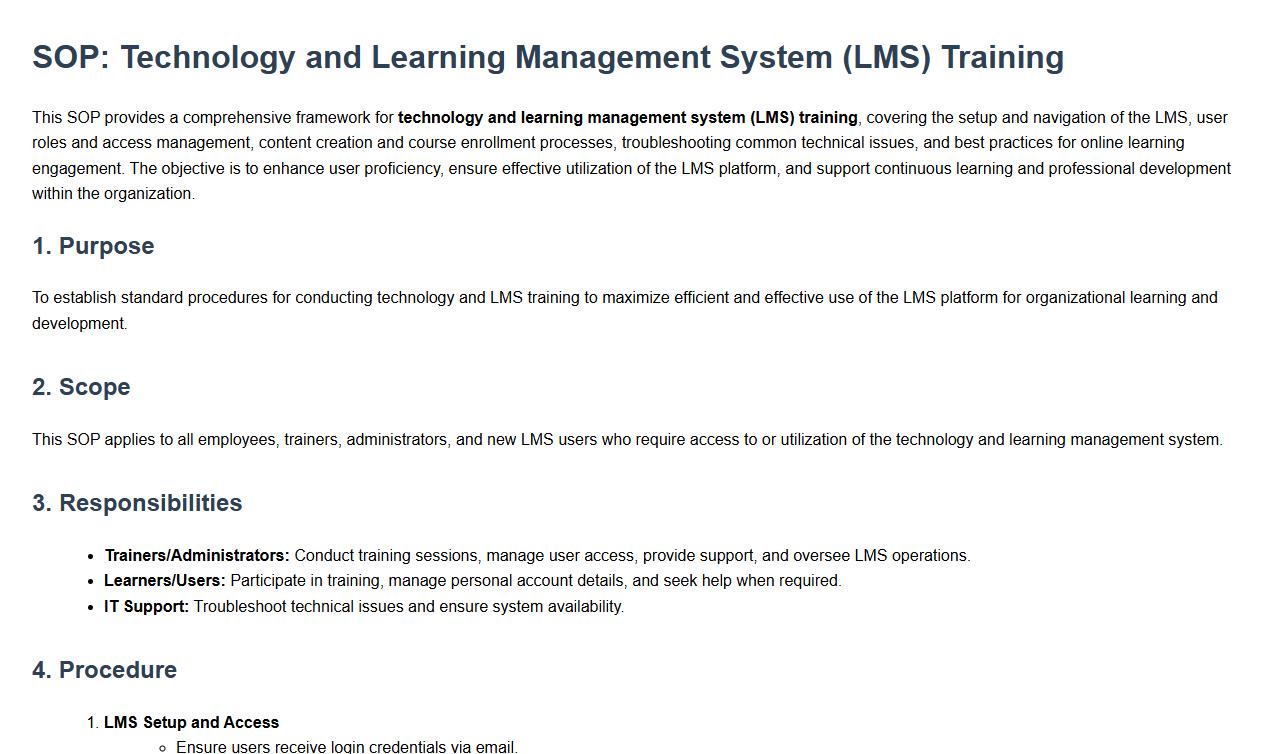
This SOP provides a comprehensive framework for technology and learning management system (LMS) training, covering the setup and navigation of the LMS, user roles and access management, content creation and course enrollment processes, troubleshooting common technical issues, and best practices for online learning engagement. The objective is to enhance user proficiency, ensure effective utilization of the LMS platform, and support continuous learning and professional development within the organization.
Curriculum standards and lesson planning procedures.
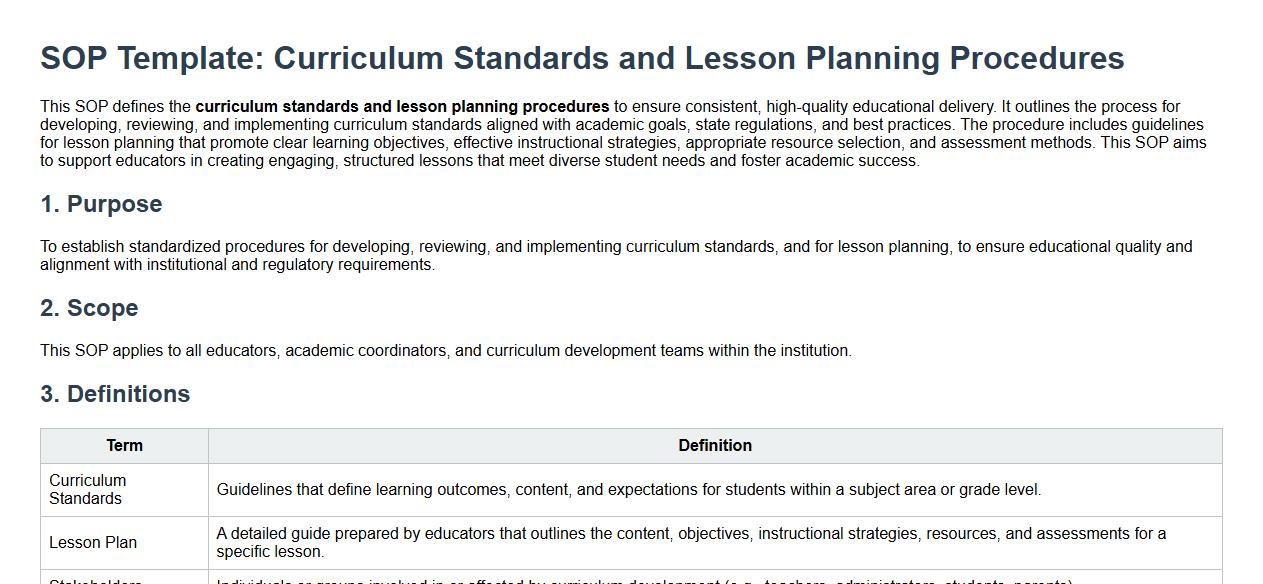
This SOP defines the curriculum standards and lesson planning procedures to ensure consistent, high-quality educational delivery. It outlines the process for developing, reviewing, and implementing curriculum standards aligned with academic goals, state regulations, and best practices. The procedure includes guidelines for lesson planning that promote clear learning objectives, effective instructional strategies, appropriate resource selection, and assessment methods. This SOP aims to support educators in creating engaging, structured lessons that meet diverse student needs and foster academic success.
Student assessment and grading protocols.
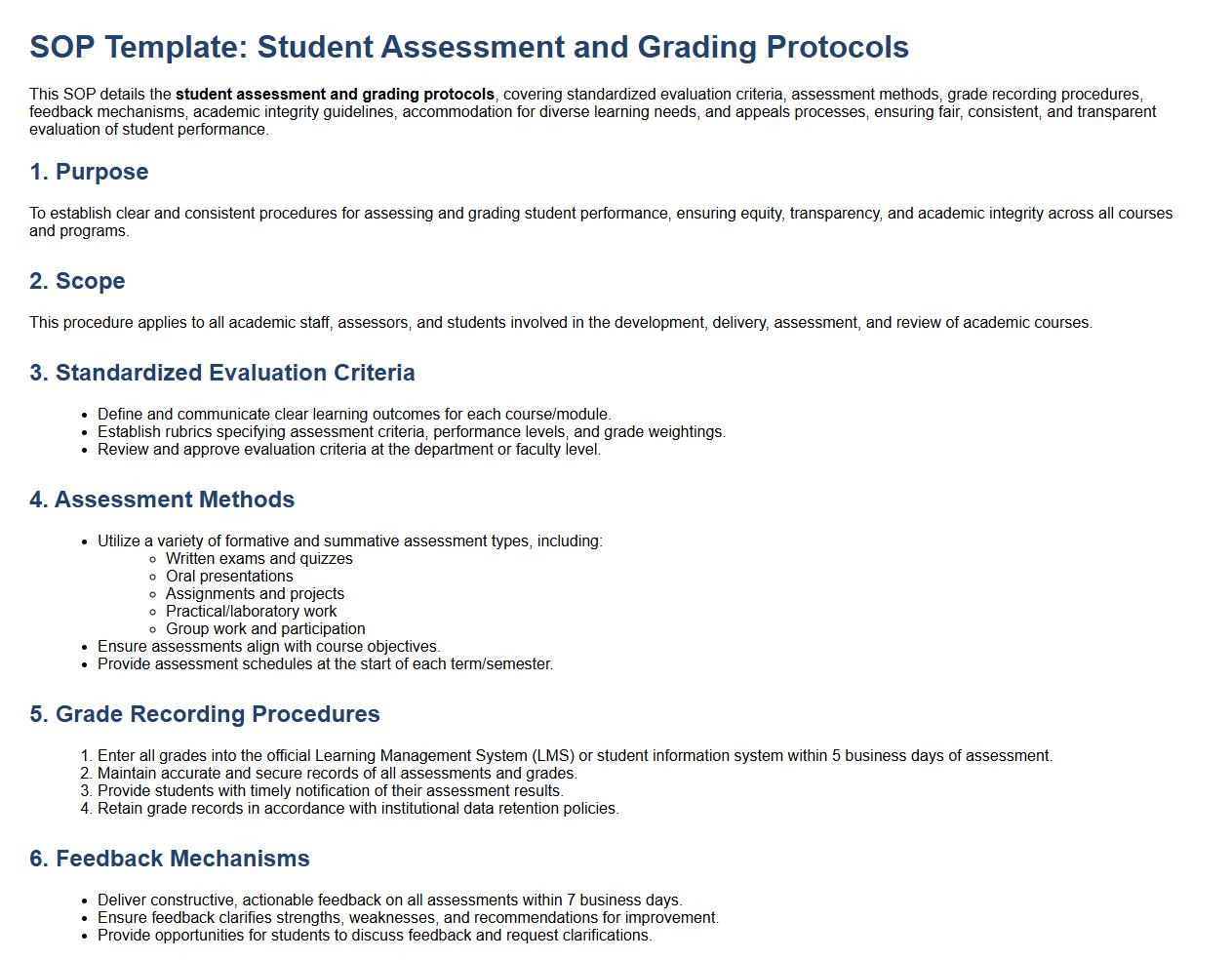
This SOP details the student assessment and grading protocols, covering standardized evaluation criteria, assessment methods, grade recording procedures, feedback mechanisms, academic integrity guidelines, accommodation for diverse learning needs, and appeals processes, ensuring fair, consistent, and transparent evaluation of student performance.
Communication and parent engagement processes.
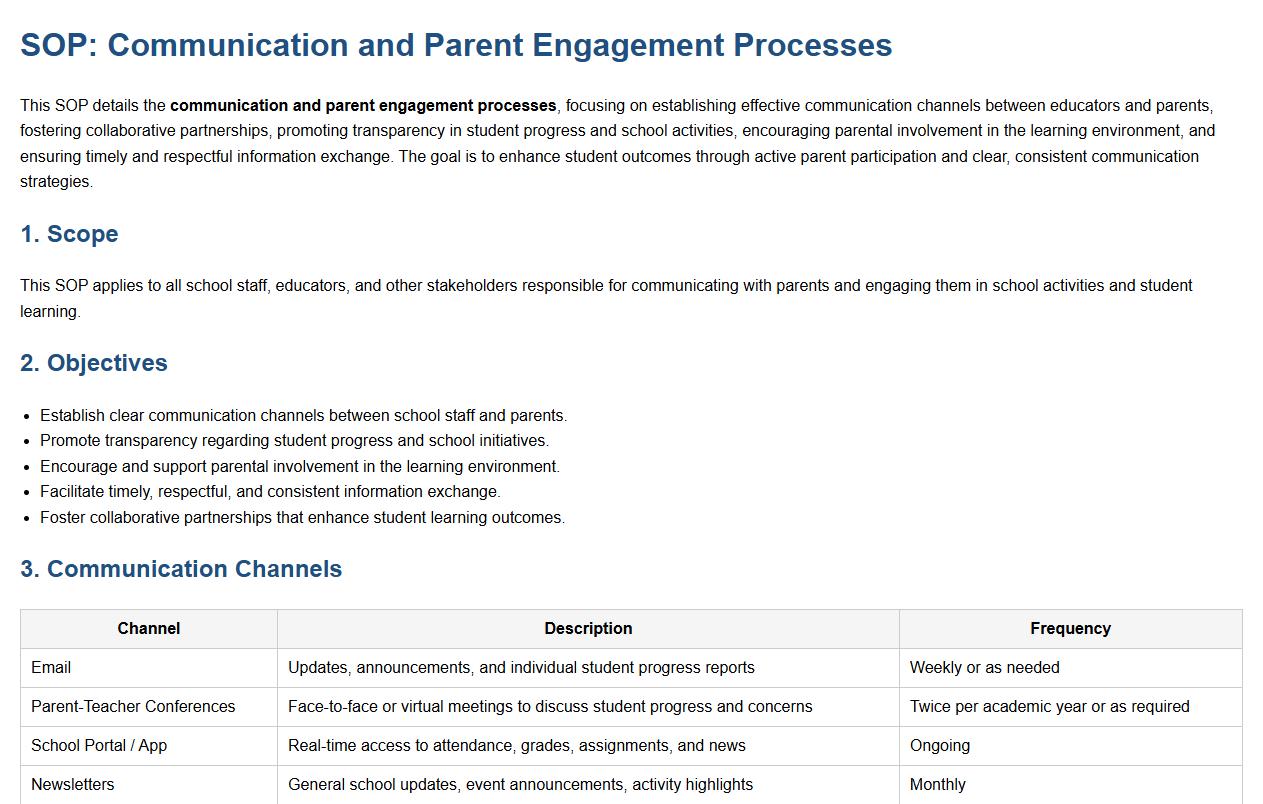
This SOP details the communication and parent engagement processes, focusing on establishing effective communication channels between educators and parents, fostering collaborative partnerships, promoting transparency in student progress and school activities, encouraging parental involvement in the learning environment, and ensuring timely and respectful information exchange. The goal is to enhance student outcomes through active parent participation and clear, consistent communication strategies.
Professional development and mentorship assignment.
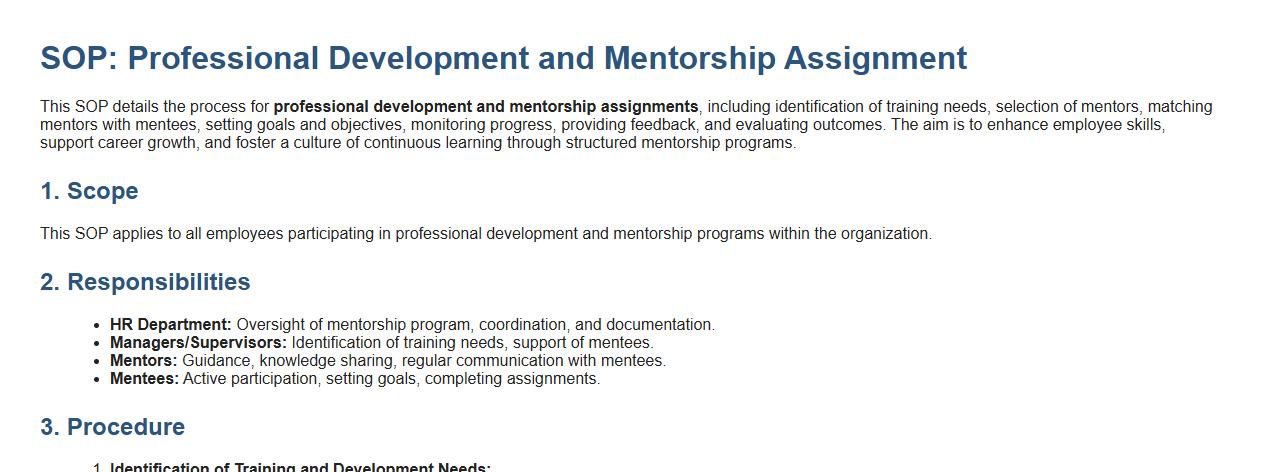
This SOP details the process for professional development and mentorship assignments, including identification of training needs, selection of mentors, matching mentors with mentees, setting goals and objectives, monitoring progress, providing feedback, and evaluating outcomes. The aim is to enhance employee skills, support career growth, and foster a culture of continuous learning through structured mentorship programs.
Health, safety, and emergency preparedness briefing.
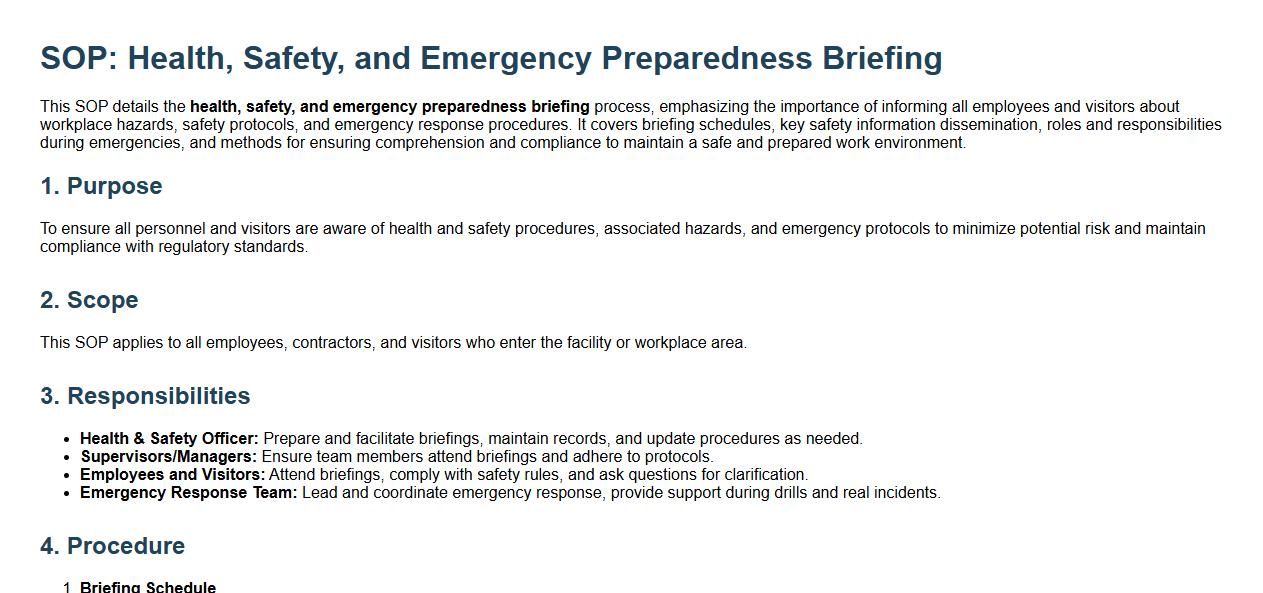
This SOP details the health, safety, and emergency preparedness briefing process, emphasizing the importance of informing all employees and visitors about workplace hazards, safety protocols, and emergency response procedures. It covers briefing schedules, key safety information dissemination, roles and responsibilities during emergencies, and methods for ensuring comprehension and compliance to maintain a safe and prepared work environment.
Mandatory Steps in the Teacher Onboarding Process
The SOP mandates a structured approach to teacher onboarding to ensure consistency and quality. Initial steps include documentation verification, followed by training and orientation sessions. Completion involves a performance briefing and final approval before the new teacher commences responsibilities.
Required Documents and Credentials
New teachers must submit key documents and credentials such as academic certificates, teaching licenses, and identity proof. The SOP requires background checks and professional references to be included. Submitting these items timely is essential for successful onboarding.
Training and Orientation Sessions Specification
The SOP outlines specific training and orientation sessions designed to familiarize new teachers with school policies and teaching standards. These sessions include classroom management strategies and usage of educational technology. Active participation in these sessions is compulsory for all new hires.
Performance Evaluation Criteria
During onboarding, the SOP introduces a clear set of performance evaluation criteria that new teachers must meet. These criteria assess teaching effectiveness, student engagement, and adherence to curriculum standards. Regular feedback and evaluations are scheduled to monitor progress.
Responsibilities for Each Onboarding Stage
The SOP assigns specific responsibilities to various personnel for each onboarding phase. The HR department manages documentation, while the academic coordinator oversees training and orientation. The principal provides final approval and ongoing mentorship to new teachers.