

A SOP Template for Field Trip Planning ensures a consistent and efficient approach to organizing educational excursions. It outlines key steps such as risk assessment, itinerary creation, permission management, and emergency protocols. This template enhances safety, communication, and overall trip success by providing a clear framework for all participants.
Pre-trip planning and objective setting.
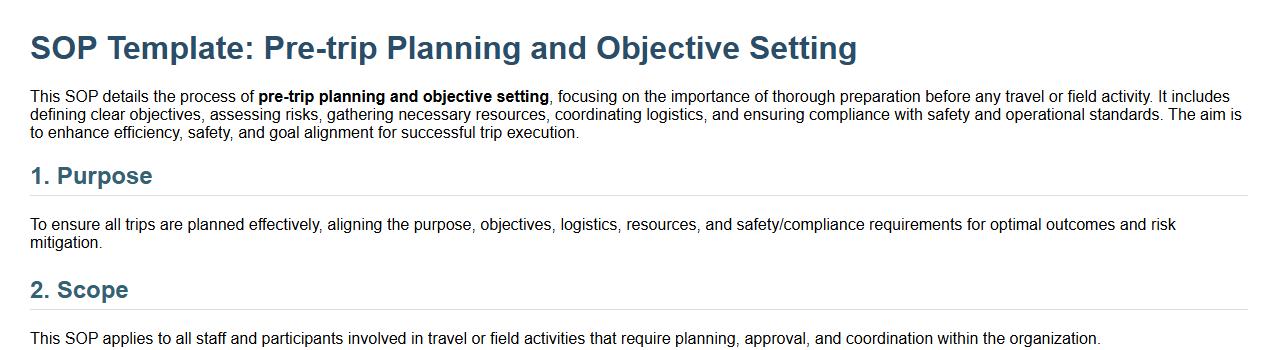
This SOP details the process of pre-trip planning and objective setting, focusing on the importance of thorough preparation before any travel or field activity. It includes defining clear objectives, assessing risks, gathering necessary resources, coordinating logistics, and ensuring compliance with safety and operational standards. The aim is to enhance efficiency, safety, and goal alignment for successful trip execution.
Student and participant registration procedures.
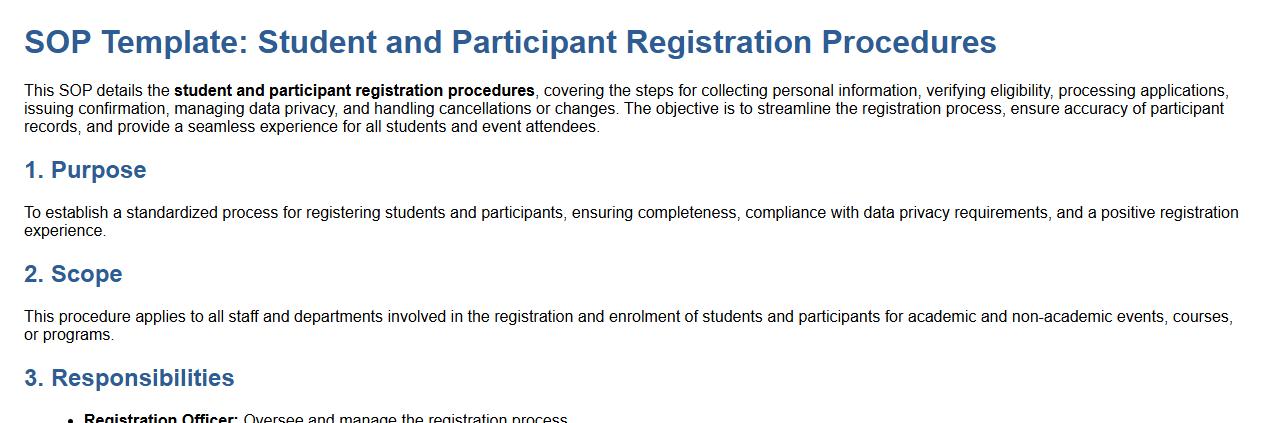
This SOP details the student and participant registration procedures, covering the steps for collecting personal information, verifying eligibility, processing applications, issuing confirmation, managing data privacy, and handling cancellations or changes. The objective is to streamline the registration process, ensure accuracy of participant records, and provide a seamless experience for all students and event attendees.
Parental/guardian consent and emergency contact collection.
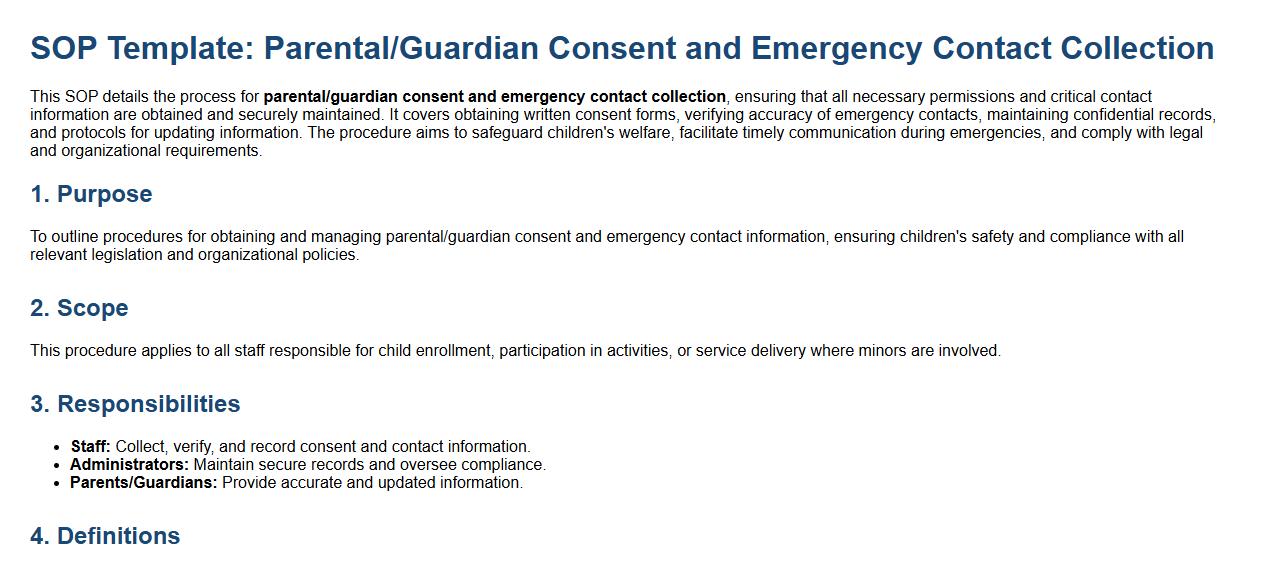
This SOP details the process for parental/guardian consent and emergency contact collection, ensuring that all necessary permissions and critical contact information are obtained and securely maintained. It covers obtaining written consent forms, verifying accuracy of emergency contacts, maintaining confidential records, and protocols for updating information. The procedure aims to safeguard children's welfare, facilitate timely communication during emergencies, and comply with legal and organizational requirements.
Risk assessment and safety protocol development.
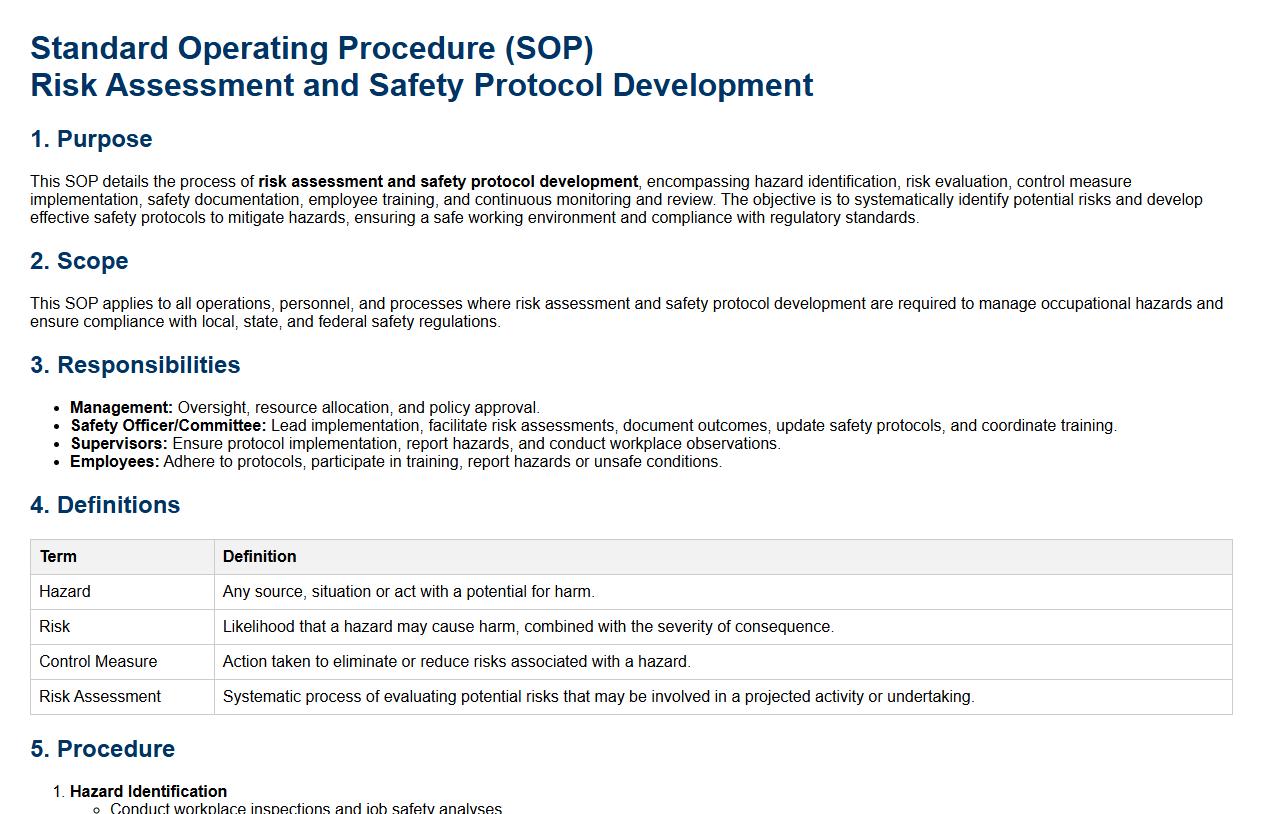
This SOP details the process of risk assessment and safety protocol development, encompassing hazard identification, risk evaluation, control measure implementation, safety documentation, employee training, and continuous monitoring and review. The objective is to systematically identify potential risks and develop effective safety protocols to mitigate hazards, ensuring a safe working environment and compliance with regulatory standards.
Transportation arrangement and vehicle inspection.
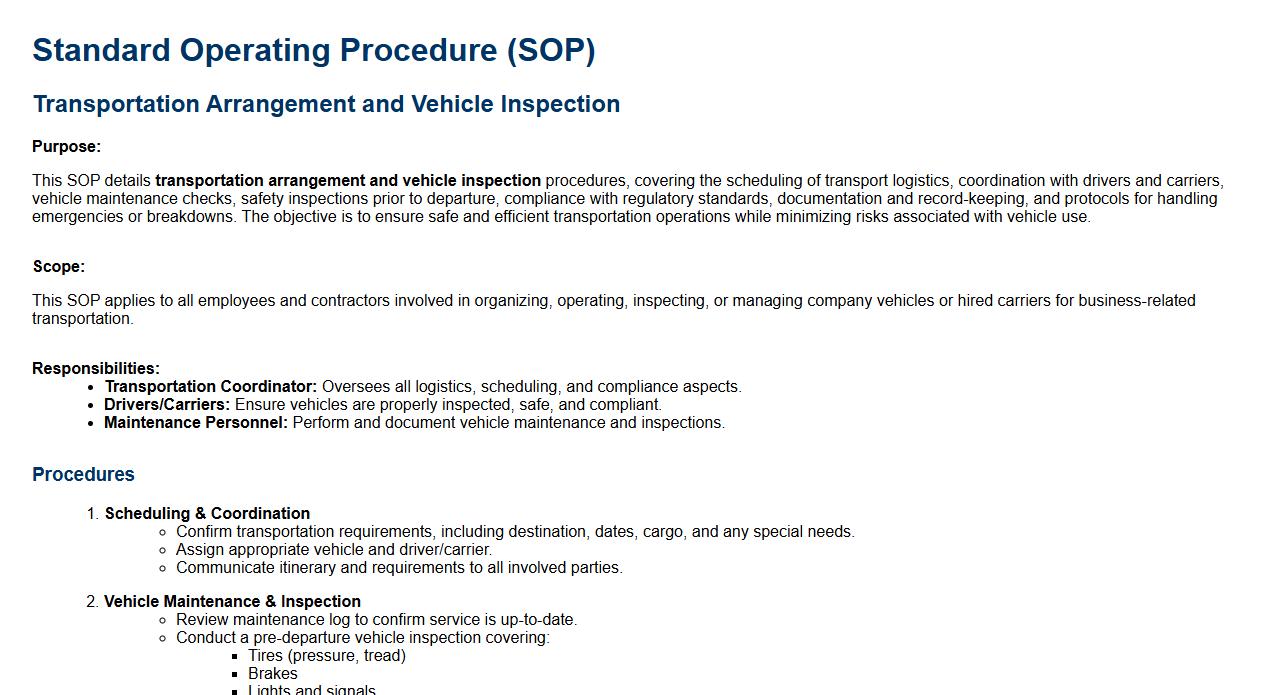
This SOP details transportation arrangement and vehicle inspection procedures, covering the scheduling of transport logistics, coordination with drivers and carriers, vehicle maintenance checks, safety inspections prior to departure, compliance with regulatory standards, documentation and record-keeping, and protocols for handling emergencies or breakdowns. The objective is to ensure safe and efficient transportation operations while minimizing risks associated with vehicle use.
Chaperone and staff assignment with roles clarification.
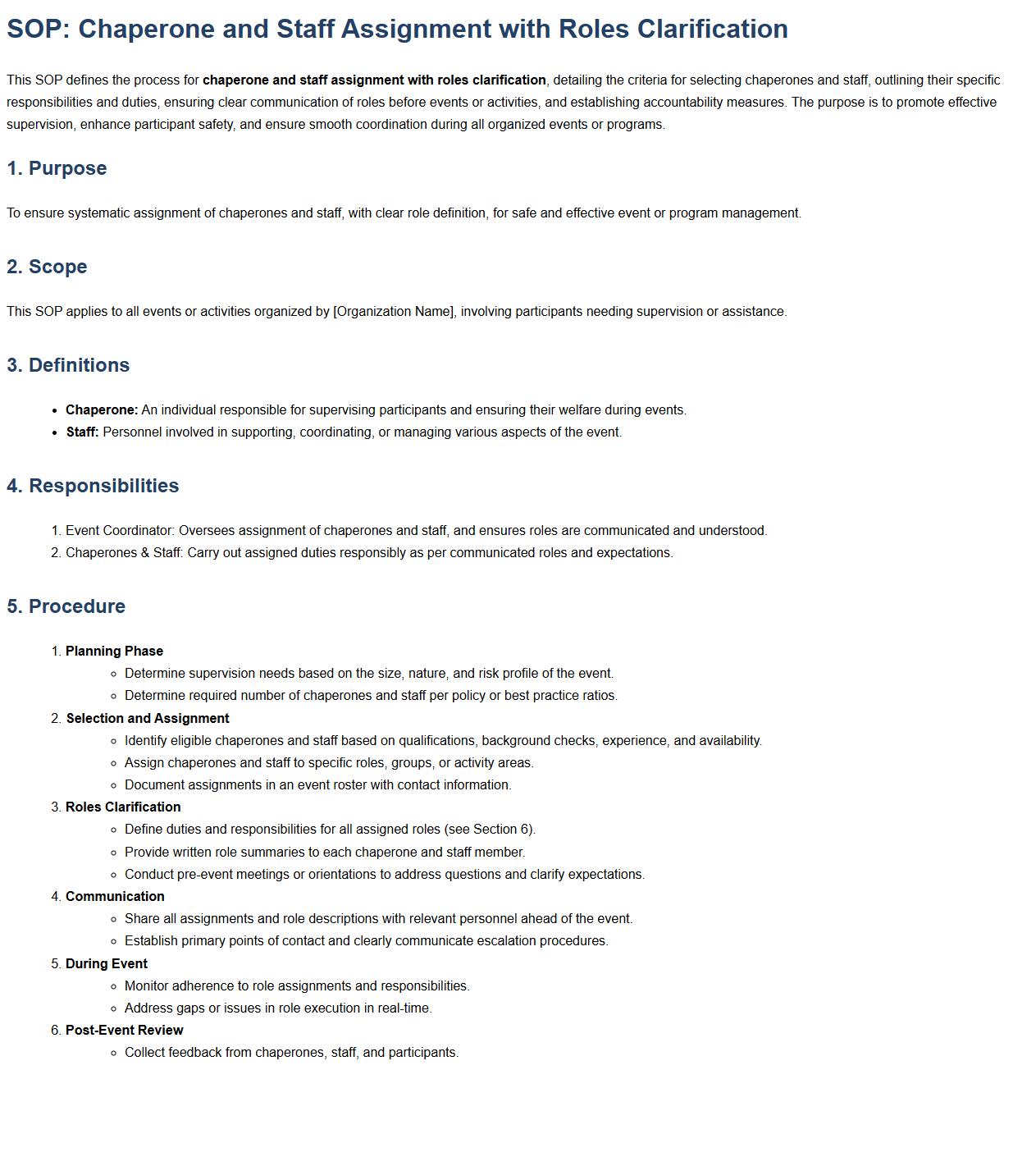
This SOP defines the process for chaperone and staff assignment with roles clarification, detailing the criteria for selecting chaperones and staff, outlining their specific responsibilities and duties, ensuring clear communication of roles before events or activities, and establishing accountability measures. The purpose is to promote effective supervision, enhance participant safety, and ensure smooth coordination during all organized events or programs.
Medical supplies and first aid kit preparation.
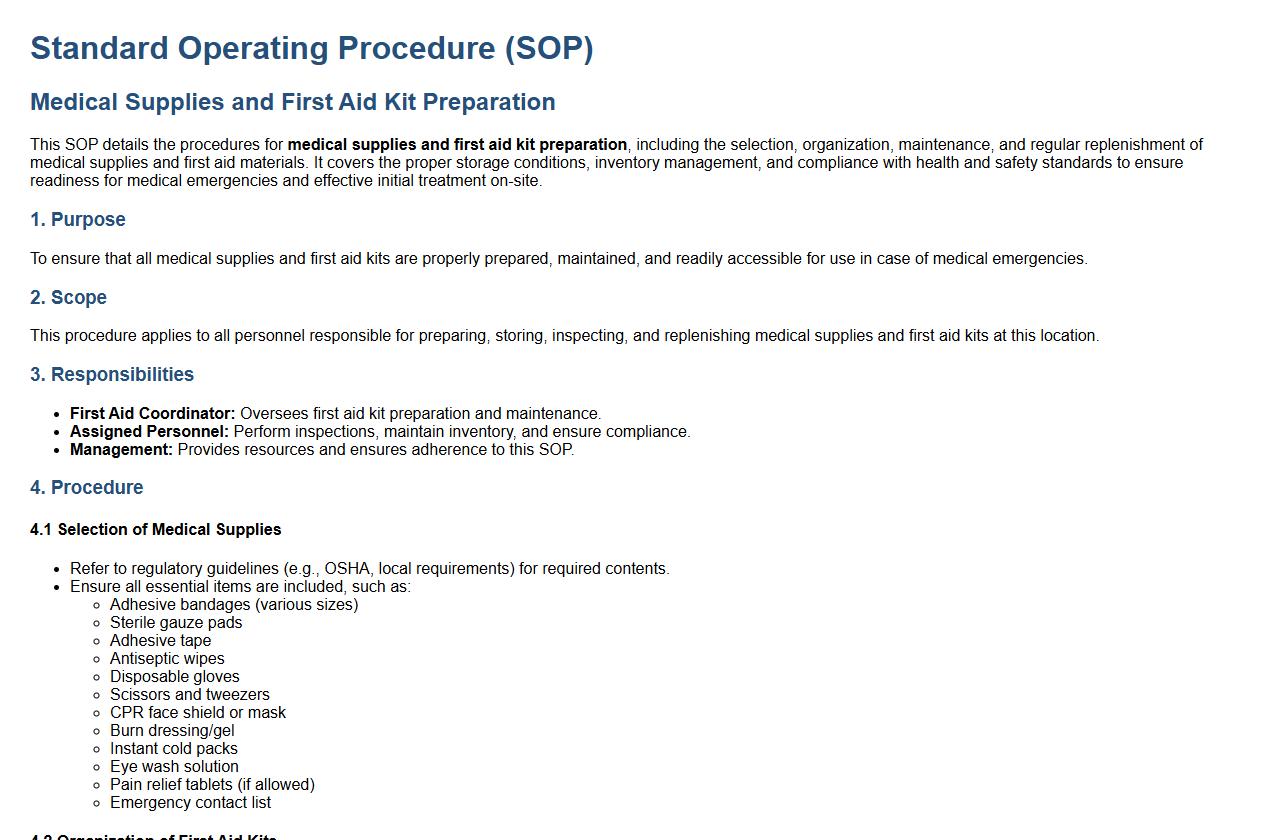
This SOP details the procedures for medical supplies and first aid kit preparation, including the selection, organization, maintenance, and regular replenishment of medical supplies and first aid materials. It covers the proper storage conditions, inventory management, and compliance with health and safety standards to ensure readiness for medical emergencies and effective initial treatment on-site.
Pre-trip briefing and itinerary distribution.
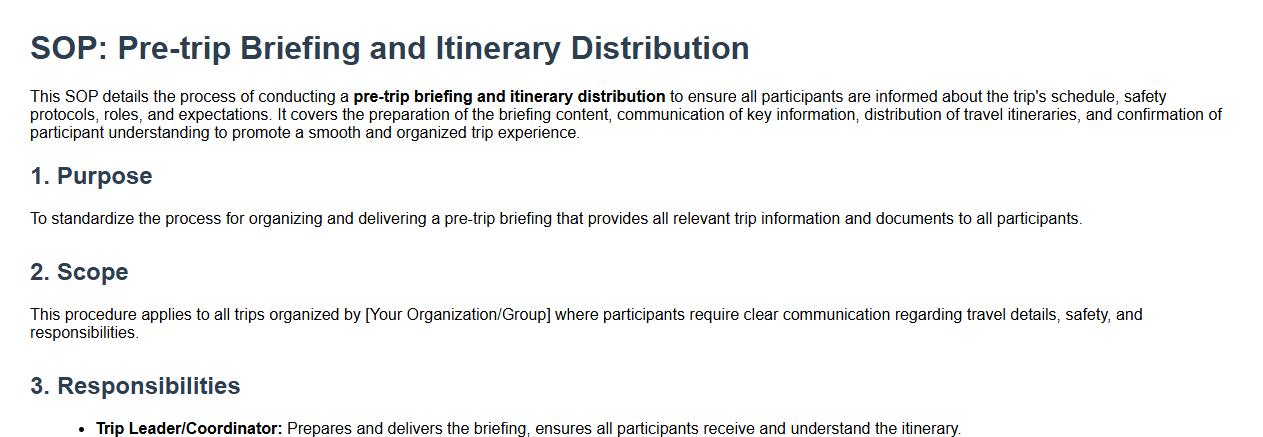
This SOP details the process of conducting a pre-trip briefing and itinerary distribution to ensure all participants are informed about the trip's schedule, safety protocols, roles, and expectations. It covers the preparation of the briefing content, communication of key information, distribution of travel itineraries, and confirmation of participant understanding to promote a smooth and organized trip experience.
On-site attendance monitoring and supervision protocol.
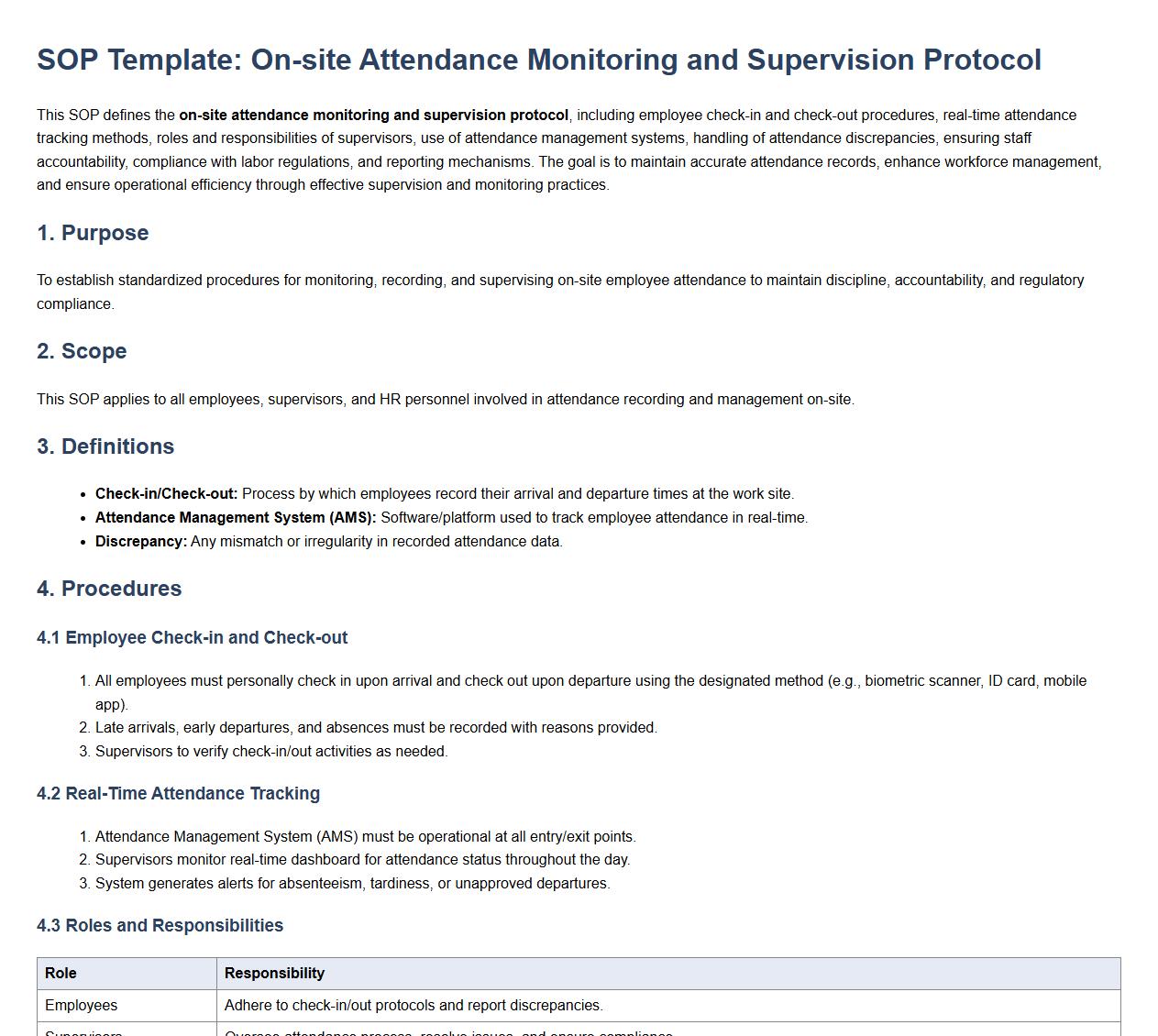
This SOP defines the on-site attendance monitoring and supervision protocol, including employee check-in and check-out procedures, real-time attendance tracking methods, roles and responsibilities of supervisors, use of attendance management systems, handling of attendance discrepancies, ensuring staff accountability, compliance with labor regulations, and reporting mechanisms. The goal is to maintain accurate attendance records, enhance workforce management, and ensure operational efficiency through effective supervision and monitoring practices.
Post-trip debriefing, incident reporting, and feedback collection.
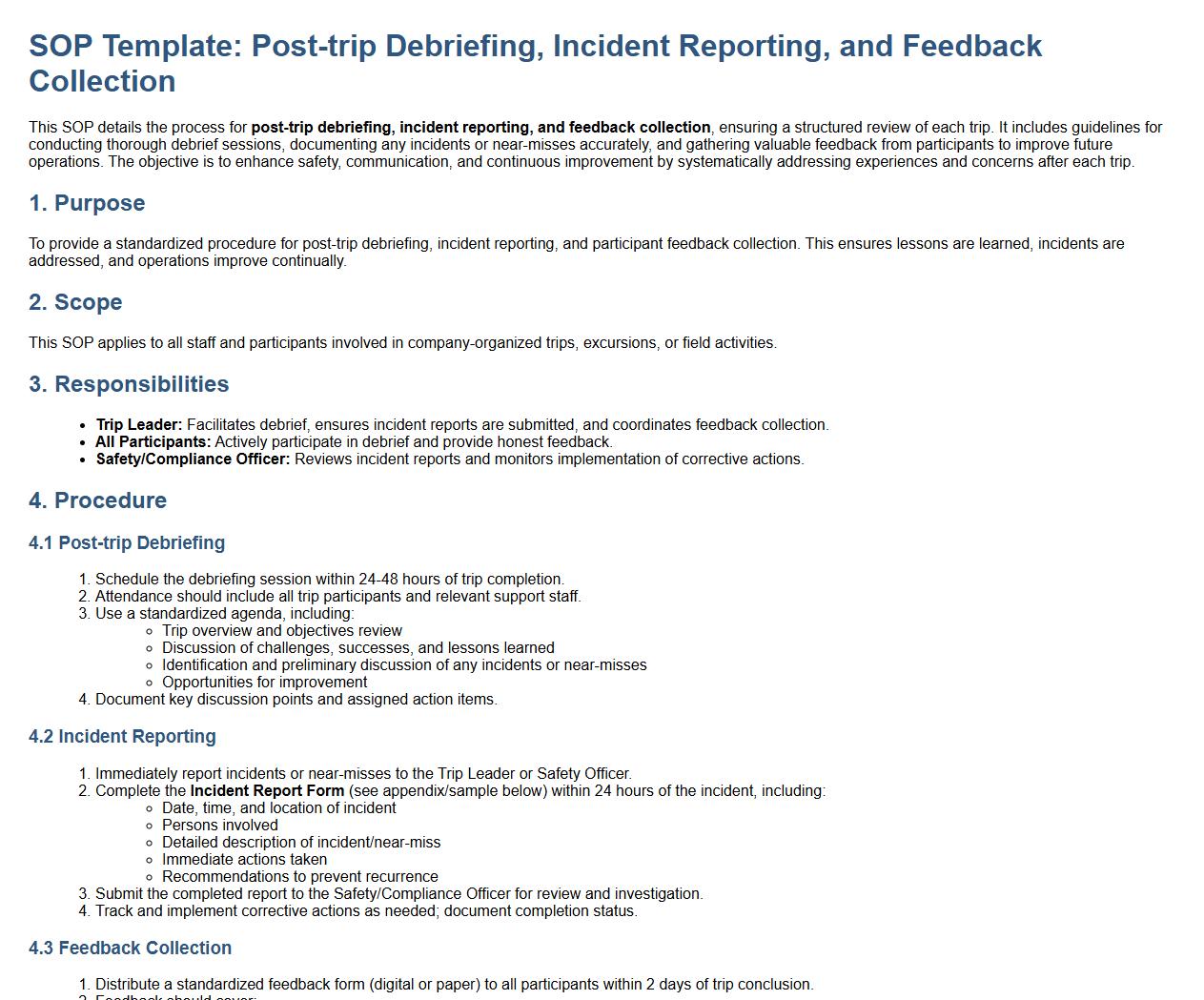
This SOP details the process for post-trip debriefing, incident reporting, and feedback collection, ensuring a structured review of each trip. It includes guidelines for conducting thorough debrief sessions, documenting any incidents or near-misses accurately, and gathering valuable feedback from participants to improve future operations. The objective is to enhance safety, communication, and continuous improvement by systematically addressing experiences and concerns after each trip.
What is the primary objective of the SOP for Field Trip Planning?
The primary objective of the SOP for Field Trip Planning is to ensure a safe and organized experience for all participants. It aims to provide clear guidelines to minimize risks and maximize educational value. Proper planning and coordination are emphasized to achieve successful field trips.
Who is responsible for authorizing and coordinating field trips according to the SOP?
The designated field trip coordinator or school administrator holds responsibility for authorizing and coordinating all field trips. They ensure compliance with all organizational policies and safety standards. Coordination involves working closely with teachers, staff, and transportation providers.
What key safety protocols must be addressed before approving a field trip?
Key safety protocols include conducting a thorough risk assessment, verifying emergency procedures, and ensuring adequate supervision ratios. Pre-trip safety briefings for staff and students are mandatory. Additionally, all health and safety equipment must be checked and readily available.
Which documentation and consent forms are required prior to field trip execution?
Required documentation includes signed parental consent forms, medical information, and emergency contact details for each participant. The trip itinerary and transportation plans must also be documented. All forms must be reviewed and approved before the trip proceeds.
How should incidents and emergencies be reported and managed as per the SOP?
Incidents and emergencies must be immediately reported to the designated field trip coordinator and relevant authorities. A clear communication plan is essential to manage the situation effectively. Post-incident reports should be completed promptly to evaluate and improve future protocols.