
A SOP Template for Cleaning Services outlines standardized procedures to ensure consistent and high-quality cleaning tasks. It serves as a comprehensive guide for staff to follow specific cleaning protocols, safety measures, and equipment usage. This template enhances efficiency, minimizes errors, and maintains hygiene standards across various cleaning environments.
Client site access and security procedures.
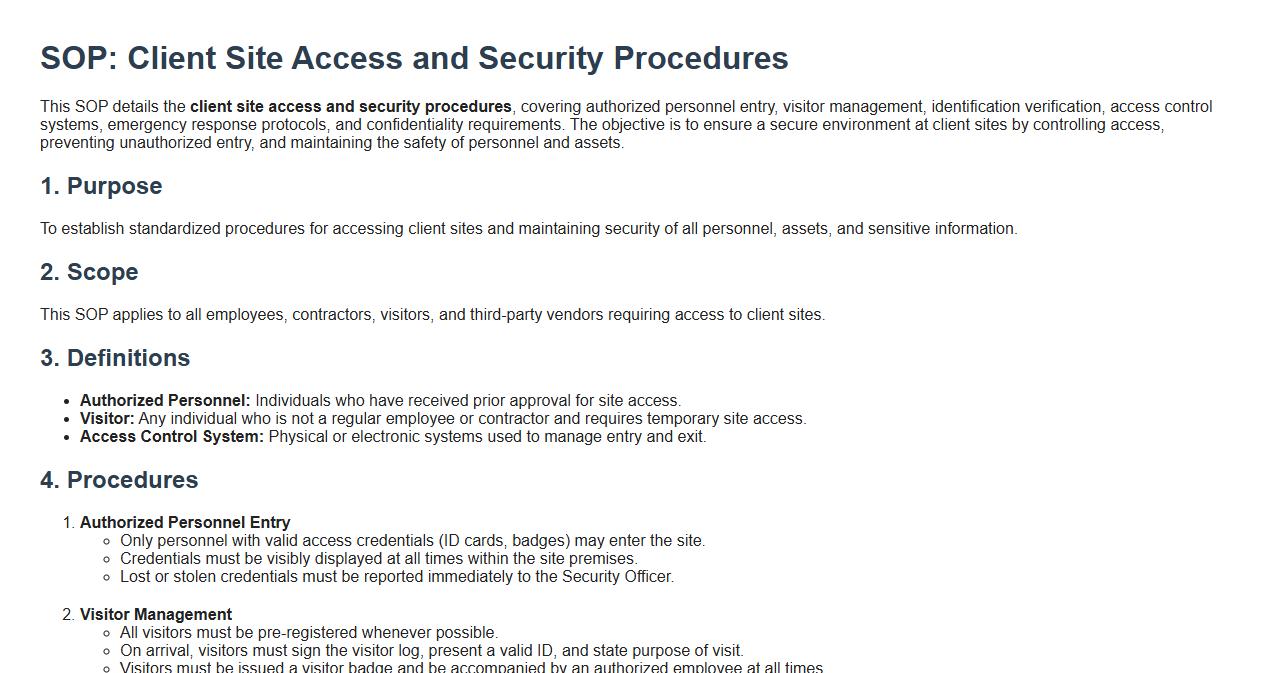
This SOP details the client site access and security procedures, covering authorized personnel entry, visitor management, identification verification, access control systems, emergency response protocols, and confidentiality requirements. The objective is to ensure a secure environment at client sites by controlling access, preventing unauthorized entry, and maintaining the safety of personnel and assets.
Pre-cleaning equipment inspection and preparation.
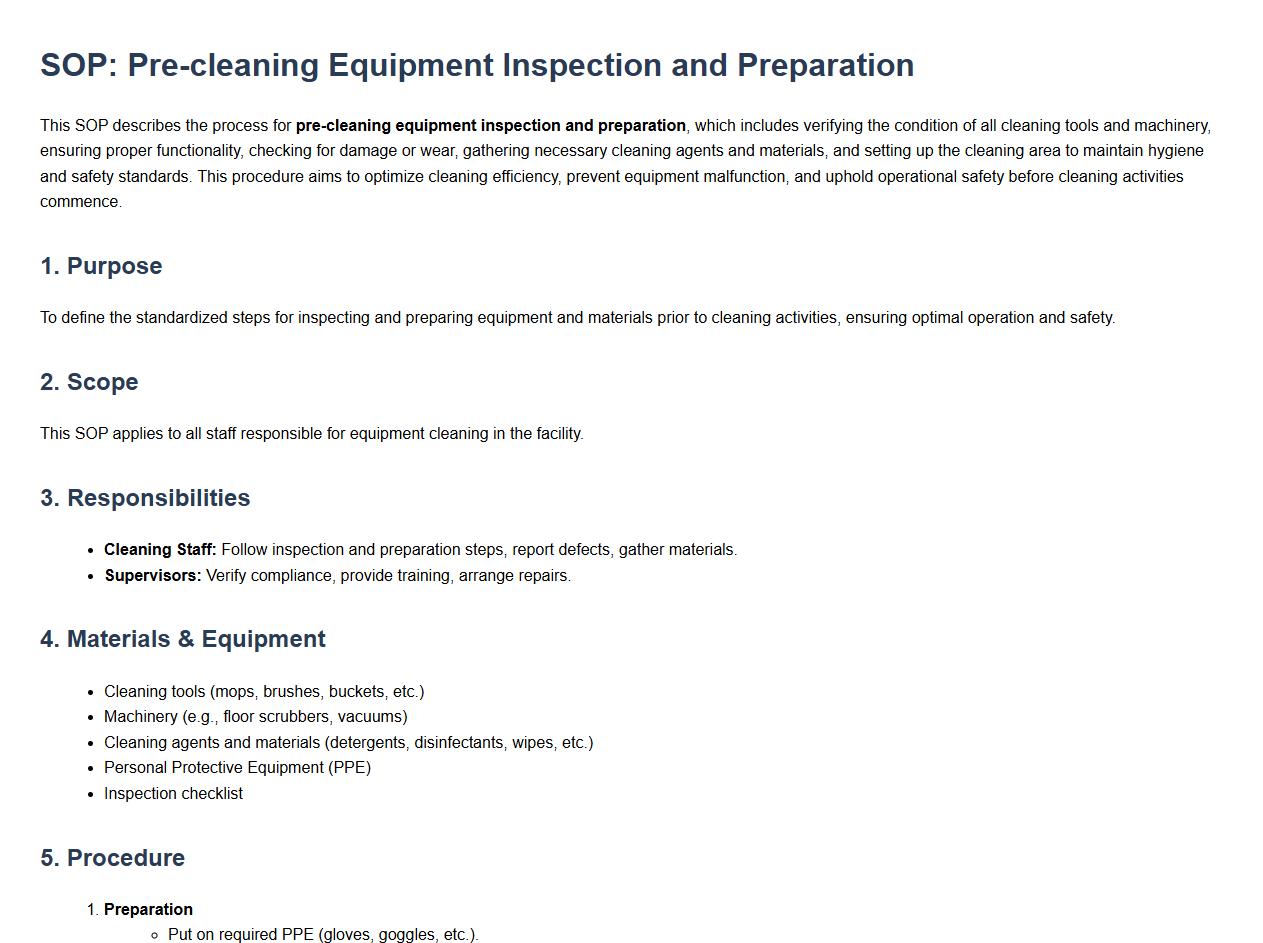
This SOP describes the process for pre-cleaning equipment inspection and preparation, which includes verifying the condition of all cleaning tools and machinery, ensuring proper functionality, checking for damage or wear, gathering necessary cleaning agents and materials, and setting up the cleaning area to maintain hygiene and safety standards. This procedure aims to optimize cleaning efficiency, prevent equipment malfunction, and uphold operational safety before cleaning activities commence.
Personal Protective Equipment (PPE) usage guidelines.
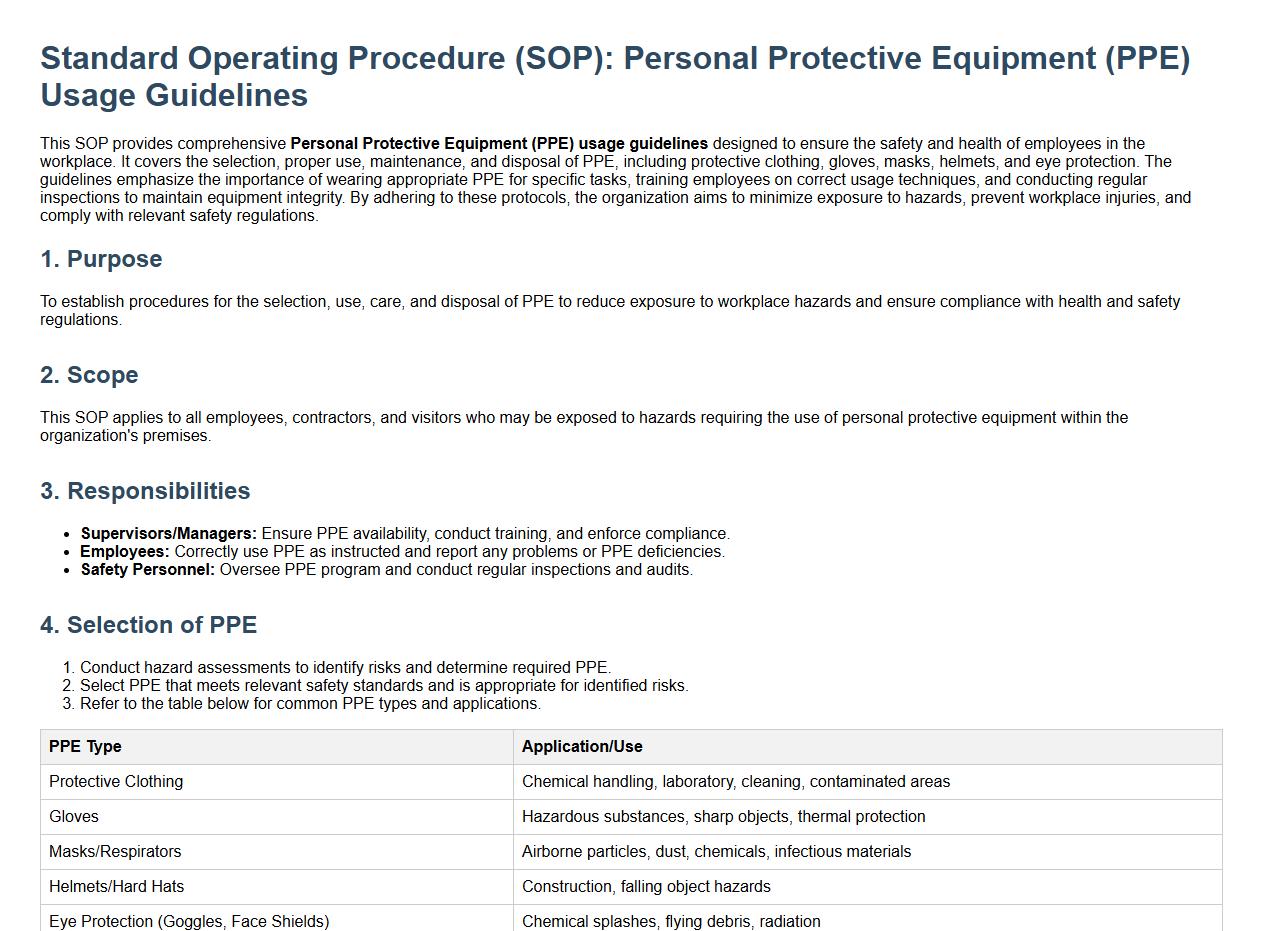
This SOP provides comprehensive Personal Protective Equipment (PPE) usage guidelines designed to ensure the safety and health of employees in the workplace. It covers the selection, proper use, maintenance, and disposal of PPE, including protective clothing, gloves, masks, helmets, and eye protection. The guidelines emphasize the importance of wearing appropriate PPE for specific tasks, training employees on correct usage techniques, and conducting regular inspections to maintain equipment integrity. By adhering to these protocols, the organization aims to minimize exposure to hazards, prevent workplace injuries, and comply with relevant safety regulations.
Surface dusting and high-touchpoint disinfection protocols.
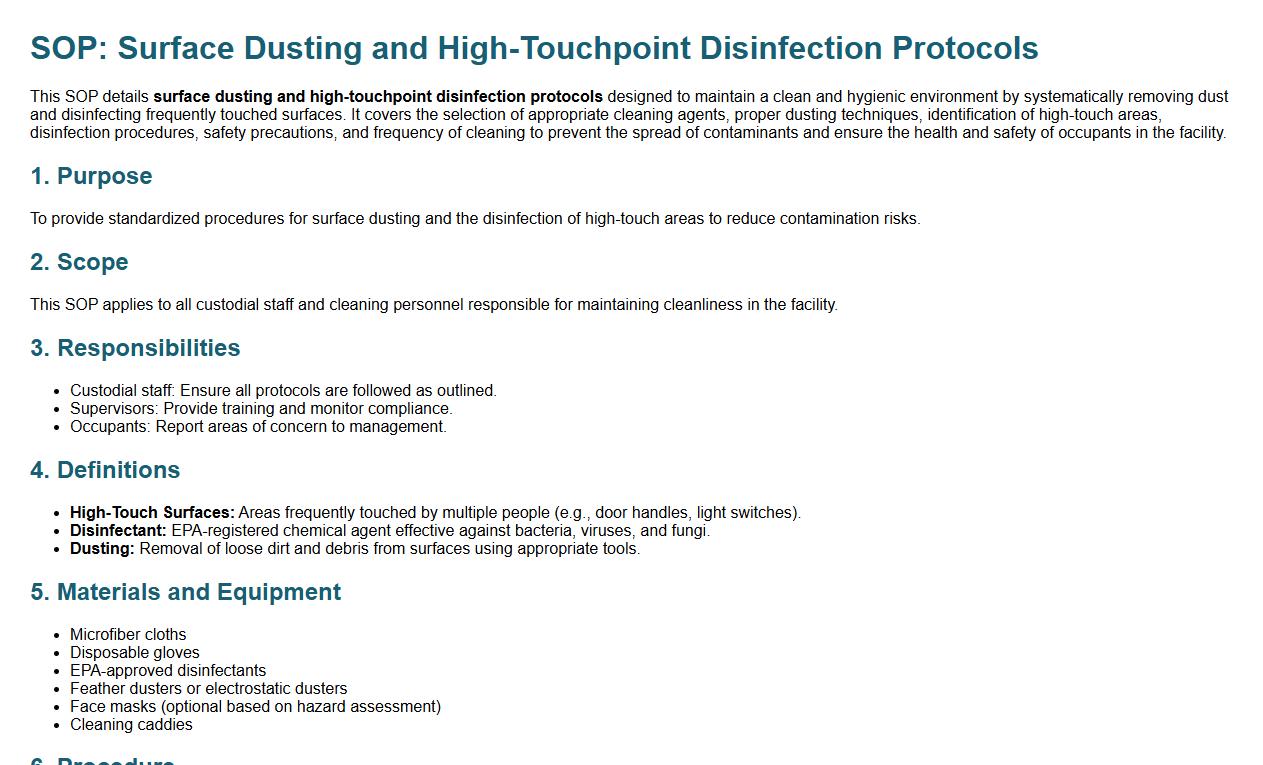
This SOP details surface dusting and high-touchpoint disinfection protocols designed to maintain a clean and hygienic environment by systematically removing dust and disinfecting frequently touched surfaces. It covers the selection of appropriate cleaning agents, proper dusting techniques, identification of high-touch areas, disinfection procedures, safety precautions, and frequency of cleaning to prevent the spread of contaminants and ensure the health and safety of occupants in the facility.
Restroom cleaning and sanitation processes.
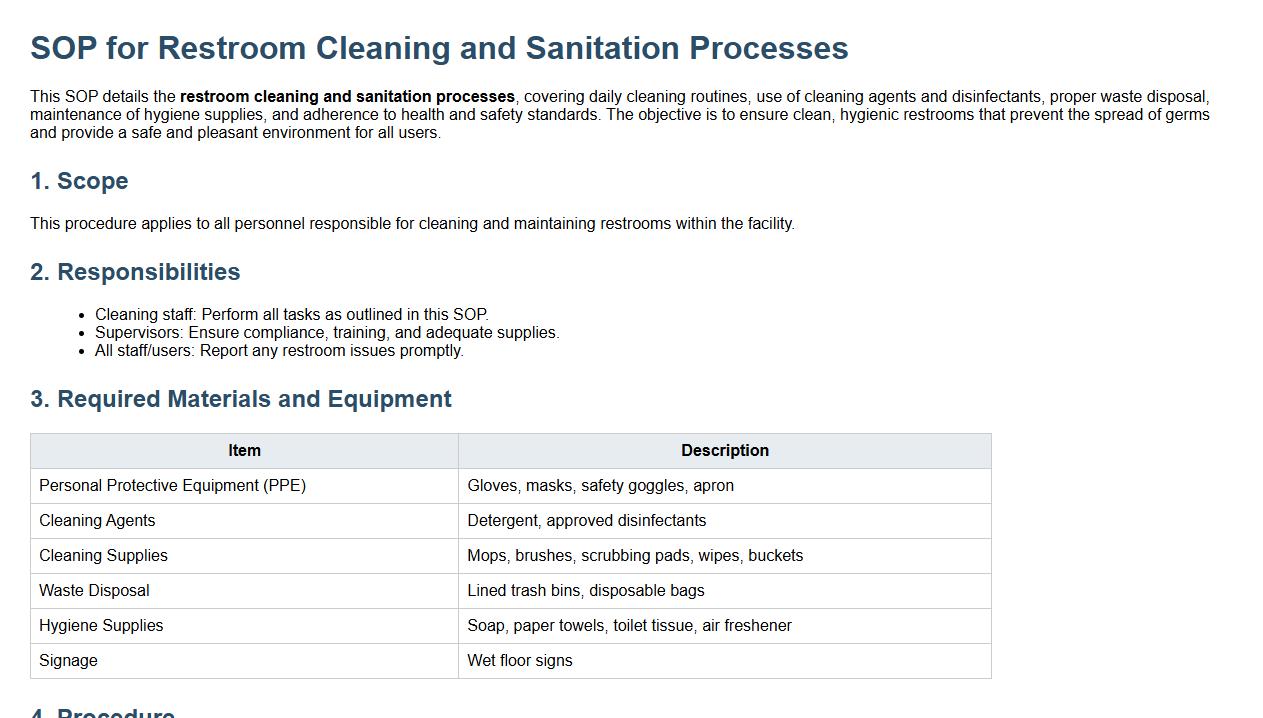
This SOP details the restroom cleaning and sanitation processes, covering daily cleaning routines, use of cleaning agents and disinfectants, proper waste disposal, maintenance of hygiene supplies, and adherence to health and safety standards. The objective is to ensure clean, hygienic restrooms that prevent the spread of germs and provide a safe and pleasant environment for all users.
Floor cleaning, mopping, and vacuuming standards.
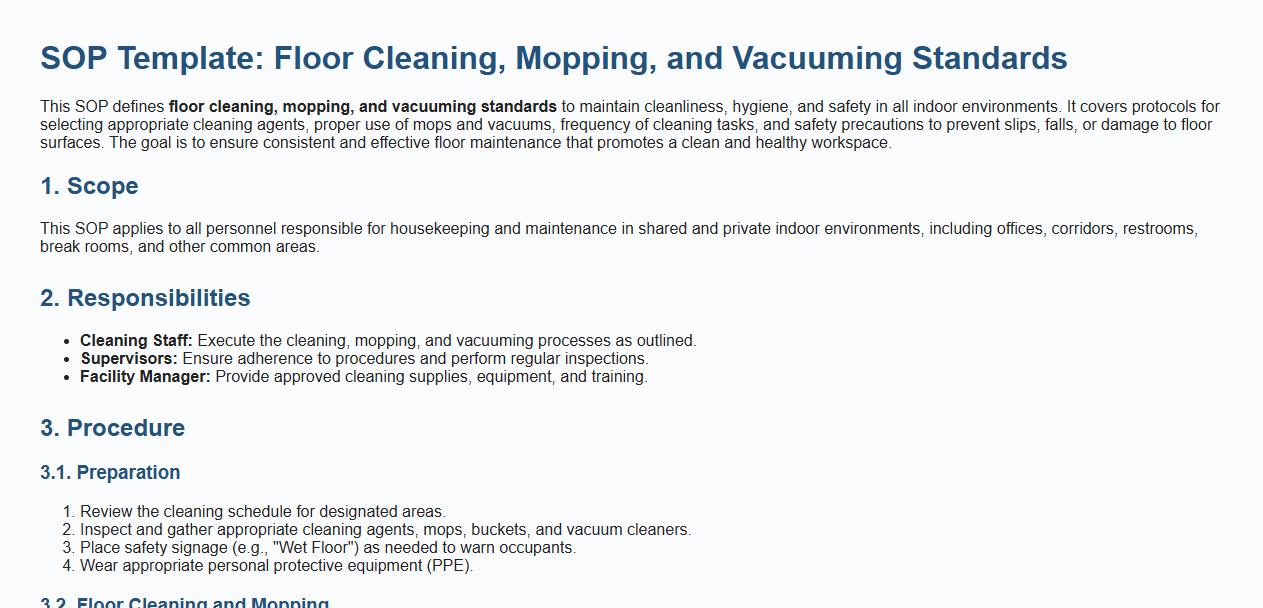
This SOP defines floor cleaning, mopping, and vacuuming standards to maintain cleanliness, hygiene, and safety in all indoor environments. It covers protocols for selecting appropriate cleaning agents, proper use of mops and vacuums, frequency of cleaning tasks, and safety precautions to prevent slips, falls, or damage to floor surfaces. The goal is to ensure consistent and effective floor maintenance that promotes a clean and healthy workspace.
Waste segregation, collection, and disposal instructions.
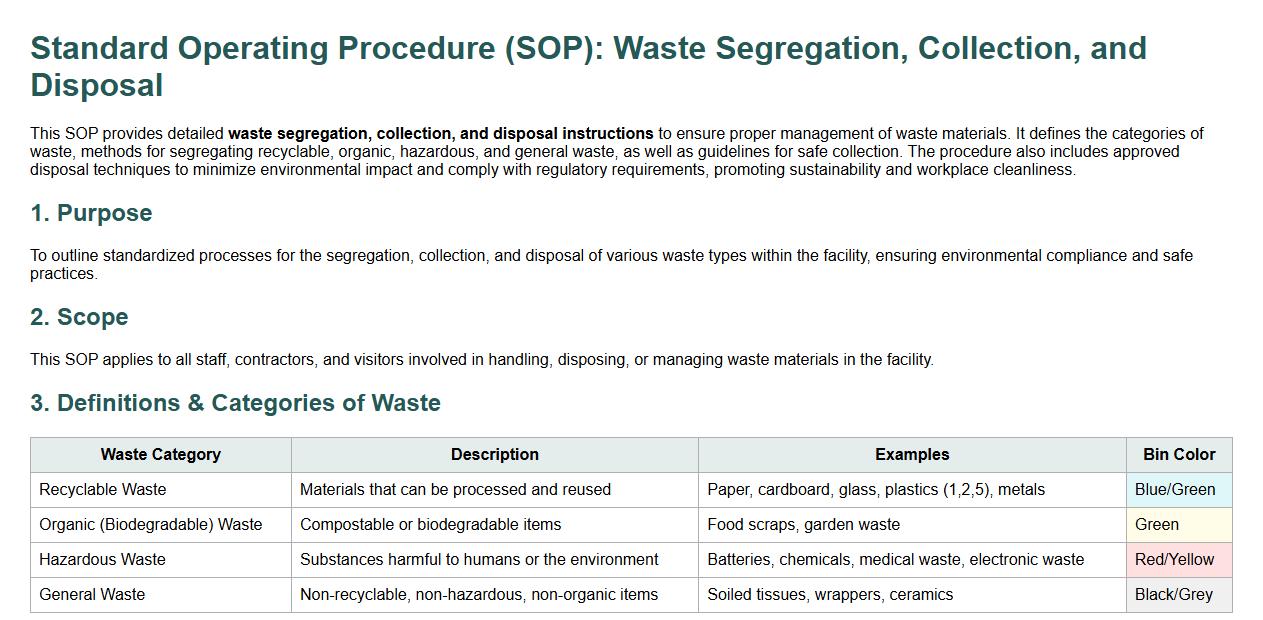
This SOP provides detailed waste segregation, collection, and disposal instructions to ensure proper management of waste materials. It defines the categories of waste, methods for segregating recyclable, organic, hazardous, and general waste, as well as guidelines for safe collection. The procedure also includes approved disposal techniques to minimize environmental impact and comply with regulatory requirements, promoting sustainability and workplace cleanliness.
Specialized cleaning for glass, carpets, and upholstery.
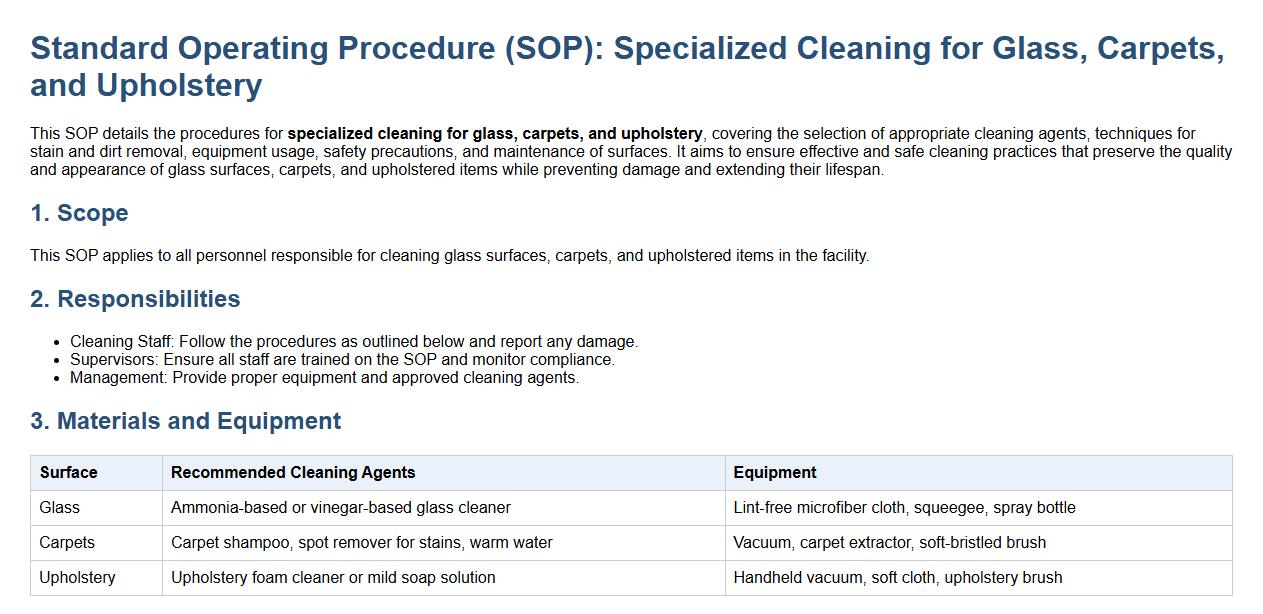
This SOP details the procedures for specialized cleaning for glass, carpets, and upholstery, covering the selection of appropriate cleaning agents, techniques for stain and dirt removal, equipment usage, safety precautions, and maintenance of surfaces. It aims to ensure effective and safe cleaning practices that preserve the quality and appearance of glass surfaces, carpets, and upholstered items while preventing damage and extending their lifespan.
Cleaning chemical dilution, storage, and handling procedures.
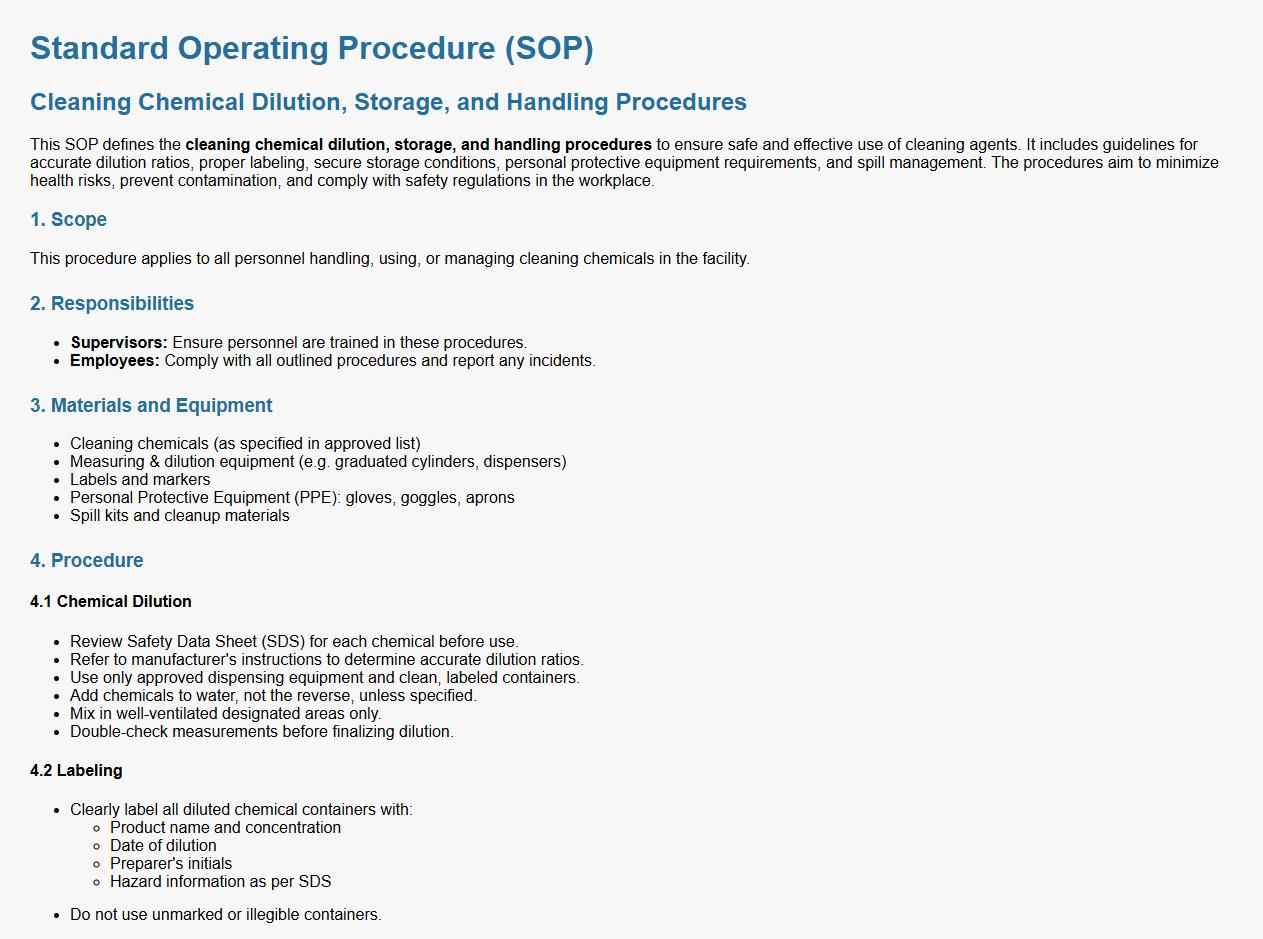
This SOP defines the cleaning chemical dilution, storage, and handling procedures to ensure safe and effective use of cleaning agents. It includes guidelines for accurate dilution ratios, proper labeling, secure storage conditions, personal protective equipment requirements, and spill management. The procedures aim to minimize health risks, prevent contamination, and comply with safety regulations in the workplace.
Post-cleaning inspection, client sign-off, and reporting documentation.
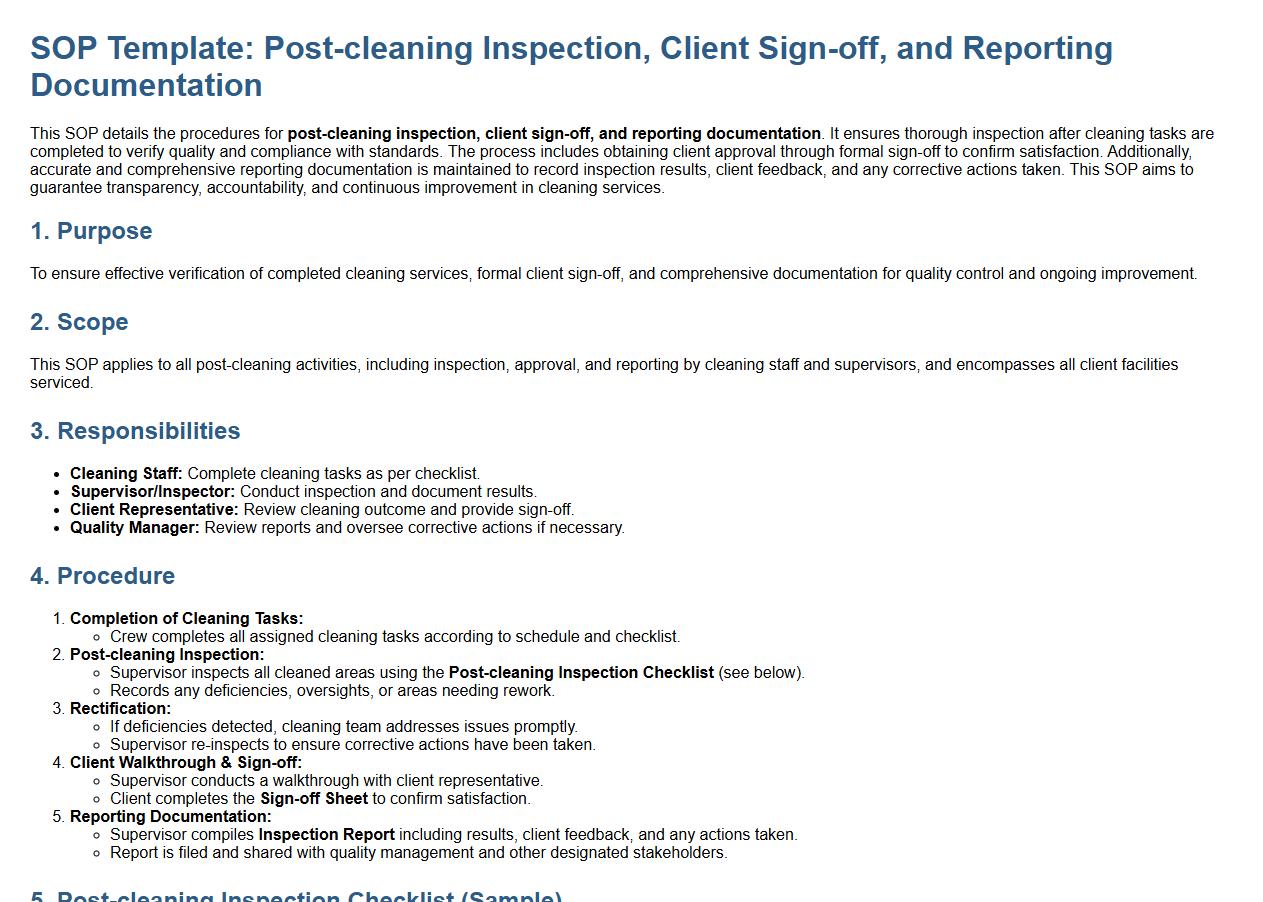
This SOP details the procedures for post-cleaning inspection, client sign-off, and reporting documentation. It ensures thorough inspection after cleaning tasks are completed to verify quality and compliance with standards. The process includes obtaining client approval through formal sign-off to confirm satisfaction. Additionally, accurate and comprehensive reporting documentation is maintained to record inspection results, client feedback, and any corrective actions taken. This SOP aims to guarantee transparency, accountability, and continuous improvement in cleaning services.
What are the key objectives outlined in the SOP for cleaning services?
The SOP for cleaning services primarily aims to maintain a clean and hygienic environment to ensure safety and health. It sets clear standards for cleanliness to prevent contamination and the spread of infections. Additionally, the SOP focuses on ensuring consistency in cleaning processes across all areas.
Which specific roles and responsibilities are defined in the cleaning SOP?
The SOP clearly defines the roles and responsibilities of cleaning staff, supervisors, and management. Cleaning staff are responsible for executing cleaning tasks, while supervisors oversee quality and compliance. Management is tasked with providing resources and ensuring training and adherence to protocols.
What cleaning methods and frequency are mandated by the SOP?
The SOP specifies standardized cleaning methods such as sweeping, mopping, disinfecting, and wiping surfaces. It mandates cleaning frequencies based on area usage, with high-touch surfaces cleaned multiple times daily. Low-traffic areas are cleaned at scheduled intervals, ensuring thorough maintenance.
Which safety precautions and personal protective equipment (PPE) are required by the SOP?
The SOP emphasizes crucial safety precautions including proper handling of cleaning agents and adherence to safety guidelines. It mandates the use of PPE such as gloves, masks, and protective eyewear to minimize exposure risks. Regular training on safety measures ensures that all personnel stay protected during cleaning tasks.
How does the SOP ensure compliance and documentation of cleaning activities?
The SOP requires detailed documentation of all cleaning activities, including checklists and logs. Supervisors are responsible for conducting regular audits to verify compliance with cleaning standards. This systematic record-keeping supports accountability and continuous improvement in cleaning operations.