

A SOP Template for Transportation and Logistics Services streamlines operational processes by providing clear, step-by-step guidelines for managing shipments, inventory, and vehicle maintenance. It ensures consistency, compliance with regulations, and enhances efficiency across transportation and supply chain activities. Customizable to different logistics companies, this template supports improved communication and accountability among team members.
Transportation scheduling and route planning.
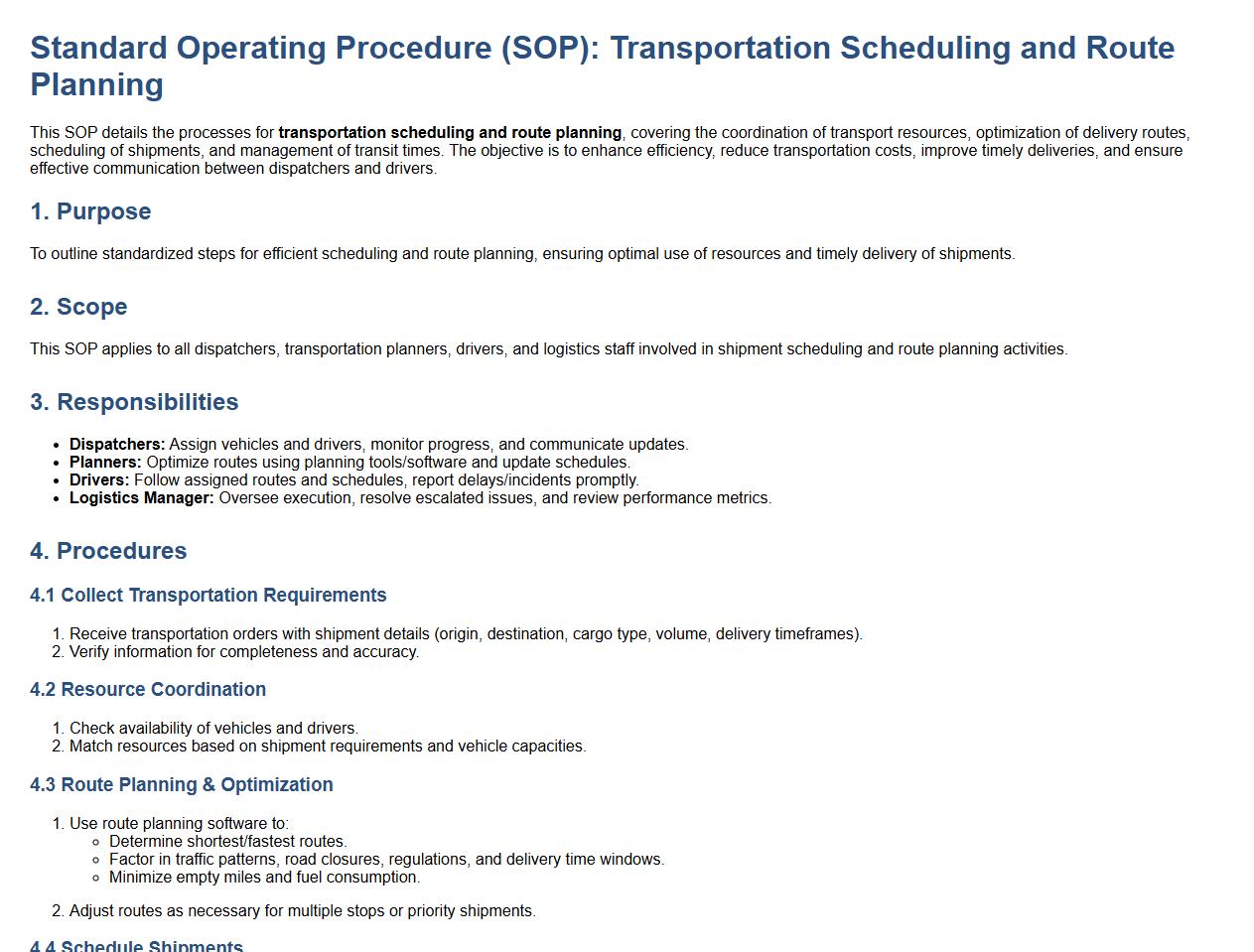
This SOP details the processes for transportation scheduling and route planning, covering the coordination of transport resources, optimization of delivery routes, scheduling of shipments, and management of transit times. The objective is to enhance efficiency, reduce transportation costs, improve timely deliveries, and ensure effective communication between dispatchers and drivers.
Vehicle inspection and maintenance procedures.
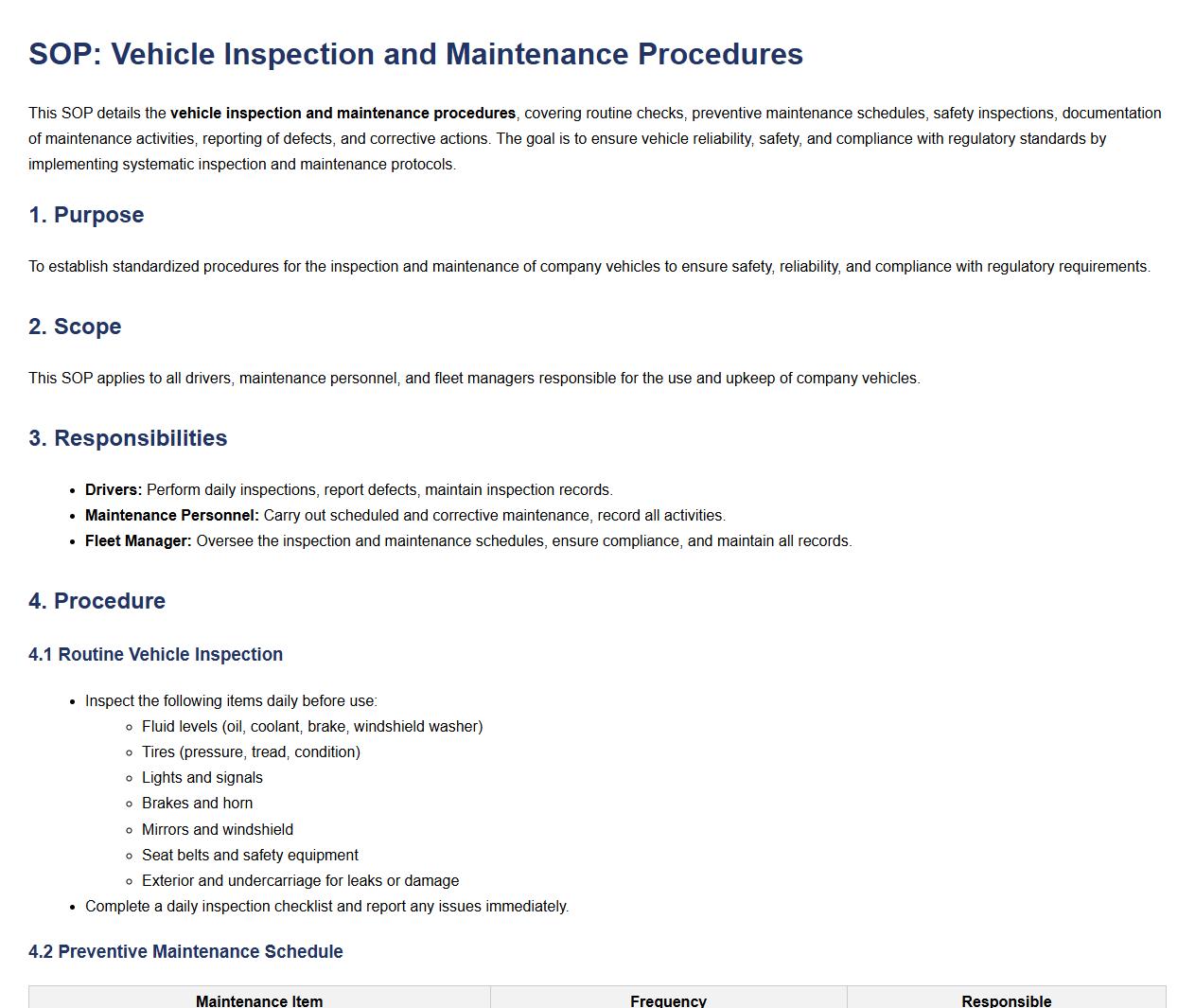
This SOP details the vehicle inspection and maintenance procedures, covering routine checks, preventive maintenance schedules, safety inspections, documentation of maintenance activities, reporting of defects, and corrective actions. The goal is to ensure vehicle reliability, safety, and compliance with regulatory standards by implementing systematic inspection and maintenance protocols.
Driver assignment and duty rosters.
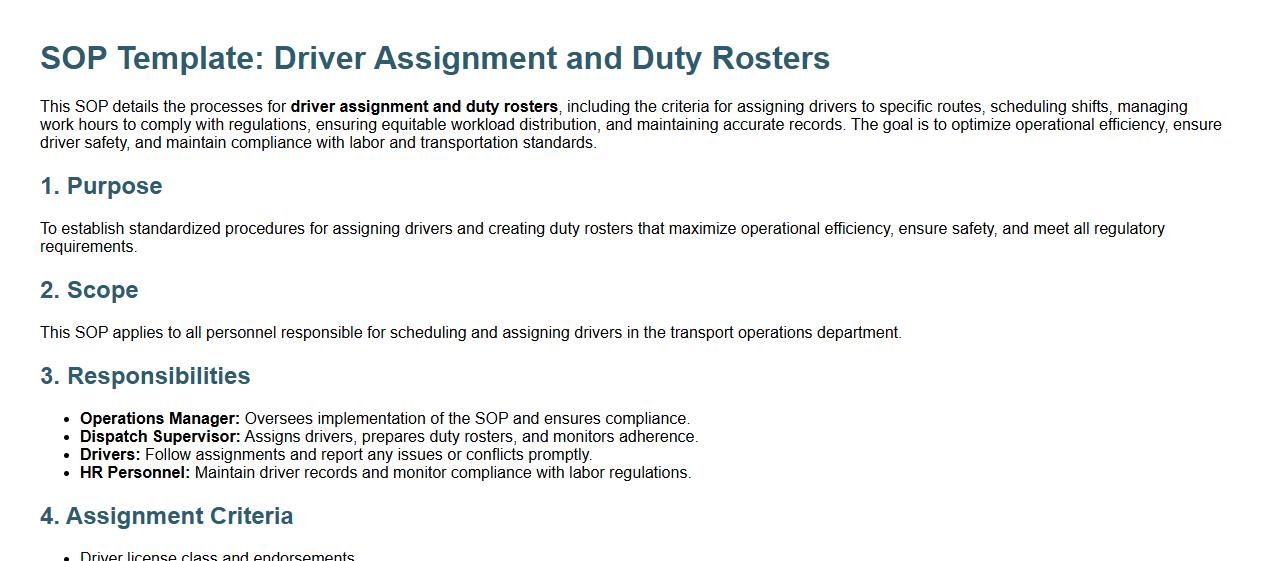
This SOP details the processes for driver assignment and duty rosters, including the criteria for assigning drivers to specific routes, scheduling shifts, managing work hours to comply with regulations, ensuring equitable workload distribution, and maintaining accurate records. The goal is to optimize operational efficiency, ensure driver safety, and maintain compliance with labor and transportation standards.
Loading and unloading protocols.
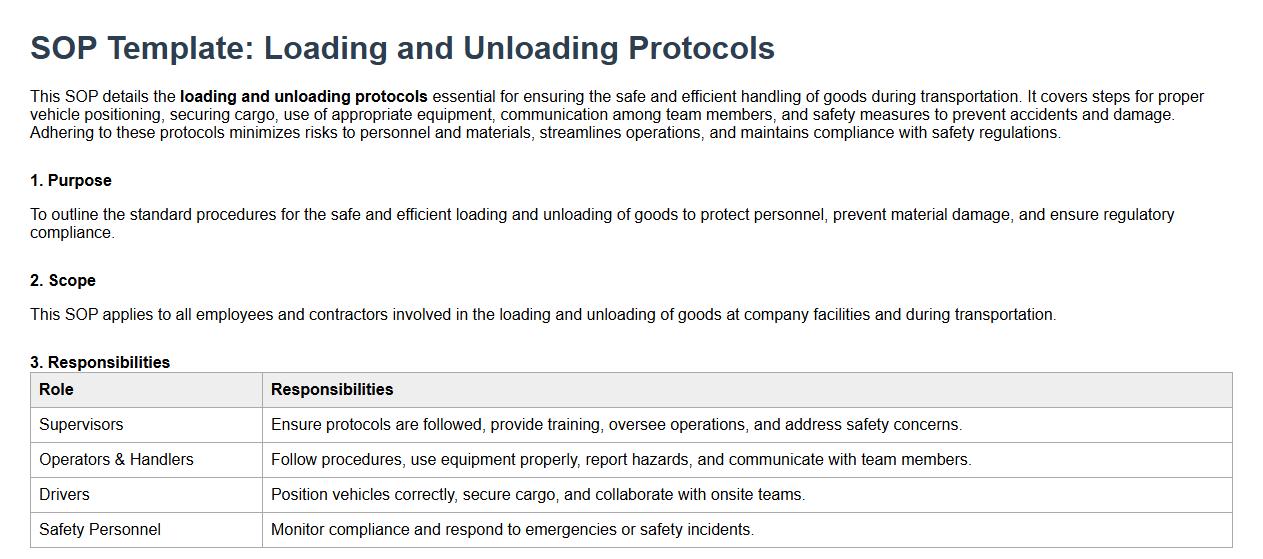
This SOP details the loading and unloading protocols essential for ensuring the safe and efficient handling of goods during transportation. It covers steps for proper vehicle positioning, securing cargo, use of appropriate equipment, communication among team members, and safety measures to prevent accidents and damage. Adhering to these protocols minimizes risks to personnel and materials, streamlines operations, and maintains compliance with safety regulations.
Cargo documentation and verification processes.
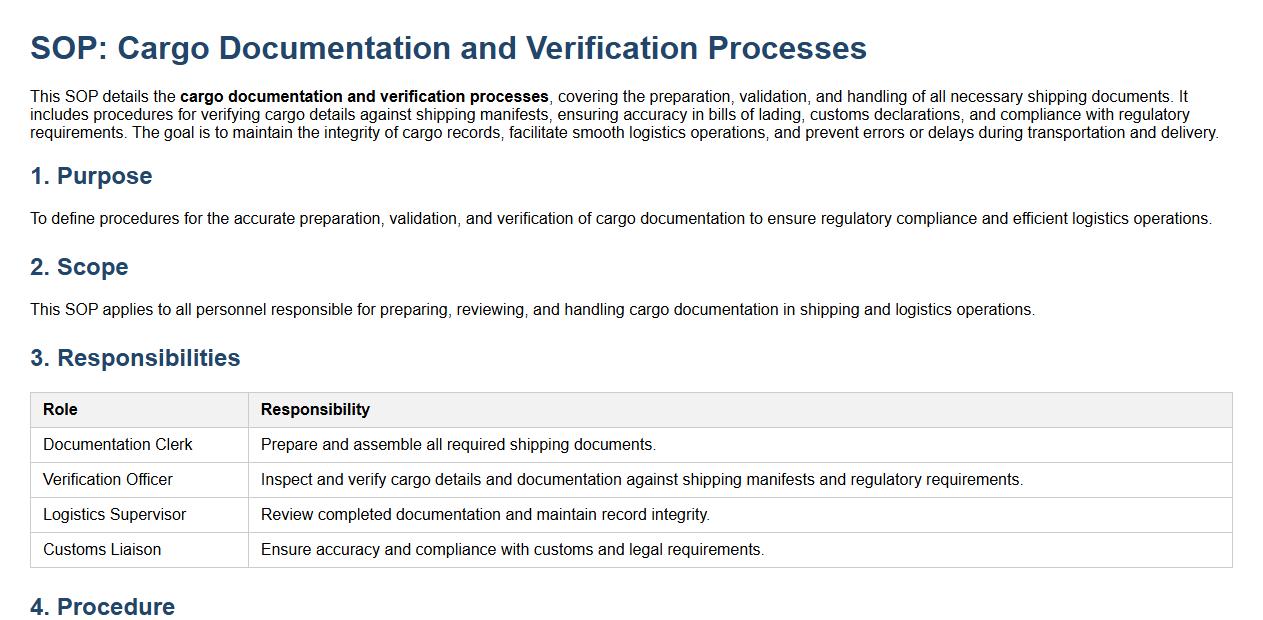
This SOP details the cargo documentation and verification processes, covering the preparation, validation, and handling of all necessary shipping documents. It includes procedures for verifying cargo details against shipping manifests, ensuring accuracy in bills of lading, customs declarations, and compliance with regulatory requirements. The goal is to maintain the integrity of cargo records, facilitate smooth logistics operations, and prevent errors or delays during transportation and delivery.
Safety and emergency response procedures.
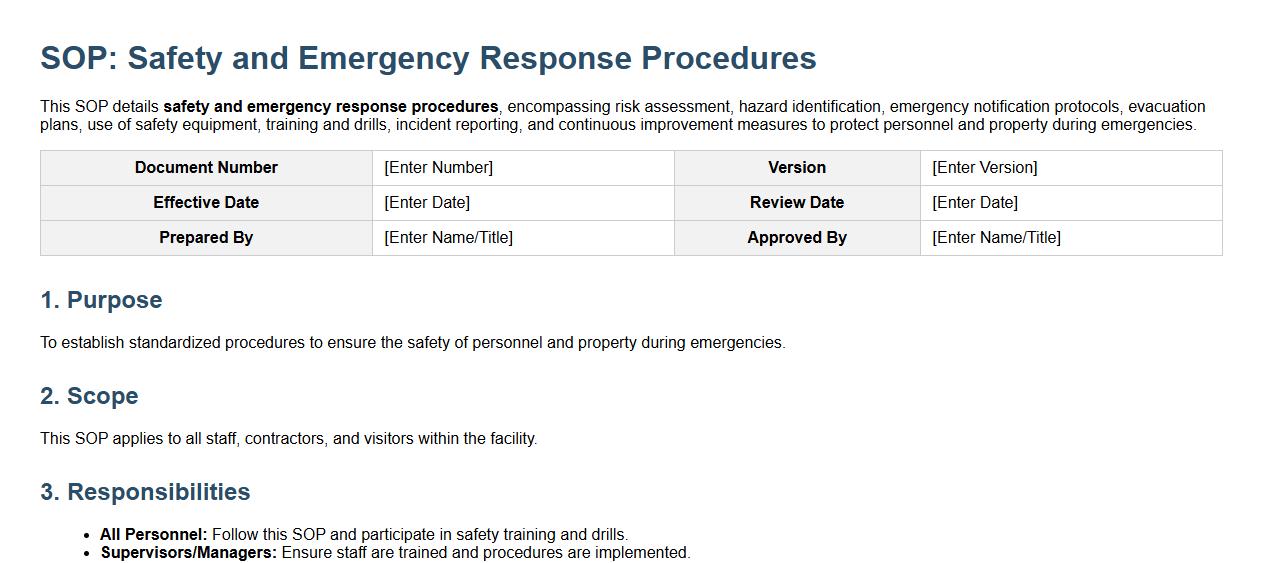
This SOP details safety and emergency response procedures, encompassing risk assessment, hazard identification, emergency notification protocols, evacuation plans, use of safety equipment, training and drills, incident reporting, and continuous improvement measures to protect personnel and property during emergencies.
Tracking and delivery status updates.
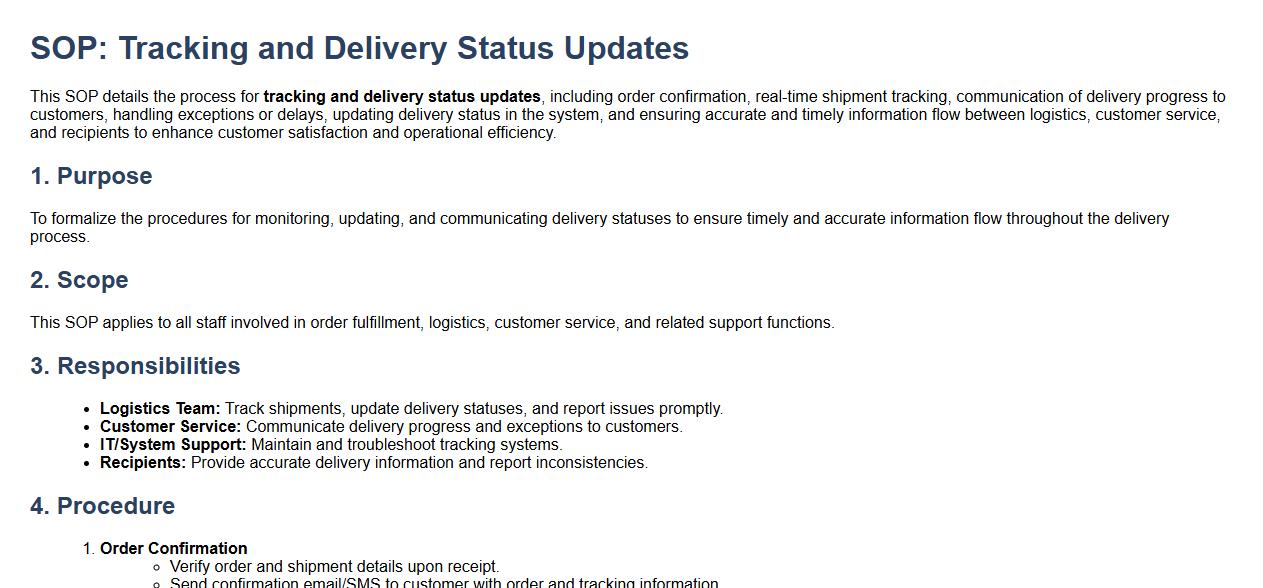
This SOP details the process for tracking and delivery status updates, including order confirmation, real-time shipment tracking, communication of delivery progress to customers, handling exceptions or delays, updating delivery status in the system, and ensuring accurate and timely information flow between logistics, customer service, and recipients to enhance customer satisfaction and operational efficiency.
Incident and accident reporting process.
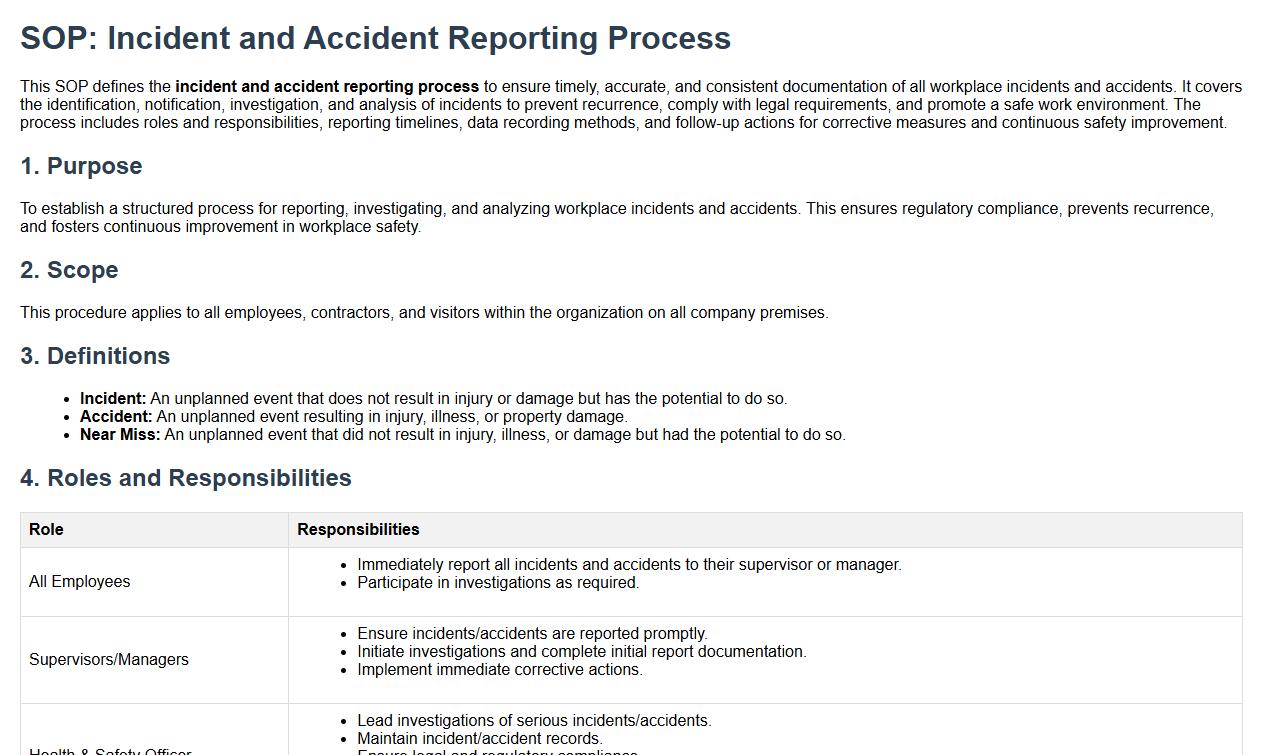
This SOP defines the incident and accident reporting process to ensure timely, accurate, and consistent documentation of all workplace incidents and accidents. It covers the identification, notification, investigation, and analysis of incidents to prevent recurrence, comply with legal requirements, and promote a safe work environment. The process includes roles and responsibilities, reporting timelines, data recording methods, and follow-up actions for corrective measures and continuous safety improvement.
Customer communication and service standards.
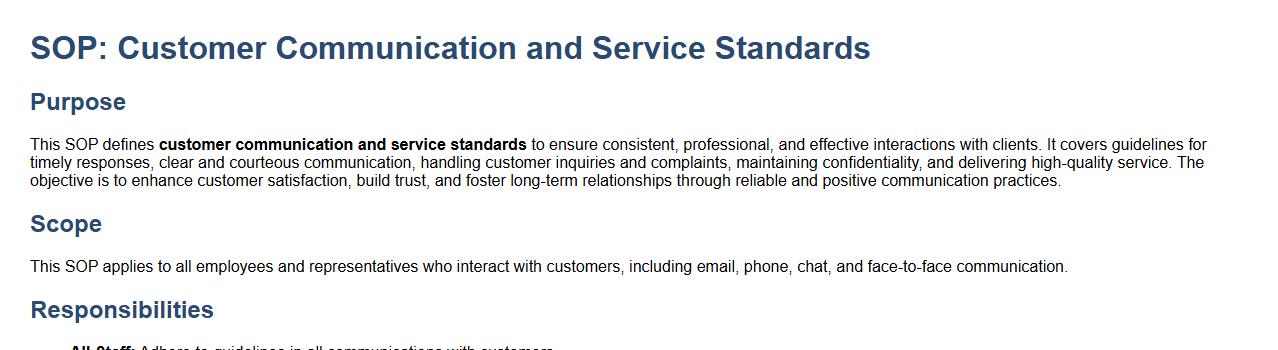
This SOP defines customer communication and service standards to ensure consistent, professional, and effective interactions with clients. It covers guidelines for timely responses, clear and courteous communication, handling customer inquiries and complaints, maintaining confidentiality, and delivering high-quality service. The objective is to enhance customer satisfaction, build trust, and foster long-term relationships through reliable and positive communication practices.
Performance monitoring and KPI reporting.
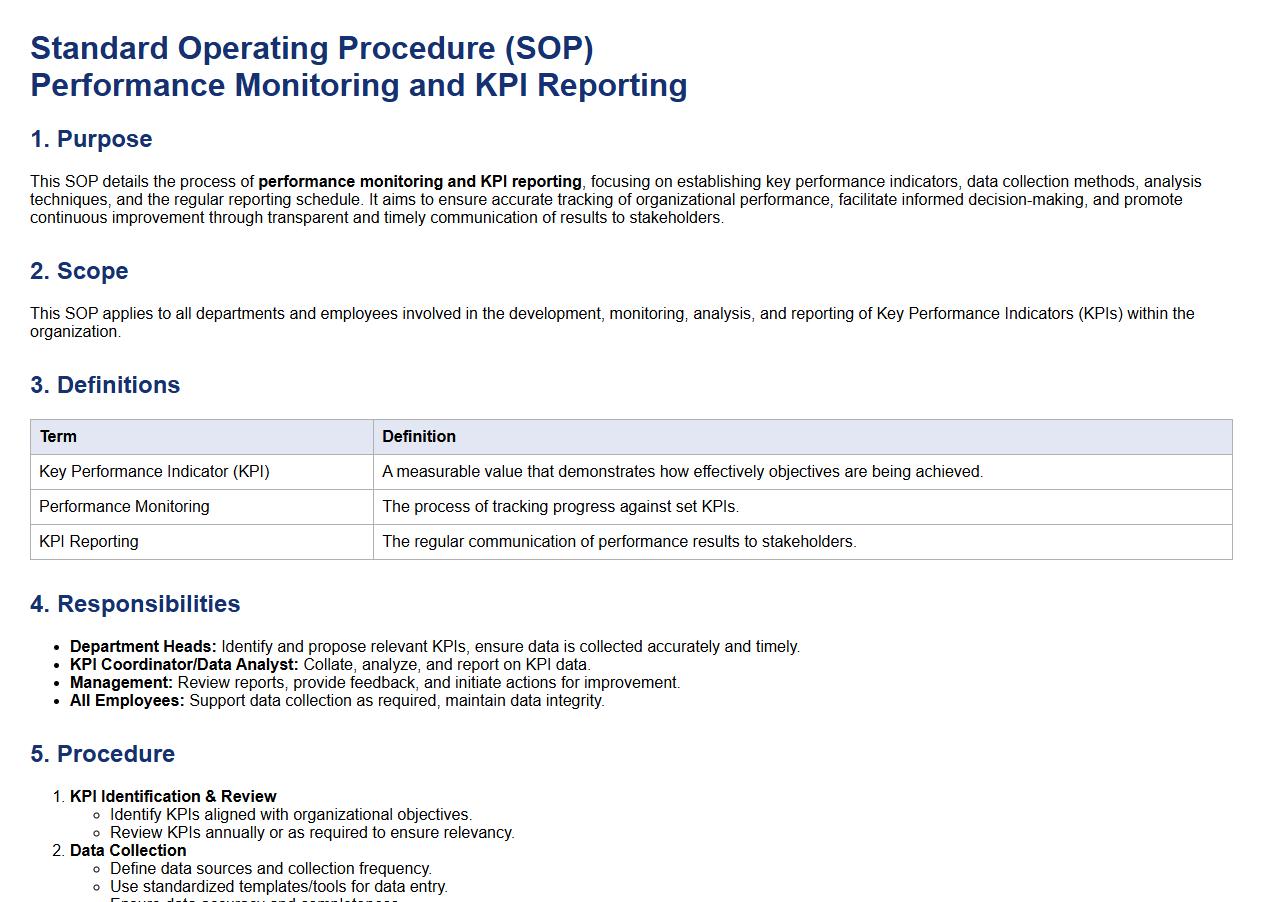
This SOP details the process of performance monitoring and KPI reporting, focusing on establishing key performance indicators, data collection methods, analysis techniques, and the regular reporting schedule. It aims to ensure accurate tracking of organizational performance, facilitate informed decision-making, and promote continuous improvement through transparent and timely communication of results to stakeholders.
Mandatory Steps for Vehicle Inspection Before Dispatch
The SOP mandates a comprehensive vehicle inspection checklist to be completed before every dispatch. This includes checking tire pressure, fluid levels, brakes, and lights to ensure operational safety. Documentation of the inspection results must be recorded and approved before the vehicle is allowed to depart.
Handling and Documenting Damaged Goods During Transit
The SOP specifies that all damaged goods discovered during transit must be immediately reported and documented. Drivers are required to take photographs and fill out a damage report form to detail the extent and nature of the damage. This documentation is essential for claims processing and must be forwarded to the logistics manager without delay.
Communication Protocols Between Drivers, Dispatch, and Clients
The SOP requires regular communication through designated channels to maintain transparency and coordination. Drivers must update dispatch at key points such as departure, arrival, and any delays. Additionally, clients should be informed promptly of delivery status and any unforeseen issues to ensure customer satisfaction.
Safety Guidelines During Loading and Unloading
Strict adherence to safety protocols is emphasized during loading and unloading procedures. This includes the use of personal protective equipment, proper securing of cargo, and following ergonomic handling techniques to prevent injuries. Supervisors must ensure all personnel are trained and compliant with these safety standards.
Procedures for Incident Reporting and Escalation in Logistics Operations
The SOP outlines a clear process for incident reporting, requiring immediate notification to supervisors upon occurrence. An incident report must be completed detailing all relevant information, and escalation procedures activated for serious issues. This ensures timely resolution and continuous improvement in operational safety.