

A SOP Template for Administrative Record Keeping provides a clear and structured format to document procedures, ensuring consistency and compliance in managing office records. It outlines steps for organizing, storing, and retrieving important documents efficiently, reducing errors and enhancing productivity. This template helps maintain accurate and up-to-date records critical for audits, legal requirements, and daily operations.
Document intake and categorization procedures.
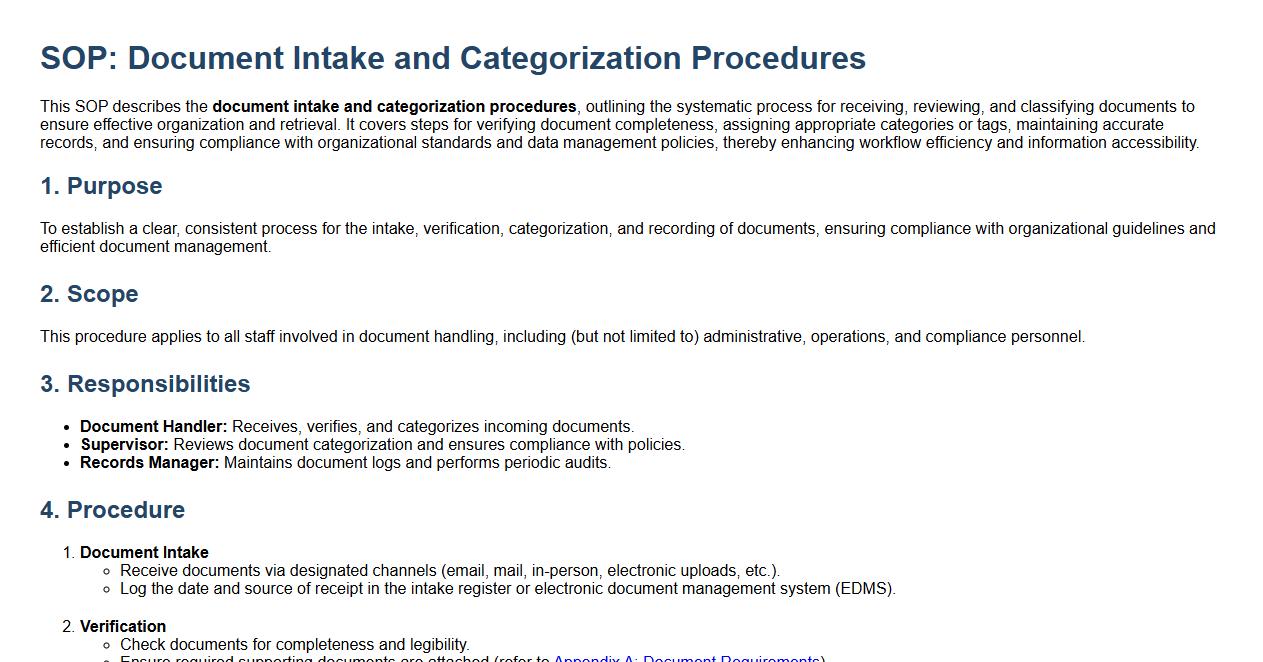
This SOP describes the document intake and categorization procedures, outlining the systematic process for receiving, reviewing, and classifying documents to ensure effective organization and retrieval. It covers steps for verifying document completeness, assigning appropriate categories or tags, maintaining accurate records, and ensuring compliance with organizational standards and data management policies, thereby enhancing workflow efficiency and information accessibility.
Data entry standards and verification steps.
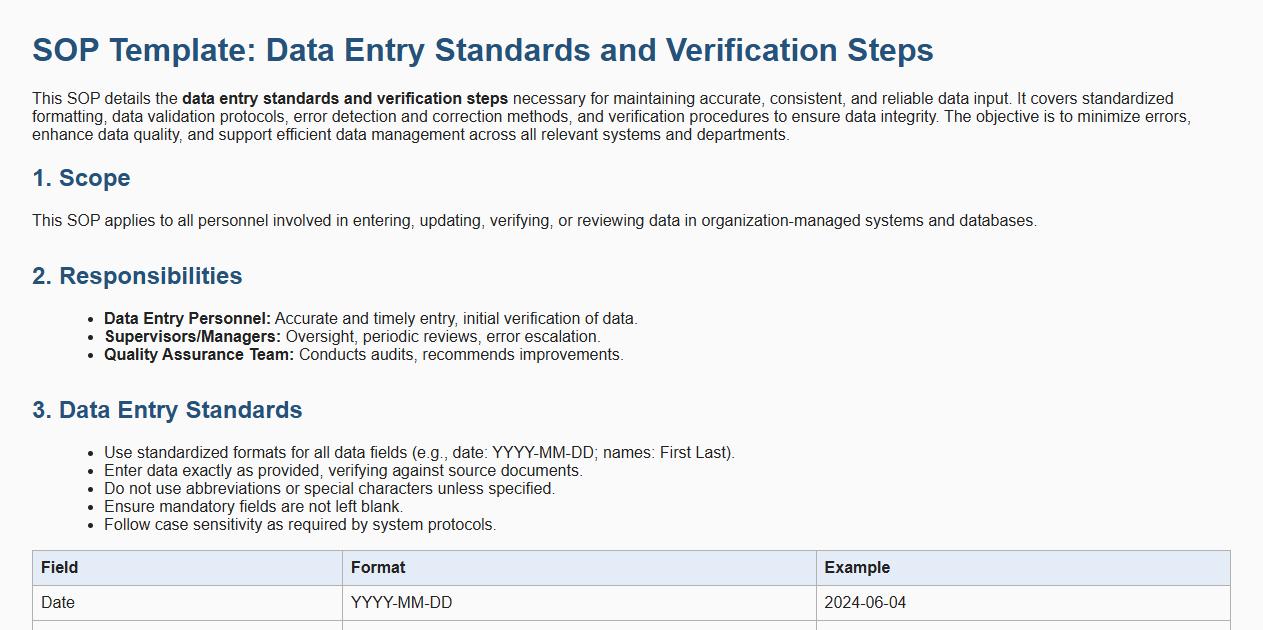
This SOP details the data entry standards and verification steps necessary for maintaining accurate, consistent, and reliable data input. It covers standardized formatting, data validation protocols, error detection and correction methods, and verification procedures to ensure data integrity. The objective is to minimize errors, enhance data quality, and support efficient data management across all relevant systems and departments.
File naming conventions and version control protocols.
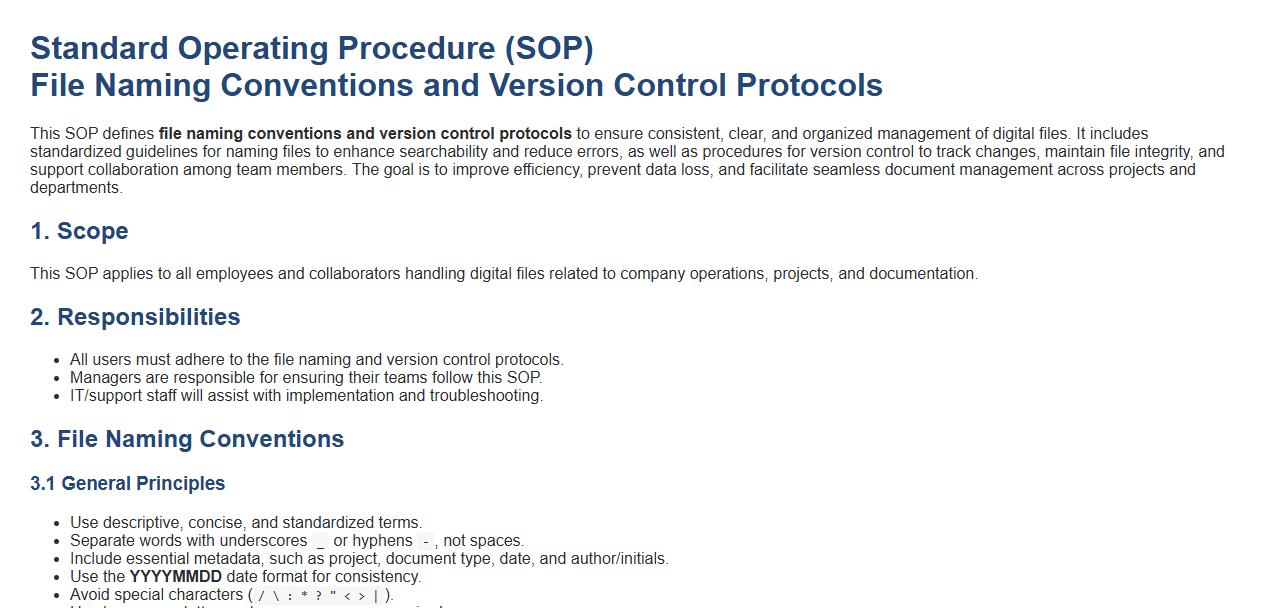
This SOP defines file naming conventions and version control protocols to ensure consistent, clear, and organized management of digital files. It includes standardized guidelines for naming files to enhance searchability and reduce errors, as well as procedures for version control to track changes, maintain file integrity, and support collaboration among team members. The goal is to improve efficiency, prevent data loss, and facilitate seamless document management across projects and departments.
Document storage, backup, and archiving procedures.
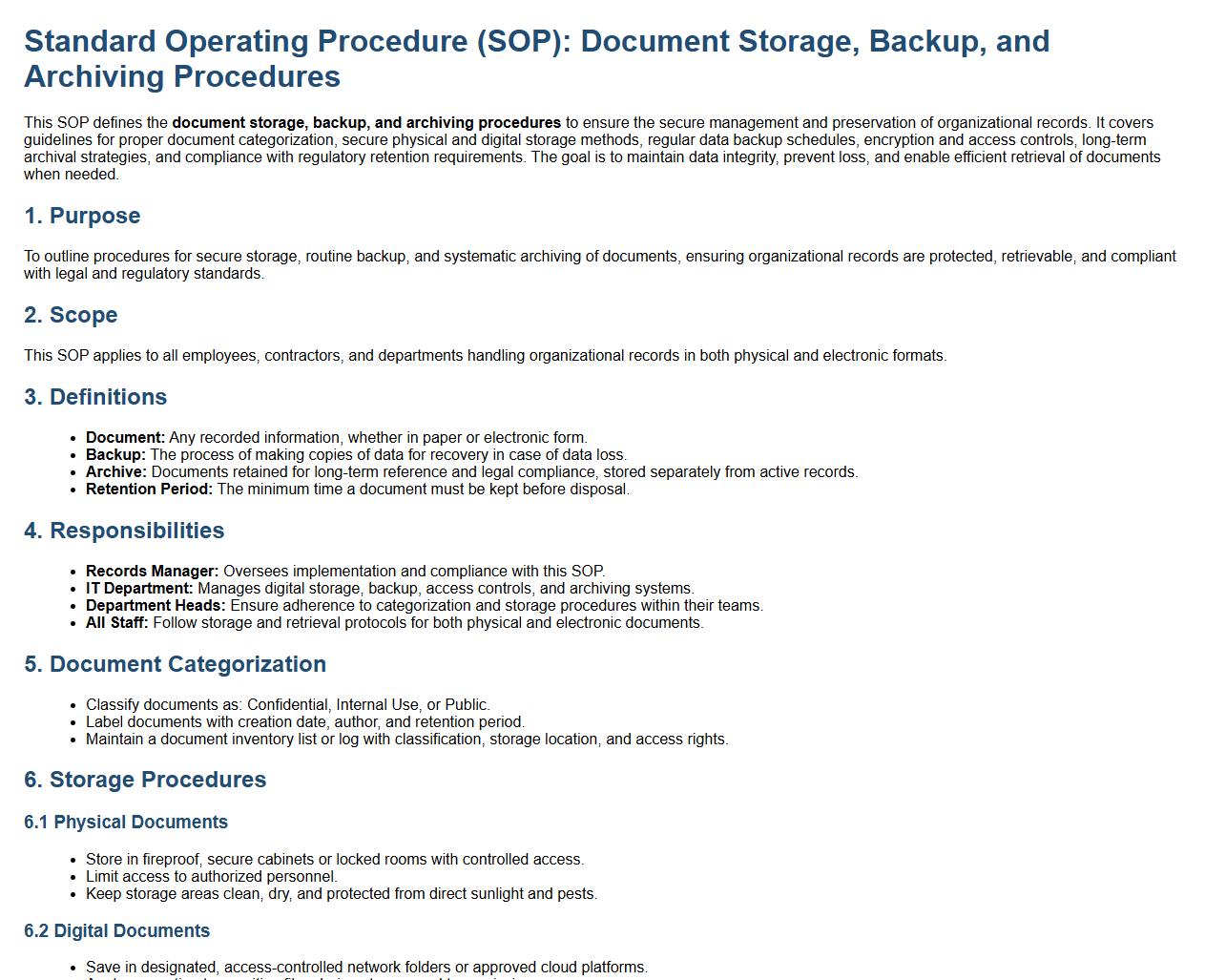
This SOP defines the document storage, backup, and archiving procedures to ensure the secure management and preservation of organizational records. It covers guidelines for proper document categorization, secure physical and digital storage methods, regular data backup schedules, encryption and access controls, long-term archival strategies, and compliance with regulatory retention requirements. The goal is to maintain data integrity, prevent loss, and enable efficient retrieval of documents when needed.
Access control and confidentiality guidelines.
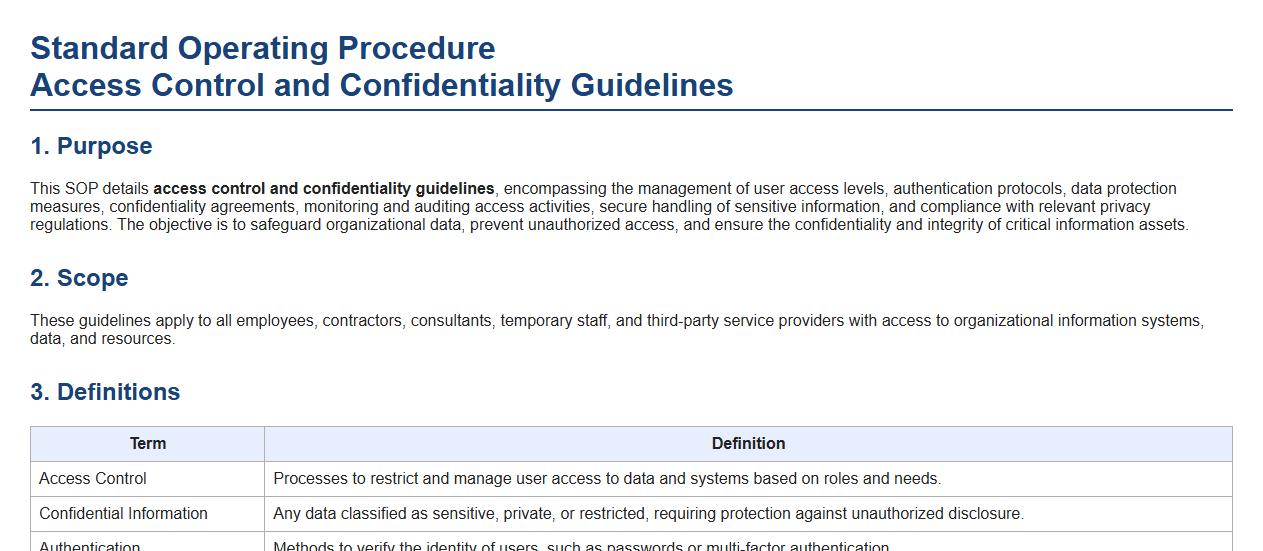
This SOP details access control and confidentiality guidelines, encompassing the management of user access levels, authentication protocols, data protection measures, confidentiality agreements, monitoring and auditing access activities, secure handling of sensitive information, and compliance with relevant privacy regulations. The objective is to safeguard organizational data, prevent unauthorized access, and ensure the confidentiality and integrity of critical information assets.
Record retention schedules and disposal methods.
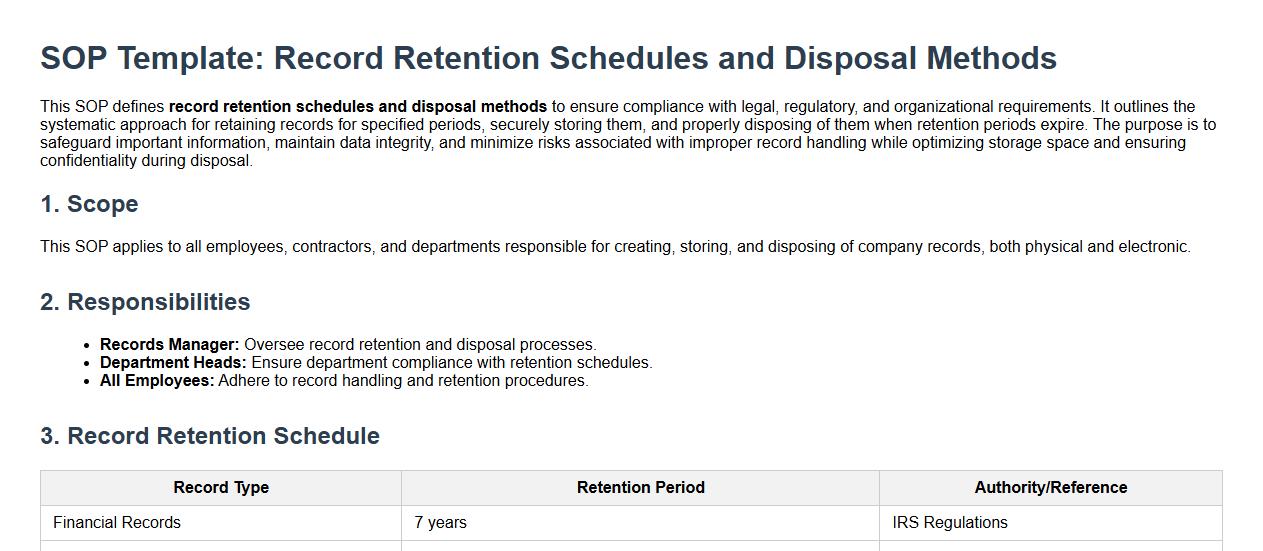
This SOP defines record retention schedules and disposal methods to ensure compliance with legal, regulatory, and organizational requirements. It outlines the systematic approach for retaining records for specified periods, securely storing them, and properly disposing of them when retention periods expire. The purpose is to safeguard important information, maintain data integrity, and minimize risks associated with improper record handling while optimizing storage space and ensuring confidentiality during disposal.
Electronic and physical document management workflow.
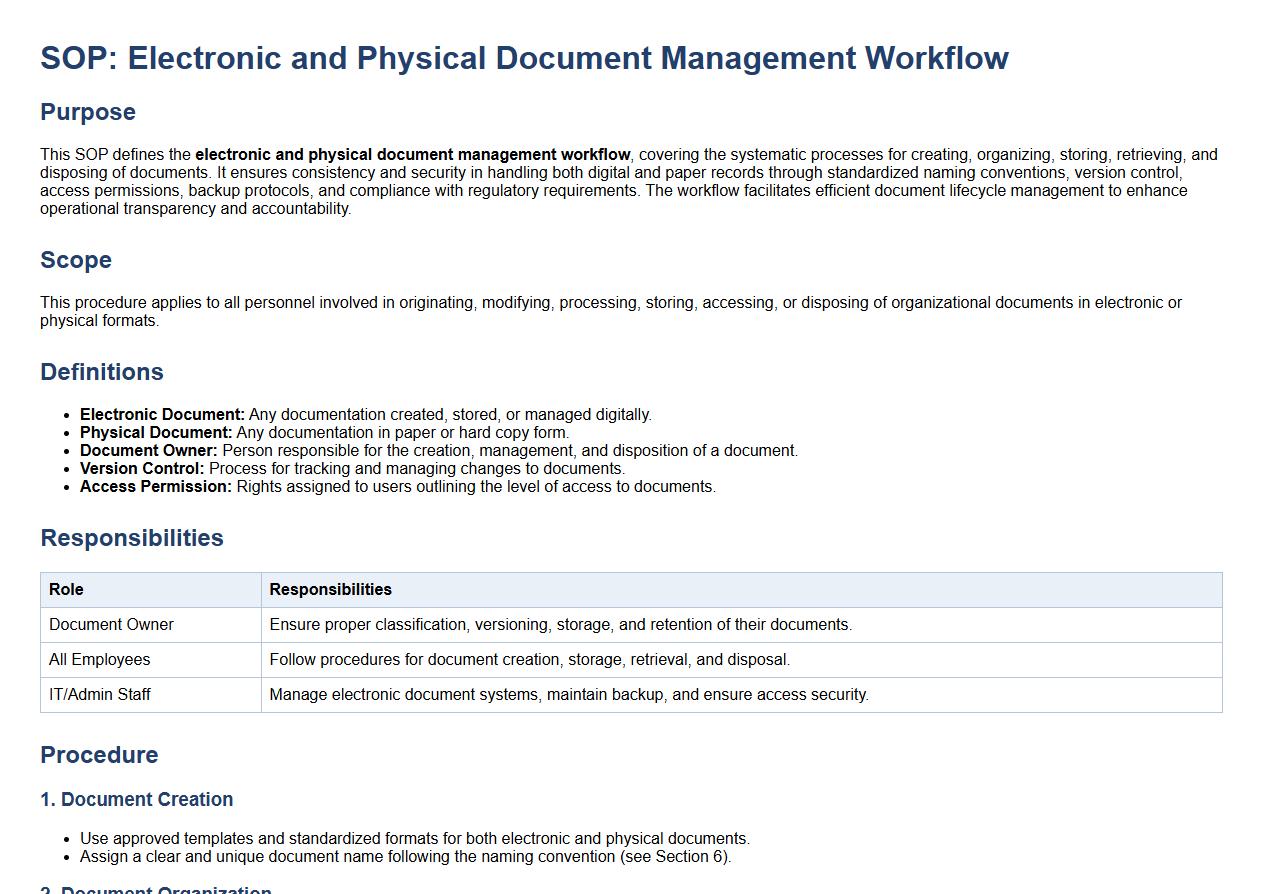
This SOP defines the electronic and physical document management workflow, covering the systematic processes for creating, organizing, storing, retrieving, and disposing of documents. It ensures consistency and security in handling both digital and paper records through standardized naming conventions, version control, access permissions, backup protocols, and compliance with regulatory requirements. The workflow facilitates efficient document lifecycle management to enhance operational transparency and accountability.
Procedures for retrieving and distributing records.
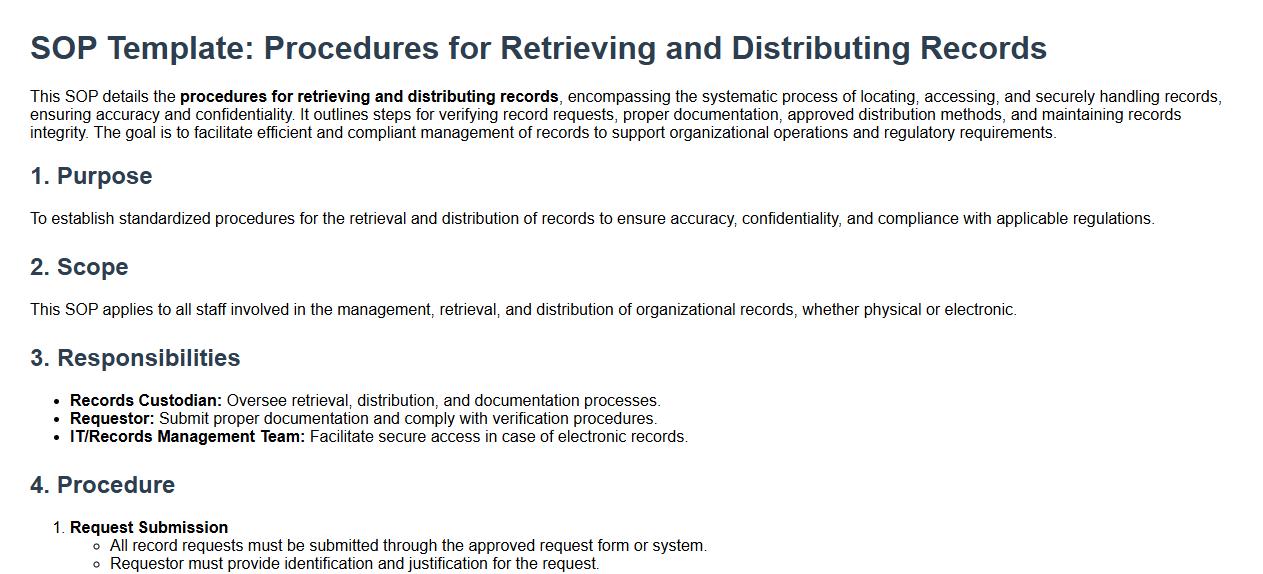
This SOP details the procedures for retrieving and distributing records, encompassing the systematic process of locating, accessing, and securely handling records, ensuring accuracy and confidentiality. It outlines steps for verifying record requests, proper documentation, approved distribution methods, and maintaining records integrity. The goal is to facilitate efficient and compliant management of records to support organizational operations and regulatory requirements.
Compliance checks and audit preparation steps.
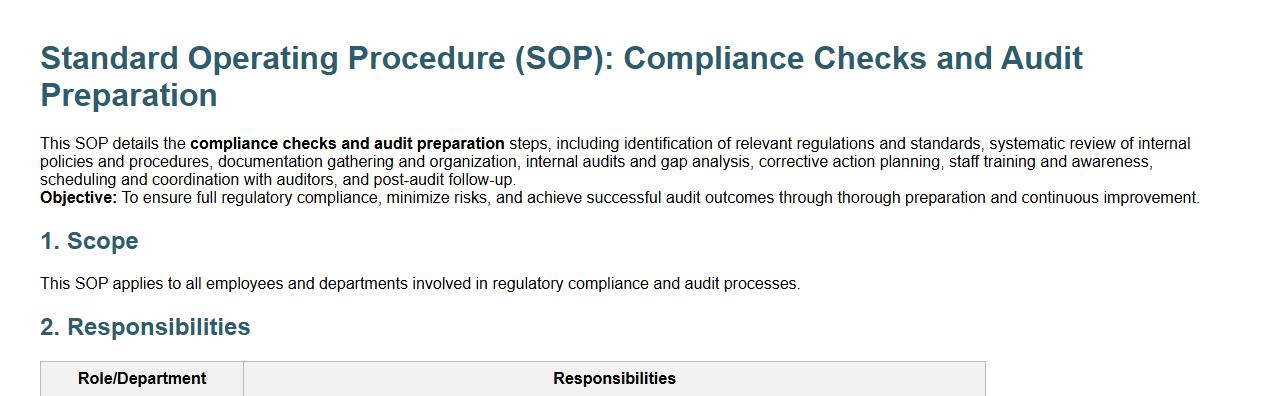
This SOP details the compliance checks and audit preparation steps, including identification of relevant regulations and standards, systematic review of internal policies and procedures, documentation gathering and organization, internal audits and gap analysis, corrective action planning, staff training and awareness, scheduling and coordination with auditors, and post-audit follow-up. The aim is to ensure full regulatory compliance, minimize risks, and achieve successful audit outcomes through thorough preparation and continuous improvement.
Error reporting and corrective action protocols.
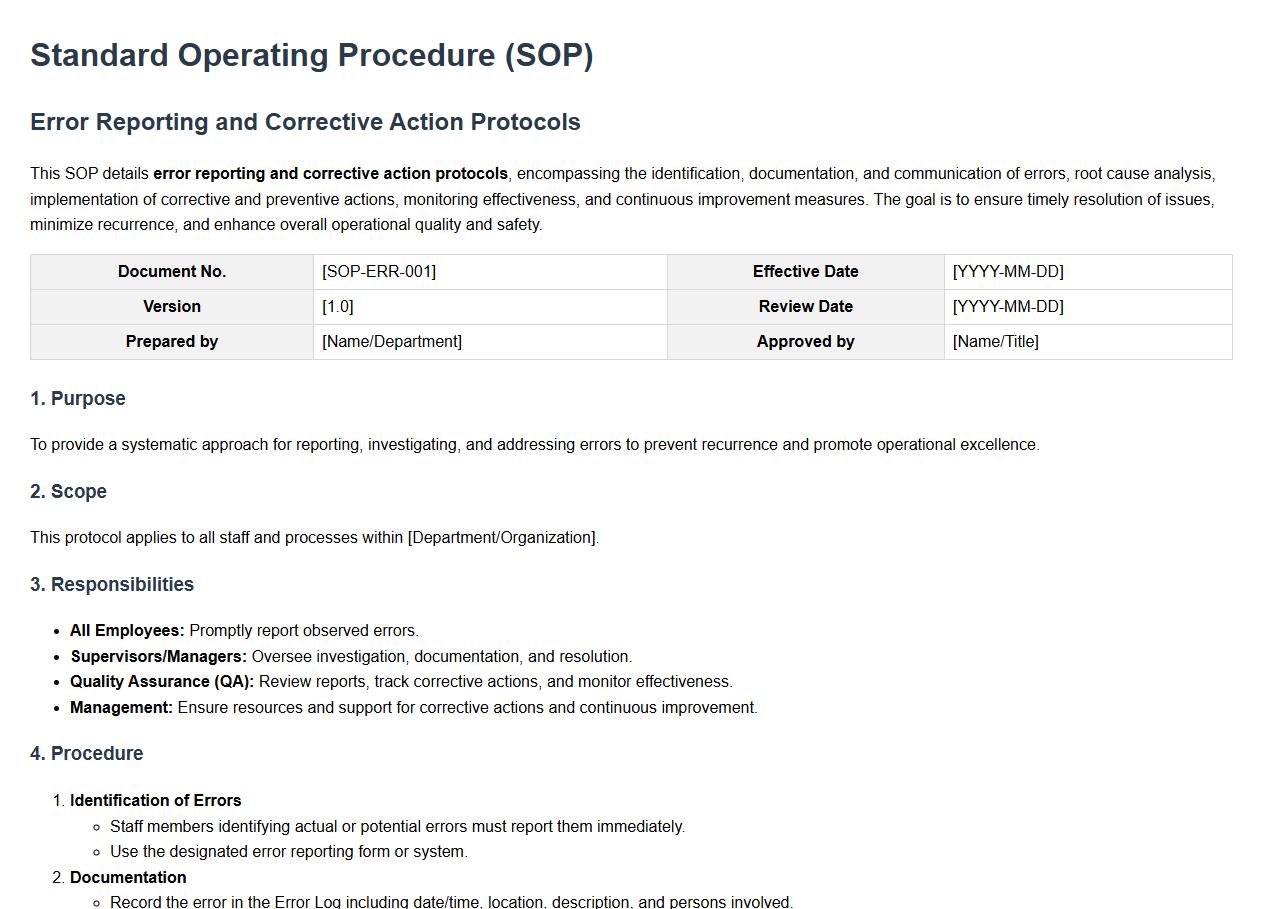
This SOP details error reporting and corrective action protocols, encompassing the identification, documentation, and communication of errors, root cause analysis, implementation of corrective and preventive actions, monitoring effectiveness, and continuous improvement measures. The goal is to ensure timely resolution of issues, minimize recurrence, and enhance overall operational quality and safety.
What key components must be included in an administrative record keeping SOP?
An effective administrative record keeping SOP must include clear guidelines on document identification, classification, and filing methods. It should define the scope, purpose, and procedures for handling records to ensure consistency. Additionally, the SOP must specify the types of records covered and the standard formats for documentation.
How does the SOP define roles and responsibilities for maintaining records?
The SOP clearly assigns roles and responsibilities to individuals involved in record management, ensuring accountability. It outlines who is responsible for creating, reviewing, storing, and disposing of records. This structure promotes efficient workflow and compliance with organizational standards.
What procedures are outlined for secure storage and retrieval of administrative records?
The SOP mandates secure storage protocols such as locked cabinets and password-protected digital systems to safeguard records. It details procedures for authorized access, ensuring records are retrievable only by designated personnel. These measures prevent unauthorized access and maintain data integrity.
How does the SOP address retention periods and record disposal procedures?
The SOP specifies retention periods based on legal and organizational requirements to determine how long records are maintained. It includes detailed procedures for the secure and compliant disposal or destruction of records once they exceed retention limits. This helps in mitigating risks related to data over-retention and ensures regulatory compliance.
What compliance measures are specified for data protection and confidentiality in the SOP?
Data protection measures in the SOP include strict adherence to privacy laws, encryption standards, and staff confidentiality agreements. It emphasizes secure handling and restricts access to sensitive information to authorized personnel only. These compliance measures ensure continuous protection against data breaches and unauthorized disclosures.