

A SOP Template for Document Confidentiality Handling ensures standardized procedures are followed to protect sensitive information within an organization. It outlines clear guidelines for accessing, sharing, and storing confidential documents to prevent unauthorized disclosure. This template helps maintain compliance with data privacy regulations while promoting secure document management practices.
Access control and authorization procedures.
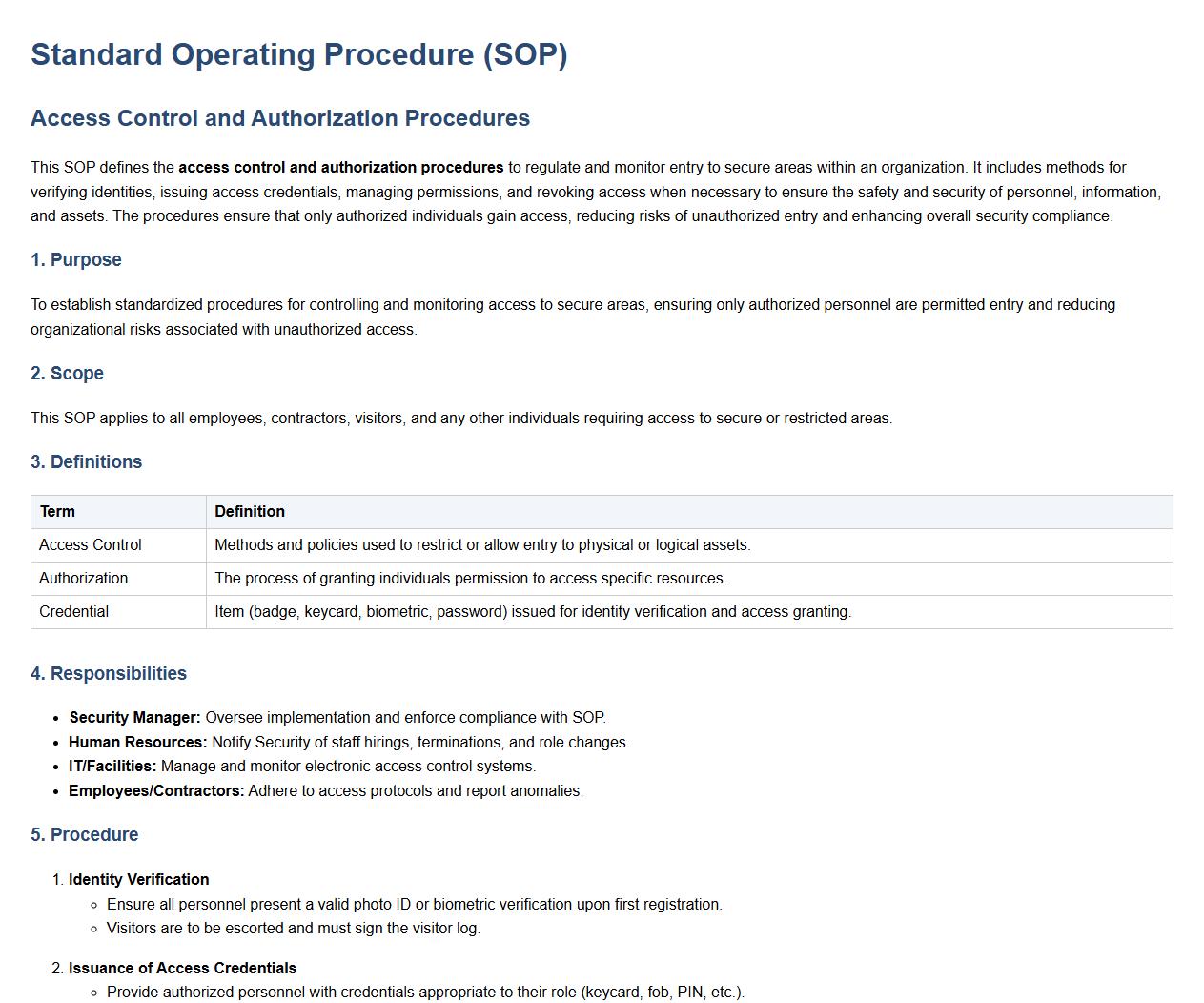
This SOP defines the access control and authorization procedures to regulate and monitor entry to secure areas within an organization. It includes methods for verifying identities, issuing access credentials, managing permissions, and revoking access when necessary to ensure the safety and security of personnel, information, and assets. The procedures ensure that only authorized individuals gain access, reducing risks of unauthorized entry and enhancing overall security compliance.
Document classification guidelines (e.g., confidential, internal use, public).
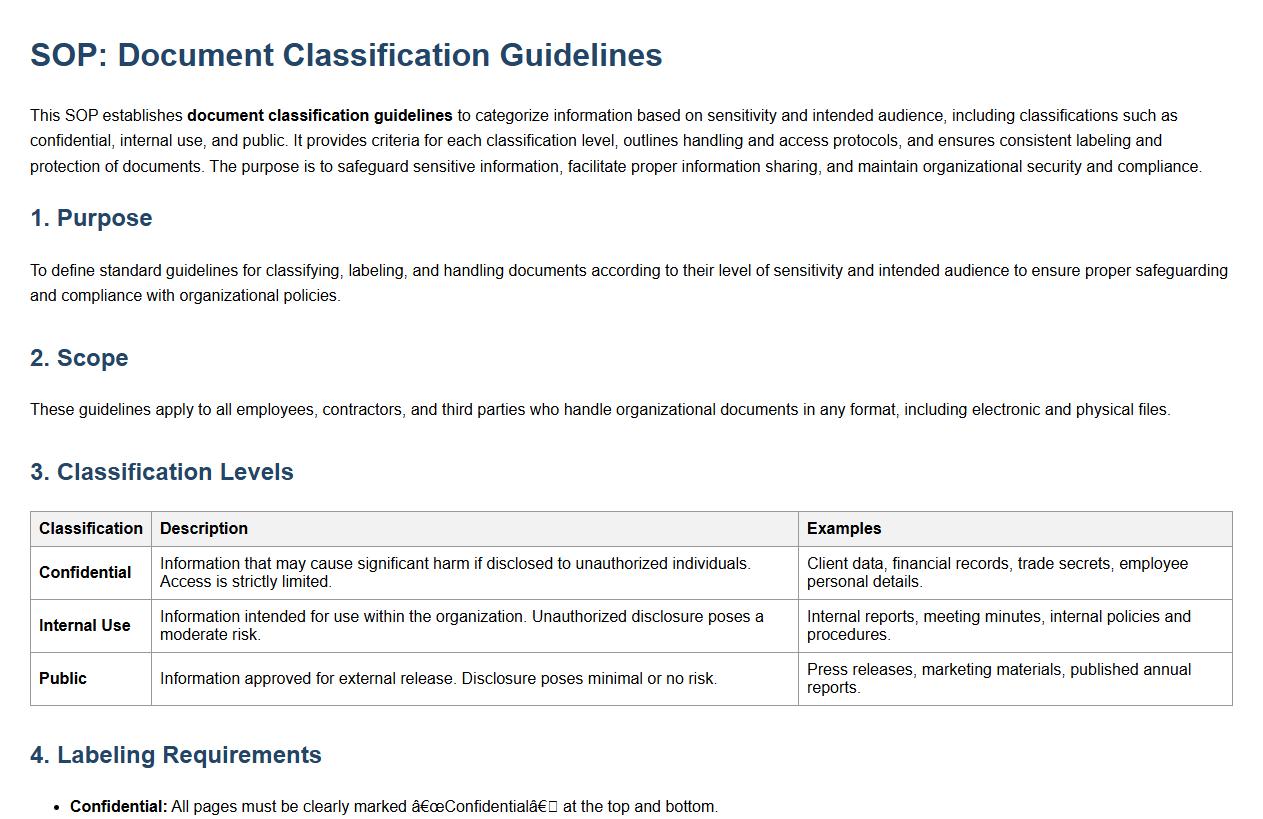
This SOP establishes document classification guidelines to categorize information based on sensitivity and intended audience, including classifications such as confidential, internal use, and public. It provides criteria for each classification level, outlines handling and access protocols, and ensures consistent labeling and protection of documents. The purpose is to safeguard sensitive information, facilitate proper information sharing, and maintain organizational security and compliance.
Document labeling and watermarking requirements.
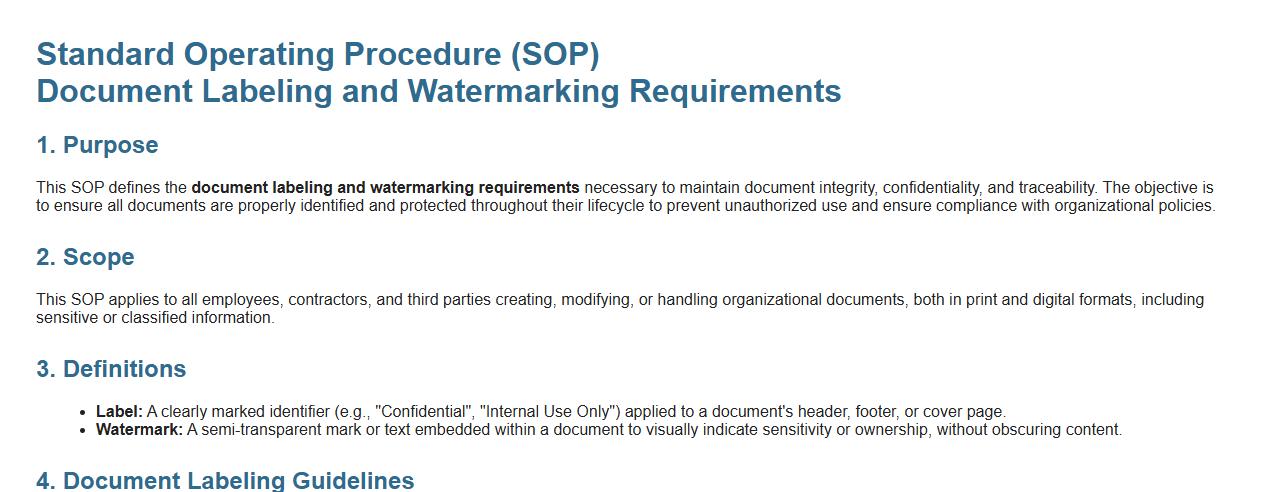
This SOP defines the document labeling and watermarking requirements necessary to maintain document integrity, confidentiality, and traceability. It includes guidelines for applying standardized labels, setting watermark specifications, positioning marks for optimal visibility without obscuring content, and procedures for handling sensitive or classified information. The objective is to ensure all documents are properly identified and protected throughout their lifecycle to prevent unauthorized use and ensure compliance with organizational policies.
Secure document storage and filing protocols.
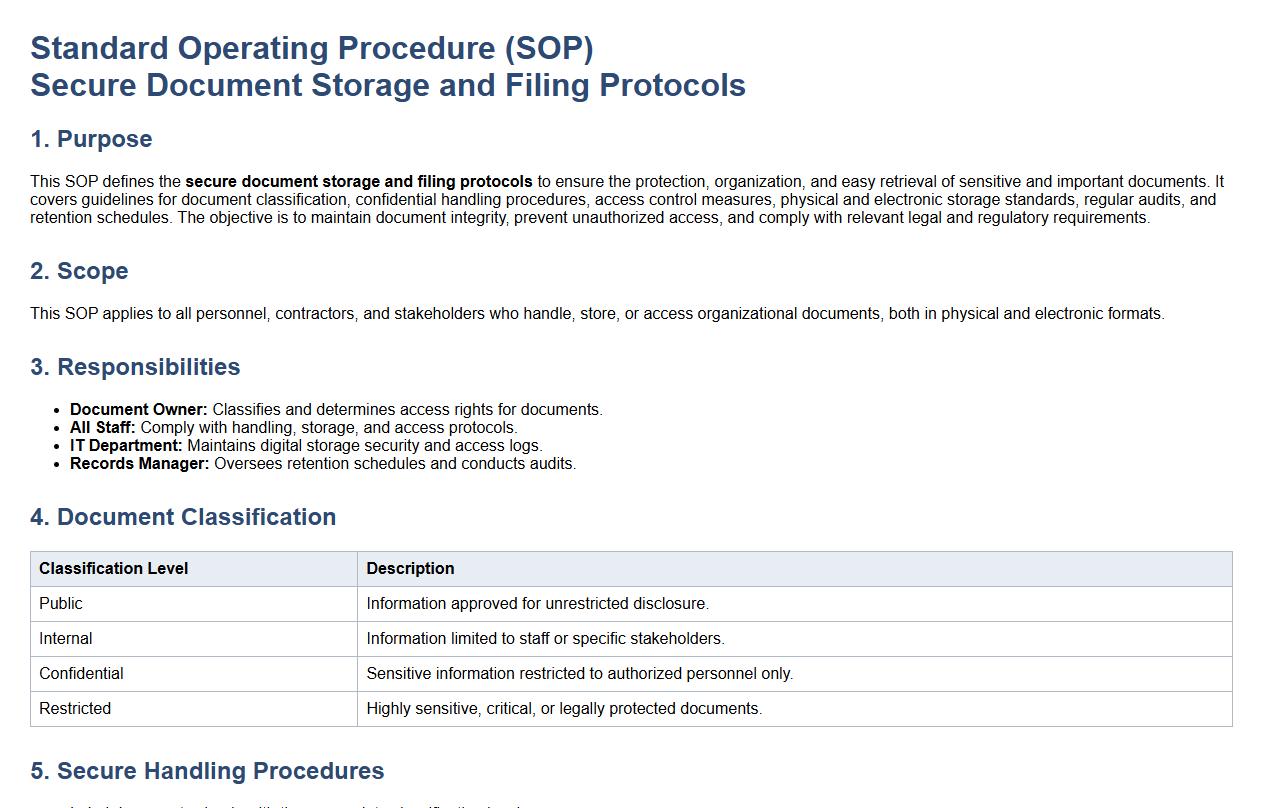
This SOP defines the secure document storage and filing protocols to ensure the protection, organization, and easy retrieval of sensitive and important documents. It covers guidelines for document classification, confidential handling procedures, access control measures, physical and electronic storage standards, regular audits, and retention schedules. The objective is to maintain document integrity, prevent unauthorized access, and comply with relevant legal and regulatory requirements.
Procedures for document sharing and distribution.
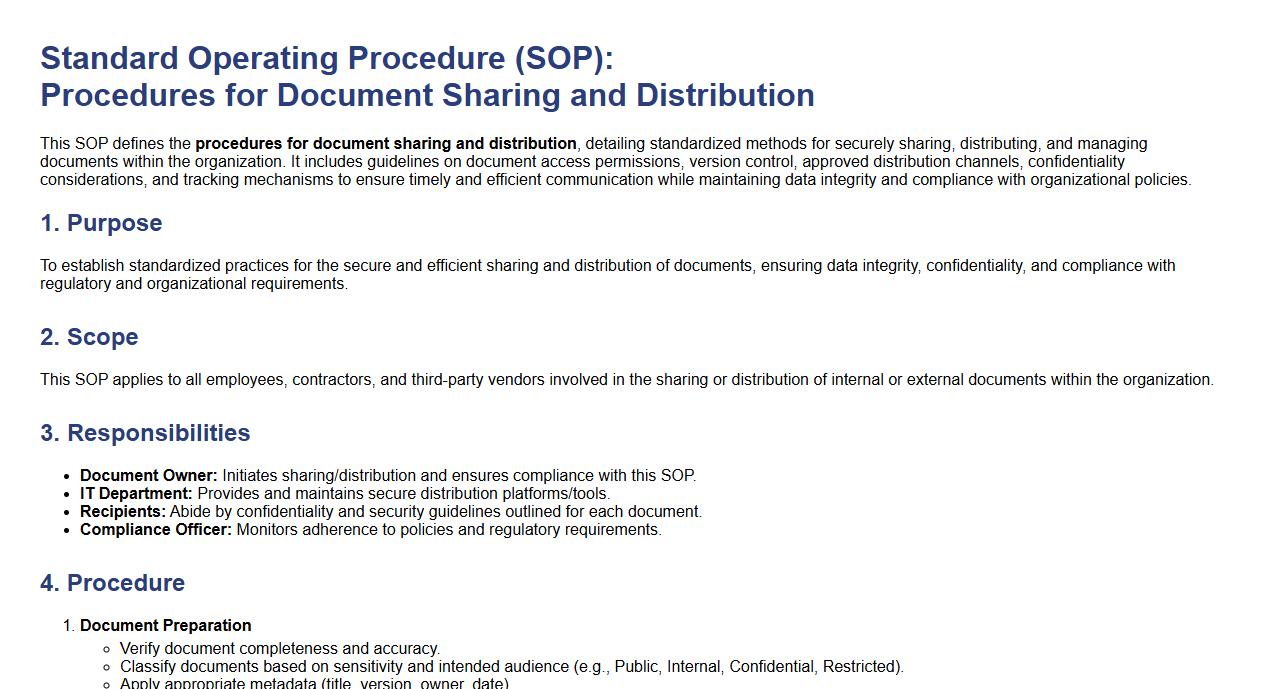
This SOP defines the procedures for document sharing and distribution, detailing standardized methods for securely sharing, distributing, and managing documents within the organization. It includes guidelines on document access permissions, version control, approved distribution channels, confidentiality considerations, and tracking mechanisms to ensure timely and efficient communication while maintaining data integrity and compliance with organizational policies.
Electronic document encryption and password protection standards.
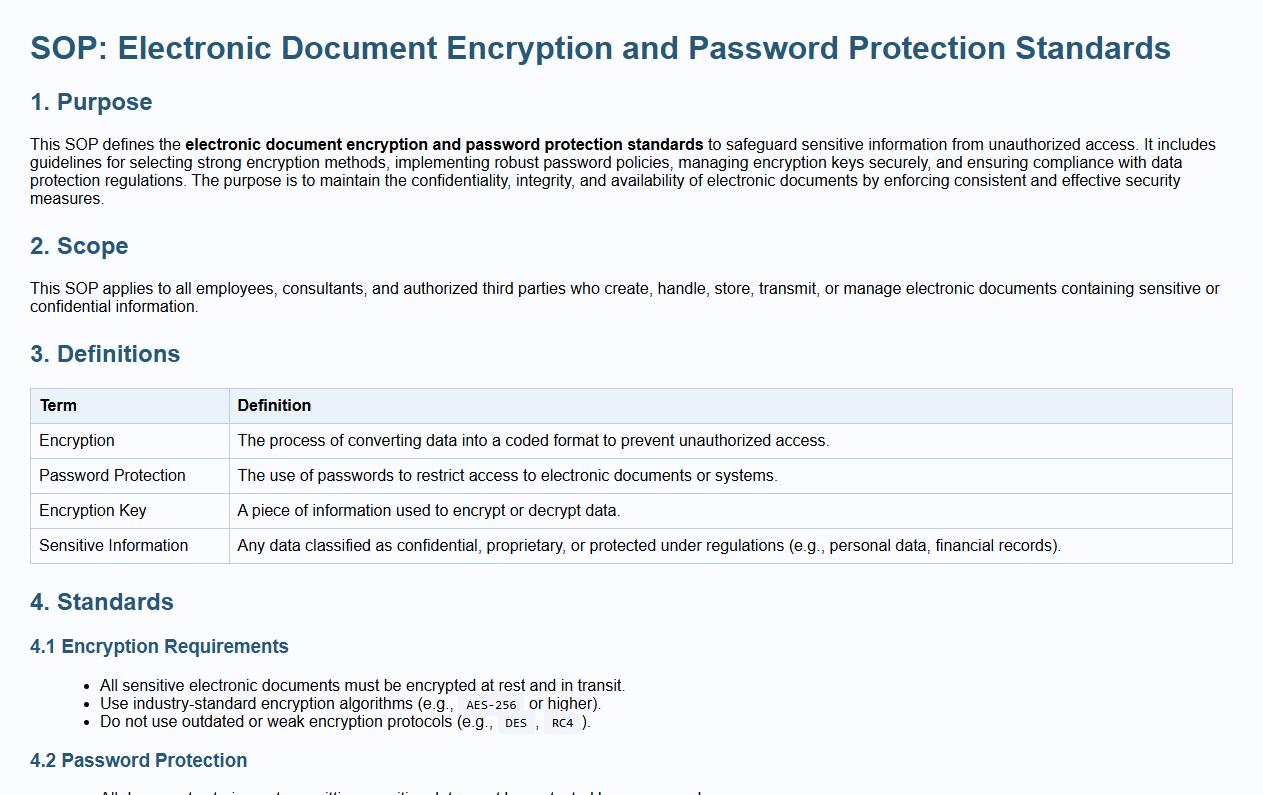
This SOP defines the electronic document encryption and password protection standards to safeguard sensitive information from unauthorized access. It includes guidelines for selecting strong encryption methods, implementing robust password policies, managing encryption keys securely, and ensuring compliance with data protection regulations. The purpose is to maintain the confidentiality, integrity, and availability of electronic documents by enforcing consistent and effective security measures.
Guidelines for document printing, copying, and scanning.
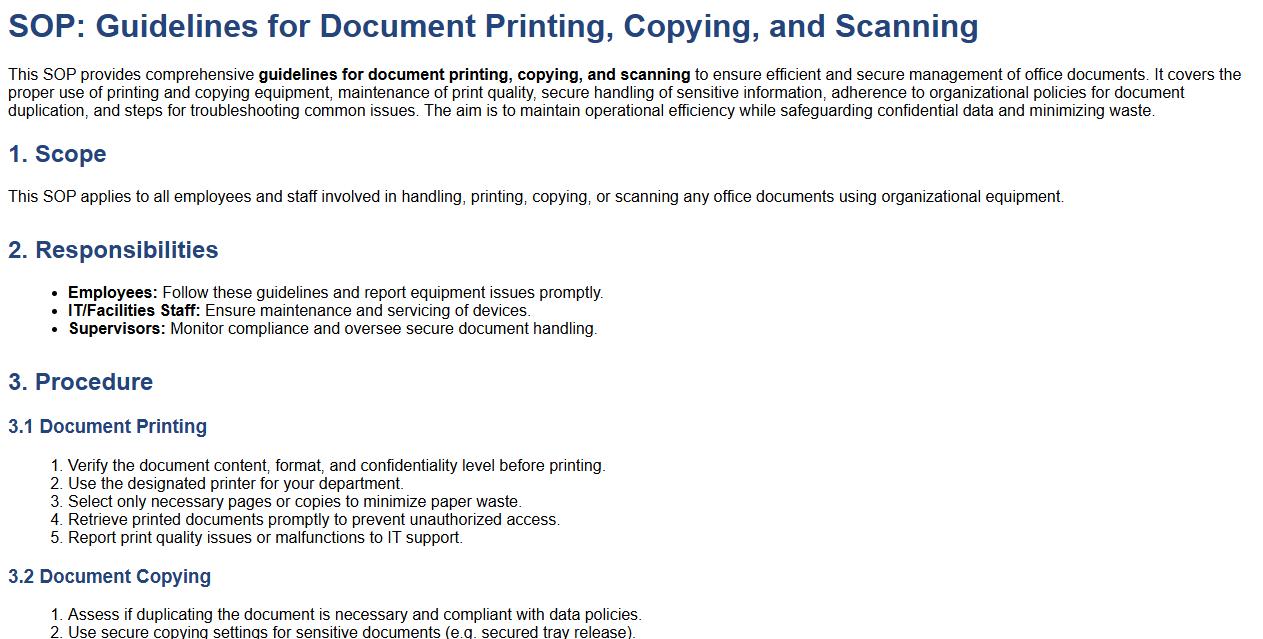
This SOP provides comprehensive guidelines for document printing, copying, and scanning to ensure efficient and secure management of office documents. It covers the proper use of printing and copying equipment, maintenance of print quality, secure handling of sensitive information, adherence to organizational policies for document duplication, and steps for troubleshooting common issues. The aim is to maintain operational efficiency while safeguarding confidential data and minimizing waste.
Visitor and third-party document handling instructions.
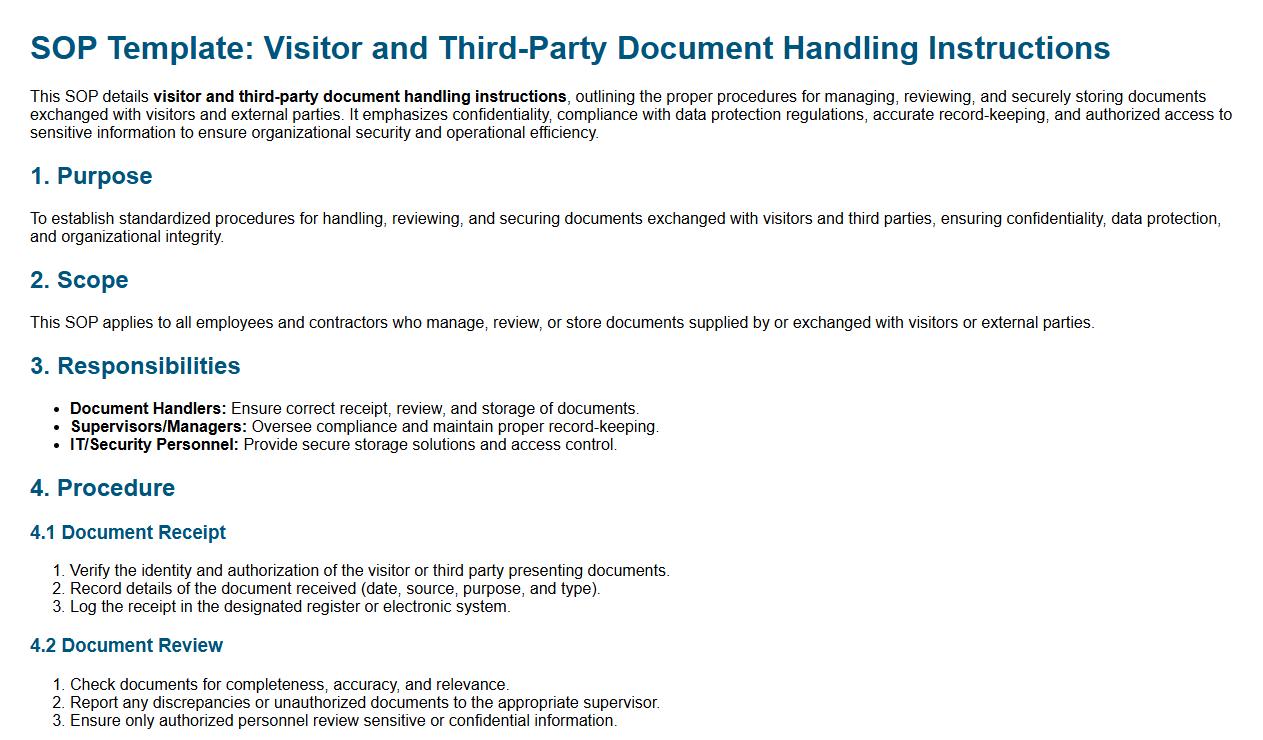
This SOP details visitor and third-party document handling instructions, outlining the proper procedures for managing, reviewing, and securely storing documents exchanged with visitors and external parties. It emphasizes confidentiality, compliance with data protection regulations, accurate record-keeping, and authorized access to sensitive information to ensure organizational security and operational efficiency.
Document retention and destruction schedules.
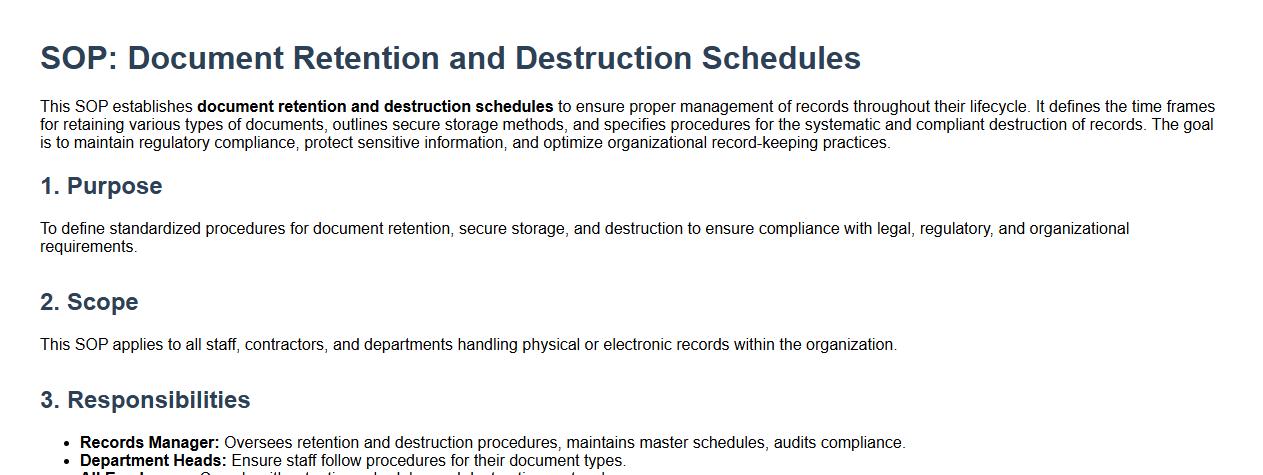
This SOP establishes document retention and destruction schedules to ensure proper management of records throughout their lifecycle. It defines the time frames for retaining various types of documents, outlines secure storage methods, and specifies procedures for the systematic and compliant destruction of records. The goal is to maintain regulatory compliance, protect sensitive information, and optimize organizational record-keeping practices.
Incident reporting and breach response protocol.
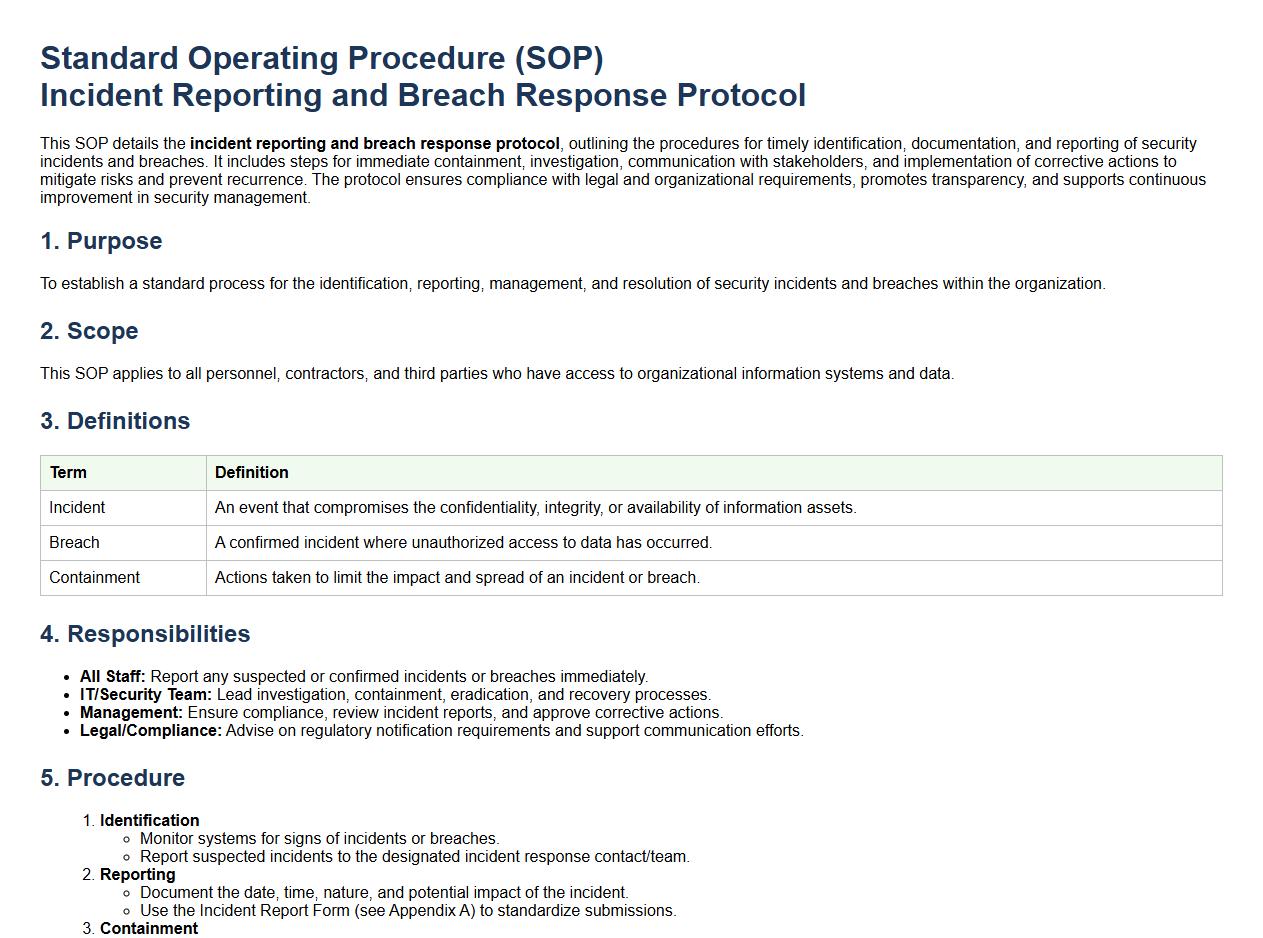
This SOP details the incident reporting and breach response protocol, outlining the procedures for timely identification, documentation, and reporting of security incidents and breaches. It includes steps for immediate containment, investigation, communication with stakeholders, and implementation of corrective actions to mitigate risks and prevent recurrence. The protocol ensures compliance with legal and organizational requirements, promotes transparency, and supports continuous improvement in security management.
What are the key classifications of document confidentiality defined in the SOP?
The SOP defines three primary classifications of document confidentiality: Public, Internal, and Confidential. Public documents can be freely distributed, while Internal documents are restricted to company employees. Confidential documents require the highest level of protection due to sensitive information.
Which personnel are authorized to access confidential documents according to the SOP?
Access to confidential documents is strictly limited to authorized personnel only. These include designated managers, compliance officers, and employees with a legitimate business need. Unauthorized access is explicitly prohibited to maintain document integrity and security.
What procedures must be followed when transmitting confidential documents internally or externally?
When transmitting confidential documents, the SOP mandates the use of secure channels such as encrypted emails or secure file transfer protocols. Internal transmissions require proper authorization and tracking, while external sharing demands recipient verification and confidentiality agreements. All transmissions must be logged for audit purposes.
How does the SOP outline the secure storage and disposal requirements for confidential documents?
The SOP requires that confidential documents be stored in locked cabinets or secure digital repositories accessible only to authorized personnel. Digital documents must be protected with encryption and strong passwords. Disposal of such documents must involve shredding physical copies and securely deleting digital files to prevent data recovery.
What actions are prescribed in the SOP in case of suspected or confirmed breaches of document confidentiality?
In the event of a suspected or confirmed breach, the SOP instructs immediate reporting to the designated security officer and initiation of an incident response plan. An investigation must be conducted to identify the source and extent of the breach. Corrective measures, including notification to affected parties and possible disciplinary actions, are then implemented.