

A SOP Template for Calendar Management streamlines scheduling processes by providing clear, step-by-step guidelines to efficiently organize appointments and meetings. This template ensures consistent handling of calendar entries, minimizing conflicts and maximizing productivity. Using a standardized approach enhances time management and improves team coordination.
Meeting scheduling and confirmation protocols.
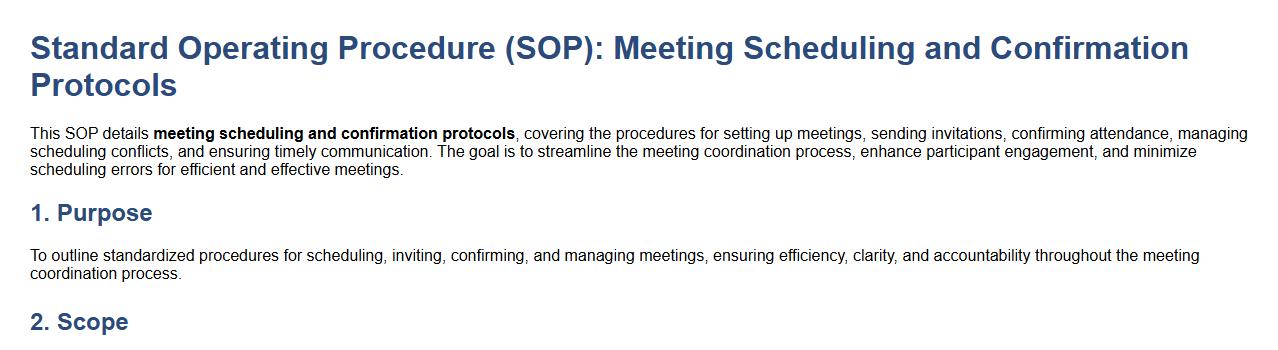
This SOP details meeting scheduling and confirmation protocols, covering the procedures for setting up meetings, sending invitations, confirming attendance, managing scheduling conflicts, and ensuring timely communication. The goal is to streamline the meeting coordination process, enhance participant engagement, and minimize scheduling errors for efficient and effective meetings.
Time-blocking for priority tasks and focus periods.
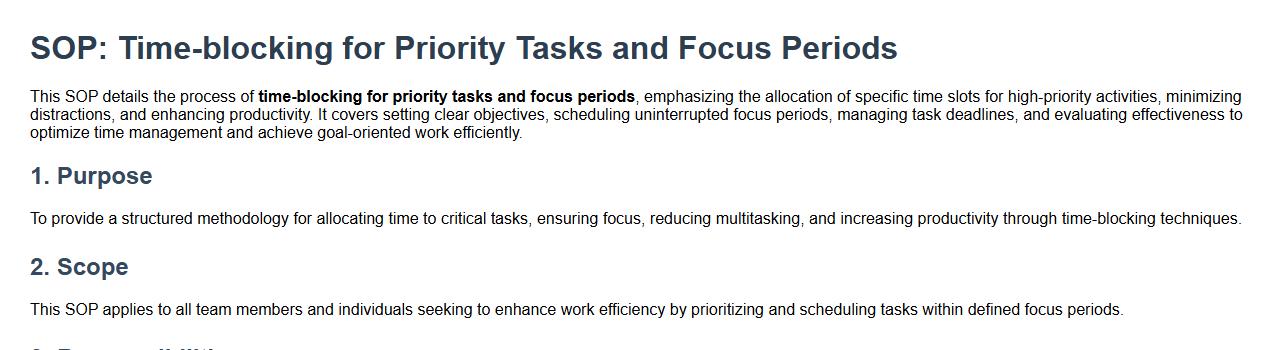
This SOP details the process of time-blocking for priority tasks and focus periods, emphasizing the allocation of specific time slots for high-priority activities, minimizing distractions, and enhancing productivity. It covers setting clear objectives, scheduling uninterrupted focus periods, managing task deadlines, and evaluating effectiveness to optimize time management and achieve goal-oriented work efficiently.
Recurring event setup and maintenance guidelines.
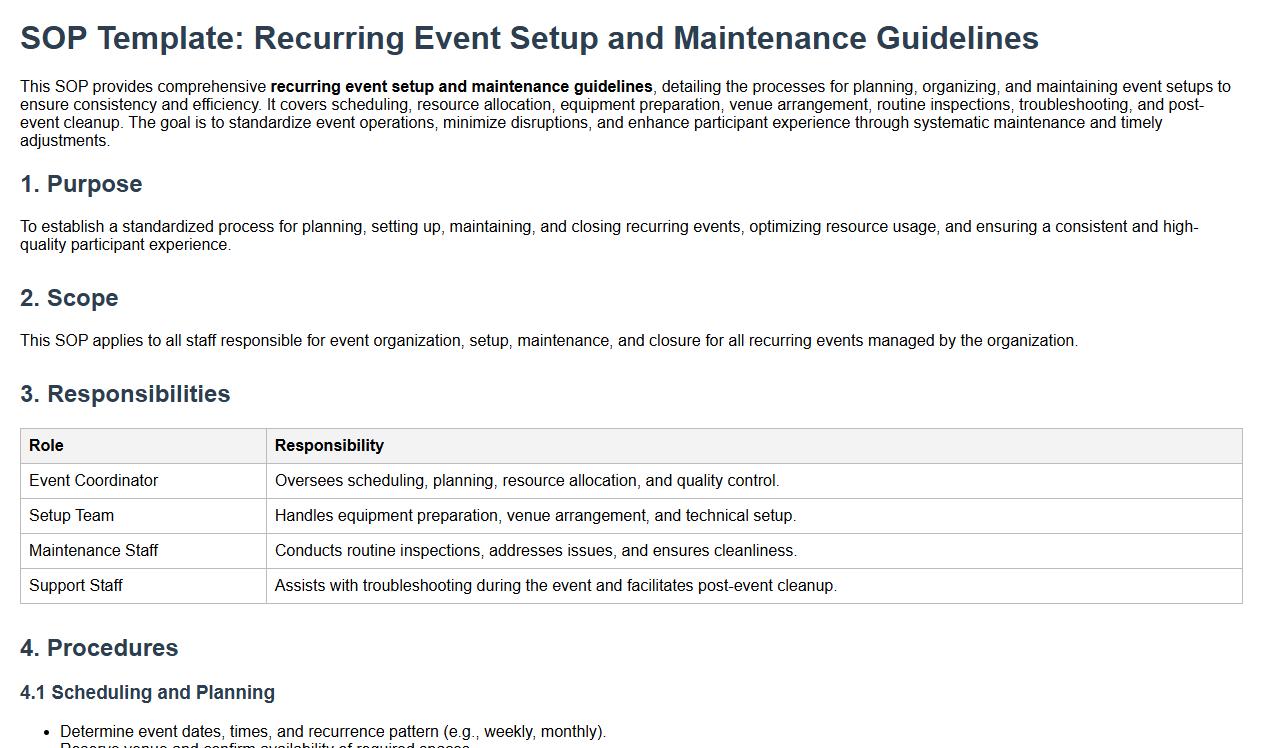
This SOP provides comprehensive recurring event setup and maintenance guidelines, detailing the processes for planning, organizing, and maintaining event setups to ensure consistency and efficiency. It covers scheduling, resource allocation, equipment preparation, venue arrangement, routine inspections, troubleshooting, and post-event cleanup. The goal is to standardize event operations, minimize disruptions, and enhance participant experience through systematic maintenance and timely adjustments.
Procedure for handling scheduling conflicts and double-booking.
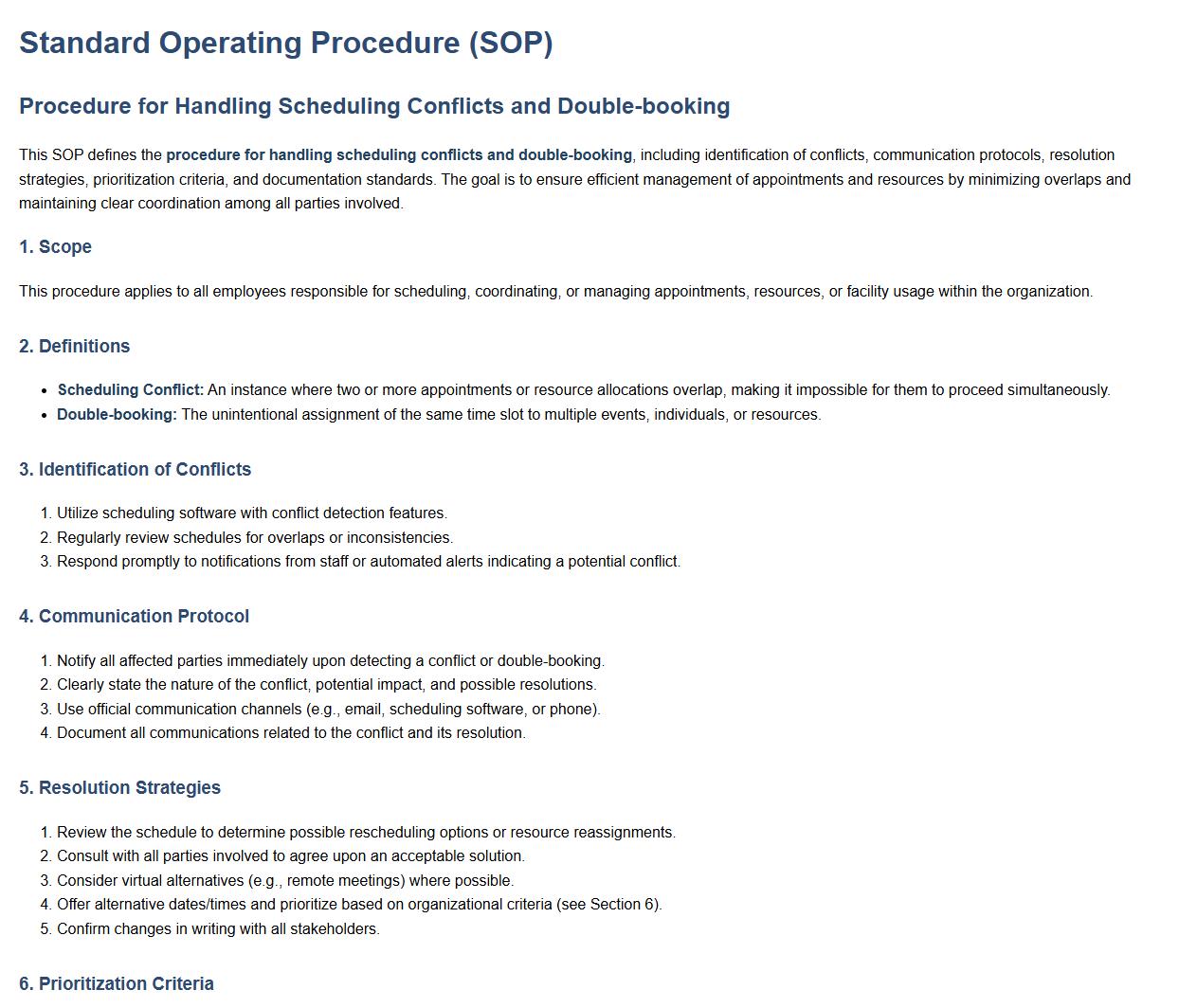
This SOP defines the procedure for handling scheduling conflicts and double-booking, including identification of conflicts, communication protocols, resolution strategies, prioritization criteria, and documentation standards. The goal is to ensure efficient management of appointments and resources by minimizing overlaps and maintaining clear coordination among all parties involved.
Email and calendar integration instructions.
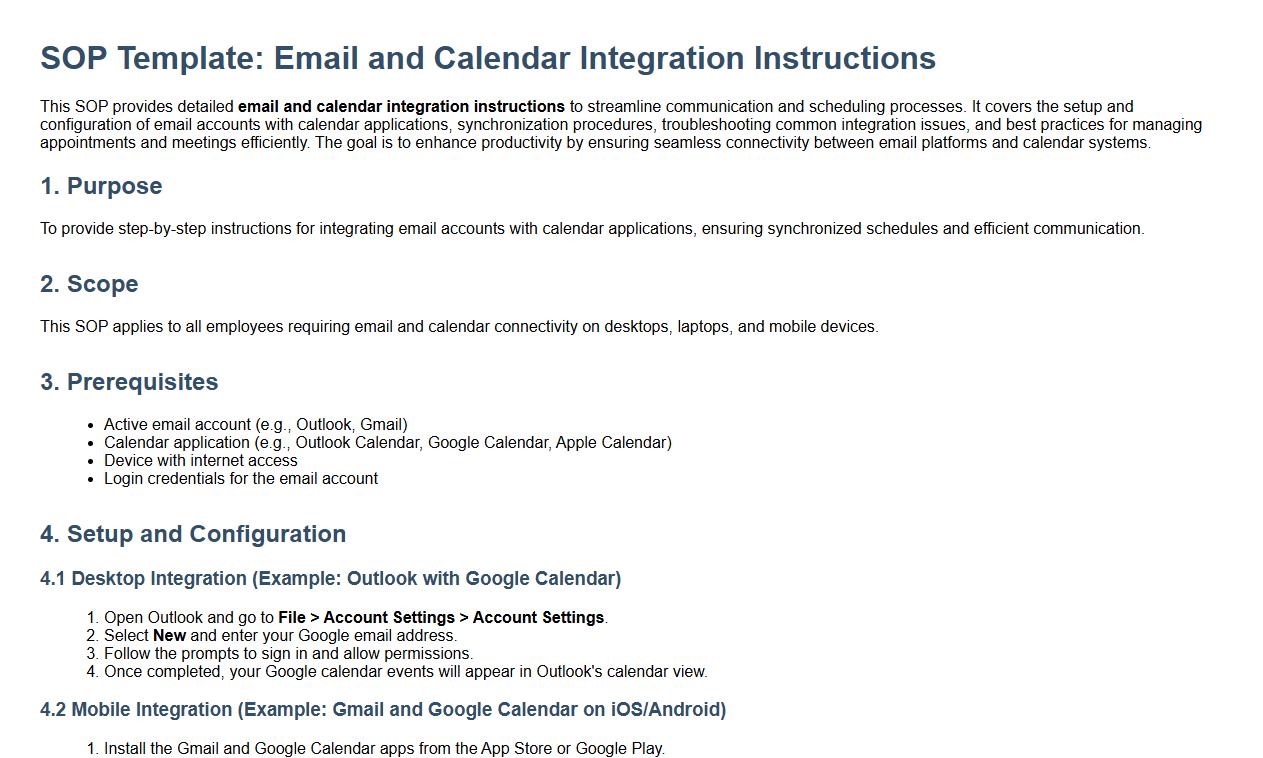
This SOP provides detailed email and calendar integration instructions to streamline communication and scheduling processes. It covers the setup and configuration of email accounts with calendar applications, synchronization procedures, troubleshooting common integration issues, and best practices for managing appointments and meetings efficiently. The goal is to enhance productivity by ensuring seamless connectivity between email platforms and calendar systems.
Shared calendar access and permission settings.
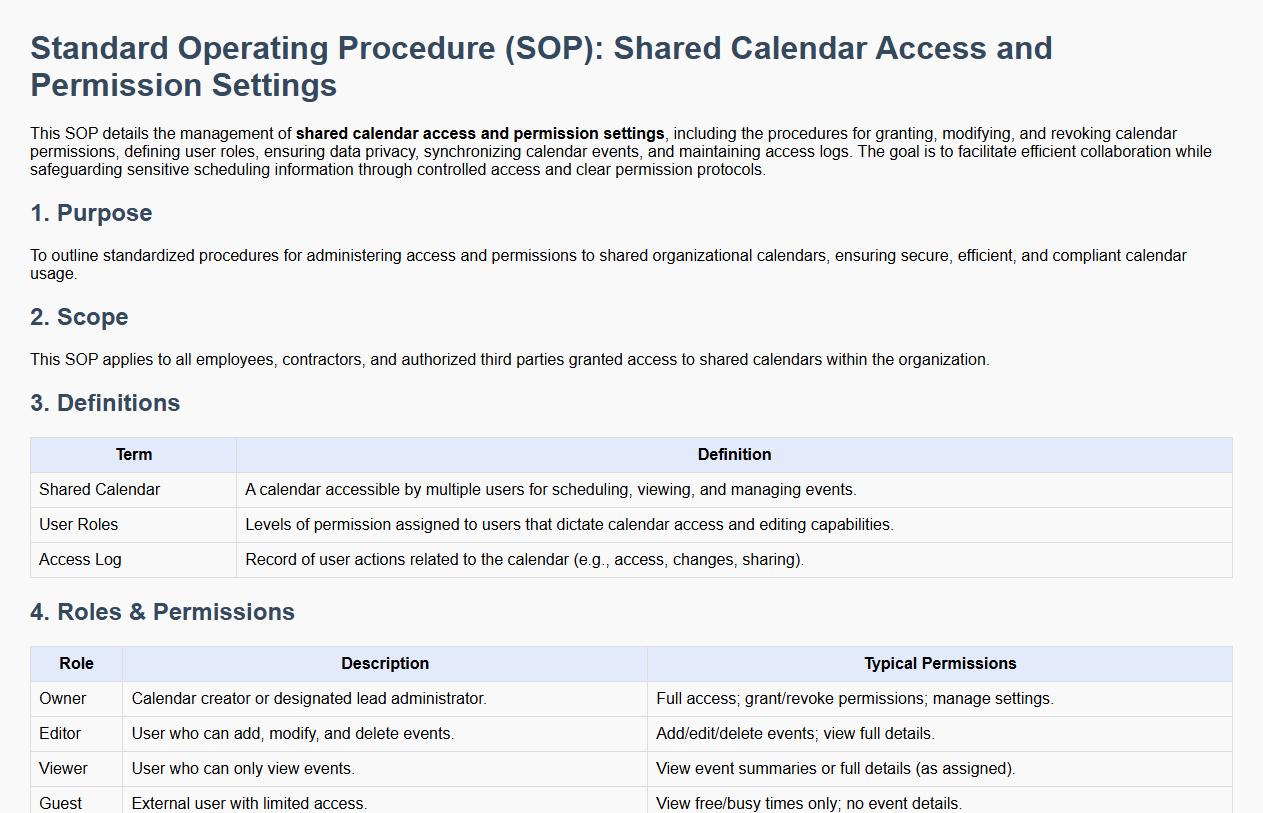
This SOP details the management of shared calendar access and permission settings, including the procedures for granting, modifying, and revoking calendar permissions, defining user roles, ensuring data privacy, synchronizing calendar events, and maintaining access logs. The goal is to facilitate efficient collaboration while safeguarding sensitive scheduling information through controlled access and clear permission protocols.
Event reminder setup and notification process.
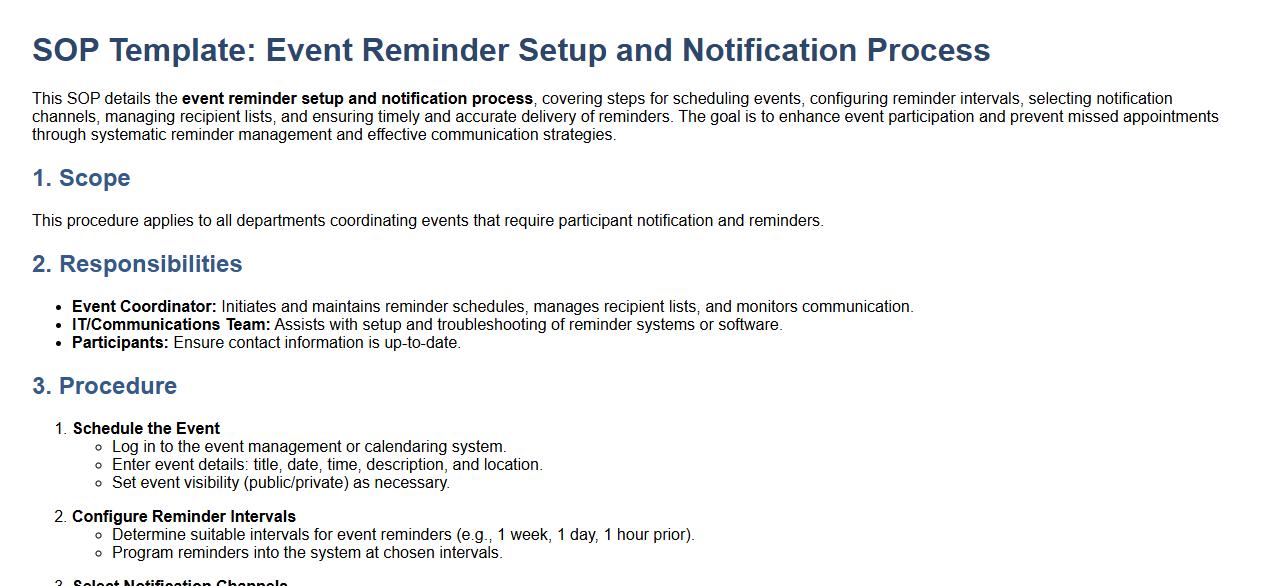
This SOP details the event reminder setup and notification process, covering steps for scheduling events, configuring reminder intervals, selecting notification channels, managing recipient lists, and ensuring timely and accurate delivery of reminders. The goal is to enhance event participation and prevent missed appointments through systematic reminder management and effective communication strategies.
Guidelines for updating, rescheduling, or canceling events.
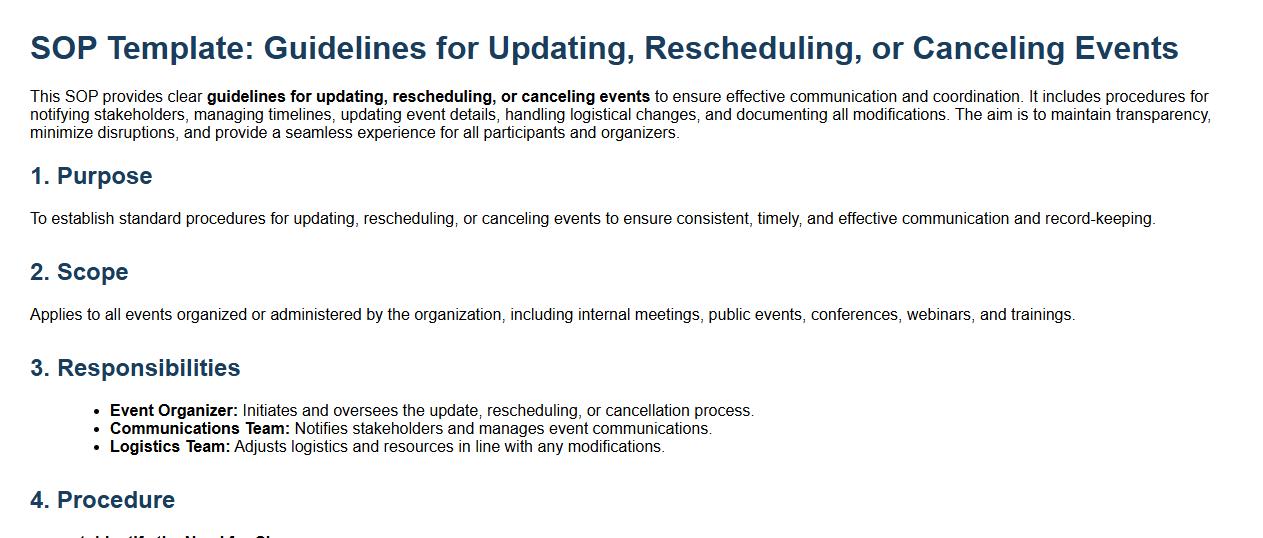
This SOP provides clear guidelines for updating, rescheduling, or canceling events to ensure effective communication and coordination. It includes procedures for notifying stakeholders, managing timelines, updating event details, handling logistical changes, and documenting all modifications. The aim is to maintain transparency, minimize disruptions, and provide a seamless experience for all participants and organizers.
Documentation and delegation of calendar management tasks.
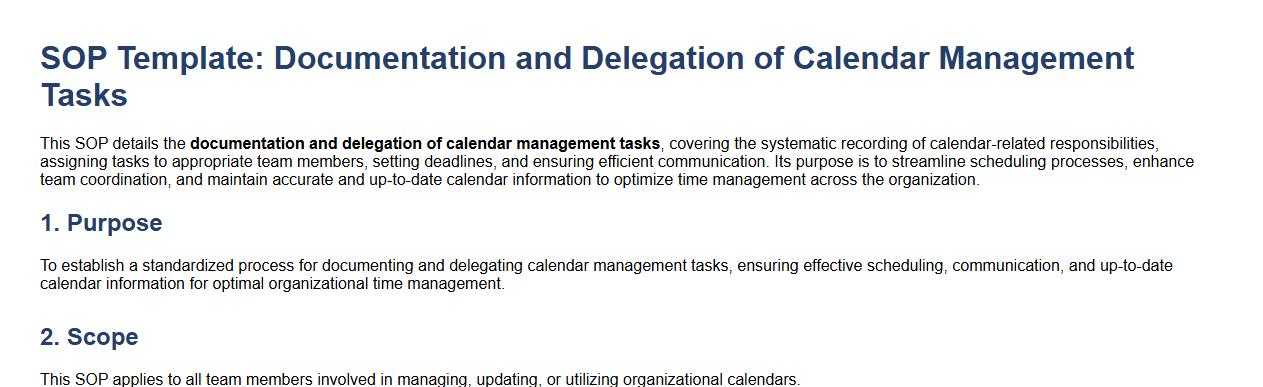
This SOP details the documentation and delegation of calendar management tasks, covering the systematic recording of calendar-related responsibilities, assigning tasks to appropriate team members, setting deadlines, and ensuring efficient communication. Its purpose is to streamline scheduling processes, enhance team coordination, and maintain accurate and up-to-date calendar information to optimize time management across the organization.
End-of-day and weekly calendar review procedures.
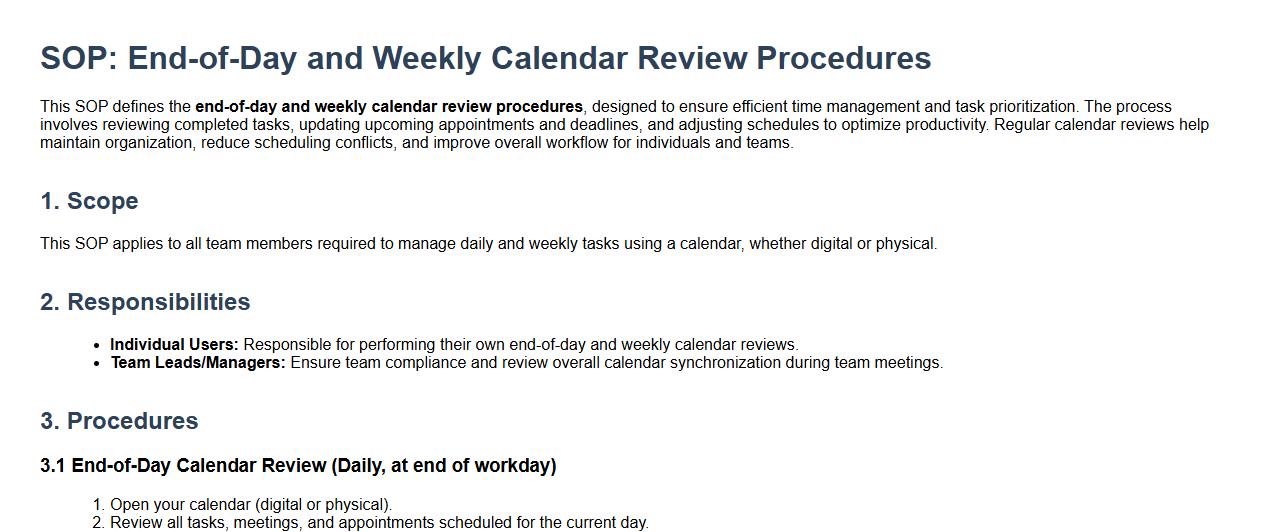
This SOP defines the end-of-day and weekly calendar review procedures, designed to ensure efficient time management and task prioritization. The process involves reviewing completed tasks, updating upcoming appointments and deadlines, and adjusting schedules to optimize productivity. Regular calendar reviews help maintain organization, reduce scheduling conflicts, and improve overall workflow for individuals and teams.
What is the primary objective of the Calendar Management SOP?
The primary objective of the Calendar Management SOP is to ensure effective and efficient organization of all events and appointments. It aims to maintain consistency in managing schedules to avoid conflicts and confusion. Additionally, it promotes clear communication among team members regarding calendar updates.
Which roles are responsible for updating and maintaining the calendar according to the SOP?
The SOP designates specific roles responsible for calendar updates, typically including administrative assistants, team leaders, or project managers. These individuals are tasked with entering, modifying, and confirming event details accurately. Their role is crucial in maintaining the calendar's integrity and timeliness.
What steps must be followed for scheduling, rescheduling, or canceling events in the calendar?
Scheduling, rescheduling, or canceling calendar events requires following clearly defined steps to ensure all stakeholders are notified. This includes checking availability, obtaining necessary approvals, and updating the calendar in real-time. Confirmation messages should be sent to participants to avoid any misunderstandings.
How should conflicts or overlapping appointments be addressed as per the SOP?
The SOP mandates that conflicts or overlapping appointments be promptly identified and resolved through prioritized rescheduling or delegation. It emphasizes communication between involved parties to reach a mutually agreeable solution. Documentation of the resolution process ensures accountability and prevents future conflicts.
What security or access protocols are outlined for calendar sharing and permissions?
Security measures in the SOP include strict access protocols to protect sensitive information within the calendar. Permissions should be granted based on roles, limiting editing rights to authorized personnel only. Regular audits and password protections are recommended to ensure the calendar remains secure and confidential.