

A SOP Template for Incident Reporting in Office provides a clear, standardized process for documenting workplace incidents efficiently. This template ensures all relevant details are accurately captured to facilitate timely investigation and resolution. Implementing this SOP Template for Incident Reporting in Office helps maintain a safe work environment and supports compliance with organizational policies.
Incident identification and initial response procedure.
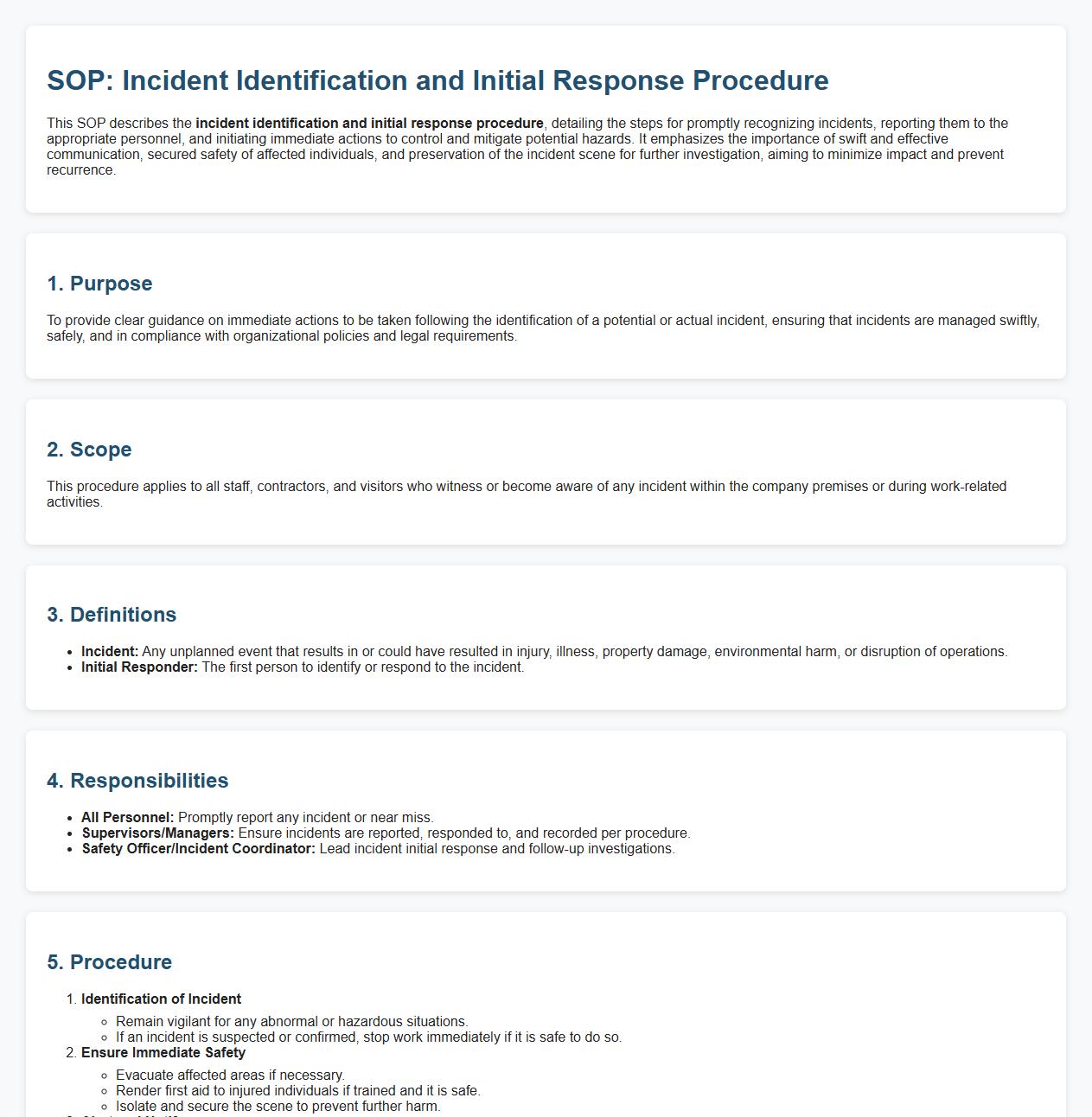
This SOP describes the incident identification and initial response procedure, detailing the steps for promptly recognizing incidents, reporting them to the appropriate personnel, and initiating immediate actions to control and mitigate potential hazards. It emphasizes the importance of swift and effective communication, secured safety of affected individuals, and preservation of the incident scene for further investigation, aiming to minimize impact and prevent recurrence.
Immediate notification to supervisor or designated authority.
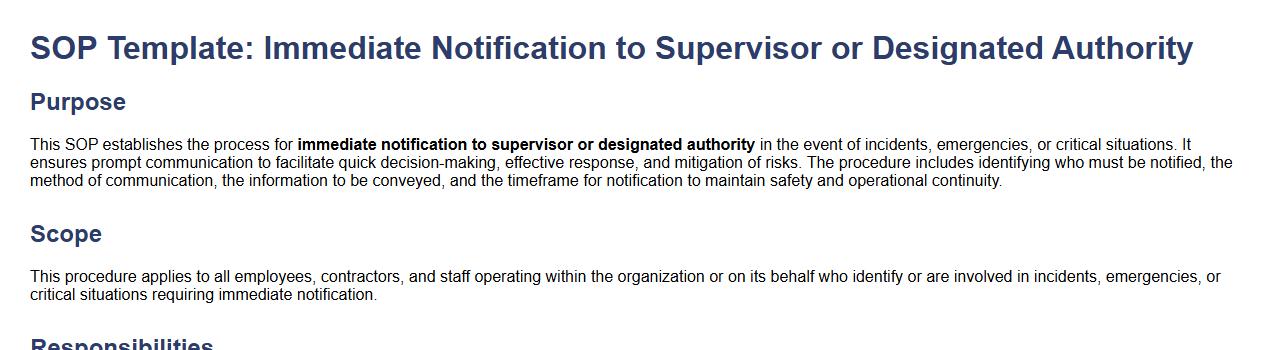
This SOP establishes the process for immediate notification to supervisor or designated authority in the event of incidents, emergencies, or critical situations. It ensures prompt communication to facilitate quick decision-making, effective response, and mitigation of risks. The procedure includes identifying who must be notified, the method of communication, the information to be conveyed, and the timeframe for notification to maintain safety and operational continuity.
Securing the incident scene and ensuring safety measures.
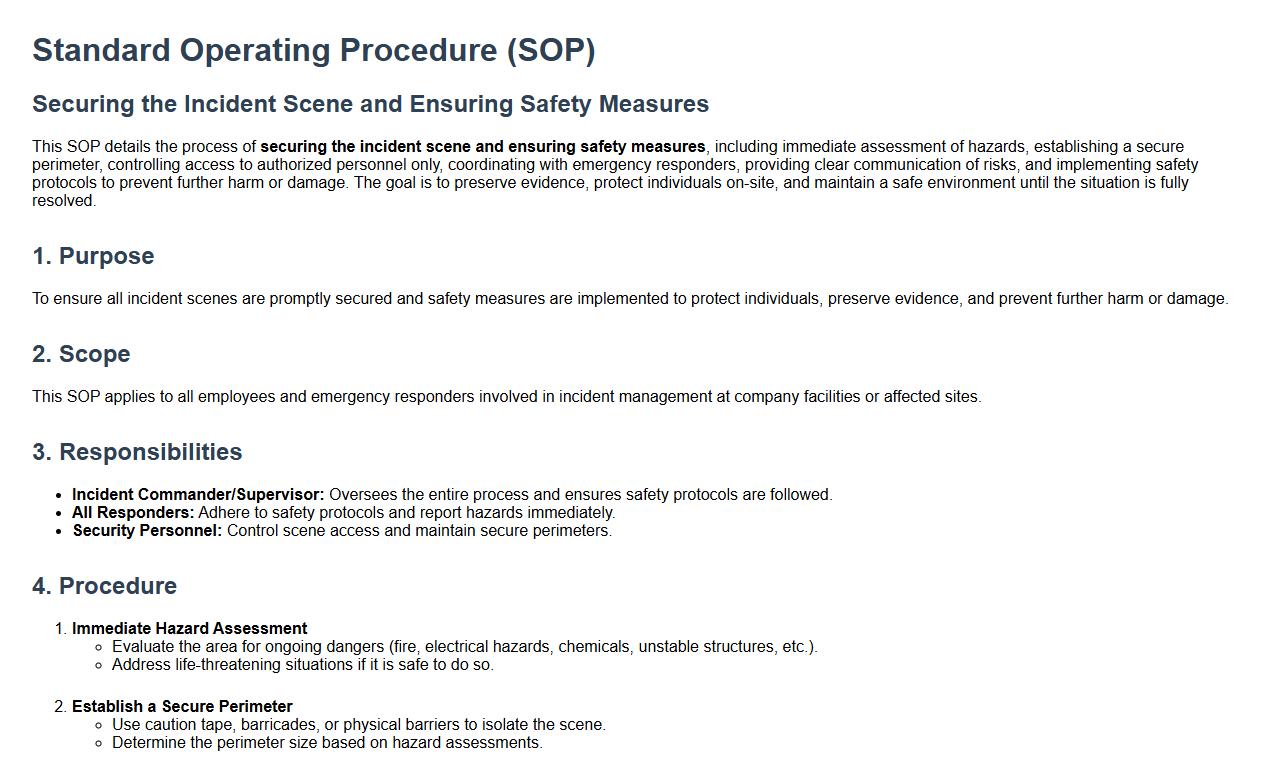
This SOP details the process of securing the incident scene and ensuring safety measures, including immediate assessment of hazards, establishing a secure perimeter, controlling access to authorized personnel only, coordinating with emergency responders, providing clear communication of risks, and implementing safety protocols to prevent further harm or damage. The goal is to preserve evidence, protect individuals on-site, and maintain a safe environment until the situation is fully resolved.
Detailed documentation of the incident (date, time, persons involved, description).
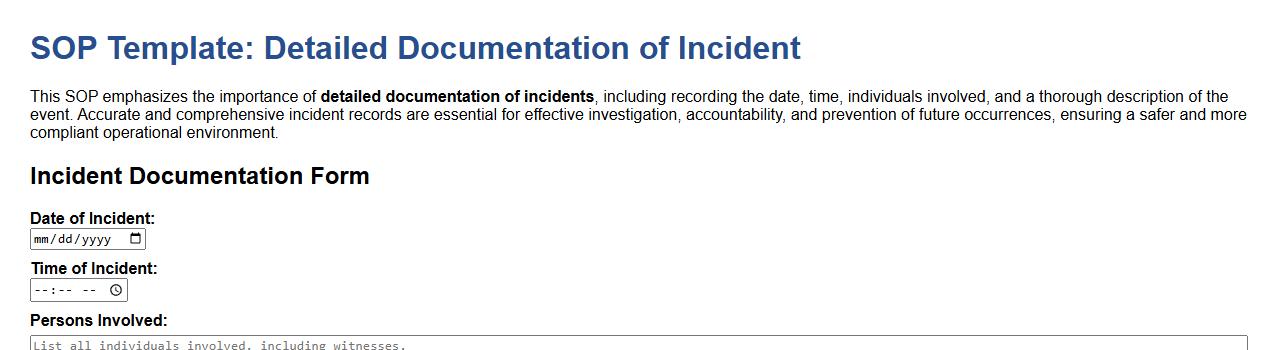
This SOP emphasizes the importance of detailed documentation of incidents, including recording the date, time, individuals involved, and a thorough description of the event. Accurate and comprehensive incident records are essential for effective investigation, accountability, and prevention of future occurrences, ensuring a safer and more compliant operational environment.
Collection and preservation of relevant evidence.
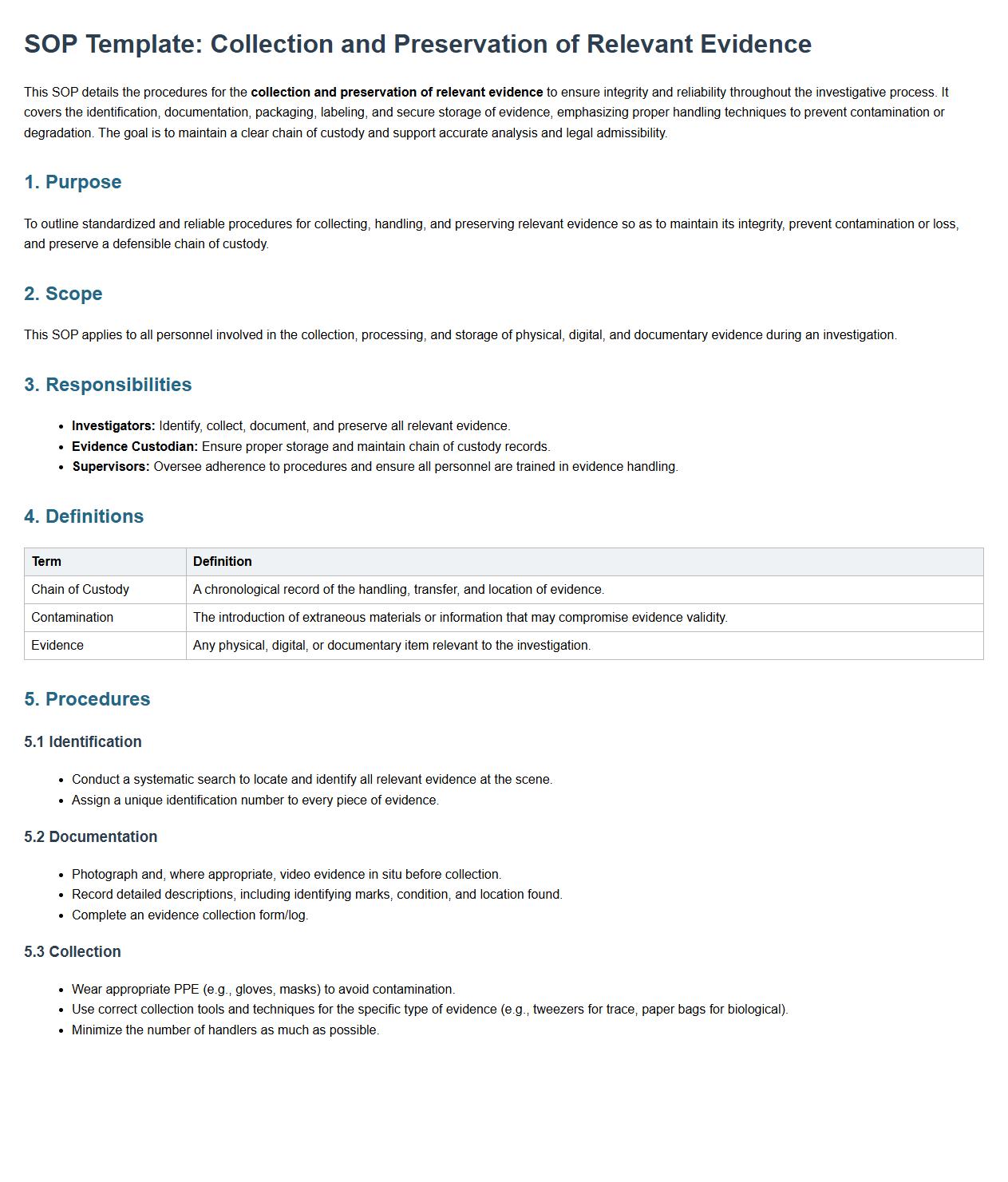
This SOP details the procedures for the collection and preservation of relevant evidence to ensure integrity and reliability throughout the investigative process. It covers the identification, documentation, packaging, labeling, and secure storage of evidence, emphasizing proper handling techniques to prevent contamination or degradation. The goal is to maintain a clear chain of custody and support accurate analysis and legal admissibility.
Interview procedures for witnesses and involved parties.
This SOP details the interview procedures for witnesses and involved parties, covering the preparation before interviews, creating a conducive environment for accurate information gathering, asking open and unbiased questions, maintaining confidentiality and professionalism, documenting responses accurately, and ensuring compliance with legal and organizational standards. The goal is to obtain reliable and comprehensive accounts to support investigations and decision-making processes effectively.
Completion and submission of standard incident report form.
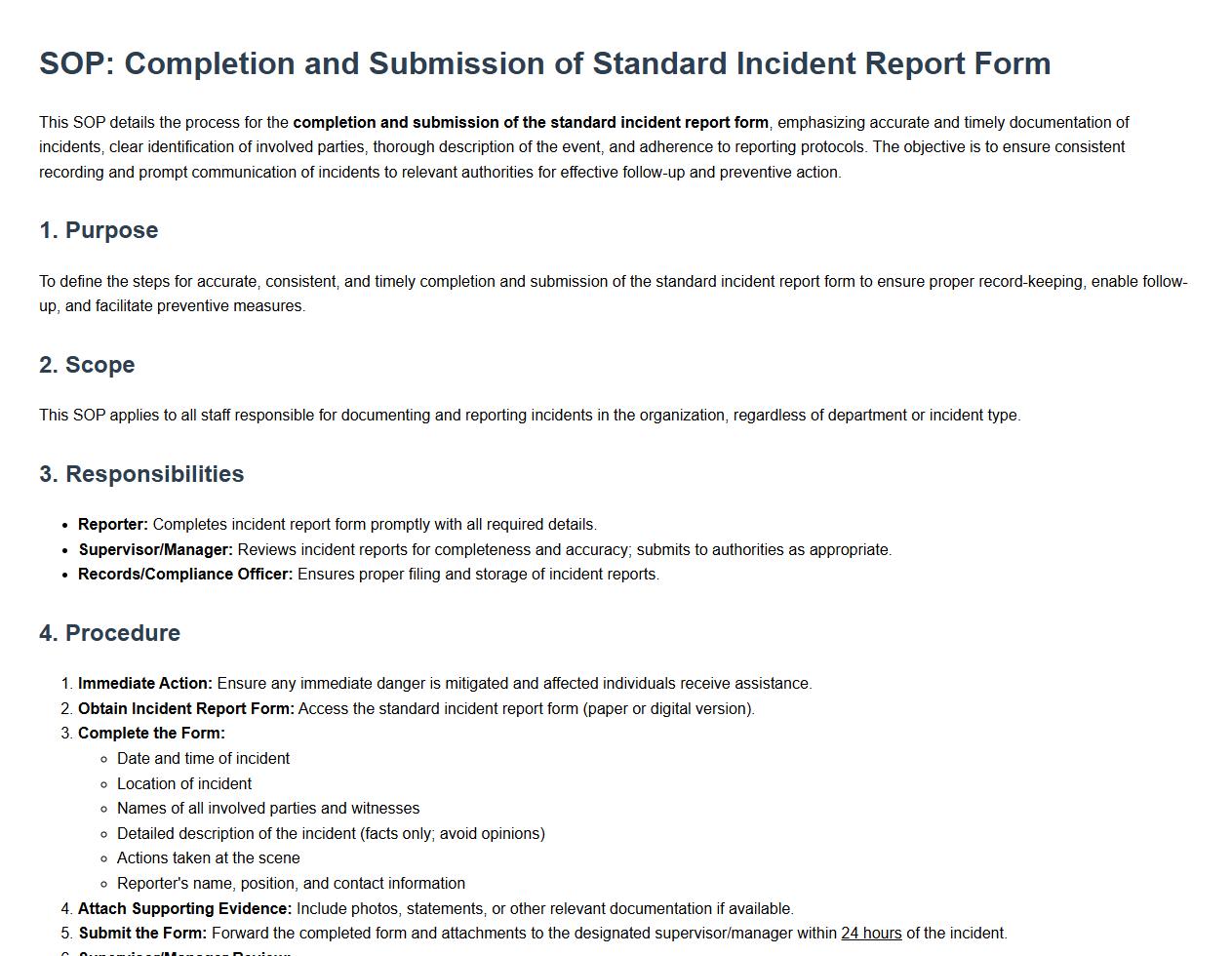
This SOP details the process for the completion and submission of the standard incident report form, emphasizing accurate and timely documentation of incidents, clear identification of involved parties, thorough description of the event, and adherence to reporting protocols. The objective is to ensure consistent recording and prompt communication of incidents to relevant authorities for effective follow-up and preventive action.
Incident escalation and communication protocols.
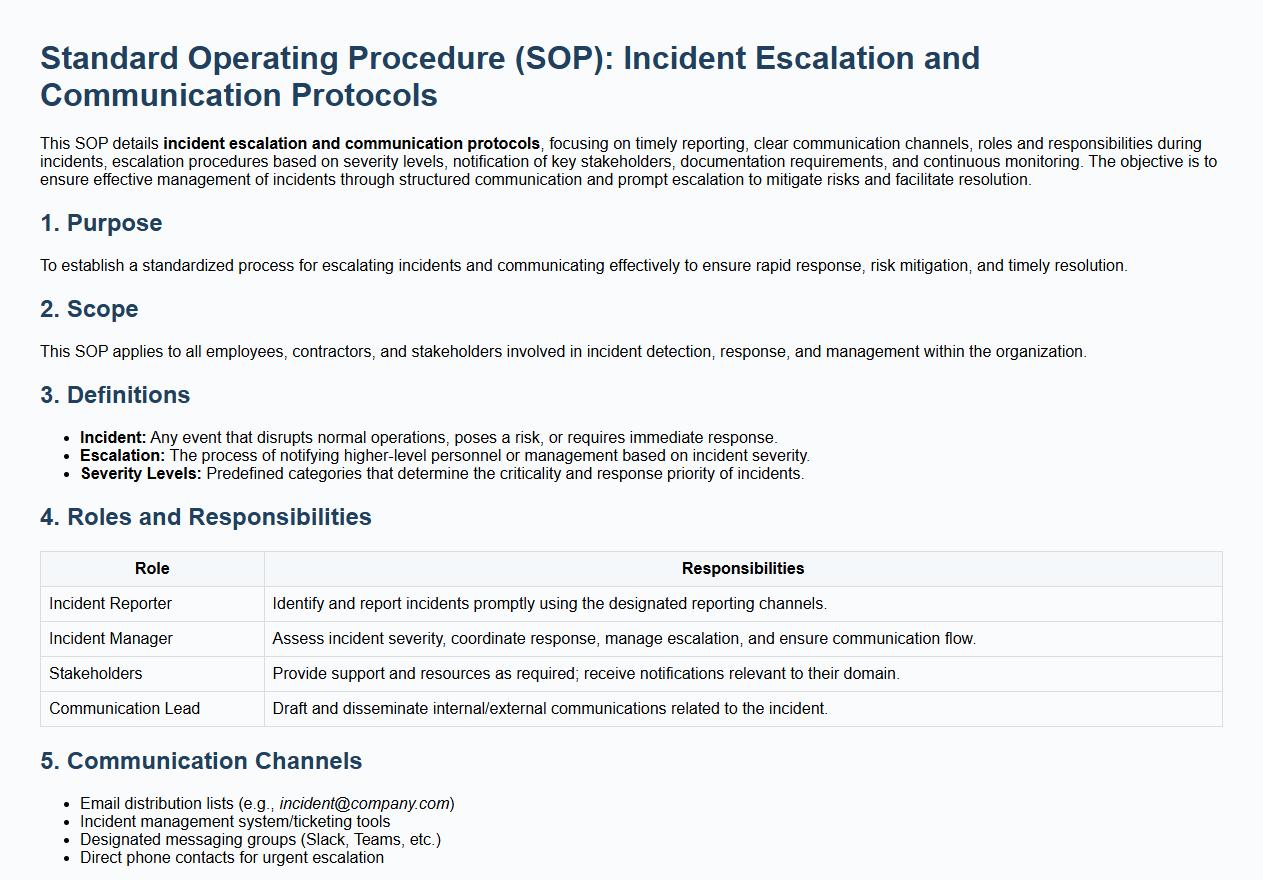
This SOP details incident escalation and communication protocols, focusing on timely reporting, clear communication channels, roles and responsibilities during incidents, escalation procedures based on severity levels, notification of key stakeholders, documentation requirements, and continuous monitoring. The objective is to ensure effective management of incidents through structured communication and prompt escalation to mitigate risks and facilitate resolution.
Corrective action planning and assignment of responsibilities.
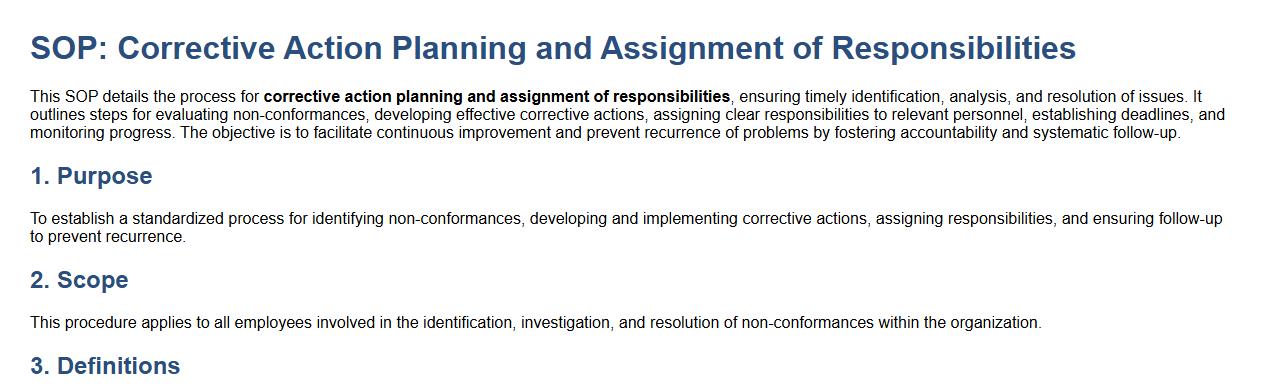
This SOP details the process for corrective action planning and assignment of responsibilities, ensuring timely identification, analysis, and resolution of issues. It outlines steps for evaluating non-conformances, developing effective corrective actions, assigning clear responsibilities to relevant personnel, establishing deadlines, and monitoring progress. The objective is to facilitate continuous improvement and prevent recurrence of problems by fostering accountability and systematic follow-up.
Follow-up review, closure, and record archiving procedures.
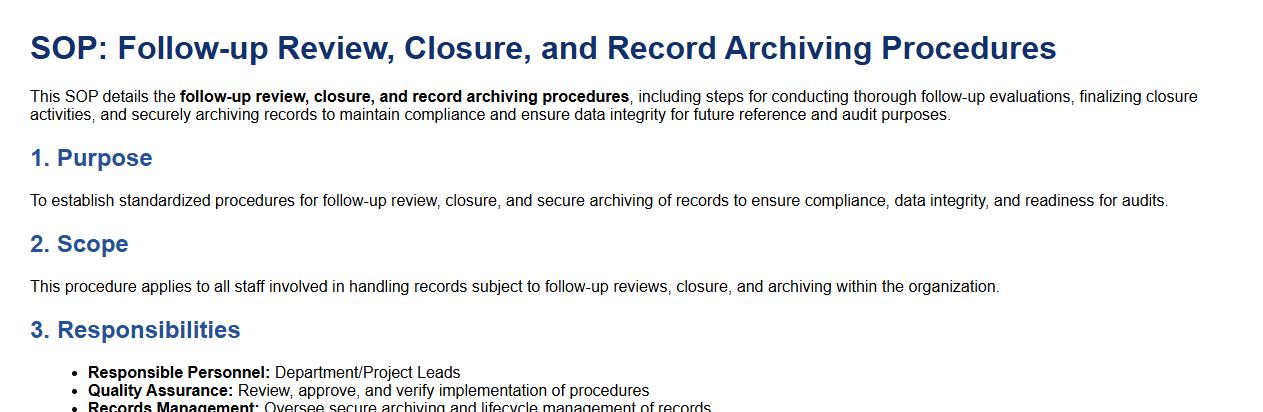
This SOP details the follow-up review, closure, and record archiving procedures, including steps for conducting thorough follow-up evaluations, finalizing closure activities, and securely archiving records to maintain compliance and ensure data integrity for future reference and audit purposes.
Key Steps in Reporting an Incident in the Office
The SOP outlines clear and structured steps for reporting incidents promptly and accurately. Initially, the incident must be identified and reported to the designated authority without delay. Following this, a detailed report is created, documenting all relevant information to facilitate proper investigation and resolution.
Responsible Person for Receiving and Logging Incident Reports
The SOP assigns the responsibility of receiving and logging incident reports to the Office Safety Officer or designated personnel. This individual ensures that all incidents are recorded systematically for future reference and action. They act as the primary point of contact for all incident-related communications within the office.
Types of Incidents Required to Be Reported
The SOP mandates reporting for all workplace accidents, near misses, security breaches, and any safety hazards. This comprehensive coverage ensures that potential risks are identified and mitigated effectively. Employees are instructed to report even minor incidents to maintain a safe working environment.
Mandatory Information Fields in an Incident Report
Submitting an incident report requires including the date and time of the incident, location, description of events, involved parties, and immediate actions taken. These critical fields ensure a complete and accurate understanding of the incident. Accurate information facilitates efficient investigation and timely resolution.
Specified Timelines for Initial Reporting and Follow-up Actions
The SOP specifies that initial incident reports must be submitted within 24 hours of the occurrence. Follow-up actions and detailed investigations should commence promptly, adhering to the timelines outlined in the SOP. This prompt response supports effective incident management and prevention of recurrence.