
A SOP Template for Record Retention and Disposal provides clear guidelines to manage the lifecycle of documents, ensuring compliance with legal and organizational requirements. It outlines procedures for categorizing, storing, and securely disposing of records to minimize risks and maintain data integrity. This template helps streamline processes, improve efficiency, and support audit readiness.
Record identification and classification procedures.
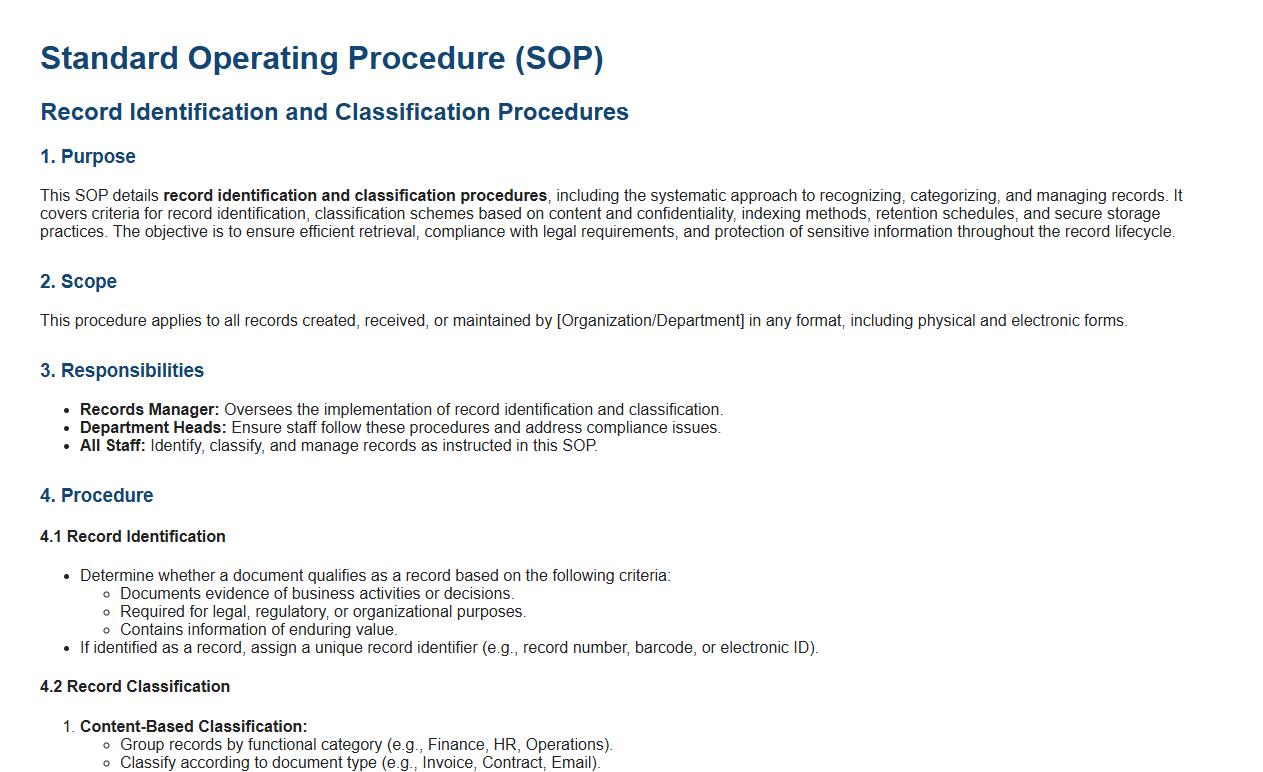
This SOP details record identification and classification procedures, including the systematic approach to recognizing, categorizing, and managing records. It covers criteria for record identification, classification schemes based on content and confidentiality, indexing methods, retention schedules, and secure storage practices. The objective is to ensure efficient retrieval, compliance with legal requirements, and protection of sensitive information throughout the record lifecycle.
Retention period determination and documentation.
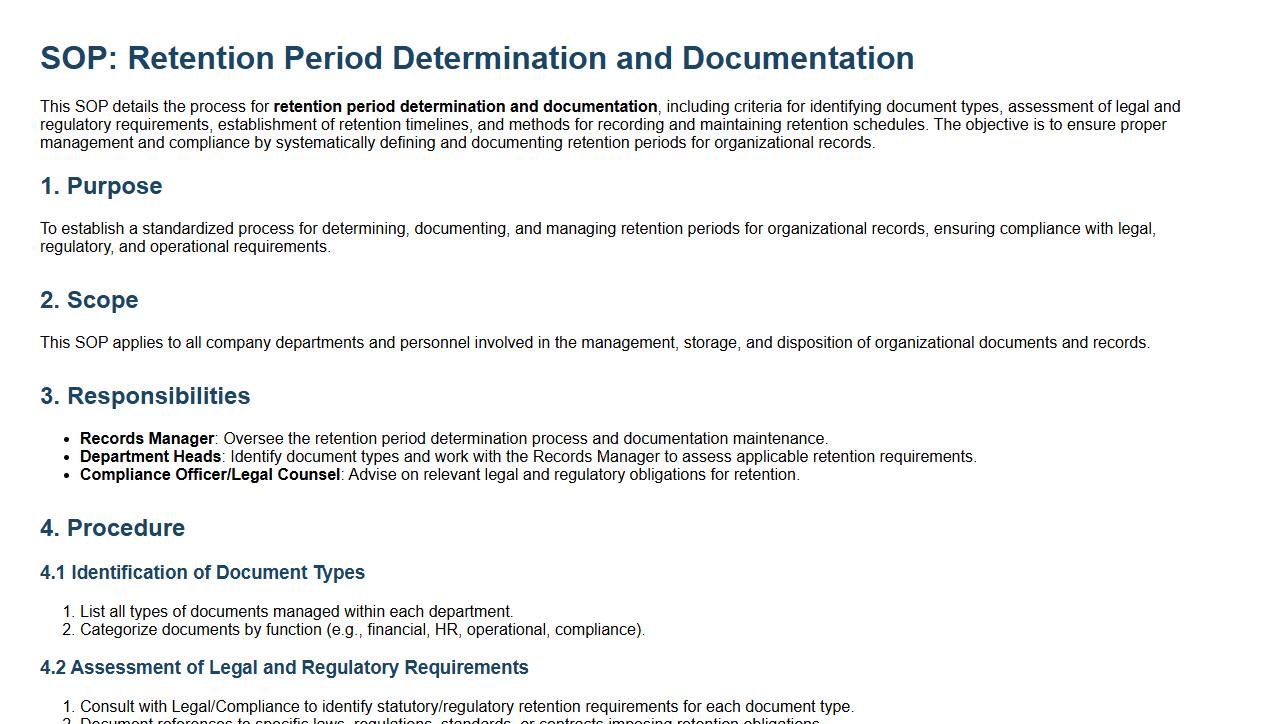
This SOP details the process for retention period determination and documentation, including criteria for identifying document types, assessment of legal and regulatory requirements, establishment of retention timelines, and methods for recording and maintaining retention schedules. The objective is to ensure proper management and compliance by systematically defining and documenting retention periods for organizational records.
Access control and confidentiality guidelines.
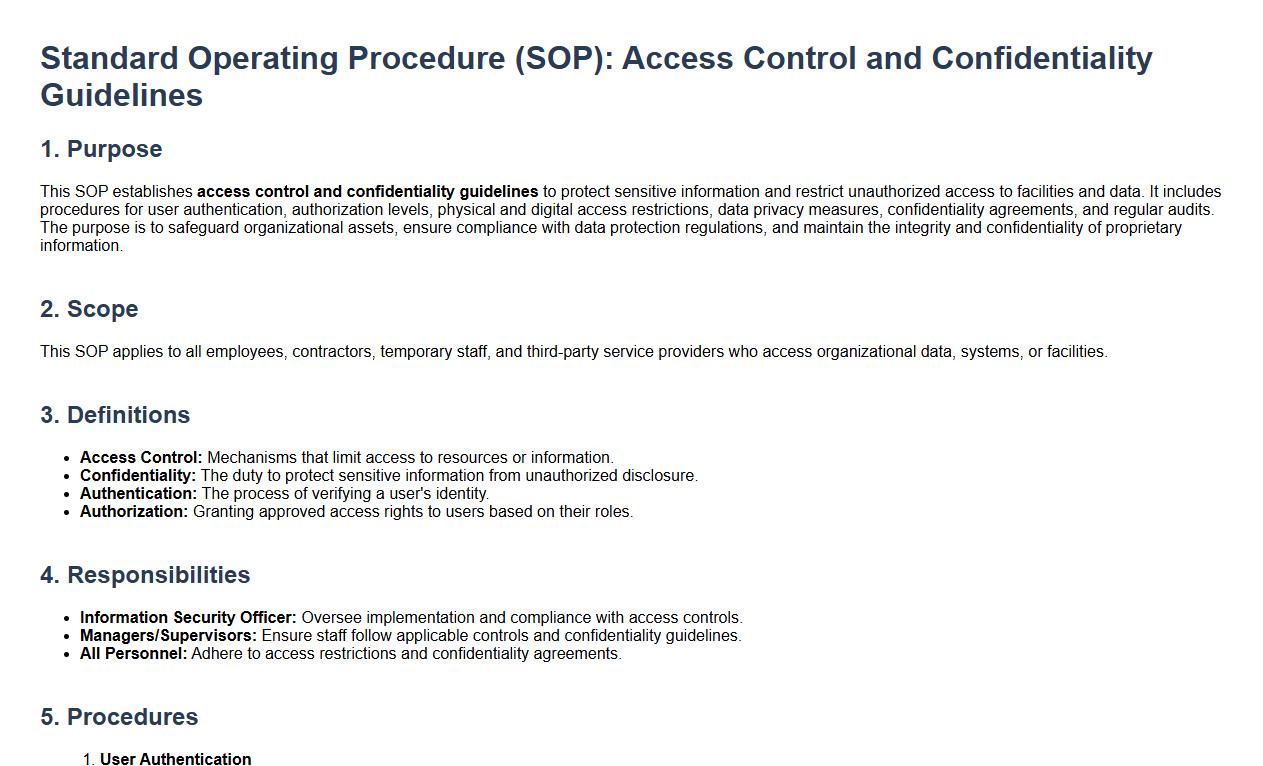
This SOP establishes access control and confidentiality guidelines to protect sensitive information and restrict unauthorized access to facilities and data. It includes procedures for user authentication, authorization levels, physical and digital access restrictions, data privacy measures, confidentiality agreements, and regular audits. The purpose is to safeguard organizational assets, ensure compliance with data protection regulations, and maintain the integrity and confidentiality of proprietary information.
Secure storage protocols for physical and digital records.
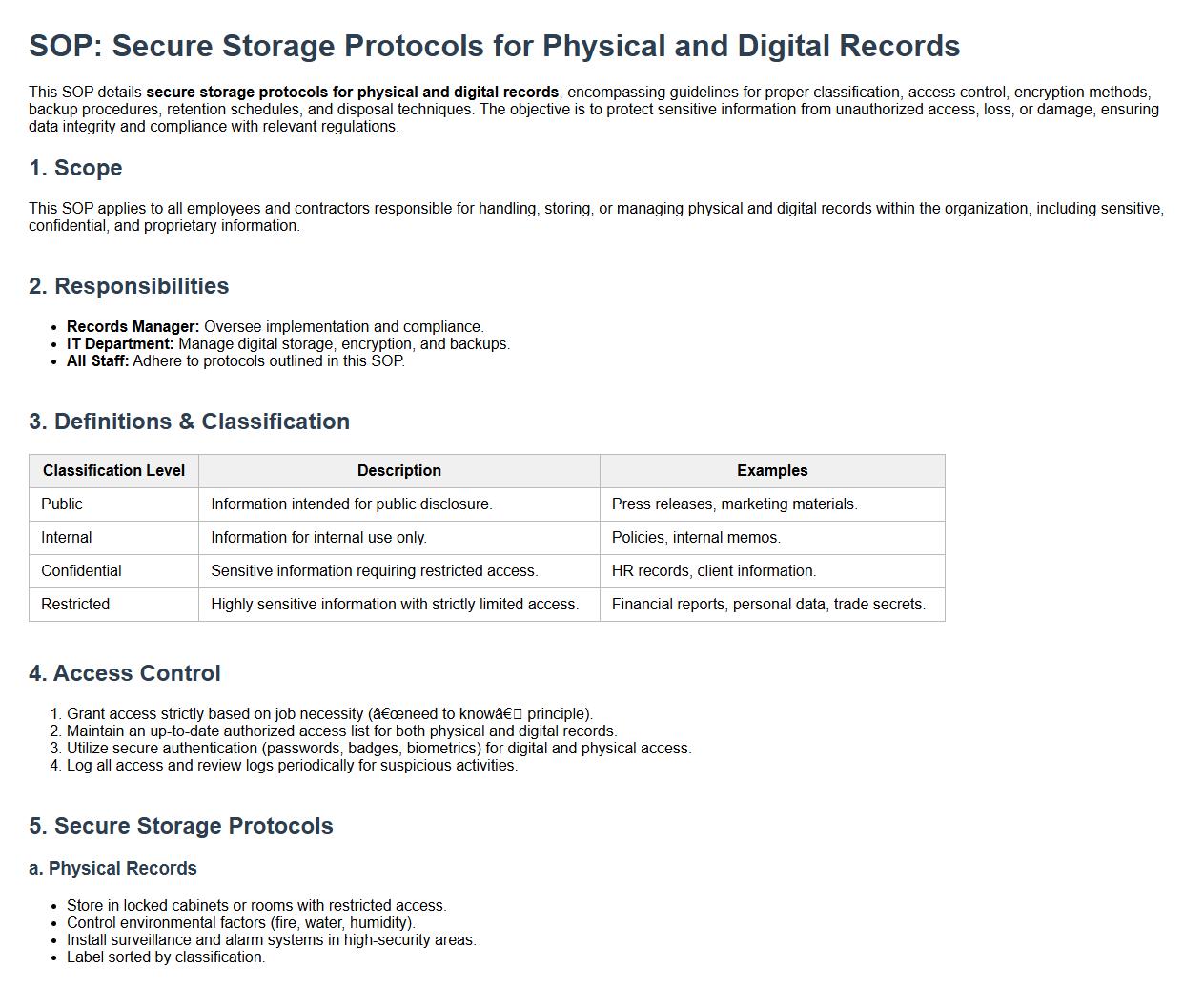
This SOP details secure storage protocols for physical and digital records, encompassing guidelines for proper classification, access control, encryption methods, backup procedures, retention schedules, and disposal techniques. The objective is to protect sensitive information from unauthorized access, loss, or damage, ensuring data integrity and compliance with relevant regulations.
Regular record review and audit schedules.
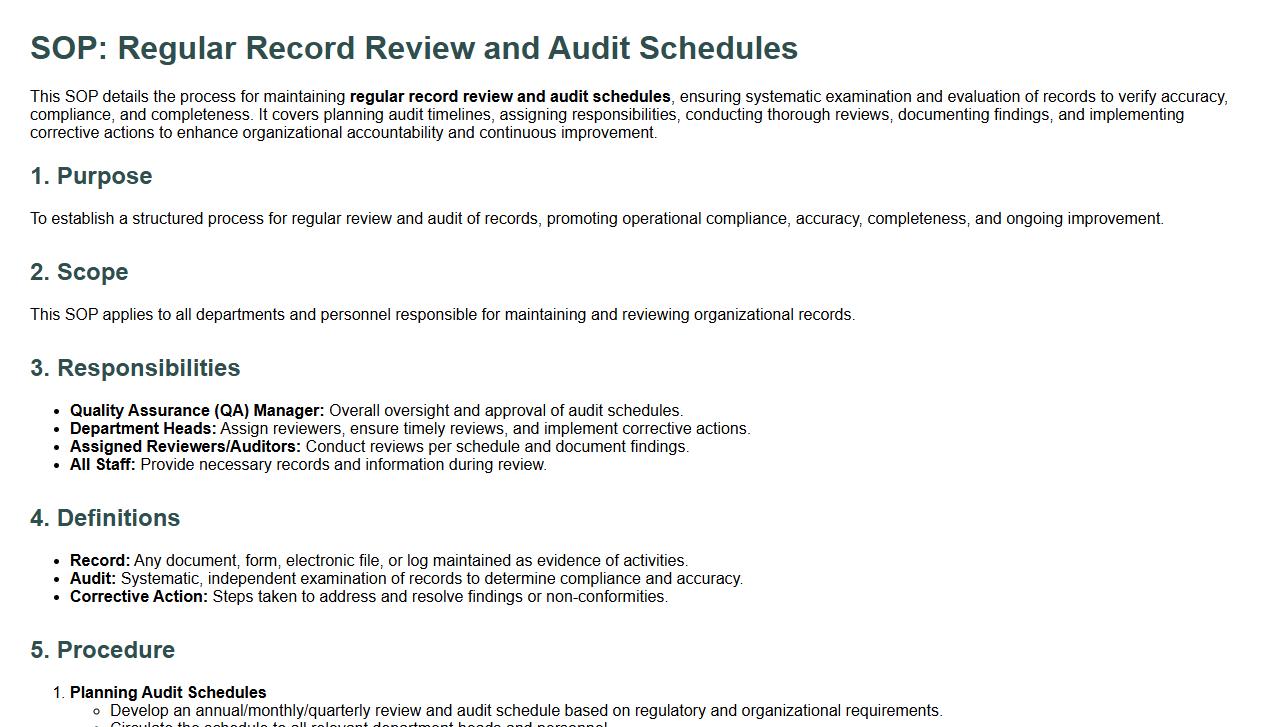
This SOP details the process for maintaining regular record review and audit schedules, ensuring systematic examination and evaluation of records to verify accuracy, compliance, and completeness. It covers planning audit timelines, assigning responsibilities, conducting thorough reviews, documenting findings, and implementing corrective actions to enhance organizational accountability and continuous improvement.
Criteria and authorization process for record disposal.
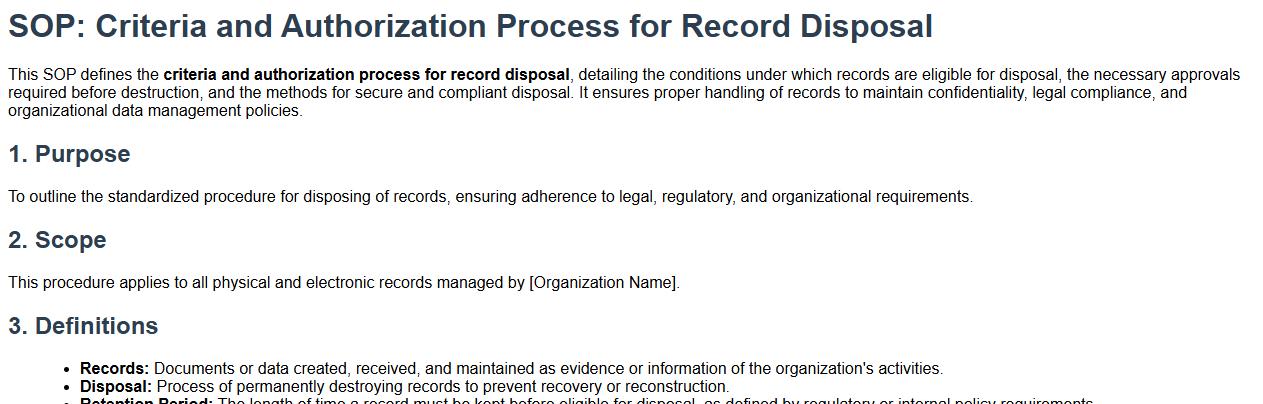
This SOP defines the criteria and authorization process for record disposal, detailing the conditions under which records are eligible for disposal, the necessary approvals required before destruction, and the methods for secure and compliant disposal. It ensures proper handling of records to maintain confidentiality, legal compliance, and organizational data management policies.
Disposal methods for confidential and non-confidential records.
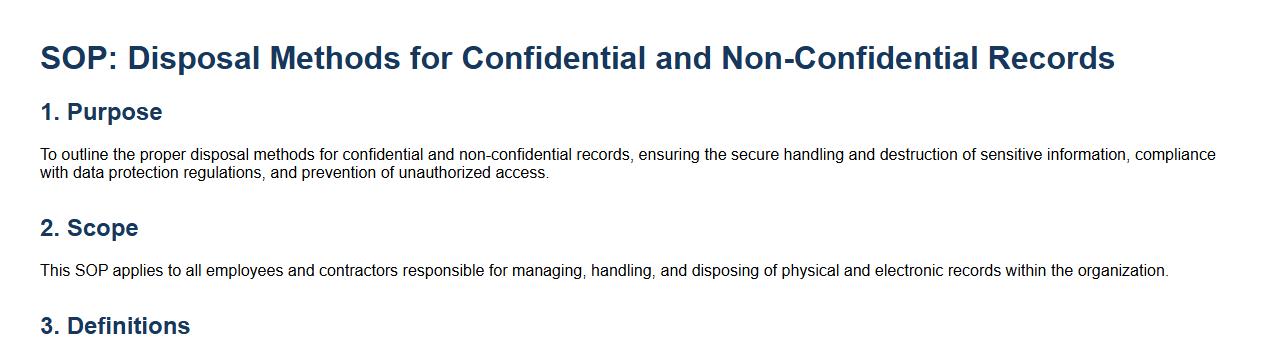
This SOP details the proper disposal methods for confidential and non-confidential records, outlining procedures to ensure secure handling and destruction of sensitive information. It includes guidelines for identifying record classification, approved disposal techniques such as shredding or secure recycling, compliance with data protection regulations, and documentation of disposal activities to maintain confidentiality and prevent unauthorized access to sensitive data.
Documentation requirements for record destruction.
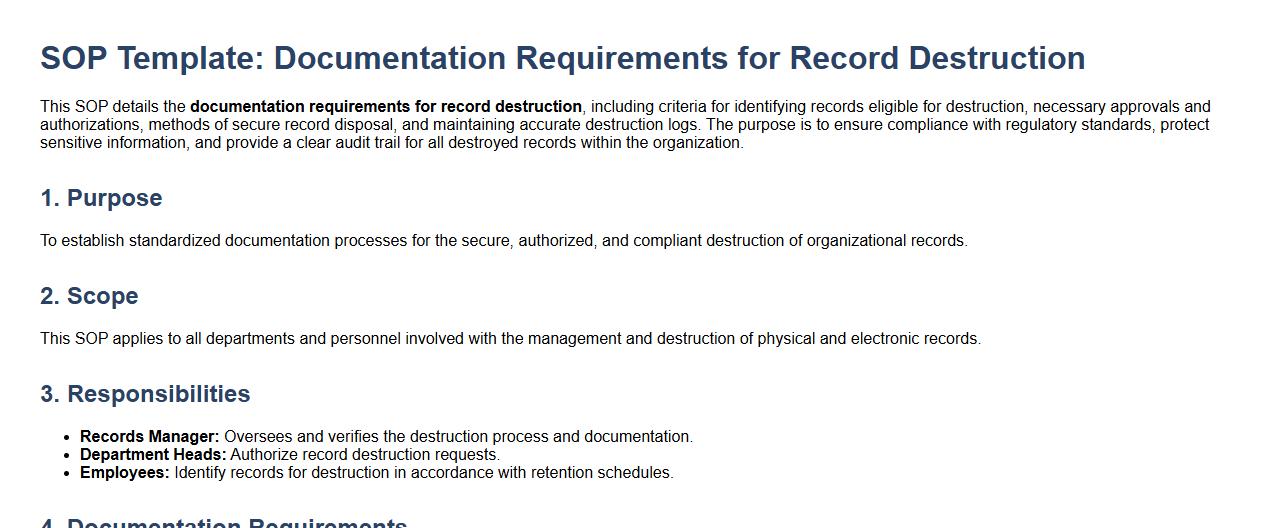
This SOP details the documentation requirements for record destruction, including criteria for identifying records eligible for destruction, necessary approvals and authorizations, methods of secure record disposal, and maintaining accurate destruction logs. The purpose is to ensure compliance with regulatory standards, protect sensitive information, and provide a clear audit trail for all destroyed records within the organization.
Legal and regulatory compliance checks.
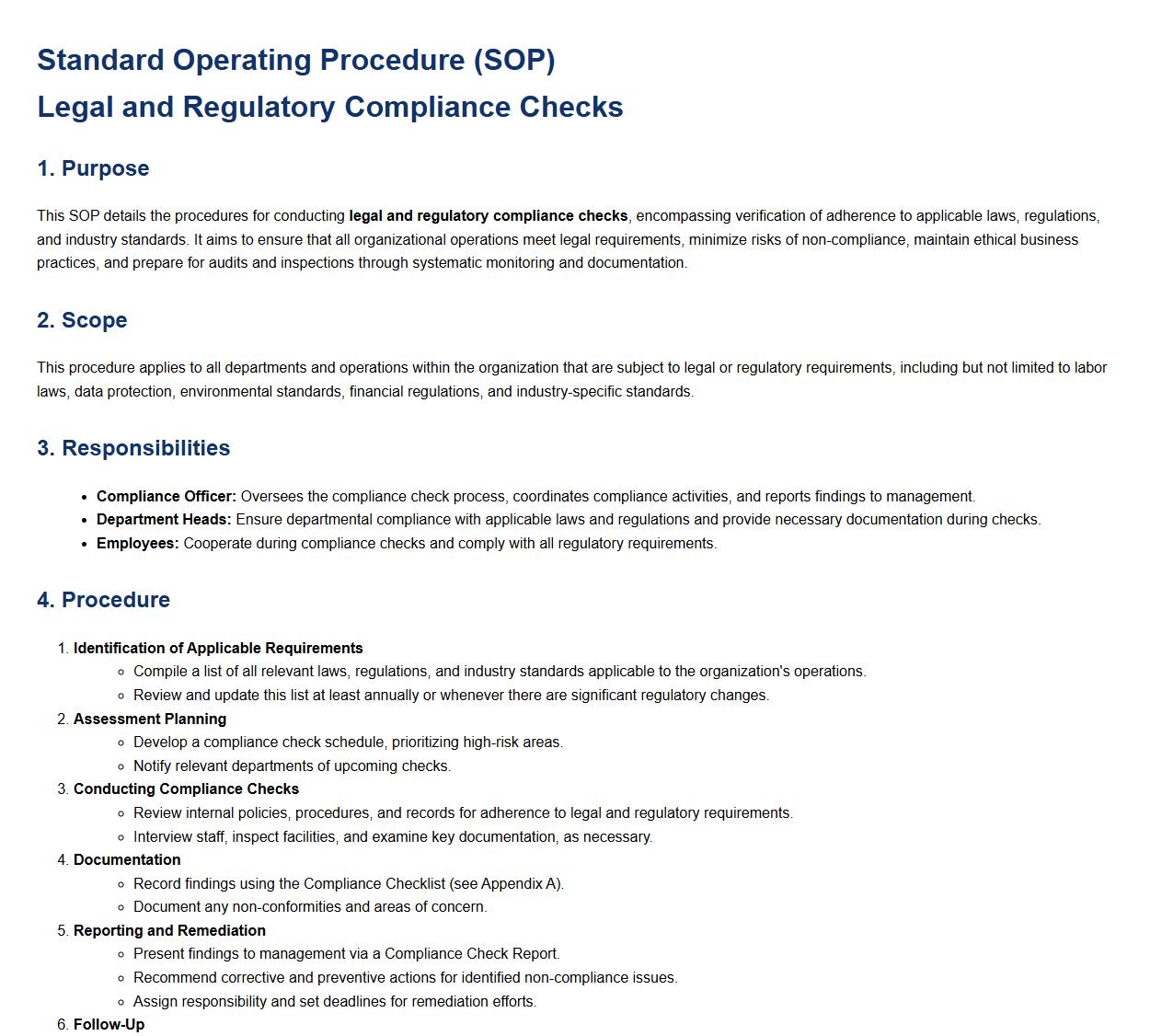
This SOP details the procedures for conducting legal and regulatory compliance checks, encompassing verification of adherence to applicable laws, regulations, and industry standards. It aims to ensure that all organizational operations meet legal requirements, minimize risks of non-compliance, maintain ethical business practices, and prepare for audits and inspections through systematic monitoring and documentation.
Employee roles, responsibilities, and training requirements.
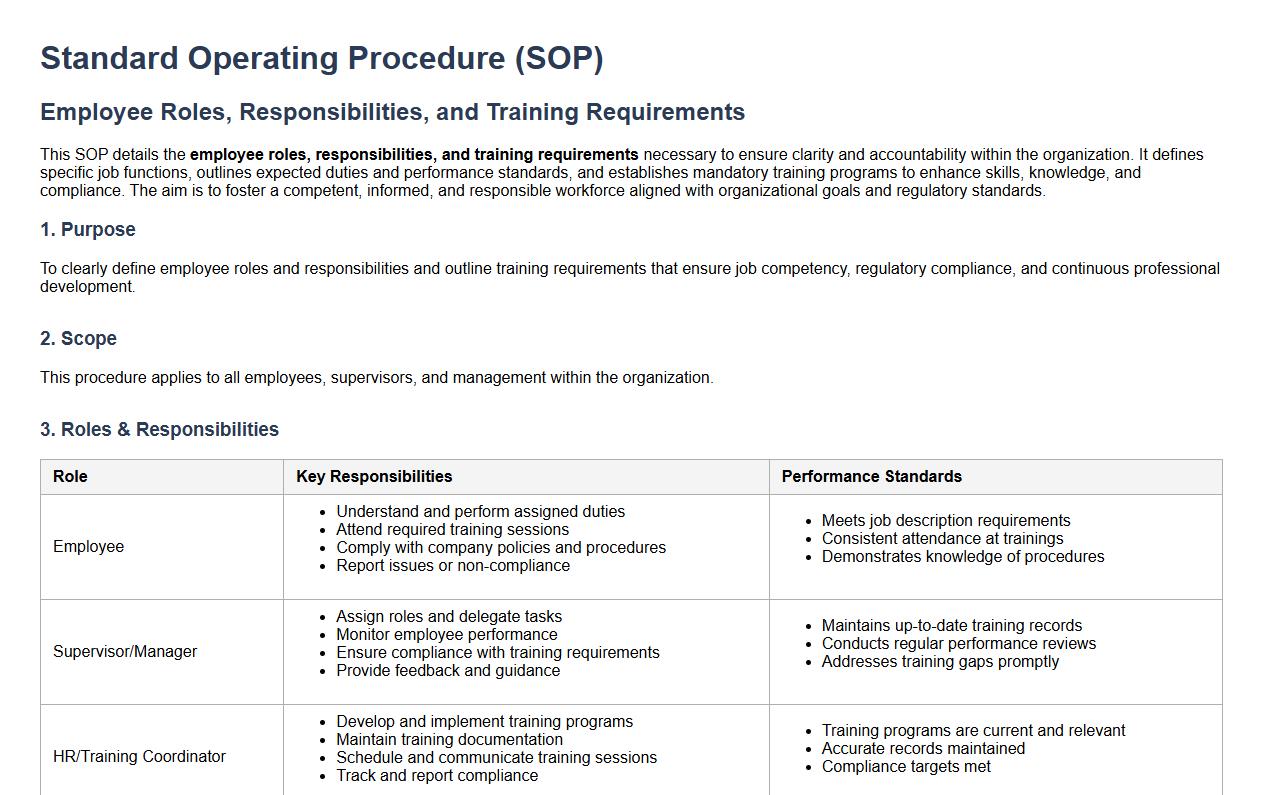
This SOP details the employee roles, responsibilities, and training requirements necessary to ensure clarity and accountability within the organization. It defines specific job functions, outlines expected duties and performance standards, and establishes mandatory training programs to enhance skills, knowledge, and compliance. The aim is to foster a competent, informed, and responsible workforce aligned with organizational goals and regulatory standards.
What criteria determine the retention period for different types of records as per the SOP?
The retention period for records is determined based on legal requirements, regulatory guidelines, and business needs. Each record type is classified according to its importance and usage frequency, which influences its retention duration. The SOP ensures these criteria align with compliance standards to avoid risks related to premature disposal or excessive retention.
Which roles are responsible for monitoring compliance with record retention and disposal procedures?
Compliance officers and designated records managers are primarily tasked with overseeing adherence to retention and disposal policies. These roles ensure that all departments implement the SOP through regular audits and training. Additionally, senior management supports the process by enforcing accountability and providing necessary resources.
What are the approved methods for the secure disposal of physical and electronic records?
Secure disposal methods include shredding for physical documents and data wiping or destruction for electronic records. The SOP mandates that these techniques prevent unauthorized access or data recovery. These procedures comply with industry best practices to protect sensitive information during disposal.
How does the SOP address the handling of records subject to legal or regulatory holds?
The SOP requires immediate suspension of destruction or alteration of records under legal or regulatory holds. Such records must be securely isolated and access restricted until the hold is officially lifted. This protocol preserves evidentiary integrity and ensures compliance with legal obligations.
What documentation is required to demonstrate proper retention and authorized disposal of records?
Proper documentation includes retention schedules, disposal logs, and approval forms signed by authorized personnel. These records provide an audit trail confirming compliance with retention policies and disposal protocols. Maintaining this documentation is critical for regulatory inspections and internal reviews.