
A SOP Template for File Organization and Archiving provides a structured framework to systematically manage and store important documents. This template ensures consistent labeling, categorization, and archiving processes to enhance document retrieval and long-term preservation. Following this SOP helps maintain data integrity and compliance with organizational standards.
Folder structure creation and naming conventions.
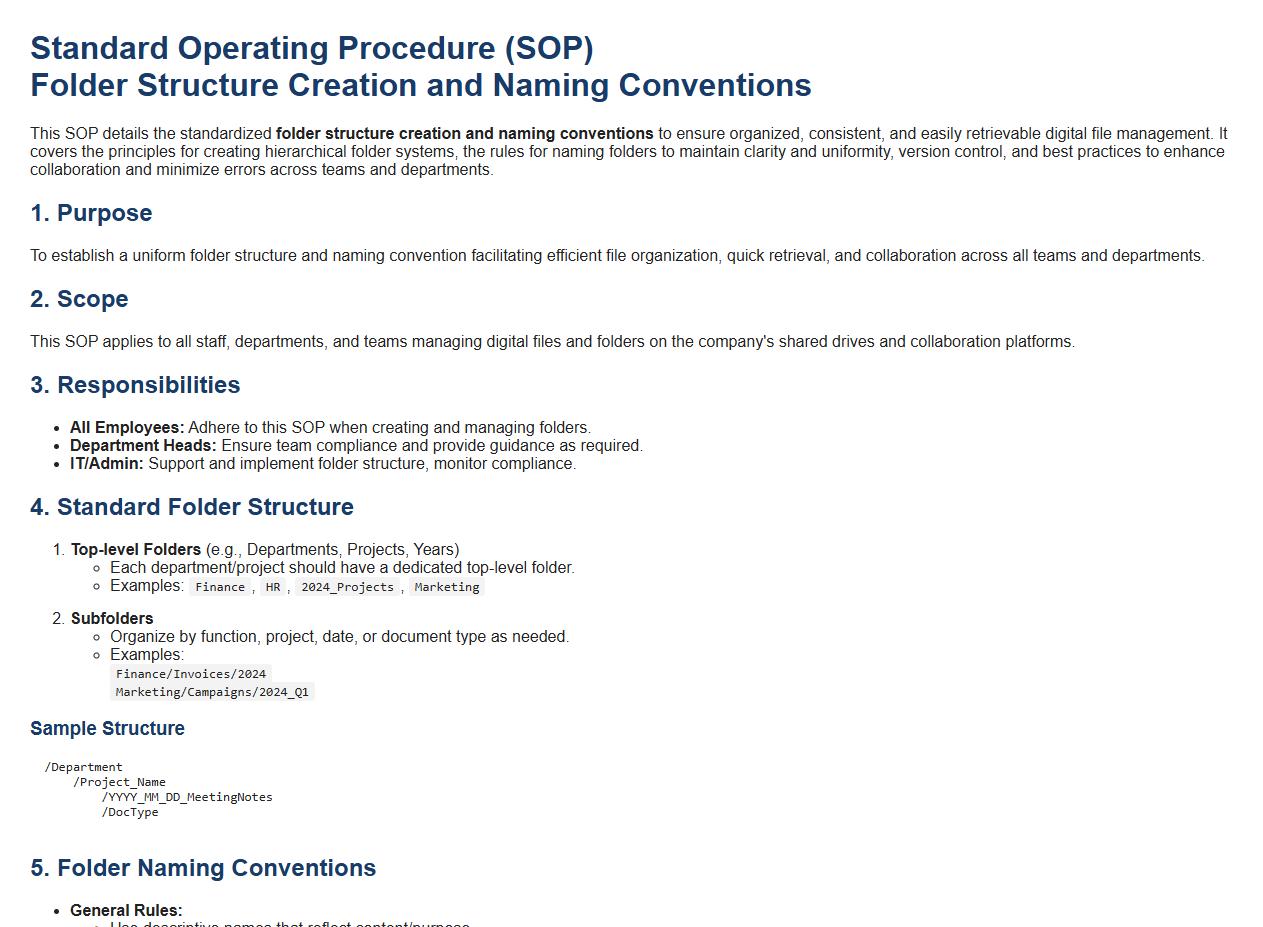
This SOP details the standardized folder structure creation and naming conventions to ensure organized, consistent, and easily retrievable digital file management. It covers the principles for creating hierarchical folder systems, the rules for naming folders to maintain clarity and uniformity, version control, and best practices to enhance collaboration and minimize errors across teams and departments.
Document version control guidelines.
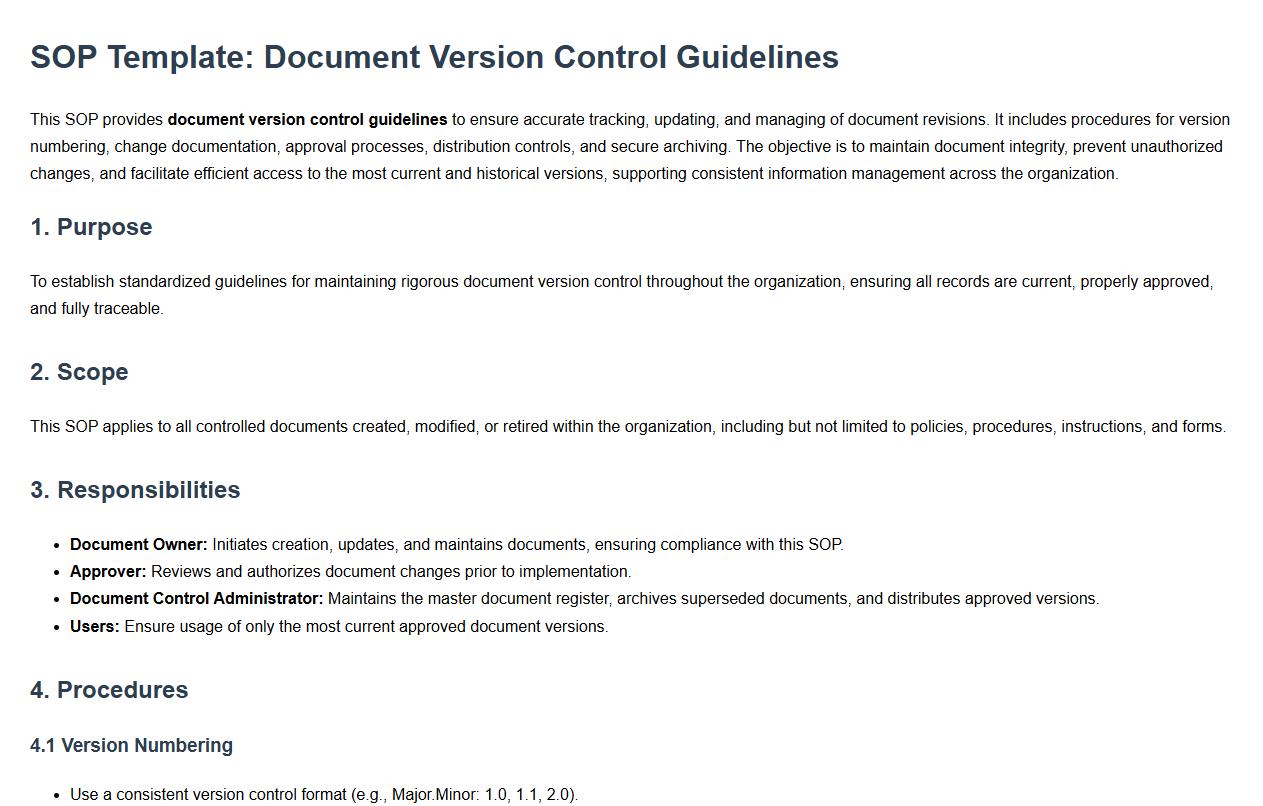
This SOP provides document version control guidelines to ensure accurate tracking, updating, and managing of document revisions. It includes procedures for version numbering, change documentation, approval processes, distribution controls, and secure archiving. The objective is to maintain document integrity, prevent unauthorized changes, and facilitate efficient access to the most current and historical versions, supporting consistent information management across the organization.
File labeling and metadata tagging procedures.
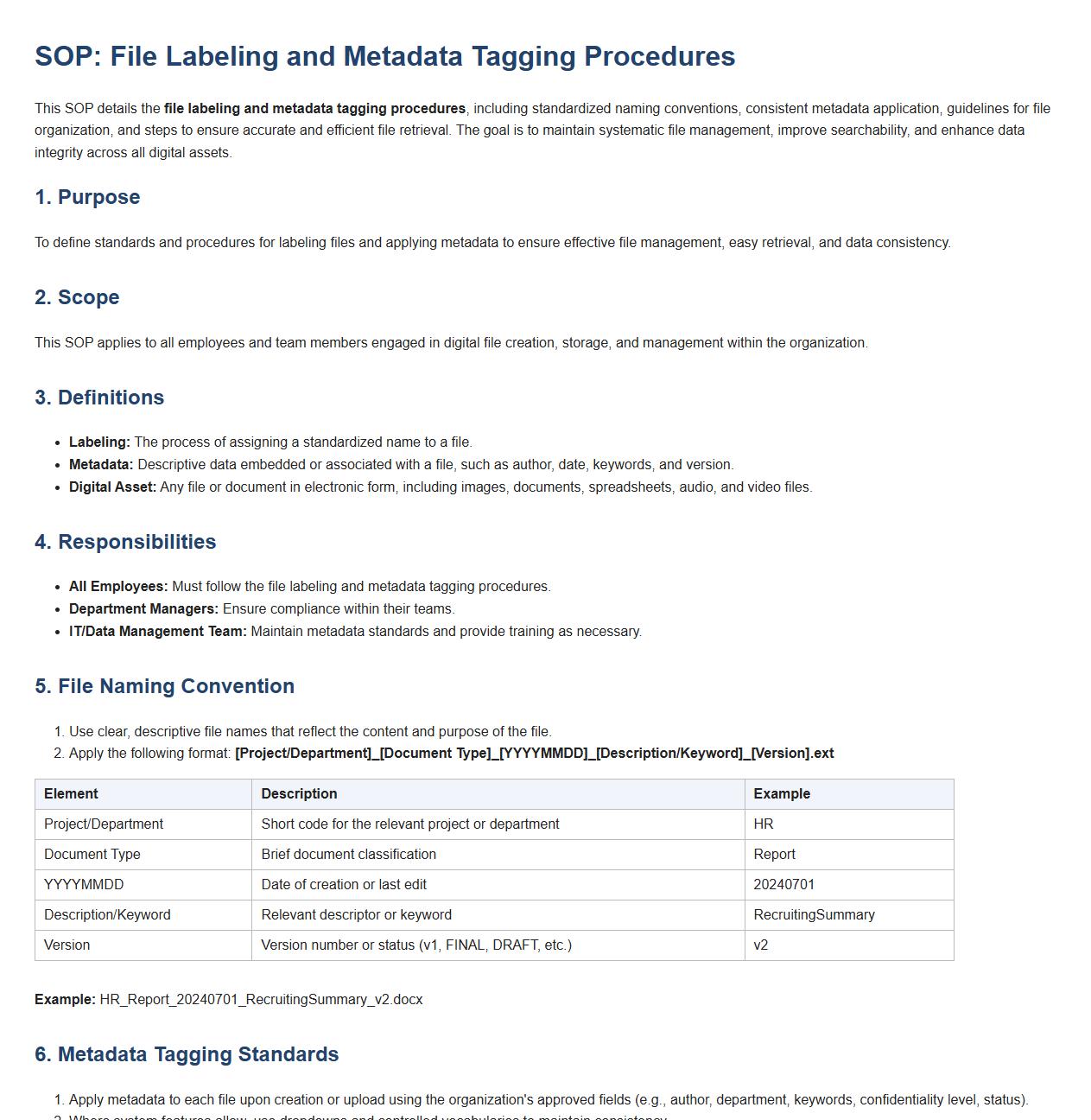
This SOP details the file labeling and metadata tagging procedures, including standardized naming conventions, consistent metadata application, guidelines for file organization, and steps to ensure accurate and efficient file retrieval. The goal is to maintain systematic file management, improve searchability, and enhance data integrity across all digital assets.
Electronic and physical document segregation instructions.
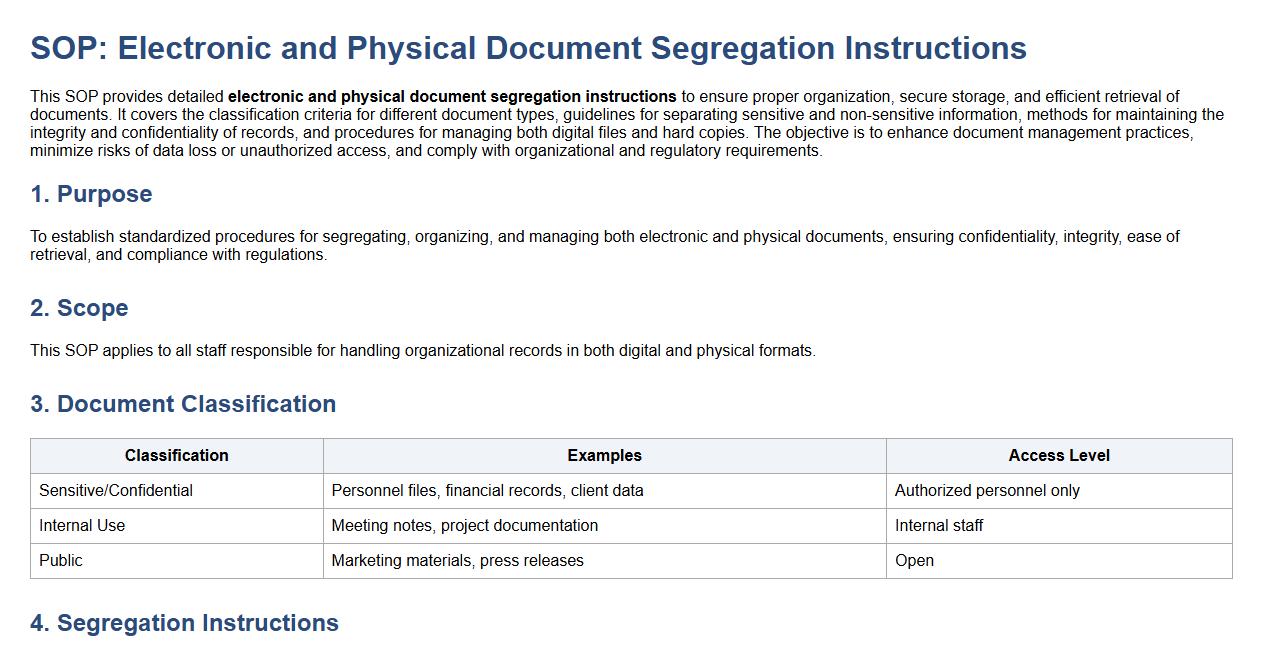
This SOP provides detailed electronic and physical document segregation instructions to ensure proper organization, secure storage, and efficient retrieval of documents. It covers the classification criteria for different document types, guidelines for separating sensitive and non-sensitive information, methods for maintaining the integrity and confidentiality of records, and procedures for managing both digital files and hard copies. The objective is to enhance document management practices, minimize risks of data loss or unauthorized access, and comply with organizational and regulatory requirements.
Schedule for routine file audits and reviews.
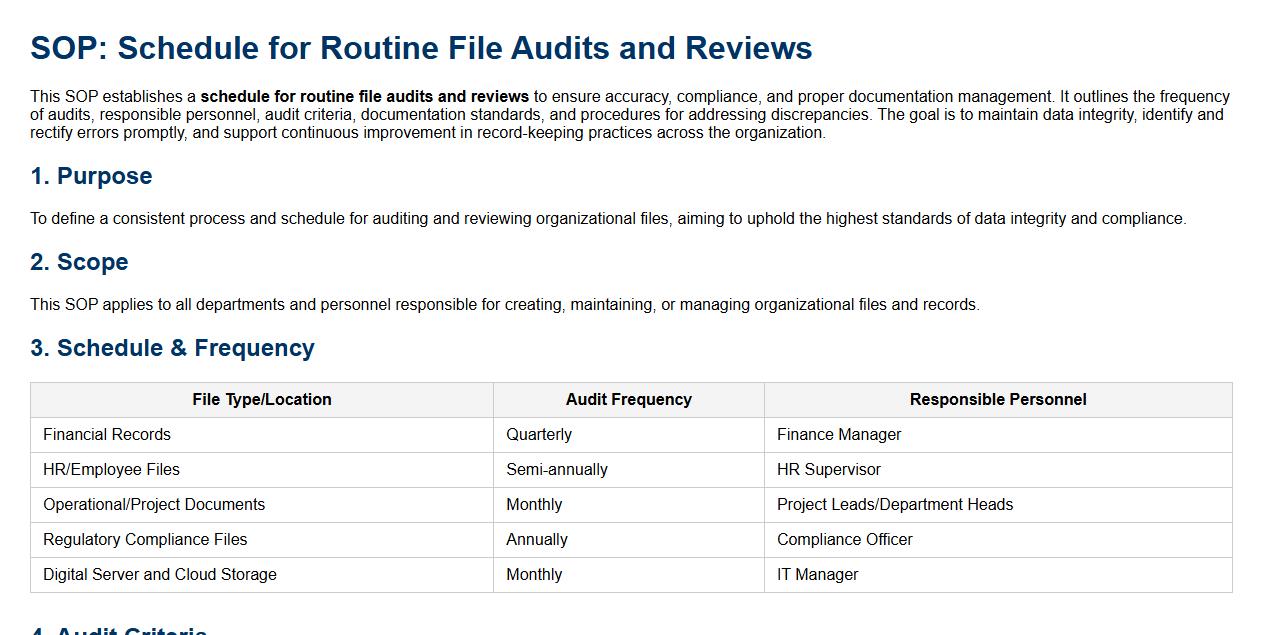
This SOP establishes a schedule for routine file audits and reviews to ensure accuracy, compliance, and proper documentation management. It outlines the frequency of audits, responsible personnel, audit criteria, documentation standards, and procedures for addressing discrepancies. The goal is to maintain data integrity, identify and rectify errors promptly, and support continuous improvement in record-keeping practices across the organization.
Protocols for document access permissions and user roles.
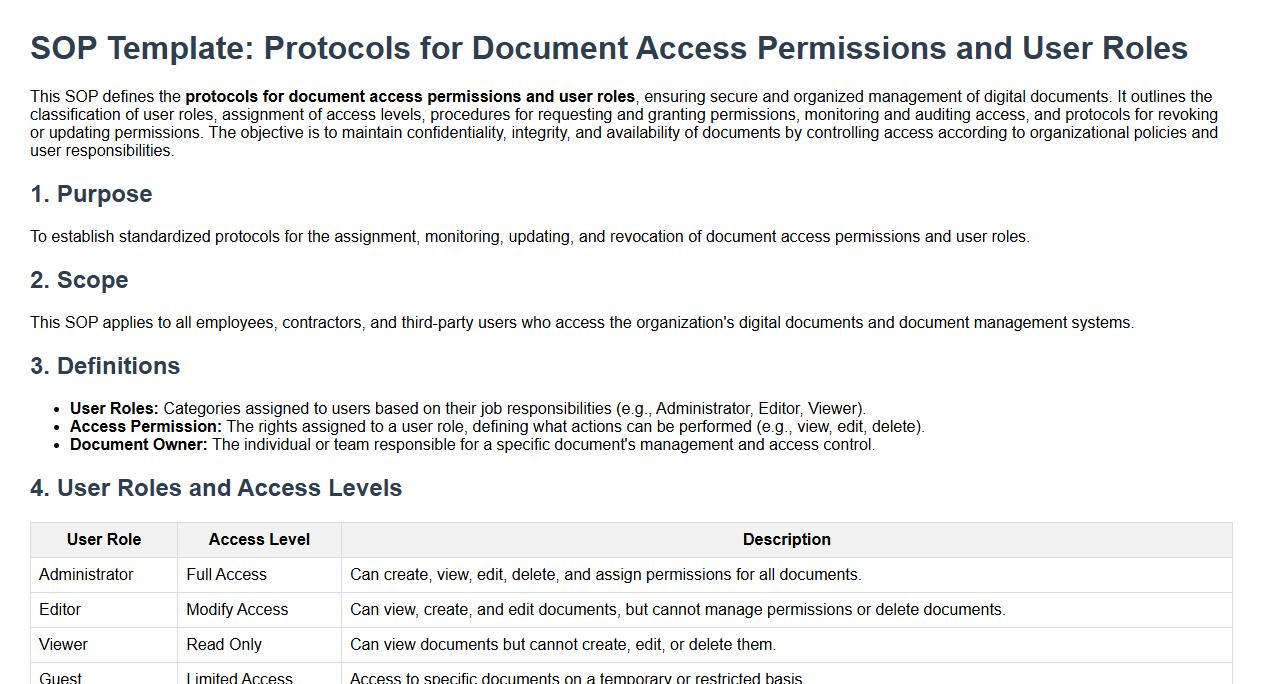
This SOP defines the protocols for document access permissions and user roles, ensuring secure and organized management of digital documents. It outlines the classification of user roles, assignment of access levels, procedures for requesting and granting permissions, monitoring and auditing access, and protocols for revoking or updating permissions. The objective is to maintain confidentiality, integrity, and availability of documents by controlling access according to organizational policies and user responsibilities.
Backup and disaster recovery processes.
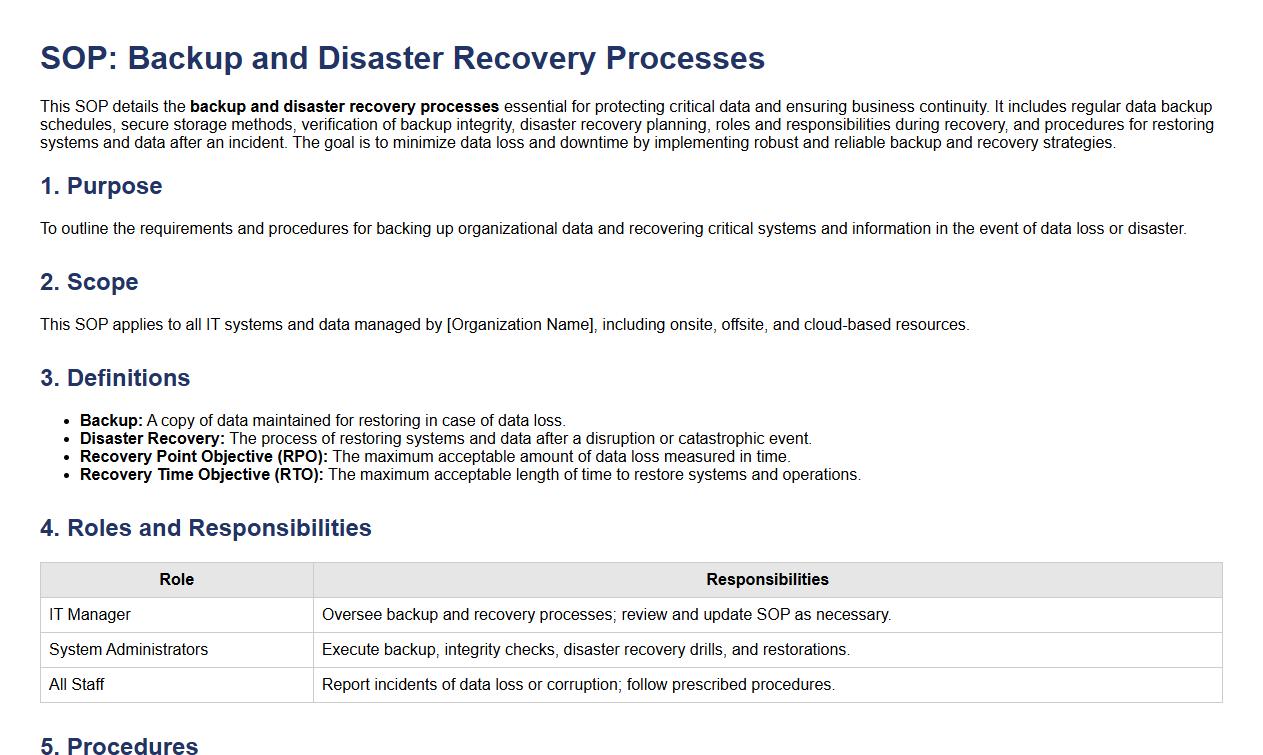
This SOP details the backup and disaster recovery processes essential for protecting critical data and ensuring business continuity. It includes regular data backup schedules, secure storage methods, verification of backup integrity, disaster recovery planning, roles and responsibilities during recovery, and procedures for restoring systems and data after an incident. The goal is to minimize data loss and downtime by implementing robust and reliable backup and recovery strategies.
Document retention and disposal policies.
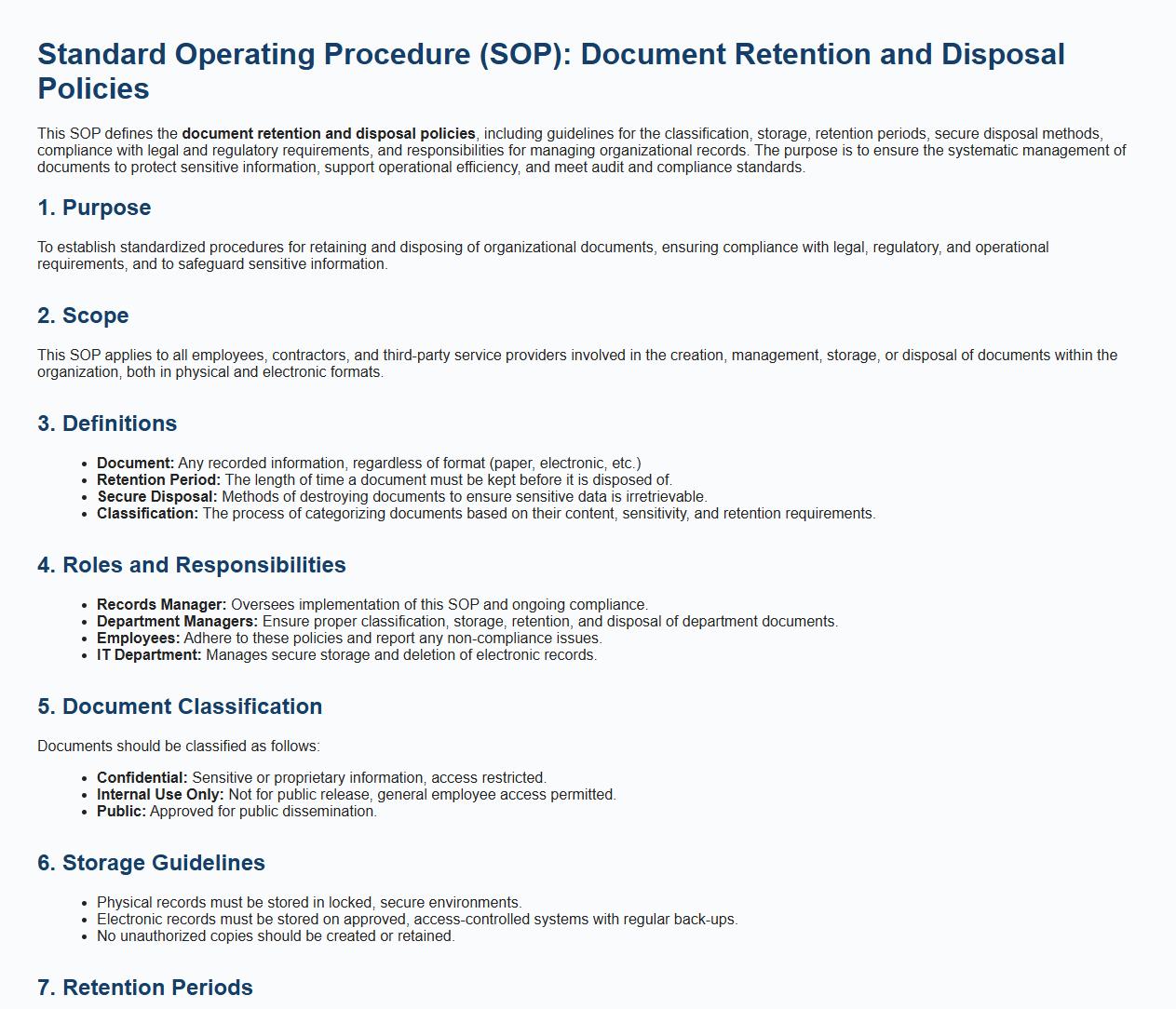
This SOP defines the document retention and disposal policies, including guidelines for the classification, storage, retention periods, secure disposal methods, compliance with legal and regulatory requirements, and responsibilities for managing organizational records. The purpose is to ensure the systematic management of documents to protect sensitive information, support operational efficiency, and meet audit and compliance standards.
Archiving inactive or obsolete records procedures.
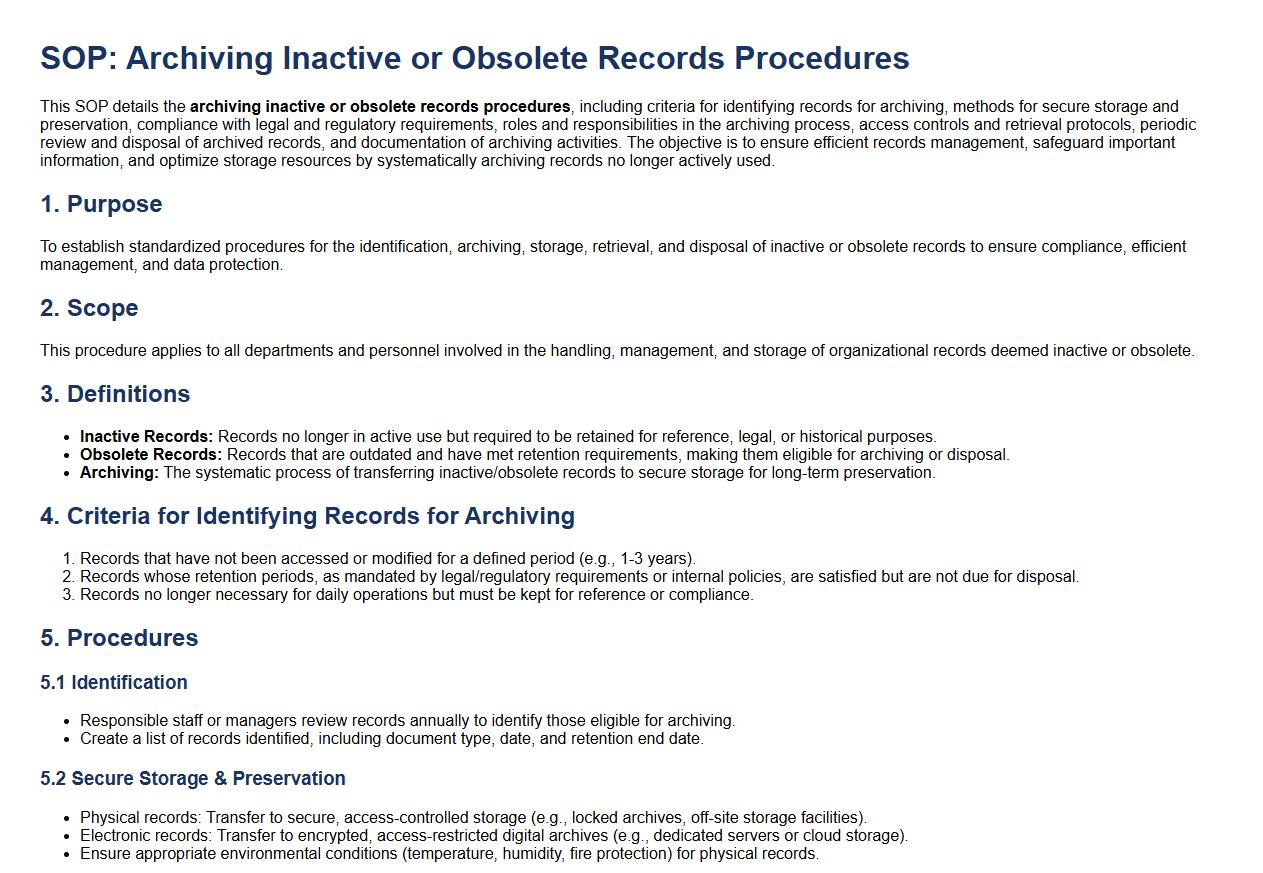
This SOP details the archiving inactive or obsolete records procedures, including criteria for identifying records for archiving, methods for secure storage and preservation, compliance with legal and regulatory requirements, roles and responsibilities in the archiving process, access controls and retrieval protocols, periodic review and disposal of archived records, and documentation of archiving activities. The objective is to ensure efficient records management, safeguard important information, and optimize storage resources by systematically archiving records no longer actively used.
Confidentiality and data protection requirements.
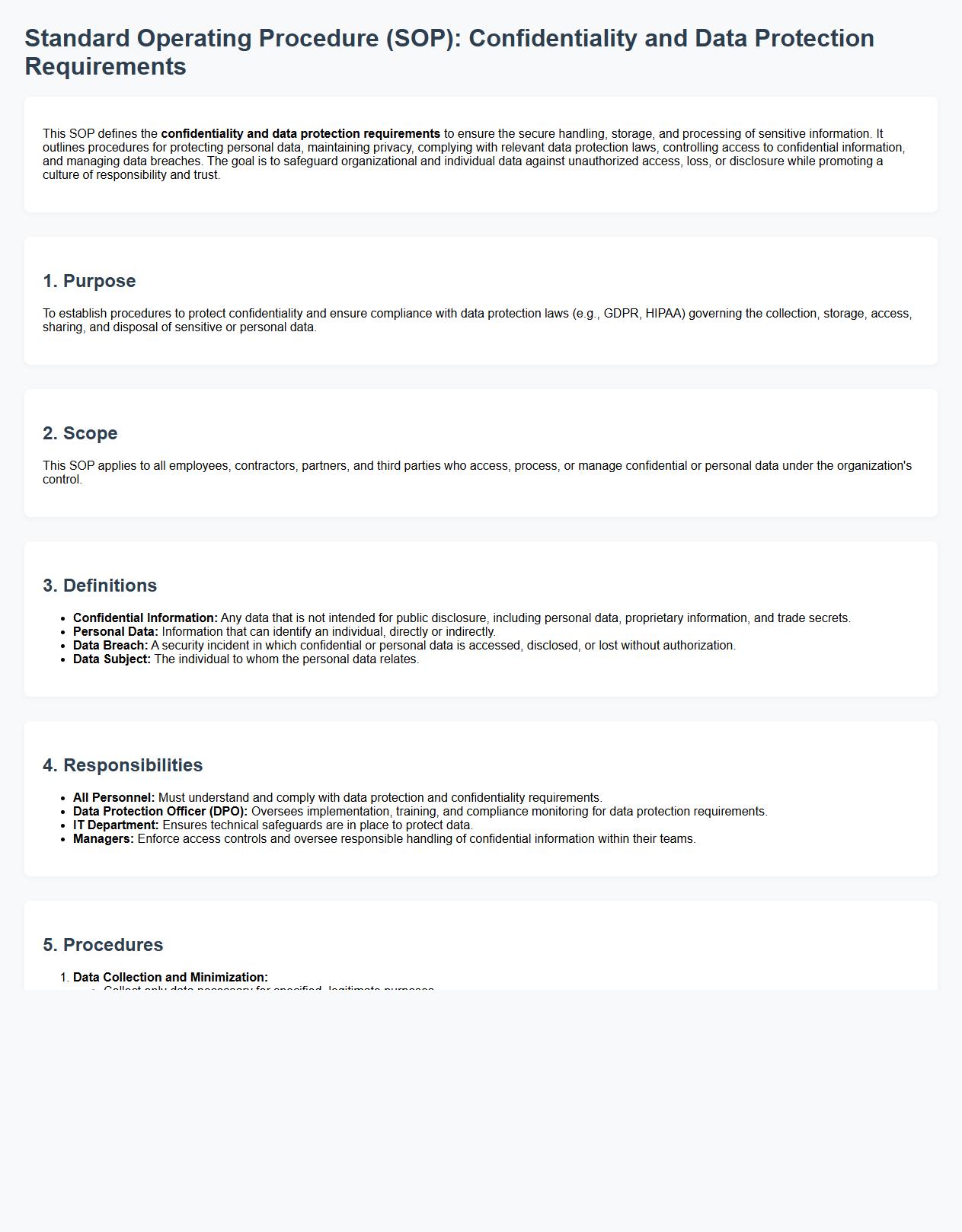
This SOP defines the confidentiality and data protection requirements to ensure the secure handling, storage, and processing of sensitive information. It outlines procedures for protecting personal data, maintaining privacy, complying with relevant data protection laws, controlling access to confidential information, and managing data breaches. The goal is to safeguard organizational and individual data against unauthorized access, loss, or disclosure while promoting a culture of responsibility and trust.
What classifications and naming conventions are specified in the SOP for organizing digital and physical files?
The SOP mandates a strict classification system to categorize files by department, project, and confidentiality level. It requires using standardized naming conventions that include dates, client IDs, and document types. This ensures easy identification and reduces retrieval time for both digital and physical files.
How does the SOP define access control and user permissions for archived files?
The SOP enforces role-based access control to regulate who can view, edit, or delete archived files. User permissions are granted based on job function and must be reviewed periodically for accuracy. Access logs are maintained to monitor file interaction and ensure compliance with security policies.
What procedures are outlined in the SOP for periodic file reviews and retention schedules?
The SOP requires scheduled file audits to verify data integrity and relevance. It establishes clear retention schedules aligned with legal and operational requirements, specifying when files should be archived or destroyed. These procedures help maintain an efficient and compliant filing system.
Which types of file formats and backup methods are approved in the SOP for long-term archiving?
The SOP approves archival in standardized file formats such as PDF/A and TIFF for long-term accessibility and compatibility. It endorses using redundant backup methods including cloud storage and offline physical backups to safeguard against data loss. Regular backup verification processes are also specified to ensure recoverability.
What are the SOP's step-by-step instructions for retrieving, modifying, and re-archiving files?
The SOP outlines a step-by-step process starting with a formal file retrieval request through the authorized system. After modification, files must undergo a version control check before being securely re-archived in their designated location. Each step requires logging details to maintain an accurate audit trail.