
A SOP Template for Document Control and Filing provides a standardized framework to ensure consistent management, organization, and retrieval of important records. This template outlines clear procedures for document creation, review, approval, storage, and archiving to maintain accuracy and compliance. Implementing this SOP enhances efficiency and reduces errors in handling critical documents.
Document creation and approval process.
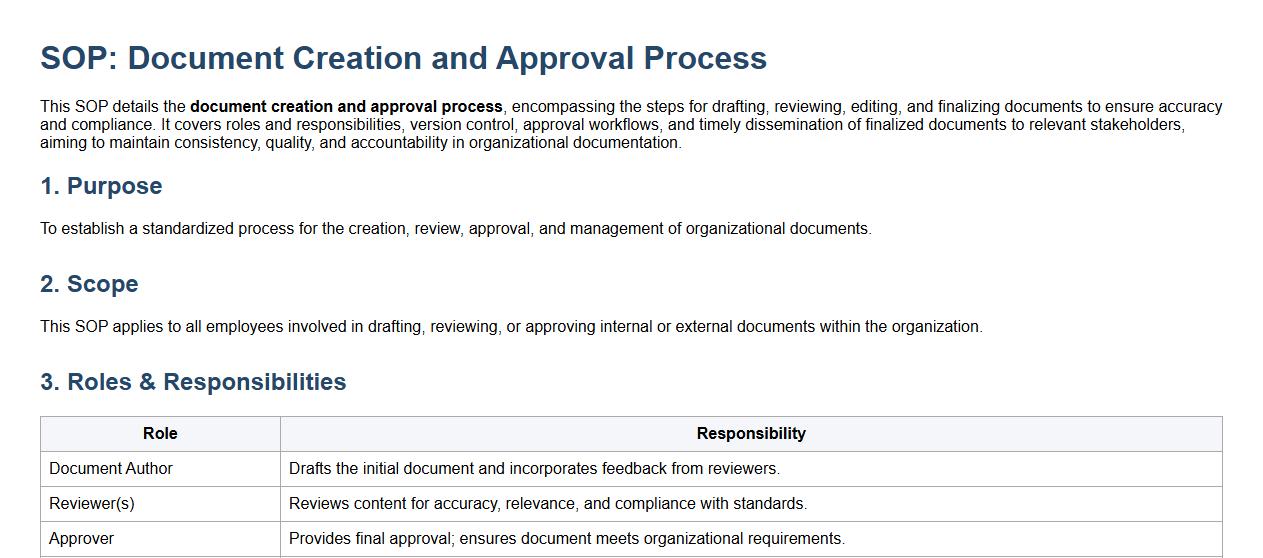
This SOP details the document creation and approval process, encompassing the steps for drafting, reviewing, editing, and finalizing documents to ensure accuracy and compliance. It covers roles and responsibilities, version control, approval workflows, and timely dissemination of finalized documents to relevant stakeholders, aiming to maintain consistency, quality, and accountability in organizational documentation.
Document version control and revision tracking.
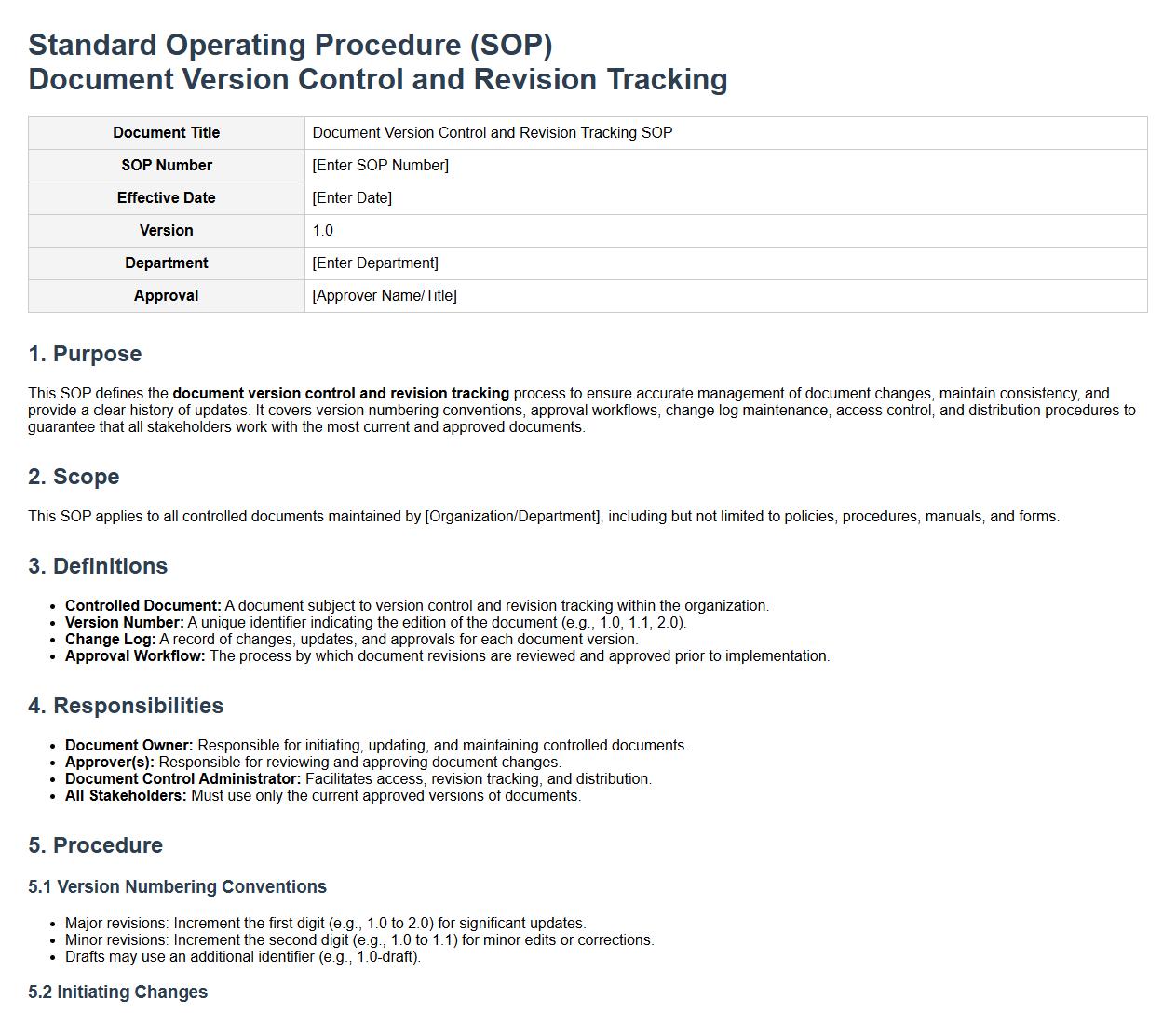
This SOP defines the document version control and revision tracking process to ensure accurate management of document changes, maintain consistency, and provide a clear history of updates. It covers version numbering conventions, approval workflows, change log maintenance, access control, and distribution procedures to guarantee that all stakeholders work with the most current and approved documents.
Document naming conventions and identification.
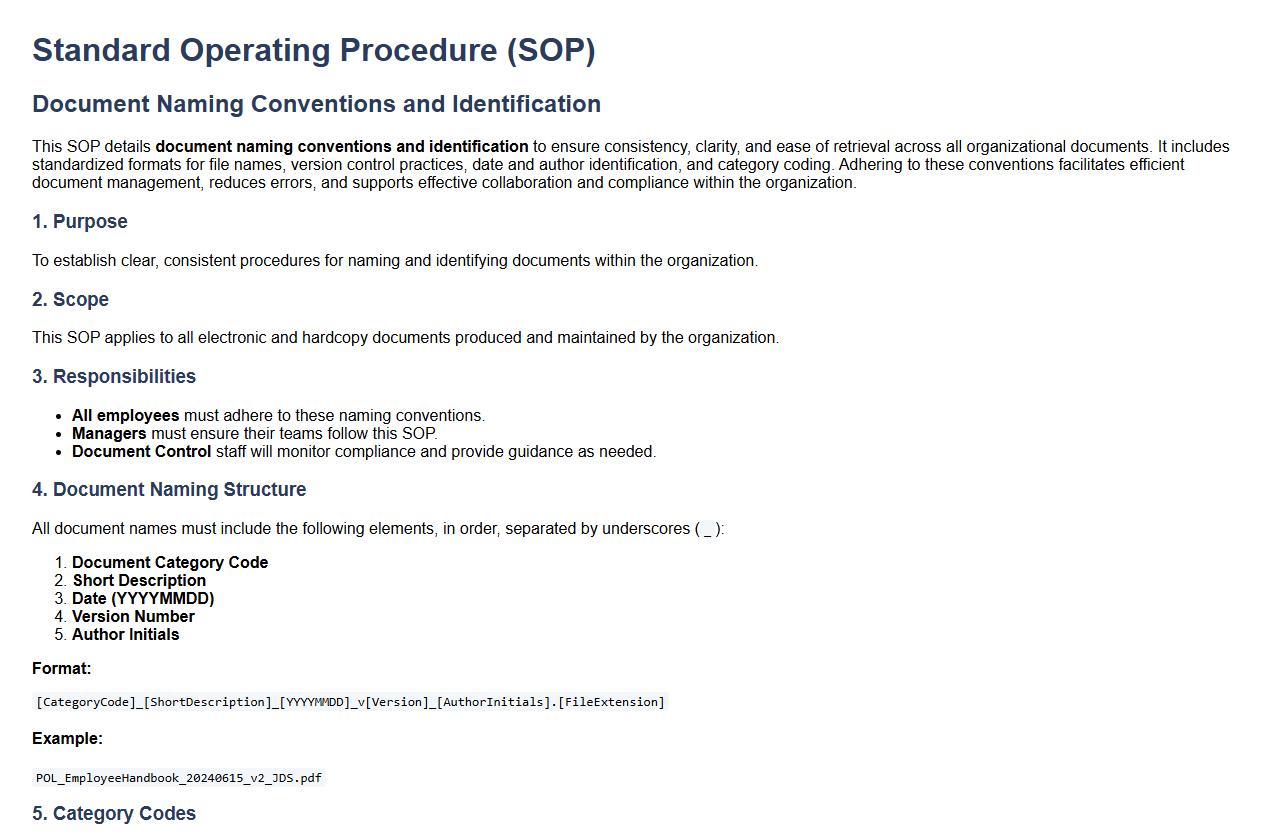
This SOP details document naming conventions and identification to ensure consistency, clarity, and ease of retrieval across all organizational documents. It includes standardized formats for file names, version control practices, date and author identification, and category coding. Adhering to these conventions facilitates efficient document management, reduces errors, and supports effective collaboration and compliance within the organization.
Centralized document storage and access protocols.
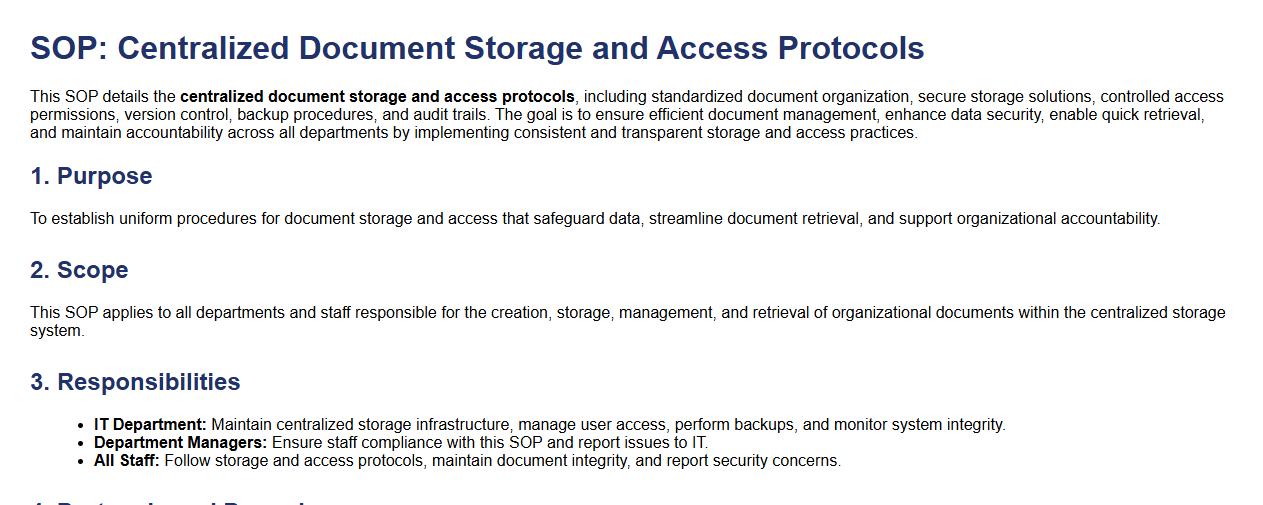
This SOP details the centralized document storage and access protocols, including standardized document organization, secure storage solutions, controlled access permissions, version control, backup procedures, and audit trails. The goal is to ensure efficient document management, enhance data security, enable quick retrieval, and maintain accountability across all departments by implementing consistent and transparent storage and access practices.
Access authorization and user permissions management.
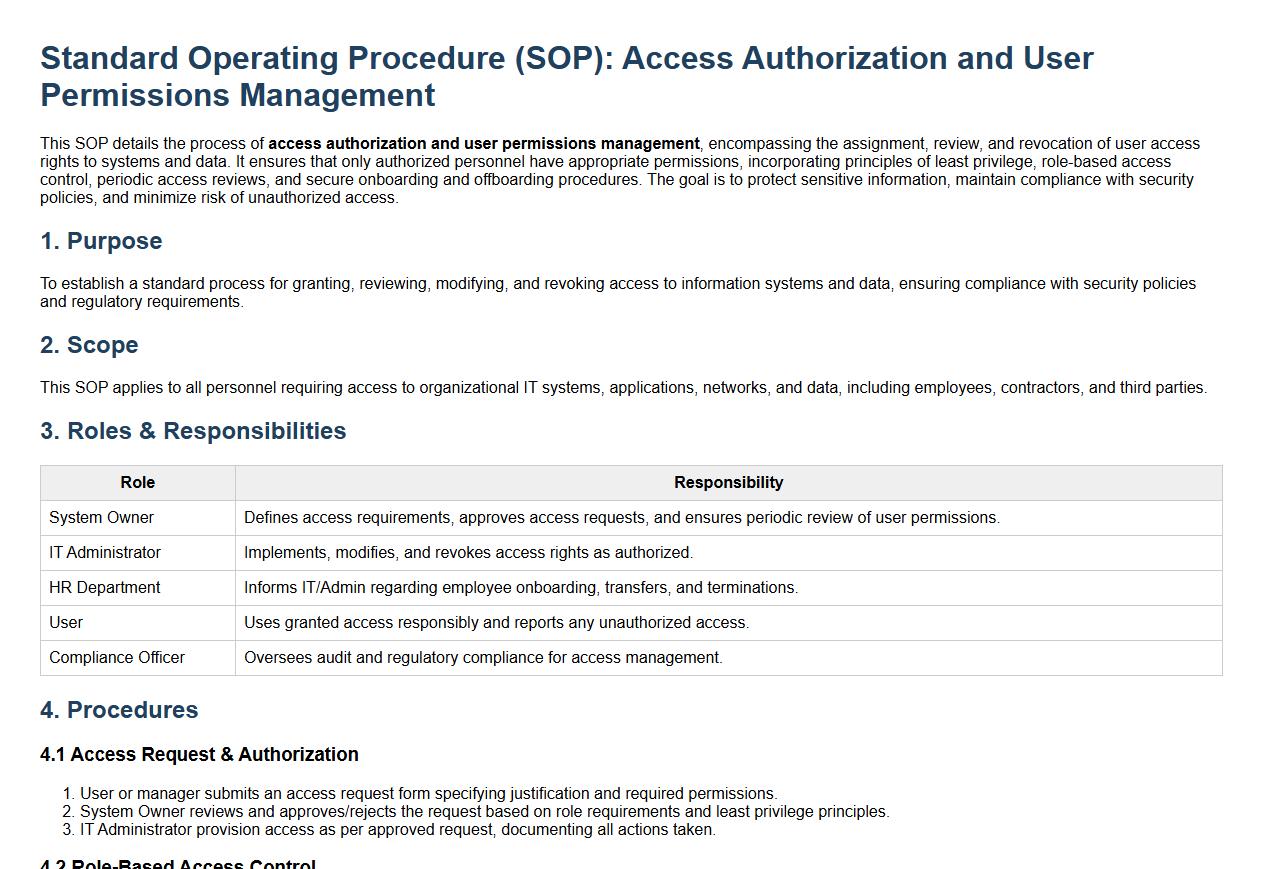
This SOP details the process of access authorization and user permissions management, encompassing the assignment, review, and revocation of user access rights to systems and data. It ensures that only authorized personnel have appropriate permissions, incorporating principles of least privilege, role-based access control, periodic access reviews, and secure onboarding and offboarding procedures. The goal is to protect sensitive information, maintain compliance with security policies, and minimize risk of unauthorized access.
Document review and update schedules.
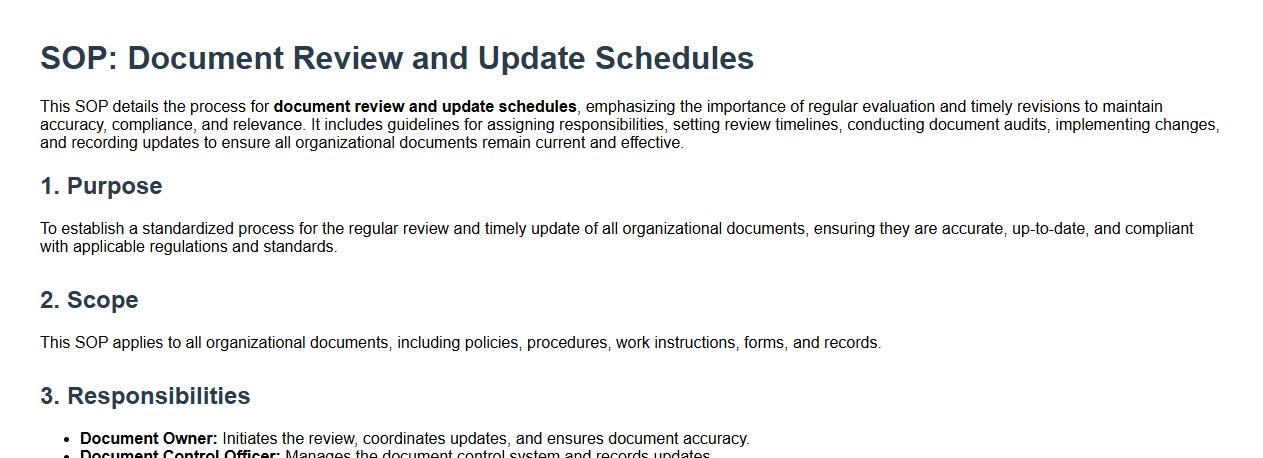
This SOP details the process for document review and update schedules, emphasizing the importance of regular evaluation and timely revisions to maintain accuracy, compliance, and relevance. It includes guidelines for assigning responsibilities, setting review timelines, conducting document audits, implementing changes, and recording updates to ensure all organizational documents remain current and effective.
Obsolete document removal and archival procedures.
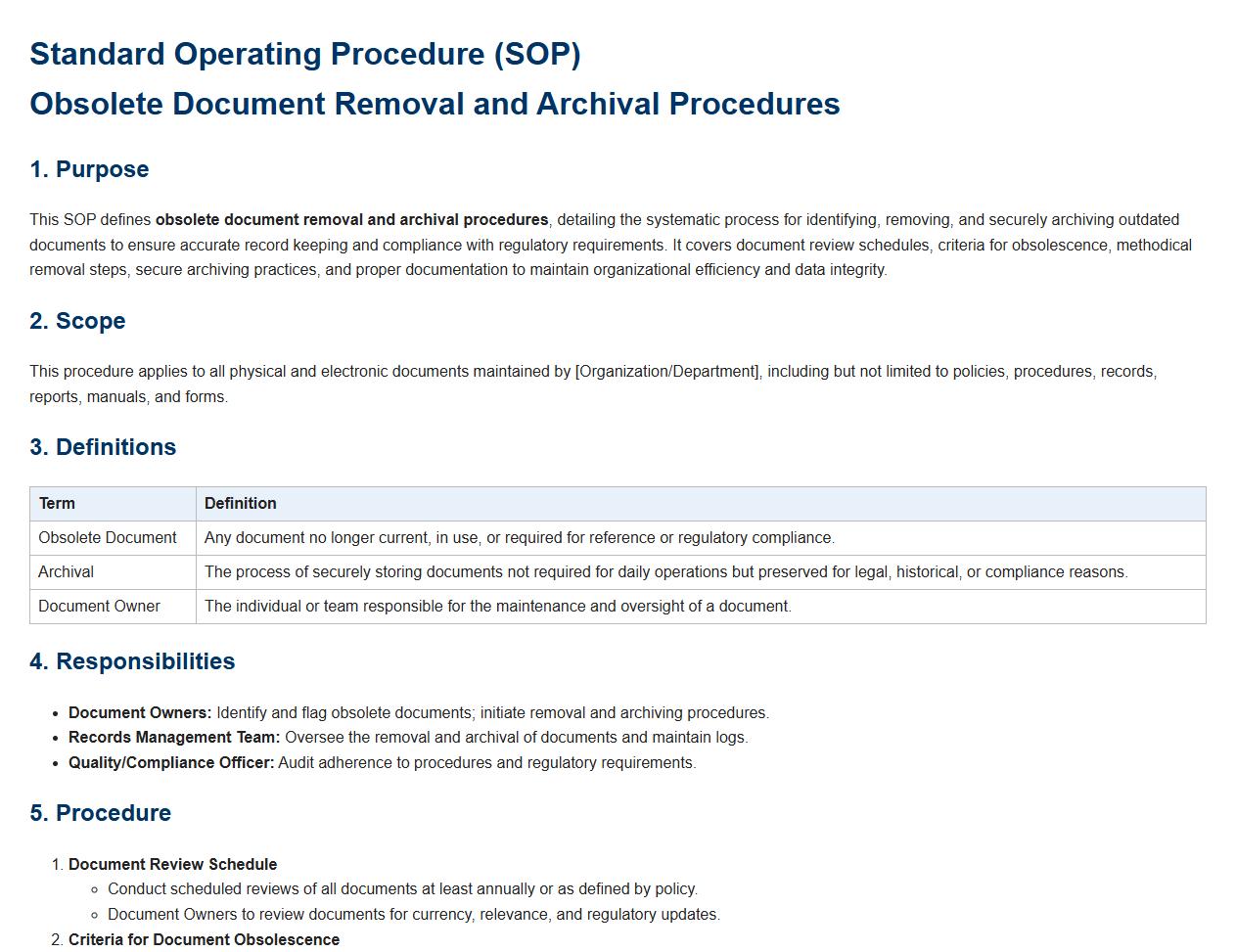
This SOP defines obsolete document removal and archival procedures, detailing the systematic process for identifying, removing, and securely archiving outdated documents to ensure accurate record keeping and compliance with regulatory requirements. It covers document review schedules, criteria for obsolescence, methodical removal steps, secure archiving practices, and proper documentation to maintain organizational efficiency and data integrity.
Backup and recovery of electronic documents.
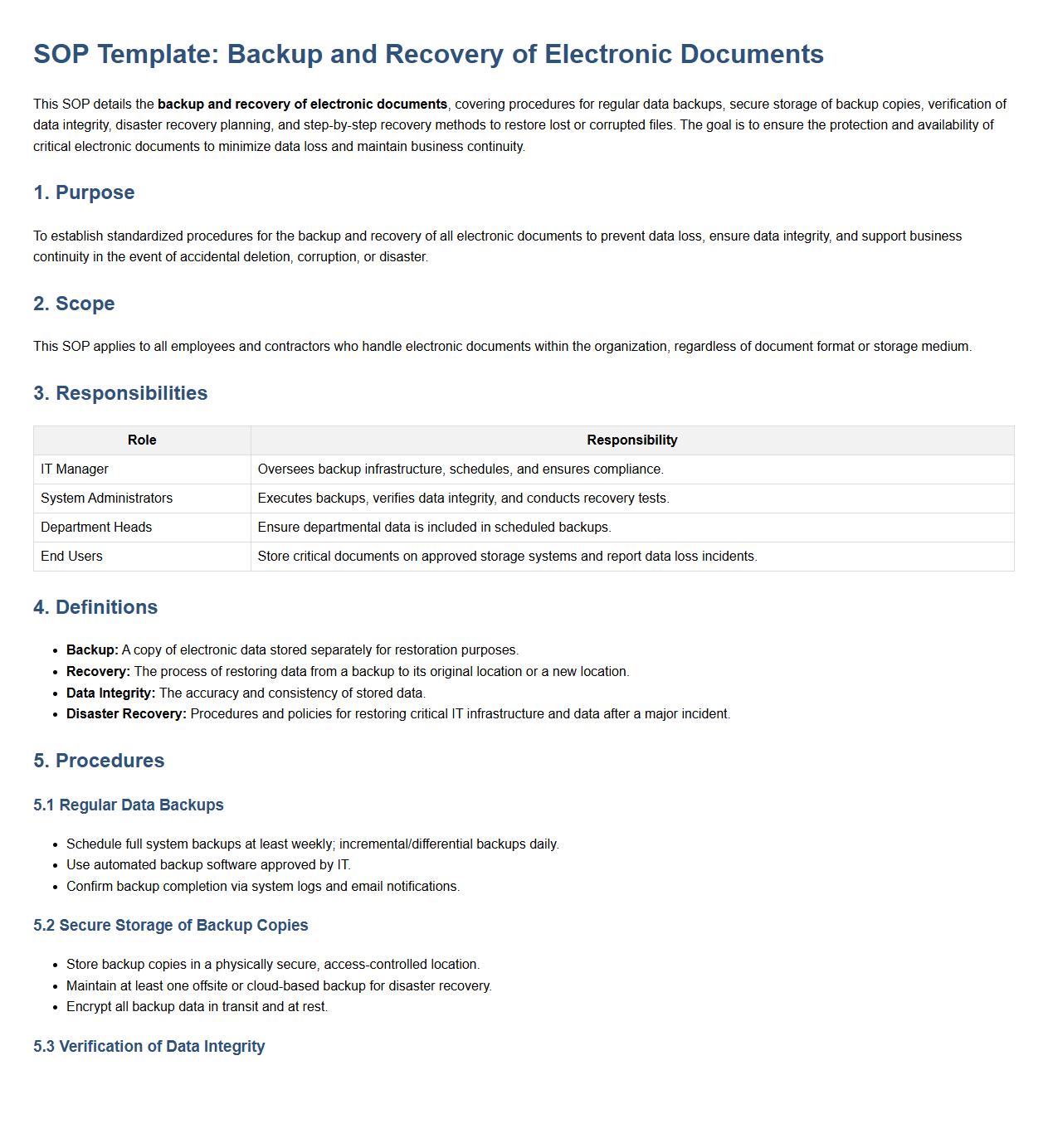
This SOP details the backup and recovery of electronic documents, covering procedures for regular data backups, secure storage of backup copies, verification of data integrity, disaster recovery planning, and step-by-step recovery methods to restore lost or corrupted files. The goal is to ensure the protection and availability of critical electronic documents to minimize data loss and maintain business continuity.
Physical document filing and security measures.
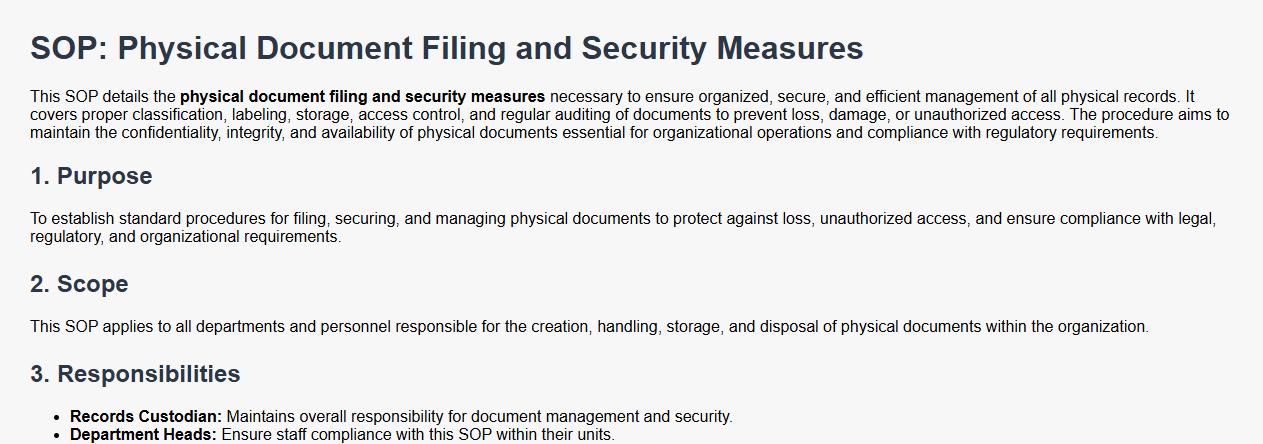
This SOP details the physical document filing and security measures necessary to ensure organized, secure, and efficient management of all physical records. It covers proper classification, labeling, storage, access control, and regular auditing of documents to prevent loss, damage, or unauthorized access. The procedure aims to maintain the confidentiality, integrity, and availability of physical documents essential for organizational operations and compliance with regulatory requirements.
Audit trails and compliance checks for document history.
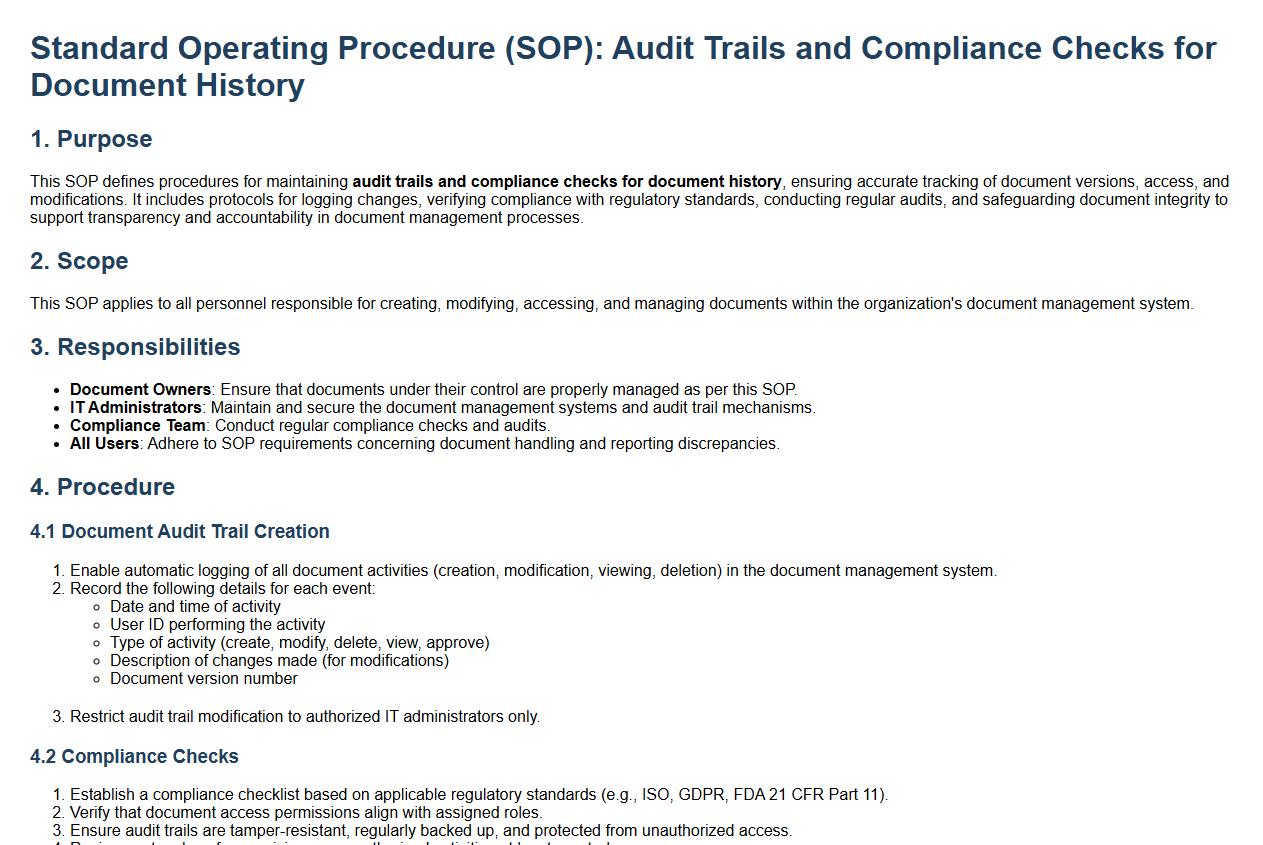
This SOP defines procedures for maintaining audit trails and compliance checks for document history, ensuring accurate tracking of document versions, access, and modifications. It includes protocols for logging changes, verifying compliance with regulatory standards, conducting regular audits, and safeguarding document integrity to support transparency and accountability in document management processes.
What is the primary objective of the SOP for Document Control and Filing?
The primary objective of the SOP for Document Control and Filing is to establish a standardized process for managing documents efficiently. It ensures all documents are accurate, current, and accessible to authorized personnel. This system supports regulatory compliance and organizational consistency.
How are document versions and revisions identified and managed?
Document versions and revisions are identified through unique version numbers and revision dates. The SOP mandates tracking these changes using a document revision history or log. This process ensures that only the latest and approved versions are in use.
What are the retention periods for different types of documents?
The SOP specifies distinct retention periods based on document type and regulatory requirements. Critical documents may be retained for several years, while routine records have shorter retention timelines. Proper retention ensures legal compliance and efficient information management.
What procedures ensure only authorized personnel access or modify documents?
Access control procedures include user authentication and role-based permissions to restrict document access. The SOP outlines protocols for document security and modification rights to authorize personnel only. These measures prevent unauthorized changes and protect document integrity.
How is document archiving and disposal handled according to the SOP?
Document archiving is conducted by securely storing inactive records for future reference, as defined by the SOP. Disposal procedures involve systematic destruction of documents after the retention period using secure methods. This ensures compliance with privacy policies and data protection standards.