

A SOP Template for Confidential Information Handling outlines standardized procedures to ensure sensitive data is managed securely and accessed only by authorized personnel. This template includes detailed steps for data classification, storage, transmission, and disposal to prevent data breaches and maintain compliance with privacy regulations. Implementing this SOP enhances organizational accountability and reduces the risk of unauthorized disclosure.
Classification and labeling of confidential information.
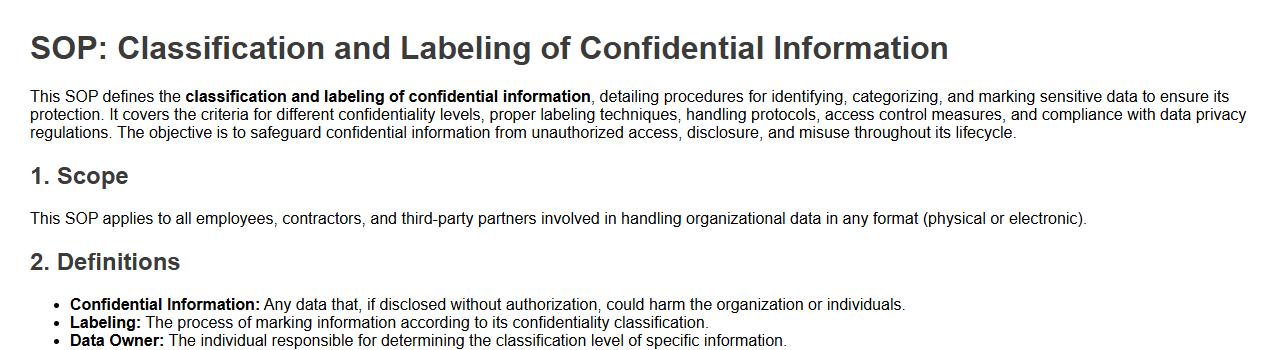
This SOP defines the classification and labeling of confidential information, detailing procedures for identifying, categorizing, and marking sensitive data to ensure its protection. It covers the criteria for different confidentiality levels, proper labeling techniques, handling protocols, access control measures, and compliance with data privacy regulations. The objective is to safeguard confidential information from unauthorized access, disclosure, and misuse throughout its lifecycle.
Access control procedures and authorization protocols.
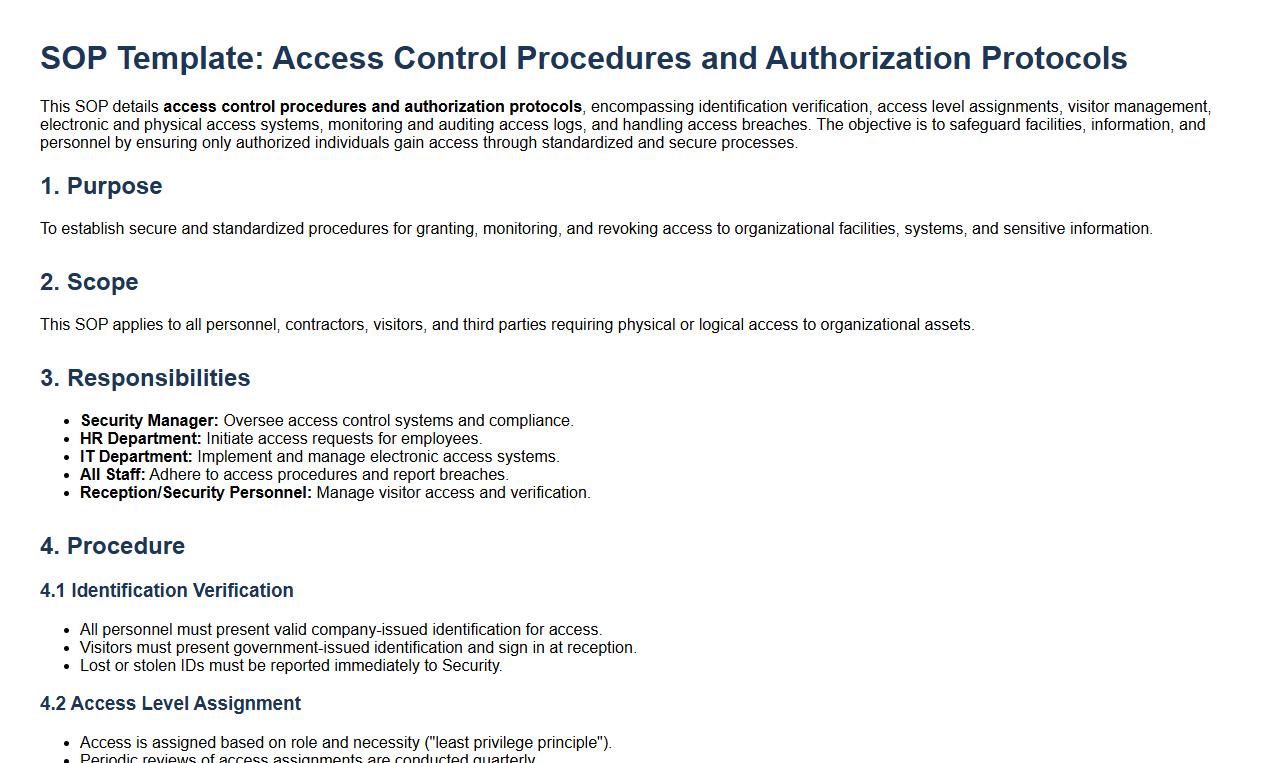
This SOP details access control procedures and authorization protocols, encompassing identification verification, access level assignments, visitor management, electronic and physical access systems, monitoring and auditing access logs, and handling access breaches. The objective is to safeguard facilities, information, and personnel by ensuring only authorized individuals gain access through standardized and secure processes.
Secure storage and transportation of sensitive data.
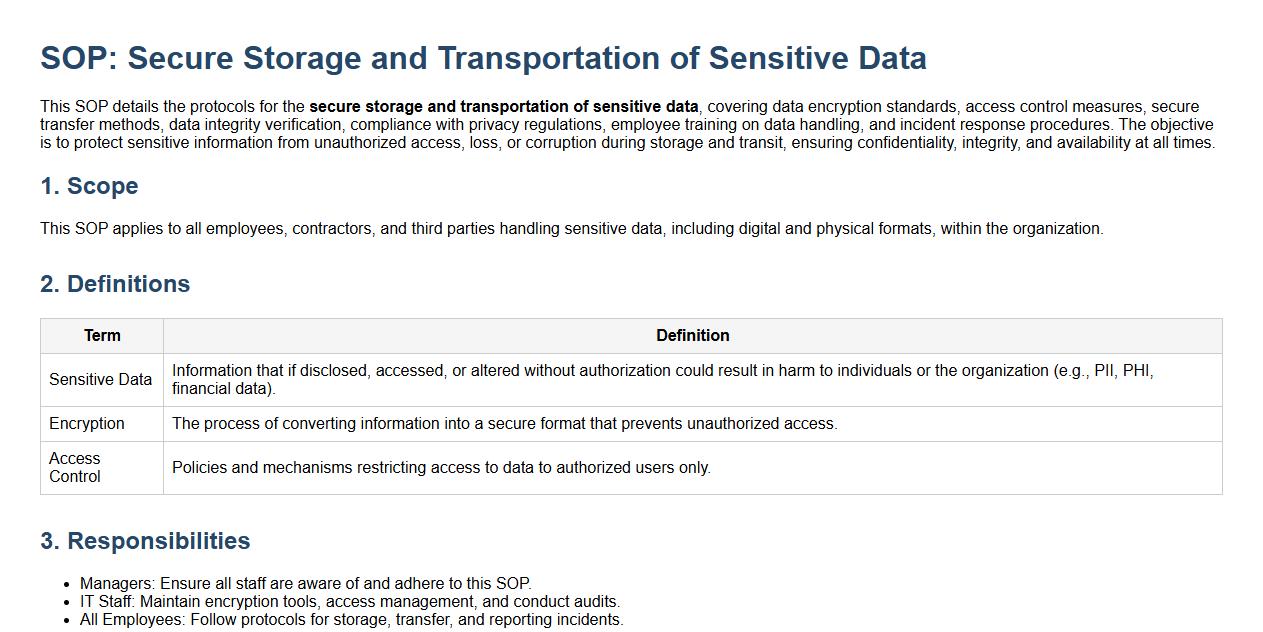
This SOP details the protocols for the secure storage and transportation of sensitive data, covering data encryption standards, access control measures, secure transfer methods, data integrity verification, compliance with privacy regulations, employee training on data handling, and incident response procedures. The objective is to protect sensitive information from unauthorized access, loss, or corruption during storage and transit, ensuring confidentiality, integrity, and availability at all times.
Procedures for sharing confidential information (internal and external).
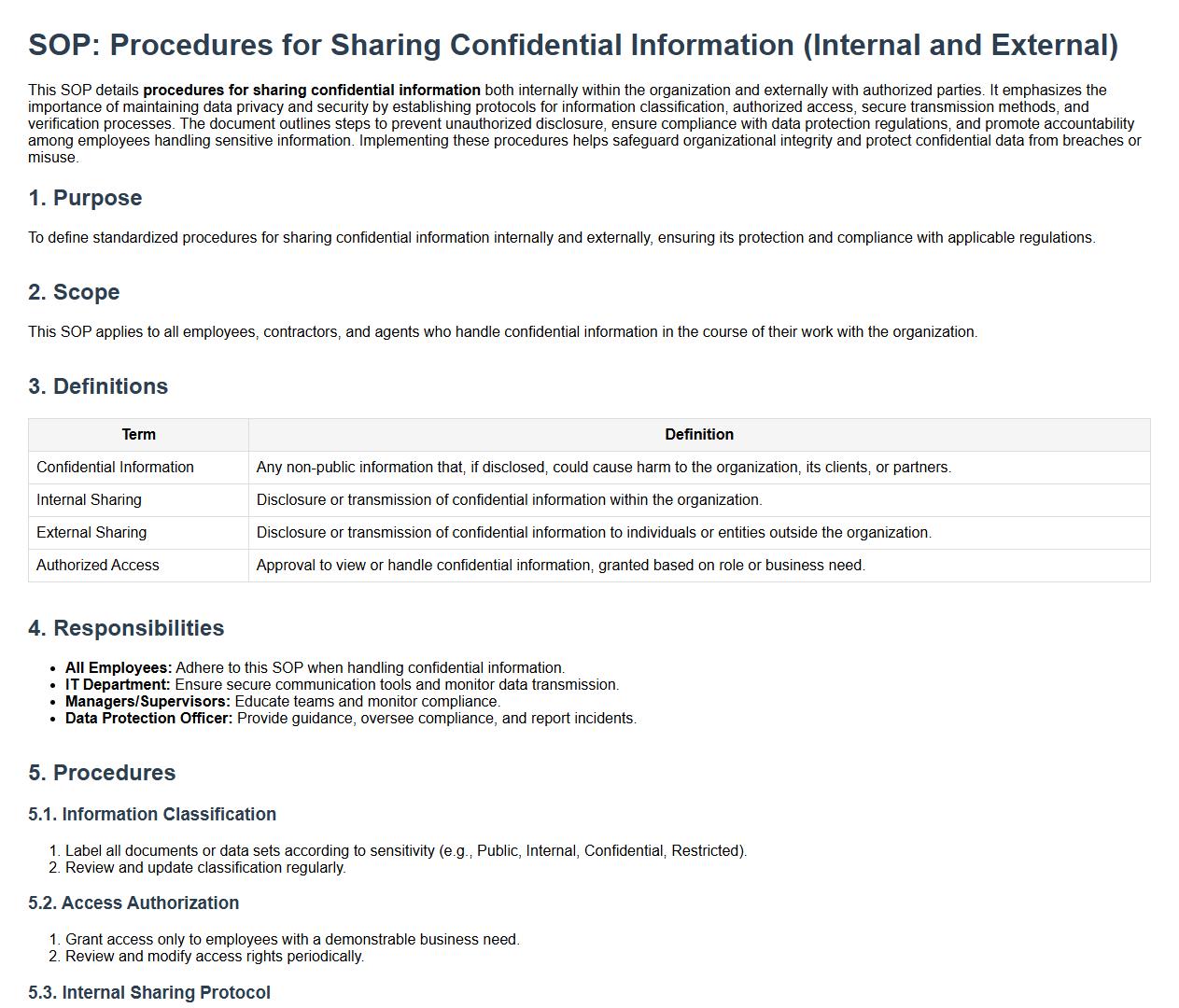
This SOP details procedures for sharing confidential information both internally within the organization and externally with authorized parties. It emphasizes the importance of maintaining data privacy and security by establishing protocols for information classification, authorized access, secure transmission methods, and verification processes. The document outlines steps to prevent unauthorized disclosure, ensure compliance with data protection regulations, and promote accountability among employees handling sensitive information. Implementing these procedures helps safeguard organizational integrity and protect confidential data from breaches or misuse.
Password management and encryption standards.
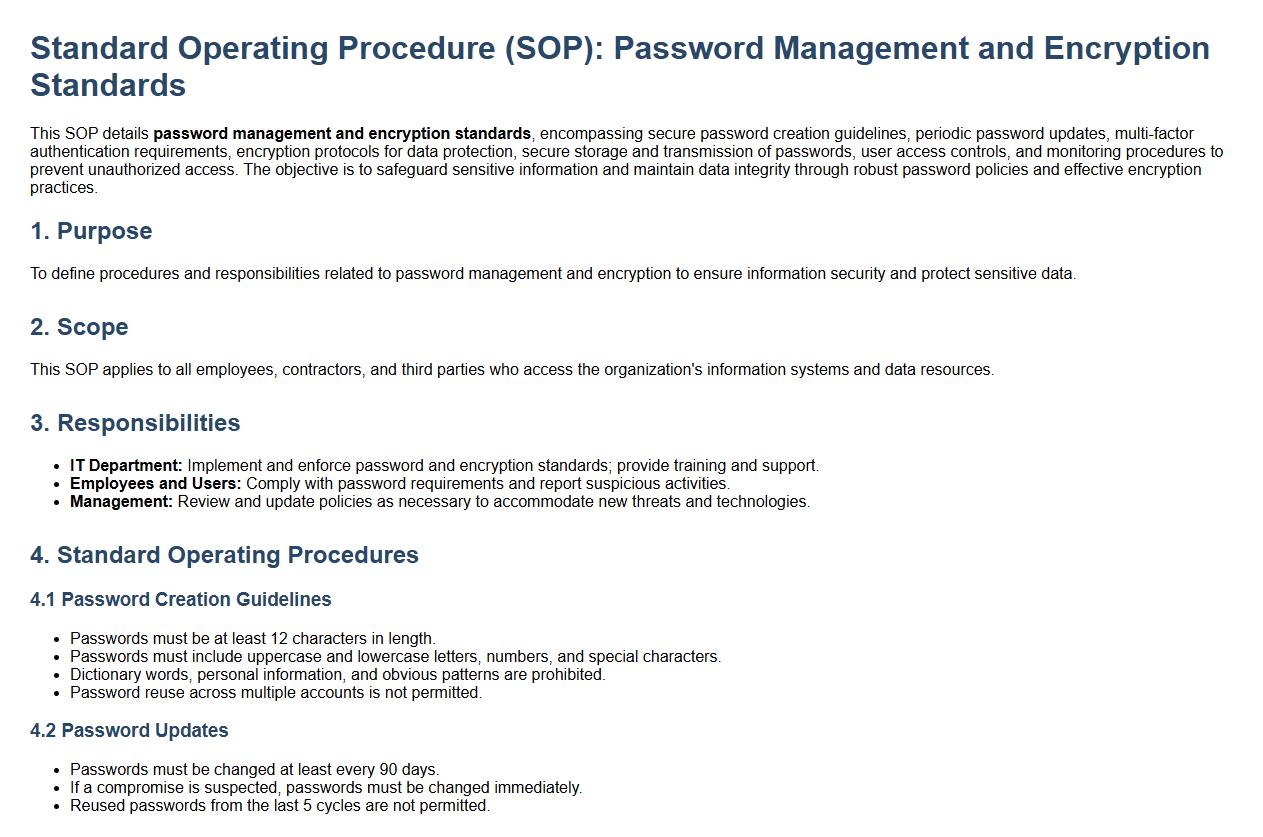
This SOP details password management and encryption standards, encompassing secure password creation guidelines, periodic password updates, multi-factor authentication requirements, encryption protocols for data protection, secure storage and transmission of passwords, user access controls, and monitoring procedures to prevent unauthorized access. The objective is to safeguard sensitive information and maintain data integrity through robust password policies and effective encryption practices.
Confidential information disposal and destruction processes.
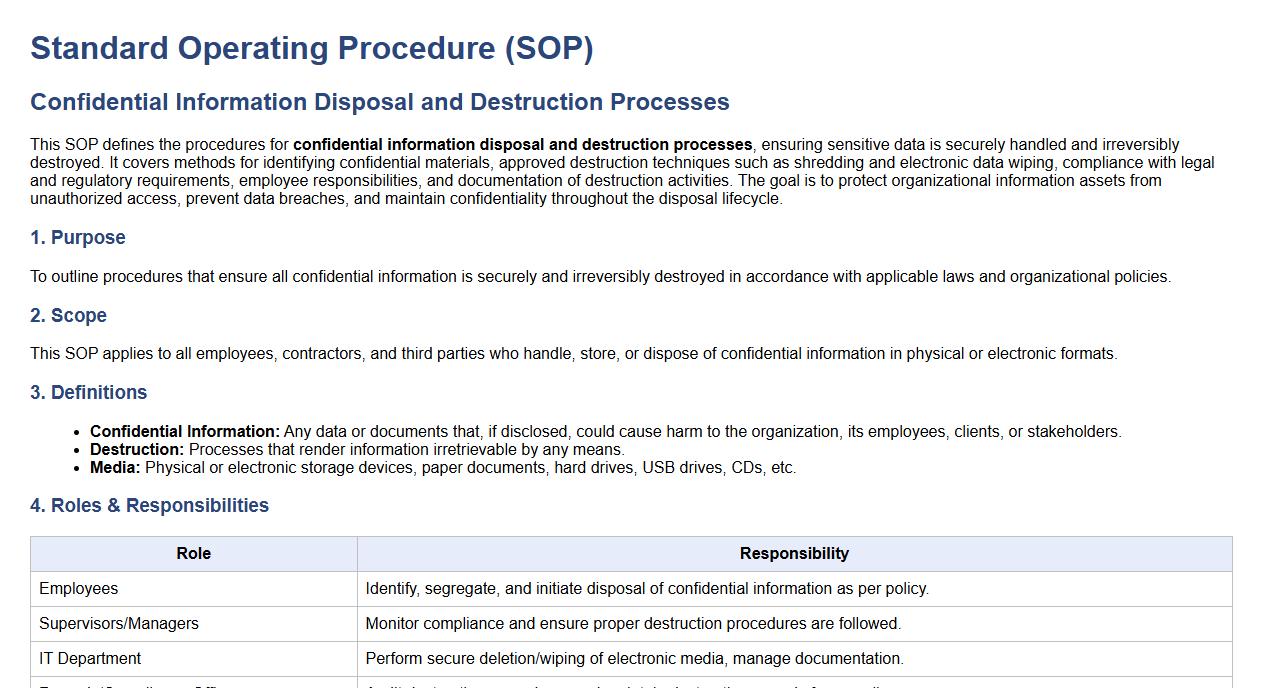
This SOP defines the procedures for confidential information disposal and destruction processes, ensuring sensitive data is securely handled and irreversibly destroyed. It covers methods for identifying confidential materials, approved destruction techniques such as shredding and electronic data wiping, compliance with legal and regulatory requirements, employee responsibilities, and documentation of destruction activities. The goal is to protect organizational information assets from unauthorized access, prevent data breaches, and maintain confidentiality throughout the disposal lifecycle.
Employee training and awareness requirements.
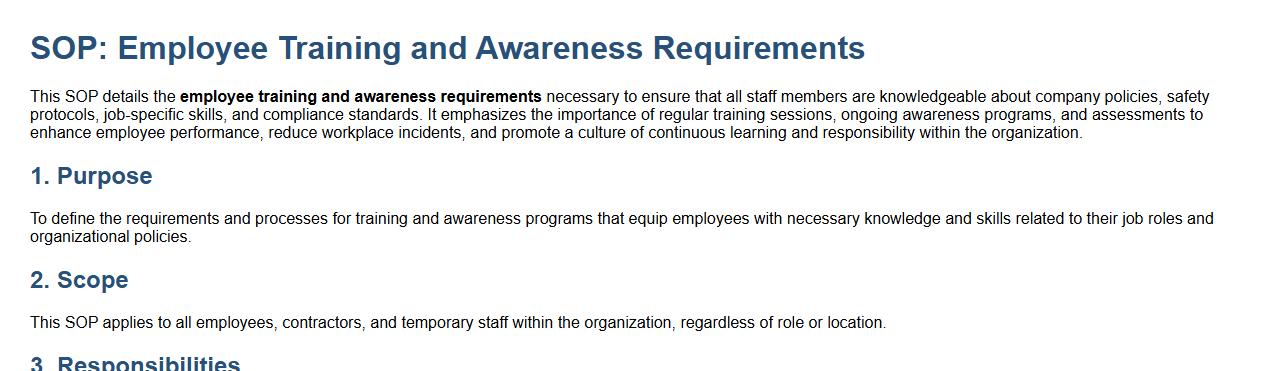
This SOP details the employee training and awareness requirements necessary to ensure that all staff members are knowledgeable about company policies, safety protocols, job-specific skills, and compliance standards. It emphasizes the importance of regular training sessions, ongoing awareness programs, and assessments to enhance employee performance, reduce workplace incidents, and promote a culture of continuous learning and responsibility within the organization.
Routine audits and compliance checks.
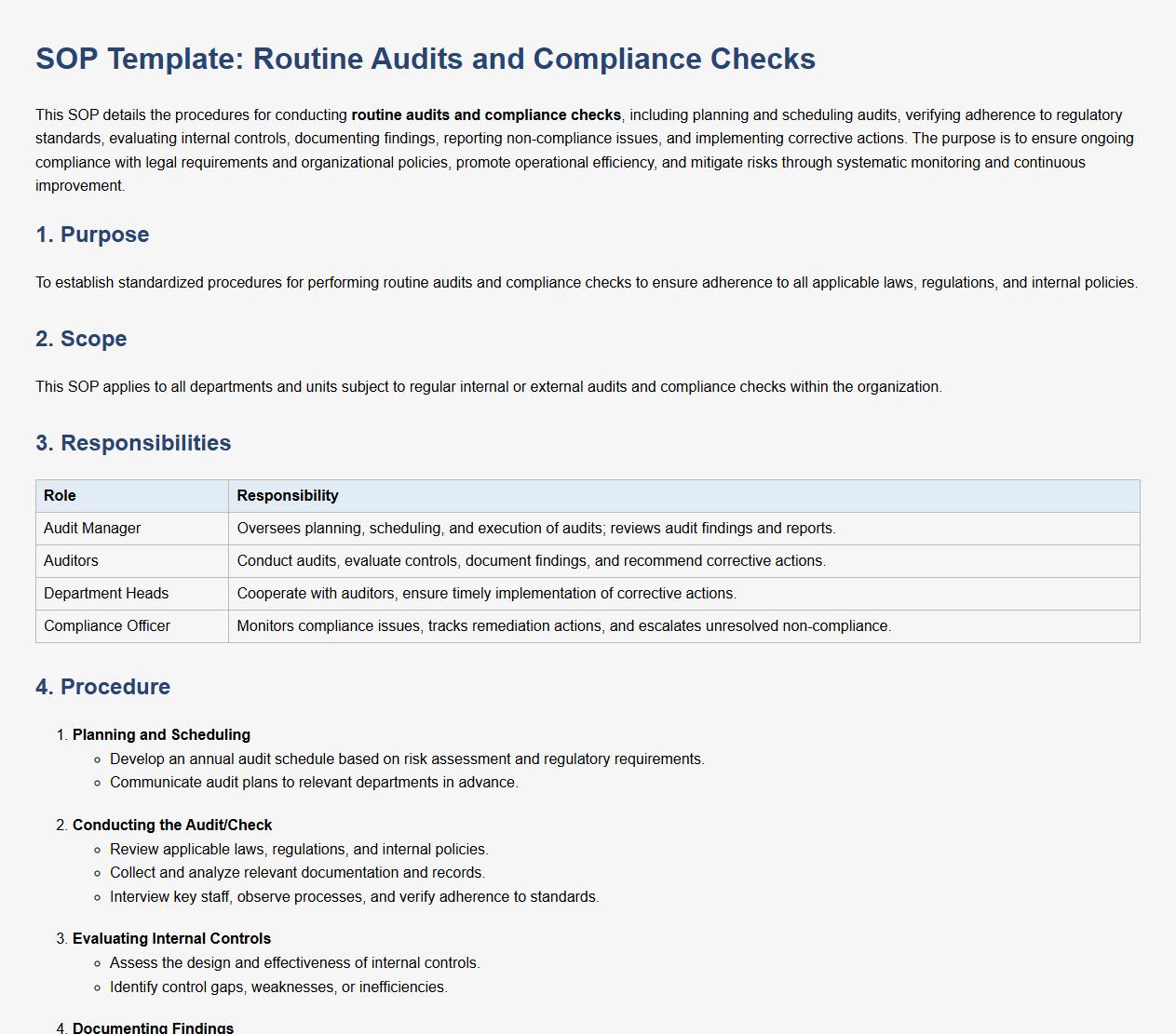
This SOP details the procedures for conducting routine audits and compliance checks, including planning and scheduling audits, verifying adherence to regulatory standards, evaluating internal controls, documenting findings, reporting non-compliance issues, and implementing corrective actions. The purpose is to ensure ongoing compliance with legal requirements and organizational policies, promote operational efficiency, and mitigate risks through systematic monitoring and continuous improvement.
Incident reporting and breach response procedures.
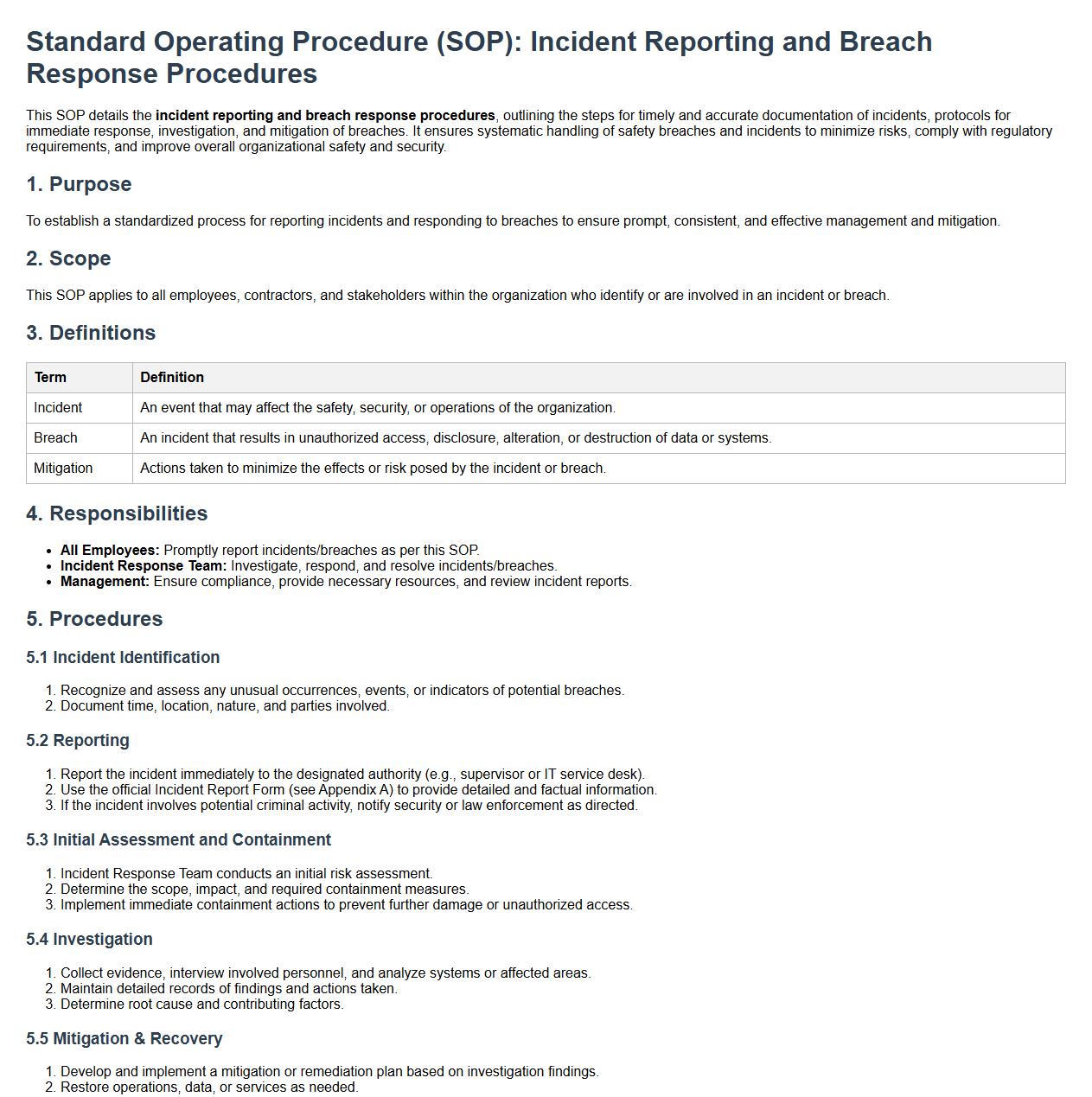
This SOP details the incident reporting and breach response procedures, outlining the steps for timely and accurate documentation of incidents, protocols for immediate response, investigation, and mitigation of breaches. It ensures systematic handling of safety breaches and incidents to minimize risks, comply with regulatory requirements, and improve overall organizational safety and security.
Documentation and record-keeping of confidential data activities.
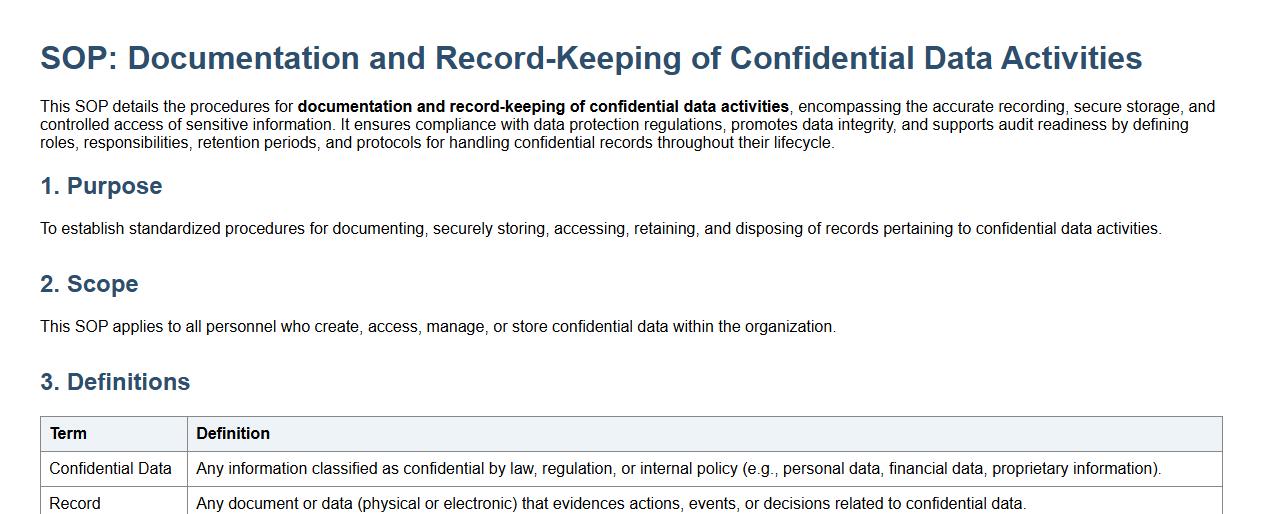
This SOP details the procedures for documentation and record-keeping of confidential data activities, encompassing the accurate recording, secure storage, and controlled access of sensitive information. It ensures compliance with data protection regulations, promotes data integrity, and supports audit readiness by defining roles, responsibilities, retention periods, and protocols for handling confidential records throughout their lifecycle.
What defines "confidential information" according to the SOP?
Confidential information as defined in the SOP includes all data and materials that are not publicly available and are intended to be kept private. This can encompass personal data, proprietary business information, and sensitive operational details. Protecting this information is critical to maintaining organizational integrity and trust.
Which personnel are authorized to access confidential information as per this SOP?
Access to confidential information is restricted to personnel who have a legitimate business need and proper authorization. Typically, this includes designated employees, management, and certain third-party contractors under strict confidentiality agreements. Unauthorized access is strictly prohibited to minimize risk.
What are the mandatory security measures stated in the SOP for storing confidential documents?
The SOP mandates storing confidential documents in secure, access-controlled environments such as locked cabinets or encrypted digital storage. Documentation must be organized and handled with care to prevent unauthorized exposure. Regular audits and access logs are required to maintain security compliance.
What procedures must be followed when transmitting confidential information electronically?
When transmitting confidential information electronically, the SOP requires using encrypted communication channels and secure file transfer methods. Employees must verify recipient credentials and avoid transmitting over unsecured networks. Additionally, passwords and multi-factor authentication are strongly recommended.
How does the SOP outline the process for reporting and managing breaches of confidentiality?
The SOP requires immediate reporting of any breach of confidentiality to designated security personnel or the compliance department. There are defined steps for investigating breaches, containing damage, and notifying affected parties as necessary. Corrective actions and preventive measures must be implemented to avoid recurrence.