
A SOP Template for Document Filing and Archiving ensures consistent and efficient management of documents by outlining standardized procedures for categorizing, storing, and retrieving files. This template helps maintain accuracy, compliance, and easy access to important records, reducing the risk of loss or misplacement. Implementing a clear SOP enhances organizational productivity and supports audit readiness.
Document classification and categorization procedures.
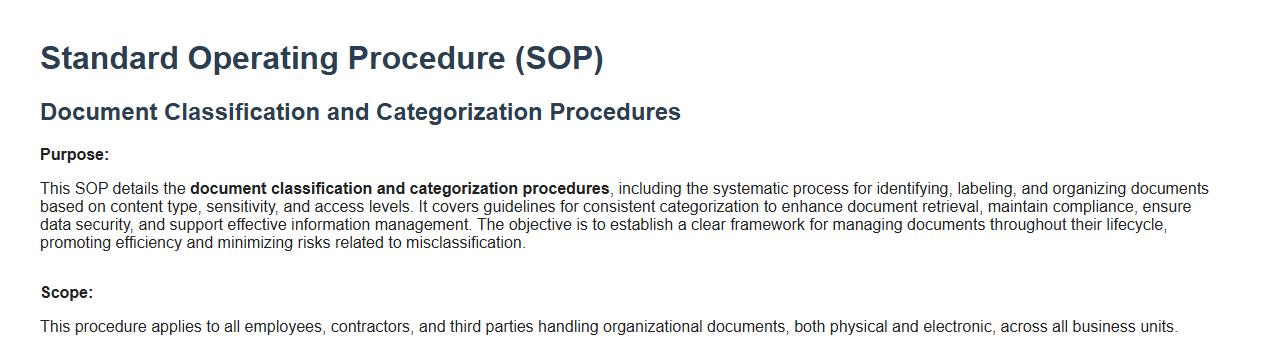
This SOP details the document classification and categorization procedures, including the systematic process for identifying, labeling, and organizing documents based on content type, sensitivity, and access levels. It covers guidelines for consistent categorization to enhance document retrieval, maintain compliance, ensure data security, and support effective information management. The objective is to establish a clear framework for managing documents throughout their lifecycle, promoting efficiency and minimizing risks related to misclassification.
File naming conventions and version control.
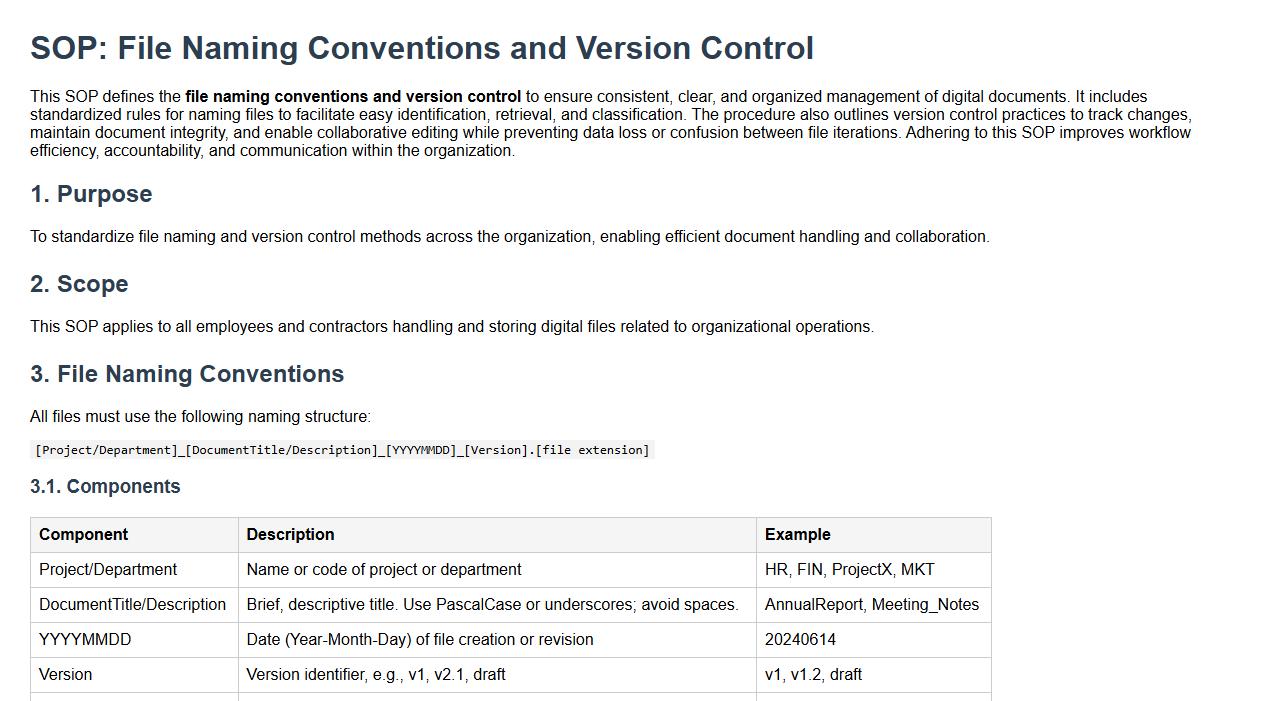
This SOP defines the file naming conventions and version control to ensure consistent, clear, and organized management of digital documents. It includes standardized rules for naming files to facilitate easy identification, retrieval, and classification. The procedure also outlines version control practices to track changes, maintain document integrity, and enable collaborative editing while preventing data loss or confusion between file iterations. Adhering to this SOP improves workflow efficiency, accountability, and communication within the organization.
Step-by-step physical document filing process.
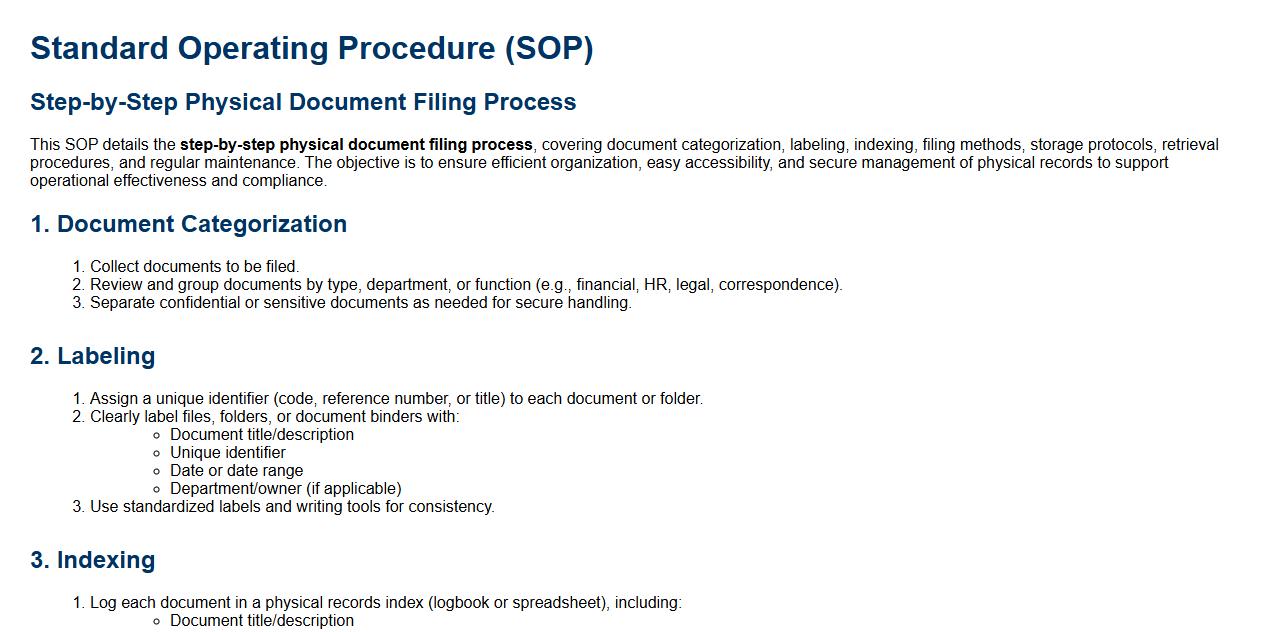
This SOP details the step-by-step physical document filing process, covering document categorization, labeling, indexing, filing methods, storage protocols, retrieval procedures, and regular maintenance. The objective is to ensure efficient organization, easy accessibility, and secure management of physical records to support operational effectiveness and compliance.
Digital document scanning and storage protocols.
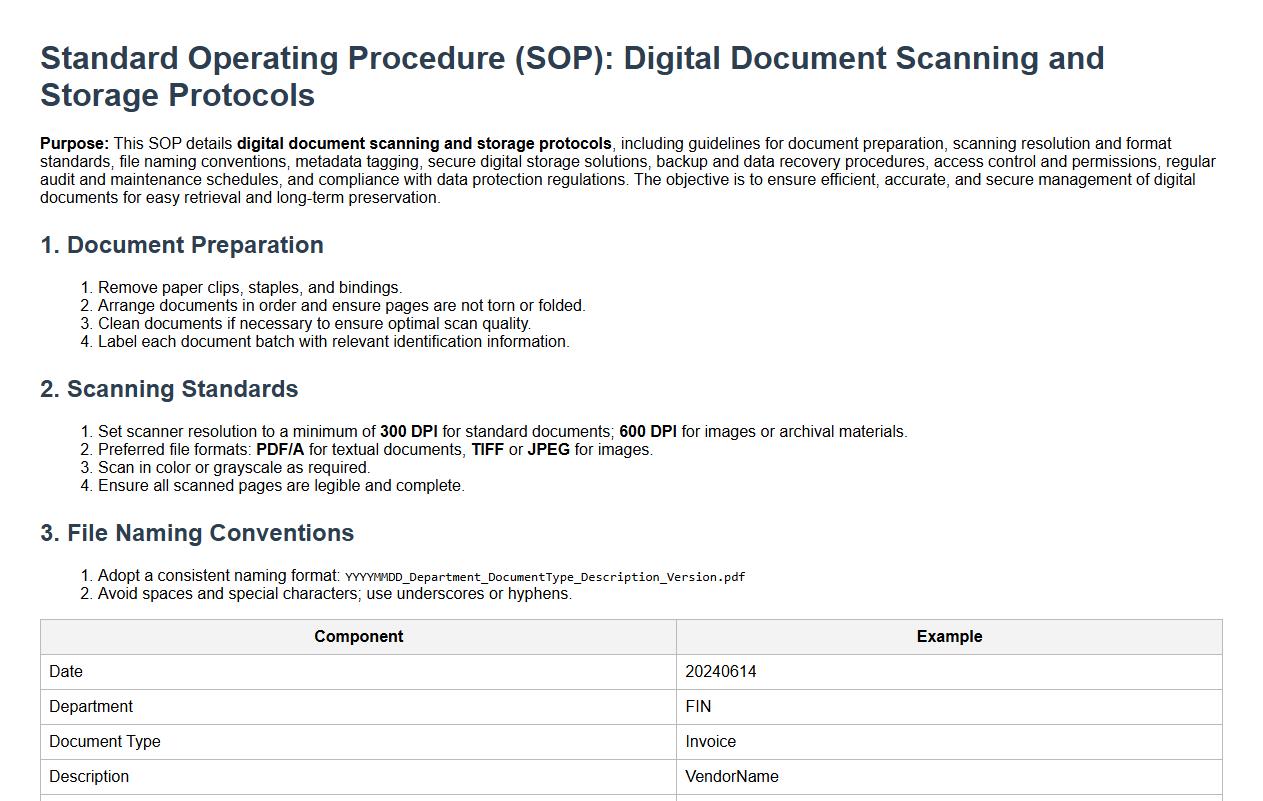
This SOP details digital document scanning and storage protocols, including guidelines for document preparation, scanning resolution and format standards, file naming conventions, metadata tagging, secure digital storage solutions, backup and data recovery procedures, access control and permissions, regular audit and maintenance schedules, and compliance with data protection regulations. The objective is to ensure efficient, accurate, and secure management of digital documents for easy retrieval and long-term preservation.
Access control and document security measures.
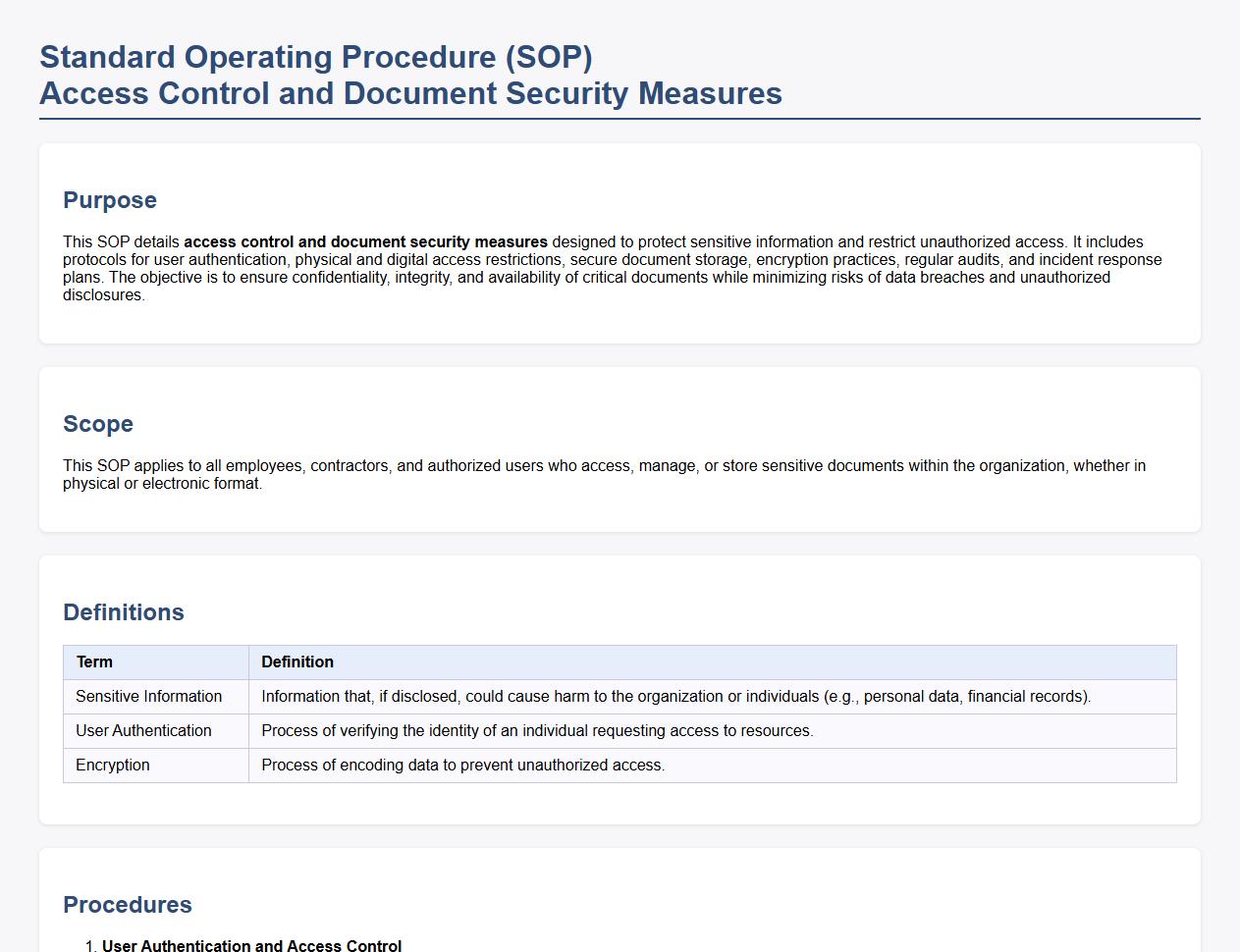
This SOP details access control and document security measures designed to protect sensitive information and restrict unauthorized access. It includes protocols for user authentication, physical and digital access restrictions, secure document storage, encryption practices, regular audits, and incident response plans. The objective is to ensure confidentiality, integrity, and availability of critical documents while minimizing risks of data breaches and unauthorized disclosures.
Archiving schedule and retention timelines.
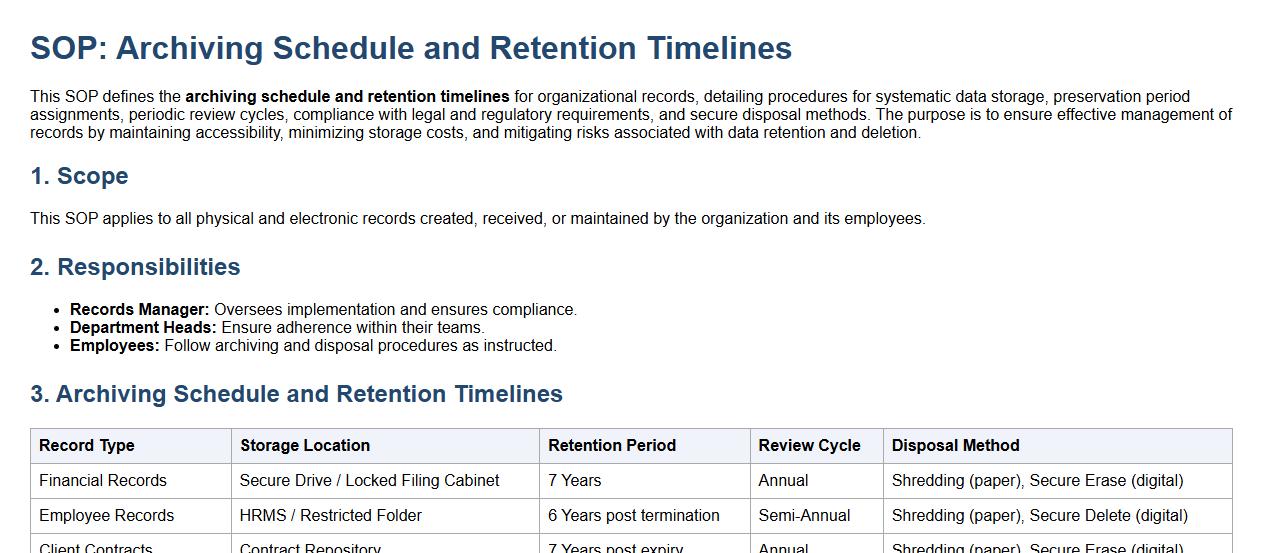
This SOP defines the archiving schedule and retention timelines for organizational records, detailing procedures for systematic data storage, preservation period assignments, periodic review cycles, compliance with legal and regulatory requirements, and secure disposal methods. The purpose is to ensure effective management of records by maintaining accessibility, minimizing storage costs, and mitigating risks associated with data retention and deletion.
Document retrieval and checkout procedures.
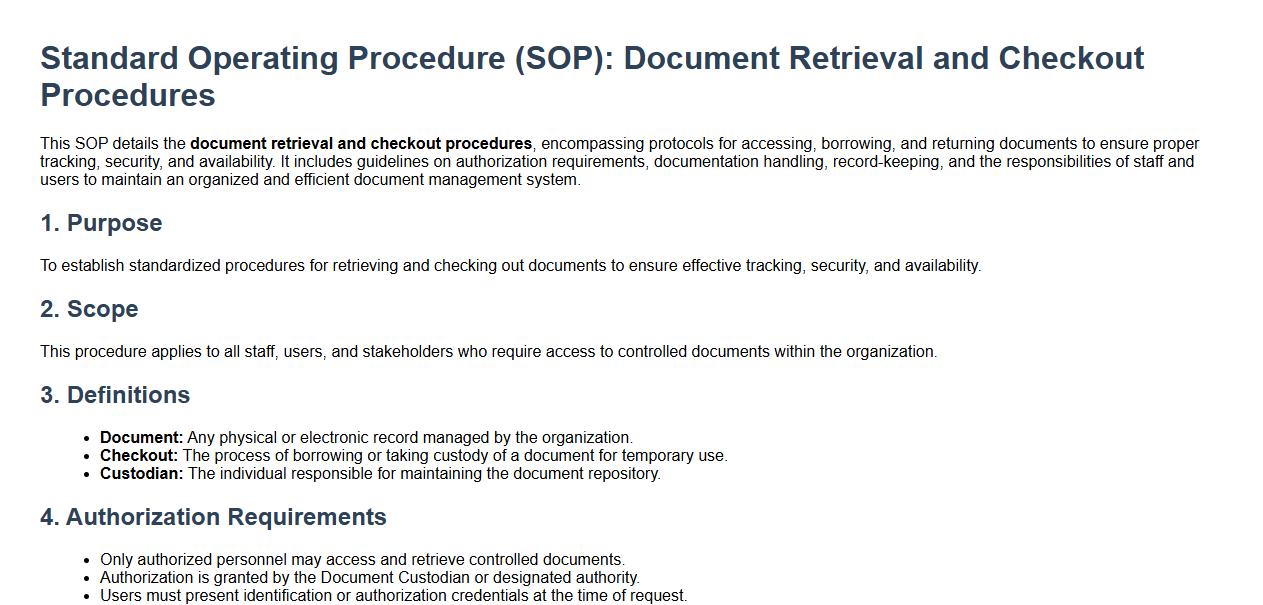
This SOP details the document retrieval and checkout procedures, encompassing protocols for accessing, borrowing, and returning documents to ensure proper tracking, security, and availability. It includes guidelines on authorization requirements, documentation handling, record-keeping, and the responsibilities of staff and users to maintain an organized and efficient document management system.
Disposal and destruction of obsolete documents.
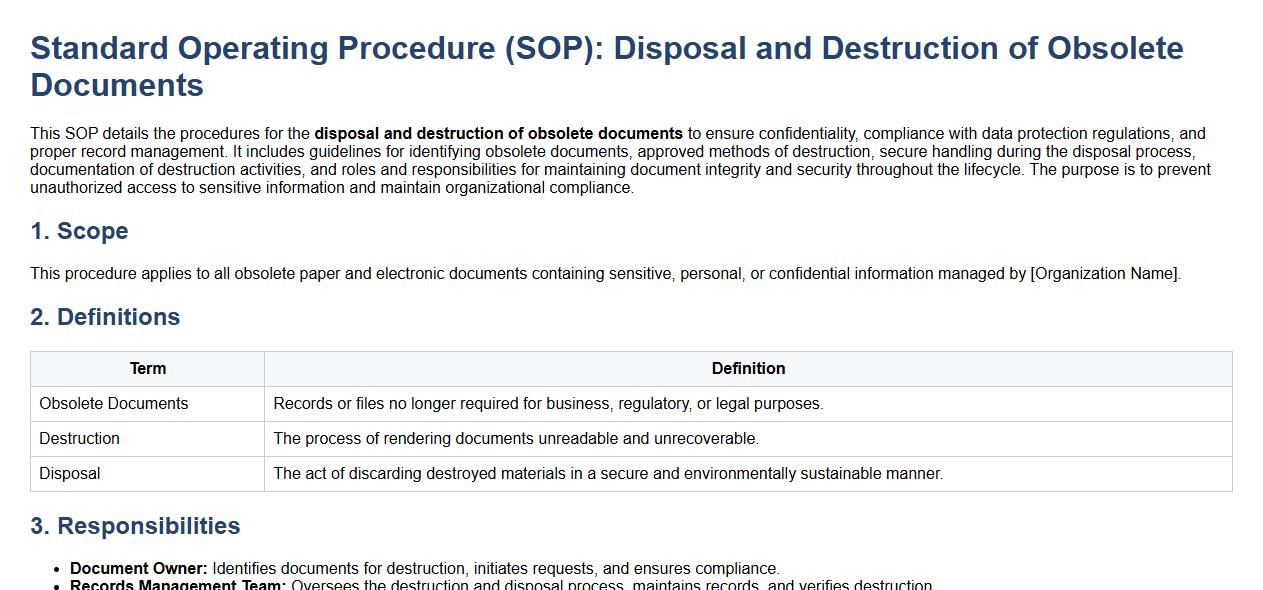
This SOP details the procedures for the disposal and destruction of obsolete documents to ensure confidentiality, compliance with data protection regulations, and proper record management. It includes guidelines for identifying obsolete documents, approved methods of destruction, secure handling during the disposal process, documentation of destruction activities, and roles and responsibilities for maintaining document integrity and security throughout the lifecycle. The purpose is to prevent unauthorized access to sensitive information and maintain organizational compliance.
Periodic audit and compliance checks.
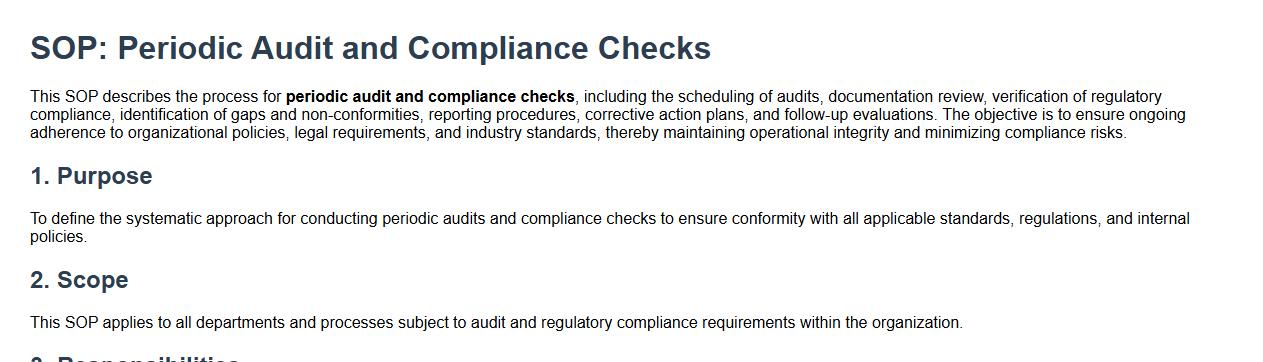
This SOP describes the process for periodic audit and compliance checks, including the scheduling of audits, documentation review, verification of regulatory compliance, identification of gaps and non-conformities, reporting procedures, corrective action plans, and follow-up evaluations. The objective is to ensure ongoing adherence to organizational policies, legal requirements, and industry standards, thereby maintaining operational integrity and minimizing compliance risks.
Backup and disaster recovery guidelines.
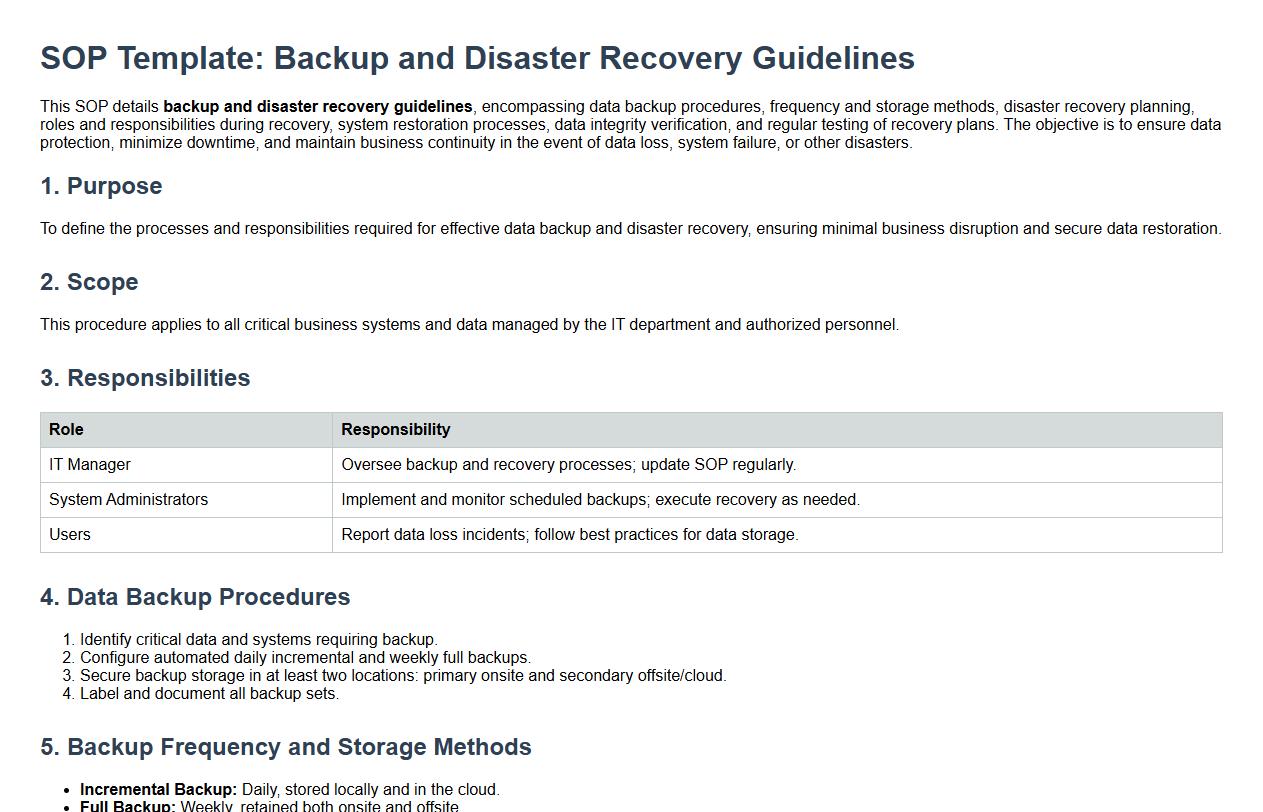
This SOP details backup and disaster recovery guidelines, encompassing data backup procedures, frequency and storage methods, disaster recovery planning, roles and responsibilities during recovery, system restoration processes, data integrity verification, and regular testing of recovery plans. The objective is to ensure data protection, minimize downtime, and maintain business continuity in the event of data loss, system failure, or other disasters.
What is the primary purpose of the SOP for Document Filing and Archiving?
The primary purpose of the SOP for Document Filing and Archiving is to establish a consistent and efficient system for managing documents. This ensures easy retrieval, secure storage, and proper organization of all company records. The SOP aims to enhance document integrity and compliance with regulatory requirements.
Which types of documents are governed by the filing and archiving SOP?
The SOP governs all official business documents, including contracts, reports, invoices, and correspondence. It covers both physical and electronic documents to ensure comprehensive record management. This uniform approach helps maintain consistency across various document types within the organization.
What are the standardized naming conventions and categorization rules outlined in the SOP?
The SOP mandates a standardized naming convention that includes document type, date, and version number for easy identification. Categorization rules classify documents based on departments, projects, and document status. Such standardized protocols facilitate quick search and efficient document management.
What procedures must be followed for accessing, retrieving, and modifying archived documents?
Access to archived documents requires proper authorization to maintain document security and confidentiality. Retrieval procedures involve logging access requests and monitoring document usage. Any modifications must be documented with version control to preserve the document's integrity.
What security and retention measures are specified for archived documents in the SOP?
The SOP enforces strict security protocols including encryption, access controls, and secured storage facilities. Retention measures specify the duration each document must be kept in compliance with legal and operational requirements. Regular audits and backups are conducted to prevent data loss and ensure document preservation.