
A SOP Template for Internal Communication Procedures ensures consistent and clear guidelines for effective information exchange within an organization. This template outlines standardized steps for message creation, approval, and distribution, promoting transparency and reducing misunderstandings. Proper use of the SOP enhances collaboration and operational efficiency across all departments.
Internal communication channels setup and access protocols.
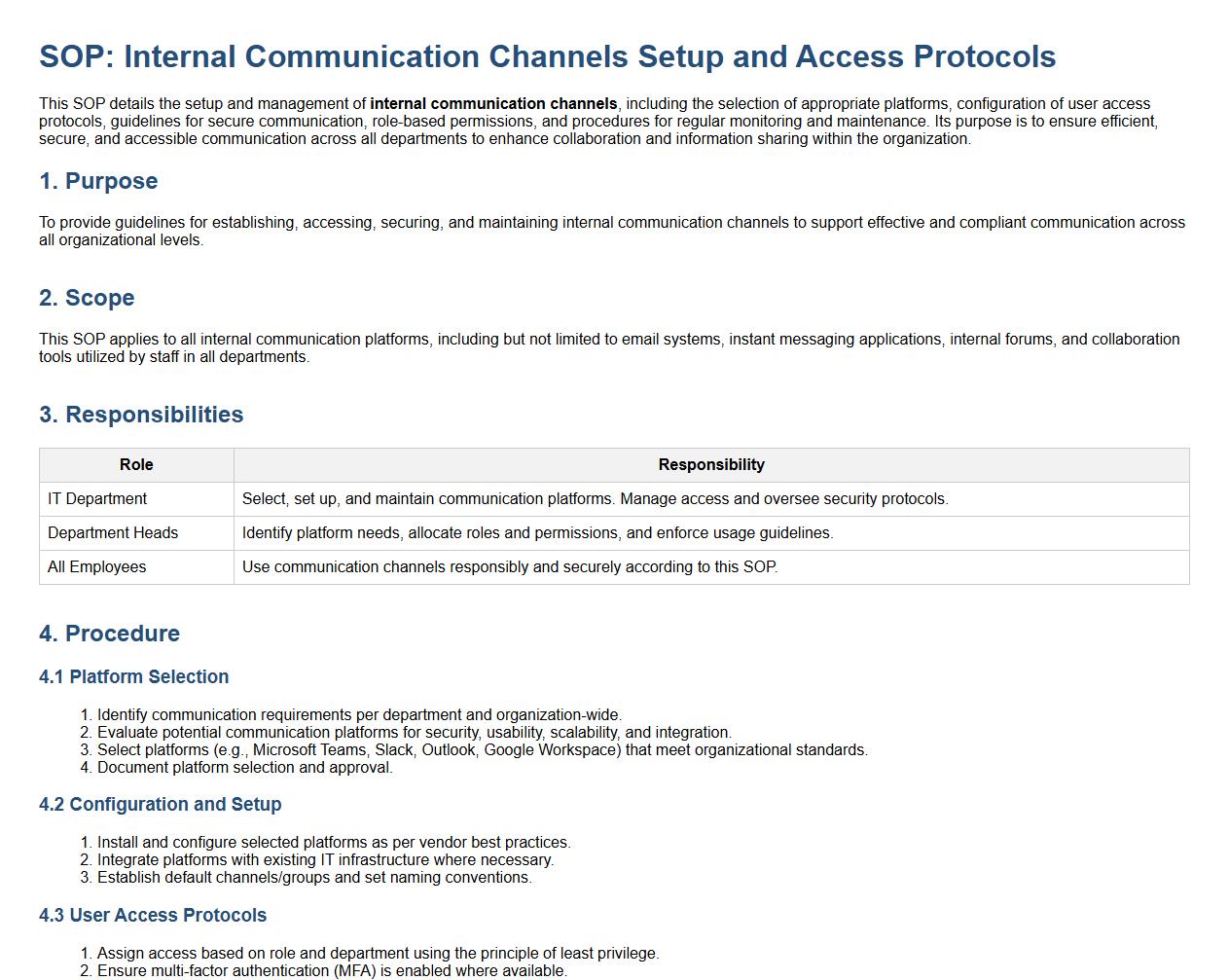
This SOP details the setup and management of internal communication channels, including the selection of appropriate platforms, configuration of user access protocols, guidelines for secure communication, role-based permissions, and procedures for regular monitoring and maintenance. Its purpose is to ensure efficient, secure, and accessible communication across all departments to enhance collaboration and information sharing within the organization.
Standardized email and message formatting guidelines.
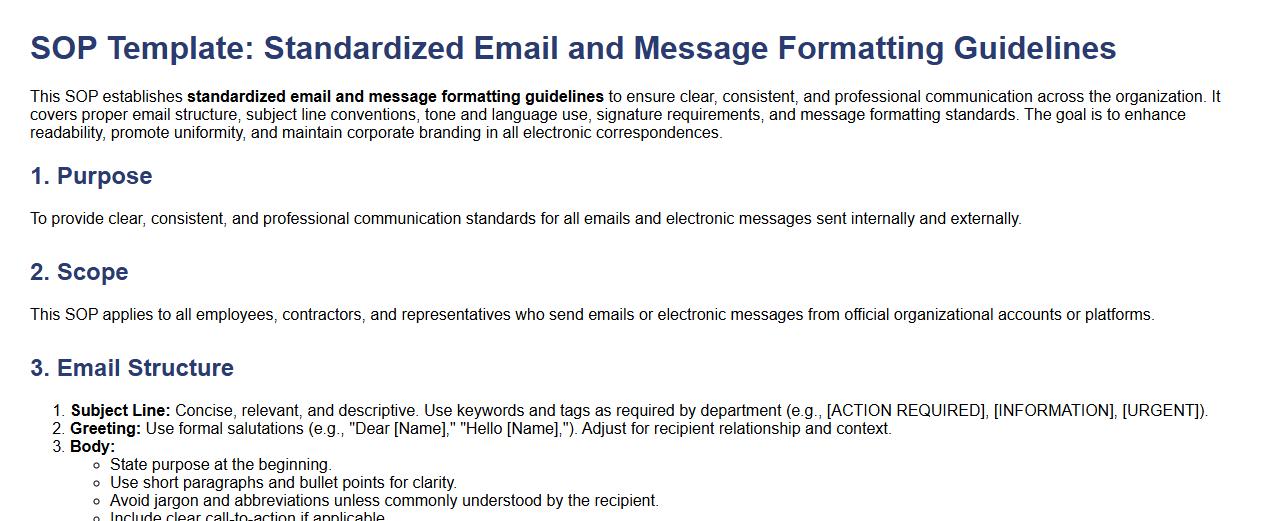
This SOP establishes standardized email and message formatting guidelines to ensure clear, consistent, and professional communication across the organization. It covers proper email structure, subject line conventions, tone and language use, signature requirements, and message formatting standards. The goal is to enhance readability, promote uniformity, and maintain corporate branding in all electronic correspondences.
Regular team meeting scheduling and agenda distribution.
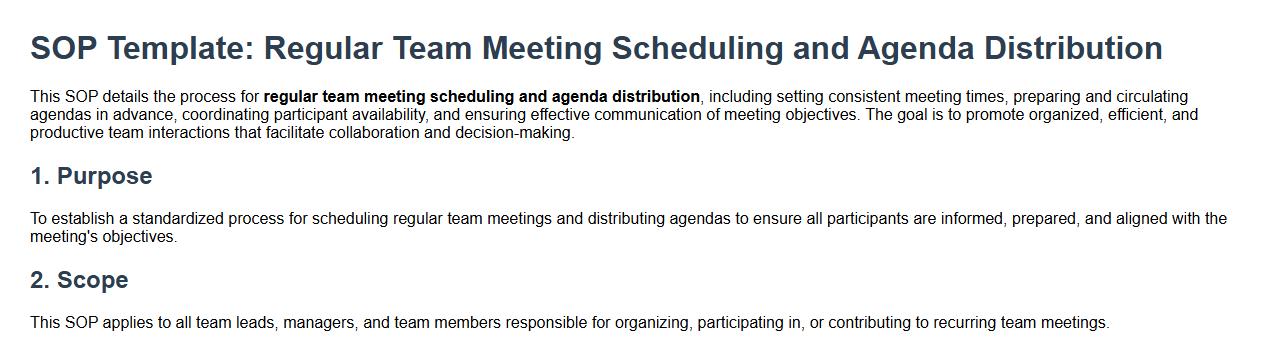
This SOP details the process for regular team meeting scheduling and agenda distribution, including setting consistent meeting times, preparing and circulating agendas in advance, coordinating participant availability, and ensuring effective communication of meeting objectives. The goal is to promote organized, efficient, and productive team interactions that facilitate collaboration and decision-making.
Escalation procedures for urgent communications.
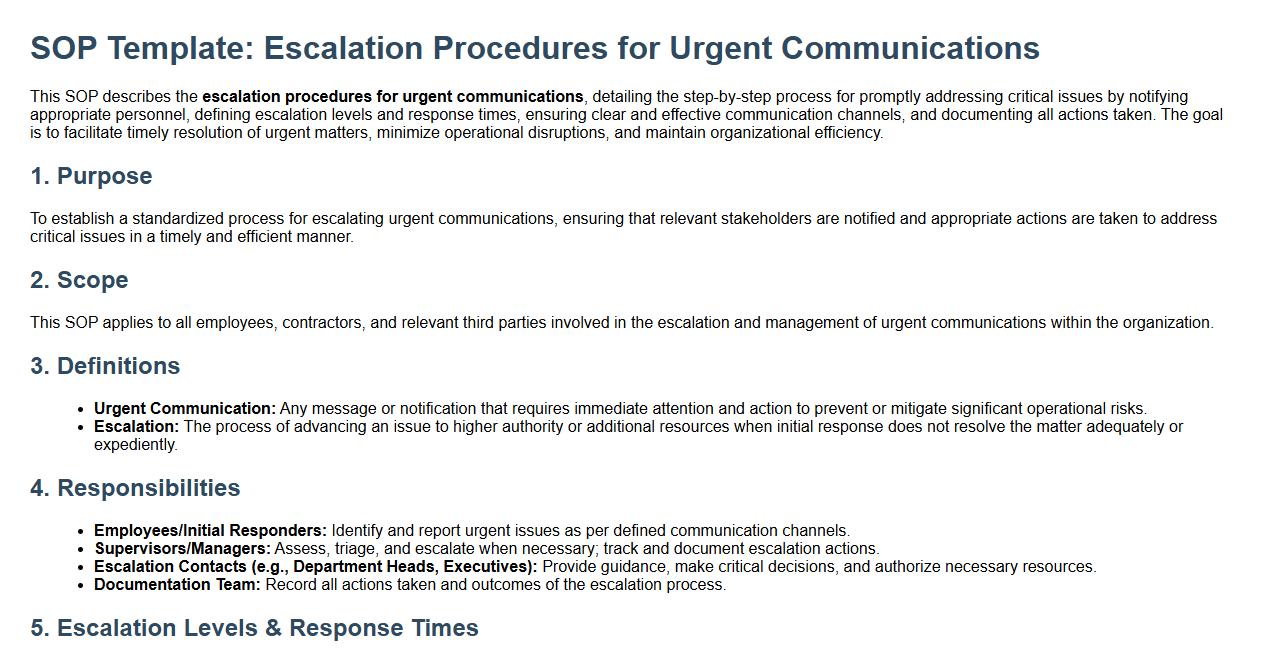
This SOP describes the escalation procedures for urgent communications, detailing the step-by-step process for promptly addressing critical issues by notifying appropriate personnel, defining escalation levels and response times, ensuring clear and effective communication channels, and documenting all actions taken. The goal is to facilitate timely resolution of urgent matters, minimize operational disruptions, and maintain organizational efficiency.
Approval workflows for internal memos and announcements.
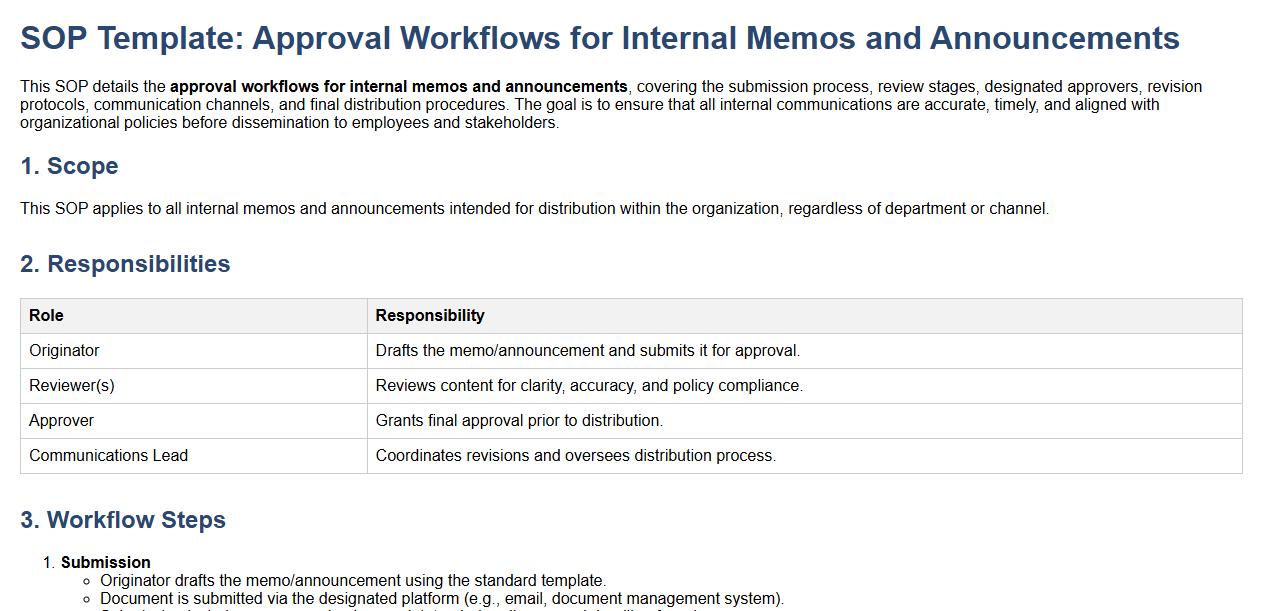
This SOP details the approval workflows for internal memos and announcements, covering the submission process, review stages, designated approvers, revision protocols, communication channels, and final distribution procedures. The goal is to ensure that all internal communications are accurate, timely, and aligned with organizational policies before dissemination to employees and stakeholders.
Confidential information handling and sharing rules.
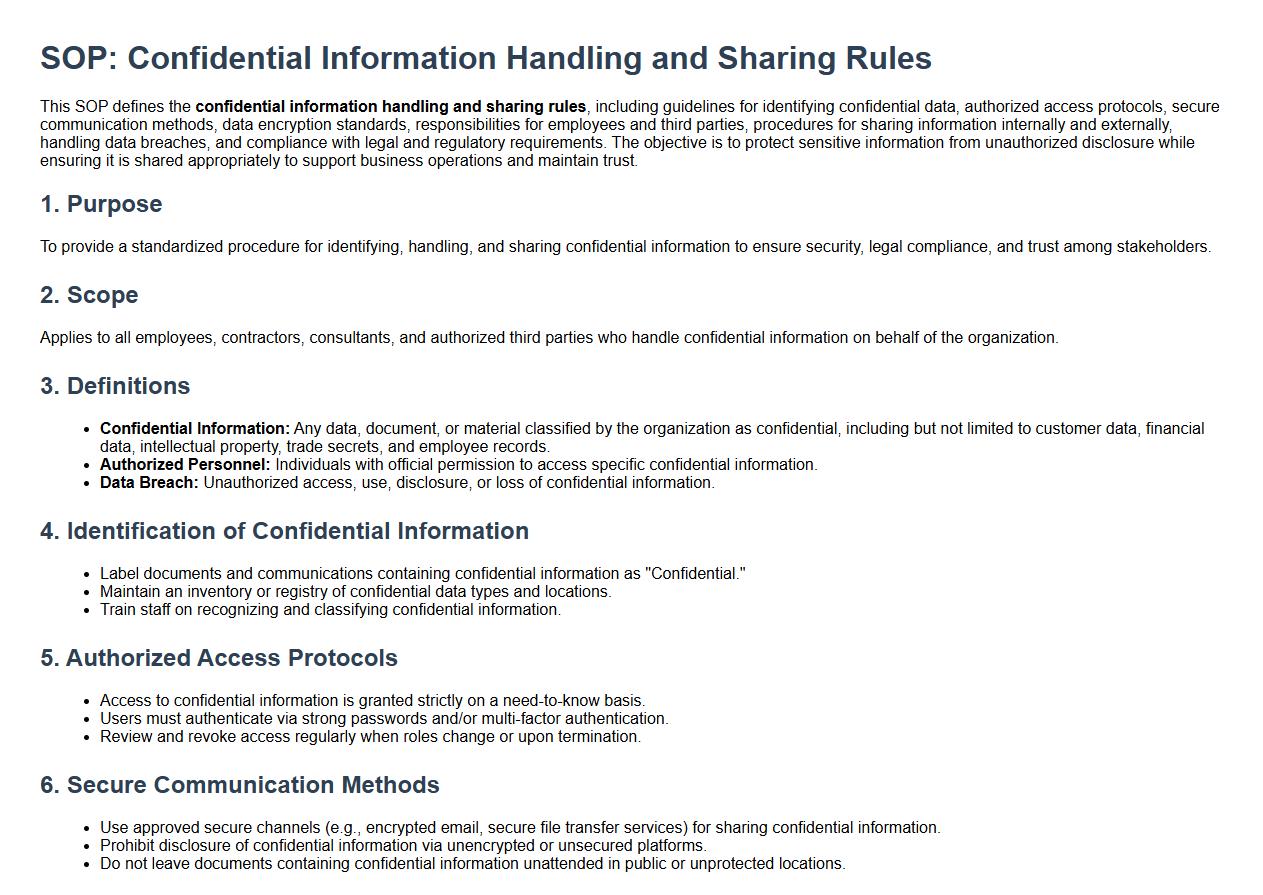
This SOP defines the confidential information handling and sharing rules, including guidelines for identifying confidential data, authorized access protocols, secure communication methods, data encryption standards, responsibilities for employees and third parties, procedures for sharing information internally and externally, handling data breaches, and compliance with legal and regulatory requirements. The objective is to protect sensitive information from unauthorized disclosure while ensuring it is shared appropriately to support business operations and maintain trust.
Document version control and file sharing protocols.
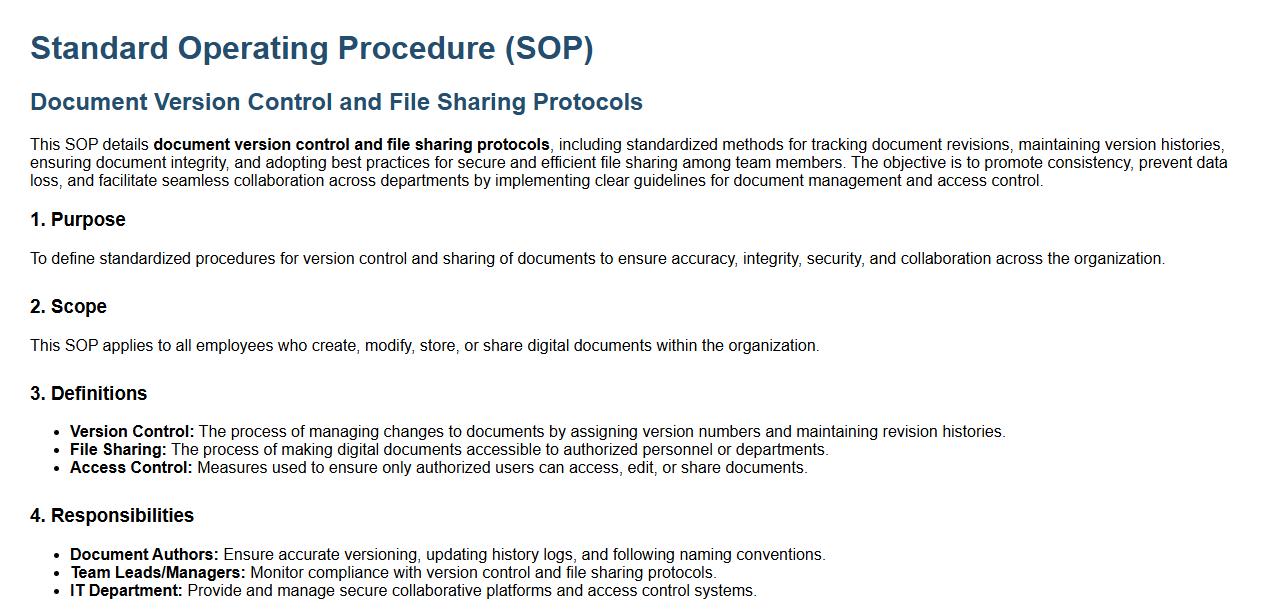
This SOP details document version control and file sharing protocols, including standardized methods for tracking document revisions, maintaining version histories, ensuring document integrity, and adopting best practices for secure and efficient file sharing among team members. The objective is to promote consistency, prevent data loss, and facilitate seamless collaboration across departments by implementing clear guidelines for document management and access control.
Feedback collection and response processes.
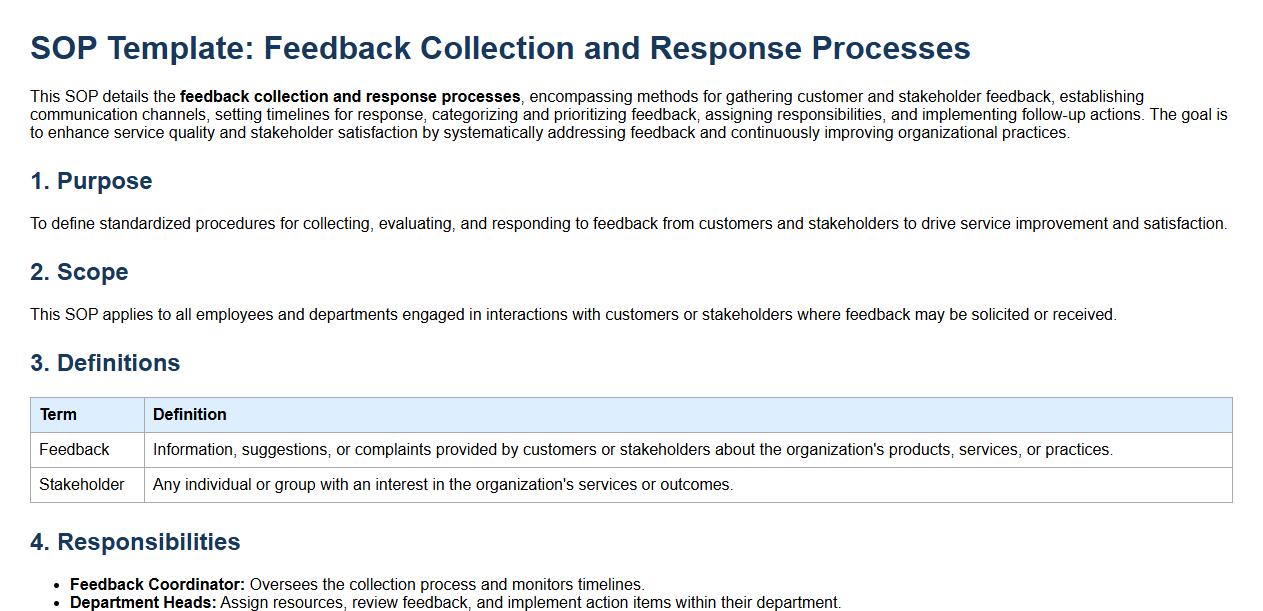
This SOP details the feedback collection and response processes, encompassing methods for gathering customer and stakeholder feedback, establishing communication channels, setting timelines for response, categorizing and prioritizing feedback, assigning responsibilities, and implementing follow-up actions. The goal is to enhance service quality and stakeholder satisfaction by systematically addressing feedback and continuously improving organizational practices.
Onboarding communication orientation for new employees.
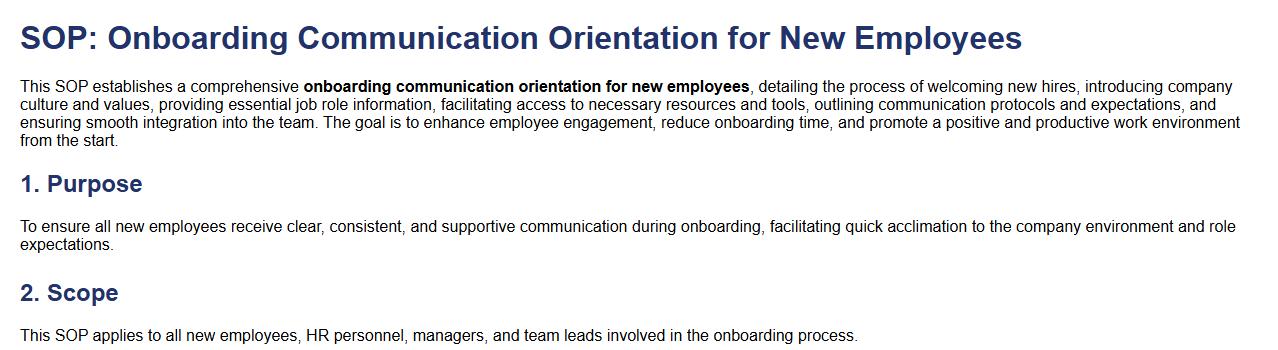
This SOP establishes a comprehensive onboarding communication orientation for new employees, detailing the process of welcoming new hires, introducing company culture and values, providing essential job role information, facilitating access to necessary resources and tools, outlining communication protocols and expectations, and ensuring smooth integration into the team. The goal is to enhance employee engagement, reduce onboarding time, and promote a positive and productive work environment from the start.
Crisis communication and notification procedures.
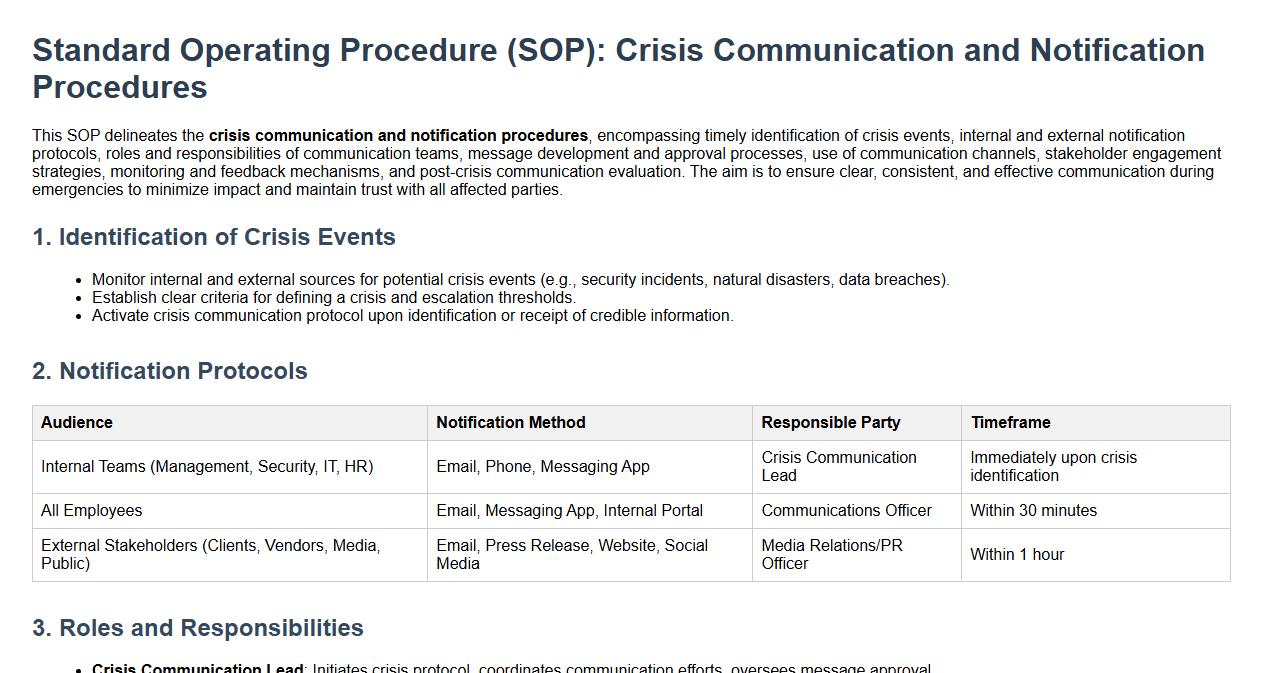
This SOP delineates the crisis communication and notification procedures, encompassing timely identification of crisis events, internal and external notification protocols, roles and responsibilities of communication teams, message development and approval processes, use of communication channels, stakeholder engagement strategies, monitoring and feedback mechanisms, and post-crisis communication evaluation. The aim is to ensure clear, consistent, and effective communication during emergencies to minimize impact and maintain trust with all affected parties.
What is the primary objective of the Internal Communication SOP?
The primary objective of the Internal Communication SOP is to establish clear guidelines for effective and consistent communication within the organization. It aims to enhance transparency and ensure all employees receive accurate and timely information. This standard operating procedure facilitates a unified approach to sharing messages across all departments.
Which channels are designated for formal internal communications?
The designated channels for formal internal communications typically include email, company intranet, and official memos. These channels ensure the messages are delivered securely and reach the appropriate audience. Using these platforms helps maintain professionalism and organizational consistency in communications.
Who is responsible for initiating and approving official internal messages?
The responsibility for initiating and approving official internal messages generally lies with designated communication officers or department heads. These individuals ensure messages align with company policies and objectives before distribution. Their role guarantees that internal messages are accurate and authorized.
What are the required steps for documenting and archiving internal communications?
Documenting and archiving internal communications requires collecting all formal messages, categorizing them by date and department, and securely storing them. The archiving process must comply with company record-keeping policies to facilitate easy retrieval. Proper documentation ensures accountability and supports future reference or audits.
How should confidential or sensitive information be communicated internally according to the SOP?
Confidential or sensitive information must be communicated through secure and encrypted channels designated by the company. The SOP mandates restricted access to such communications to protect privacy and prevent unauthorized disclosure. Employees handling sensitive data are also required to follow strict confidentiality protocols.