

A SOP Template for Internal Communication ensures consistent, clear, and efficient information flow within an organization. It outlines standardized procedures for messaging, reporting, and feedback, enhancing collaboration across teams. Implementing this template reduces misunderstandings and streamlines communication processes.
Internal communication policy overview.
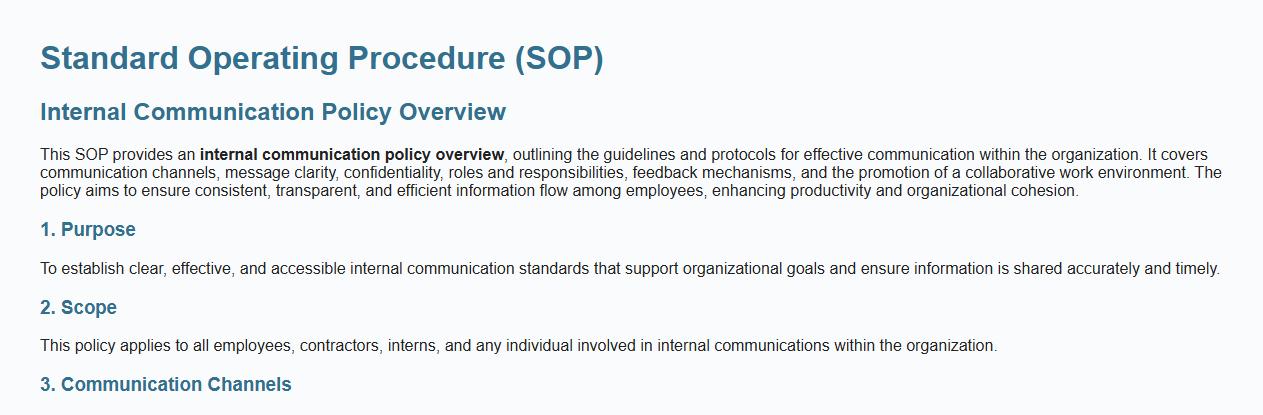
This SOP provides an internal communication policy overview, outlining the guidelines and protocols for effective communication within the organization. It covers communication channels, message clarity, confidentiality, roles and responsibilities, feedback mechanisms, and the promotion of a collaborative work environment. The policy aims to ensure consistent, transparent, and efficient information flow among employees, enhancing productivity and organizational cohesion.
Criteria for message classification and urgency levels.
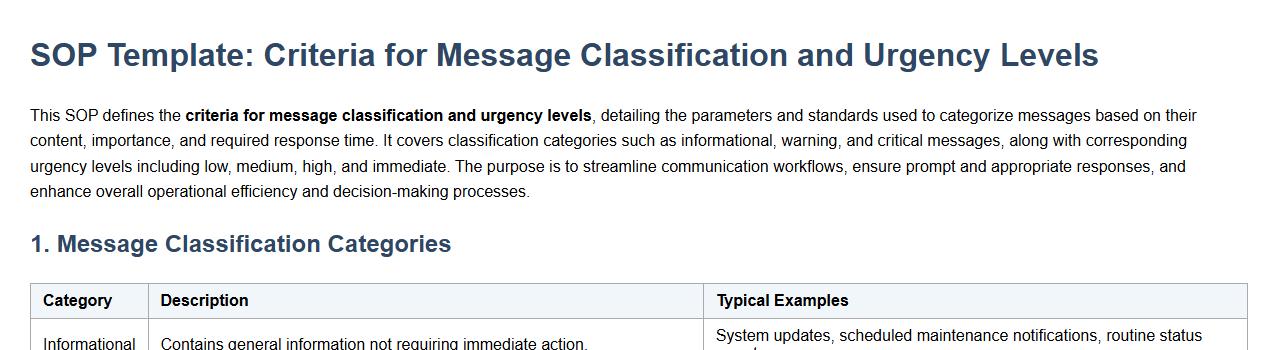
This SOP defines the criteria for message classification and urgency levels, detailing the parameters and standards used to categorize messages based on their content, importance, and required response time. It covers classification categories such as informational, warning, and critical messages, along with corresponding urgency levels including low, medium, high, and immediate. The purpose is to streamline communication workflows, ensure prompt and appropriate responses, and enhance overall operational efficiency and decision-making processes.
Standard channels for internal communication (email, chat, meetings, bulletins).
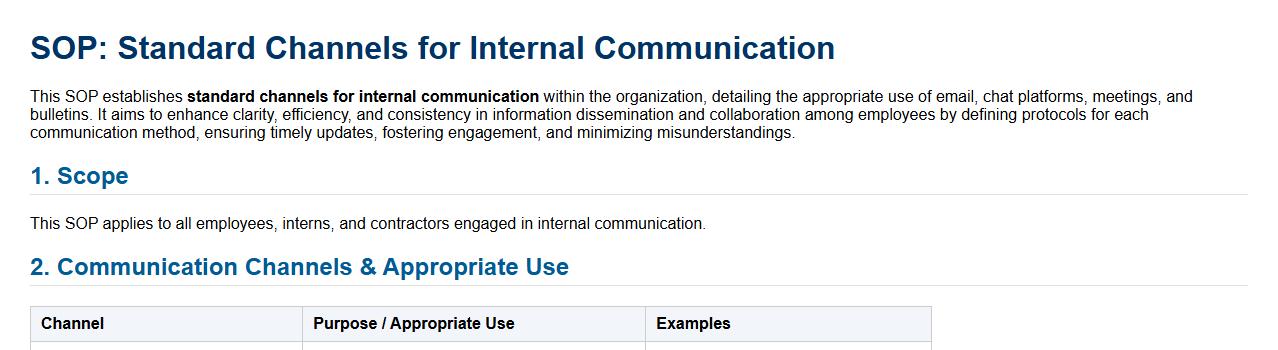
This SOP establishes standard channels for internal communication within the organization, detailing the appropriate use of email, chat platforms, meetings, and bulletins. It aims to enhance clarity, efficiency, and consistency in information dissemination and collaboration among employees by defining protocols for each communication method, ensuring timely updates, fostering engagement, and minimizing misunderstandings.
Procedures for drafting and formatting internal messages.
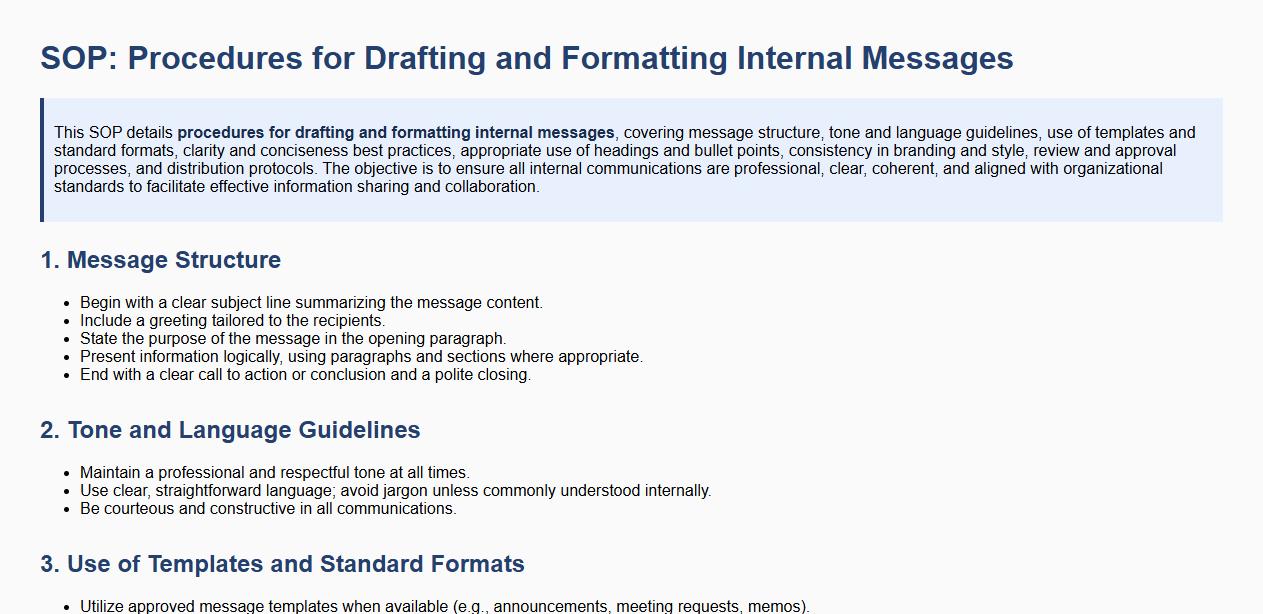
This SOP details procedures for drafting and formatting internal messages, covering message structure, tone and language guidelines, use of templates and standard formats, clarity and conciseness best practices, appropriate use of headings and bullet points, consistency in branding and style, review and approval processes, and distribution protocols. The objective is to ensure all internal communications are professional, clear, coherent, and aligned with organizational standards to facilitate effective information sharing and collaboration.
Approval workflow for sensitive or organization-wide communications.
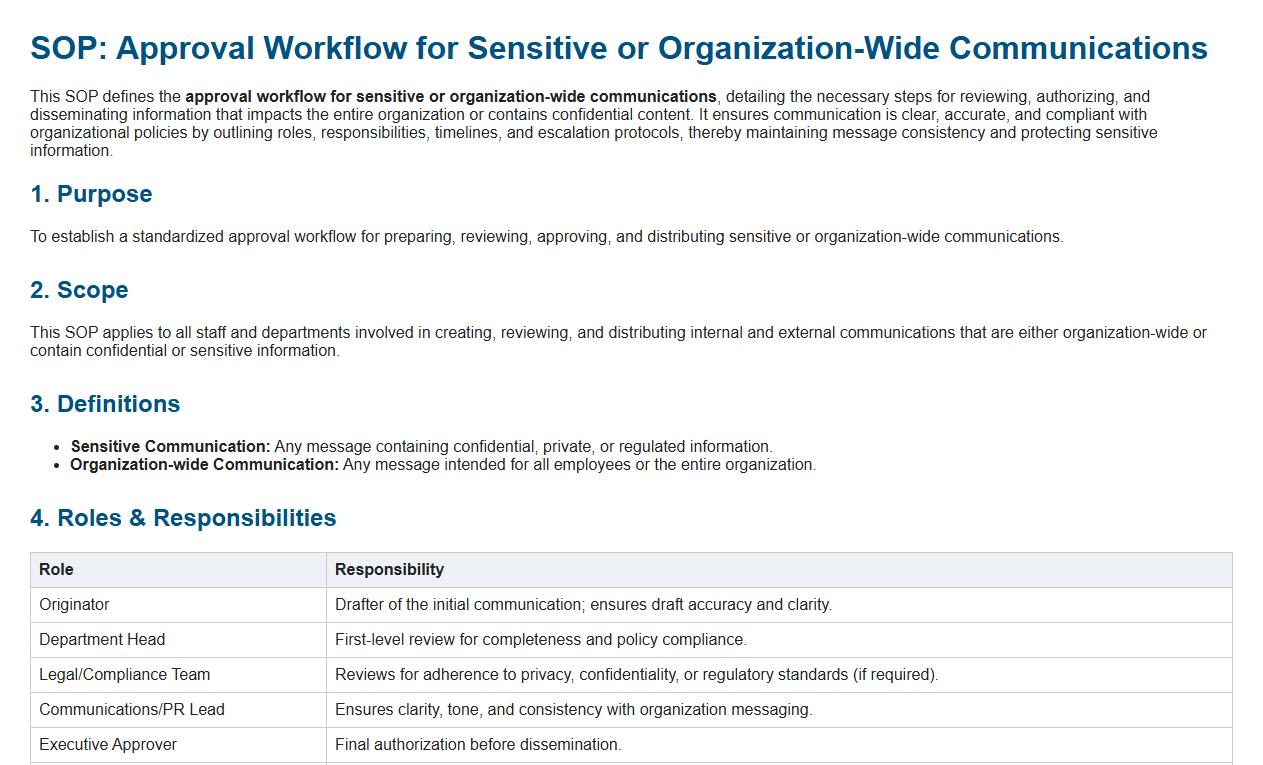
This SOP defines the approval workflow for sensitive or organization-wide communications, detailing the necessary steps for reviewing, authorizing, and disseminating information that impacts the entire organization or contains confidential content. It ensures communication is clear, accurate, and compliant with organizational policies by outlining roles, responsibilities, timelines, and escalation protocols, thereby maintaining message consistency and protecting sensitive information.
Guidelines for scheduling and frequency of internal communications.
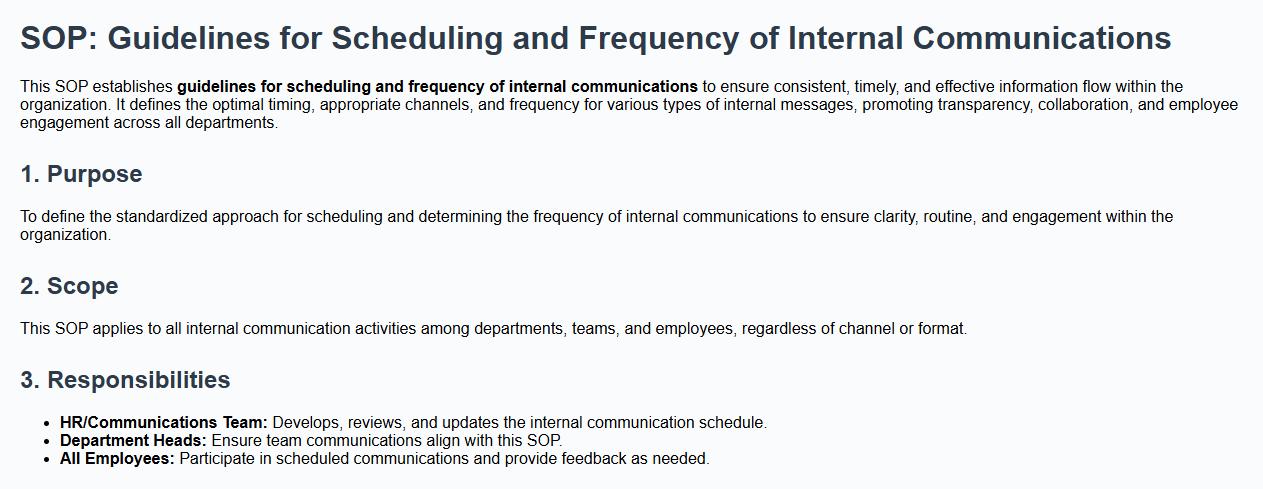
This SOP establishes guidelines for scheduling and frequency of internal communications to ensure consistent, timely, and effective information flow within the organization. It defines the optimal timing, appropriate channels, and frequency for various types of internal messages, promoting transparency, collaboration, and employee engagement across all departments.
Protocols for confidentiality and data protection.
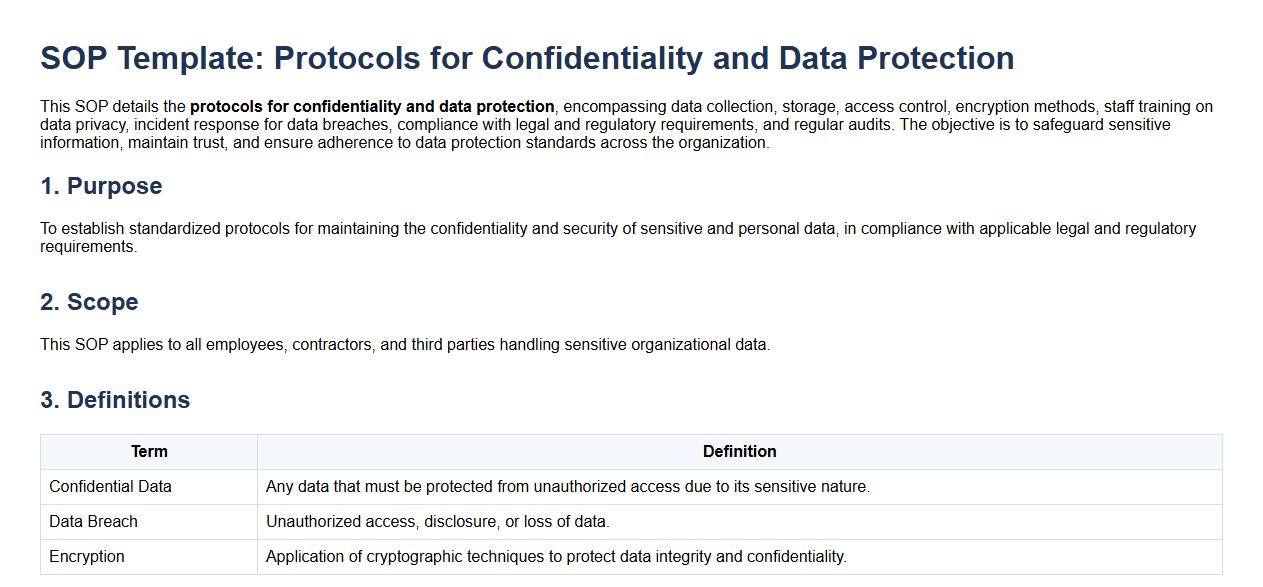
This SOP details the protocols for confidentiality and data protection, encompassing data collection, storage, access control, encryption methods, staff training on data privacy, incident response for data breaches, compliance with legal and regulatory requirements, and regular audits. The objective is to safeguard sensitive information, maintain trust, and ensure adherence to data protection standards across the organization.
Feedback and response expectations and timeframes.
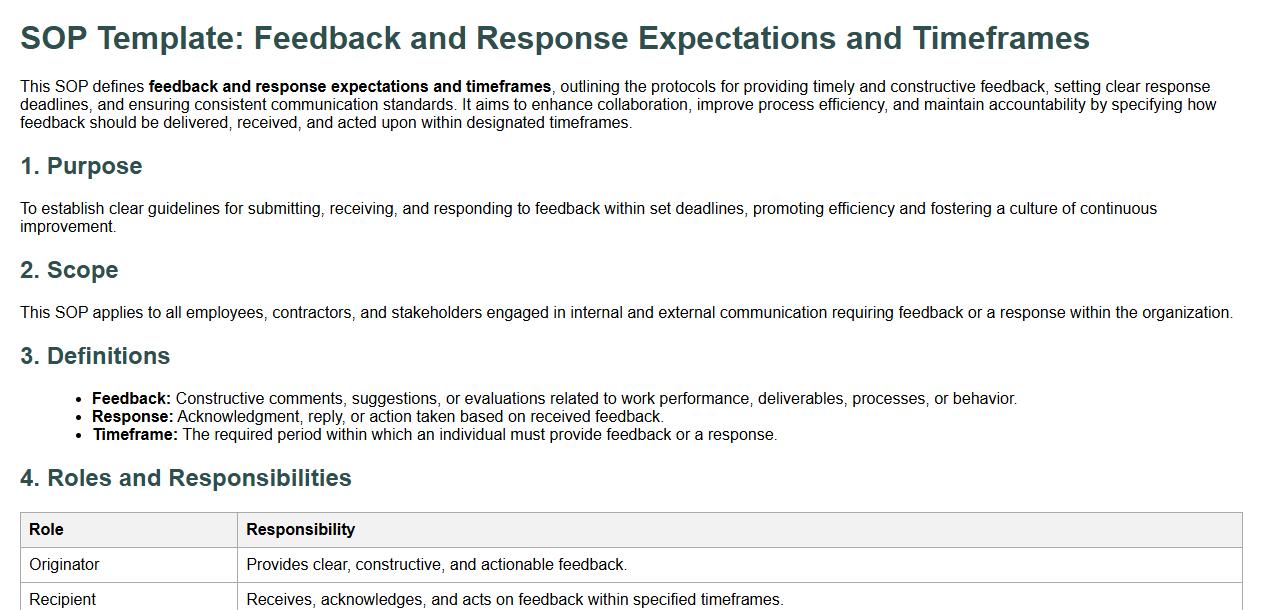
This SOP defines feedback and response expectations and timeframes, outlining the protocols for providing timely and constructive feedback, setting clear response deadlines, and ensuring consistent communication standards. It aims to enhance collaboration, improve process efficiency, and maintain accountability by specifying how feedback should be delivered, received, and acted upon within designated timeframes.
Escalation process for unresolved or critical communication issues.
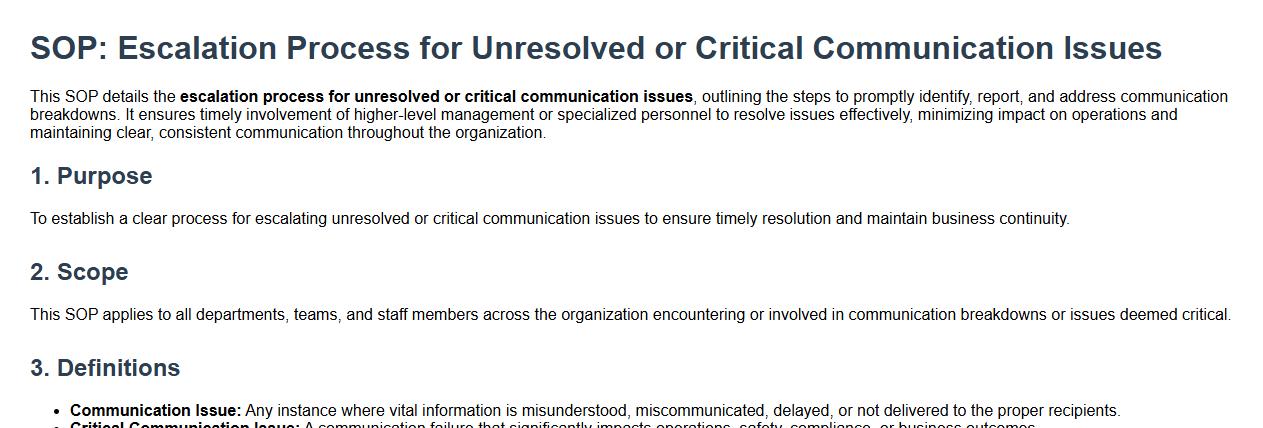
This SOP details the escalation process for unresolved or critical communication issues, outlining the steps to promptly identify, report, and address communication breakdowns. It ensures timely involvement of higher-level management or specialized personnel to resolve issues effectively, minimizing impact on operations and maintaining clear, consistent communication throughout the organization.
Documentation and archiving of internal communications.
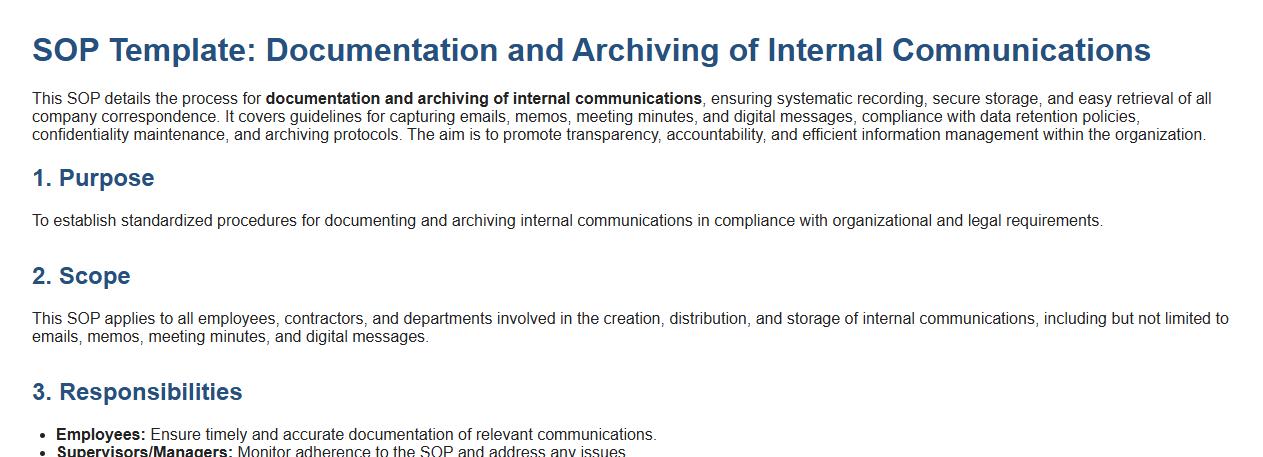
This SOP details the process for documentation and archiving of internal communications, ensuring systematic recording, secure storage, and easy retrieval of all company correspondence. It covers guidelines for capturing emails, memos, meeting minutes, and digital messages, compliance with data retention policies, confidentiality maintenance, and archiving protocols. The aim is to promote transparency, accountability, and efficient information management within the organization.
What key channels are specified in the SOP for internal communication within the organization?
The SOP highlights email, intranet platforms, and instant messaging tools as the primary channels for internal communication. These channels are chosen for their reliability and ease of access across the organization. Additionally, regular team meetings and internal newsletters are emphasized for comprehensive information dissemination.
Which roles are responsible for initiating and approving internal communications as per the SOP?
The SOP designates department heads and communication officers as responsible for initiating internal messages. Approvals must come from senior management and the HR department to ensure alignment with organizational policies. This dual-level process guarantees accuracy and accountability in communications.
How does the SOP define confidentiality and information sensitivity levels for internal messages?
The SOP categorizes information into public, internal use, and confidential levels, specifying handling procedures for each. Confidential communications require encryption and limited distribution within authorized personnel. These measures ensure sensitive data is protected against unauthorized access.
What are the required formats and templates for official internal communications mentioned in the SOP?
The SOP mandates standardized email templates, memo formats, and presentation styles for official messages. Using these formats promotes consistency and professionalism across all departments. Templates also include designated sections for subject lines, salutations, and confidentiality notices.
How does the SOP address escalation procedures for urgent internal communications?
The SOP outlines a clear escalation hierarchy involving immediate notification of supervisors and use of high-priority communication channels. Urgent issues must be flagged and communicated within specified timeframes to ensure prompt resolution. This structured approach minimizes delays and manages crises effectively.