

A SOP Template for Record Keeping ensures consistent documentation and management of essential information within an organization. This template provides a clear framework for identifying, storing, and retrieving records efficiently, reducing errors and compliance risks. Implementing a standardized SOP enhances data accuracy and supports regulatory requirements effectively.
Purpose and scope of record keeping.
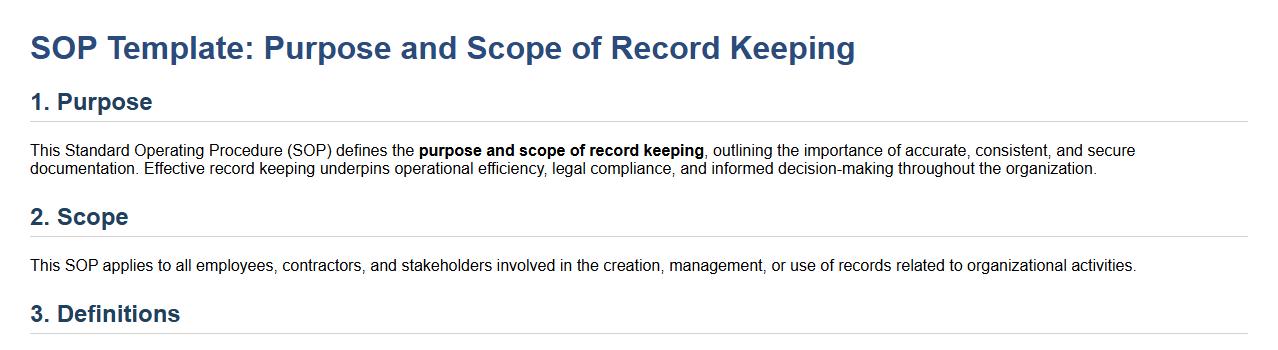
This SOP defines the purpose and scope of record keeping, outlining the importance of accurate, consistent, and secure documentation for operational efficiency, legal compliance, and decision-making support. It covers the types of records to be maintained, responsibilities for record creation and management, retention periods, and protocols for storage, access, and disposal to ensure data integrity and confidentiality across the organization.
Roles and responsibilities for documentation.
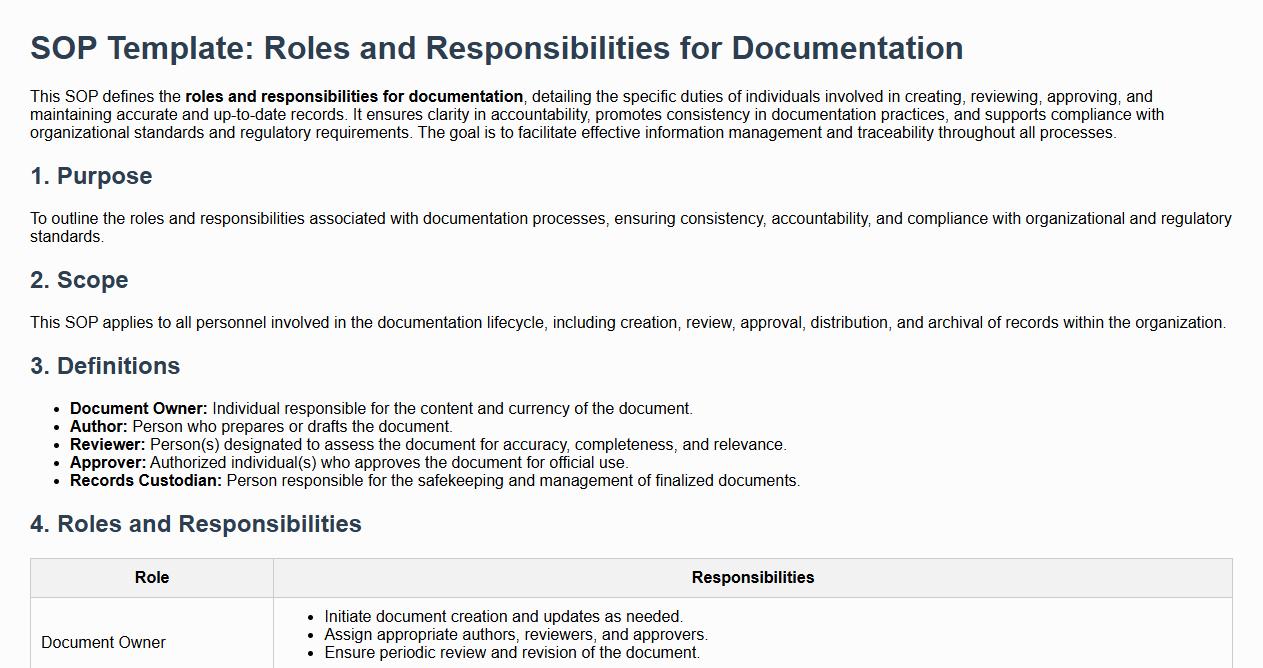
This SOP defines the roles and responsibilities for documentation, detailing the specific duties of individuals involved in creating, reviewing, approving, and maintaining accurate and up-to-date records. It ensures clarity in accountability, promotes consistency in documentation practices, and supports compliance with organizational standards and regulatory requirements. The goal is to facilitate effective information management and traceability throughout all processes.
Standardized data entry procedures.
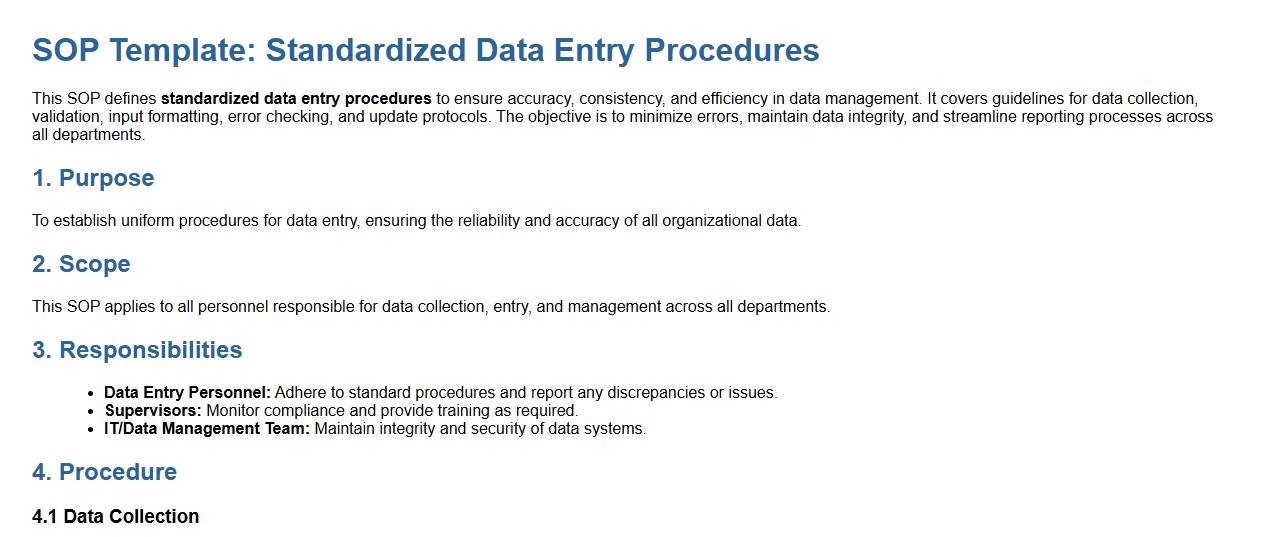
This SOP defines standardized data entry procedures to ensure accuracy, consistency, and efficiency in data management. It covers guidelines for data collection, validation, input formatting, error checking, and update protocols. The objective is to minimize errors, maintain data integrity, and streamline reporting processes across all departments.
Frequency and timing of record updates.
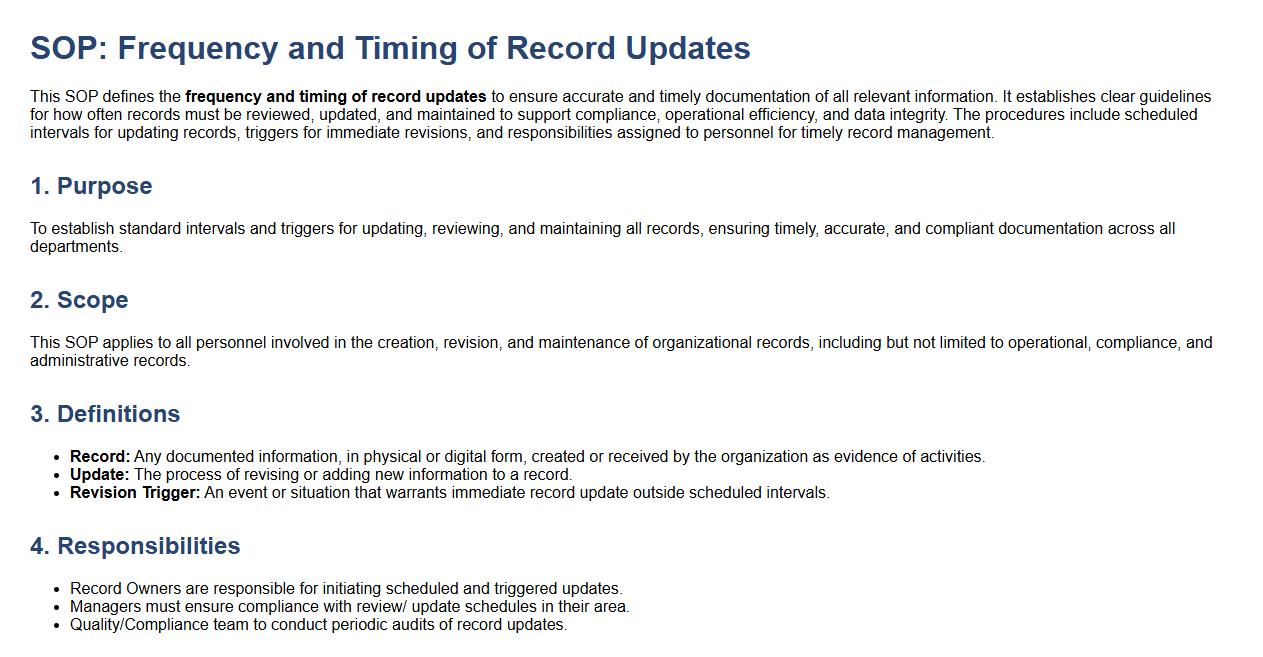
This SOP defines the frequency and timing of record updates to ensure accurate and timely documentation of all relevant information. It establishes clear guidelines for how often records must be reviewed, updated, and maintained to support compliance, operational efficiency, and data integrity. The procedures include scheduled intervals for updating records, triggers for immediate revisions, and responsibilities assigned to personnel for timely record management.
Required forms and documentation templates.
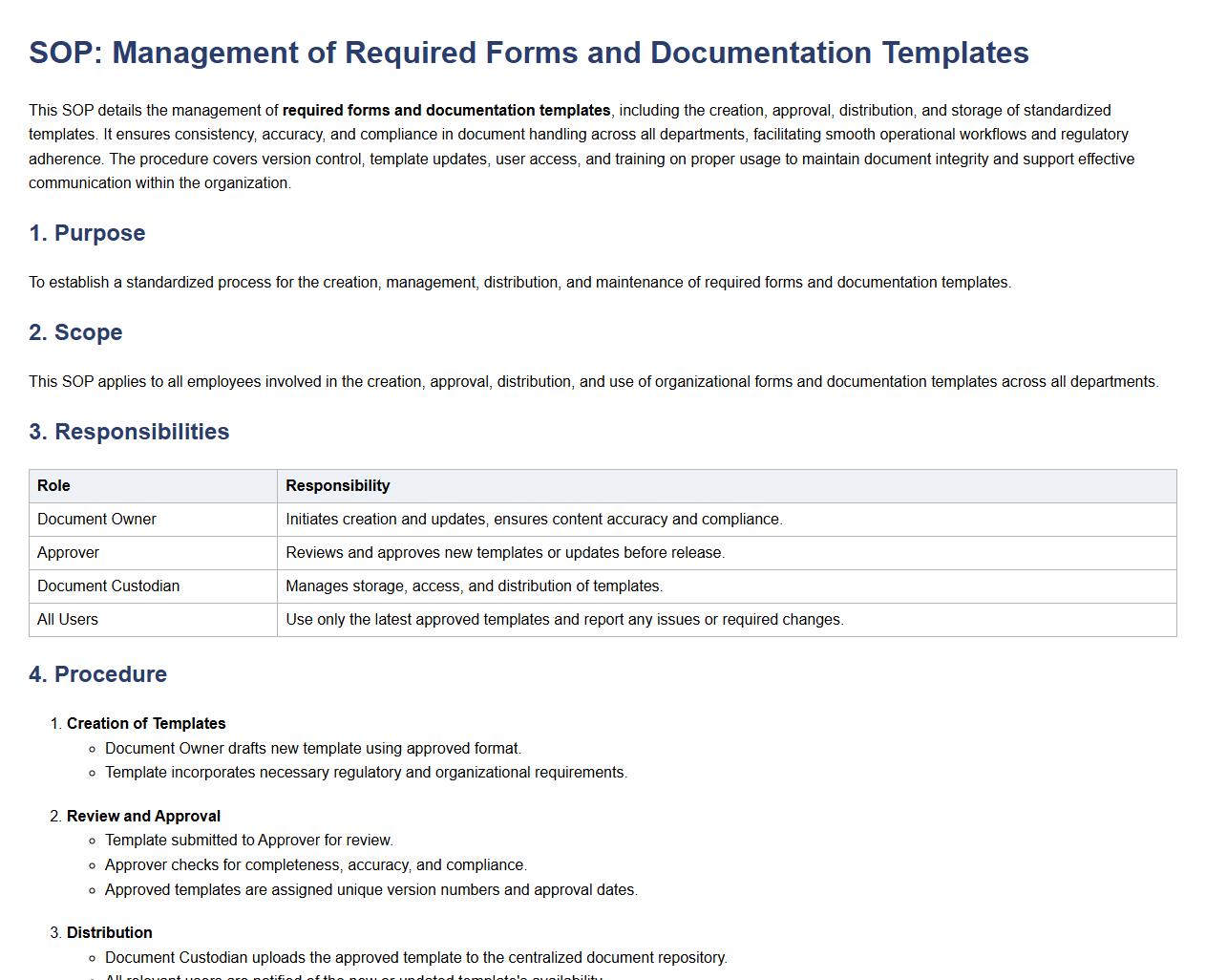
This SOP details the management of required forms and documentation templates, including the creation, approval, distribution, and storage of standardized templates. It ensures consistency, accuracy, and compliance in document handling across all departments, facilitating smooth operational workflows and regulatory adherence. The procedure covers version control, template updates, user access, and training on proper usage to maintain document integrity and support effective communication within the organization.
Procedures for data verification and accuracy checks.
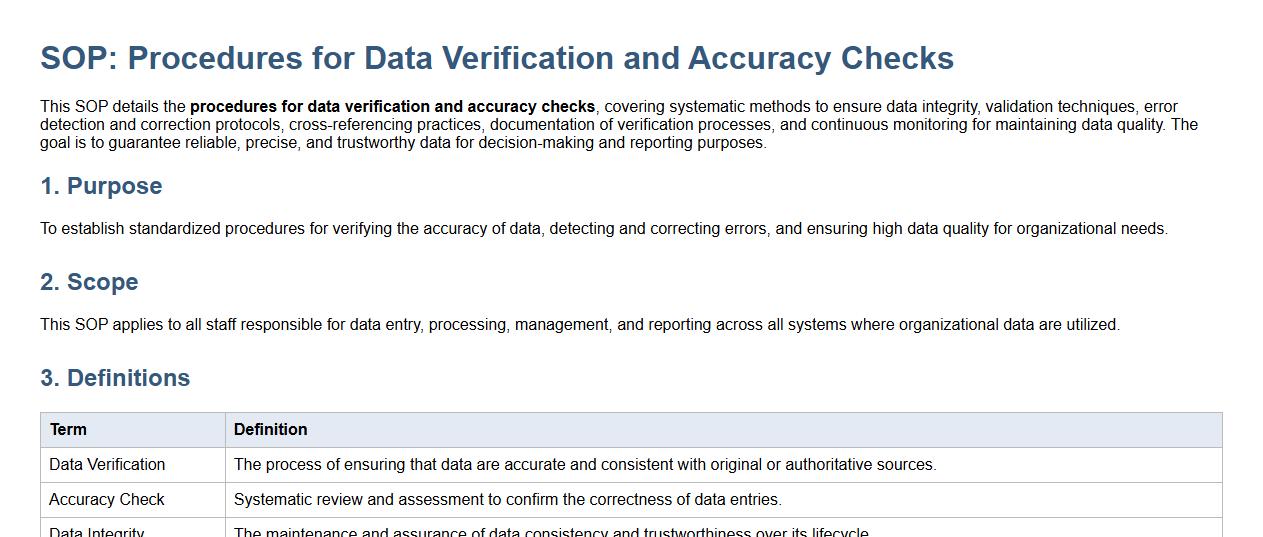
This SOP details the procedures for data verification and accuracy checks, covering systematic methods to ensure data integrity, validation techniques, error detection and correction protocols, cross-referencing practices, documentation of verification processes, and continuous monitoring for maintaining data quality. The goal is to guarantee reliable, precise, and trustworthy data for decision-making and reporting purposes.
Data storage, access, and confidentiality protocols.
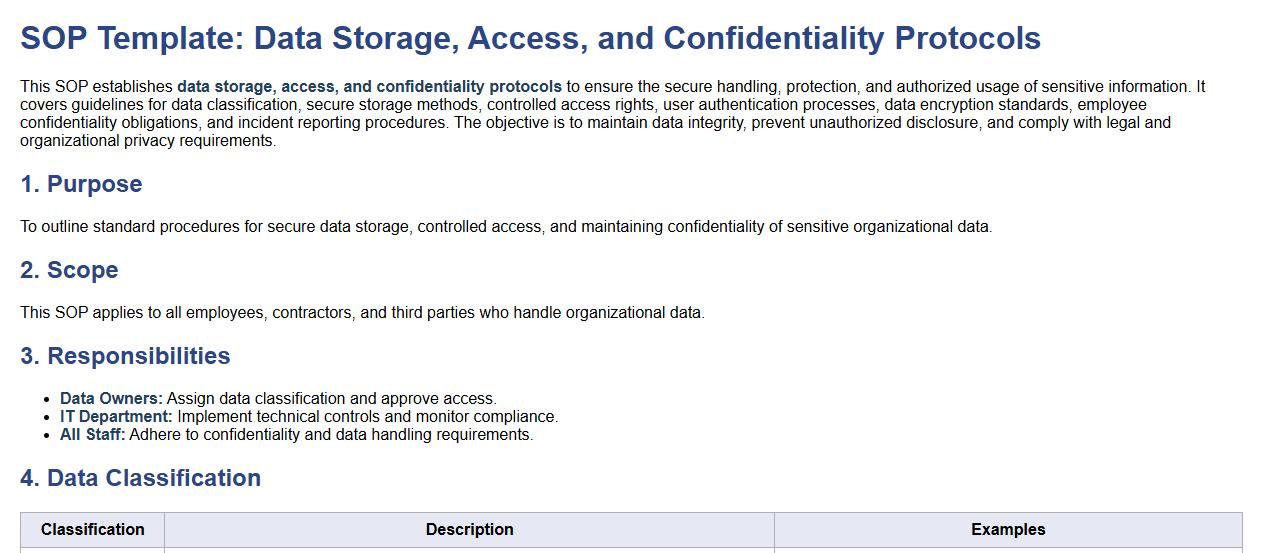
This SOP establishes data storage, access, and confidentiality protocols to ensure the secure handling, protection, and authorized usage of sensitive information. It covers guidelines for data classification, secure storage methods, controlled access rights, user authentication processes, data encryption standards, employee confidentiality obligations, and incident reporting procedures. The objective is to maintain data integrity, prevent unauthorized disclosure, and comply with legal and organizational privacy requirements.
Digital versus paper record management guidelines.
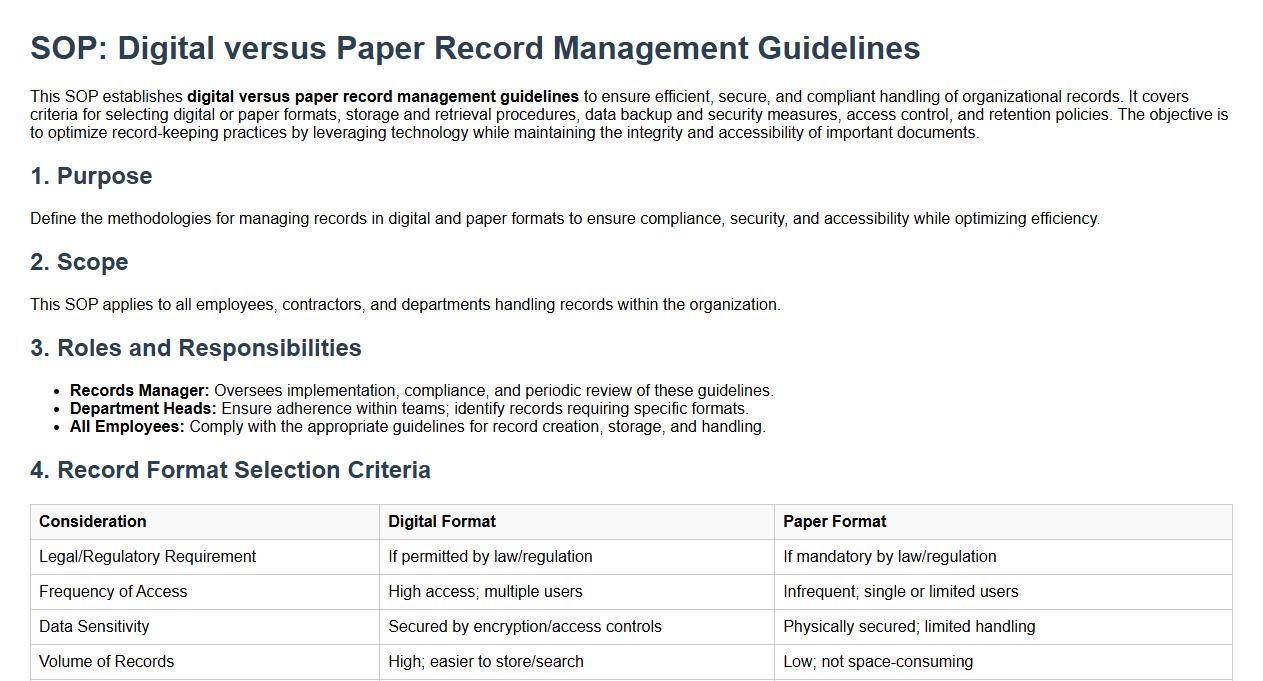
This SOP establishes digital versus paper record management guidelines to ensure efficient, secure, and compliant handling of organizational records. It covers criteria for selecting digital or paper formats, storage and retrieval procedures, data backup and security measures, access control, and retention policies. The objective is to optimize record-keeping practices by leveraging technology while maintaining the integrity and accessibility of important documents.
Backup and archiving procedures.
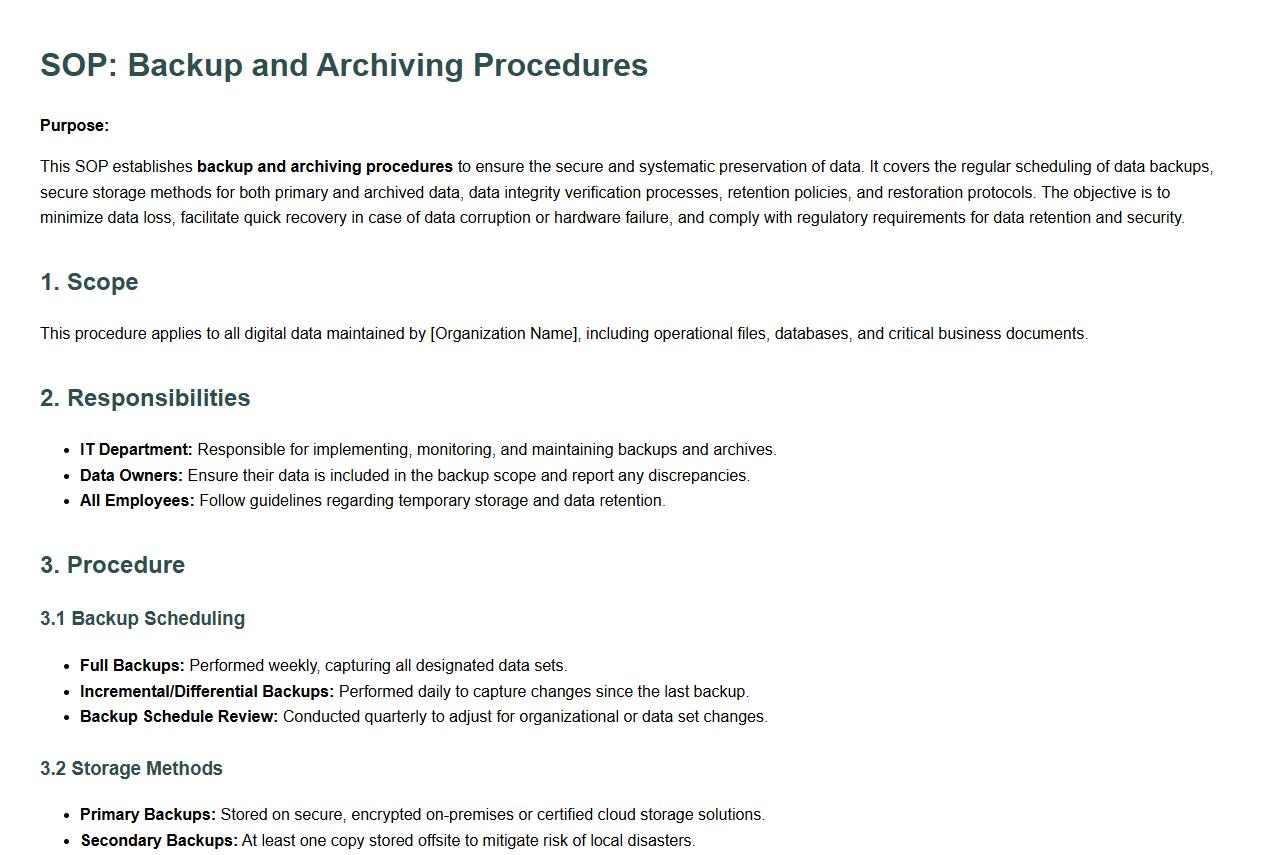
This SOP establishes backup and archiving procedures to ensure the secure and systematic preservation of data. It covers the regular scheduling of data backups, secure storage methods for both primary and archived data, data integrity verification processes, retention policies, and restoration protocols. The objective is to minimize data loss, facilitate quick recovery in case of data corruption or hardware failure, and comply with regulatory requirements for data retention and security.
Review, audit, and retention schedule.
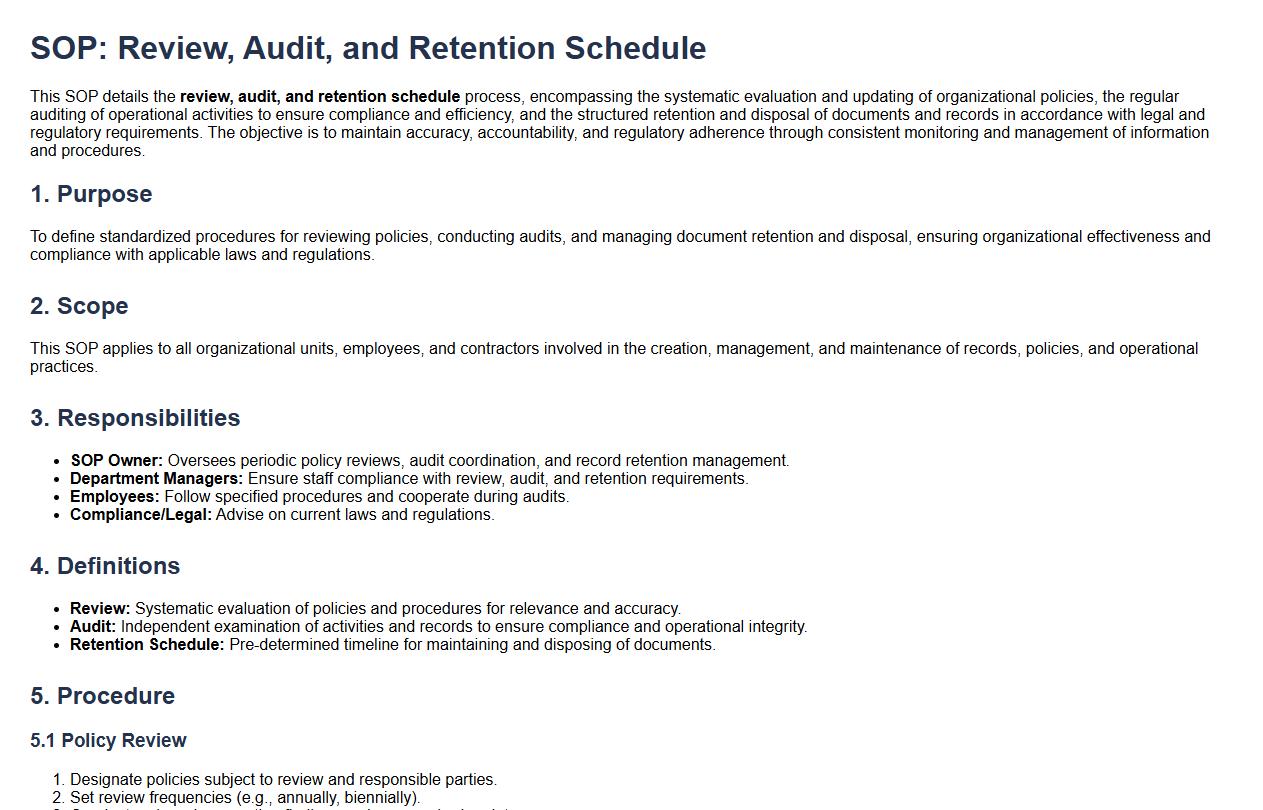
This SOP details the review, audit, and retention schedule process, encompassing the systematic evaluation and updating of organizational policies, the regular auditing of operational activities to ensure compliance and efficiency, and the structured retention and disposal of documents and records in accordance with legal and regulatory requirements. The objective is to maintain accuracy, accountability, and regulatory adherence through consistent monitoring and management of information and procedures.
What is the primary purpose of record keeping as outlined in the SOP?
The primary purpose of record keeping in the SOP is to ensure accurate documentation of all activities and transactions. It supports compliance with regulatory requirements and internal policies. Efficient record keeping also facilitates transparency and accountability within the organization.
Which types of documents must be retained according to the SOP for record keeping?
The SOP mandates retention of key documents including financial records, correspondence, reports, and contracts. These documents serve as proof of operations and decision-making processes. Retaining such records helps in audits and future references.
What are the procedures for storing and securing records as per the SOP?
The SOP specifies that all records must be stored in a secure and organized manner, either digitally or physically. Access controls should be implemented to prevent unauthorized retrieval. Additionally, backup systems must be maintained to protect against data loss.
How long must records be maintained before disposal, as specified in the SOP?
Records are required to be retained for a minimum duration defined by legal and organizational guidelines. Typically, this period ranges from three to seven years depending on the document type. Proper disposal methods must be followed once the retention period expires.
Who is responsible for reviewing and updating the record-keeping process under the SOP?
The responsibility for reviewing and updating the record-keeping process lies with the designated compliance officer or records manager. They ensure the procedures remain aligned with regulatory changes and organizational needs. Regular audits and assessments support continuous improvement of the process.