

A SOP Template for Meeting Scheduling and Coordination streamlines the process of organizing and managing meetings efficiently. It outlines clear steps for sending invitations, confirming attendance, and preparing agendas to ensure productive discussions. Utilizing this template enhances communication and reduces scheduling conflicts in any organization.
Meeting request initiation and approval process.
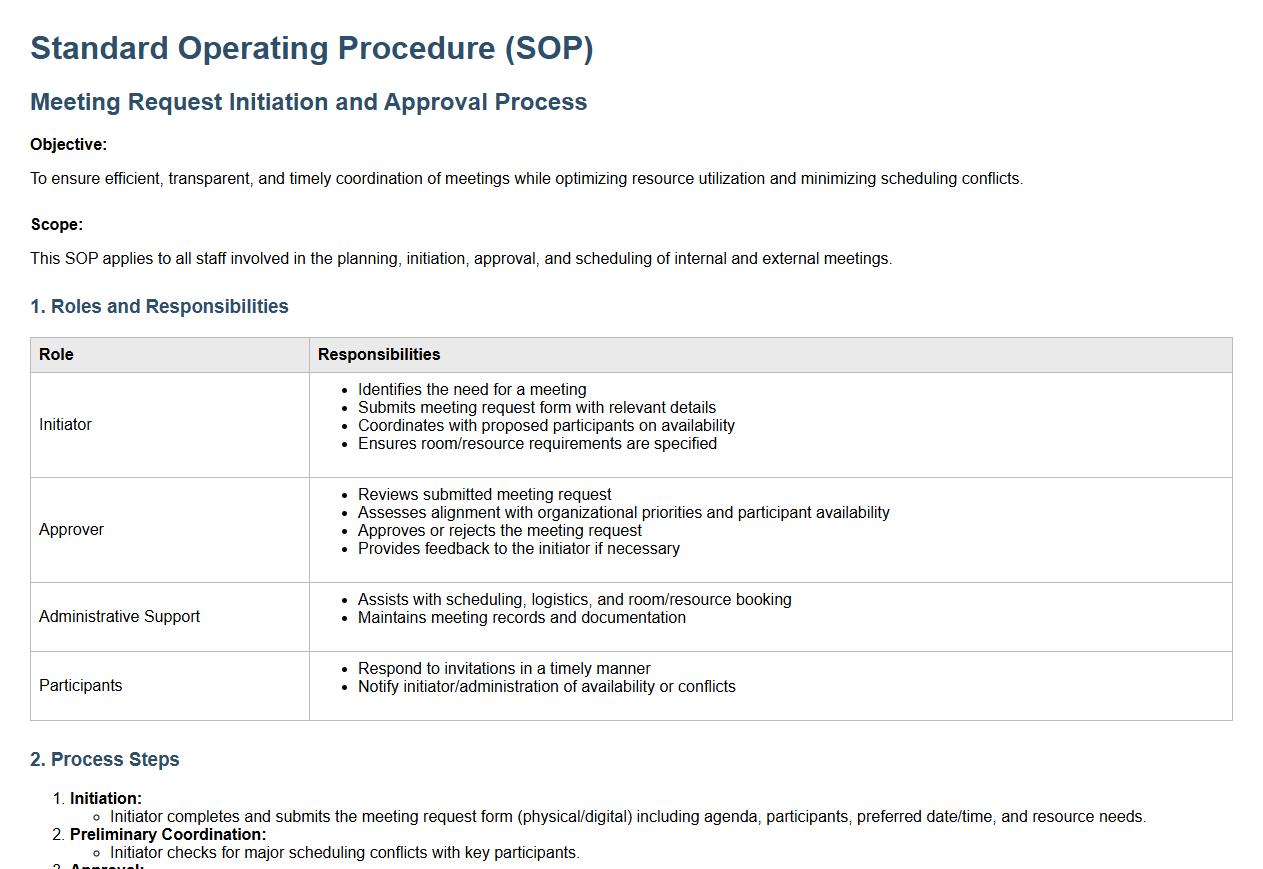
This SOP describes the meeting request initiation and approval process, covering the steps for submitting meeting requests, criteria for approval, roles and responsibilities of initiators and approvers, communication protocols, scheduling guidelines, conflict resolution methods, and documentation requirements. The objective is to ensure efficient, transparent, and timely coordination of meetings while optimizing resource utilization and minimizing scheduling conflicts.
Standard protocol for selecting meeting dates and times.
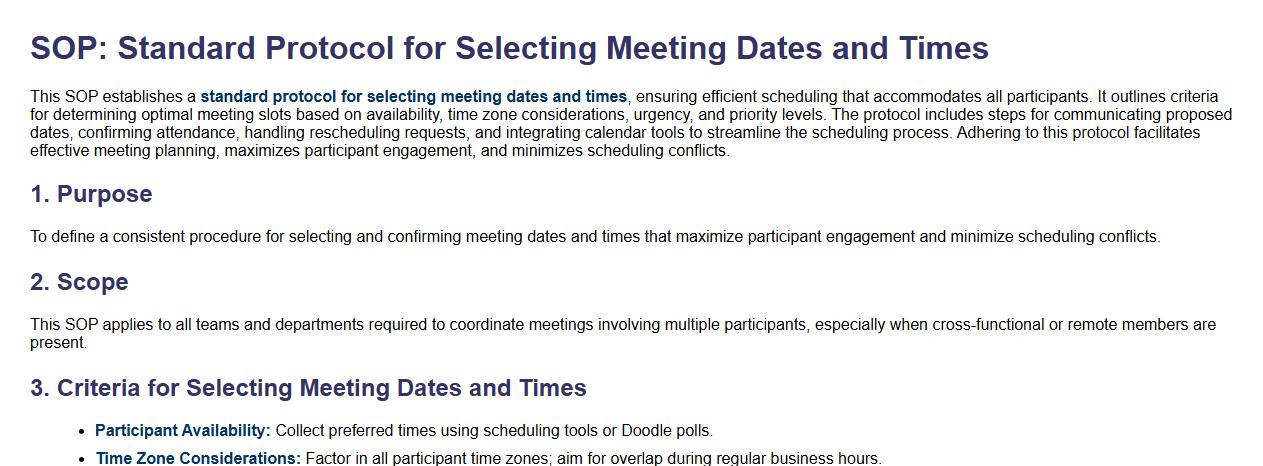
This SOP establishes a standard protocol for selecting meeting dates and times, ensuring efficient scheduling that accommodates all participants. It outlines criteria for determining optimal meeting slots based on availability, time zone considerations, urgency, and priority levels. The protocol includes steps for communicating proposed dates, confirming attendance, handling rescheduling requests, and integrating calendar tools to streamline the scheduling process. Adhering to this protocol facilitates effective meeting planning, maximizes participant engagement, and minimizes scheduling conflicts.
Procedure for reserving and confirming meeting venues or virtual platforms.
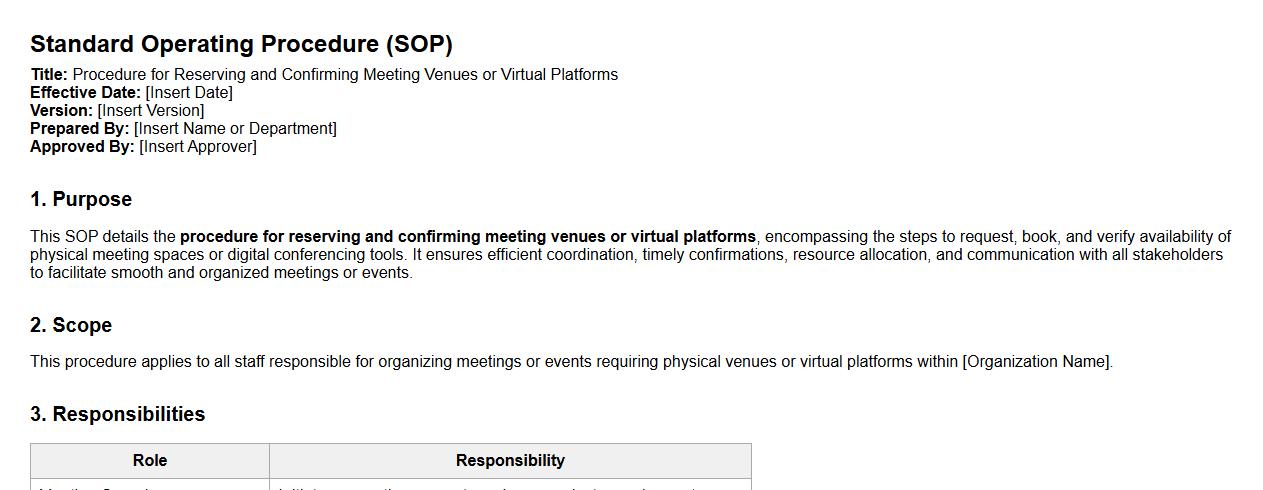
This SOP details the procedure for reserving and confirming meeting venues or virtual platforms, encompassing the steps to request, book, and verify availability of physical meeting spaces or digital conferencing tools. It ensures efficient coordination, timely confirmations, resource allocation, and communication with all stakeholders to facilitate smooth and organized meetings or events.
Guidelines for preparing and distributing meeting agendas.
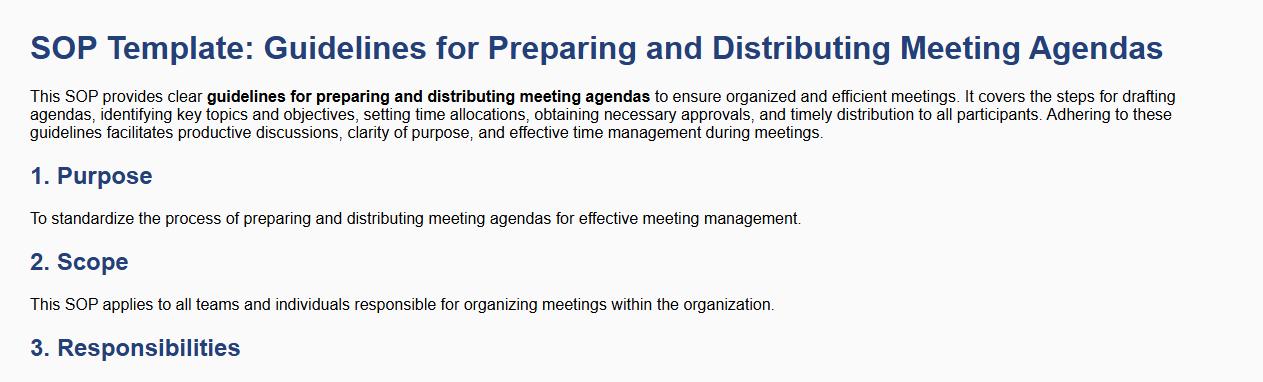
This SOP provides clear guidelines for preparing and distributing meeting agendas to ensure organized and efficient meetings. It covers the steps for drafting agendas, identifying key topics and objectives, setting time allocations, obtaining necessary approvals, and timely distribution to all participants. Adhering to these guidelines facilitates productive discussions, clarity of purpose, and effective time management during meetings.
Participant invitation and attendance confirmation steps.
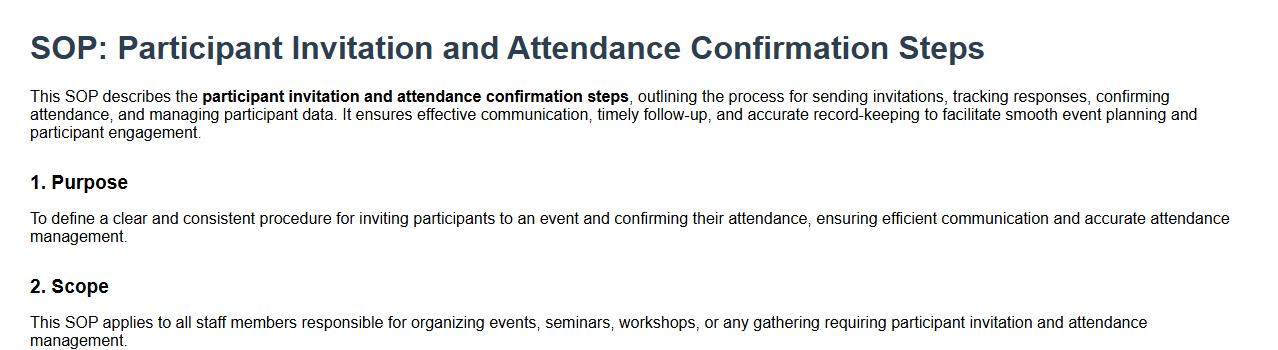
This SOP describes the participant invitation and attendance confirmation steps, outlining the process for sending invitations, tracking responses, confirming attendance, and managing participant data. It ensures effective communication, timely follow-up, and accurate record-keeping to facilitate smooth event planning and participant engagement.
Checklist for pre-meeting material distribution.
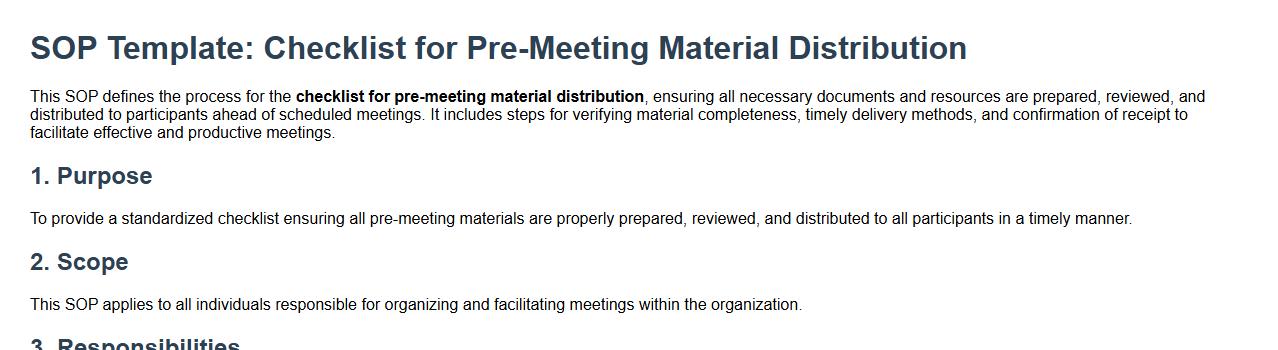
This SOP defines the process for the checklist for pre-meeting material distribution, ensuring all necessary documents and resources are prepared, reviewed, and distributed to participants ahead of scheduled meetings. It includes steps for verifying material completeness, timely delivery methods, and confirmation of receipt to facilitate effective and productive meetings.
Protocol for managing meeting changes and cancellations.
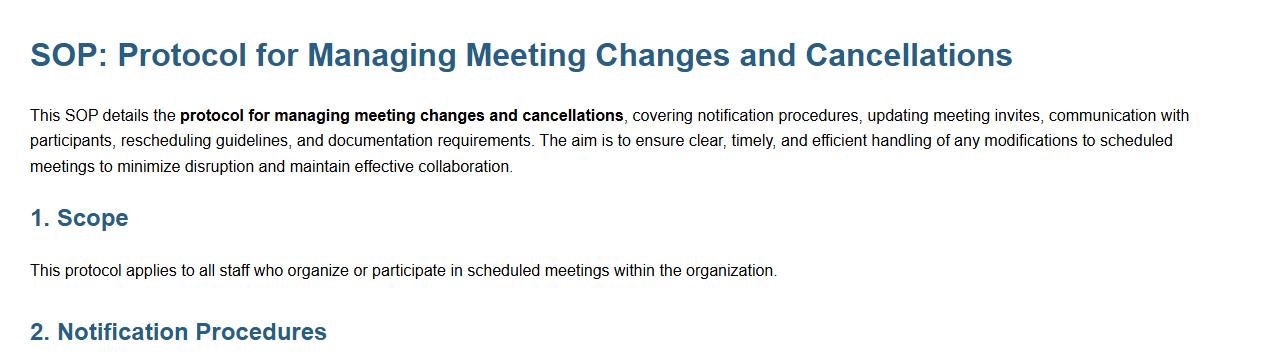
This SOP details the protocol for managing meeting changes and cancellations, covering notification procedures, updating meeting invites, communication with participants, rescheduling guidelines, and documentation requirements. The aim is to ensure clear, timely, and efficient handling of any modifications to scheduled meetings to minimize disruption and maintain effective collaboration.
Attendance tracking and sign-in procedures.
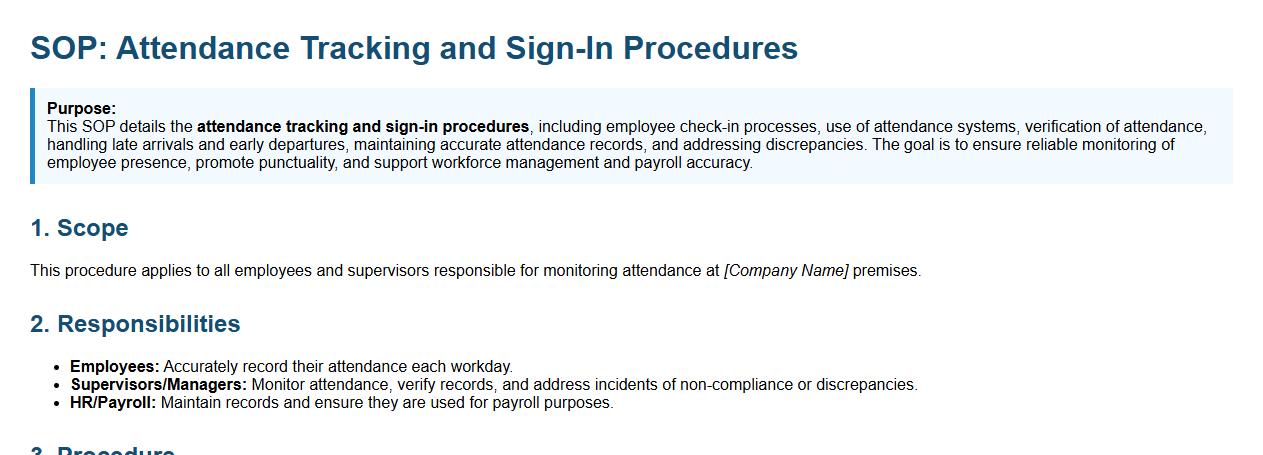
This SOP details the attendance tracking and sign-in procedures, including employee check-in processes, use of attendance systems, verification of attendance, handling late arrivals and early departures, maintaining accurate attendance records, and addressing discrepancies. The goal is to ensure reliable monitoring of employee presence, promote punctuality, and support workforce management and payroll accuracy.
Documentation and distribution of meeting minutes and action items.
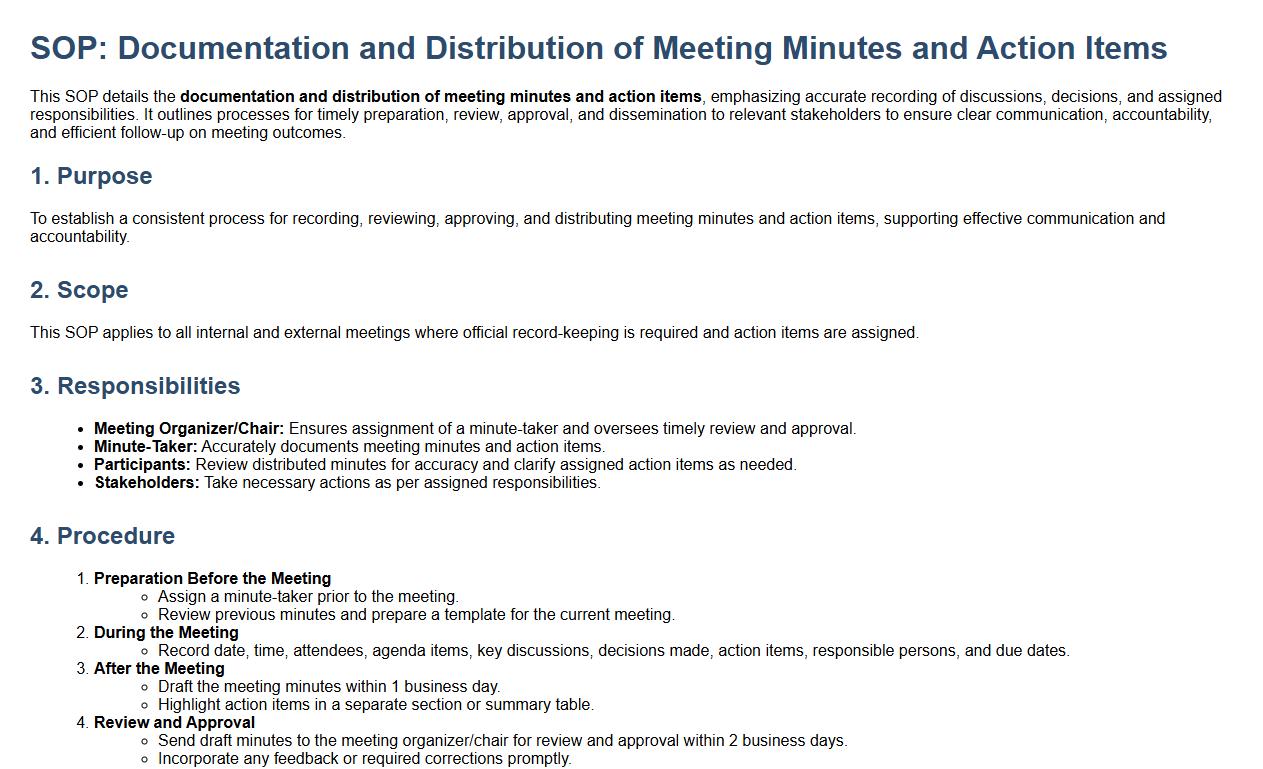
This SOP details the documentation and distribution of meeting minutes and action items, emphasizing accurate recording of discussions, decisions, and assigned responsibilities. It outlines processes for timely preparation, review, approval, and dissemination to relevant stakeholders to ensure clear communication, accountability, and efficient follow-up on meeting outcomes.
Follow-up procedures for post-meeting tasks and deadlines.
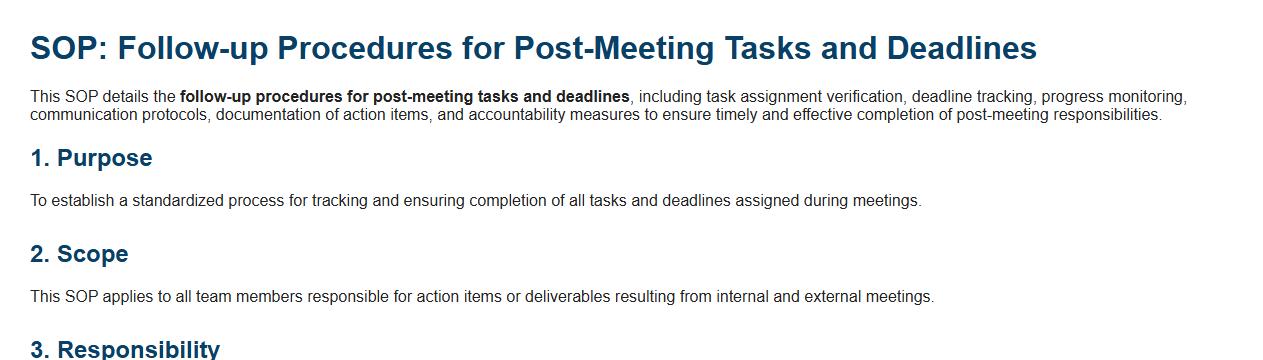
This SOP details the follow-up procedures for post-meeting tasks and deadlines, including task assignment verification, deadline tracking, progress monitoring, communication protocols, documentation of action items, and accountability measures to ensure timely and effective completion of post-meeting responsibilities.
What Are the Required Steps for Initiating a New Meeting as Outlined in the SOP?
The first step in initiating a new meeting involves identifying the purpose and objectives clearly. Next, the meeting organizer must select a suitable date and time ensuring availability of key participants. Finally, a formal meeting request is sent through the designated communication channels as specified in the SOP.
Which Stakeholders Must Be Notified According to the SOP When Scheduling a Meeting?
The SOP mandates that all primary stakeholders directly involved in the meeting topics must be notified. Additionally, secondary stakeholders who may be impacted by the outcomes are included in the notification process. Notifications should be sent in a timely manner to allow adequate preparation and participation.
What Are the Standard Guidelines for Documenting Meeting Agendas in the SOP?
Meeting agendas must be clear, concise, and structured to cover all intended discussion points. They should include specific time allocations for each agenda item to ensure efficient meeting flow. The agenda must be distributed to attendees at least 24 hours before the meeting begins.
How Does the SOP Specify Handling Meeting Rescheduling or Cancellations?
Any rescheduling or cancellations need to be communicated immediately to all stakeholders via the approved notification channels. The SOP requires providing a valid reason and suggesting alternate dates where applicable. Proper documentation of such changes must be maintained for accountability and record-keeping.
What Is the Process for Distributing Meeting Minutes According to the SOP?
Meeting minutes must be accurate, comprehensive, and distributed promptly after the conclusion of the meeting. The designated minutes taker prepares the document, which is then reviewed before dissemination. Minutes are shared with all attendees and relevant stakeholders to ensure transparency and follow-up on action items.