

A SOP Template for Document Filing provides a standardized framework to ensure consistent and efficient organization of documents. It outlines clear procedures for categorizing, storing, and retrieving files, minimizing errors and saving time. This template enhances compliance and improves overall document management within any organization.
Document classification and labeling procedures.
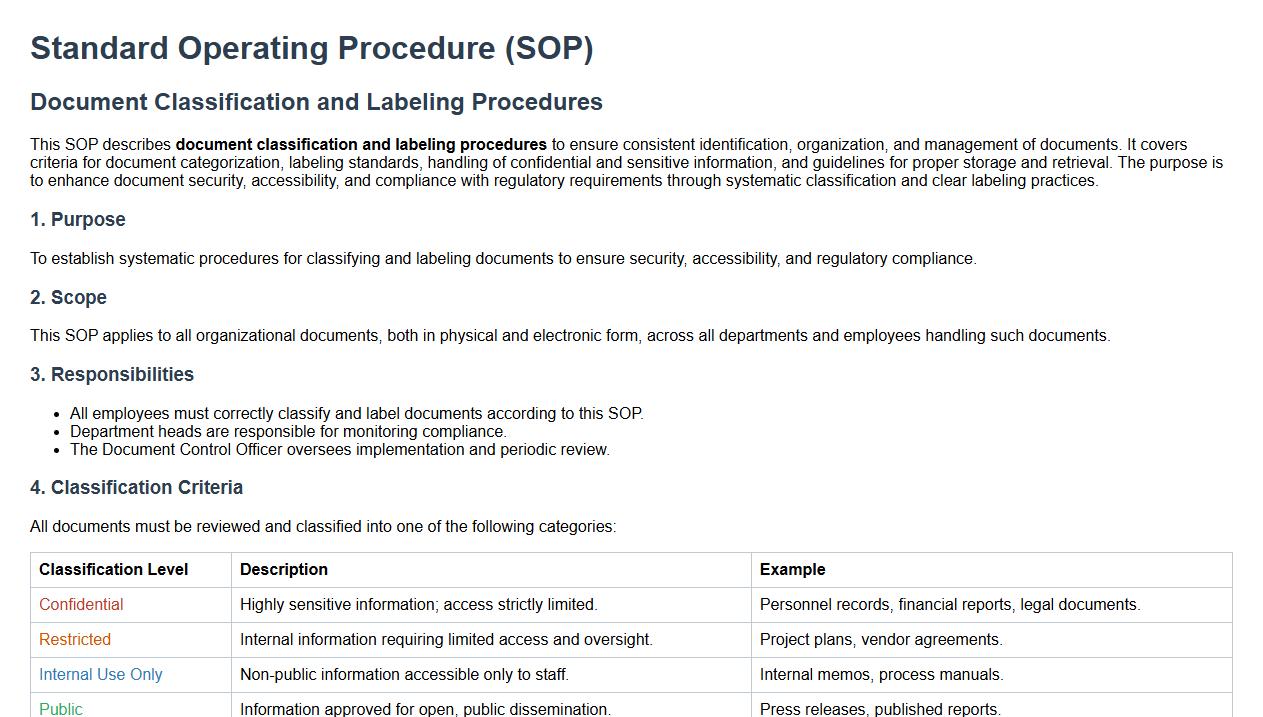
This SOP describes document classification and labeling procedures to ensure consistent identification, organization, and management of documents. It covers criteria for document categorization, labeling standards, handling of confidential and sensitive information, and guidelines for proper storage and retrieval. The purpose is to enhance document security, accessibility, and compliance with regulatory requirements through systematic classification and clear labeling practices.
Standardized file naming conventions.
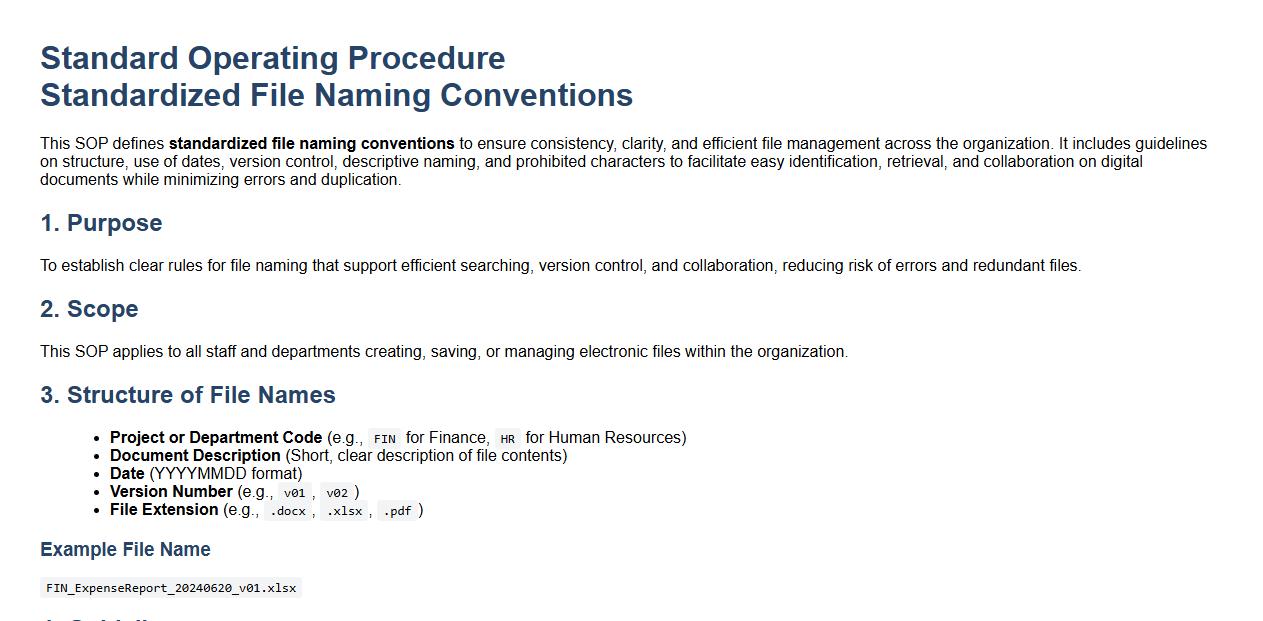
This SOP defines standardized file naming conventions to ensure consistency, clarity, and efficient file management across the organization. It includes guidelines on structure, use of dates, version control, descriptive naming, and prohibited characters to facilitate easy identification, retrieval, and collaboration on digital documents while minimizing errors and duplication.
Document intake and receipt logging.
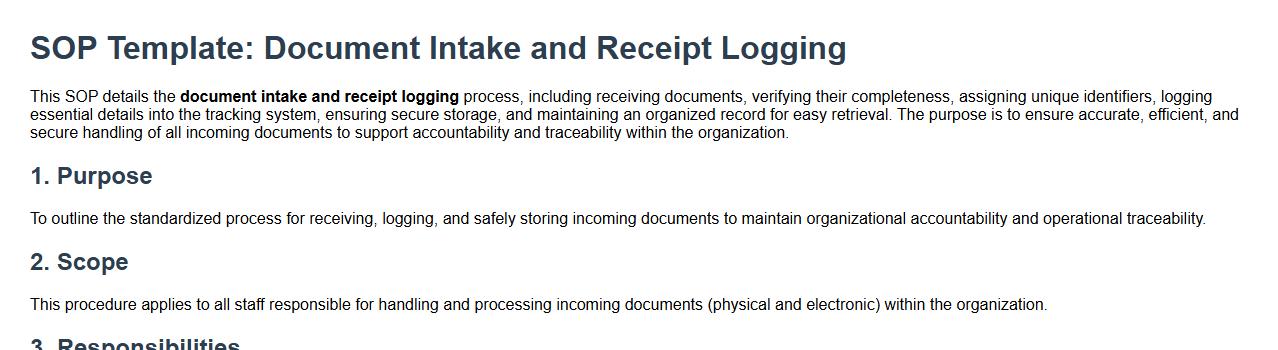
This SOP details the document intake and receipt logging process, including receiving documents, verifying their completeness, assigning unique identifiers, logging essential details into the tracking system, ensuring secure storage, and maintaining an organized record for easy retrieval. The purpose is to ensure accurate, efficient, and secure handling of all incoming documents to support accountability and traceability within the organization.
Physical and digital document sorting protocols.
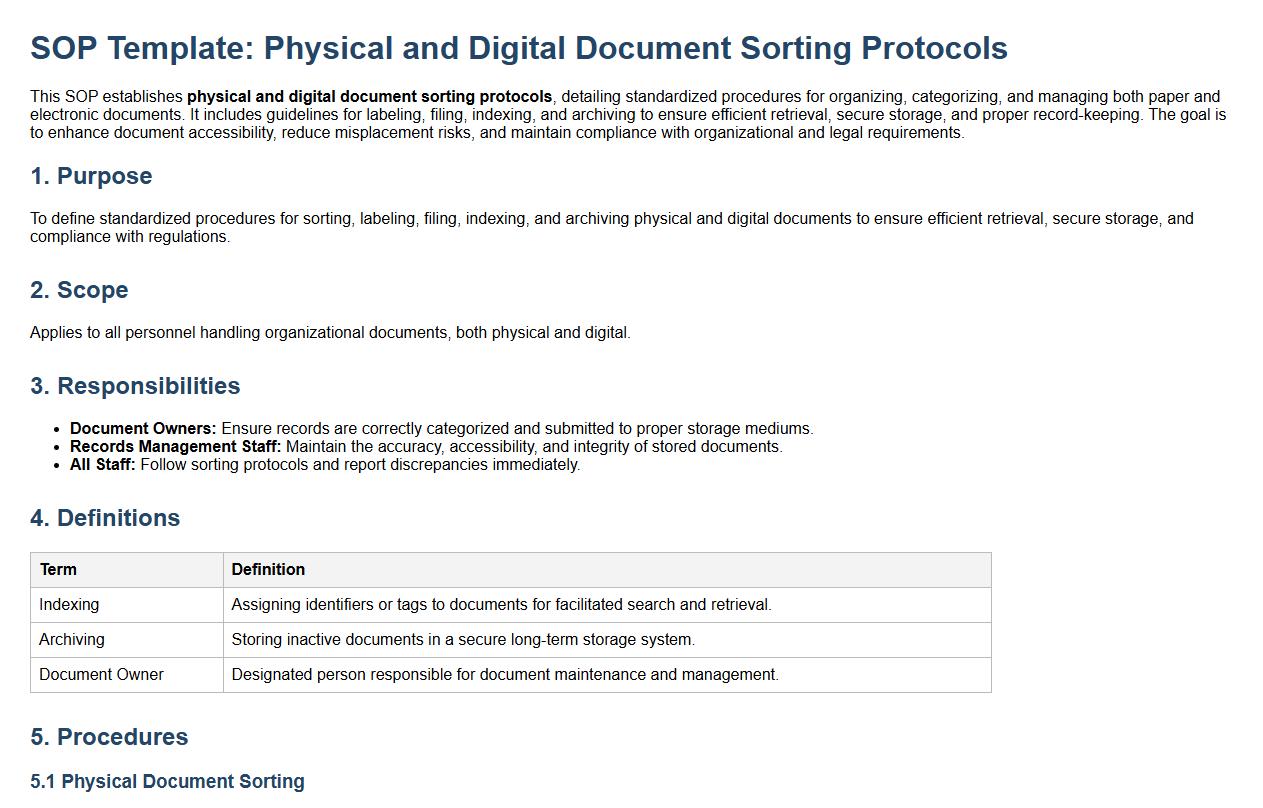
This SOP establishes physical and digital document sorting protocols, detailing standardized procedures for organizing, categorizing, and managing both paper and electronic documents. It includes guidelines for labeling, filing, indexing, and archiving to ensure efficient retrieval, secure storage, and proper record-keeping. The goal is to enhance document accessibility, reduce misplacement risks, and maintain compliance with organizational and legal requirements.
Folder structure setup and maintenance guidelines.
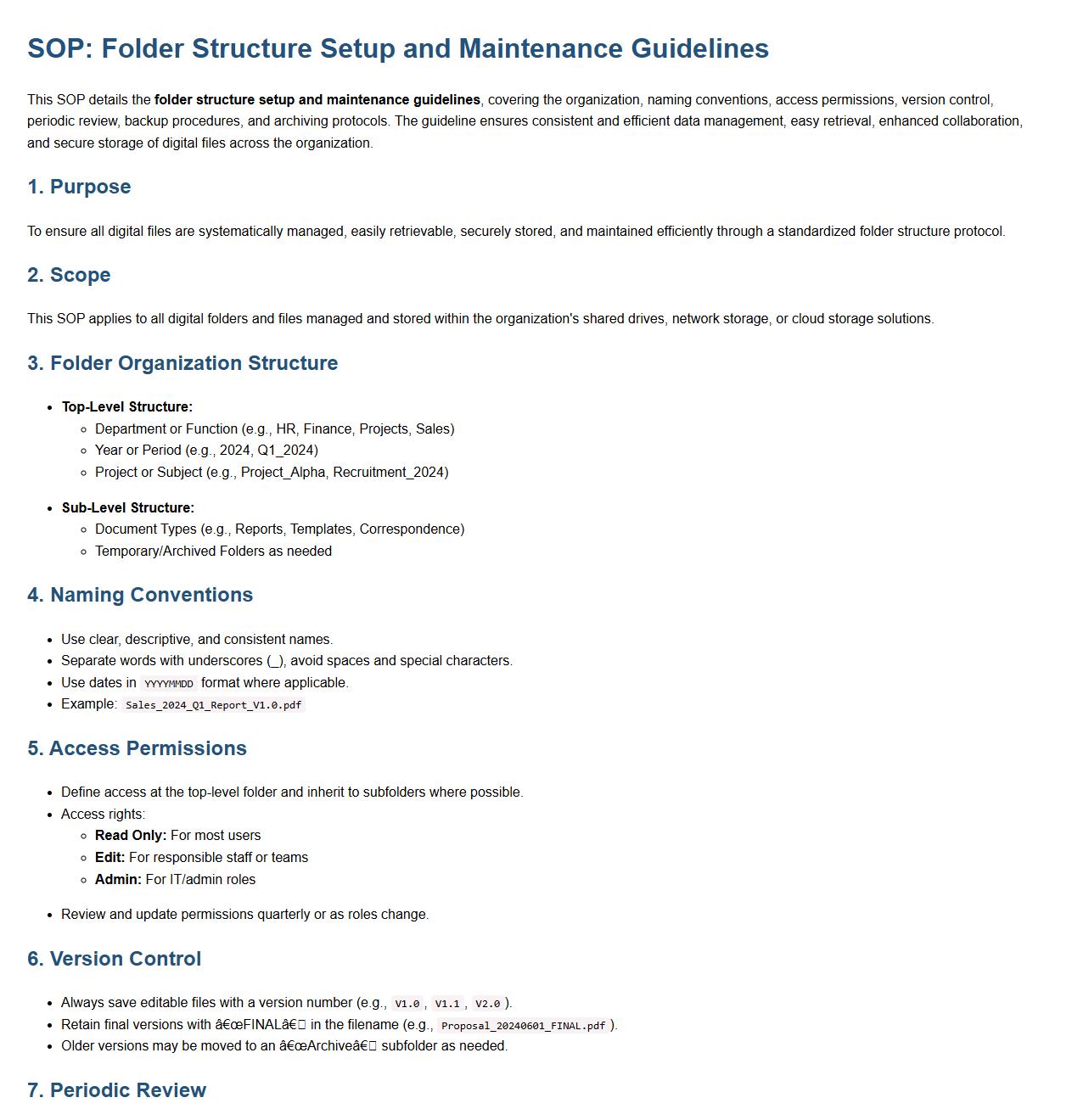
This SOP details the folder structure setup and maintenance guidelines, covering the organization, naming conventions, access permissions, version control, periodic review, backup procedures, and archiving protocols. The guideline ensures consistent and efficient data management, easy retrieval, enhanced collaboration, and secure storage of digital files across the organization.
Access control and document security measures.
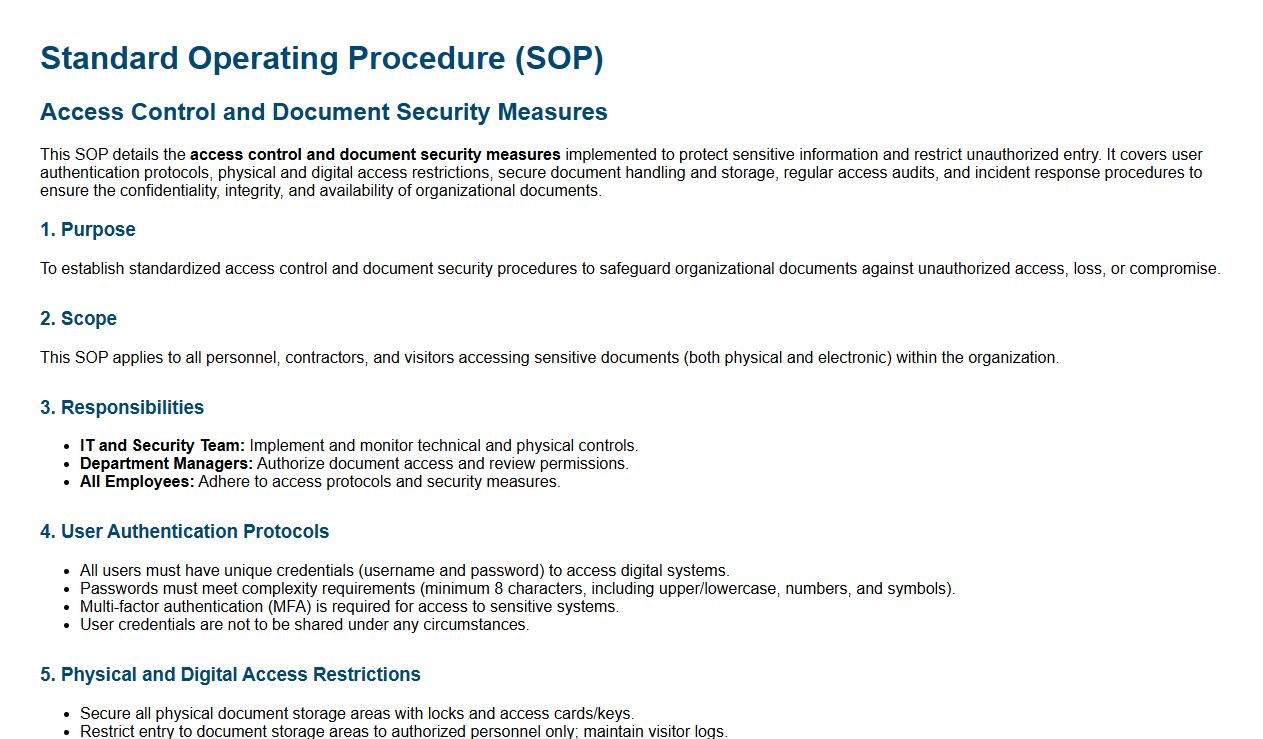
This SOP details the access control and document security measures implemented to protect sensitive information and restrict unauthorized entry. It covers user authentication protocols, physical and digital access restrictions, secure document handling and storage, regular access audits, and incident response procedures to ensure the confidentiality, integrity, and availability of organizational documents.
Procedures for filing, retrieval, and re-filing of documents.
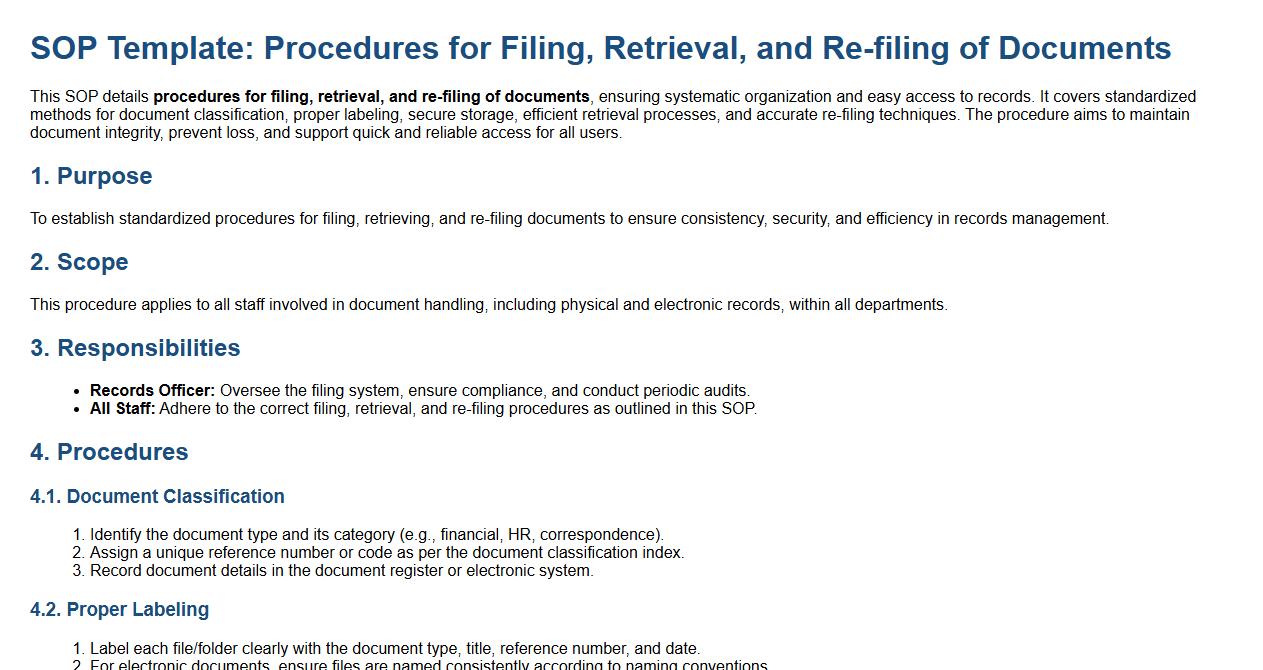
This SOP details procedures for filing, retrieval, and re-filing of documents, ensuring systematic organization and easy access to records. It covers standardized methods for document classification, proper labeling, secure storage, efficient retrieval processes, and accurate re-filing techniques. The procedure aims to maintain document integrity, prevent loss, and support quick and reliable access for all users.
Archiving and retention schedule management.
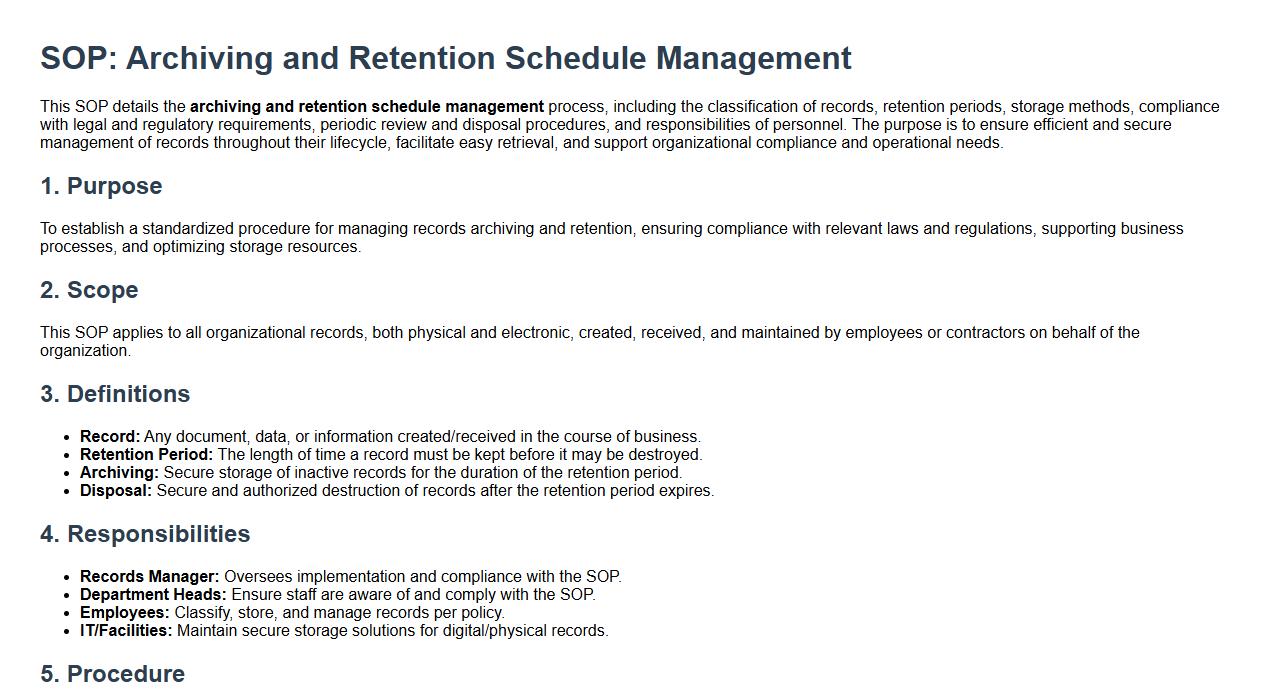
This SOP details the archiving and retention schedule management process, including the classification of records, retention periods, storage methods, compliance with legal and regulatory requirements, periodic review and disposal procedures, and responsibilities of personnel. The purpose is to ensure efficient and secure management of records throughout their lifecycle, facilitate easy retrieval, and support organizational compliance and operational needs.
Document disposal and shredding procedures.
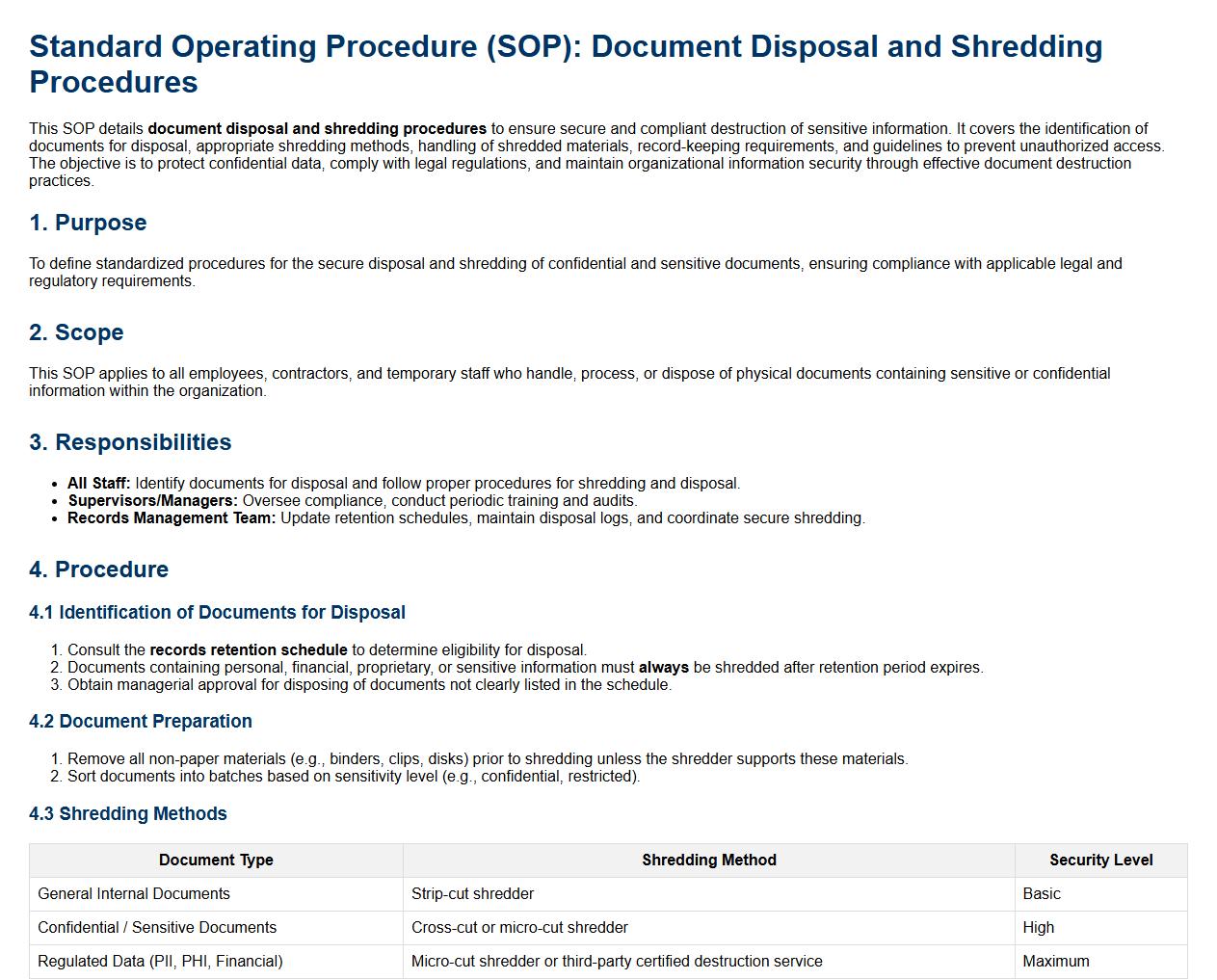
This SOP details document disposal and shredding procedures to ensure secure and compliant destruction of sensitive information. It covers the identification of documents for disposal, appropriate shredding methods, handling of shredded materials, record-keeping requirements, and guidelines to prevent unauthorized access. The objective is to protect confidential data, comply with legal regulations, and maintain organizational information security through effective document destruction practices.
Periodic audit and compliance checklists.
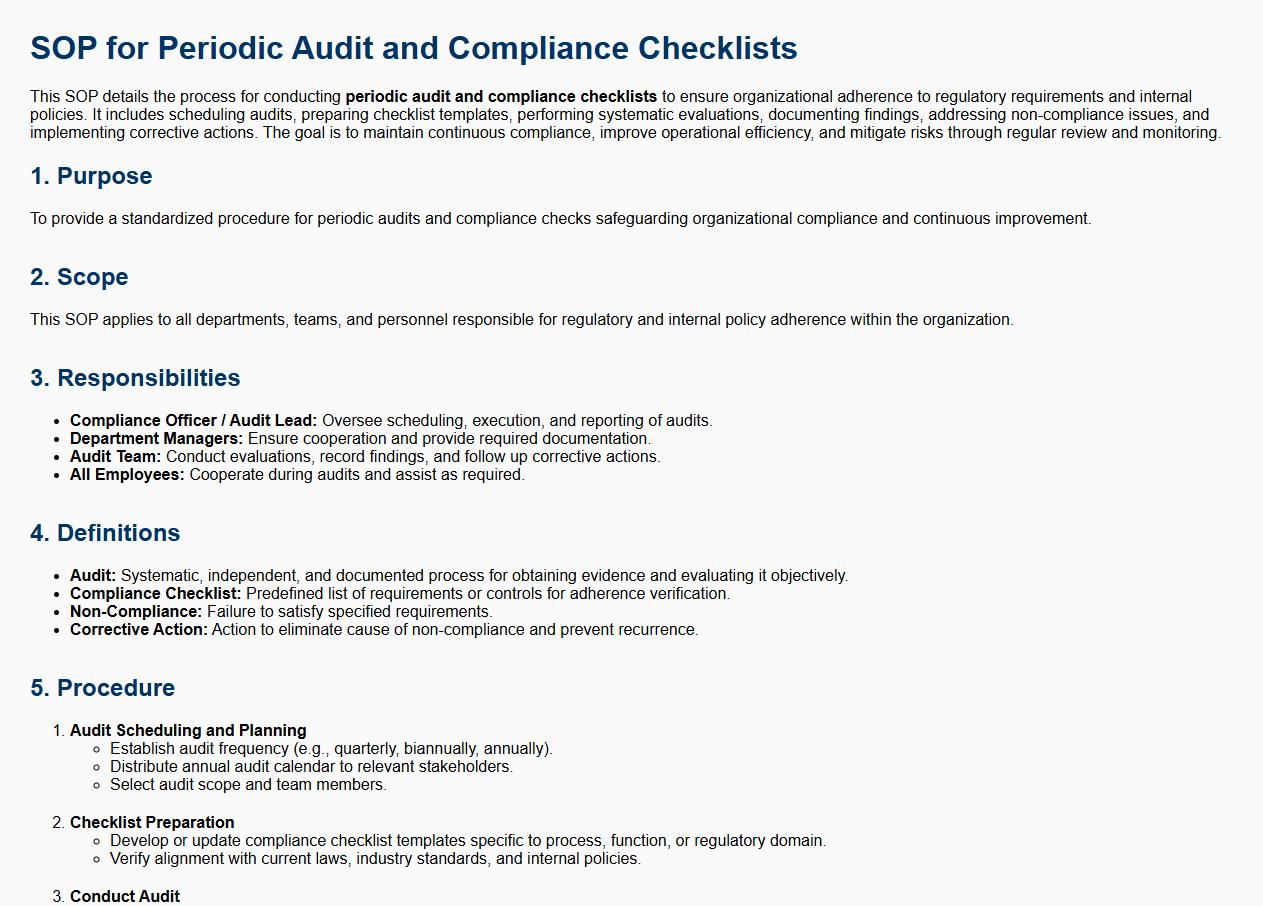
This SOP details the process for conducting periodic audit and compliance checklists to ensure organizational adherence to regulatory requirements and internal policies. It includes scheduling audits, preparing checklist templates, performing systematic evaluations, documenting findings, addressing non-compliance issues, and implementing corrective actions. The goal is to maintain continuous compliance, improve operational efficiency, and mitigate risks through regular review and monitoring.
What is the primary objective of the SOP for Document Filing?
The primary objective of the SOP for Document Filing is to establish a consistent and efficient method for organizing and storing documents. It aims to ensure easy accessibility and retrieval of important files. This SOP helps maintain accuracy and security of the document management system.
Which document categories require mandatory filing according to the SOP?
The SOP mandates filing for key document categories such as financial records, legal documents, and operational reports. These categories are essential for compliance and audit purposes. Proper filing of these documents ensures organizational transparency and accountability.
What is the standardized naming convention specified in the filing SOP?
The filing SOP specifies a standardized naming convention that includes date, document type, and department code. This format enhances uniformity and simplifies document searches. Consistent naming reduces errors and increases document traceability.
Who is responsible for ensuring document filing compliance as outlined in the SOP?
The responsibility for ensuring document filing compliance lies with designated filing coordinators and department heads. They oversee adherence to the SOP and conduct regular audits. This accountability mechanism supports proper document management practices.
What is the procedure for retrieving and re-filing documents according to the filing SOP?
The SOP outlines a clear procedure where documents must be logged out before retrieval and recorded upon return. Re-filing requires placing the document back in its original location following the naming and categorization standards. This process guarantees document integrity and availability at all times.