

A SOP Template for Online Class Delivery ensures a consistent and efficient approach to managing virtual lessons. It outlines step-by-step procedures for instructors, including preparation, technology use, student engagement, and assessment methods. Implementing this template improves the overall quality and effectiveness of online education.
Course preparation and syllabus upload.
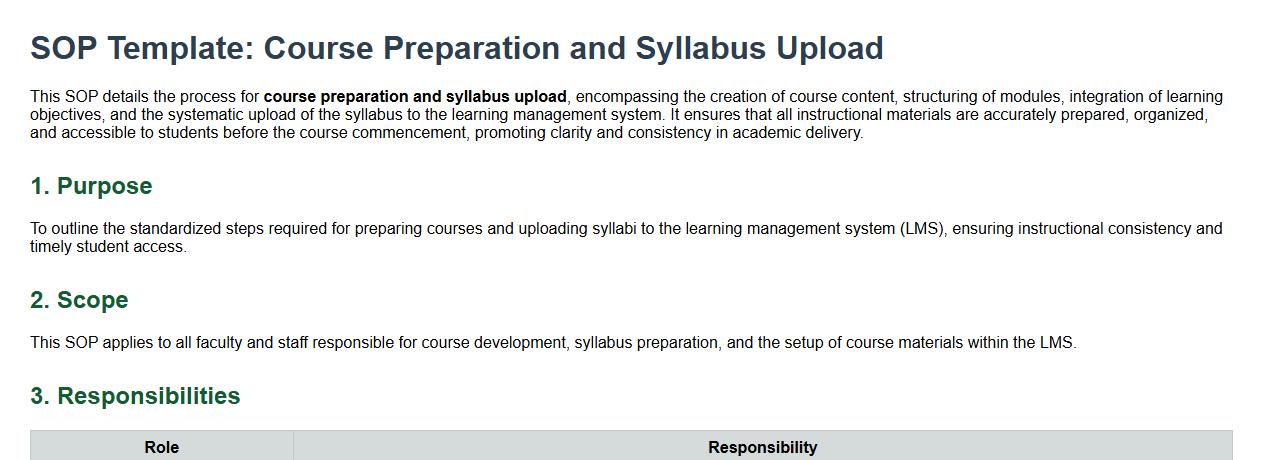
This SOP details the process for course preparation and syllabus upload, encompassing the creation of course content, structuring of modules, integration of learning objectives, and the systematic upload of the syllabus to the learning management system. It ensures that all instructional materials are accurately prepared, organized, and accessible to students before the course commencement, promoting clarity and consistency in academic delivery.
Instructor and student onboarding process.
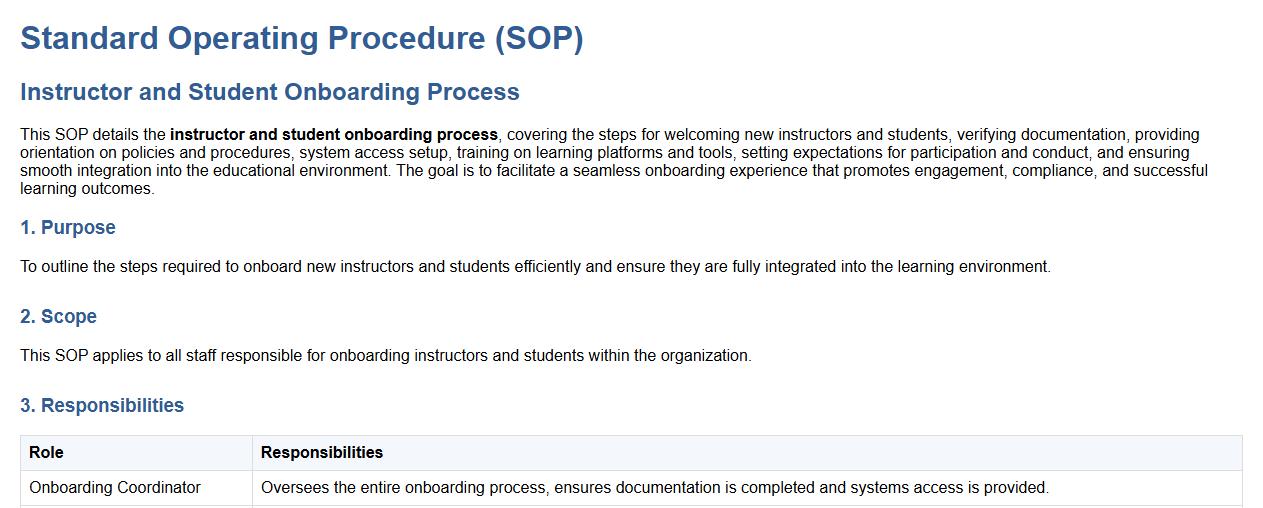
This SOP details the instructor and student onboarding process, covering the steps for welcoming new instructors and students, verifying documentation, providing orientation on policies and procedures, system access setup, training on learning platforms and tools, setting expectations for participation and conduct, and ensuring smooth integration into the educational environment. The goal is to facilitate a seamless onboarding experience that promotes engagement, compliance, and successful learning outcomes.
Virtual classroom setup and technology check.
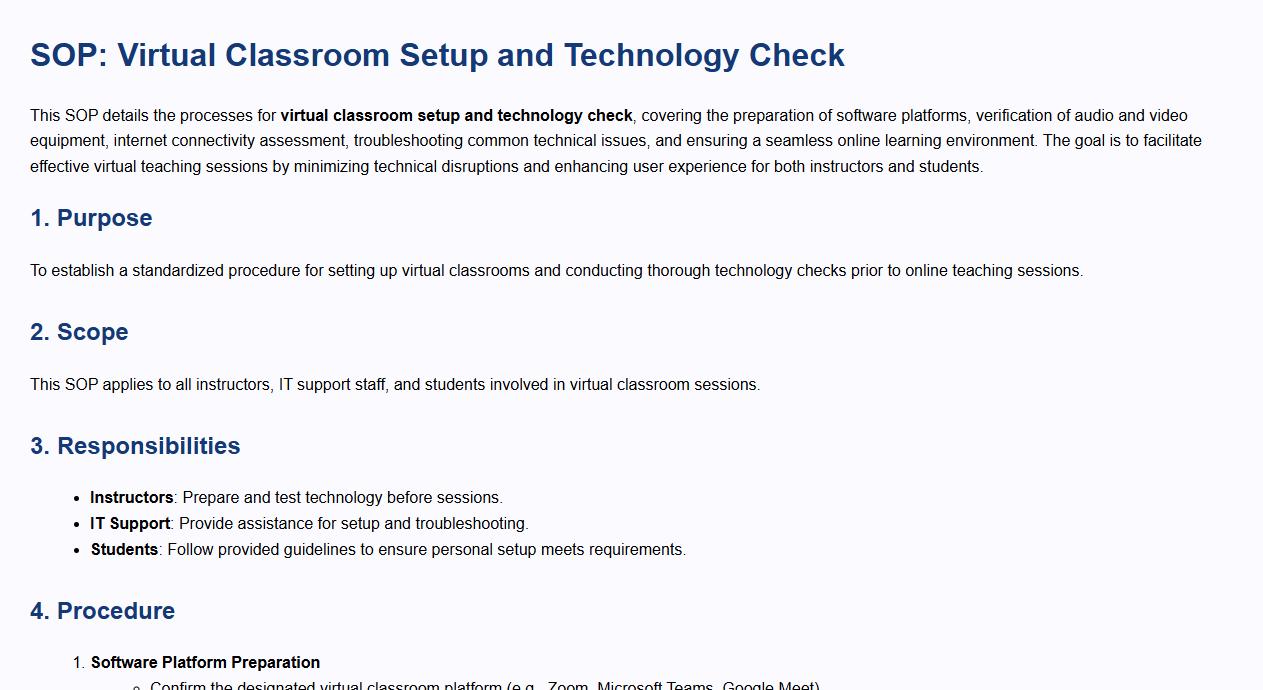
This SOP details the processes for virtual classroom setup and technology check, covering the preparation of software platforms, verification of audio and video equipment, internet connectivity assessment, troubleshooting common technical issues, and ensuring a seamless online learning environment. The goal is to facilitate effective virtual teaching sessions by minimizing technical disruptions and enhancing user experience for both instructors and students.
Content delivery and lecture recording procedures.
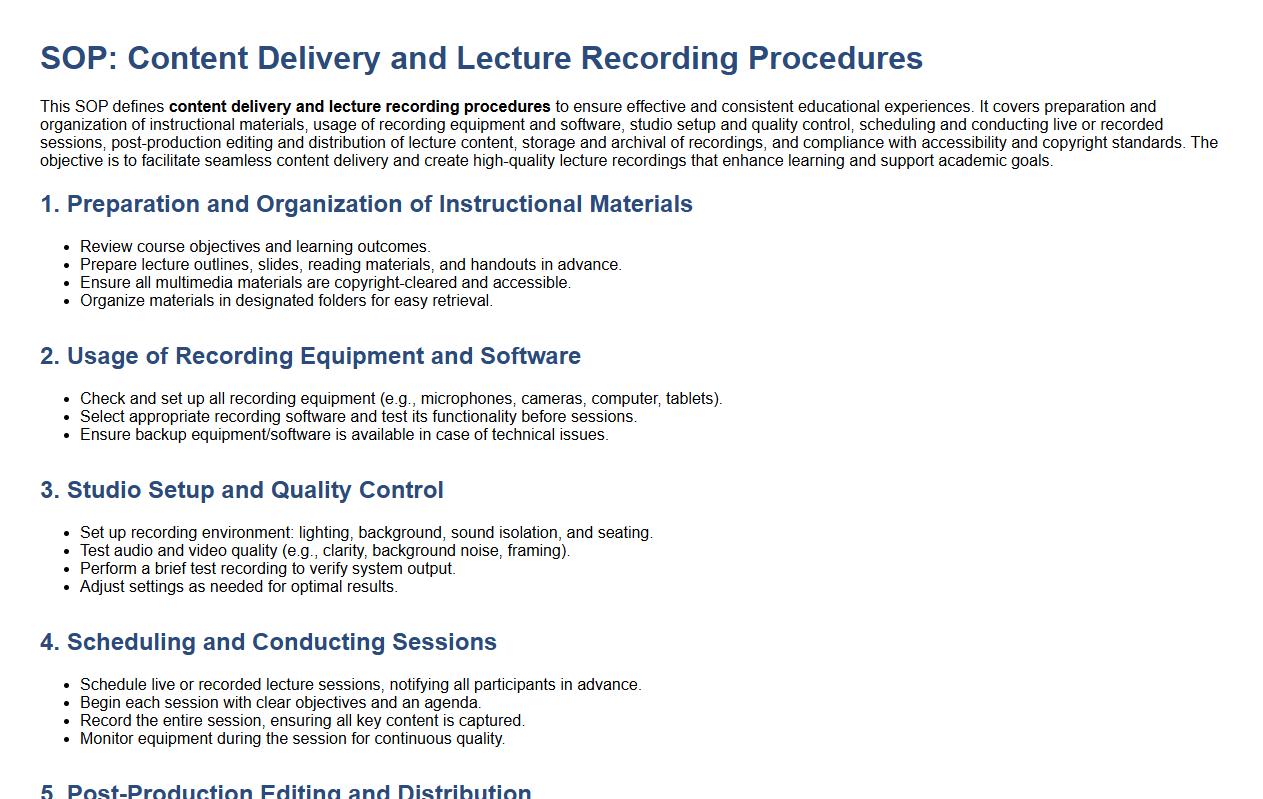
This SOP defines content delivery and lecture recording procedures to ensure effective and consistent educational experiences. It covers preparation and organization of instructional materials, usage of recording equipment and software, studio setup and quality control, scheduling and conducting live or recorded sessions, post-production editing and distribution of lecture content, storage and archival of recordings, and compliance with accessibility and copyright standards. The objective is to facilitate seamless content delivery and create high-quality lecture recordings that enhance learning and support academic goals.
Student engagement and participation protocols.
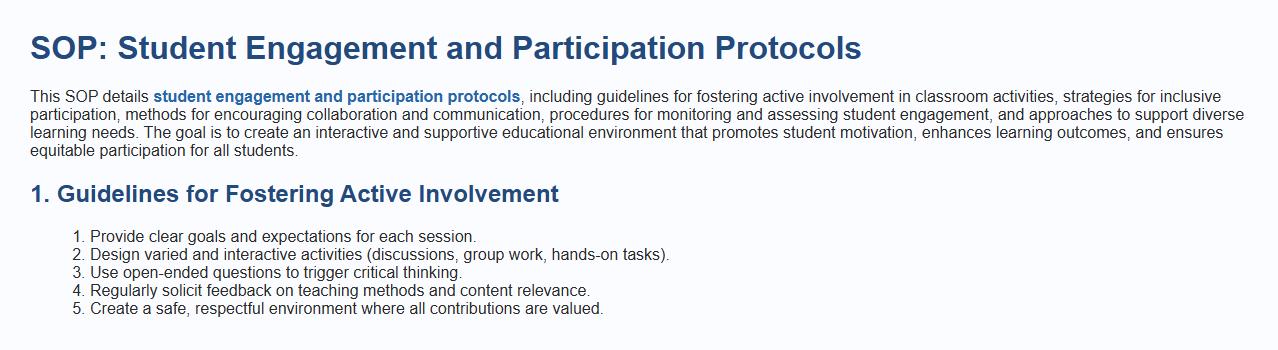
This SOP details student engagement and participation protocols, including guidelines for fostering active involvement in classroom activities, strategies for inclusive participation, methods for encouraging collaboration and communication, procedures for monitoring and assessing student engagement, and approaches to support diverse learning needs. The goal is to create an interactive and supportive educational environment that promotes student motivation, enhances learning outcomes, and ensures equitable participation for all students.
Assignment creation, submission, and feedback system.
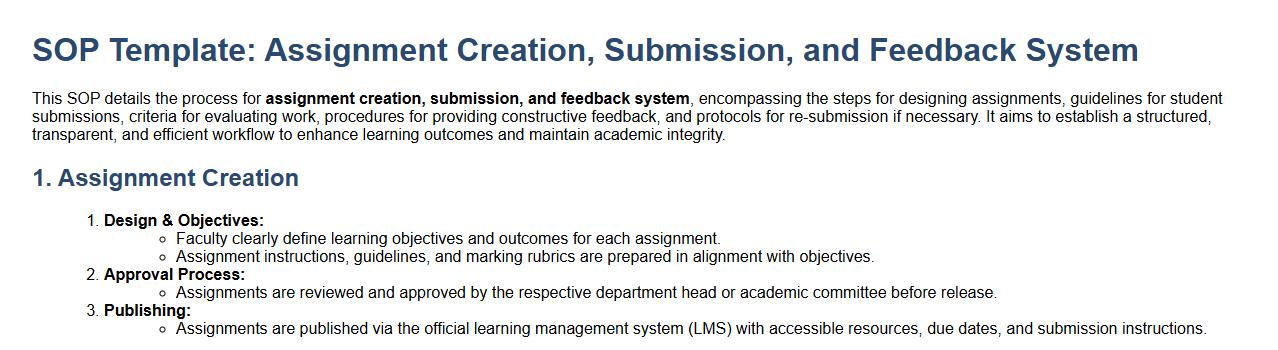
This SOP details the process for assignment creation, submission, and feedback system, encompassing the steps for designing assignments, guidelines for student submissions, criteria for evaluating work, procedures for providing constructive feedback, and protocols for re-submission if necessary. It aims to establish a structured, transparent, and efficient workflow to enhance learning outcomes and maintain academic integrity.
Online assessment and proctoring guidelines.
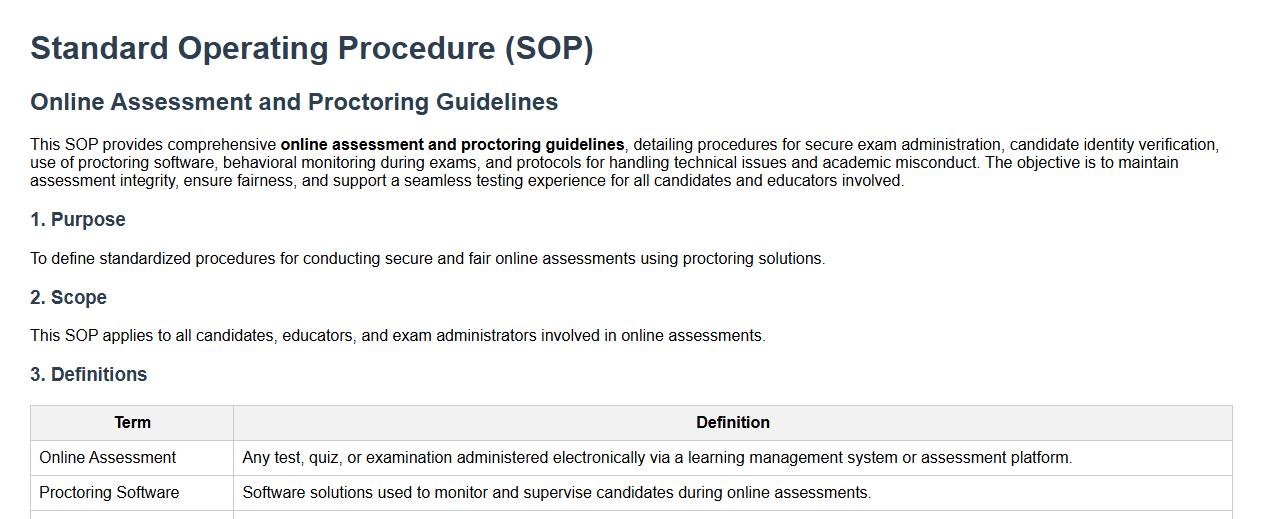
This SOP provides comprehensive online assessment and proctoring guidelines, detailing procedures for secure exam administration, candidate identity verification, use of proctoring software, behavioral monitoring during exams, and protocols for handling technical issues and academic misconduct. The objective is to maintain assessment integrity, ensure fairness, and support a seamless testing experience for all candidates and educators involved.
Communication and announcement dissemination.
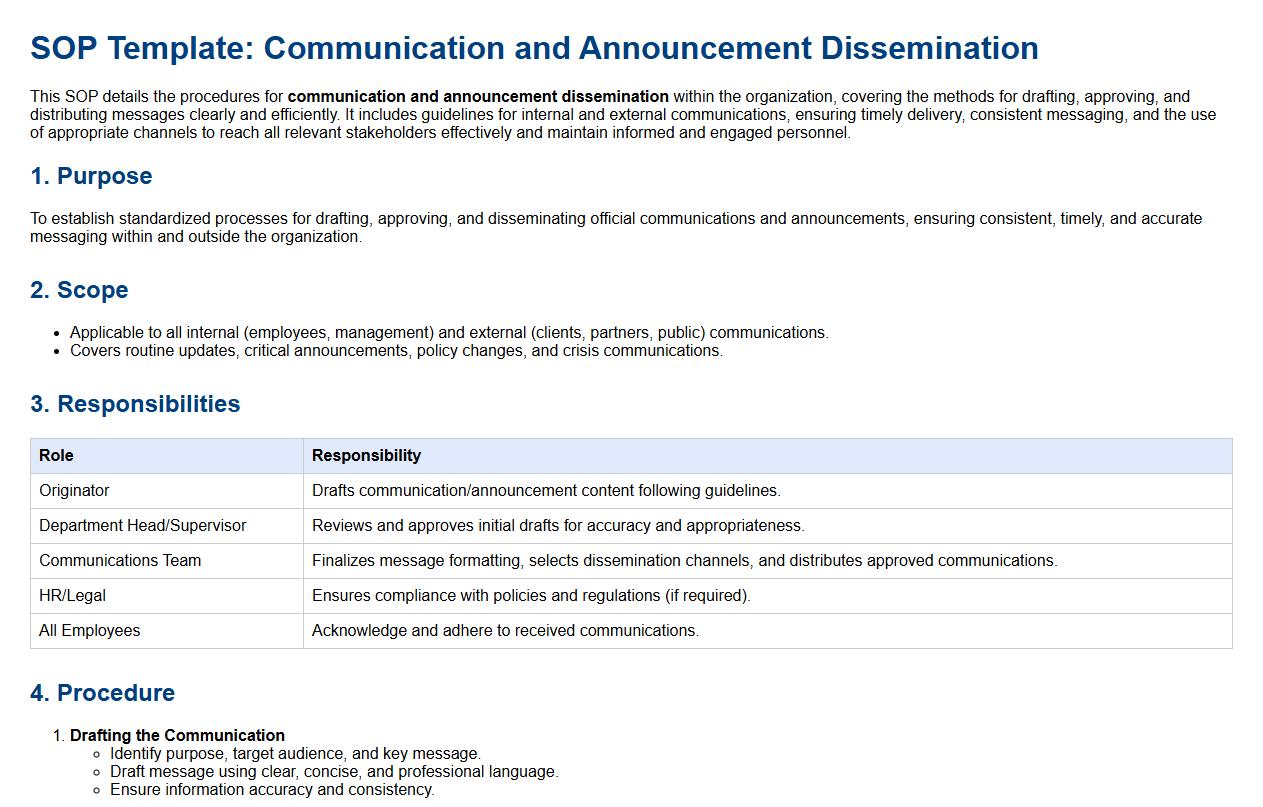
This SOP details the procedures for communication and announcement dissemination within the organization, covering the methods for drafting, approving, and distributing messages clearly and efficiently. It includes guidelines for internal and external communications, ensuring timely delivery, consistent messaging, and the use of appropriate channels to reach all relevant stakeholders effectively and maintain informed and engaged personnel.
Technical support and troubleshooting steps.
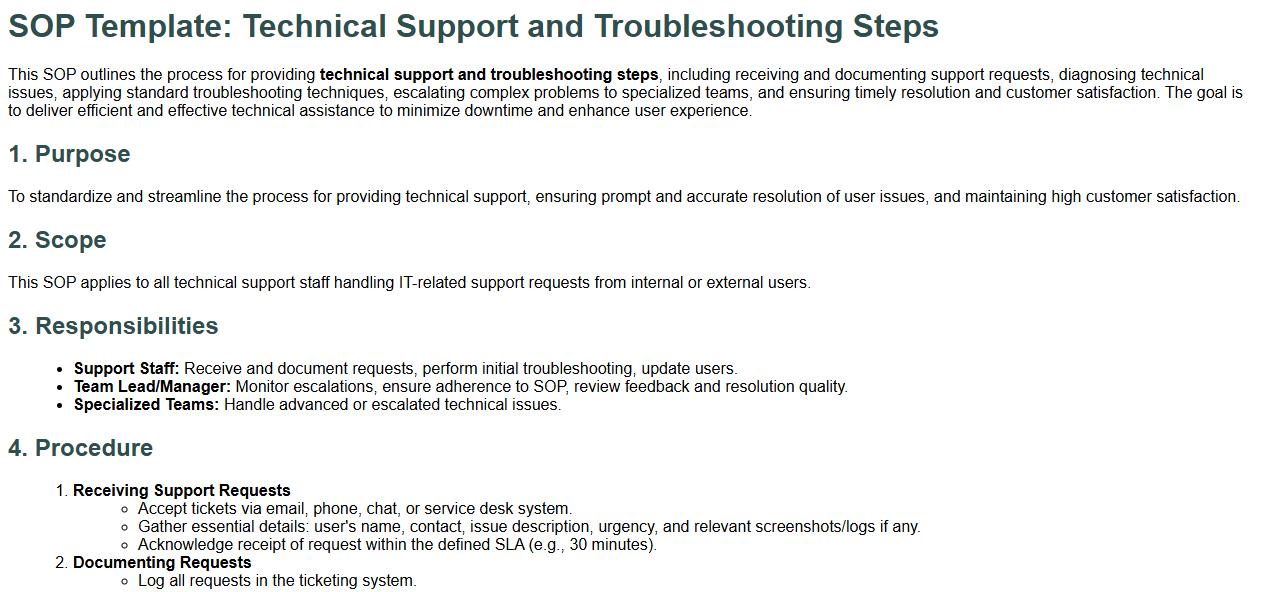
This SOP outlines the process for providing technical support and troubleshooting steps, including receiving and documenting support requests, diagnosing technical issues, applying standard troubleshooting techniques, escalating complex problems to specialized teams, and ensuring timely resolution and customer satisfaction. The goal is to deliver efficient and effective technical assistance to minimize downtime and enhance user experience.
Data privacy and academic integrity compliance.
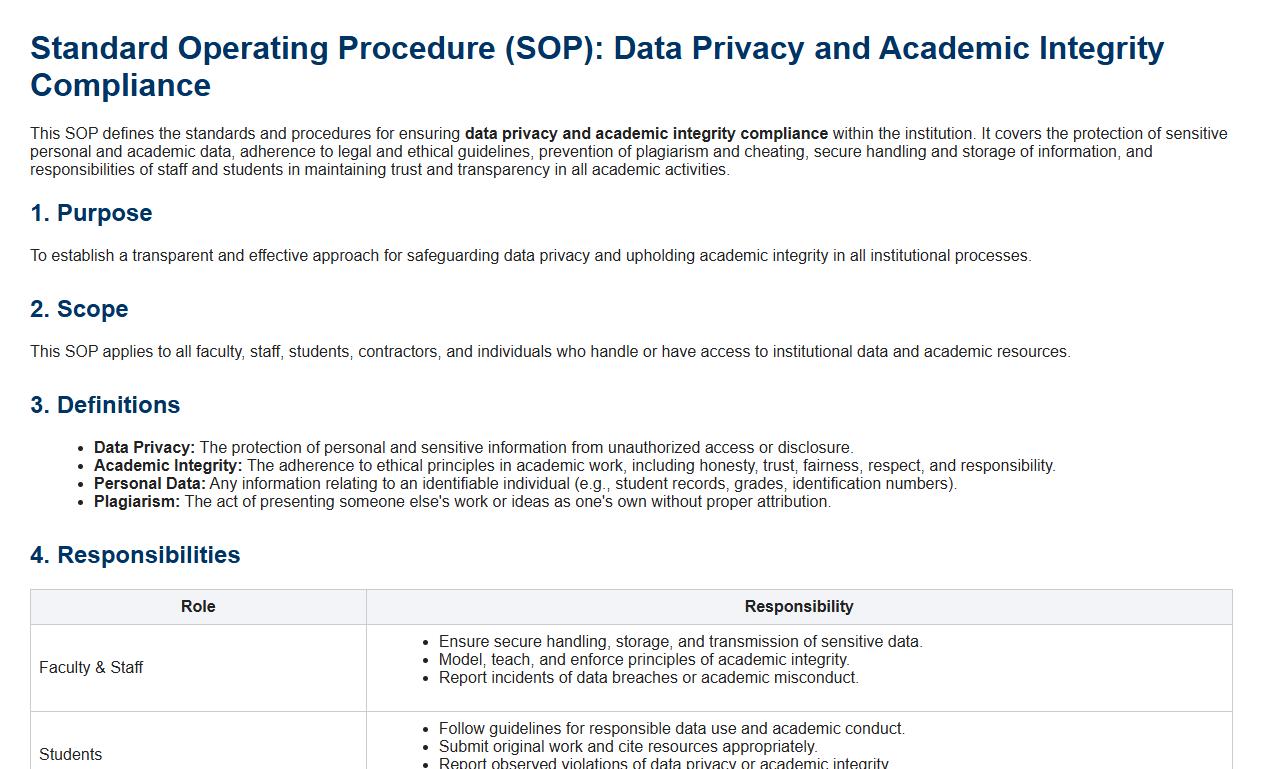
This SOP defines the standards and procedures for ensuring data privacy and academic integrity compliance within the institution. It covers the protection of sensitive personal and academic data, adherence to legal and ethical guidelines, prevention of plagiarism and cheating, secure handling and storage of information, and responsibilities of staff and students in maintaining trust and transparency in all academic activities.
Mandatory Steps for Initiating an Online Class Session
The SOP mandates that instructors log in to the designated platform at least 15 minutes before the session starts to ensure all systems are functioning properly. They must verify the class list and prepare all instructional materials beforehand. Starting the class on time is emphasized to maintain consistency and professionalism.
Approved Platforms and Tools for Online Class Delivery
The SOP specifies the use of Zoom, Microsoft Teams, and Google Meet as the primary platforms for online class delivery. Instructors are encouraged to utilize built-in tools such as screen sharing, breakout rooms, and polling to enhance engagement. These platforms have been approved for their reliability and security features.
Student Attendance Verification and Documentation
Attendance is recorded through the platform's automatic attendance reports or by manual roll calls at the beginning and end of the session. Instructors must document attendance in the learning management system within 24 hours. This procedure ensures accurate tracking and accountability of student participation.
Protocols for Recording and Sharing Class Materials
Instructors are required to record sessions unless otherwise directed, ensuring all classes are accessible for review and revision. Recorded materials must be uploaded to the official learning portal within 48 hours. Sharing is restricted to enrolled students to comply with privacy standards.
Procedures for Handling Technical Disruptions During an Online Class
The SOP instructs instructors to immediately notify technical support for unresolved connectivity or audio/video issues. They should have a backup communication method, such as email or phone, to keep students informed. If the disruption persists beyond 15 minutes, rescheduling protocols must be initiated.