
A SOP Template for Library Services provides a structured framework to standardize daily operations, ensuring consistent and efficient service delivery. This template outlines clear procedures for cataloging, lending, and maintaining library resources while promoting a user-friendly environment. It serves as a valuable tool for training staff and enhancing overall library management.
Circulation and Lending Procedures.
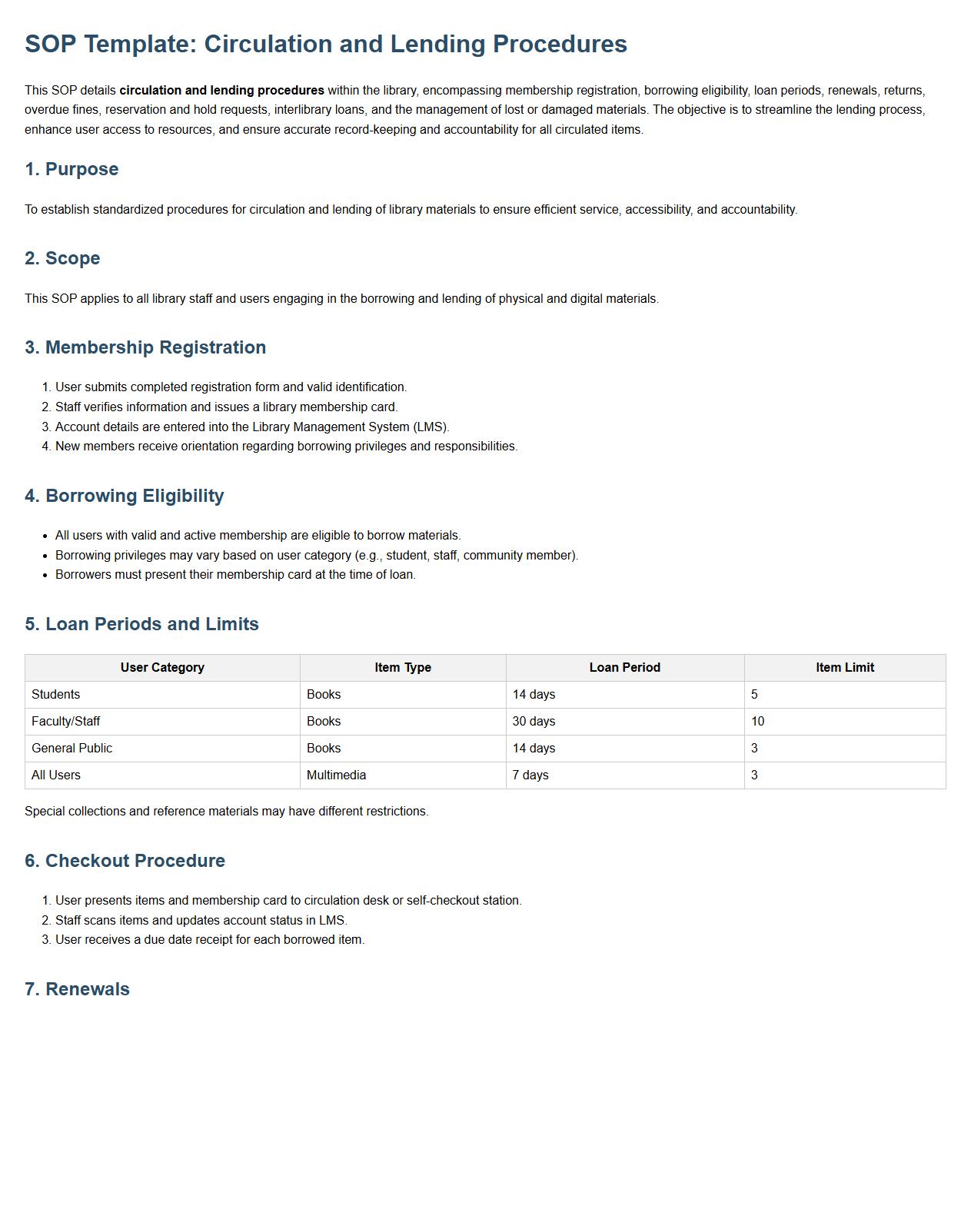
This SOP details circulation and lending procedures within the library, encompassing membership registration, borrowing eligibility, loan periods, renewals, returns, overdue fines, reservation and hold requests, interlibrary loans, and the management of lost or damaged materials. The objective is to streamline the lending process, enhance user access to resources, and ensure accurate record-keeping and accountability for all circulated items.
User Registration and Membership Management.
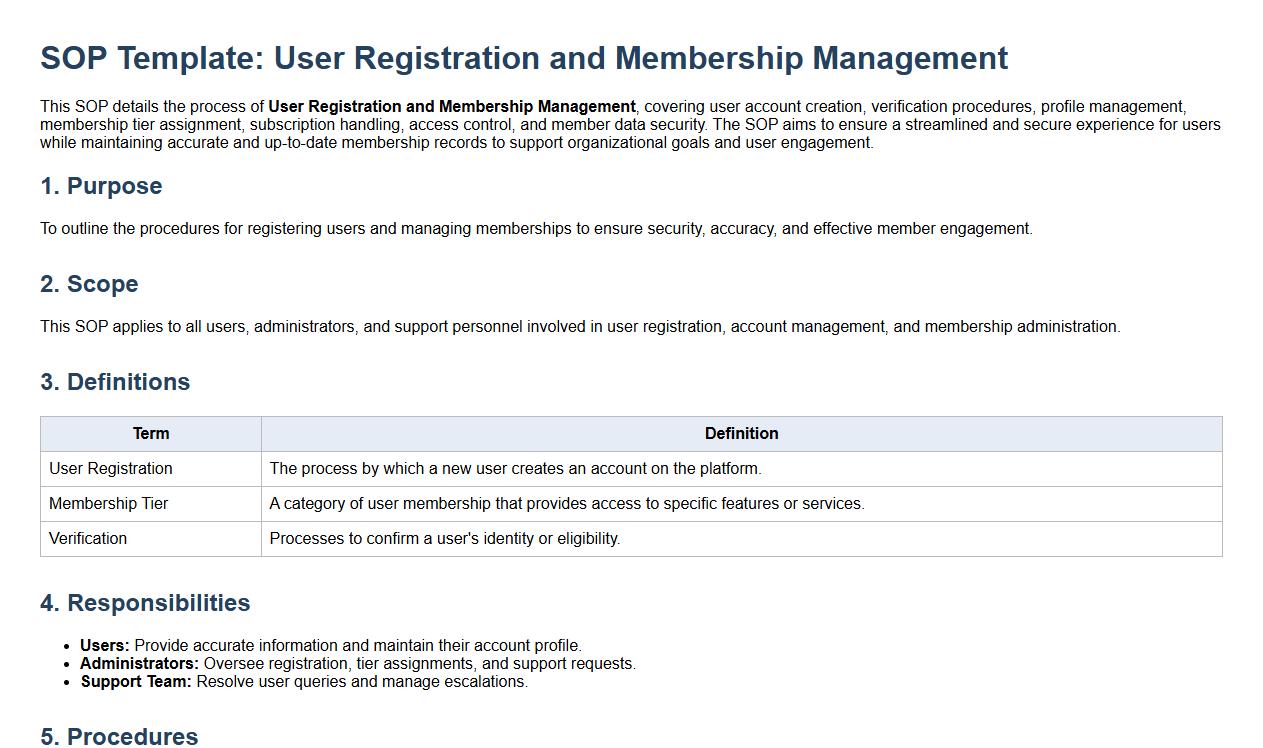
This SOP details the process of User Registration and Membership Management, covering user account creation, verification procedures, profile management, membership tier assignment, subscription handling, access control, and member data security. The SOP aims to ensure a streamlined and secure experience for users while maintaining accurate and up-to-date membership records to support organizational goals and user engagement.
Cataloguing and Classification of Materials.
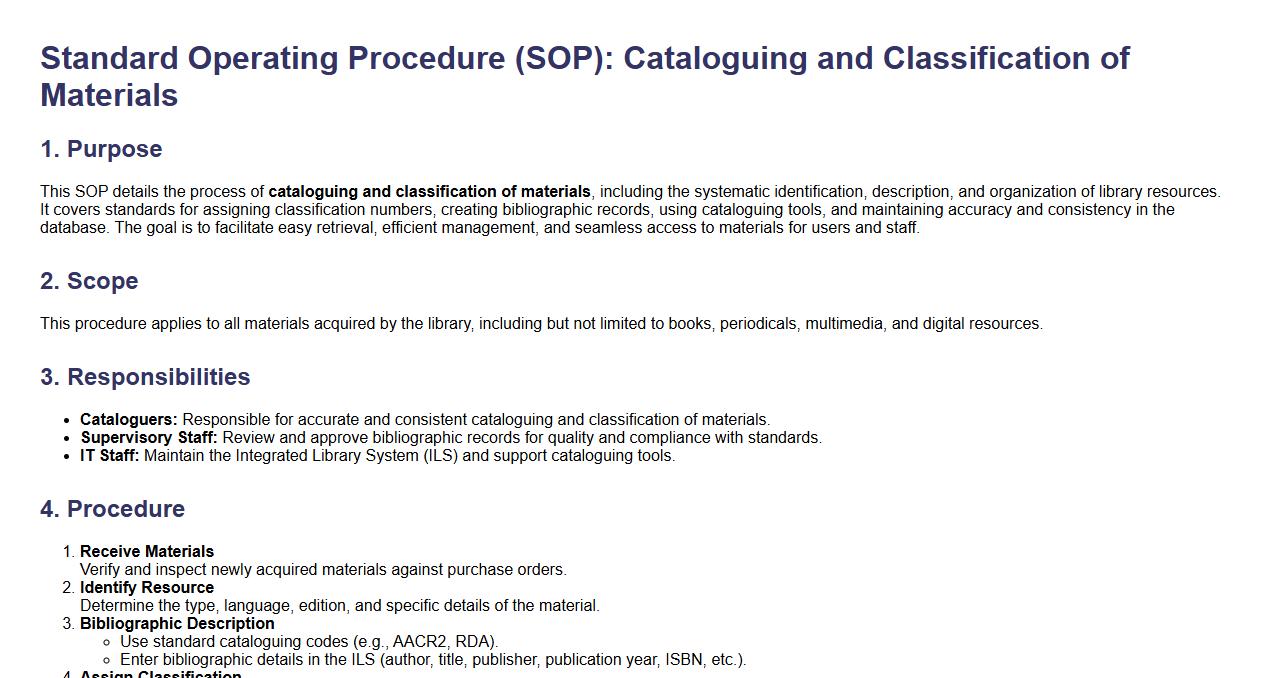
This SOP details the process of cataloguing and classification of materials, including the systematic identification, description, and organization of library resources. It covers standards for assigning classification numbers, creating bibliographic records, using cataloguing tools, and maintaining accuracy and consistency in the database. The goal is to facilitate easy retrieval, efficient management, and seamless access to materials for users and staff.
Acquisition and Processing of New Materials.
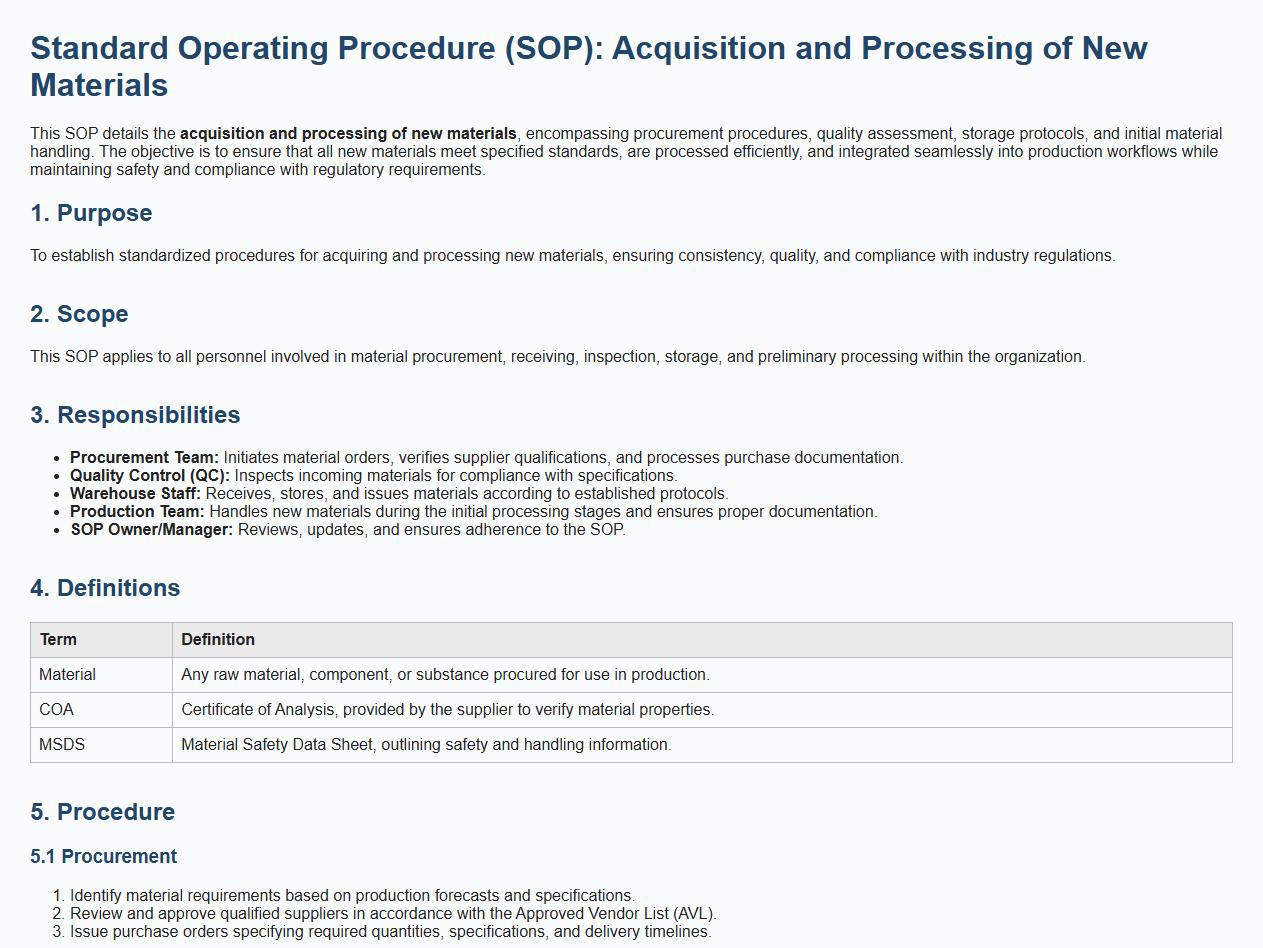
This SOP details the acquisition and processing of new materials, encompassing procurement procedures, quality assessment, storage protocols, and initial material handling. The objective is to ensure that all new materials meet specified standards, are processed efficiently, and integrated seamlessly into production workflows while maintaining safety and compliance with regulatory requirements.
Reference and Information Services Workflow.
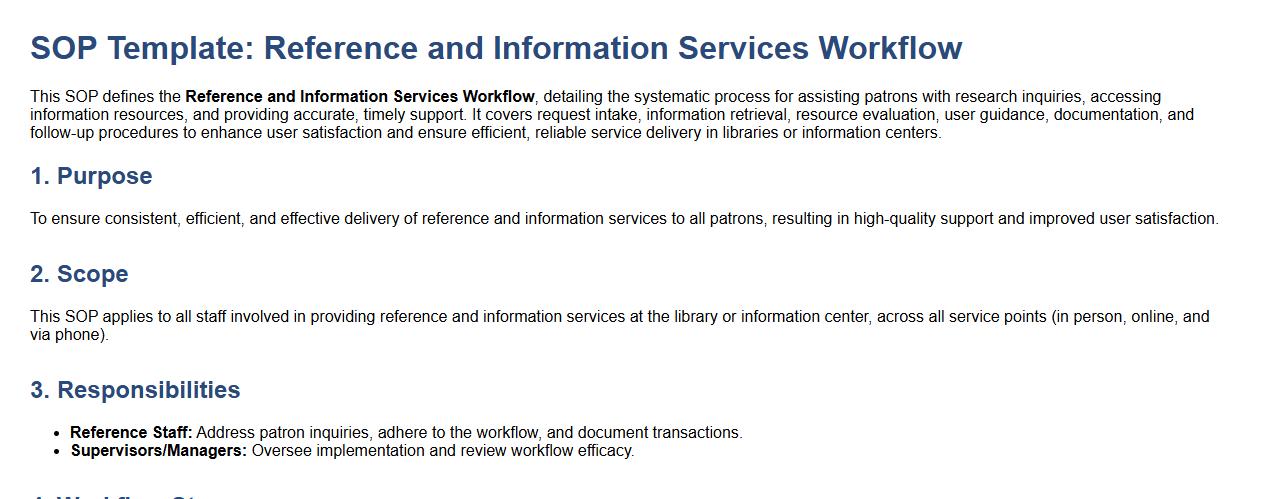
This SOP defines the Reference and Information Services Workflow, detailing the systematic process for assisting patrons with research inquiries, accessing information resources, and providing accurate, timely support. It covers request intake, information retrieval, resource evaluation, user guidance, documentation, and follow-up procedures to enhance user satisfaction and ensure efficient, reliable service delivery in libraries or information centers.
Interlibrary Loan and Document Delivery Process.
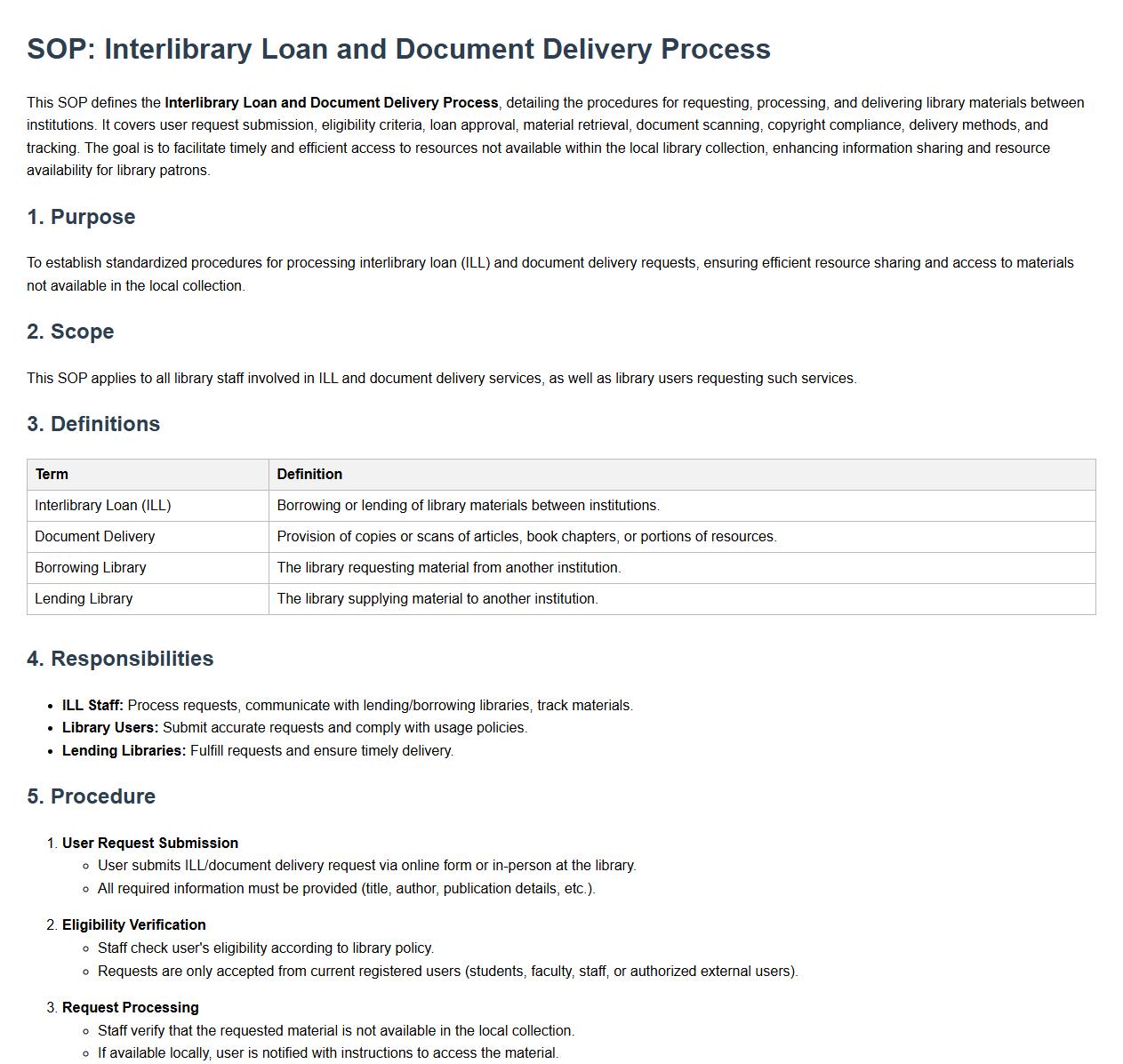
This SOP defines the Interlibrary Loan and Document Delivery Process, detailing the procedures for requesting, processing, and delivering library materials between institutions. It covers user request submission, eligibility criteria, loan approval, material retrieval, document scanning, copyright compliance, delivery methods, and tracking. The goal is to facilitate timely and efficient access to resources not available within the local library collection, enhancing information sharing and resource availability for library patrons.
Library Facility and Resource Access Management.
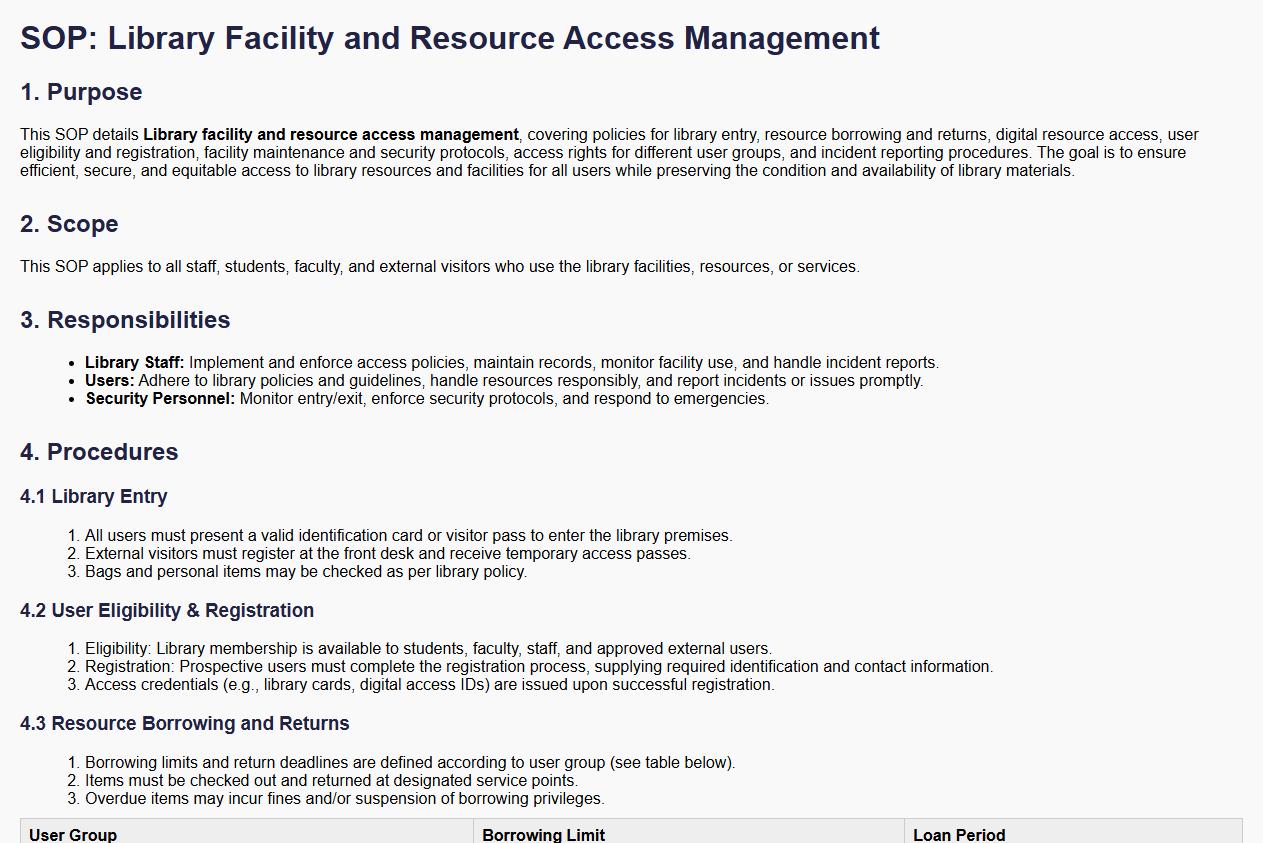
This SOP details Library facility and resource access management, covering policies for library entry, resource borrowing and returns, digital resource access, user eligibility and registration, facility maintenance and security protocols, access rights for different user groups, and incident reporting procedures. The goal is to ensure efficient, secure, and equitable access to library resources and facilities for all users while preserving the condition and availability of library materials.
Collection Development and Weeding Guidelines.
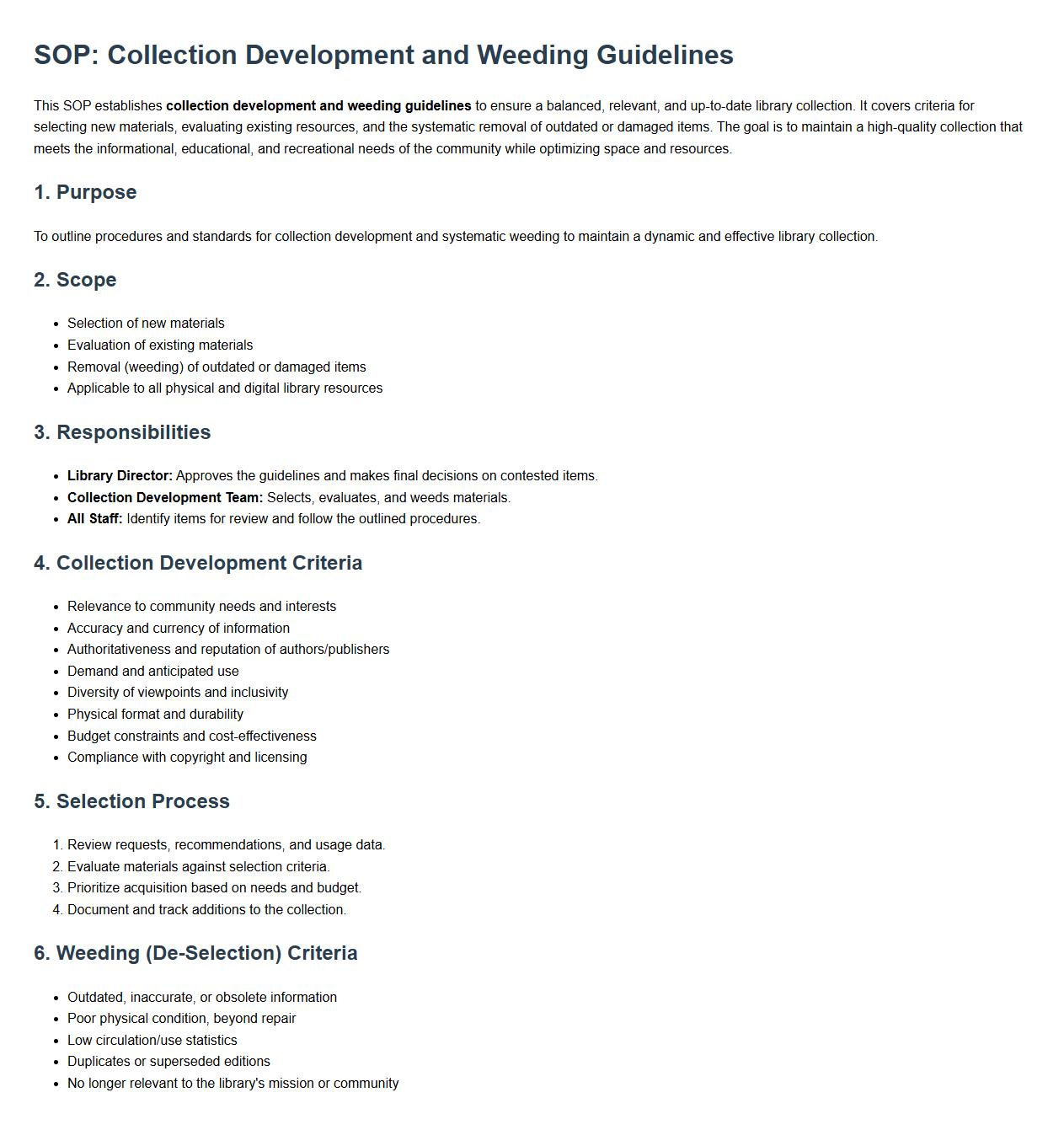
This SOP establishes collection development and weeding guidelines to ensure a balanced, relevant, and up-to-date library collection. It covers criteria for selecting new materials, evaluating existing resources, and the systematic removal of outdated or damaged items. The goal is to maintain a high-quality collection that meets the informational, educational, and recreational needs of the community while optimizing space and resources.
Digital Resource Management and Access Control.
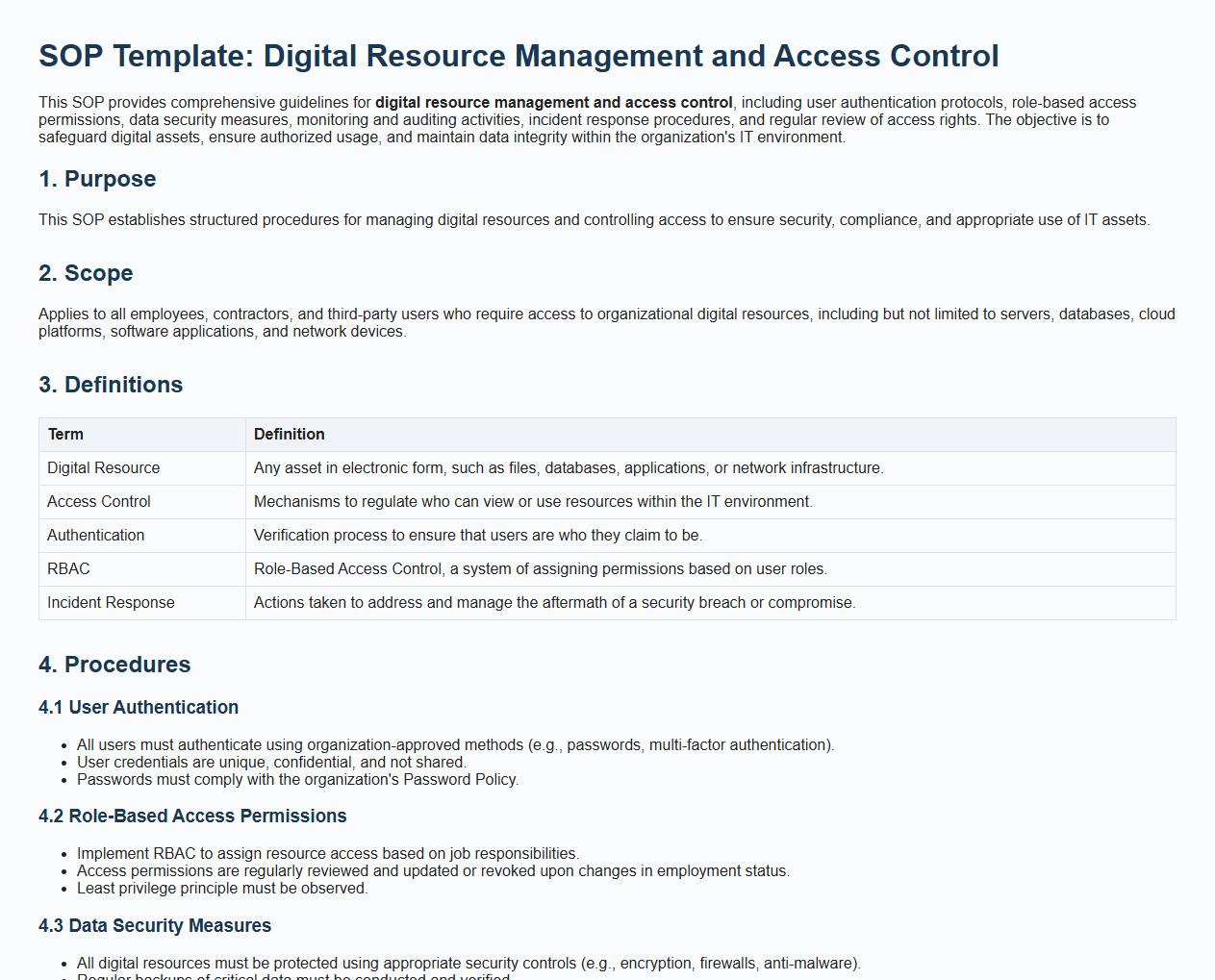
This SOP provides comprehensive guidelines for digital resource management and access control, including user authentication protocols, role-based access permissions, data security measures, monitoring and auditing activities, incident response procedures, and regular review of access rights. The objective is to safeguard digital assets, ensure authorized usage, and maintain data integrity within the organization's IT environment.
Lost and Damaged Materials Handling Procedure.
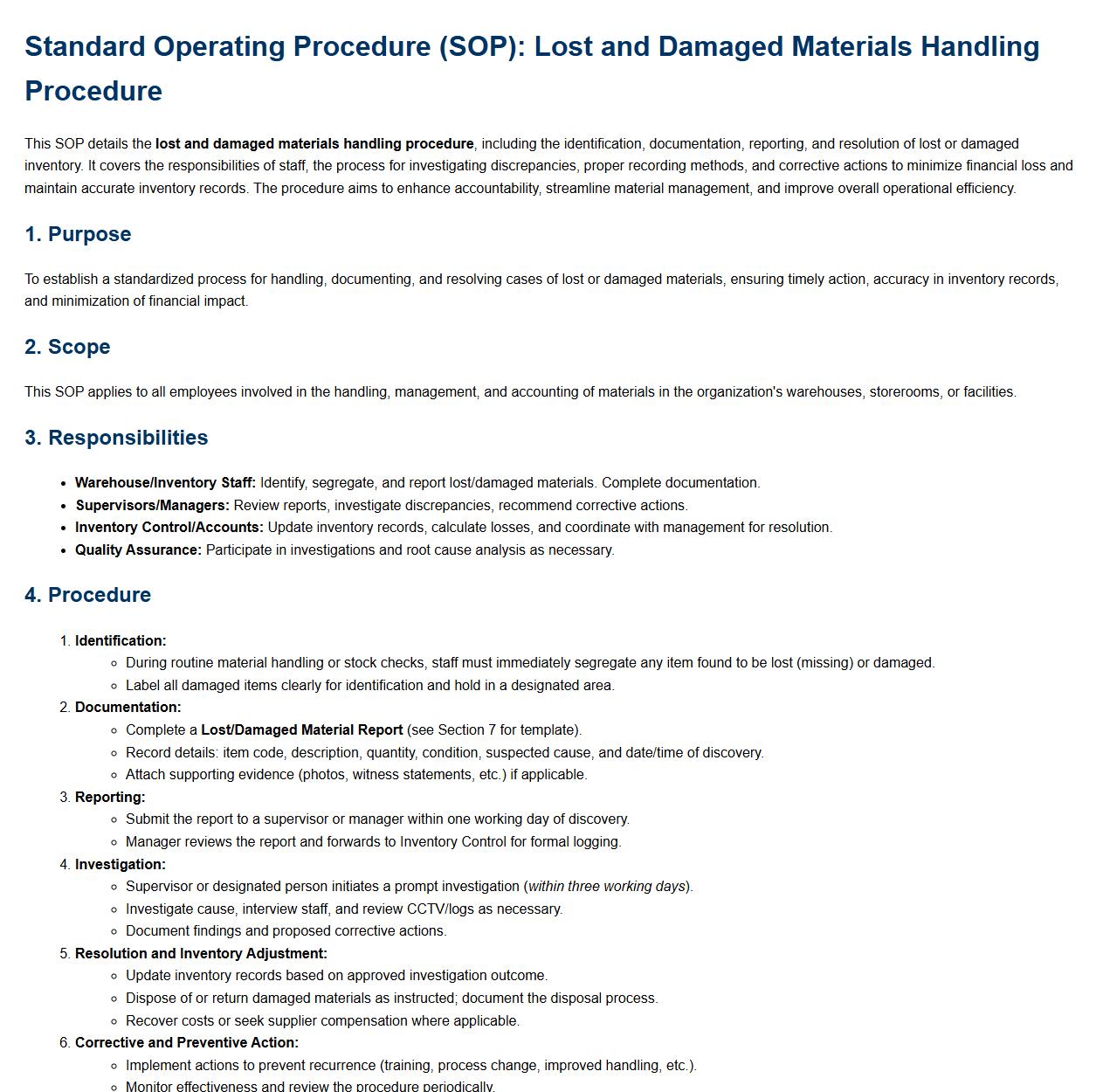
This SOP details the lost and damaged materials handling procedure, including the identification, documentation, reporting, and resolution of lost or damaged inventory. It covers the responsibilities of staff, the process for investigating discrepancies, proper recording methods, and corrective actions to minimize financial loss and maintain accurate inventory records. The procedure aims to enhance accountability, streamline material management, and improve overall operational efficiency.
What are the primary objectives outlined in the SOP for Library Services?
The primary objectives of the SOP for Library Services focus on providing efficient access to information resources for all users. It aims to maintain a well-organized and user-friendly library environment that supports research, learning, and recreational reading. Additionally, the SOP ensures consistent service quality and facilitates the management of library materials and resources.
Which personnel roles and responsibilities are defined in the SOP?
The SOP clearly defines the roles and responsibilities of library staff including librarians, assistants, and administrative personnel. Each role is assigned specific duties such as cataloging, circulation management, user support, and resource acquisition. This delineation ensures accountability and smooth operational workflow within the library.
What procedures does the SOP specify for borrowing and returning library materials?
The SOP outlines detailed procedures for borrowing which include user registration, item checkout using library cards, and borrowing limits. It specifies return protocols with deadlines and penalties for late returns to ensure resource availability. These procedures help manage inventory and enhance user responsibility in handling library materials.
How does the SOP ensure the security and preservation of library resources?
The SOP incorporates measures such as security checks, surveillance, and restricted access to sensitive collection areas. It emphasizes regular maintenance and proper handling of materials to prevent damage and loss. Additionally, disaster preparedness plans are integrated to protect resources from fire, theft, or natural calamities.
What user conduct and compliance guidelines are established in the SOP?
The SOP enforces user conduct guidelines that promote respect, noise control, and prohibition of unauthorized activities within the library. It mandates compliance with borrowing rules, use of electronic devices, and proper use of facilities. These rules create a conducive environment for all patrons and ensure the library operates smoothly.