

The SOP Template for Virtual Learning Technology Support ensures consistent and efficient handling of technical issues in online education environments. It outlines step-by-step procedures for troubleshooting, user assistance, and system maintenance to enhance the virtual learning experience. This template helps support teams deliver timely solutions and maintain platform reliability.
User account setup and access management.
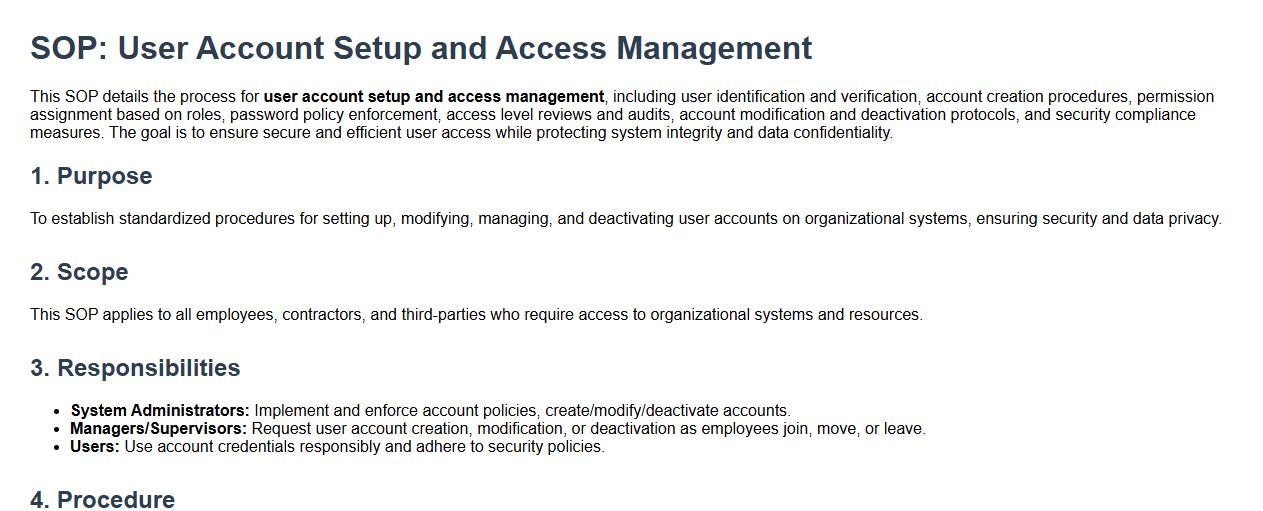
This SOP details the process for user account setup and access management, including user identification and verification, account creation procedures, permission assignment based on roles, password policy enforcement, access level reviews and audits, account modification and deactivation protocols, and security compliance measures. The goal is to ensure secure and efficient user access while protecting system integrity and data confidentiality.
Device and software compatibility checks.
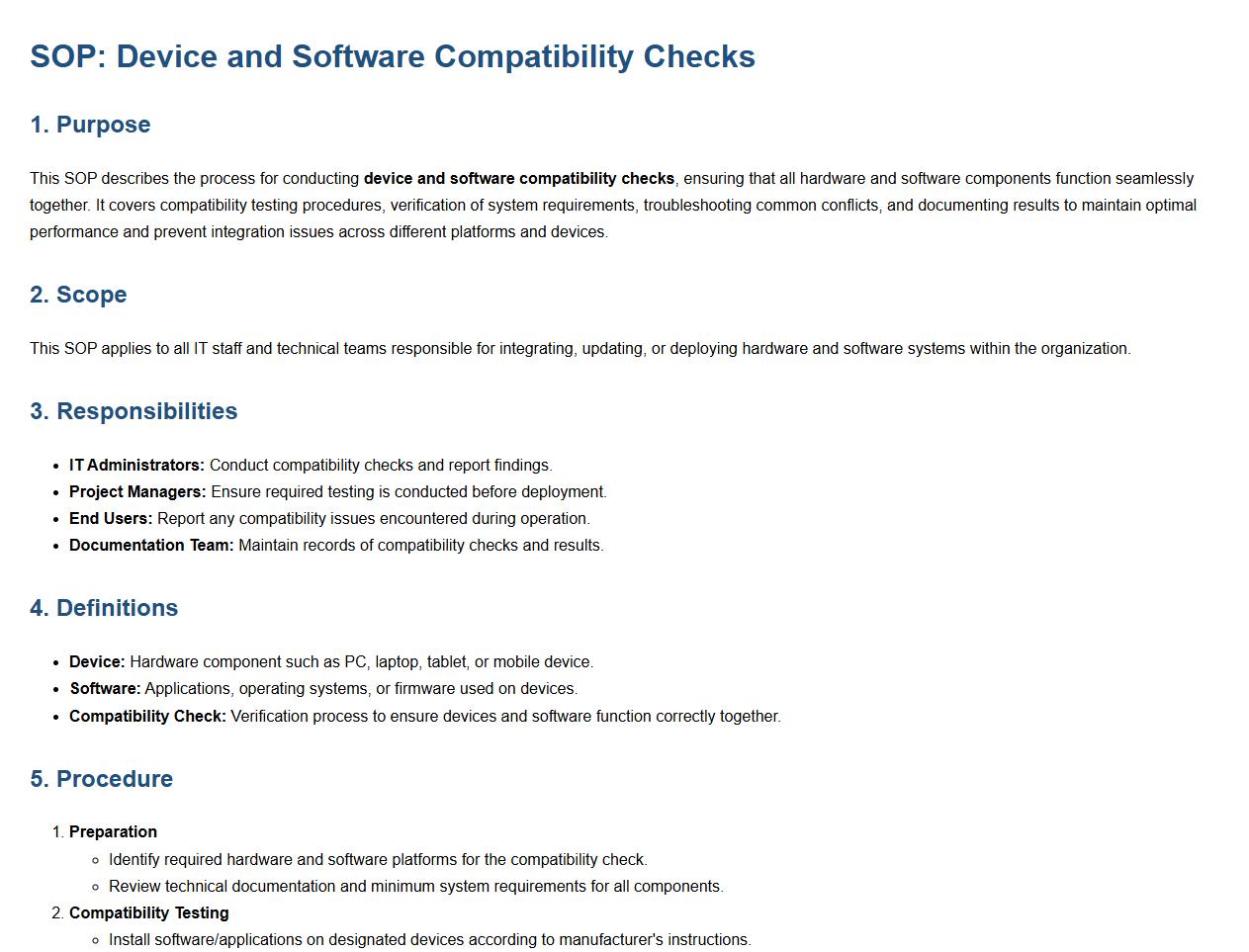
This SOP describes the process for conducting device and software compatibility checks, ensuring that all hardware and software components function seamlessly together. It covers compatibility testing procedures, verification of system requirements, troubleshooting common conflicts, and documenting results to maintain optimal performance and prevent integration issues across different platforms and devices.
Virtual classroom setup and platform configuration.
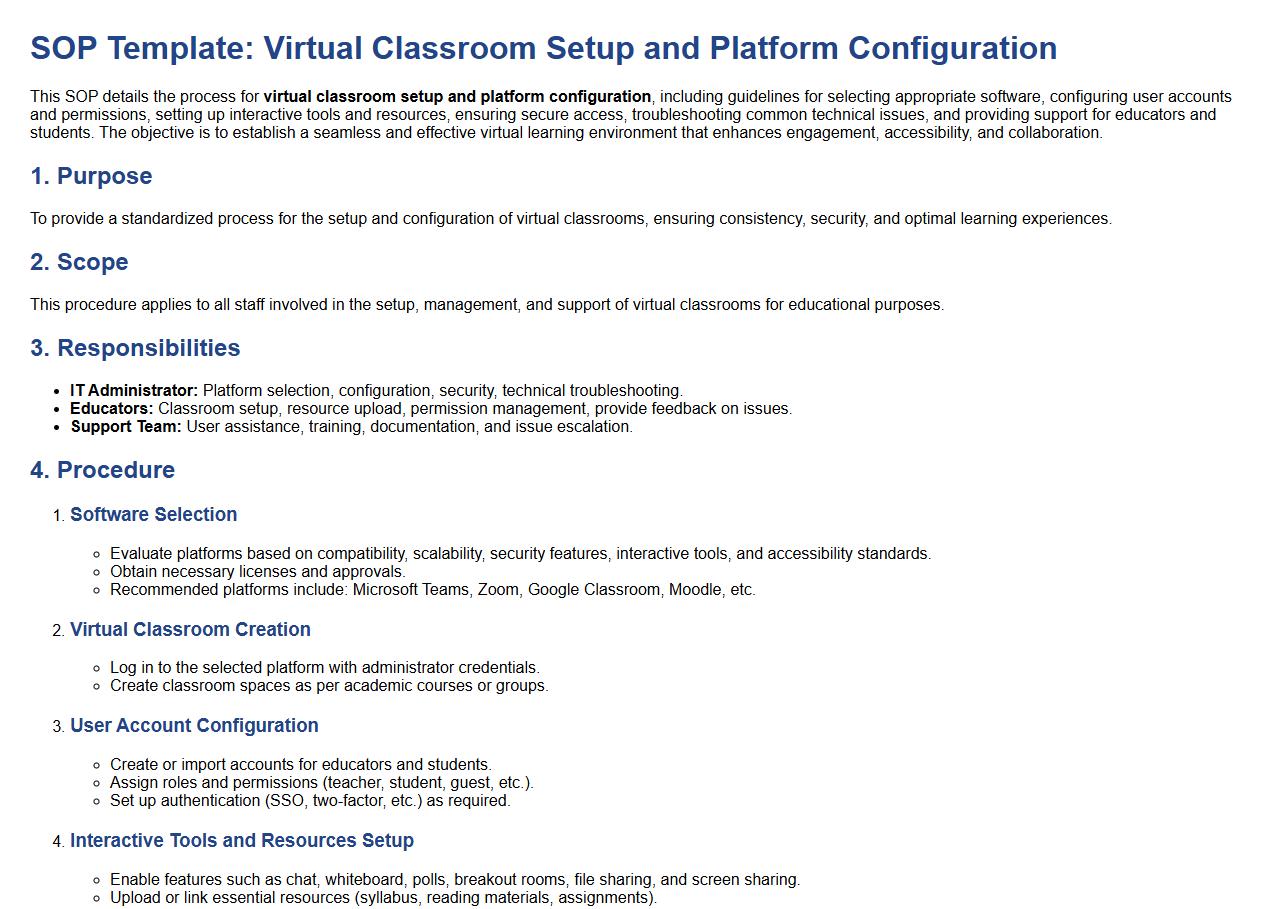
This SOP details the process for virtual classroom setup and platform configuration, including guidelines for selecting appropriate software, configuring user accounts and permissions, setting up interactive tools and resources, ensuring secure access, troubleshooting common technical issues, and providing support for educators and students. The objective is to establish a seamless and effective virtual learning environment that enhances engagement, accessibility, and collaboration.
User onboarding and orientation procedures.
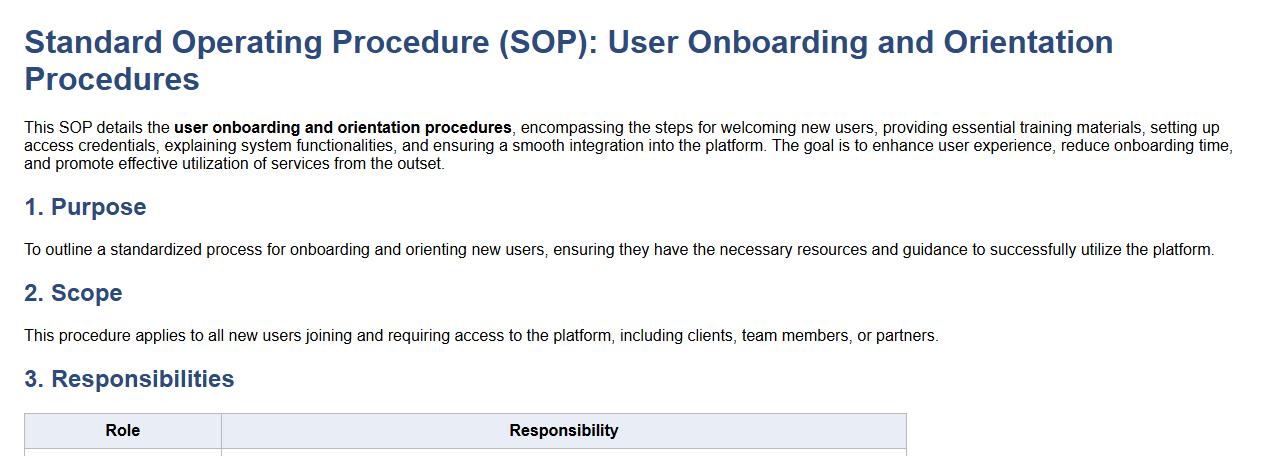
This SOP details the user onboarding and orientation procedures, encompassing the steps for welcoming new users, providing essential training materials, setting up access credentials, explaining system functionalities, and ensuring a smooth integration into the platform. The goal is to enhance user experience, reduce onboarding time, and promote effective utilization of services from the outset.
Troubleshooting connectivity and login issues.
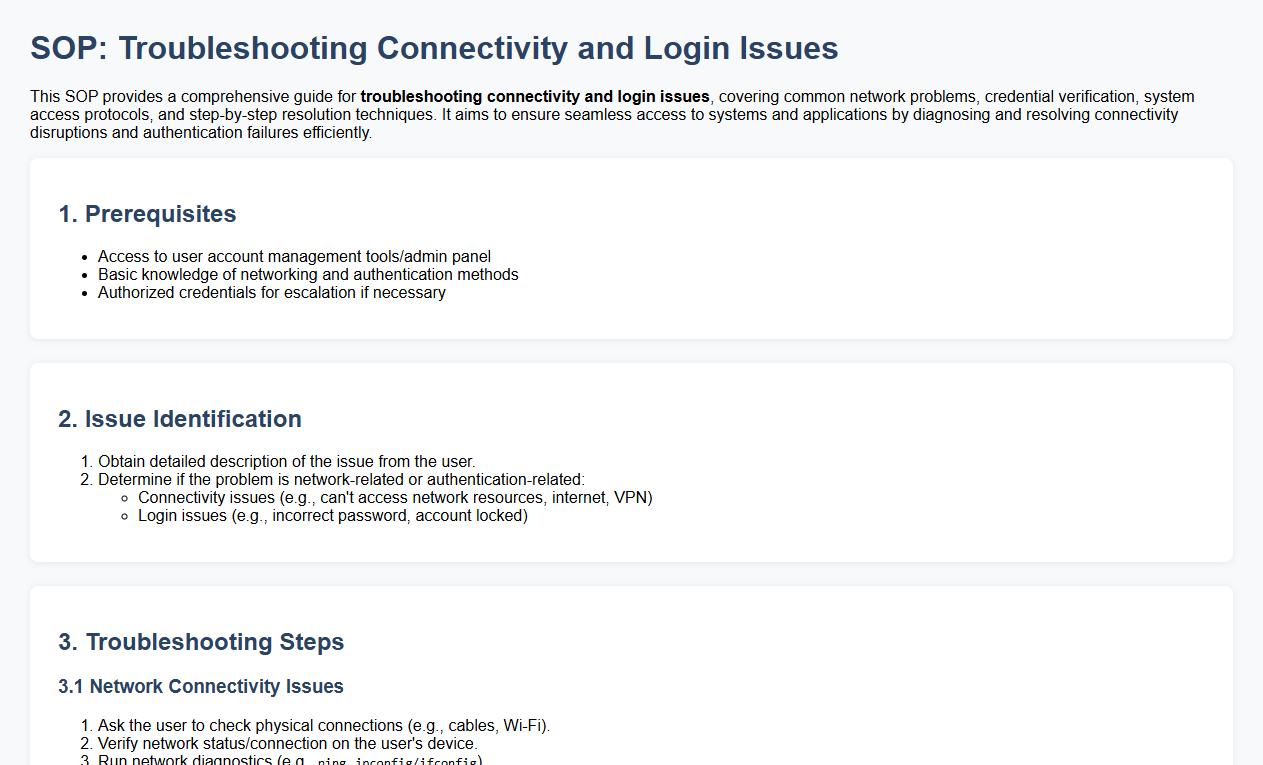
This SOP provides a comprehensive guide for troubleshooting connectivity and login issues, covering common network problems, credential verification, system access protocols, and step-by-step resolution techniques. It aims to ensure seamless access to systems and applications by diagnosing and resolving connectivity disruptions and authentication failures efficiently.
Guidelines for software updates and patch management.
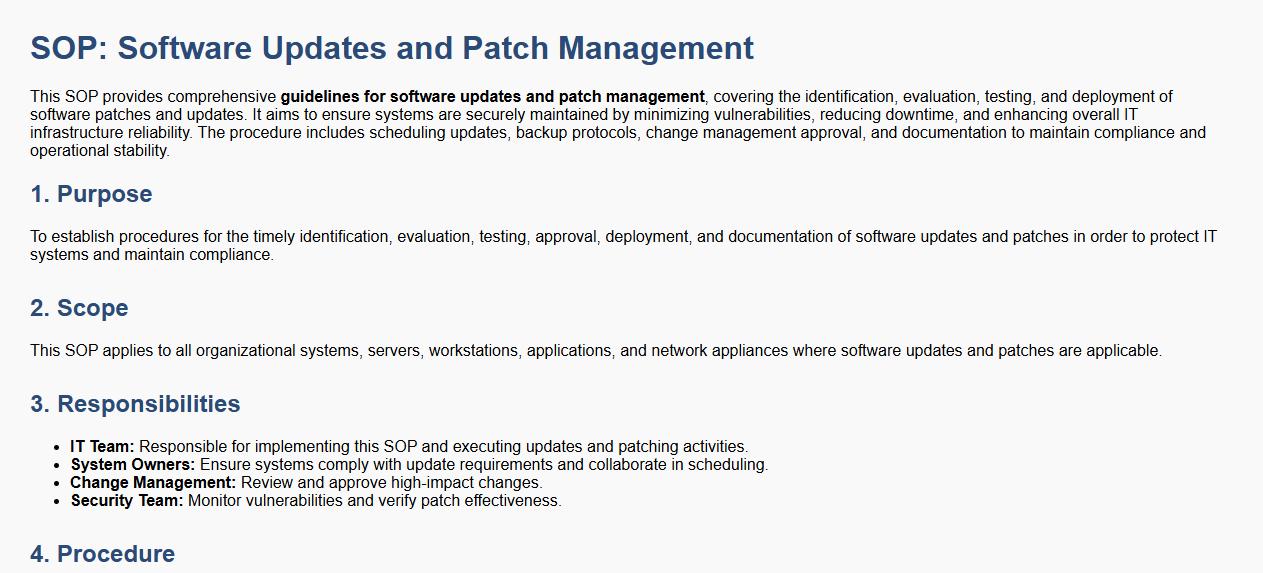
This SOP provides comprehensive guidelines for software updates and patch management, covering the identification, evaluation, testing, and deployment of software patches and updates. It aims to ensure systems are securely maintained by minimizing vulnerabilities, reducing downtime, and enhancing overall IT infrastructure reliability. The procedure includes scheduling updates, backup protocols, change management approval, and documentation to maintain compliance and operational stability.
Procedures for handling technical support requests.
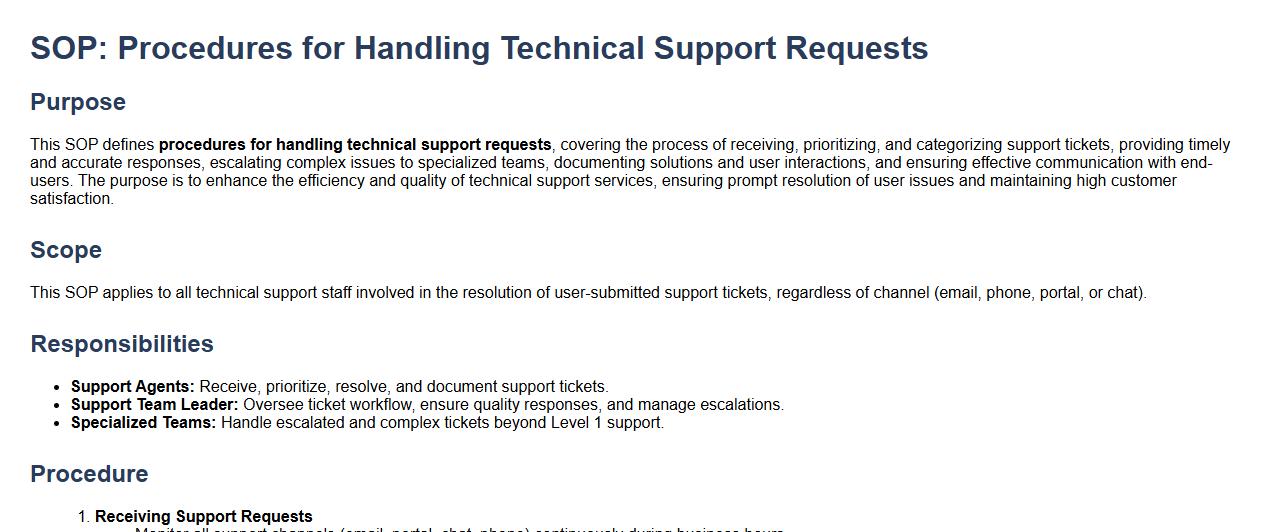
This SOP defines procedures for handling technical support requests, covering the process of receiving, prioritizing, and categorizing support tickets, providing timely and accurate responses, escalating complex issues to specialized teams, documenting solutions and user interactions, and ensuring effective communication with end-users. The purpose is to enhance the efficiency and quality of technical support services, ensuring prompt resolution of user issues and maintaining high customer satisfaction.
Data privacy and cybersecurity protocols.
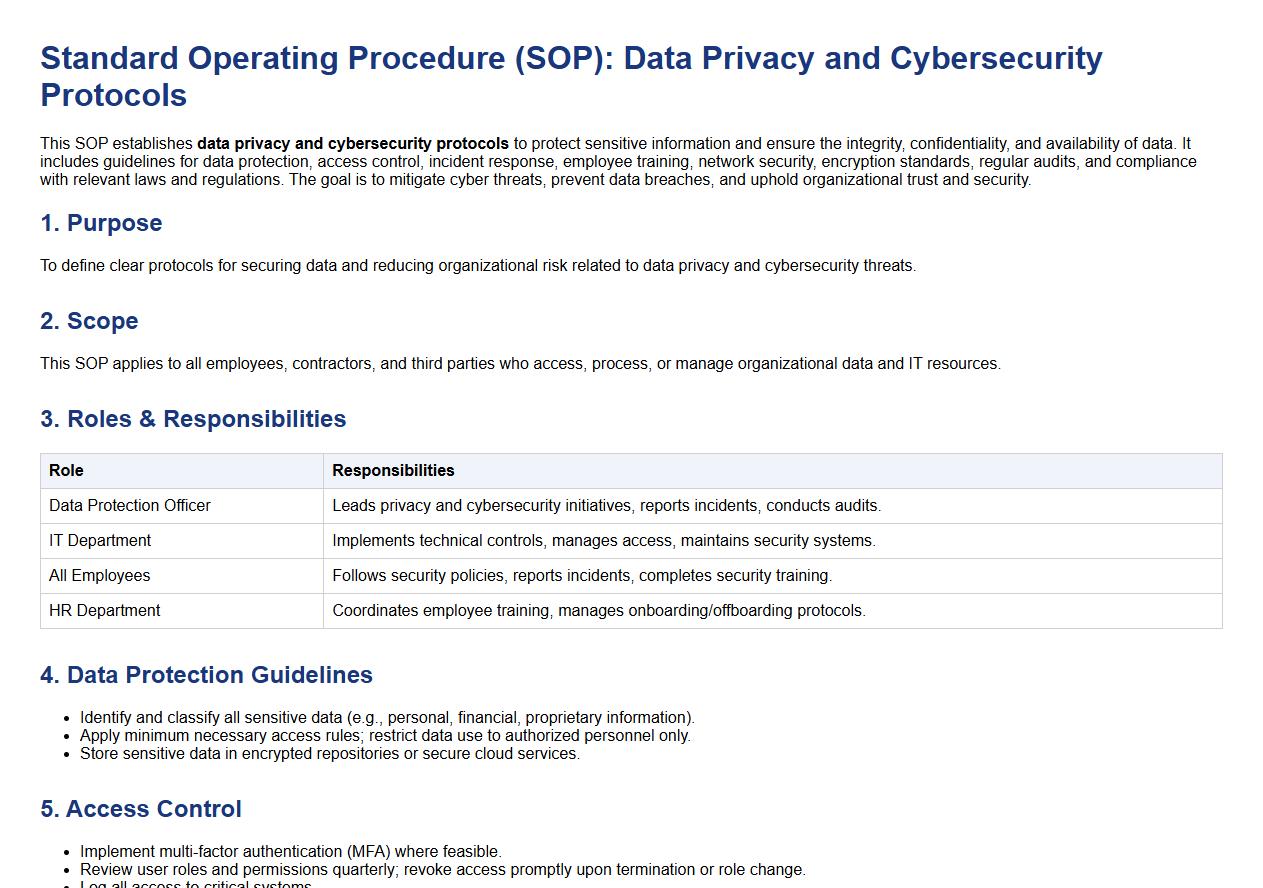
This SOP establishes data privacy and cybersecurity protocols to protect sensitive information and ensure the integrity, confidentiality, and availability of data. It includes guidelines for data protection, access control, incident response, employee training, network security, encryption standards, regular audits, and compliance with relevant laws and regulations. The goal is to mitigate cyber threats, prevent data breaches, and uphold organizational trust and security.
Incident escalation and resolution workflow.
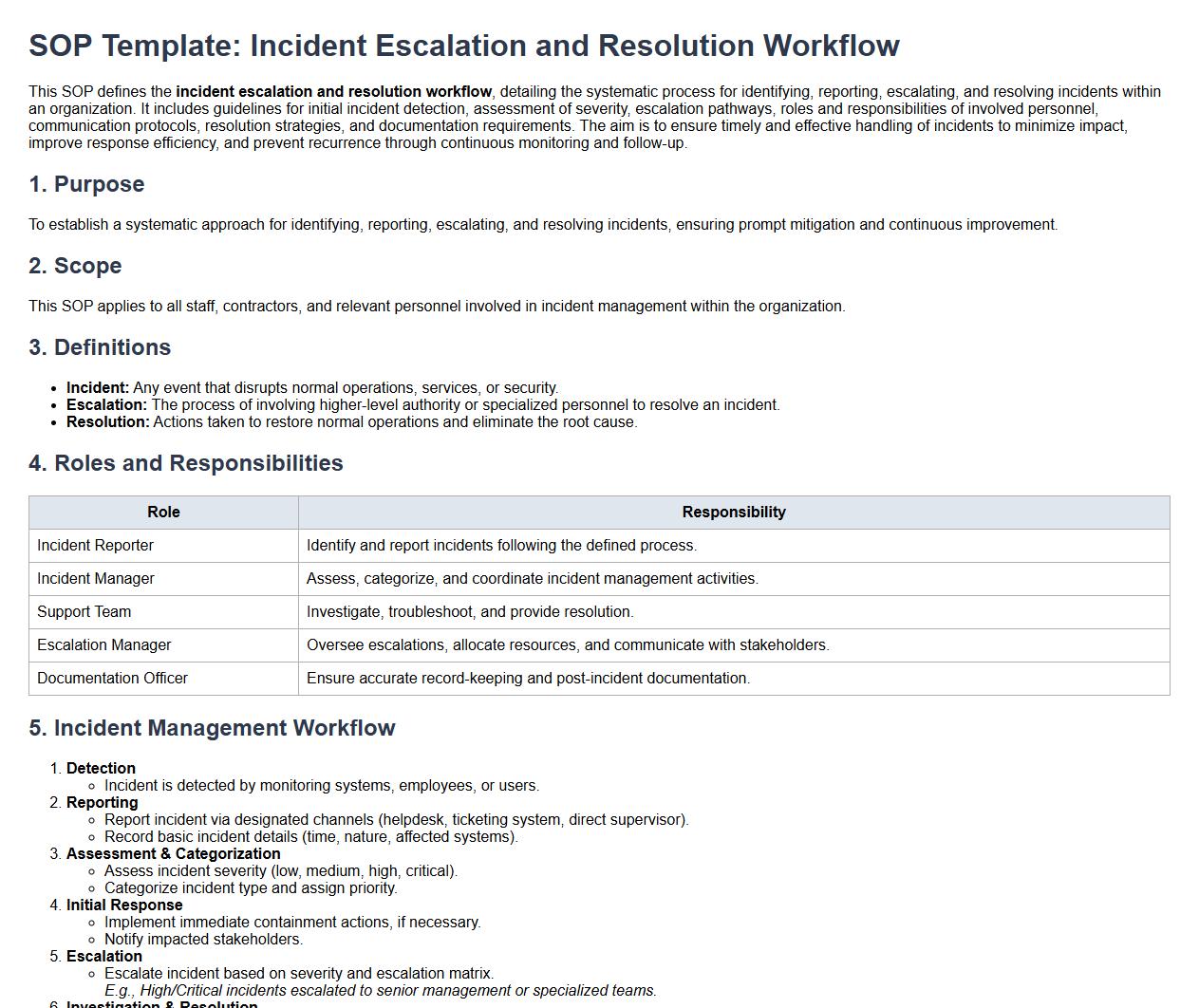
This SOP defines the incident escalation and resolution workflow, detailing the systematic process for identifying, reporting, escalating, and resolving incidents within an organization. It includes guidelines for initial incident detection, assessment of severity, escalation pathways, roles and responsibilities of involved personnel, communication protocols, resolution strategies, and documentation requirements. The aim is to ensure timely and effective handling of incidents to minimize impact, improve response efficiency, and prevent recurrence through continuous monitoring and follow-up.
End-of-session system maintenance and performance reporting.
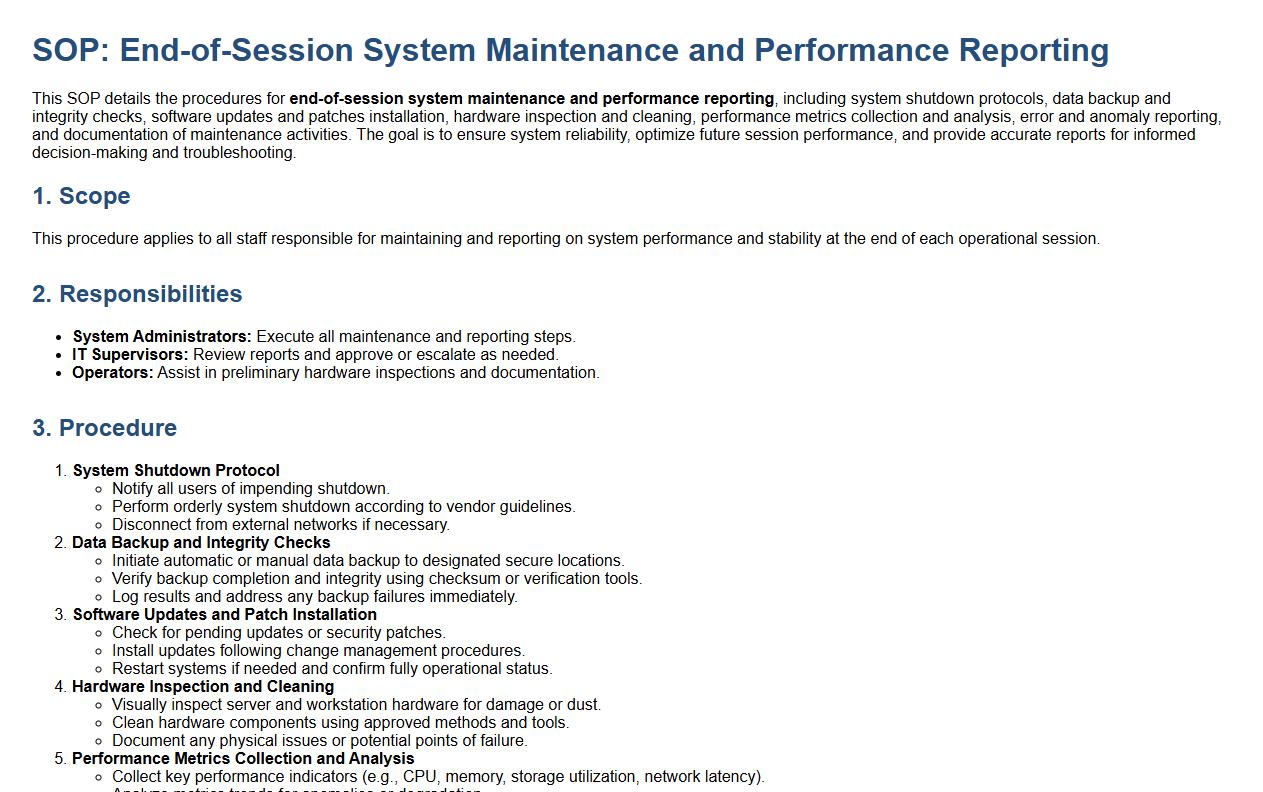
This SOP details the procedures for end-of-session system maintenance and performance reporting, including system shutdown protocols, data backup and integrity checks, software updates and patches installation, hardware inspection and cleaning, performance metrics collection and analysis, error and anomaly reporting, and documentation of maintenance activities. The goal is to ensure system reliability, optimize future session performance, and provide accurate reports for informed decision-making and troubleshooting.
What are the primary objectives outlined in the SOP for Virtual Learning Technology Support?
The primary objectives of the SOP for Virtual Learning Technology Support focus on ensuring seamless access and functionality of virtual learning platforms. It aims to enhance the user experience by minimizing downtime and technical disruptions during live sessions. Additionally, the SOP strives to maintain a high standard of technical support to facilitate effective learning outcomes.
Which roles and responsibilities are defined in the SOP for handling virtual learning technical issues?
The SOP clearly defines specific roles and responsibilities for IT support staff, educators, and administrators in managing virtual learning technical issues. IT support is tasked with troubleshooting and resolving technical problems promptly. Educators are responsible for initial reporting and assisting in basic troubleshooting, while administrators oversee the coordination and escalation of complex issues.
What are the standard procedures for reporting and resolving common virtual learning platform problems?
The SOP outlines a structured reporting and resolution procedure starting with issue identification and immediate documentation. Users are instructed to report problems through designated helpdesk systems or communication channels. Support teams then prioritize issues based on severity and apply standardized troubleshooting methods to resolve them efficiently.
How does the SOP specify escalation protocols for unresolved or critical technology incidents?
The SOP mandates a clear escalation protocol for incidents that remain unresolved beyond initial intervention or are deemed critical. Issues must be escalated to higher-level technical experts or management within defined timeframes. This ensures faster resolution of critical events to minimize impact on virtual learning activities.
What documentation and communication requirements are mandated in the SOP during technology support processes?
The SOP requires comprehensive documentation and communication throughout the technology support process to maintain transparency and accountability. All reported issues, troubleshooting steps, and resolutions must be logged accurately in support records. Regular updates and clear communication are essential to keep users and stakeholders informed about the status of their support requests.