
A SOP Template for Inclusive Education Practices outlines standardized procedures to create supportive learning environments for all students, including those with diverse needs. It ensures consistent implementation of accessible teaching methods, accommodations, and collaboration with specialists. This template promotes equity and fosters an inclusive culture within educational institutions.
Student admission and enrollment procedures for inclusive classrooms.
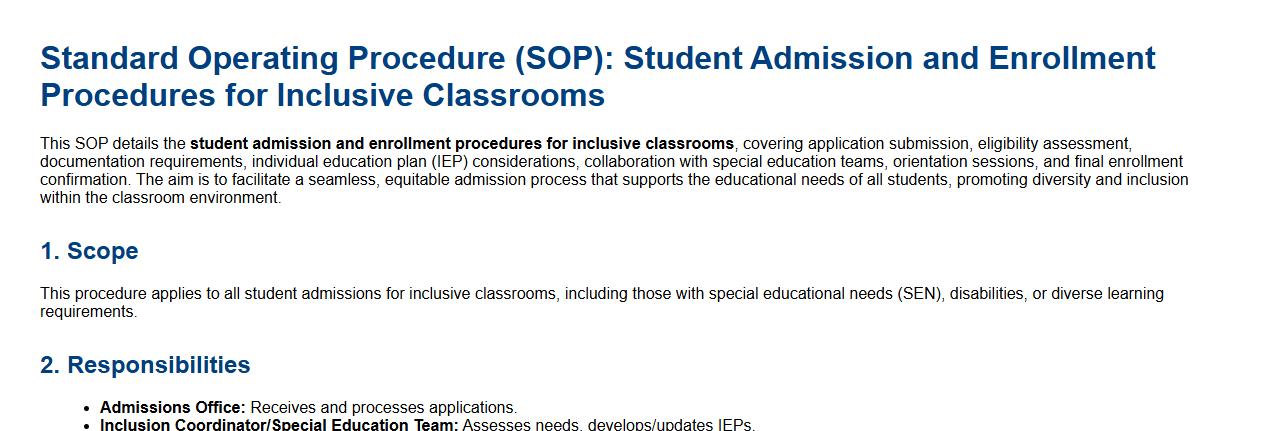
This SOP details the student admission and enrollment procedures for inclusive classrooms, covering application submission, eligibility assessment, documentation requirements, individual education plan (IEP) considerations, collaboration with special education teams, orientation sessions, and final enrollment confirmation. The aim is to facilitate a seamless, equitable admission process that supports the educational needs of all students, promoting diversity and inclusion within the classroom environment.
Identification and assessment of students with diverse learning needs.
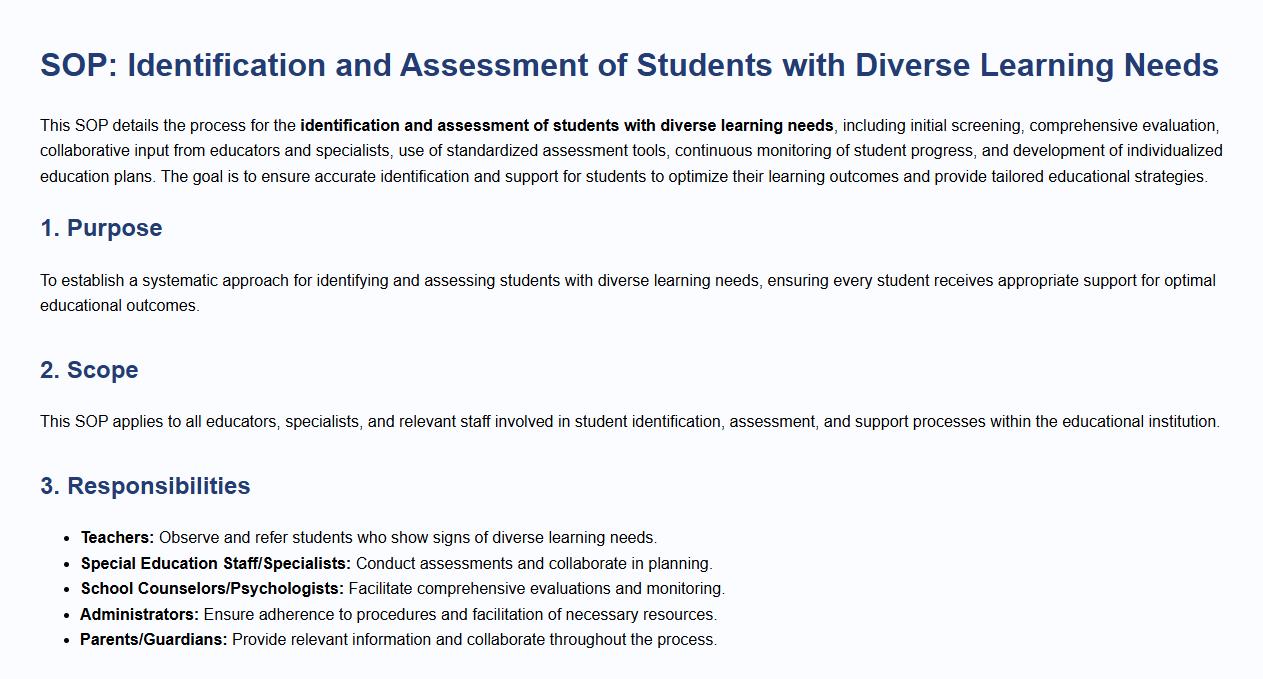
This SOP details the process for the identification and assessment of students with diverse learning needs, including initial screening, comprehensive evaluation, collaborative input from educators and specialists, use of standardized assessment tools, continuous monitoring of student progress, and development of individualized education plans. The goal is to ensure accurate identification and support for students to optimize their learning outcomes and provide tailored educational strategies.
Differentiated lesson planning and instructional strategies.
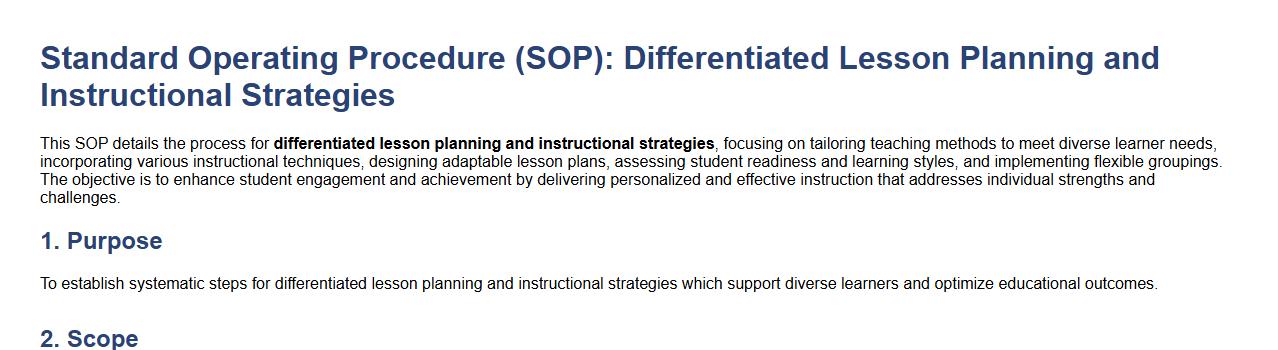
This SOP details the process for differentiated lesson planning and instructional strategies, focusing on tailoring teaching methods to meet diverse learner needs, incorporating various instructional techniques, designing adaptable lesson plans, assessing student readiness and learning styles, and implementing flexible groupings. The objective is to enhance student engagement and achievement by delivering personalized and effective instruction that addresses individual strengths and challenges.
Individualized Education Plan (IEP) development and implementation.
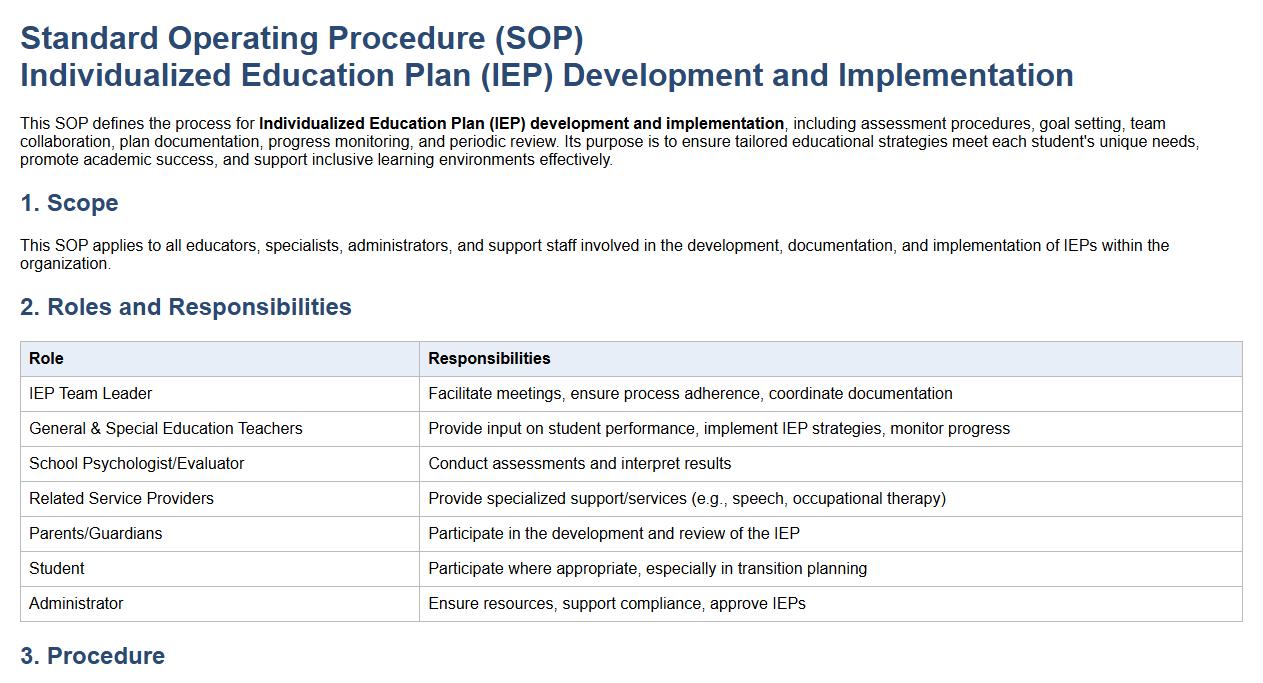
This SOP defines the process for Individualized Education Plan (IEP) development and implementation, including assessment procedures, goal setting, team collaboration, plan documentation, progress monitoring, and periodic review. Its purpose is to ensure tailored educational strategies meet each student's unique needs, promote academic success, and support inclusive learning environments effectively.
Collaboration protocols for multidisciplinary support teams.
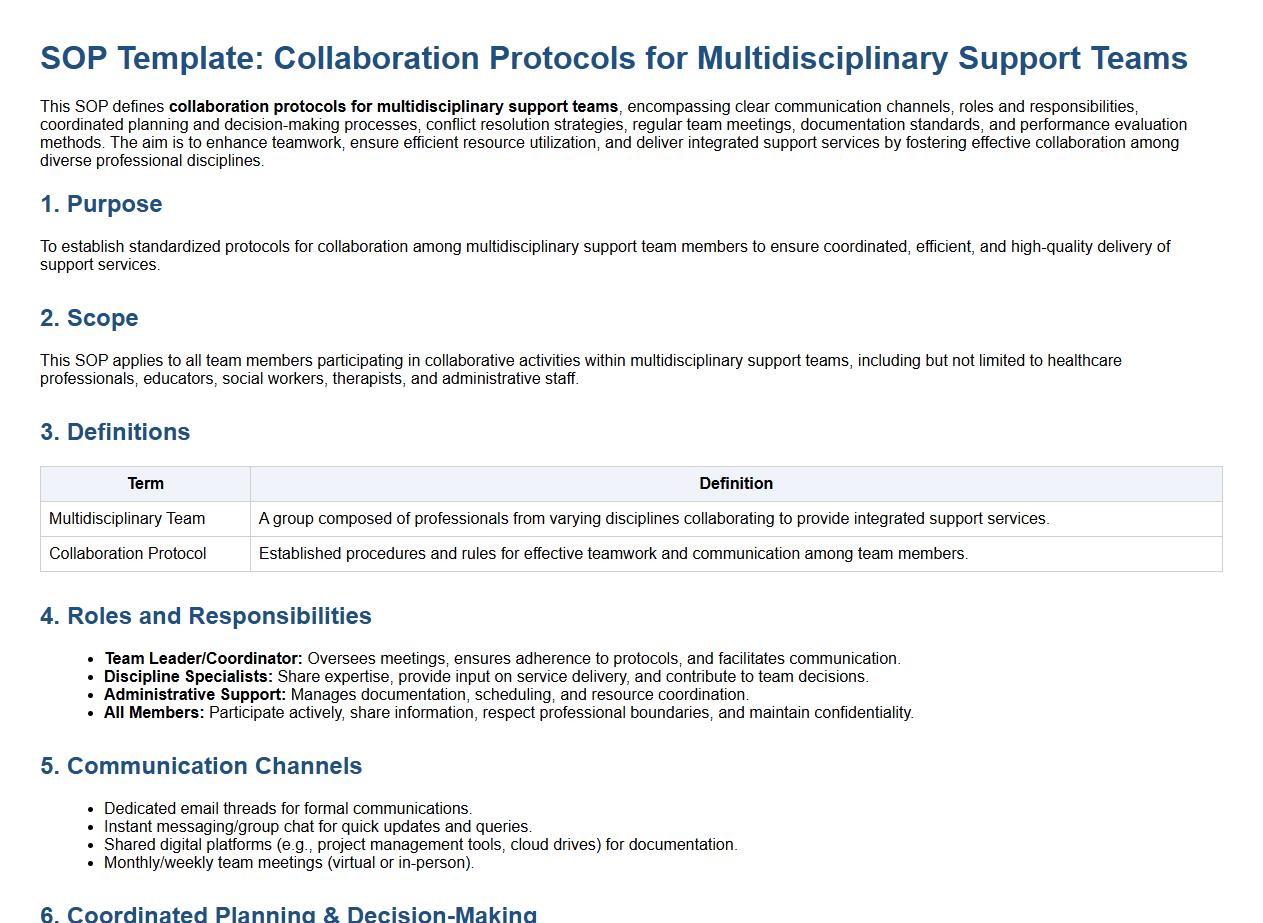
This SOP defines collaboration protocols for multidisciplinary support teams, encompassing clear communication channels, roles and responsibilities, coordinated planning and decision-making processes, conflict resolution strategies, regular team meetings, documentation standards, and performance evaluation methods. The aim is to enhance teamwork, ensure efficient resource utilization, and deliver integrated support services by fostering effective collaboration among diverse professional disciplines.
Classroom accessibility and resource adaptation guidelines.
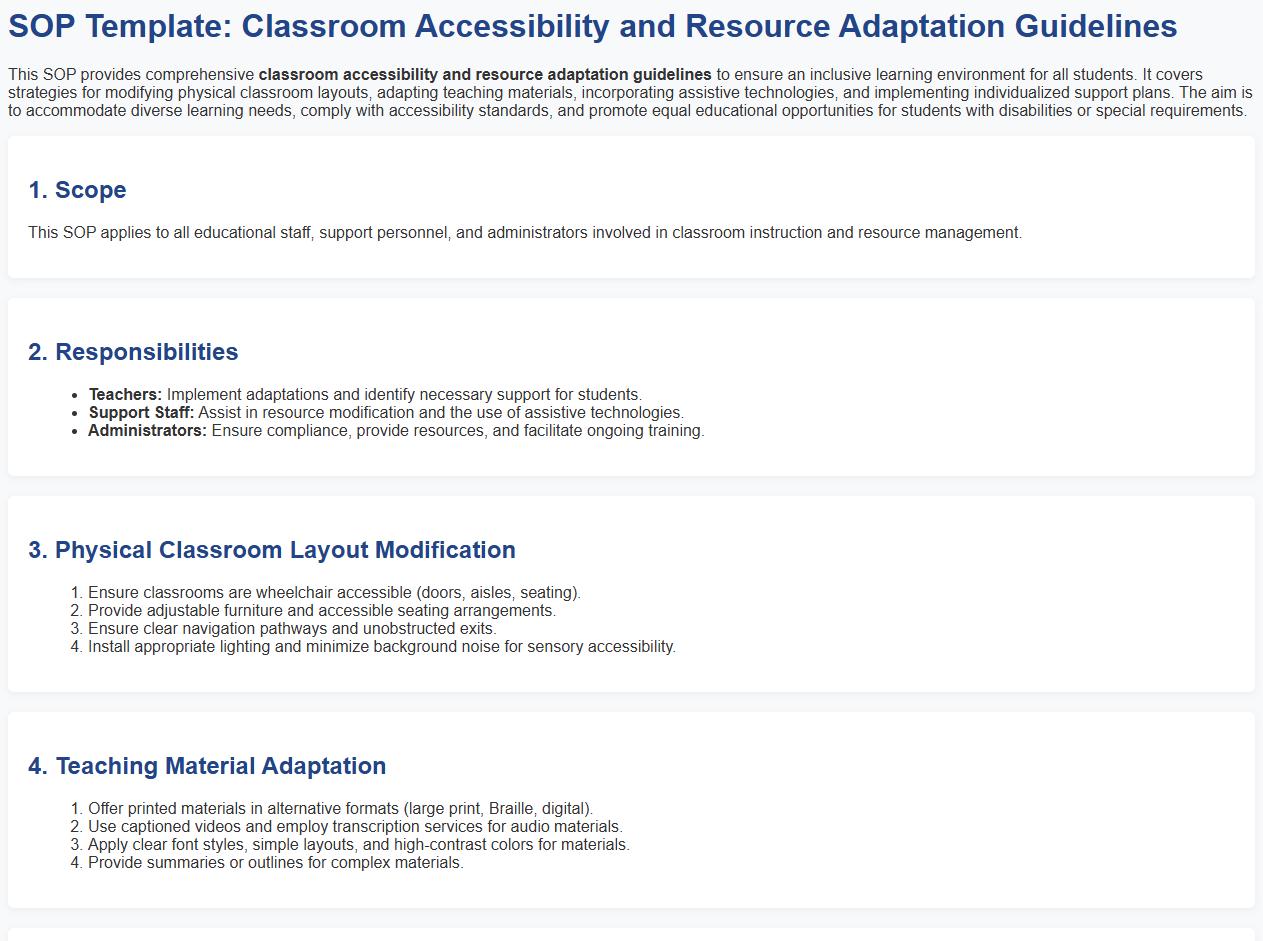
This SOP provides comprehensive classroom accessibility and resource adaptation guidelines to ensure an inclusive learning environment for all students. It covers strategies for modifying physical classroom layouts, adapting teaching materials, incorporating assistive technologies, and implementing individualized support plans. The aim is to accommodate diverse learning needs, comply with accessibility standards, and promote equal educational opportunities for students with disabilities or special requirements.
Behavior intervention and positive classroom management.
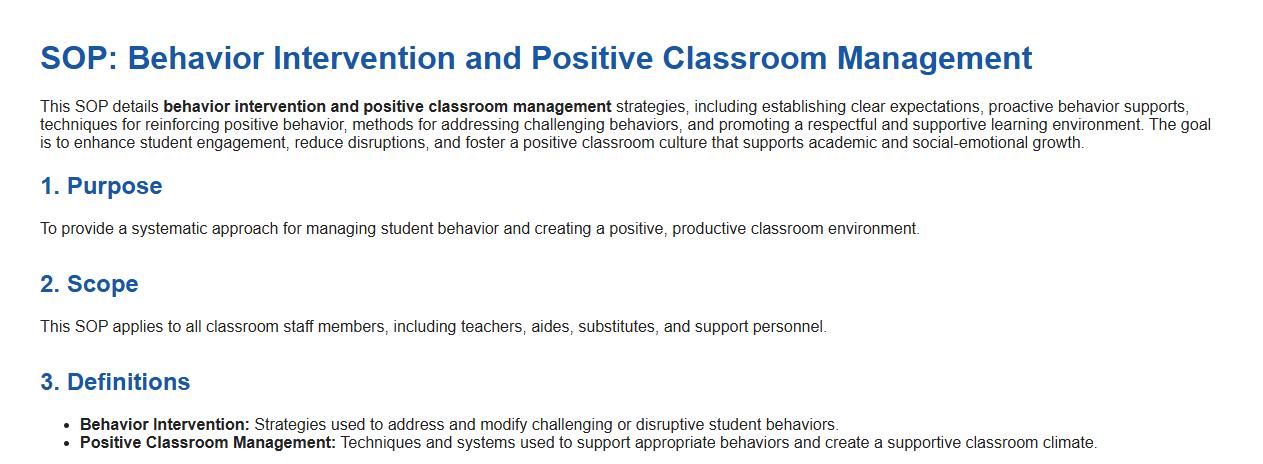
This SOP details behavior intervention and positive classroom management strategies, including establishing clear expectations, proactive behavior supports, techniques for reinforcing positive behavior, methods for addressing challenging behaviors, and promoting a respectful and supportive learning environment. The goal is to enhance student engagement, reduce disruptions, and foster a positive classroom culture that supports academic and social-emotional growth.
Accommodations for assessments and assignments.
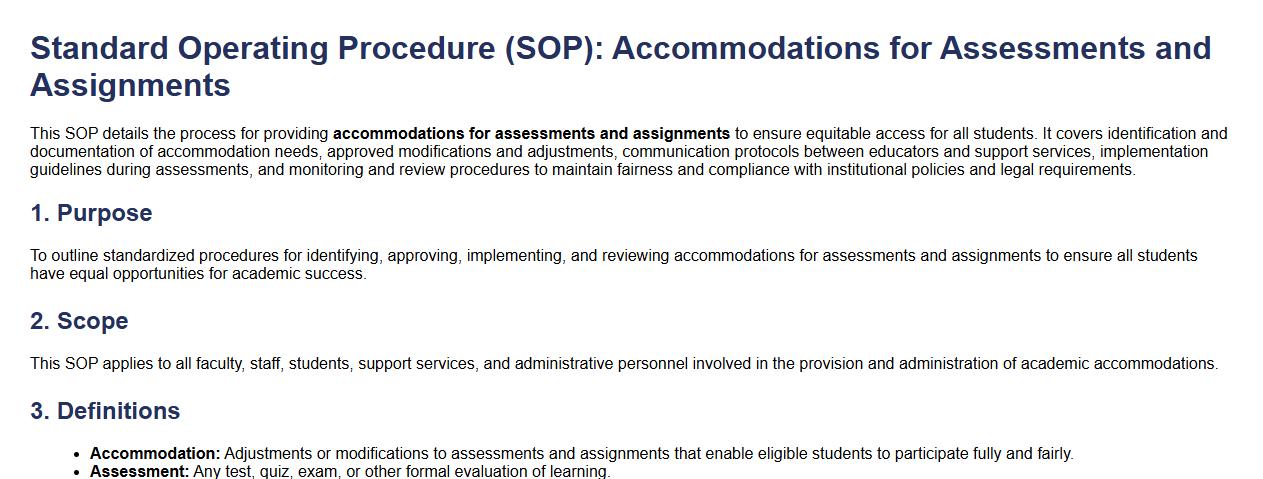
This SOP details the process for providing accommodations for assessments and assignments to ensure equitable access for all students. It covers identification and documentation of accommodation needs, approved modifications and adjustments, communication protocols between educators and support services, implementation guidelines during assessments, and monitoring and review procedures to maintain fairness and compliance with institutional policies and legal requirements.
Parental and community engagement in inclusive practices.
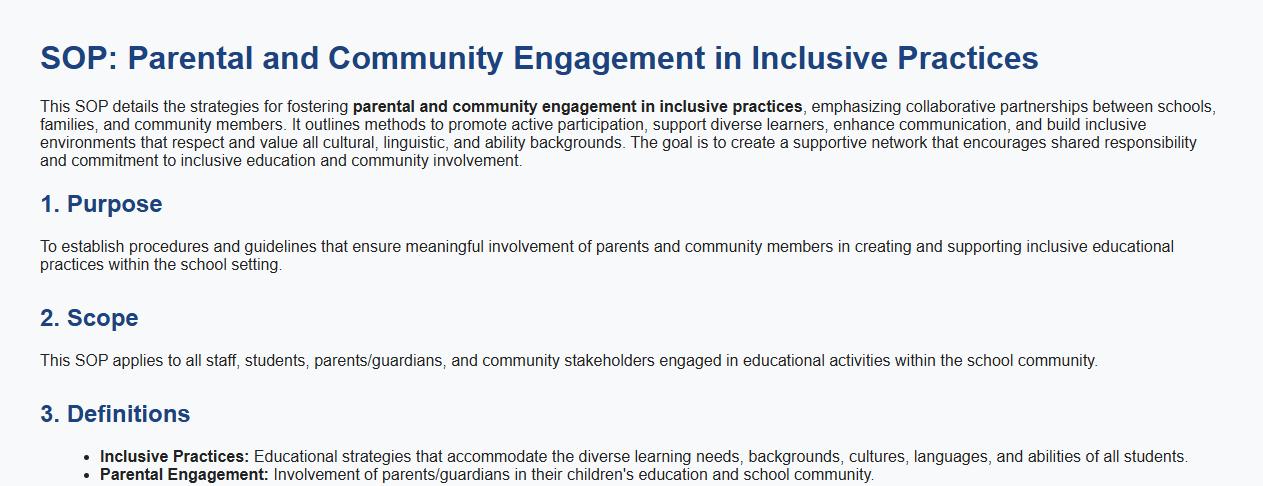
This SOP details the strategies for fostering parental and community engagement in inclusive practices, emphasizing collaborative partnerships between schools, families, and community members. It outlines methods to promote active participation, support diverse learners, enhance communication, and build inclusive environments that respect and value all cultural, linguistic, and ability backgrounds. The goal is to create a supportive network that encourages shared responsibility and commitment to inclusive education and community involvement.
Monitoring, evaluation, and continuous improvement of inclusive education practices.
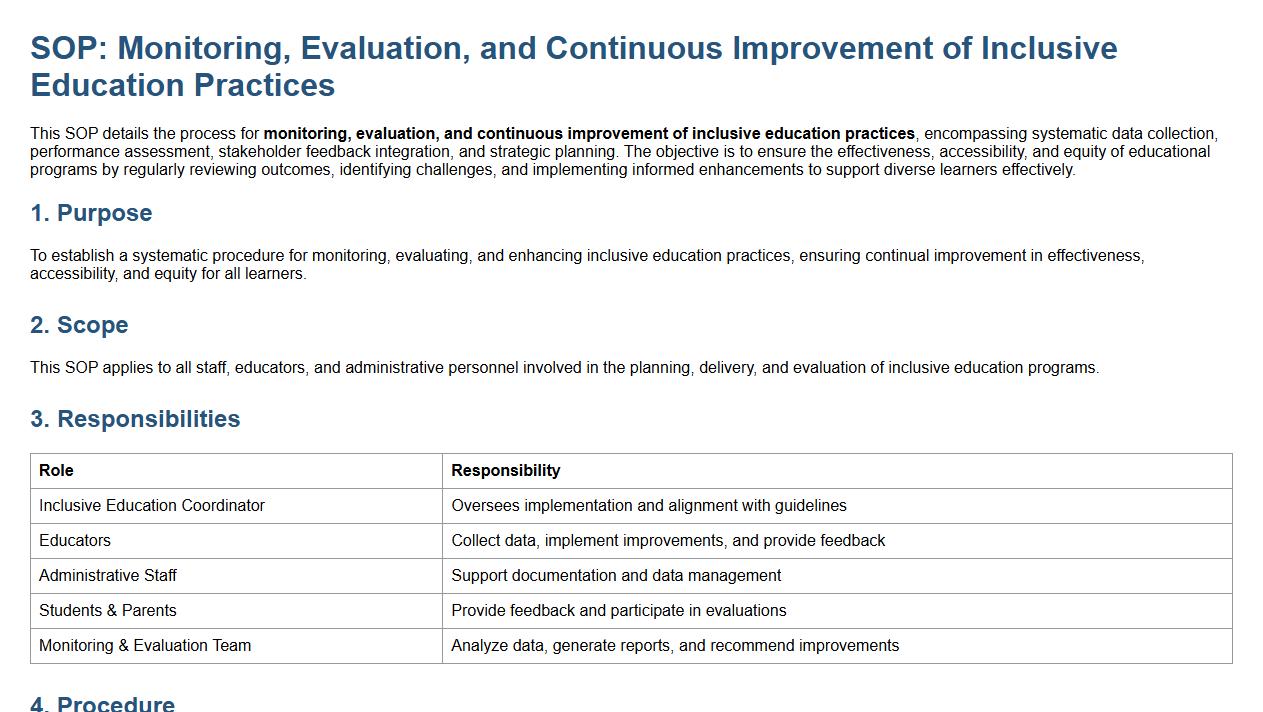
This SOP details the process for monitoring, evaluation, and continuous improvement of inclusive education practices, encompassing systematic data collection, performance assessment, stakeholder feedback integration, and strategic planning. The objective is to ensure the effectiveness, accessibility, and equity of educational programs by regularly reviewing outcomes, identifying challenges, and implementing informed enhancements to support diverse learners effectively.
What are the key principles outlined in the SOP for ensuring inclusive education practices?
The SOP emphasizes equity and access to quality education for all students regardless of their backgrounds. It highlights the importance of respecting diversity and promoting a supportive learning environment. Additionally, the SOP advocates for collaborative teaching and continuous professional development to foster inclusion.
How does the SOP define and address diverse student needs within the learning environment?
The SOP defines diverse student needs as the varying academic, social, emotional, and physical requirements of students. It requires tailored instructional strategies and flexible curriculum adaptations to meet these needs effectively. The document also stresses the importance of individualized support plans to address specific barriers to learning.
What procedural steps must staff follow to implement accommodations for students with disabilities according to the SOP?
Staff must begin by conducting a thorough assessment to identify each student's unique needs. Next, they develop an Individualized Education Program (IEP) that outlines required accommodations and supports. Finally, staff must regularly monitor and document the implementation and effectiveness of these accommodations.
How does the SOP specify collaboration between general and special education staff for inclusive planning and instruction?
The SOP mandates regular team meetings to facilitate communication and joint planning between general and special education staff. It encourages shared responsibilities in curriculum design and instructional delivery for inclusivity. This collaboration aims to ensure that all students receive coordinated and cohesive educational support.
What monitoring and evaluation processes does the SOP establish for assessing the effectiveness of inclusive education practices?
The SOP outlines the use of data collection tools such as student progress reports and feedback surveys to monitor practices. It calls for periodic review meetings to evaluate the success of inclusion strategies and make necessary adjustments. Continuous improvement is supported through evidence-based decision making based on these evaluations.