
A SOP Template for Food Allergy Management provides a standardized framework to ensure consistent and effective handling of food allergies in various settings. It outlines essential procedures for identifying allergens, preventing cross-contamination, and managing allergic reactions. This template helps organizations maintain safety compliance and protect individuals with food allergies.
Identification and documentation of individuals with food allergies.
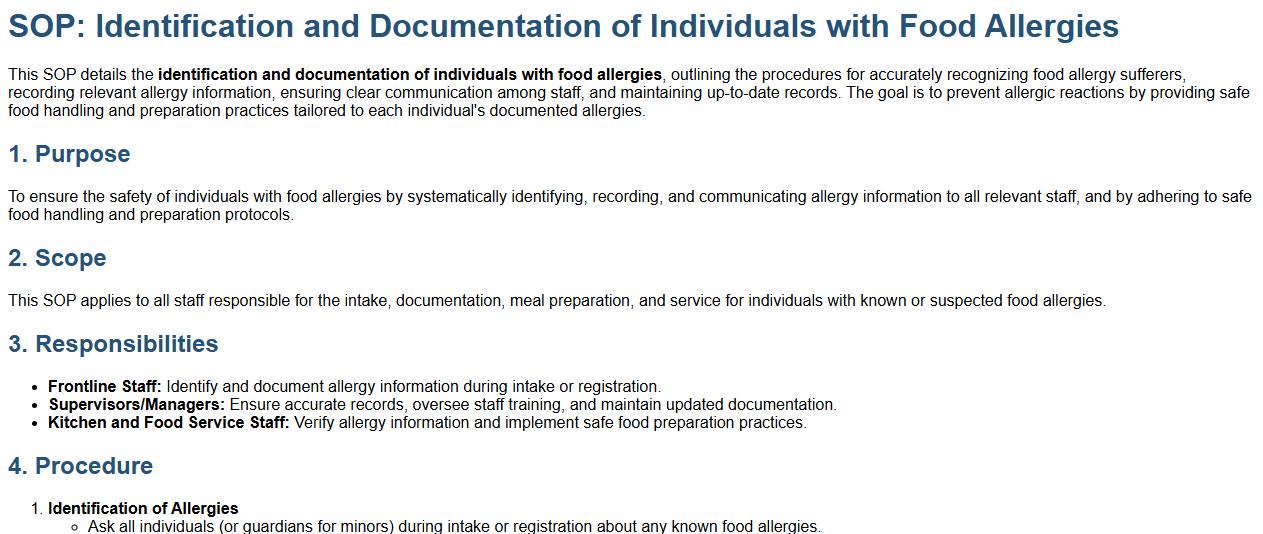
This SOP details the identification and documentation of individuals with food allergies, outlining the procedures for accurately recognizing food allergy sufferers, recording relevant allergy information, ensuring clear communication among staff, and maintaining up-to-date records. The goal is to prevent allergic reactions by providing safe food handling and preparation practices tailored to each individual's documented allergies.
Allergen-free food preparation and handling protocols.
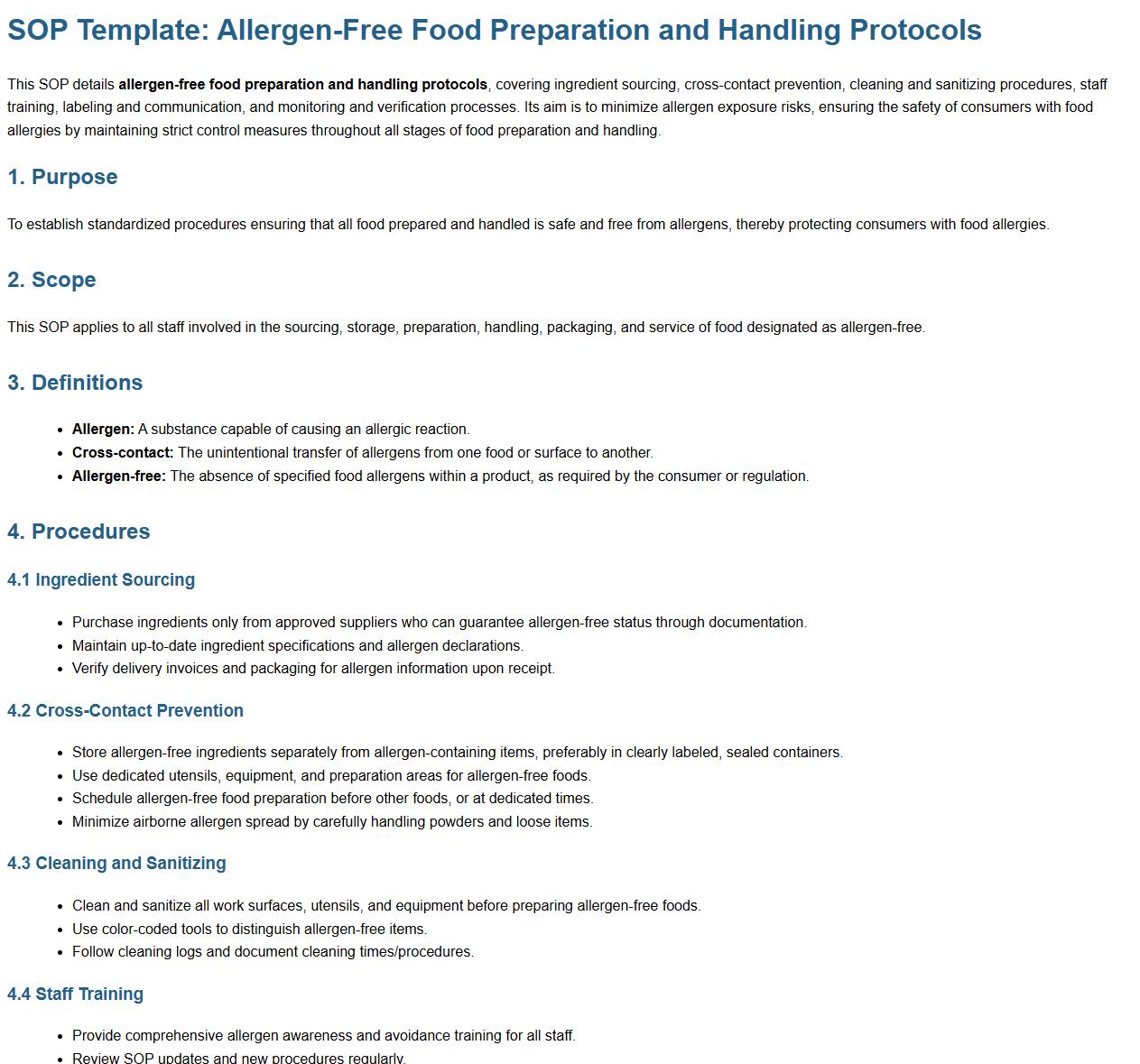
This SOP details allergen-free food preparation and handling protocols, covering ingredient sourcing, cross-contact prevention, cleaning and sanitizing procedures, staff training, labeling and communication, and monitoring and verification processes. Its aim is to minimize allergen exposure risks, ensuring the safety of consumers with food allergies by maintaining strict control measures throughout all stages of food preparation and handling.
Cross-contact prevention measures during food storage and service.
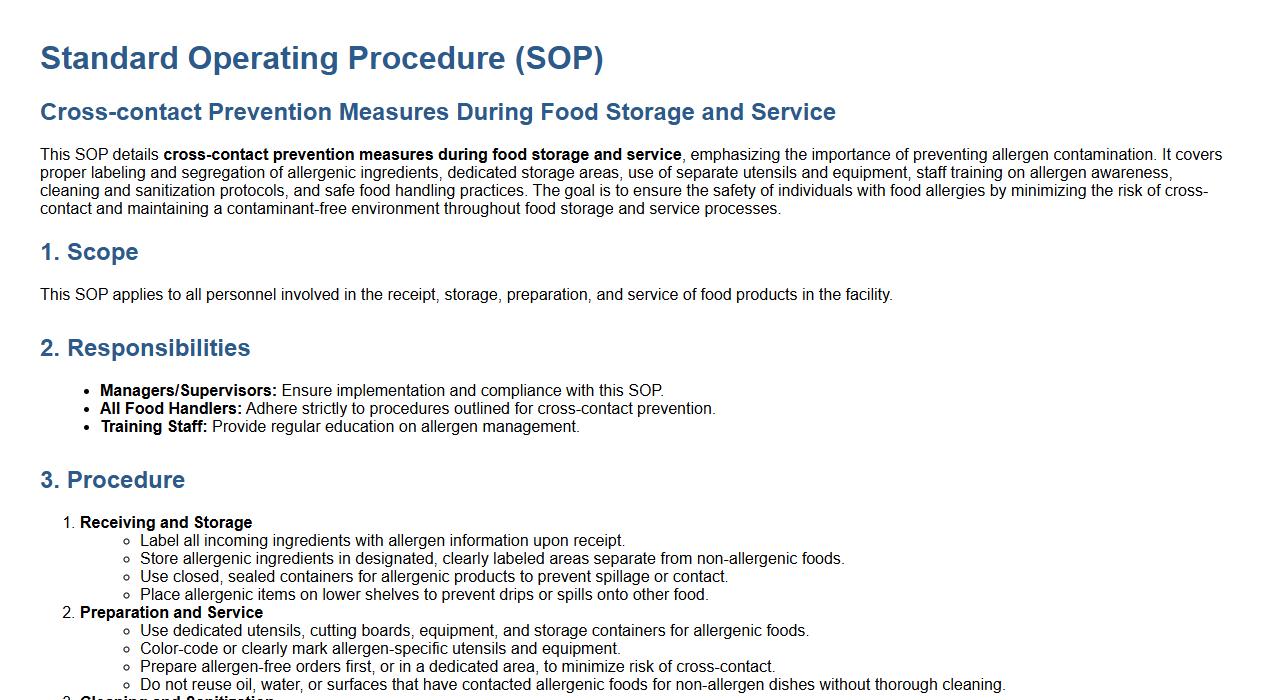
This SOP details cross-contact prevention measures during food storage and service, emphasizing the importance of preventing allergen contamination. It covers proper labeling and segregation of allergenic ingredients, dedicated storage areas, use of separate utensils and equipment, staff training on allergen awareness, cleaning and sanitization protocols, and safe food handling practices. The goal is to ensure the safety of individuals with food allergies by minimizing the risk of cross-contact and maintaining a contaminant-free environment throughout food storage and service processes.
Staff training on food allergy awareness and emergency response.
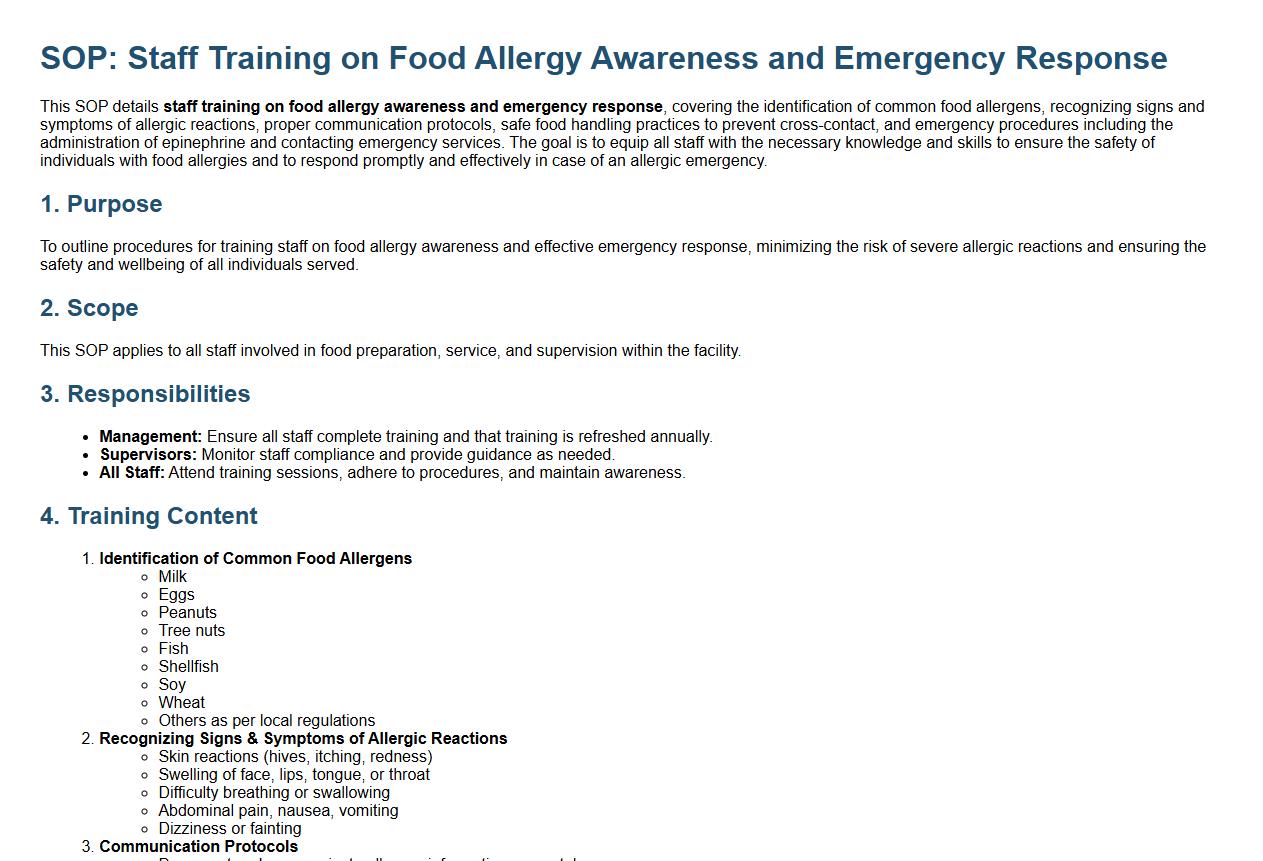
This SOP details staff training on food allergy awareness and emergency response, covering the identification of common food allergens, recognizing signs and symptoms of allergic reactions, proper communication protocols, safe food handling practices to prevent cross-contact, and emergency procedures including the administration of epinephrine and contacting emergency services. The goal is to equip all staff with the necessary knowledge and skills to ensure the safety of individuals with food allergies and to respond promptly and effectively in case of an allergic emergency.
Ingredient sourcing and verification procedures.
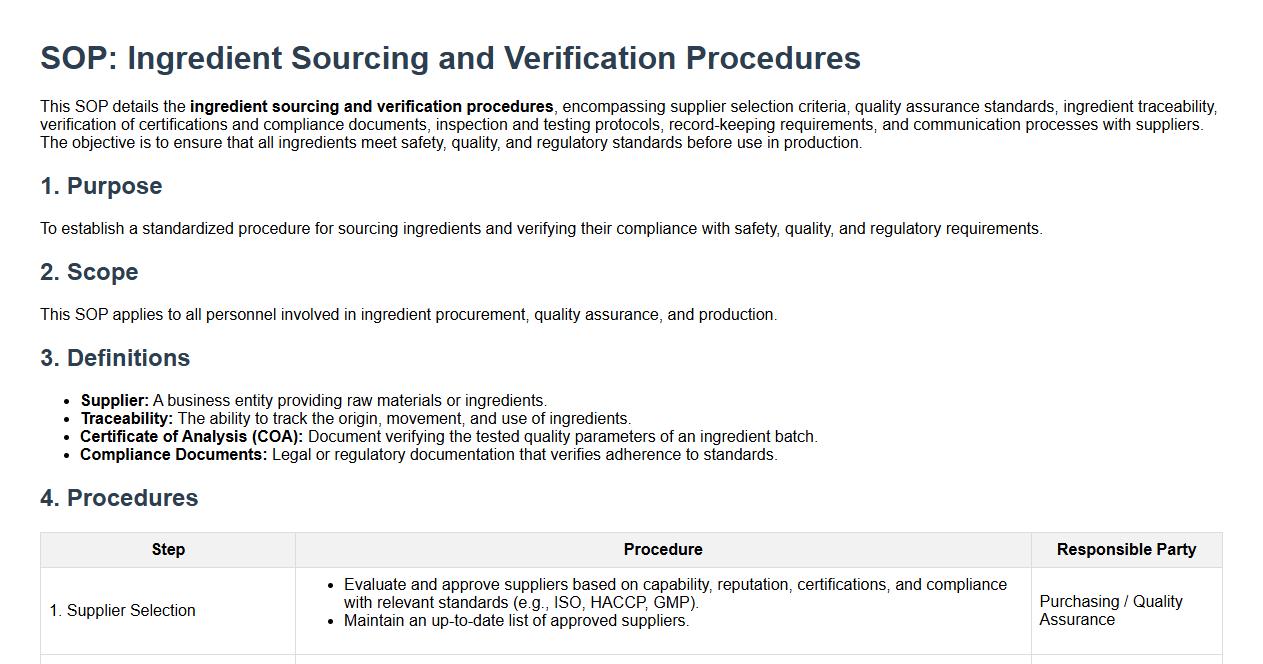
This SOP details the ingredient sourcing and verification procedures, encompassing supplier selection criteria, quality assurance standards, ingredient traceability, verification of certifications and compliance documents, inspection and testing protocols, record-keeping requirements, and communication processes with suppliers. The objective is to ensure that all ingredients meet safety, quality, and regulatory standards before use in production.
Allergen labeling and menu communication standards.
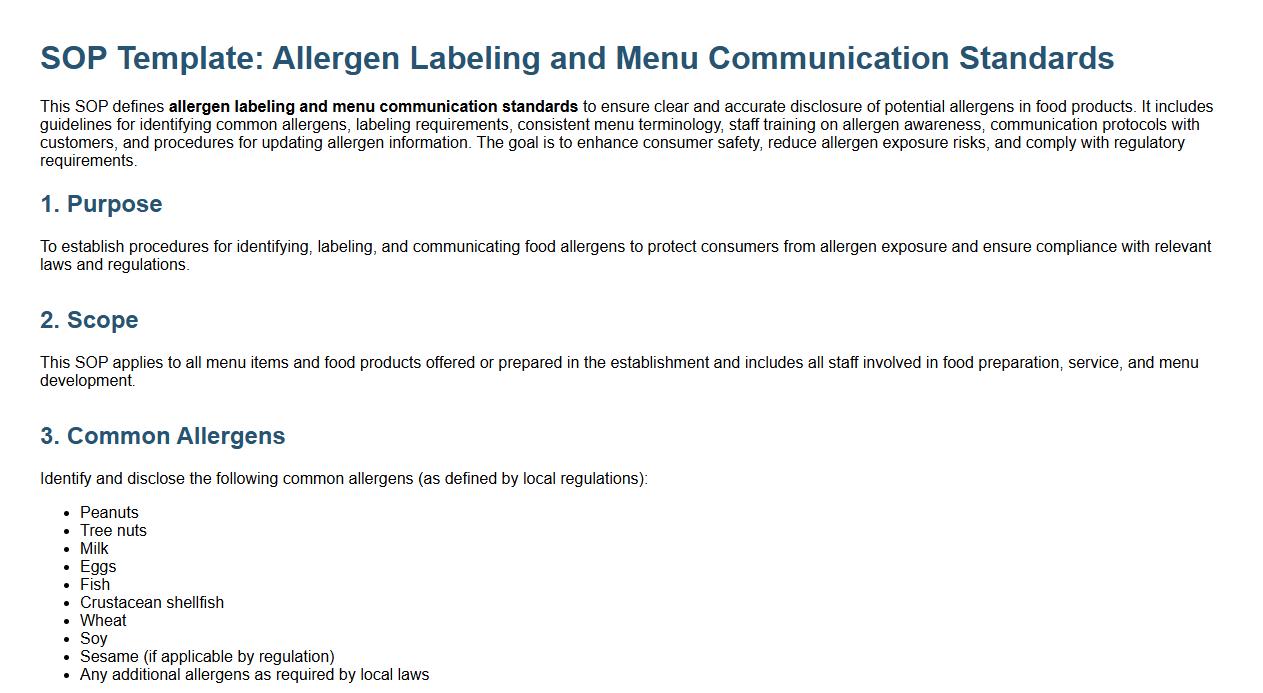
This SOP defines allergen labeling and menu communication standards to ensure clear and accurate disclosure of potential allergens in food products. It includes guidelines for identifying common allergens, labeling requirements, consistent menu terminology, staff training on allergen awareness, communication protocols with customers, and procedures for updating allergen information. The goal is to enhance consumer safety, reduce allergen exposure risks, and comply with regulatory requirements.
Cleaning and sanitization processes to remove allergens.
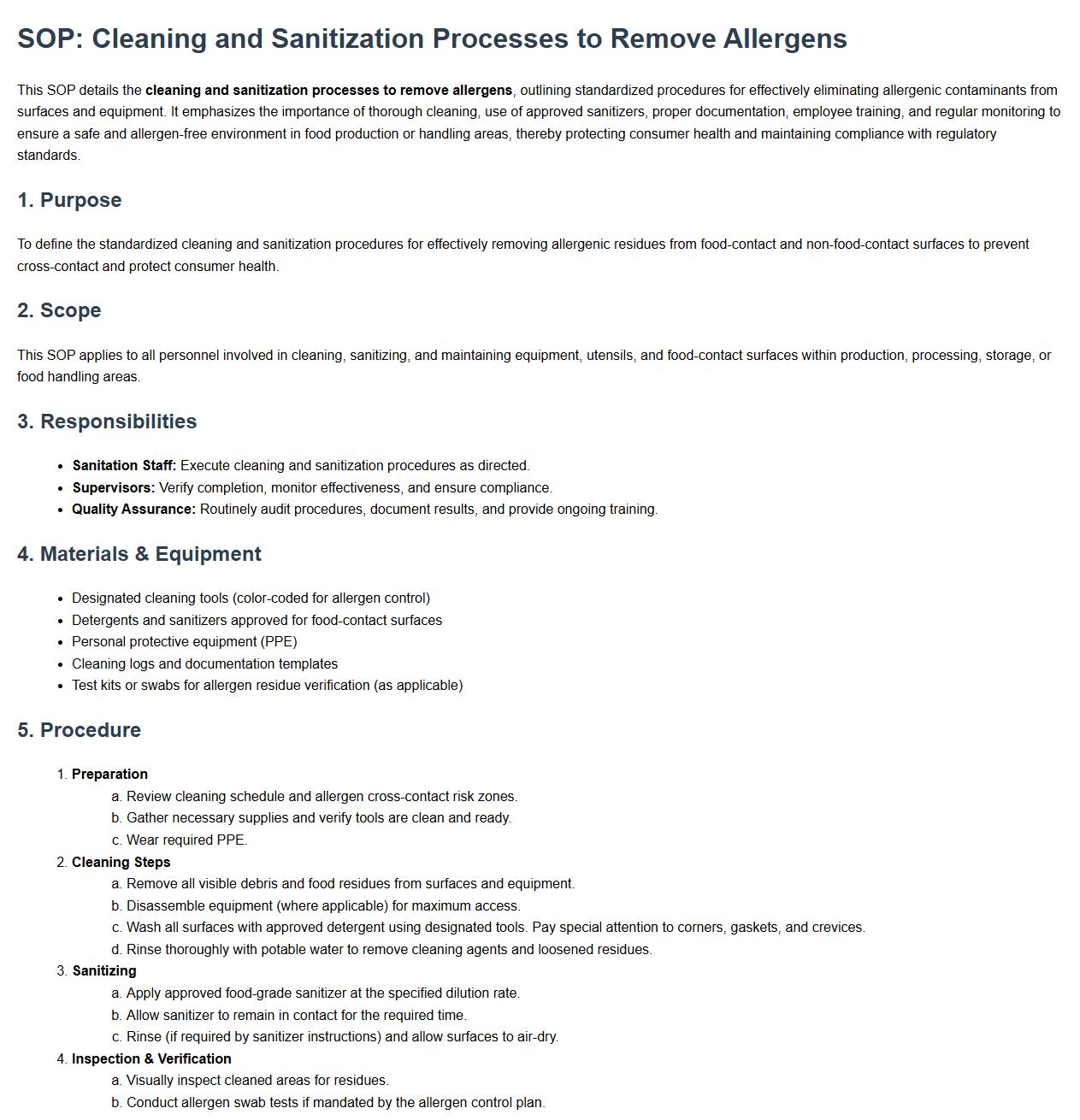
This SOP details the cleaning and sanitization processes to remove allergens, outlining standardized procedures for effectively eliminating allergenic contaminants from surfaces and equipment. It emphasizes the importance of thorough cleaning, use of approved sanitizers, proper documentation, employee training, and regular monitoring to ensure a safe and allergen-free environment in food production or handling areas, thereby protecting consumer health and maintaining compliance with regulatory standards.
Emergency action plan for allergic reactions, including use of epinephrine.
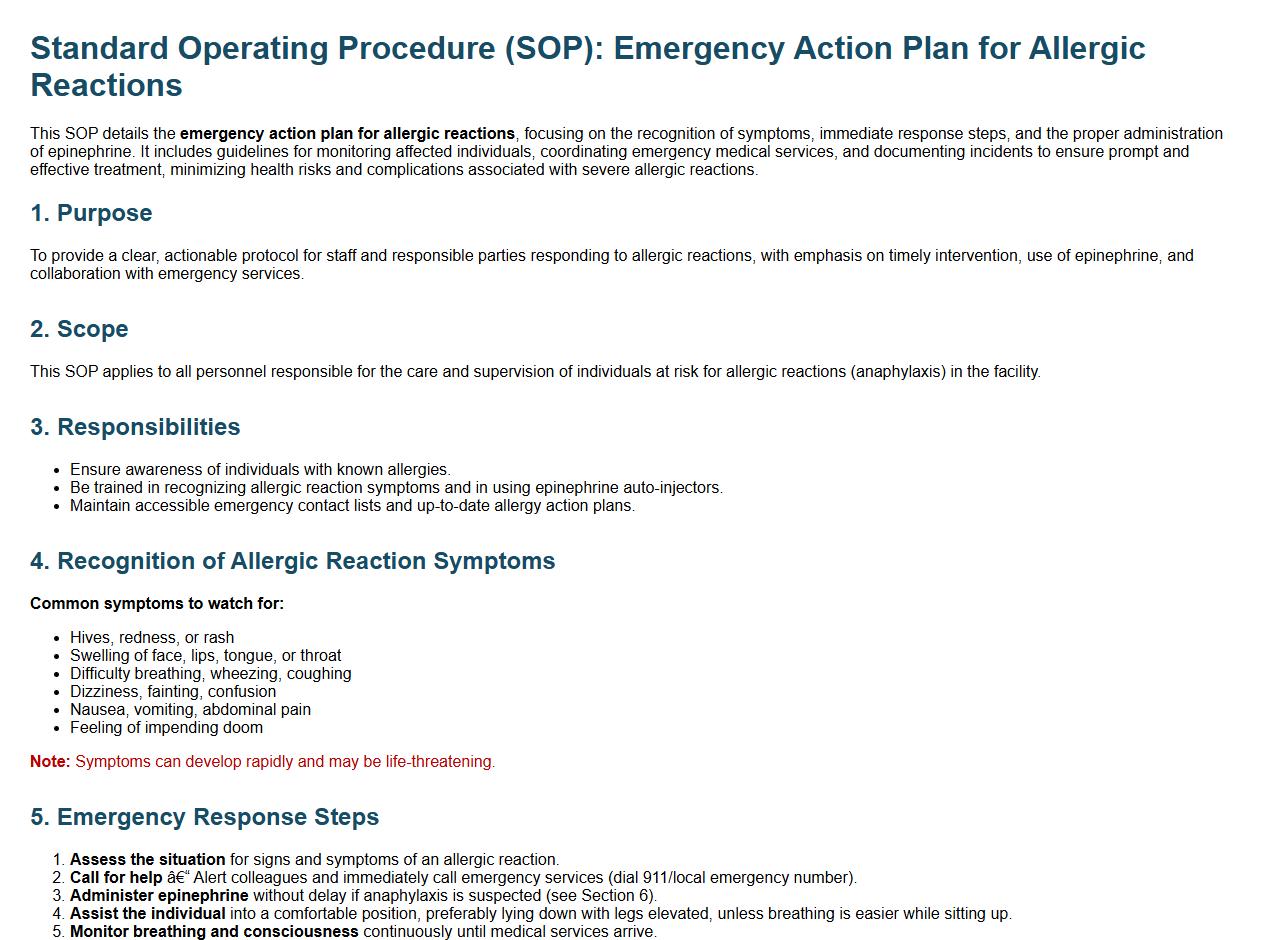
This SOP details the emergency action plan for allergic reactions, focusing on the recognition of symptoms, immediate response steps, and the proper administration of epinephrine. It includes guidelines for monitoring affected individuals, coordinating emergency medical services, and documenting incidents to ensure prompt and effective treatment, minimizing health risks and complications associated with severe allergic reactions.
Communication guidelines with parents, guardians, or clients regarding allergies.
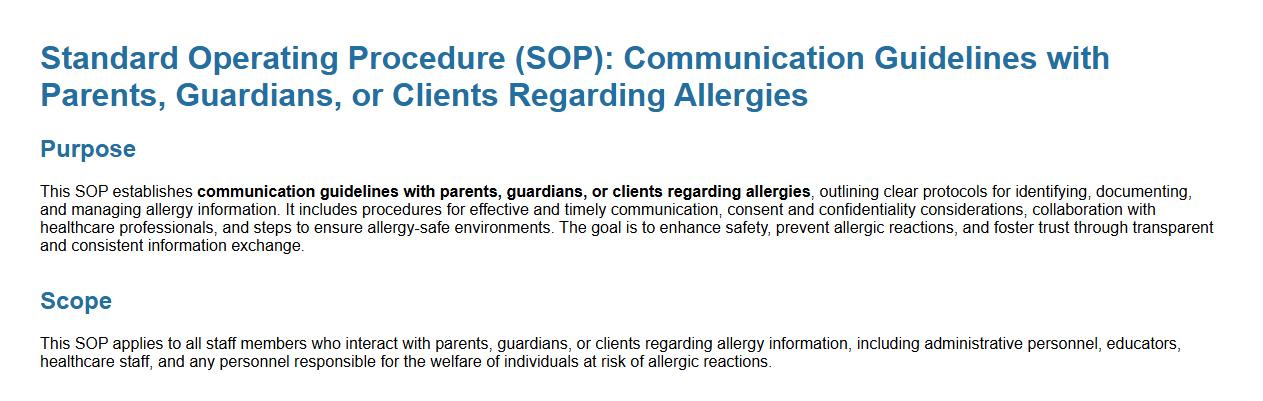
This SOP establishes communication guidelines with parents, guardians, or clients regarding allergies, outlining clear protocols for identifying, documenting, and managing allergy information. It includes procedures for effective and timely communication, consent and confidentiality considerations, collaboration with healthcare professionals, and steps to ensure allergy-safe environments. The goal is to enhance safety, prevent allergic reactions, and foster trust through transparent and consistent information exchange.
Incident reporting, review, and continuous improvement procedures.
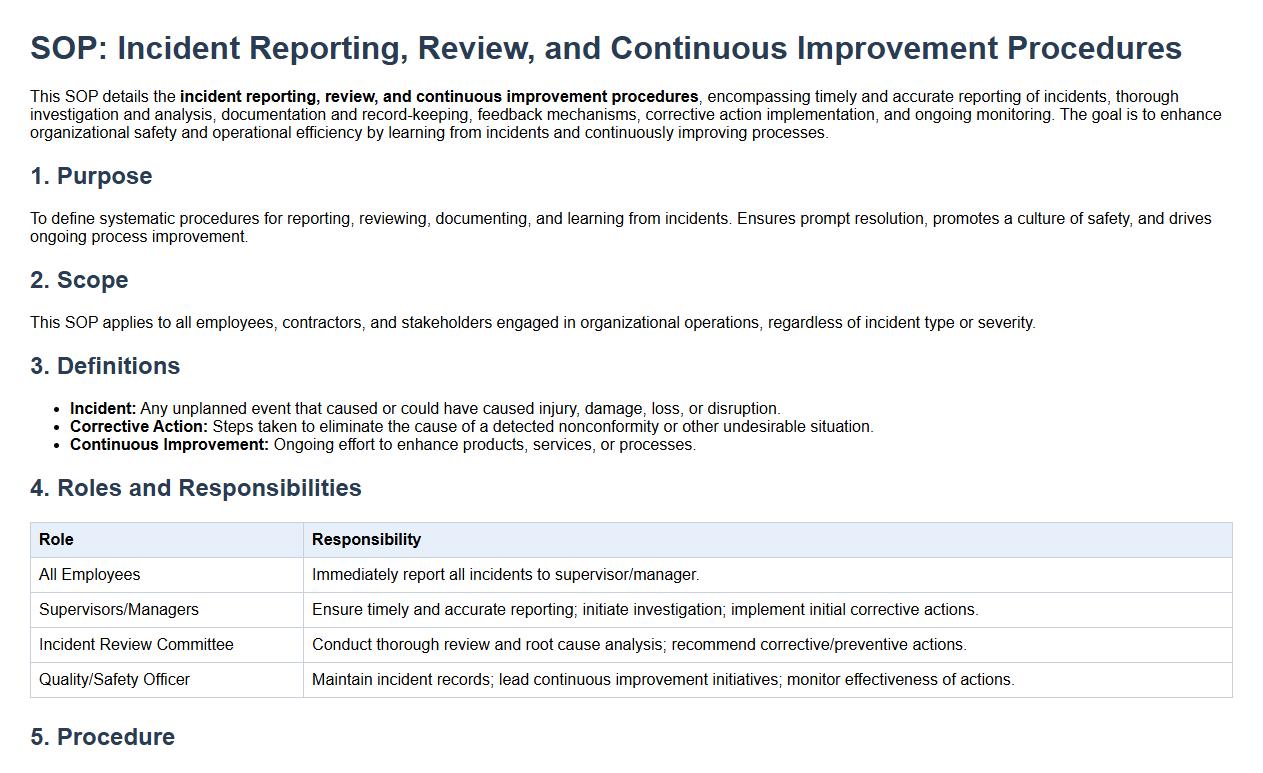
This SOP details the incident reporting, review, and continuous improvement procedures, encompassing timely and accurate reporting of incidents, thorough investigation and analysis, documentation and record-keeping, feedback mechanisms, corrective action implementation, and ongoing monitoring. The goal is to enhance organizational safety and operational efficiency by learning from incidents and continuously improving processes.
Essential Steps for Identifying and Managing Food Allergens
The SOP emphasizes the identification of all major food allergens present in the facility's ingredients. It mandates thorough cross-contact prevention measures during storage, preparation, and serving. Regular monitoring and verification procedures are also integral to ensuring allergen control.
Roles and Responsibilities Regarding Food Allergy Risk
The SOP clearly defines the responsibilities of each staff member in preventing food allergy risks, including kitchen and serving staff. It outlines specific duties such as proper allergen handling and communication protocol for allergen information. Accountability mechanisms ensure staff adherence to allergen management standards.
Documentation and Labeling Practices to Prevent Cross-Contact
The SOP requires detailed documentation of allergen-containing ingredients and preparation steps. Proper labeling on all food packages and prepared meals is mandatory to prevent accidental allergen exposure. It also specifies systematic record-keeping for traceability and audit purposes.
Emergency Procedures for Allergic Reactions
The SOP details immediate response protocols for suspected allergic reactions, including assessment and quick response actions. Use of emergency medication such as epinephrine auto-injectors is clearly outlined with step-by-step guidance. It also stresses the importance of timely communication with emergency medical services.
Training and Communication on Food Allergens
The SOP mandates regular training sessions for staff to update knowledge on allergen risks and prevention techniques. It also promotes clear and transparent communication with guests/customers regarding allergen information and potential risks. Ongoing education ensures a safe environment and compliance with allergen safety protocols.