
A SOP Template for Fast Food Outlet Operations ensures consistent quality and efficiency by outlining standard procedures for food preparation, customer service, and hygiene practices. This template helps streamline daily tasks, maintain compliance with health regulations, and improve overall operational workflow. Clear instructions within the SOP support staff training and promote a seamless customer experience.
Opening and Closing Procedures.
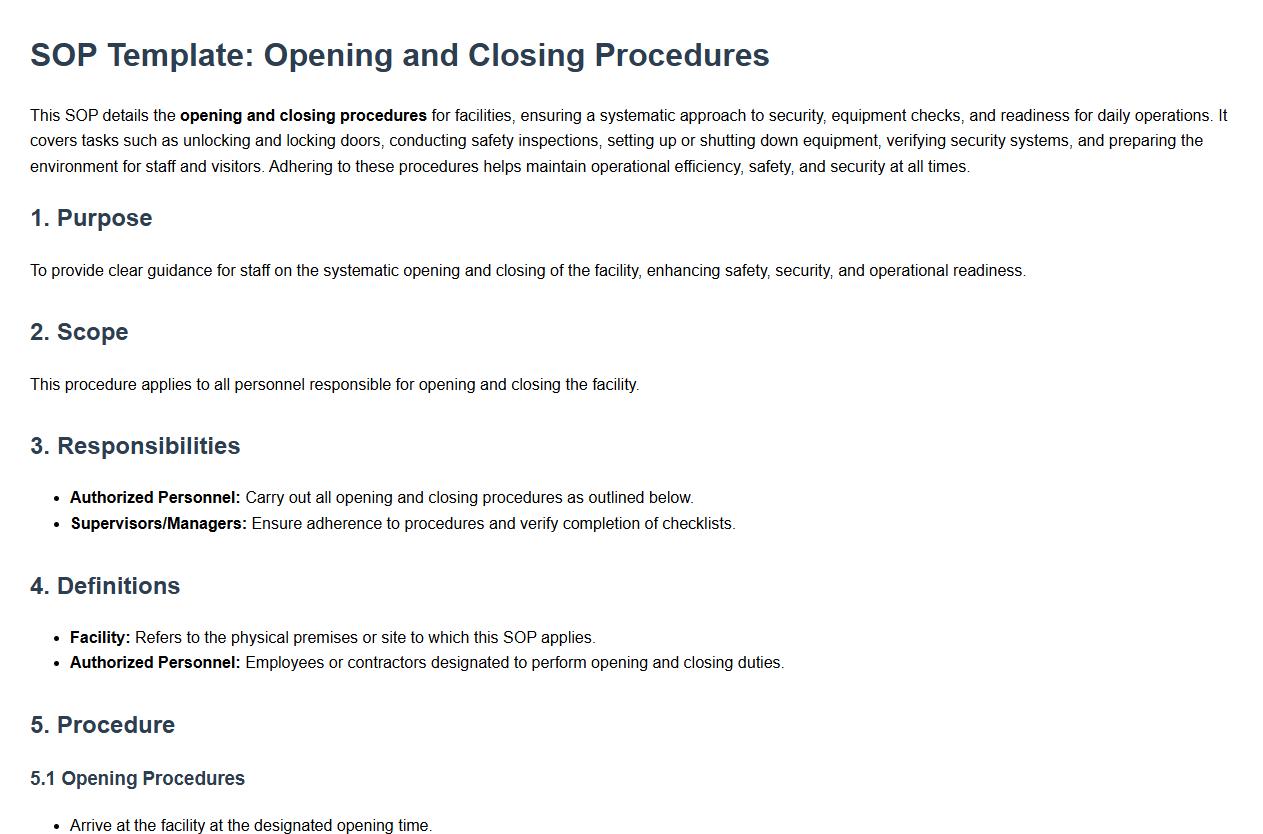
This SOP details the opening and closing procedures for facilities, ensuring a systematic approach to security, equipment checks, and readiness for daily operations. It covers tasks such as unlocking and locking doors, conducting safety inspections, setting up or shutting down equipment, verifying security systems, and preparing the environment for staff and visitors. Adhering to these procedures helps maintain operational efficiency, safety, and security at all times.
Cash Handling and Register Operations.
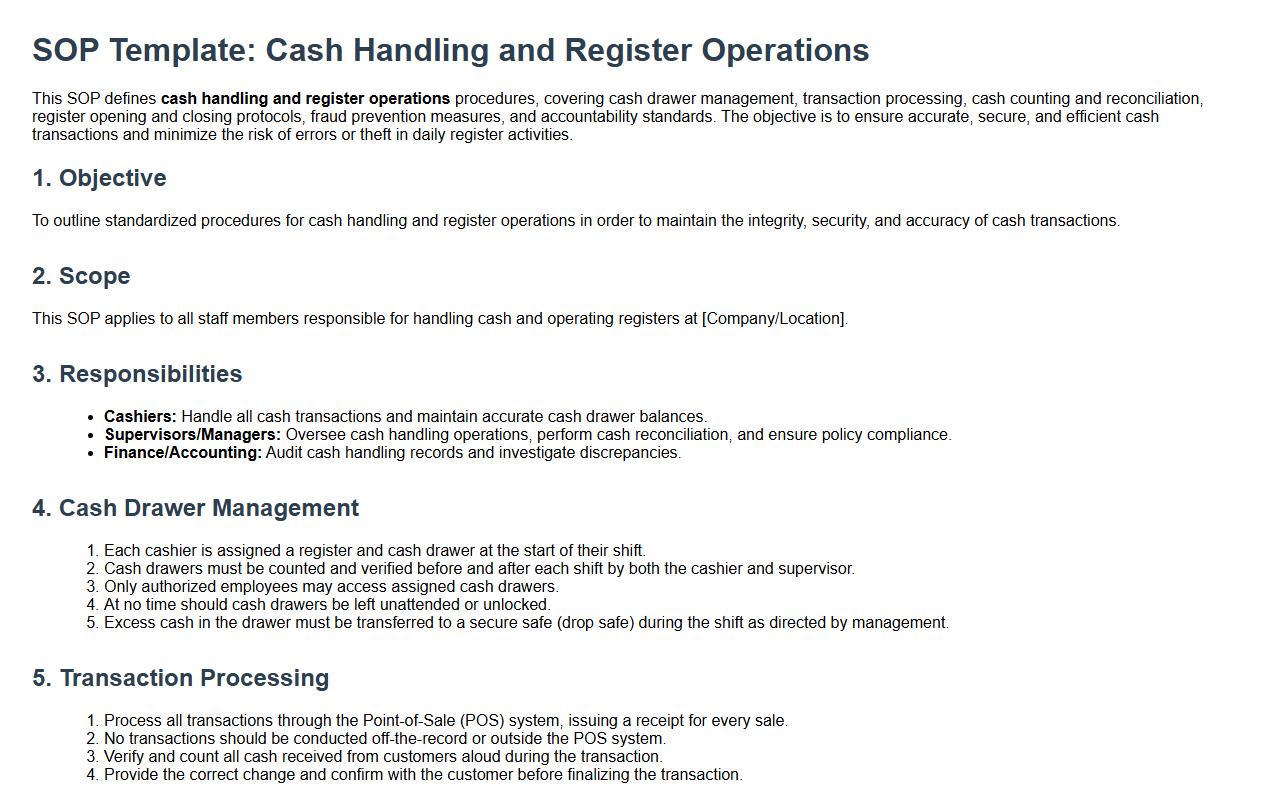
This SOP defines cash handling and register operations procedures, covering cash drawer management, transaction processing, cash counting and reconciliation, register opening and closing protocols, fraud prevention measures, and accountability standards. The objective is to ensure accurate, secure, and efficient cash transactions and minimize the risk of errors or theft in daily register activities.
Food Preparation and Assembly Guidelines.
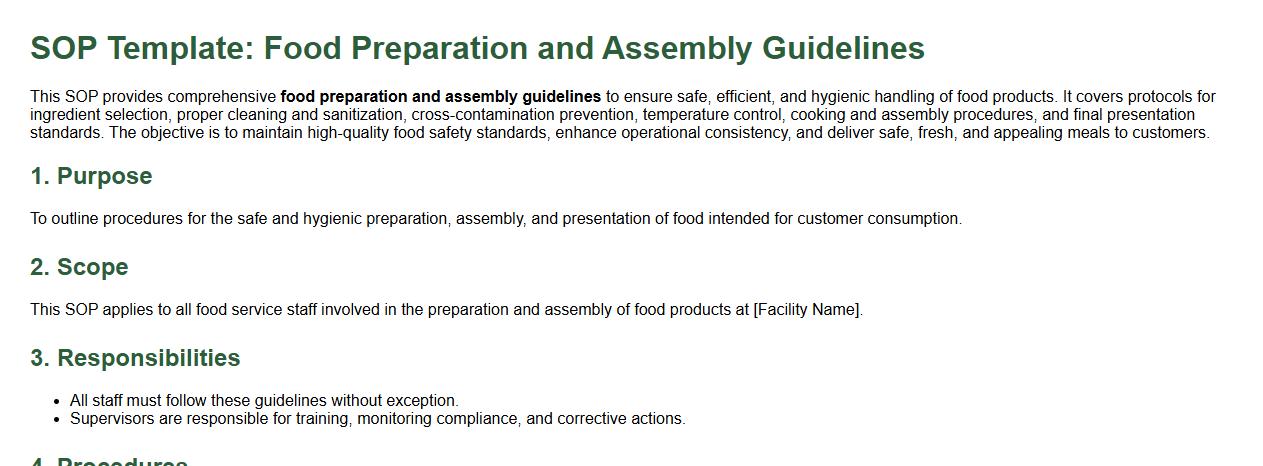
This SOP provides comprehensive food preparation and assembly guidelines to ensure safe, efficient, and hygienic handling of food products. It covers protocols for ingredient selection, proper cleaning and sanitization, cross-contamination prevention, temperature control, cooking and assembly procedures, and final presentation standards. The objective is to maintain high-quality food safety standards, enhance operational consistency, and deliver safe, fresh, and appealing meals to customers.
Order Taking and Customer Service Protocols.
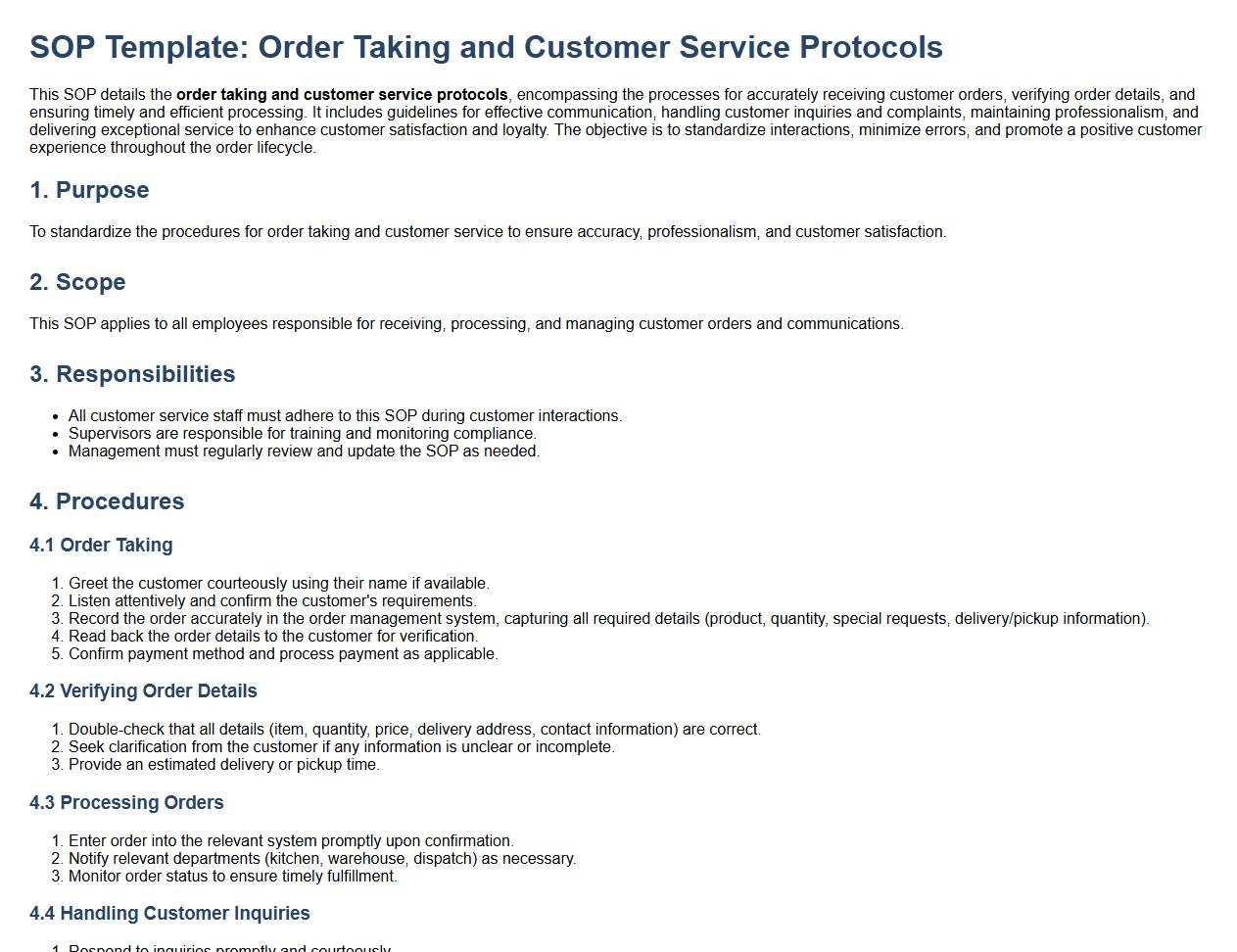
This SOP details the order taking and customer service protocols, encompassing the processes for accurately receiving customer orders, verifying order details, and ensuring timely and efficient processing. It includes guidelines for effective communication, handling customer inquiries and complaints, maintaining professionalism, and delivering exceptional service to enhance customer satisfaction and loyalty. The objective is to standardize interactions, minimize errors, and promote a positive customer experience throughout the order lifecycle.
Cleaning and Sanitation Procedures.
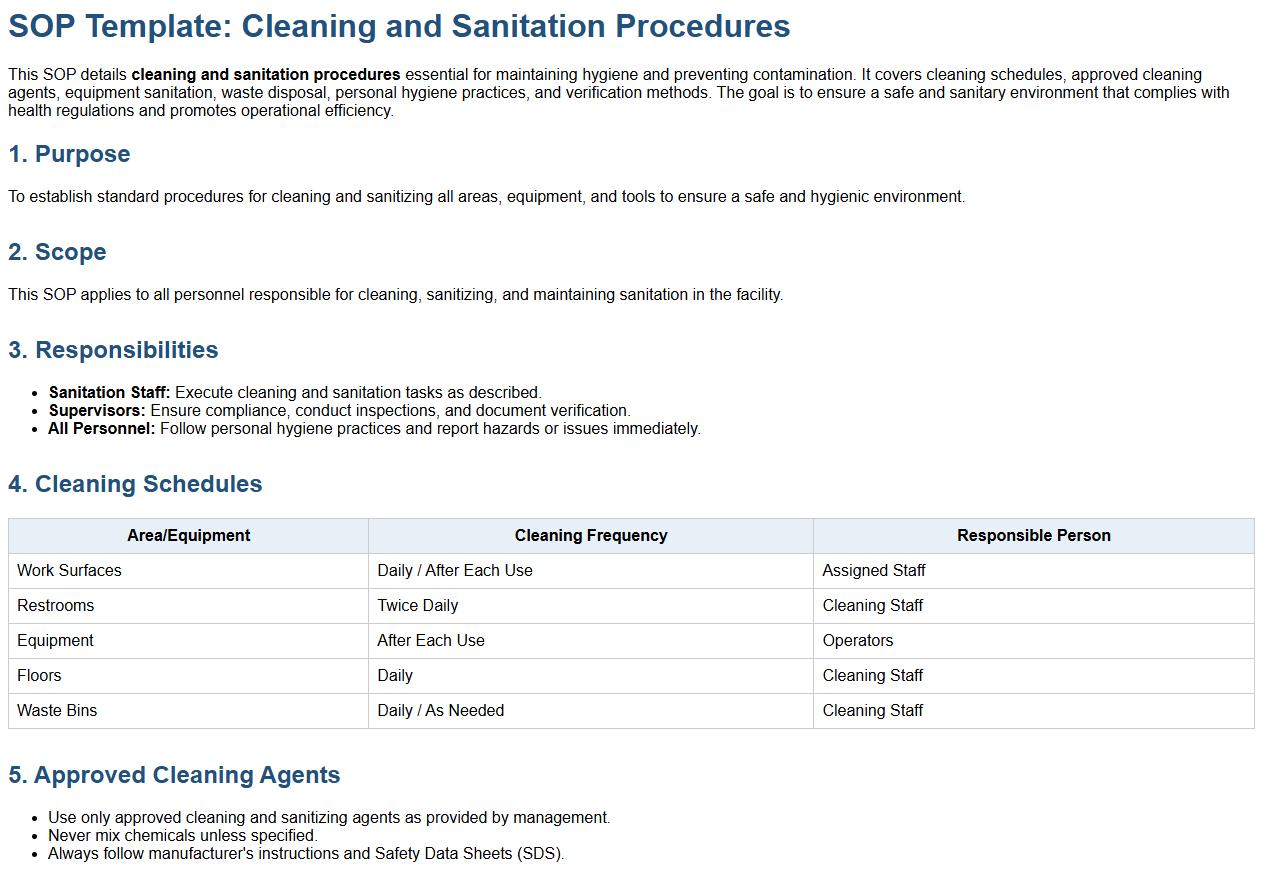
This SOP details cleaning and sanitation procedures essential for maintaining hygiene and preventing contamination. It covers cleaning schedules, approved cleaning agents, equipment sanitation, waste disposal, personal hygiene practices, and verification methods. The goal is to ensure a safe and sanitary environment that complies with health regulations and promotes operational efficiency.
Inventory Management and Stock Replenishment.
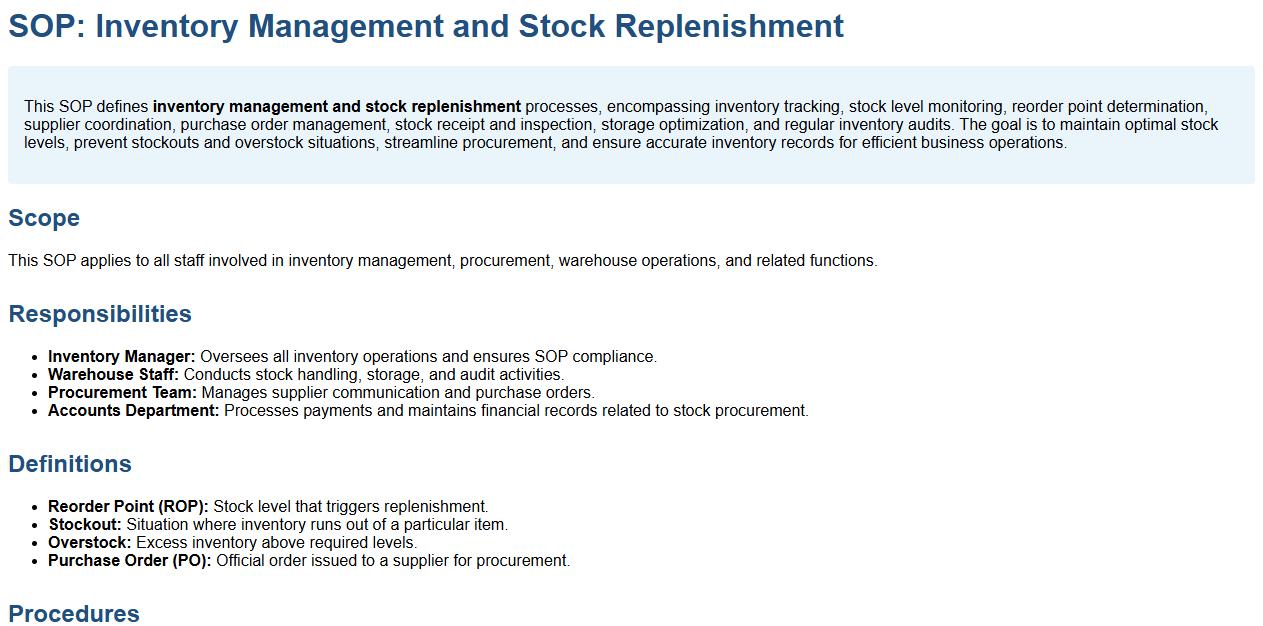
This SOP defines inventory management and stock replenishment processes, encompassing inventory tracking, stock level monitoring, reorder point determination, supplier coordination, purchase order management, stock receipt and inspection, storage optimization, and regular inventory audits. The goal is to maintain optimal stock levels, prevent stockouts and overstock situations, streamline procurement, and ensure accurate inventory records for efficient business operations.
Equipment Maintenance and Safety Checks.
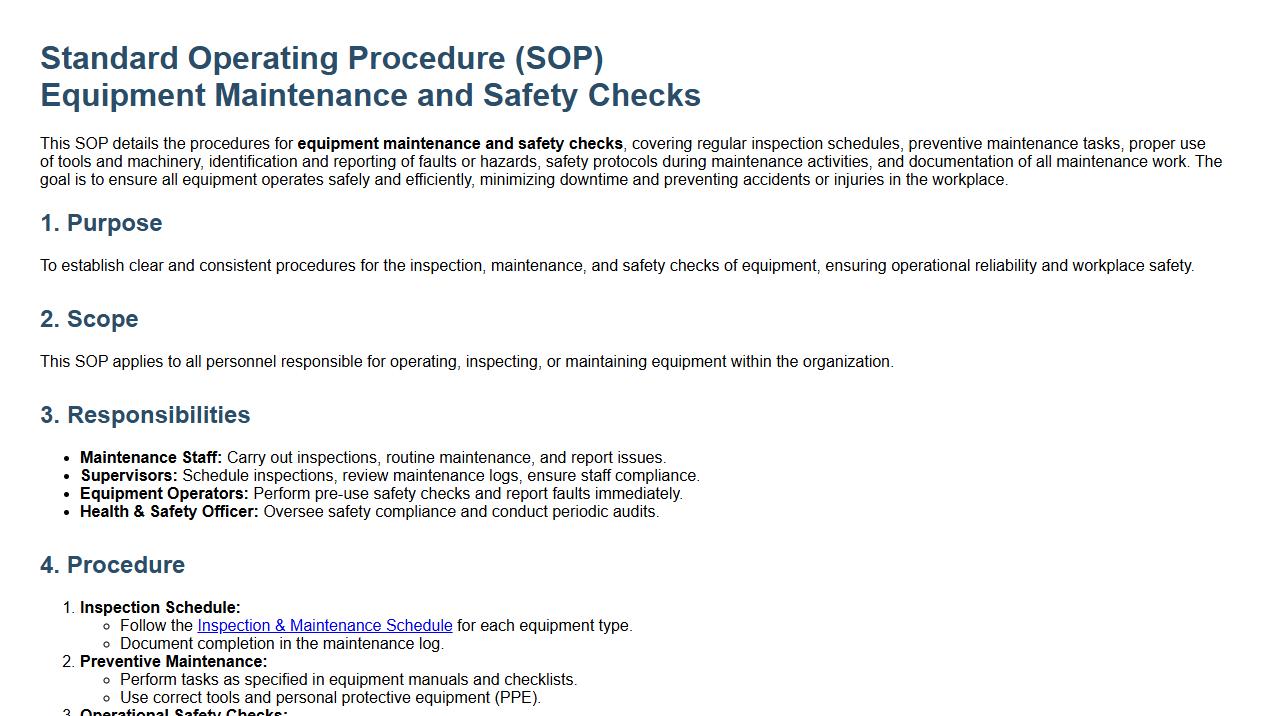
This SOP details the procedures for equipment maintenance and safety checks, covering regular inspection schedules, preventive maintenance tasks, proper use of tools and machinery, identification and reporting of faults or hazards, safety protocols during maintenance activities, and documentation of all maintenance work. The goal is to ensure all equipment operates safely and efficiently, minimizing downtime and preventing accidents or injuries in the workplace.
Employee Scheduling and Shift Handover.
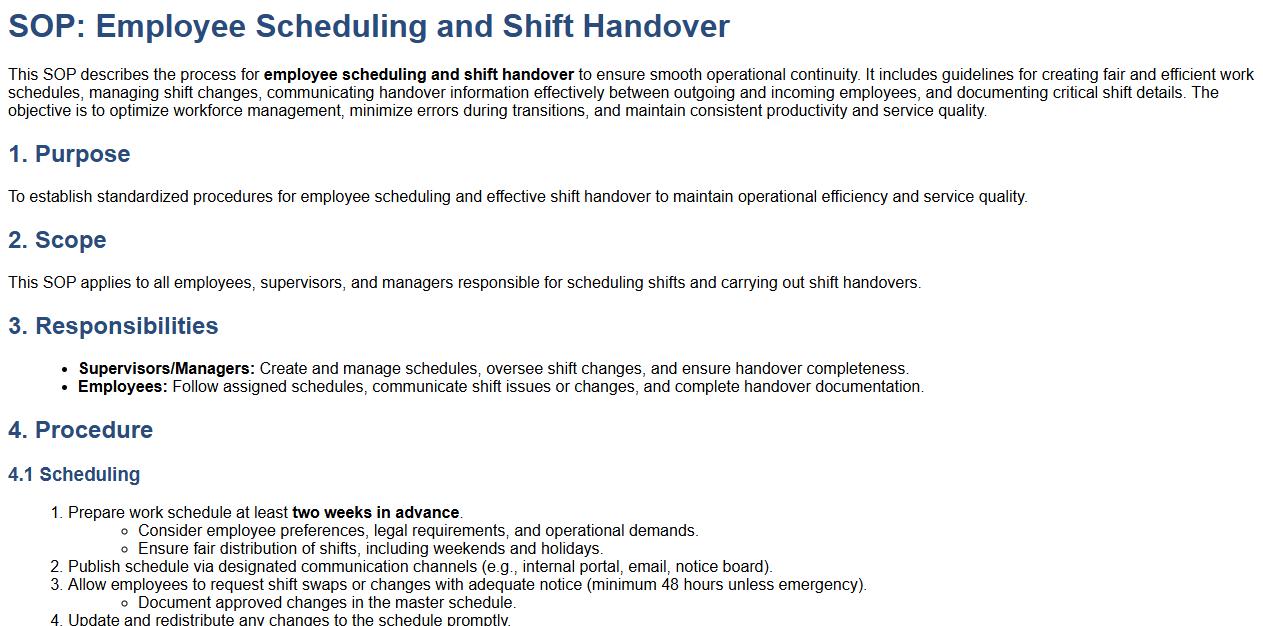
This SOP describes the process for employee scheduling and shift handover to ensure smooth operational continuity. It includes guidelines for creating fair and efficient work schedules, managing shift changes, communicating handover information effectively between outgoing and incoming employees, and documenting critical shift details. The objective is to optimize workforce management, minimize errors during transitions, and maintain consistent productivity and service quality.
Complaint Handling and Incident Reporting.
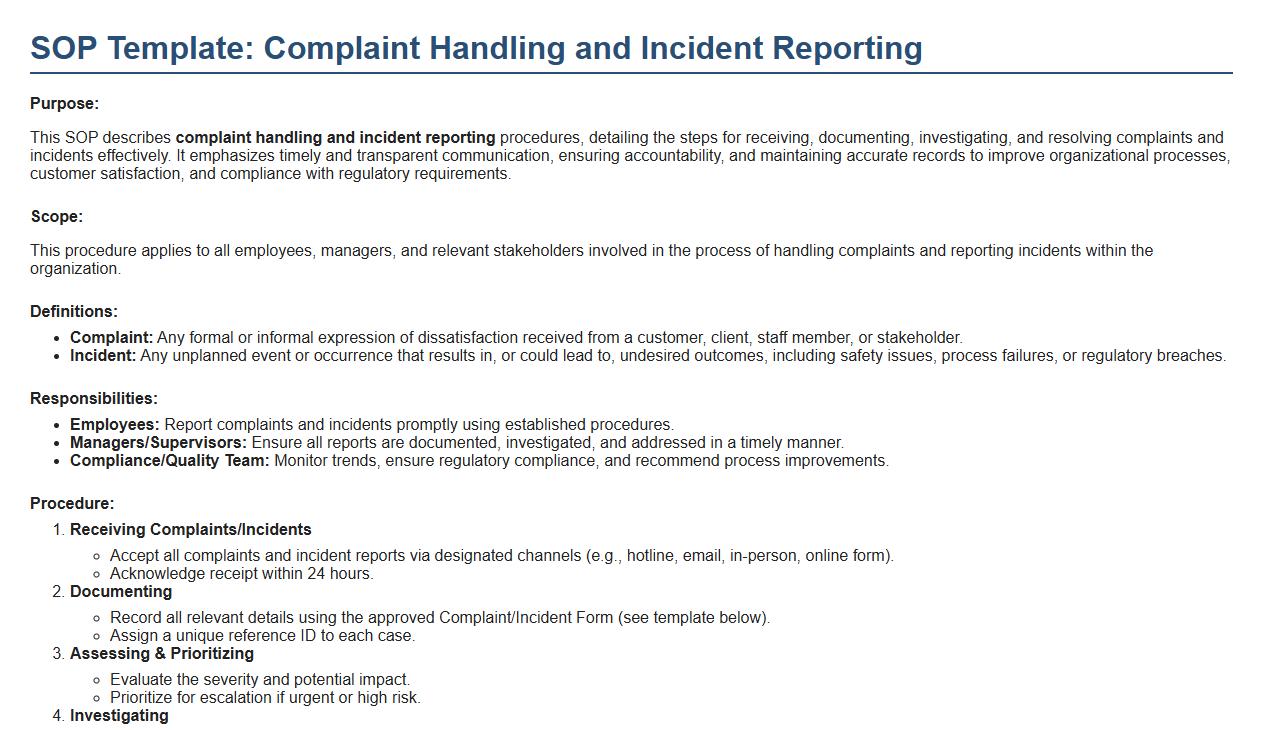
This SOP describes complaint handling and incident reporting procedures, detailing the steps for receiving, documenting, investigating, and resolving complaints and incidents effectively. It emphasizes timely and transparent communication, ensuring accountability, and maintaining accurate records to improve organizational processes, customer satisfaction, and compliance with regulatory requirements.
Health, Hygiene, and Personal Protective Equipment (PPE) Compliance.
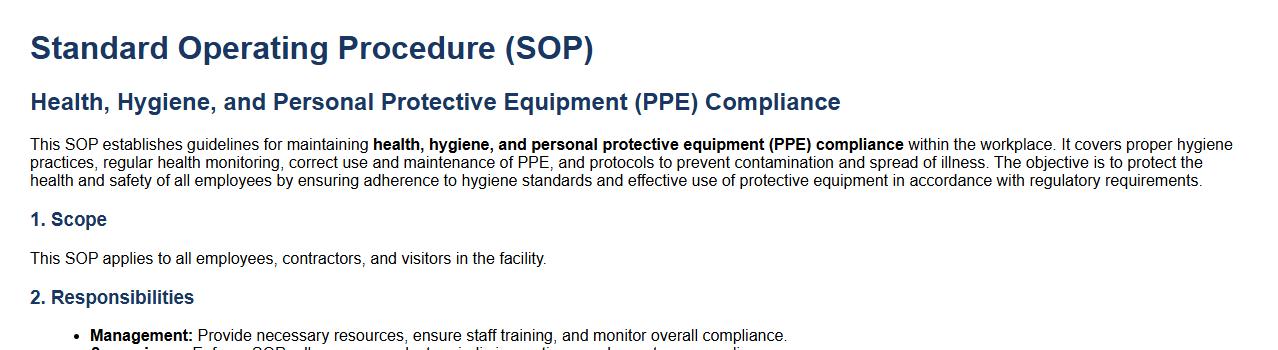
This SOP establishes guidelines for maintaining health, hygiene, and personal protective equipment (PPE) compliance within the workplace. It covers proper hygiene practices, regular health monitoring, correct use and maintenance of PPE, and protocols to prevent contamination and spread of illness. The objective is to protect the health and safety of all employees by ensuring adherence to hygiene standards and effective use of protective equipment in accordance with regulatory requirements.
Key Procedures Outlined in the SOP for Food Safety and Hygiene in the Fast Food Outlet
The SOP emphasizes critical food safety practices such as proper handwashing, avoiding cross-contamination, and correct food storage temperatures. Staff must follow strict guidelines for personal hygiene and wear protective gear like gloves and hairnets. Regular sanitation schedules and monitoring ensure all surfaces and equipment remain clean and safe.
Standard Process for Order Taking and Customer Service as Defined by the SOP
The SOP mandates a clear and courteous communication method for order taking, ensuring accuracy and efficiency. Staff must confirm orders with customers to reduce errors and enhance satisfaction. Friendly interaction and prompt service delivery are key components to maintain high customer service standards.
Protocols Established in the SOP for Inventory Management and Stock Control
The SOP requires systematic inventory tracking with regular stock audits to prevent shortages and overstocking. It outlines procedures for receiving, inspecting, and storing goods safely. Accurate record-keeping and timely reordering based on consumption rates are essential for smooth operations.
Roles and Responsibilities of Staff During Peak Hours as Specified by the SOP
During peak hours, the SOP assigns specific role-based tasks to maintain workflow efficiency, such as designated order takers, food preparers, and cashiers. Staff must communicate effectively and support each other to handle high customer volumes. Prioritizing speed without compromising quality or hygiene is emphasized.
Documented Steps for Equipment Cleaning and Maintenance in the Outlet's SOP
The SOP details a rigorous cleaning schedule for all kitchen equipment, including disassembly, cleansing with approved agents, and thorough drying. Maintenance checks are logged to identify malfunctioning items promptly and prevent breakdowns. Adhering to these steps helps ensure equipment safety and longevity.