
A SOP Template for Table Setting in Restaurants ensures consistency and cleanliness by providing clear, step-by-step instructions for staff. It outlines specific placement of utensils, glassware, and napkins to enhance customer experience and maintain a professional appearance. Following this template streamlines training and helps uphold high service standards.
Table setup preparation and cleanliness check.
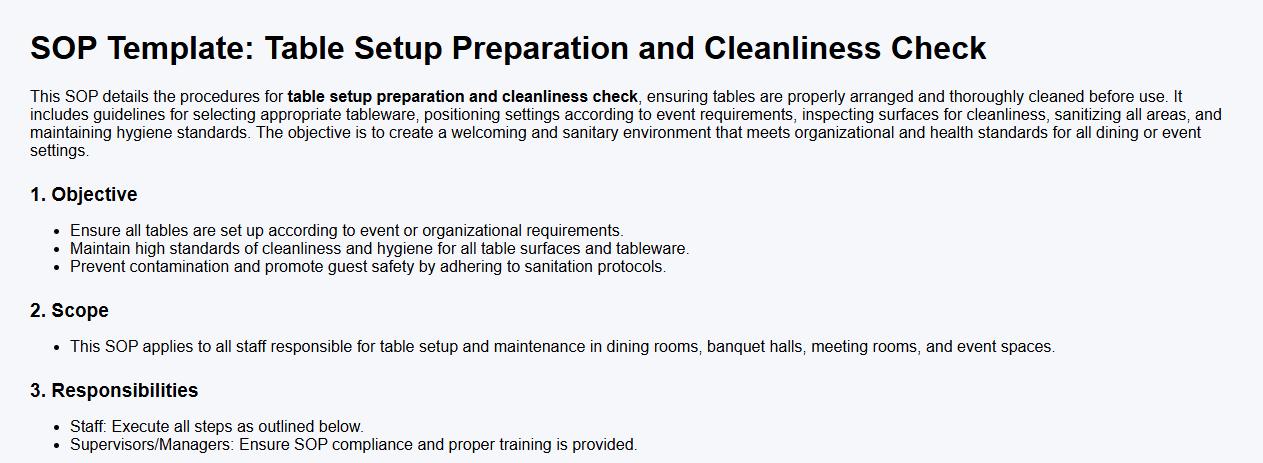
This SOP details the procedures for table setup preparation and cleanliness check, ensuring tables are properly arranged and thoroughly cleaned before use. It includes guidelines for selecting appropriate tableware, positioning settings according to event requirements, inspecting surfaces for cleanliness, sanitizing all areas, and maintaining hygiene standards. The objective is to create a welcoming and sanitary environment that meets organizational and health standards for all dining or event settings.
Organizing table linens, placemats, and covers.
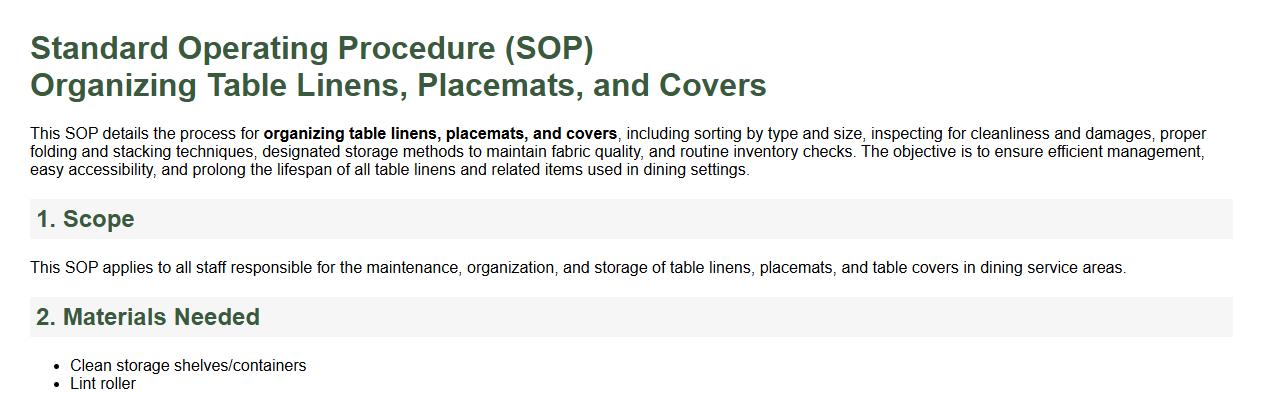
This SOP details the process for organizing table linens, placemats, and covers, including sorting by type and size, inspecting for cleanliness and damages, proper folding and stacking techniques, designated storage methods to maintain fabric quality, and routine inventory checks. The objective is to ensure efficient management, easy accessibility, and prolong the lifespan of all table linens and related items used in dining settings.
Arranging cutlery, plates, and glassware as per standard layout.
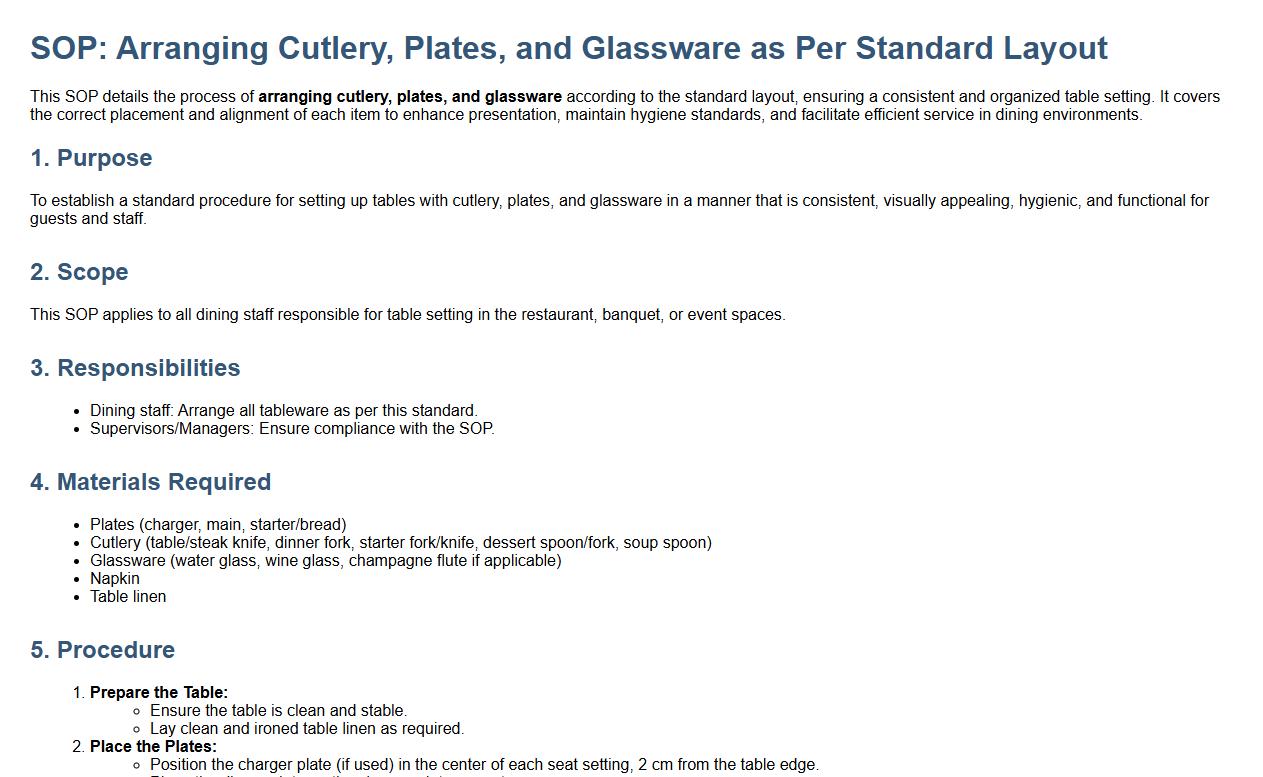
This SOP details the process of arranging cutlery, plates, and glassware according to the standard layout, ensuring a consistent and organized table setting. It covers the correct placement and alignment of each item to enhance presentation, maintain hygiene standards, and facilitate efficient service in dining environments.
Folding and positioning napkins consistently.
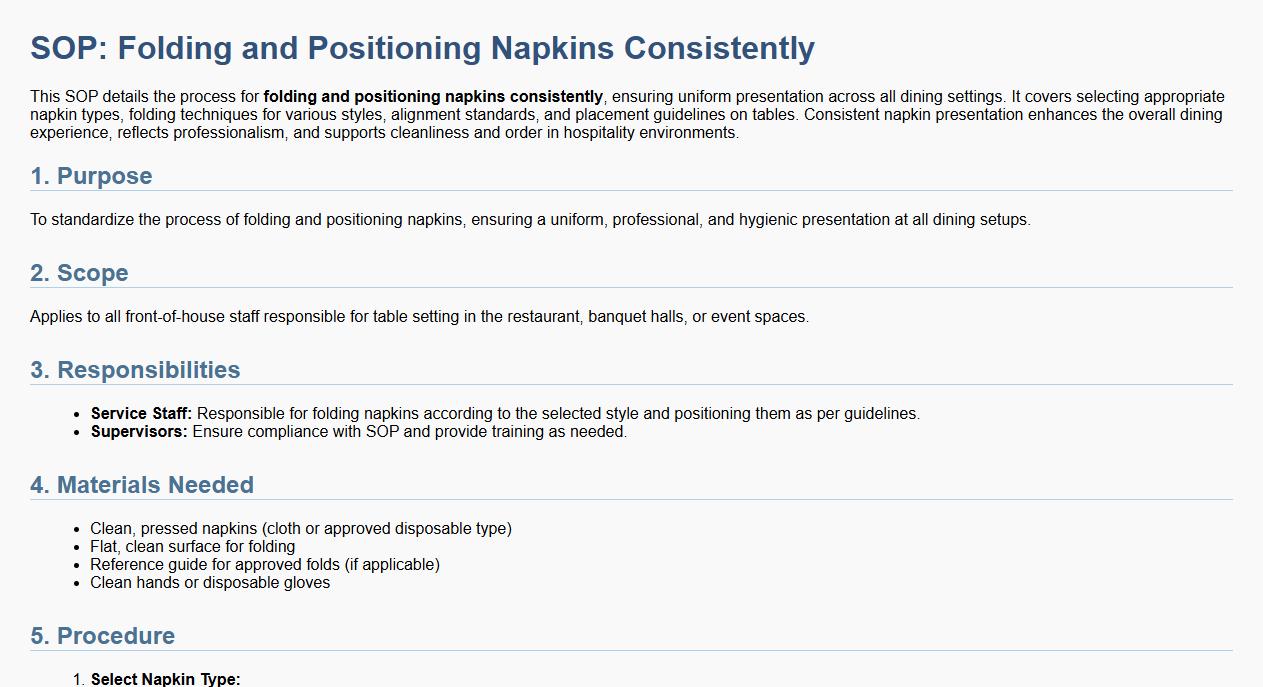
This SOP details the process for folding and positioning napkins consistently, ensuring uniform presentation across all dining settings. It covers selecting appropriate napkin types, folding techniques for various styles, alignment standards, and placement guidelines on tables. Consistent napkin presentation enhances the overall dining experience, reflects professionalism, and supports cleanliness and order in hospitality environments.
Placing condiments and centerpieces appropriately.
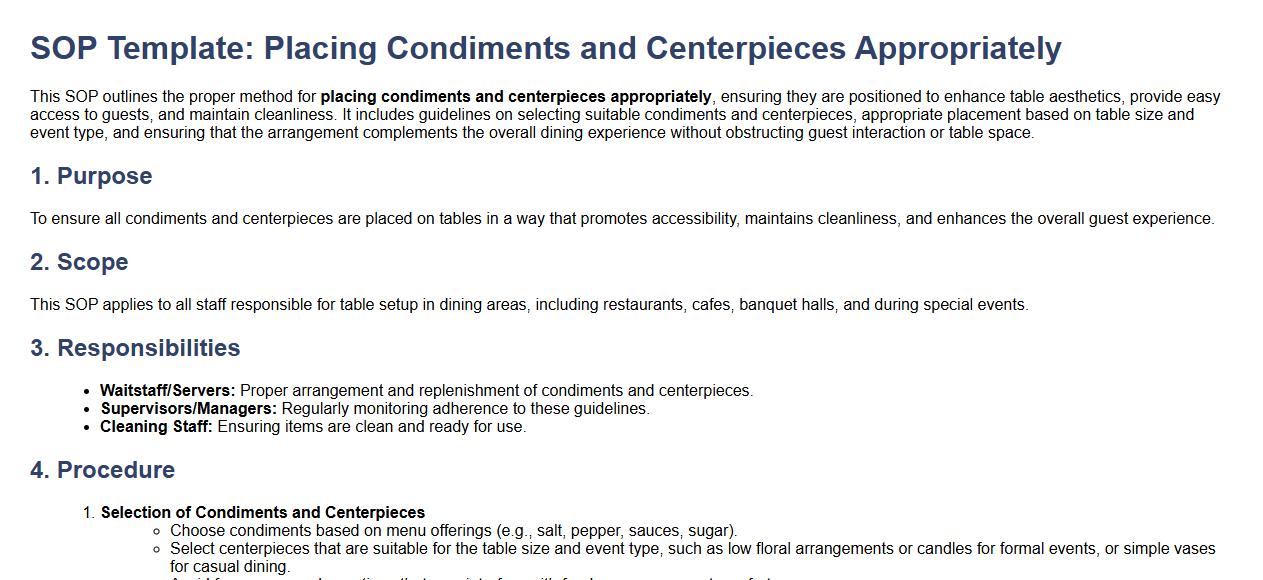
This SOP outlines the proper method for placing condiments and centerpieces appropriately, ensuring they are positioned to enhance table aesthetics, provide easy access to guests, and maintain cleanliness. It includes guidelines on selecting suitable condiments and centerpieces, appropriate placement based on table size and event type, and ensuring that the arrangement complements the overall dining experience without obstructing guest interaction or table space.
Ensuring proper spacing between place settings.
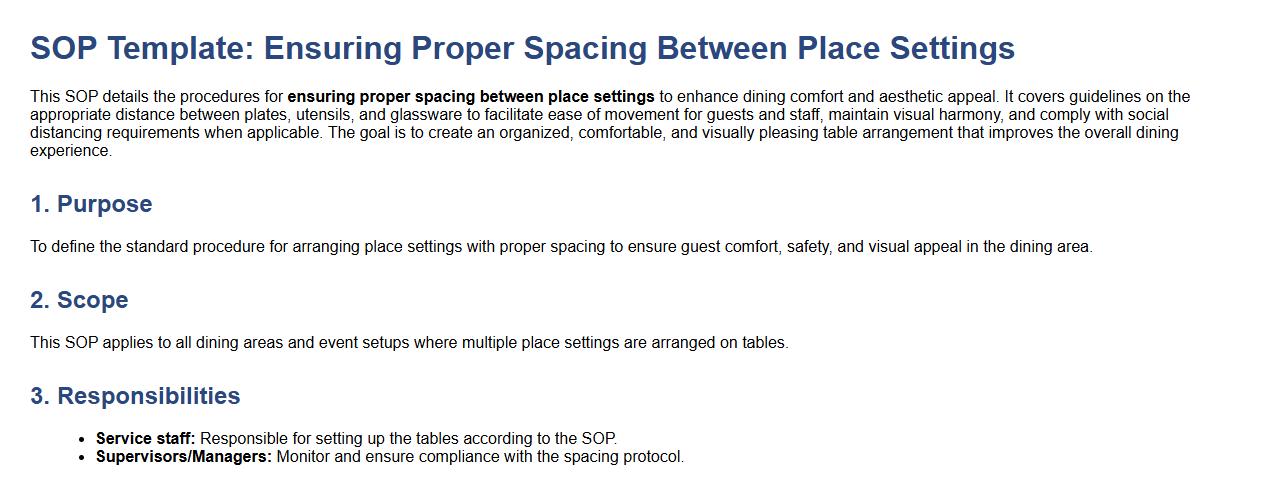
This SOP details the procedures for ensuring proper spacing between place settings to enhance dining comfort and aesthetic appeal. It covers guidelines on the appropriate distance between plates, utensils, and glassware to facilitate ease of movement for guests and staff, maintain visual harmony, and comply with social distancing requirements when applicable. The goal is to create an organized, comfortable, and visually pleasing table arrangement that improves the overall dining experience.
Inspecting tableware for cleanliness and damage.
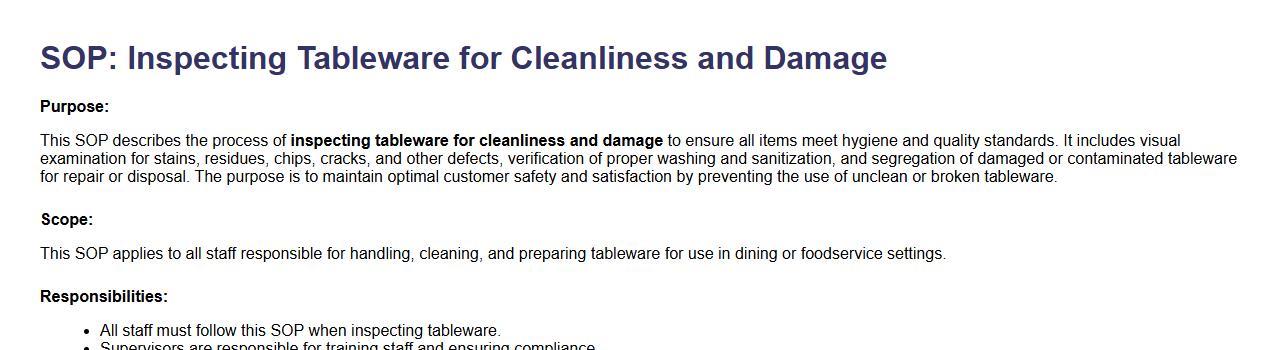
This SOP describes the process of inspecting tableware for cleanliness and damage to ensure all items meet hygiene and quality standards. It includes visual examination for stains, residues, chips, cracks, and other defects, verification of proper washing and sanitization, and segregation of damaged or contaminated tableware for repair or disposal. The purpose is to maintain optimal customer safety and satisfaction by preventing the use of unclean or broken tableware.
Coordinating with service staff for table readiness.
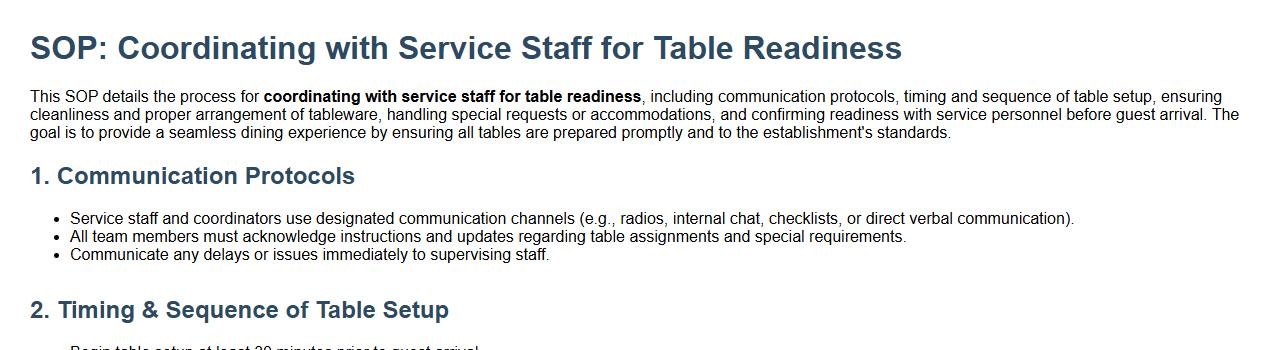
This SOP details the process for coordinating with service staff for table readiness, including communication protocols, timing and sequence of table setup, ensuring cleanliness and proper arrangement of tableware, handling special requests or accommodations, and confirming readiness with service personnel before guest arrival. The goal is to provide a seamless dining experience by ensuring all tables are prepared promptly and to the establishment's standards.
Final table inspection before guest seating.
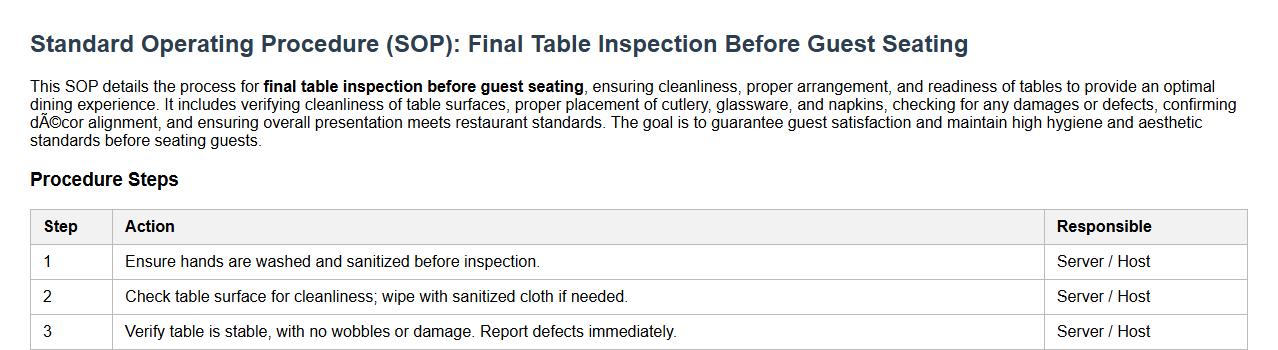
This SOP details the process for final table inspection before guest seating, ensuring cleanliness, proper arrangement, and readiness of tables to provide an optimal dining experience. It includes verifying cleanliness of table surfaces, proper placement of cutlery, glassware, and napkins, checking for any damages or defects, confirming décor alignment, and ensuring overall presentation meets restaurant standards. The goal is to guarantee guest satisfaction and maintain high hygiene and aesthetic standards before seating guests.
Documenting setup completion and addressing discrepancies.
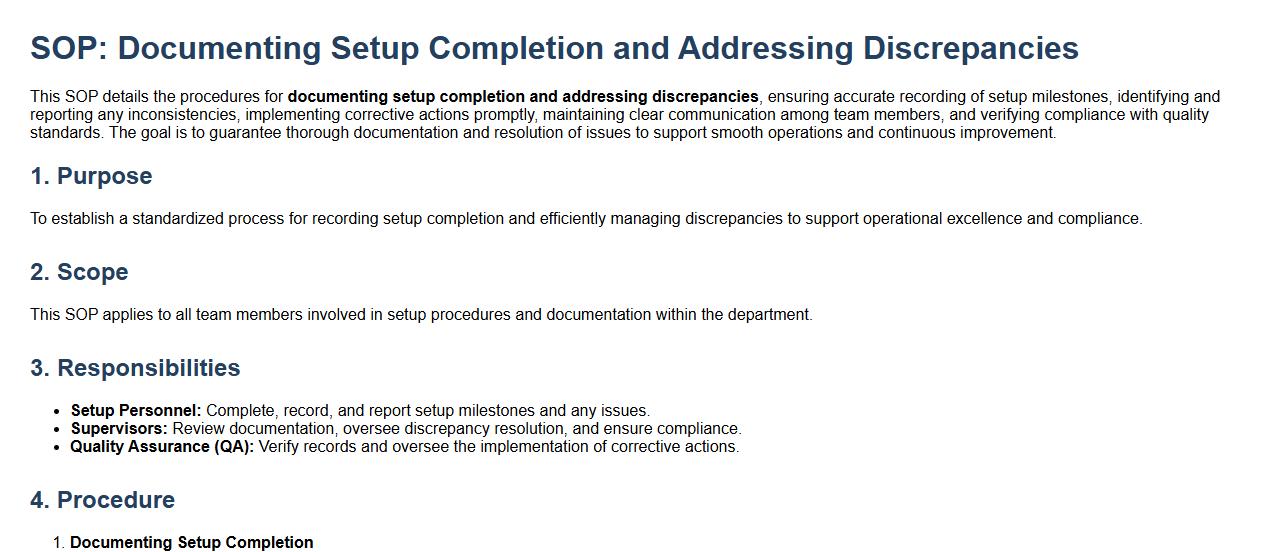
This SOP details the procedures for documenting setup completion and addressing discrepancies, ensuring accurate recording of setup milestones, identifying and reporting any inconsistencies, implementing corrective actions promptly, maintaining clear communication among team members, and verifying compliance with quality standards. The goal is to guarantee thorough documentation and resolution of issues to support smooth operations and continuous improvement.
What are the essential items required for a standard table setting according to the SOP?
The SOP mandates that a standard table setting includes a dinner plate, fork, knife, spoon, napkin, and water glass. Additionally, a bread plate with a butter knife may be required for formal settings. Each item should be clean and polished to maintain high restaurant standards.
How does the SOP specify the correct placement and alignment of cutlery, plates, and glasses?
The SOP requires cutlery to be placed parallel and aligned with the edges of the table. Forks are positioned on the left, knives and spoons on the right side of the plate, with the cutting edge of knives facing inward. Glasses should be placed above the knives, ensuring easy reach and consistent spacing.
What hygiene and safety protocols must be followed during table setting as per the SOP?
Staff must wash their hands thoroughly before handling any tableware to prevent contamination. The SOP emphasizes wearing gloves and using clean cloths to polish items, ensuring no fingerprints or smudges remain. Additionally, all tableware must be inspected for cleanliness and integrity to guarantee guest safety.
How should staff handle and report missing or damaged tableware as outlined in the SOP?
According to the SOP, any missing or damaged tableware must be immediately reported to the supervisor for replacement or repair. Staff are instructed to remove compromised items from service promptly to maintain quality standards. Proper documentation of incidents ensures accountability and timely resolution.
What steps does the SOP outline for resetting and inspecting tables between customer seatings?
The SOP states that tables must be cleared of all used items and wiped down with approved sanitizers after each customer seating. New tableware should be placed freshly and checked for alignment and cleanliness. Staff are also required to visually inspect the area for any debris or damages before seating new guests.