
A SOP Template for Food Truck Operations outlines standardized procedures to ensure efficient daily tasks, including food preparation, safety protocols, and customer service. This template helps maintain consistency, compliance with health regulations, and streamline workflow for staff. Clear guidelines within the SOP reduce errors and enhance the overall quality of food truck management.
Daily vehicle inspection and sanitation checklist.
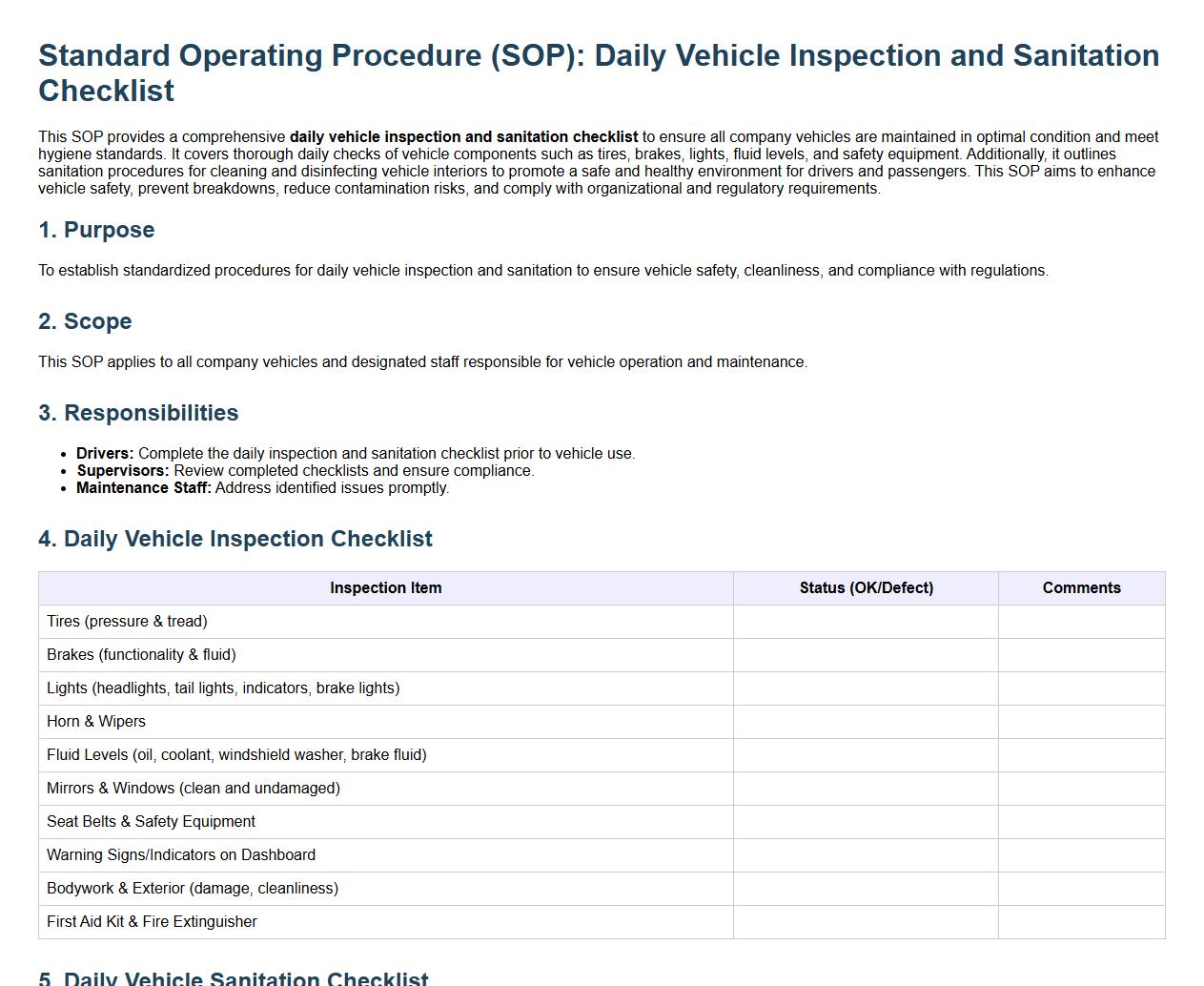
This SOP provides a comprehensive daily vehicle inspection and sanitation checklist to ensure all company vehicles are maintained in optimal condition and meet hygiene standards. It covers thorough daily checks of vehicle components such as tires, brakes, lights, fluid levels, and safety equipment. Additionally, it outlines sanitation procedures for cleaning and disinfecting vehicle interiors to promote a safe and healthy environment for drivers and passengers. This SOP aims to enhance vehicle safety, prevent breakdowns, reduce contamination risks, and comply with organizational and regulatory requirements.
Food preparation and handling protocols.
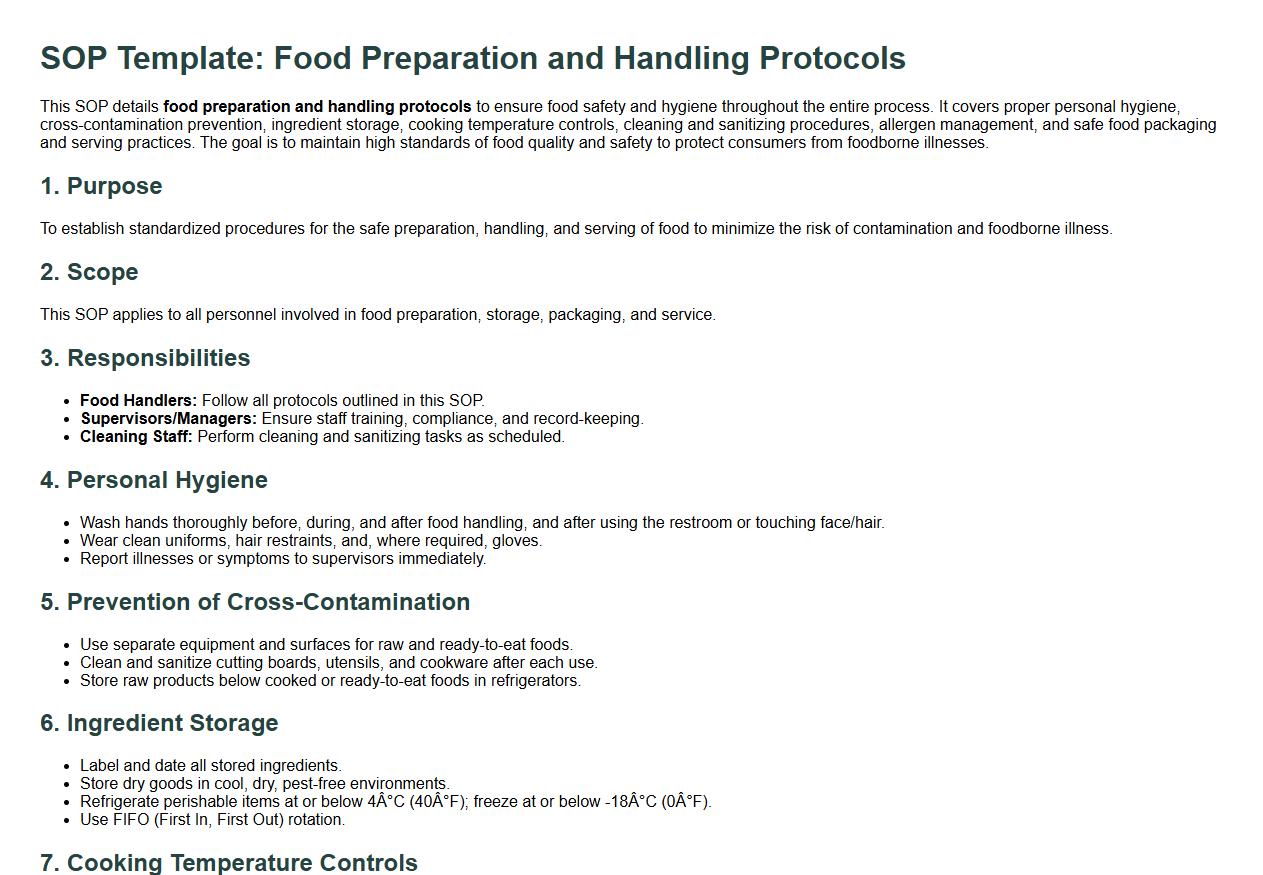
This SOP details food preparation and handling protocols to ensure food safety and hygiene throughout the entire process. It covers proper personal hygiene, cross-contamination prevention, ingredient storage, cooking temperature controls, cleaning and sanitizing procedures, allergen management, and safe food packaging and serving practices. The goal is to maintain high standards of food quality and safety to protect consumers from foodborne illnesses.
Staff hygiene and uniform requirements.
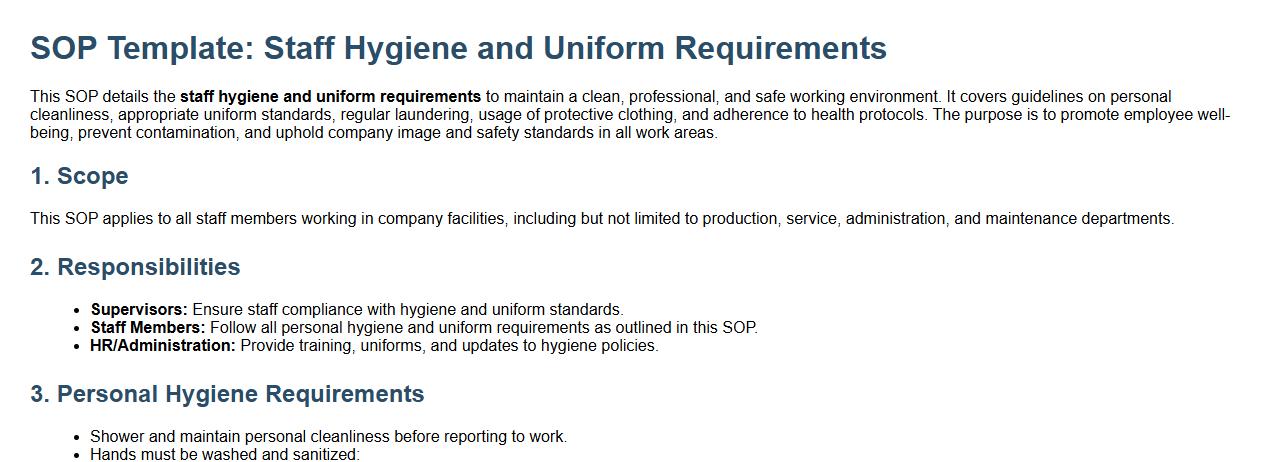
This SOP details the staff hygiene and uniform requirements to maintain a clean, professional, and safe working environment. It covers guidelines on personal cleanliness, appropriate uniform standards, regular laundering, usage of protective clothing, and adherence to health protocols. The purpose is to promote employee well-being, prevent contamination, and uphold company image and safety standards in all work areas.
Opening and closing setup procedures.
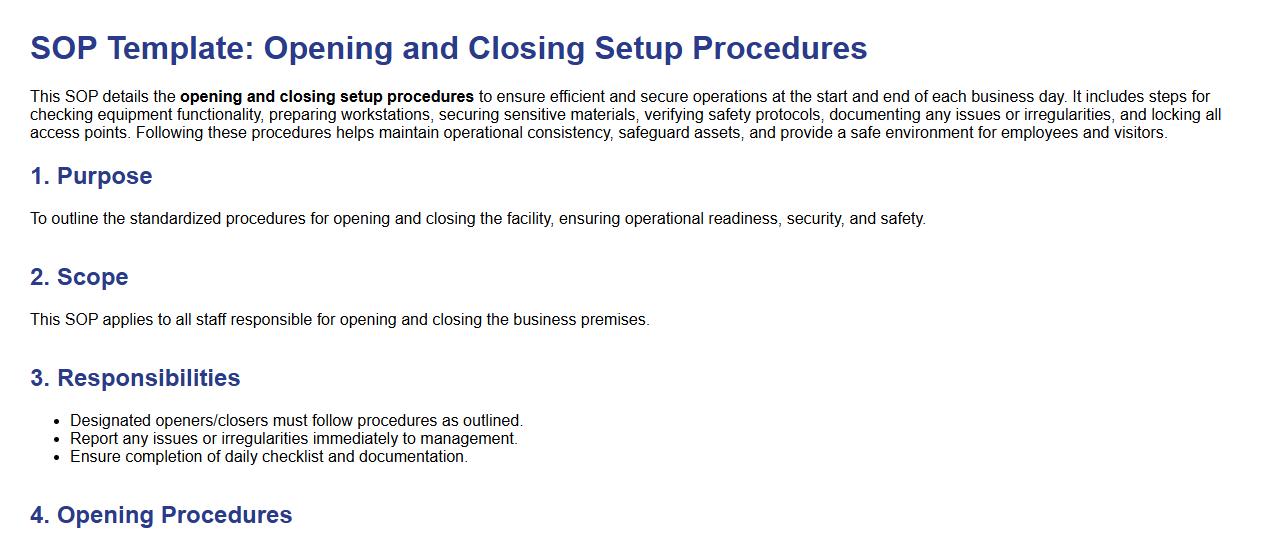
This SOP details the opening and closing setup procedures to ensure efficient and secure operations at the start and end of each business day. It includes steps for checking equipment functionality, preparing workstations, securing sensitive materials, verifying safety protocols, documenting any issues or irregularities, and locking all access points. Following these procedures helps maintain operational consistency, safeguard assets, and provide a safe environment for employees and visitors.
Cash handling and point-of-sale (POS) operations.
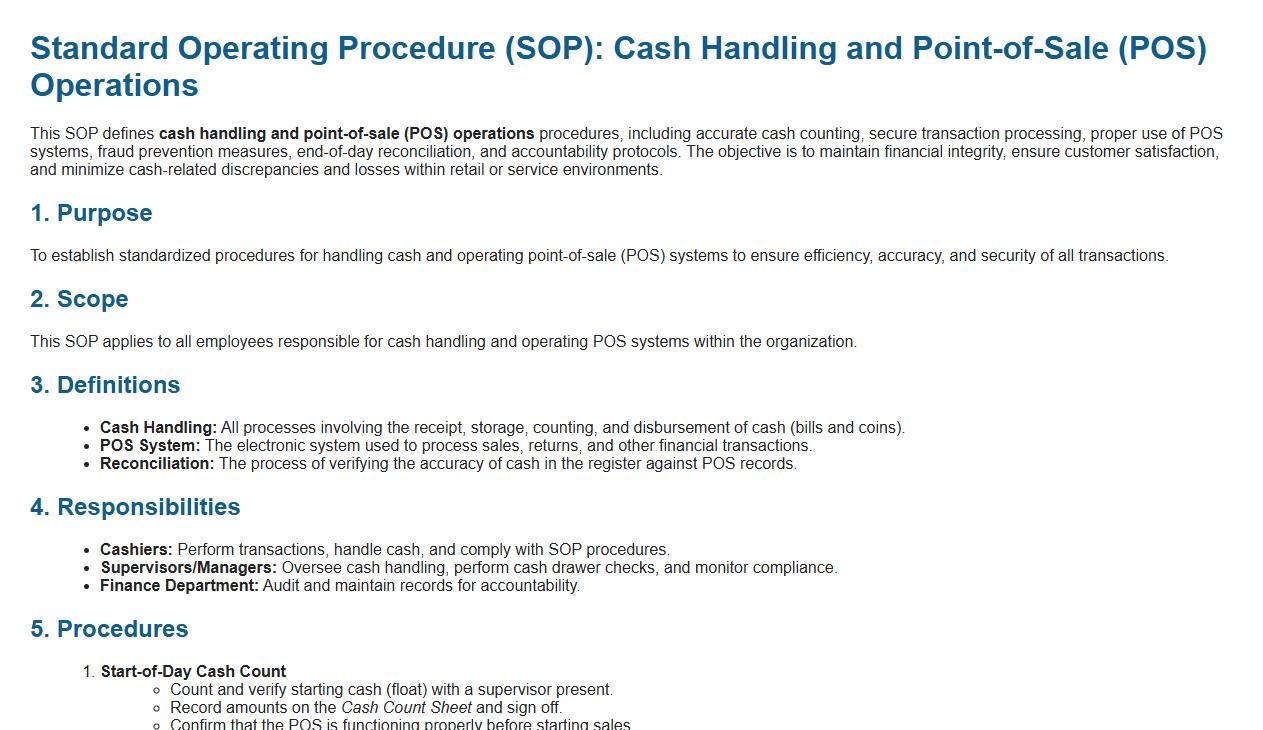
This SOP defines cash handling and point-of-sale (POS) operations procedures, including accurate cash counting, secure transaction processing, proper use of POS systems, fraud prevention measures, end-of-day reconciliation, and accountability protocols. The objective is to maintain financial integrity, ensure customer satisfaction, and minimize cash-related discrepancies and losses within retail or service environments.
Customer service and order taking procedures.
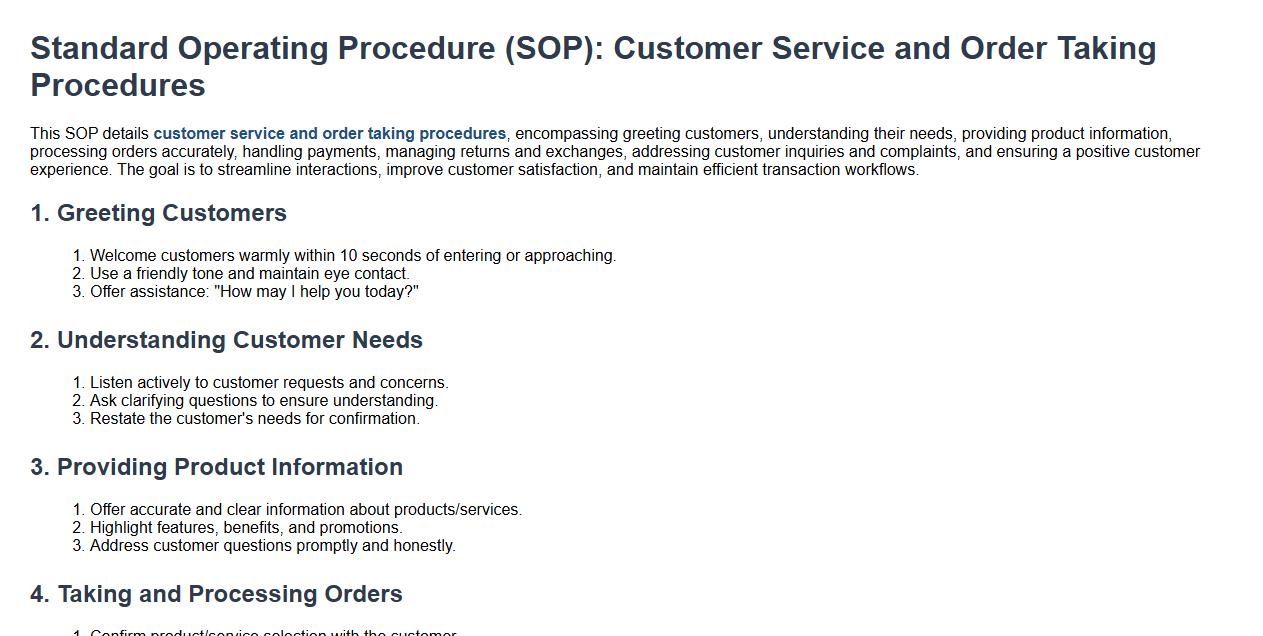
This SOP details customer service and order taking procedures, encompassing greeting customers, understanding their needs, providing product information, processing orders accurately, handling payments, managing returns and exchanges, addressing customer inquiries and complaints, and ensuring a positive customer experience. The goal is to streamline interactions, improve customer satisfaction, and maintain efficient transaction workflows.
Inventory tracking and restocking guidelines.
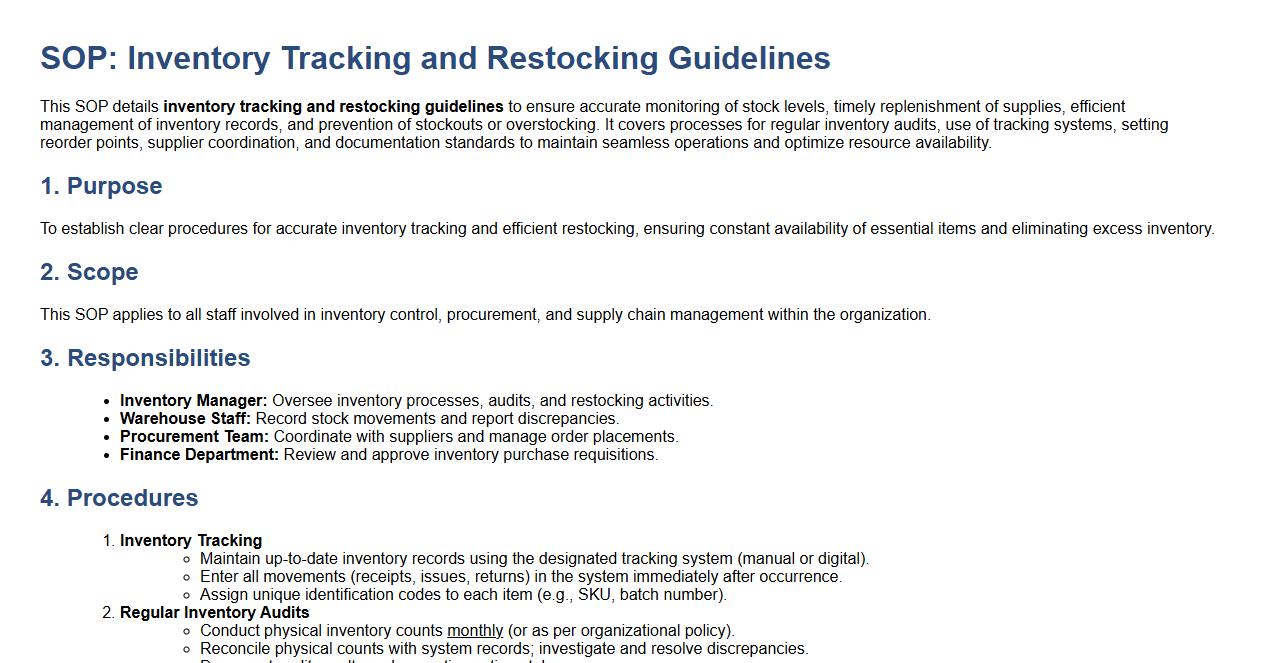
This SOP details inventory tracking and restocking guidelines to ensure accurate monitoring of stock levels, timely replenishment of supplies, efficient management of inventory records, and prevention of stockouts or overstocking. It covers processes for regular inventory audits, use of tracking systems, setting reorder points, supplier coordination, and documentation standards to maintain seamless operations and optimize resource availability.
Waste disposal and recycling processes.
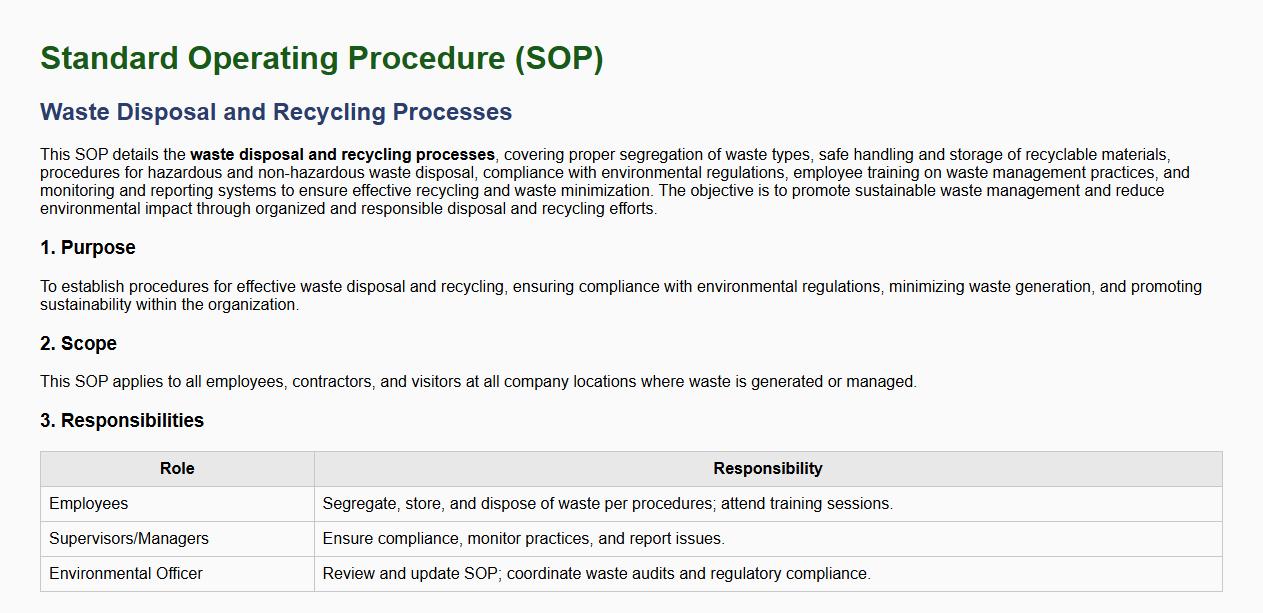
This SOP details the waste disposal and recycling processes, covering proper segregation of waste types, safe handling and storage of recyclable materials, procedures for hazardous and non-hazardous waste disposal, compliance with environmental regulations, employee training on waste management practices, and monitoring and reporting systems to ensure effective recycling and waste minimization. The objective is to promote sustainable waste management and reduce environmental impact through organized and responsible disposal and recycling efforts.
Emergency response and first aid instructions.
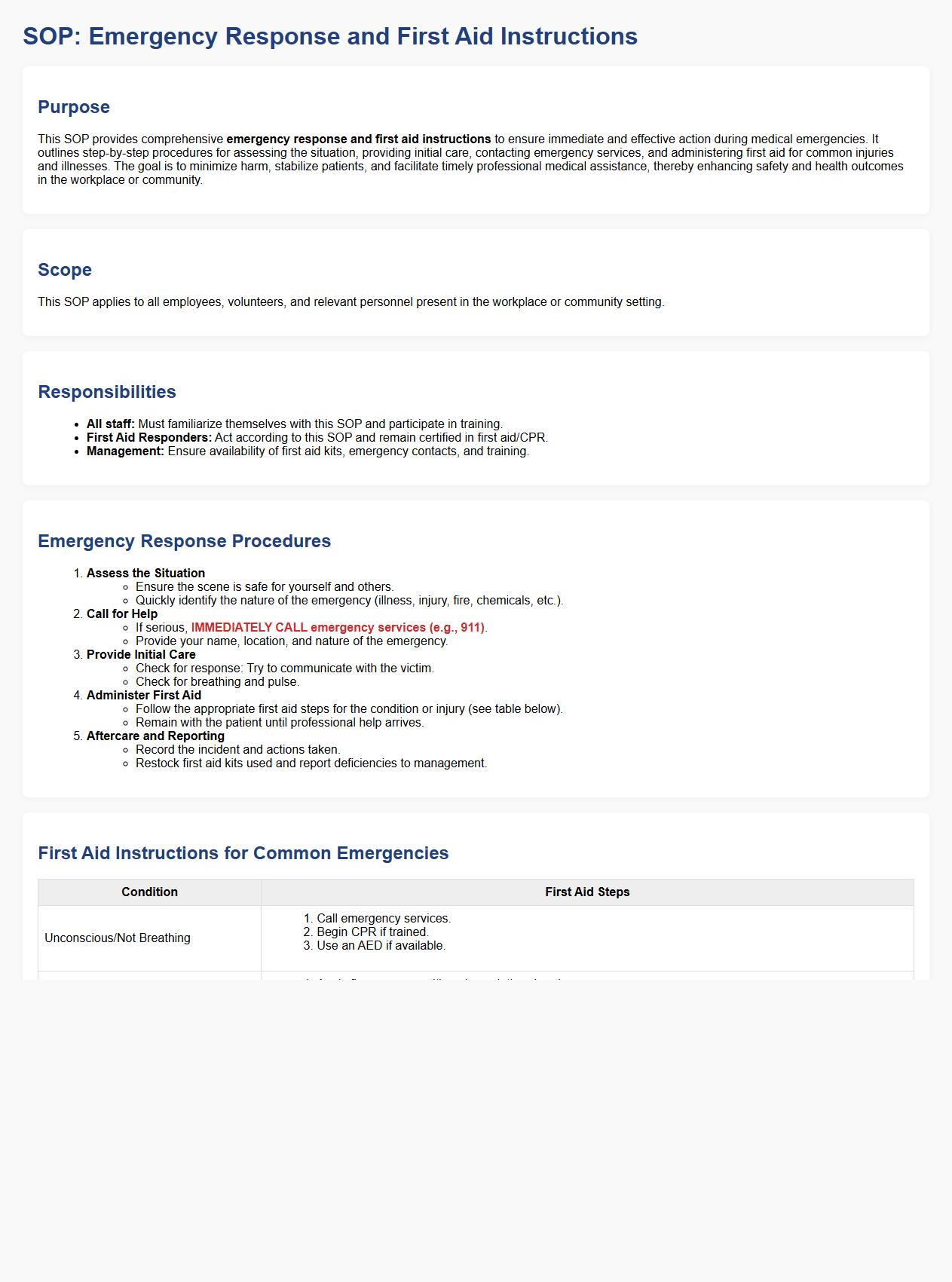
This SOP provides comprehensive emergency response and first aid instructions to ensure immediate and effective action during medical emergencies. It outlines step-by-step procedures for assessing the situation, providing initial care, contacting emergency services, and administering first aid for common injuries and illnesses. The goal is to minimize harm, stabilize patients, and facilitate timely professional medical assistance, thereby enhancing safety and health outcomes in the workplace or community.
Health department compliance and documentation.
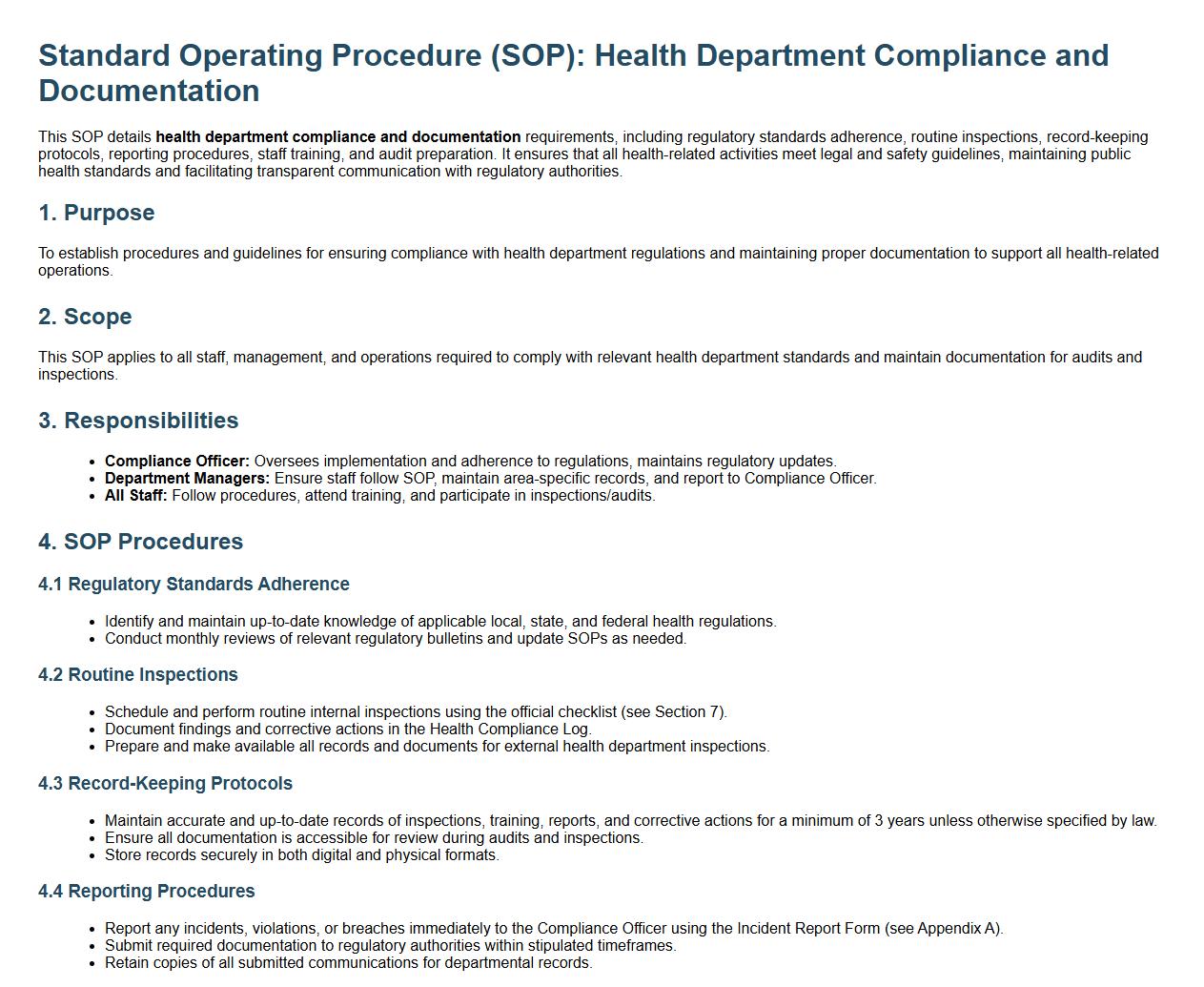
This SOP details health department compliance and documentation requirements, including regulatory standards adherence, routine inspections, record-keeping protocols, reporting procedures, staff training, and audit preparation. It ensures that all health-related activities meet legal and safety guidelines, maintaining public health standards and facilitating transparent communication with regulatory authorities.
What critical steps are outlined in the SOP for food safety and hygiene in daily food truck operations?
The SOP emphasizes the importance of strict personal hygiene practices, including regular hand washing and wearing clean uniforms. It outlines procedures for proper food handling to prevent cross-contamination and maintain safe temperatures. Regular sanitation of work surfaces and utensils is mandated to ensure a clean environment during daily operations.
How does the SOP define proper procedures for equipment cleaning and sanitization?
The SOP details specific cleaning schedules and the use of approved sanitizing agents for all equipment. It requires thorough disassembly of equipment for deep cleaning, followed by reassembly once fully dried. Documentation of cleaning activities ensures consistent equipment maintenance and compliance.
What emergency protocols are included in the SOP for power outages or equipment failure?
In case of power outages, the SOP instructs immediate use of backup power sources if available or safe disposal of perishable foods. Equipment failure protocols include prompt notification of maintenance staff and switching to manual operations if possible. These procedures aim to minimize health risks and operational downtime.
How does the SOP specify staff roles and responsibilities during peak business hours?
The SOP assigns clear roles to each team member, such as cash handling, food preparation, and customer service. It emphasizes efficient communication and teamwork to manage high customer volume smoothly. Adherence to these roles ensures consistent service quality and operational flow.
What inventory management processes are detailed in the SOP to ensure consistent food and supply availability?
The SOP outlines regular inventory checks with detailed recording to maintain accurate stock levels. It mandates timely reordering based on usage rates and anticipated demand to prevent shortages. Effective inventory management supports uninterrupted food preparation and customer satisfaction.