
A SOP Template for Event Management Services provides a structured framework to ensure consistent and efficient execution of events. It outlines key procedures such as planning, coordination, risk management, and post-event evaluation. Using this template helps event managers maintain quality standards and streamline communication across teams.
Event planning and timeline development.
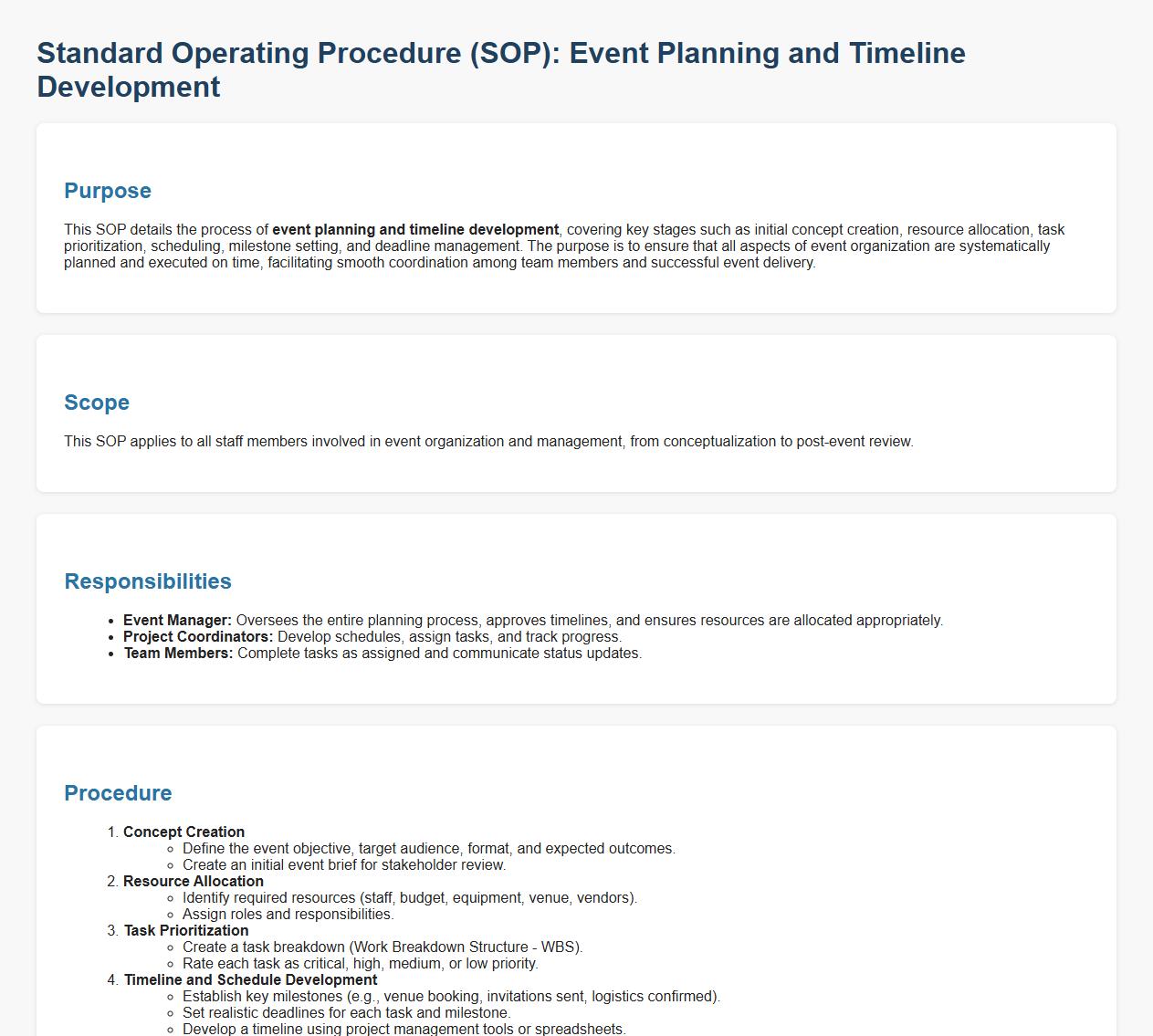
This SOP details the process of event planning and timeline development, covering key stages such as initial concept creation, resource allocation, task prioritization, scheduling, milestone setting, and deadline management. The purpose is to ensure that all aspects of event organization are systematically planned and executed on time, facilitating smooth coordination among team members and successful event delivery.
Client consultation and requirements gathering.
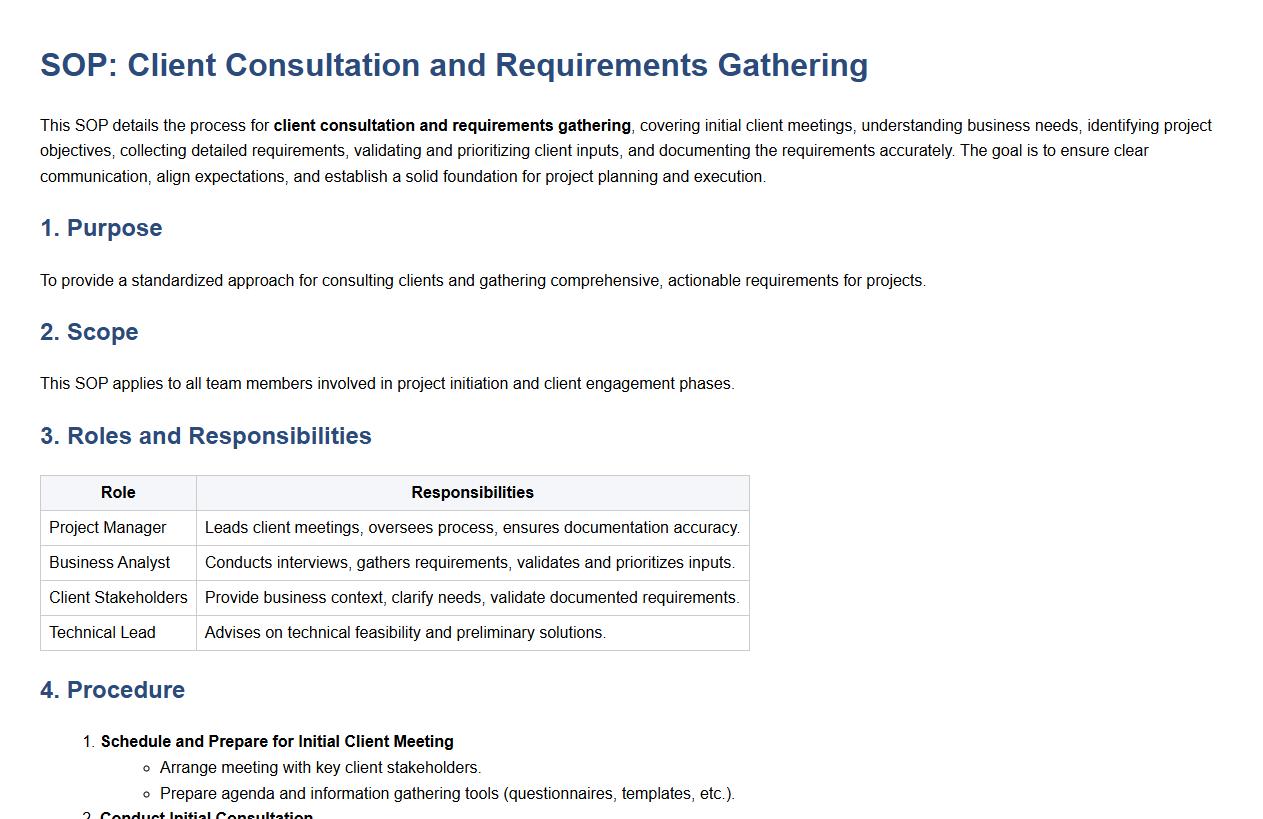
This SOP details the process for client consultation and requirements gathering, covering initial client meetings, understanding business needs, identifying project objectives, collecting detailed requirements, validating and prioritizing client inputs, and documenting the requirements accurately. The goal is to ensure clear communication, align expectations, and establish a solid foundation for project planning and execution.
Vendor selection and contract management.
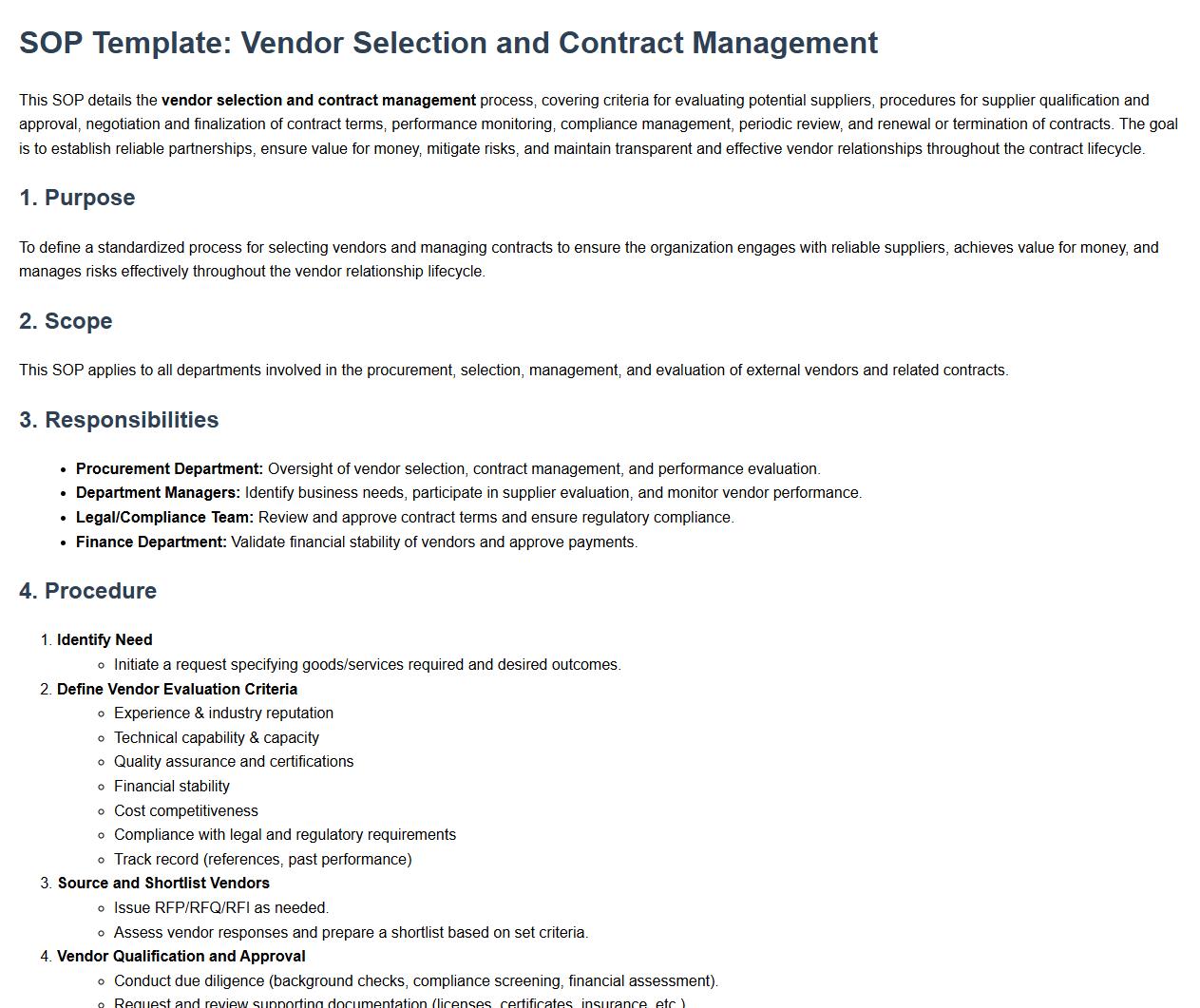
This SOP details the vendor selection and contract management process, covering criteria for evaluating potential suppliers, procedures for supplier qualification and approval, negotiation and finalization of contract terms, performance monitoring, compliance management, periodic review, and renewal or termination of contracts. The goal is to establish reliable partnerships, ensure value for money, mitigate risks, and maintain transparent and effective vendor relationships throughout the contract lifecycle.
Venue inspection and booking procedures.
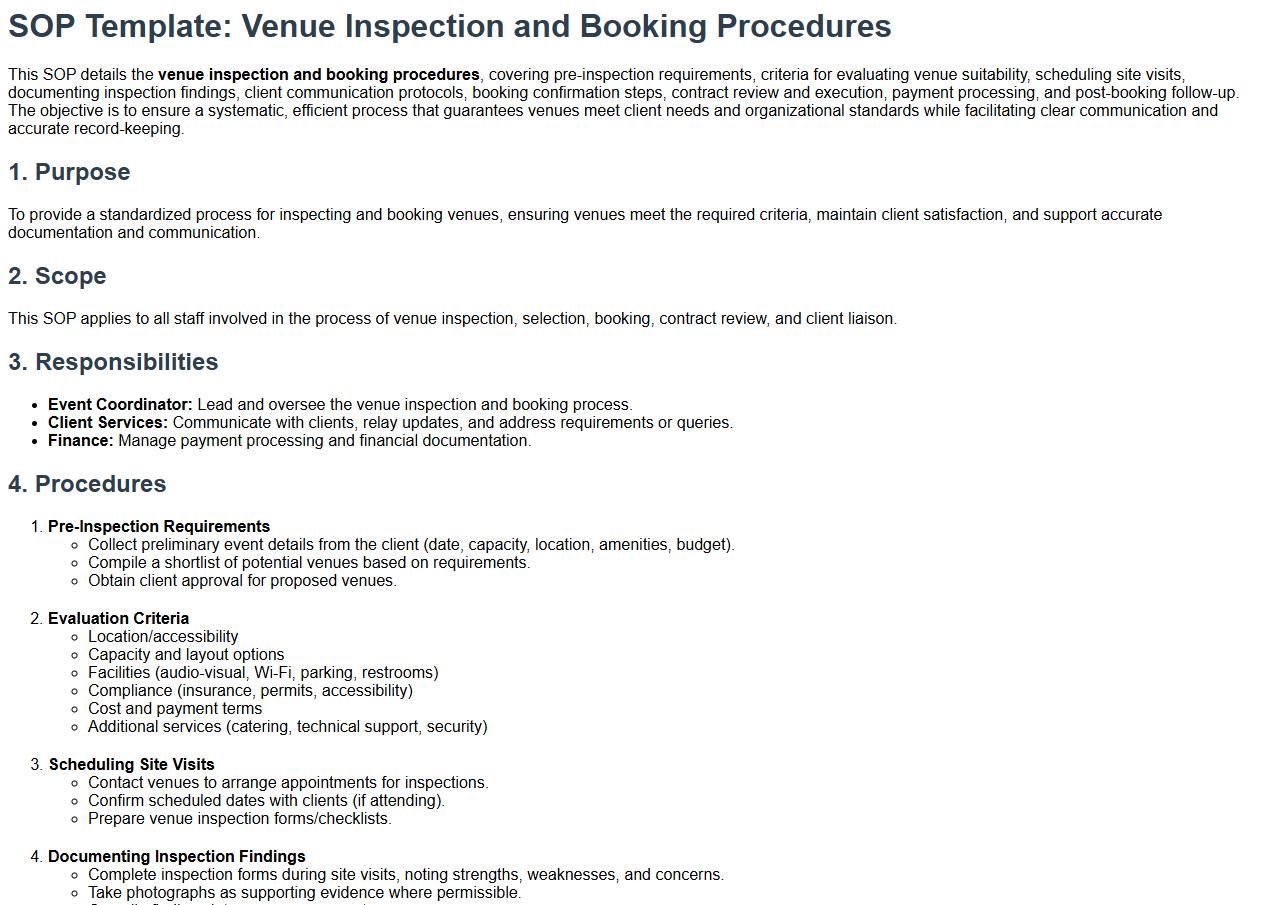
This SOP details the venue inspection and booking procedures, covering pre-inspection requirements, criteria for evaluating venue suitability, scheduling site visits, documenting inspection findings, client communication protocols, booking confirmation steps, contract review and execution, payment processing, and post-booking follow-up. The objective is to ensure a systematic, efficient process that guarantees venues meet client needs and organizational standards while facilitating clear communication and accurate record-keeping.
Budget preparation and expense tracking.
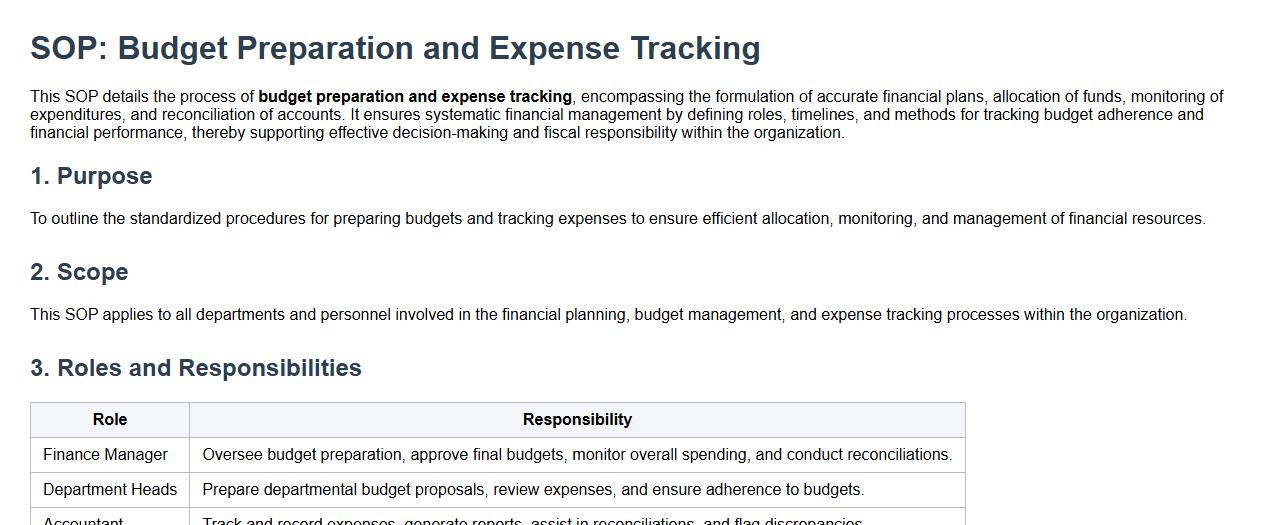
This SOP details the process of budget preparation and expense tracking, encompassing the formulation of accurate financial plans, allocation of funds, monitoring of expenditures, and reconciliation of accounts. It ensures systematic financial management by defining roles, timelines, and methods for tracking budget adherence and financial performance, thereby supporting effective decision-making and fiscal responsibility within the organization.
Risk assessment and contingency planning.
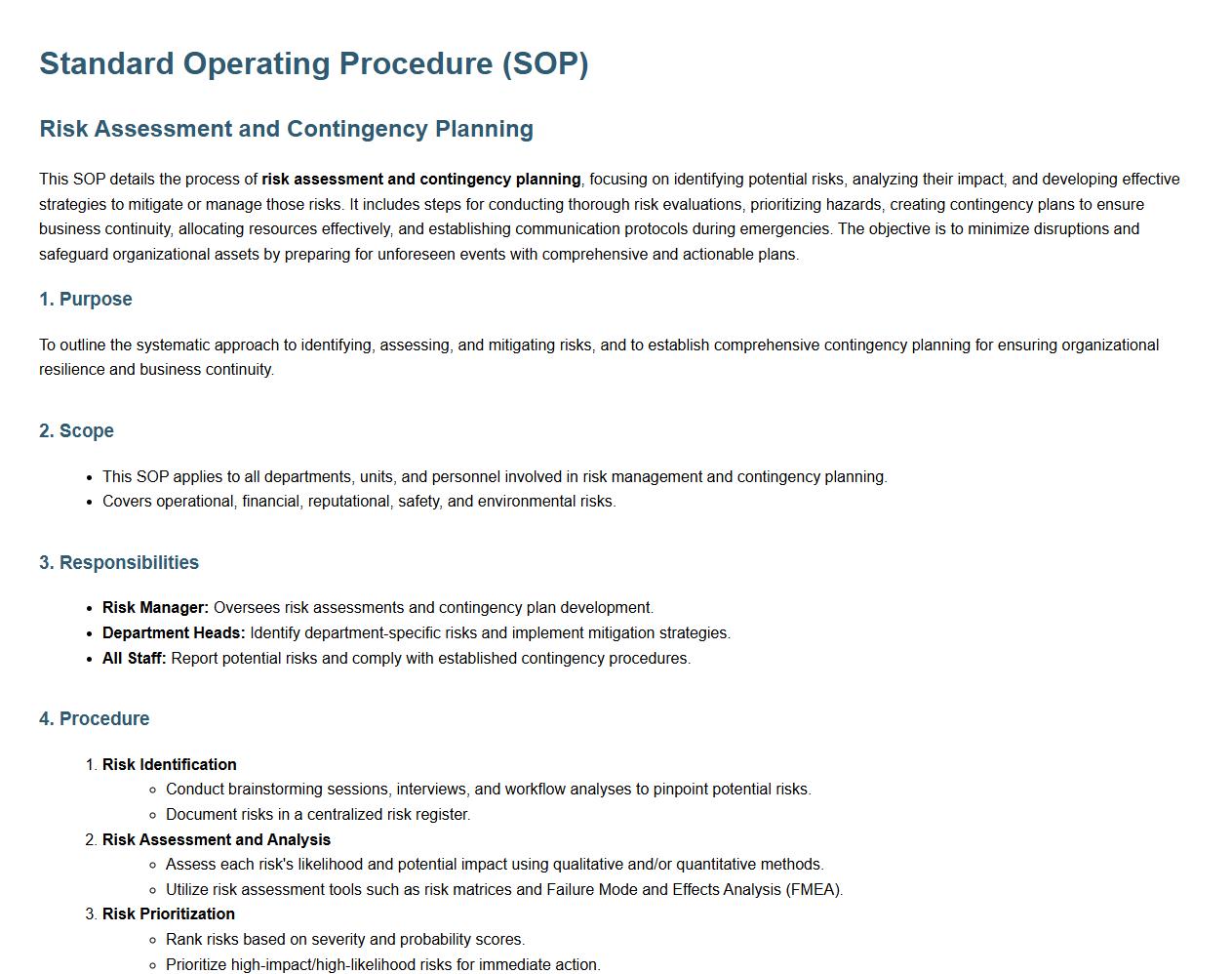
This SOP details the process of risk assessment and contingency planning, focusing on identifying potential risks, analyzing their impact, and developing effective strategies to mitigate or manage those risks. It includes steps for conducting thorough risk evaluations, prioritizing hazards, creating contingency plans to ensure business continuity, allocating resources effectively, and establishing communication protocols during emergencies. The objective is to minimize disruptions and safeguard organizational assets by preparing for unforeseen events with comprehensive and actionable plans.
On-site event coordination and logistics.
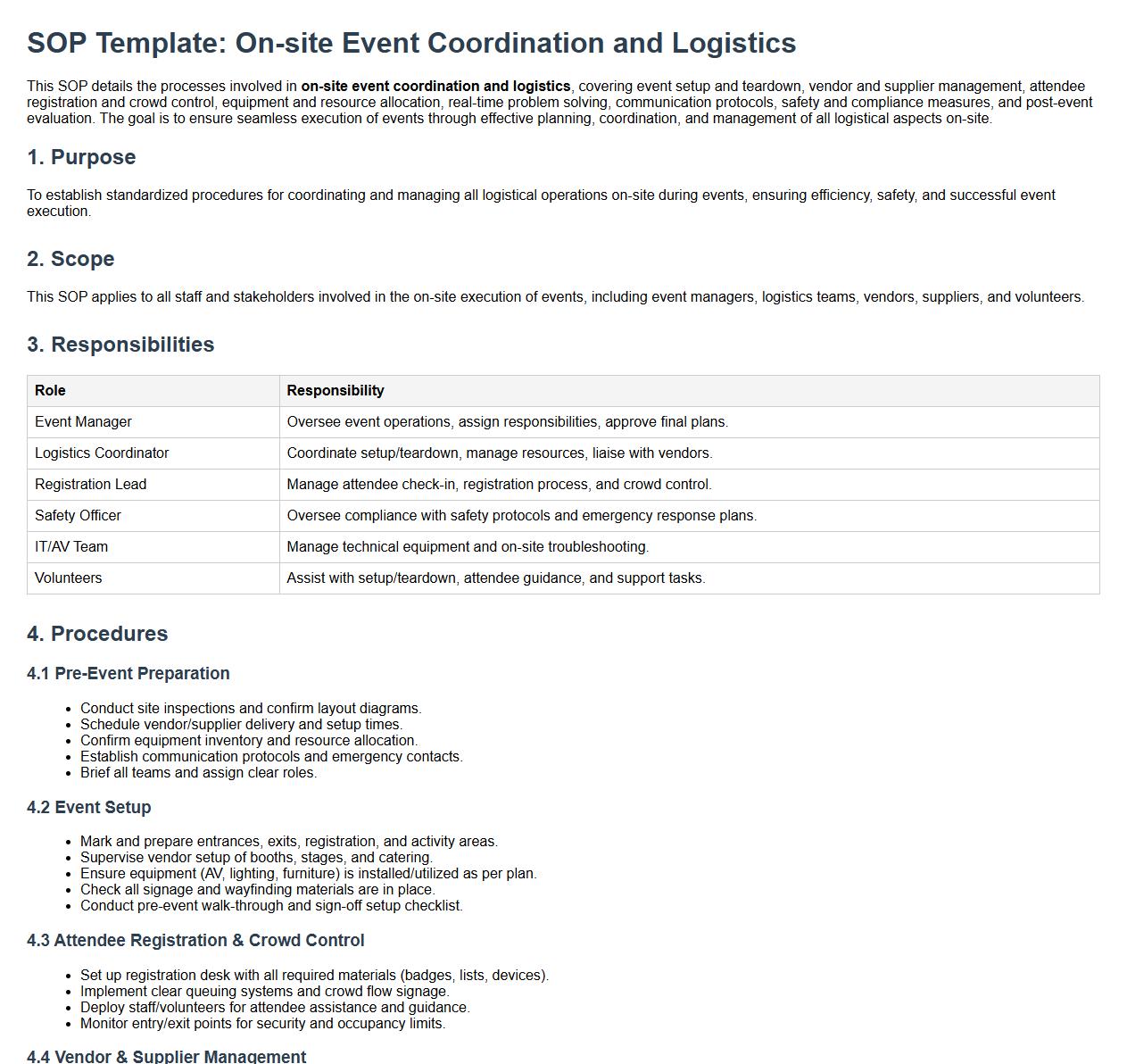
This SOP details the processes involved in on-site event coordination and logistics, covering event setup and teardown, vendor and supplier management, attendee registration and crowd control, equipment and resource allocation, real-time problem solving, communication protocols, safety and compliance measures, and post-event evaluation. The goal is to ensure seamless execution of events through effective planning, coordination, and management of all logistical aspects on-site.
Guest registration and attendee management.
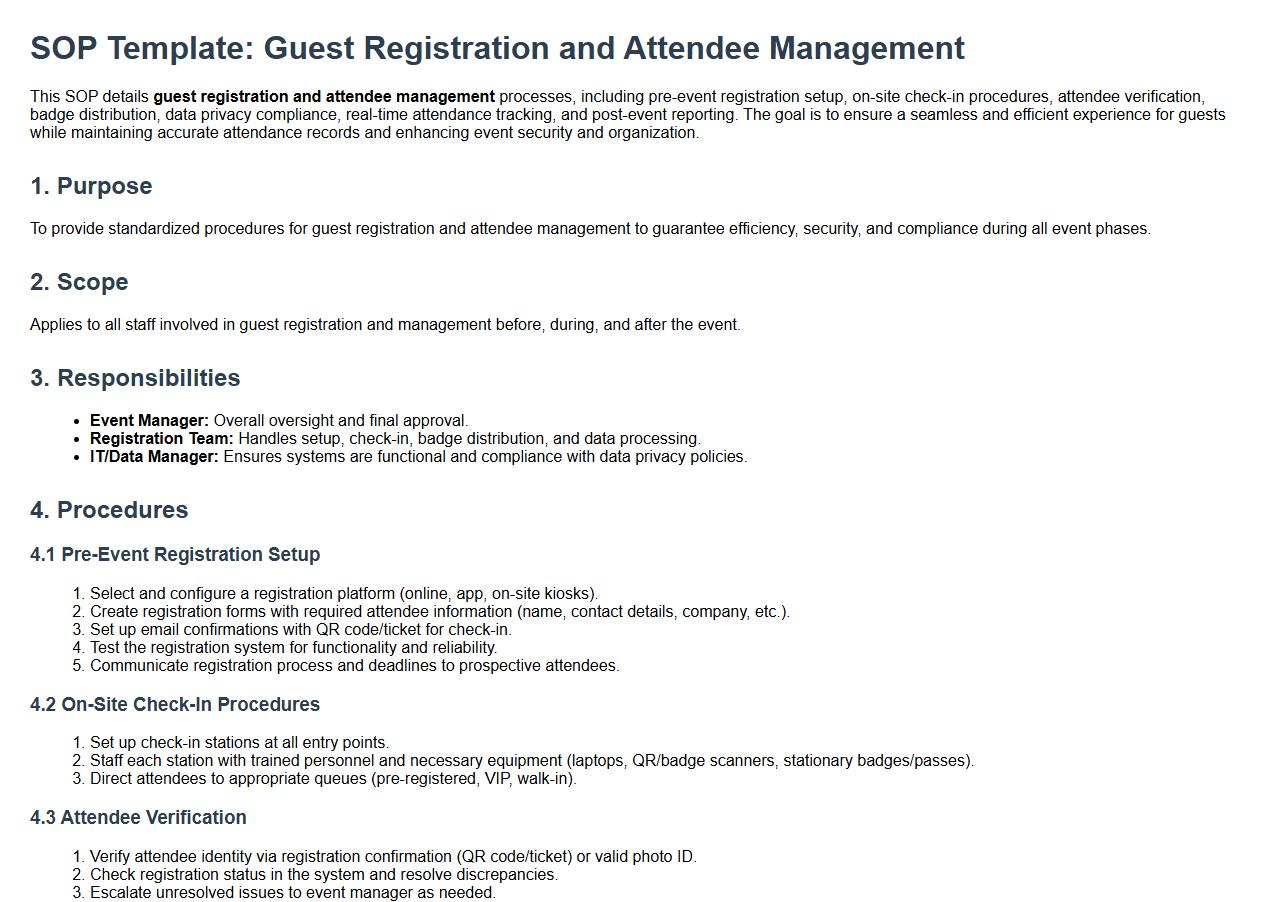
This SOP details guest registration and attendee management processes, including pre-event registration setup, on-site check-in procedures, attendee verification, badge distribution, data privacy compliance, real-time attendance tracking, and post-event reporting. The goal is to ensure a seamless and efficient experience for guests while maintaining accurate attendance records and enhancing event security and organization.
Audio-visual and technical setup procedures.
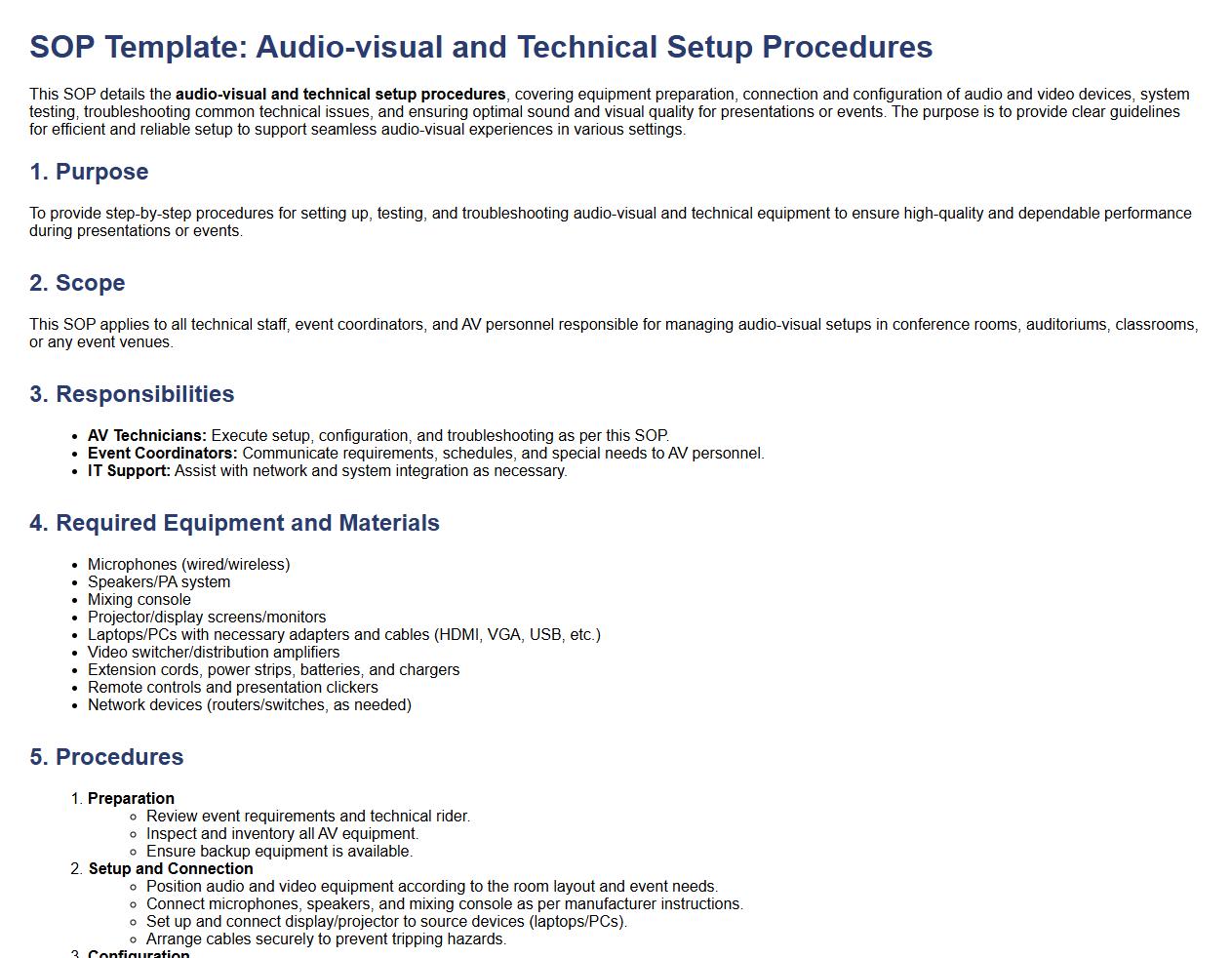
This SOP details the audio-visual and technical setup procedures, covering equipment preparation, connection and configuration of audio and video devices, system testing, troubleshooting common technical issues, and ensuring optimal sound and visual quality for presentations or events. The purpose is to provide clear guidelines for efficient and reliable setup to support seamless audio-visual experiences in various settings.
Post-event evaluation and feedback collection.
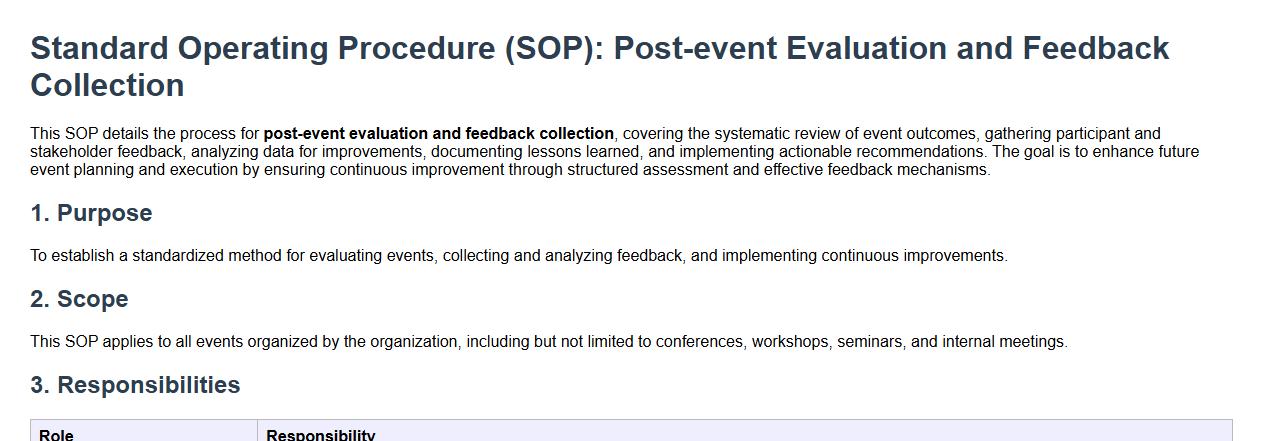
This SOP details the process for post-event evaluation and feedback collection, covering the systematic review of event outcomes, gathering participant and stakeholder feedback, analyzing data for improvements, documenting lessons learned, and implementing actionable recommendations. The goal is to enhance future event planning and execution by ensuring continuous improvement through structured assessment and effective feedback mechanisms.
What are the key objectives outlined in the SOP for Event Management Services?
The key objectives in the SOP focus on ensuring seamless coordination and successful delivery of events. It emphasizes maintaining high quality standards and optimizing resources to enhance attendee experience. Additionally, the SOP aims to establish clear communication channels among all stakeholders.
Which roles and responsibilities are defined for event planning and execution?
The SOP clearly defines roles such as event coordinators, vendors, and logistics teams to ensure smooth event planning and execution. Each role carries specific responsibilities to maintain accountability and efficiency during the process. This structured approach helps minimize errors and improve collaboration.
What standard procedures must be followed for vendor selection and management?
Vendor selection follows a standardized procedure that includes evaluating credentials, negotiating contracts, and verifying compliance with quality standards. The SOP also outlines ongoing vendor management practices to ensure timely delivery and service excellence. Regular performance reviews are mandated to maintain high standards.
How are risk assessment and contingency planning addressed in the SOP?
The SOP mandates a comprehensive risk assessment prior to event execution to identify potential issues and hazards. It incorporates detailed contingency planning to quickly mitigate any unforeseen disruptions during the event. This preparation ensures minimal impact on event success and safety.
What documentation and reporting requirements are mandated throughout the event lifecycle?
The SOP requires thorough documentation at every stage, including planning, execution, and post-event analysis. Regular reporting on progress, issues, and financials ensures transparency and accountability. These records are essential for continuous improvement and stakeholder communication.