

A SOP Template for Service Quality Assurance provides a structured framework to ensure consistent delivery of high-quality services. It outlines clear procedures, roles, and standards to monitor and improve service performance effectively. This template helps organizations maintain compliance and enhance customer satisfaction through systematic quality checks.
Service request intake and logging procedures.
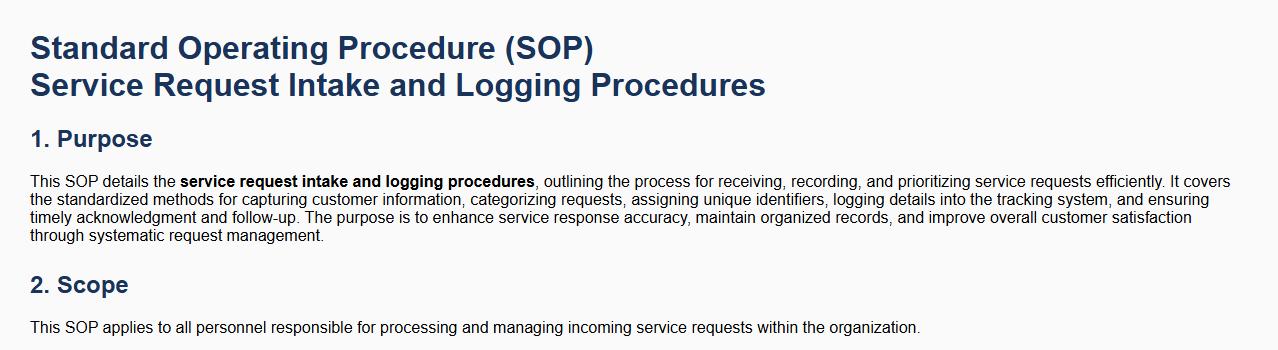
This SOP details the service request intake and logging procedures, outlining the process for receiving, recording, and prioritizing service requests efficiently. It covers the standardized methods for capturing customer information, categorizing requests, assigning unique identifiers, logging details into the tracking system, and ensuring timely acknowledgment and follow-up. The purpose is to enhance service response accuracy, maintain organized records, and improve overall customer satisfaction through systematic request management.
Customer communication protocols and response timelines.
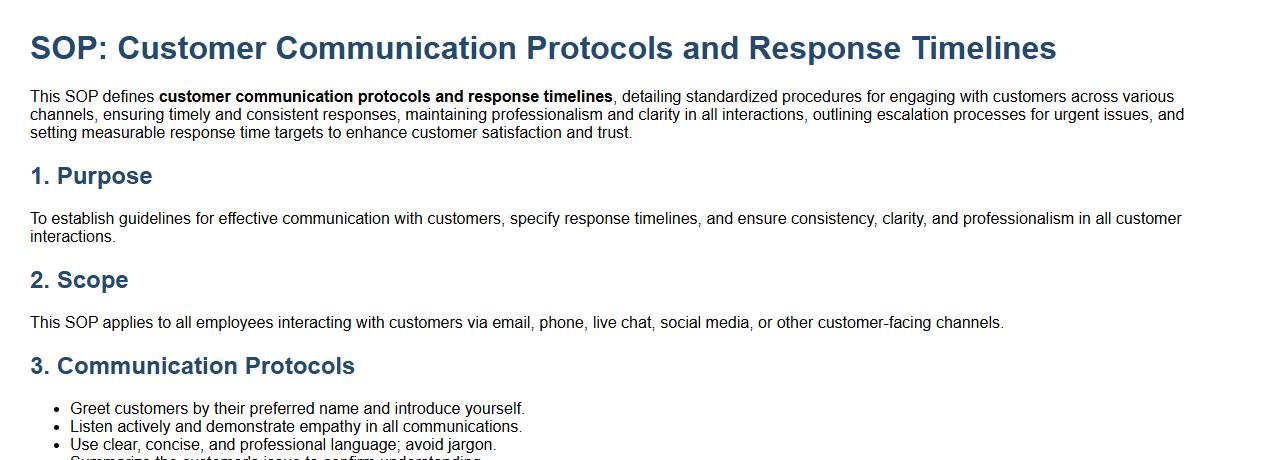
This SOP defines customer communication protocols and response timelines, detailing standardized procedures for engaging with customers across various channels, ensuring timely and consistent responses, maintaining professionalism and clarity in all interactions, outlining escalation processes for urgent issues, and setting measurable response time targets to enhance customer satisfaction and trust.
Service delivery process and checklist.
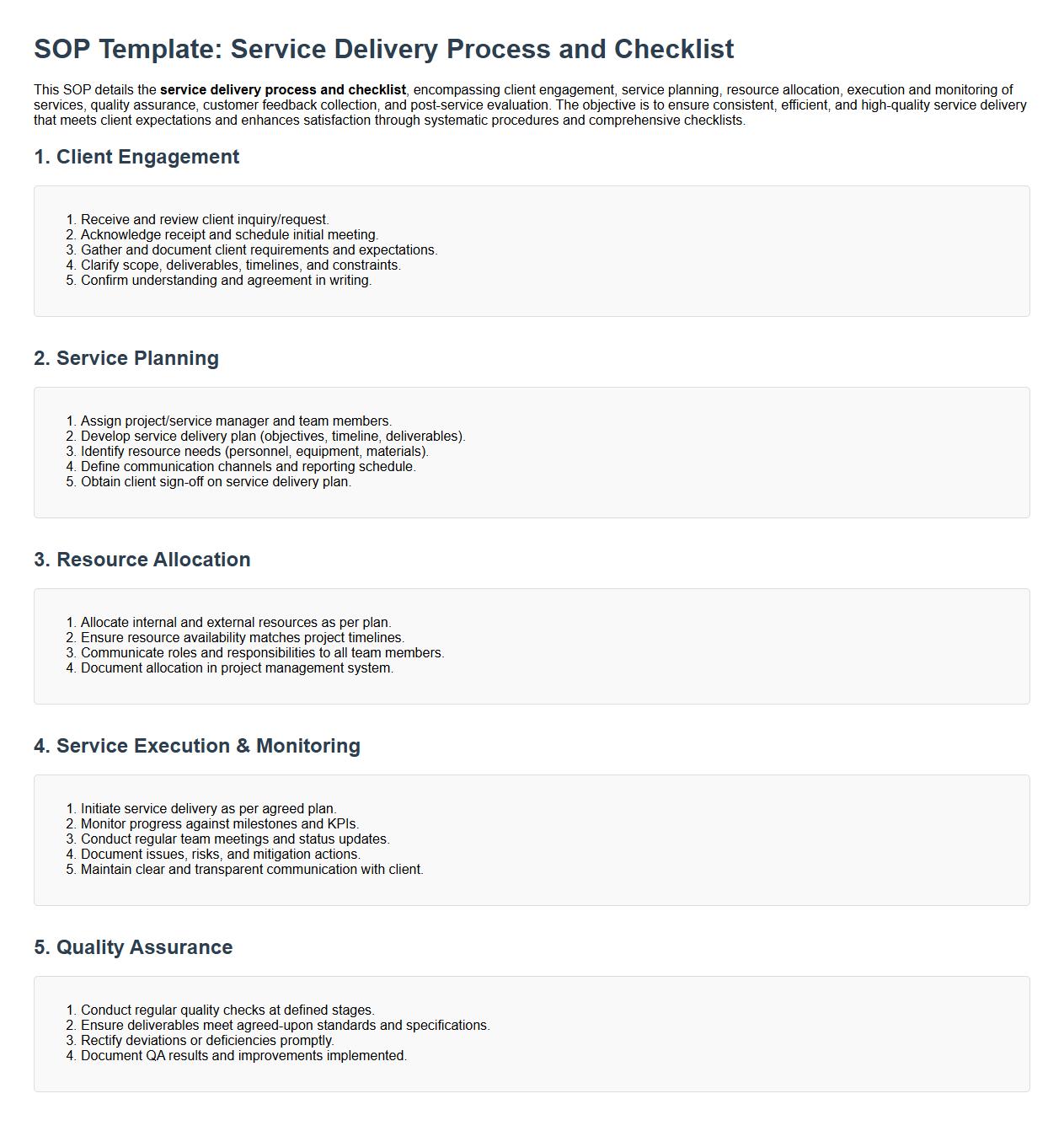
This SOP details the service delivery process and checklist, encompassing client engagement, service planning, resource allocation, execution and monitoring of services, quality assurance, customer feedback collection, and post-service evaluation. The objective is to ensure consistent, efficient, and high-quality service delivery that meets client expectations and enhances satisfaction through systematic procedures and comprehensive checklists.
Employee roles and responsibility assignment.
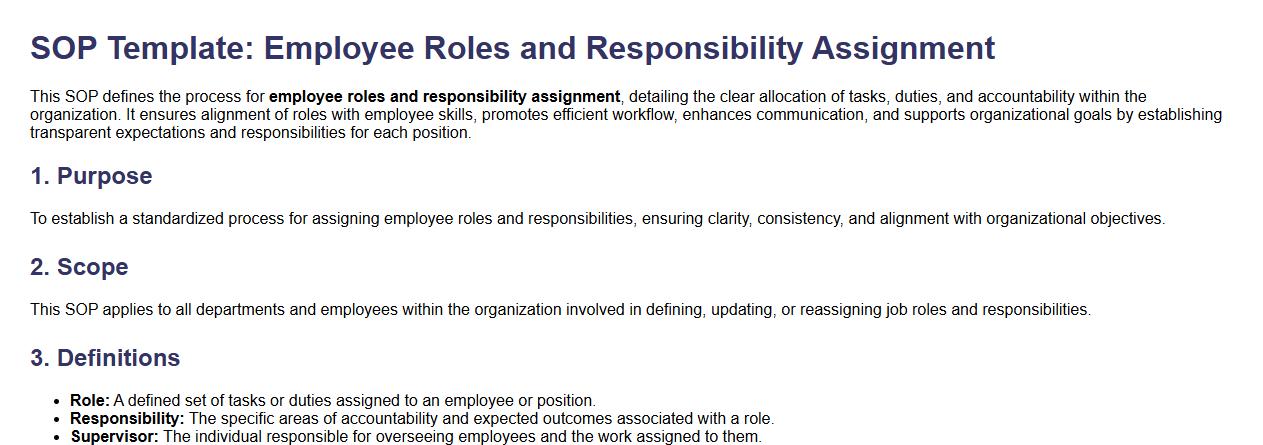
This SOP defines the process for employee roles and responsibility assignment, detailing the clear allocation of tasks, duties, and accountability within the organization. It ensures alignment of roles with employee skills, promotes efficient workflow, enhances communication, and supports organizational goals by establishing transparent expectations and responsibilities for each position.
Quality inspection and approval workflow.
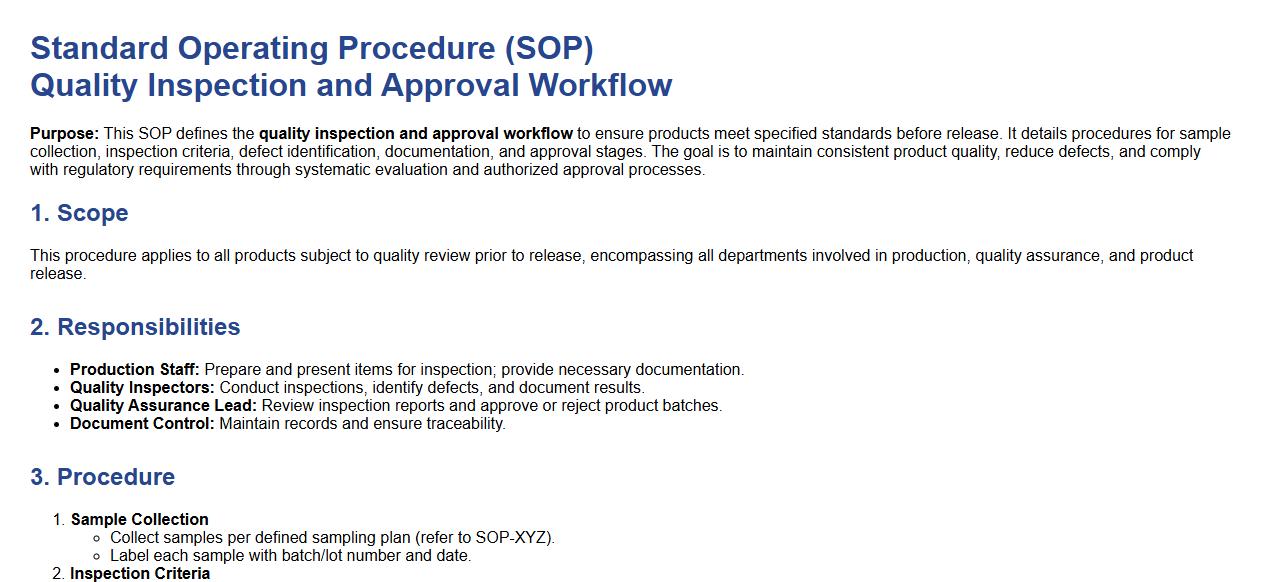
This SOP defines the quality inspection and approval workflow to ensure products meet specified standards before release. It details procedures for sample collection, inspection criteria, defect identification, documentation, and approval stages. The goal is to maintain consistent product quality, reduce defects, and comply with regulatory requirements through systematic evaluation and authorized approval processes.
Customer feedback collection and analysis methods.
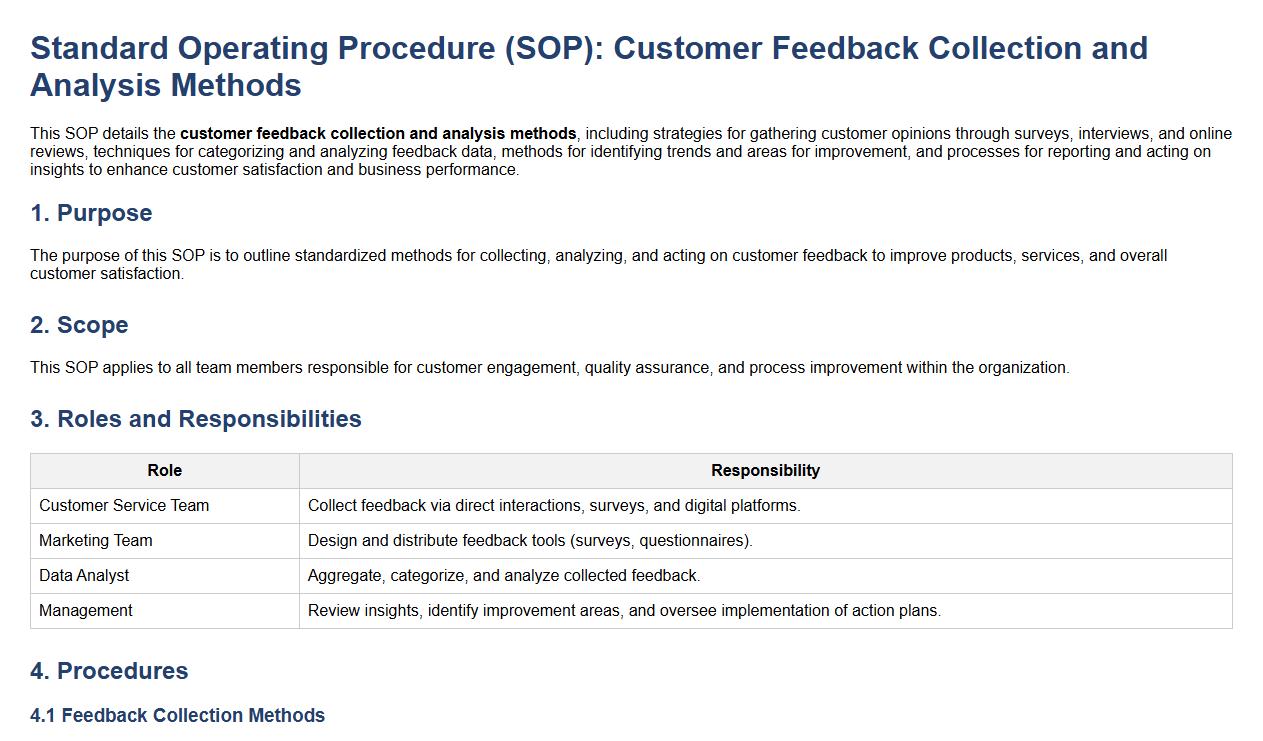
This SOP details the customer feedback collection and analysis methods, including strategies for gathering customer opinions through surveys, interviews, and online reviews, techniques for categorizing and analyzing feedback data, methods for identifying trends and areas for improvement, and processes for reporting and acting on insights to enhance customer satisfaction and business performance.
Non-conformance reporting and corrective action process.
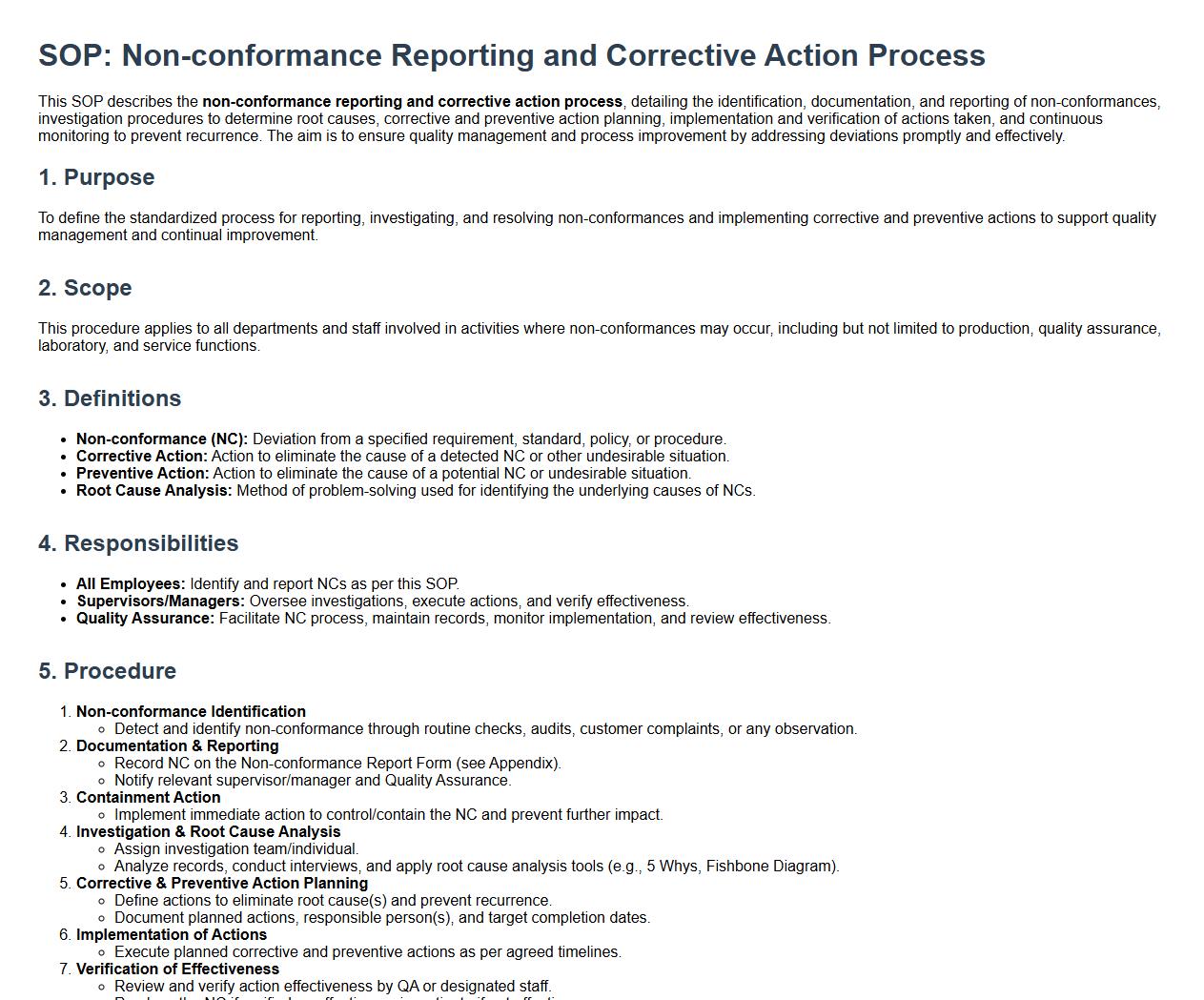
This SOP describes the non-conformance reporting and corrective action process, detailing the identification, documentation, and reporting of non-conformances, investigation procedures to determine root causes, corrective and preventive action planning, implementation and verification of actions taken, and continuous monitoring to prevent recurrence. The aim is to ensure quality management and process improvement by addressing deviations promptly and effectively.
Service completion documentation and sign-off.
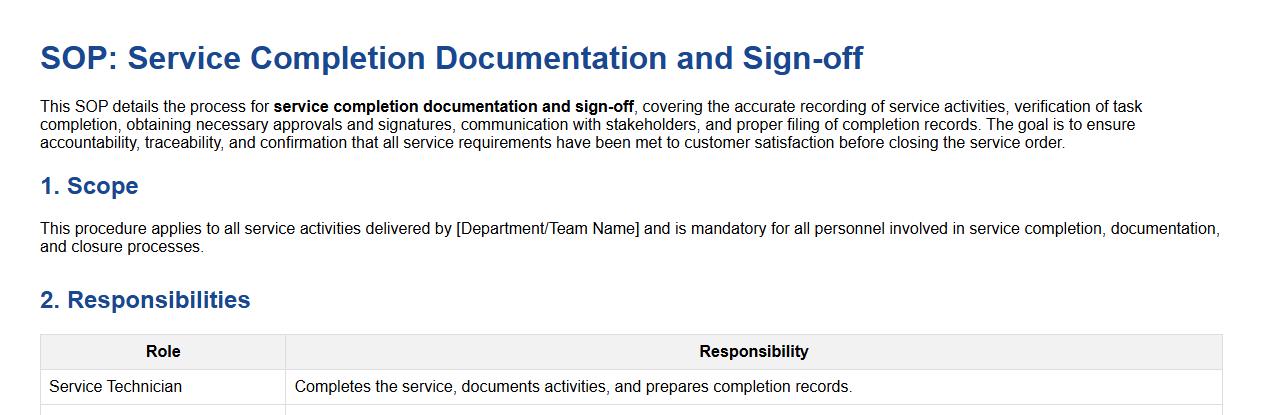
This SOP details the process for service completion documentation and sign-off, covering the accurate recording of service activities, verification of task completion, obtaining necessary approvals and signatures, communication with stakeholders, and proper filing of completion records. The goal is to ensure accountability, traceability, and confirmation that all service requirements have been met to customer satisfaction before closing the service order.
Regular training and competency assessment schedule.
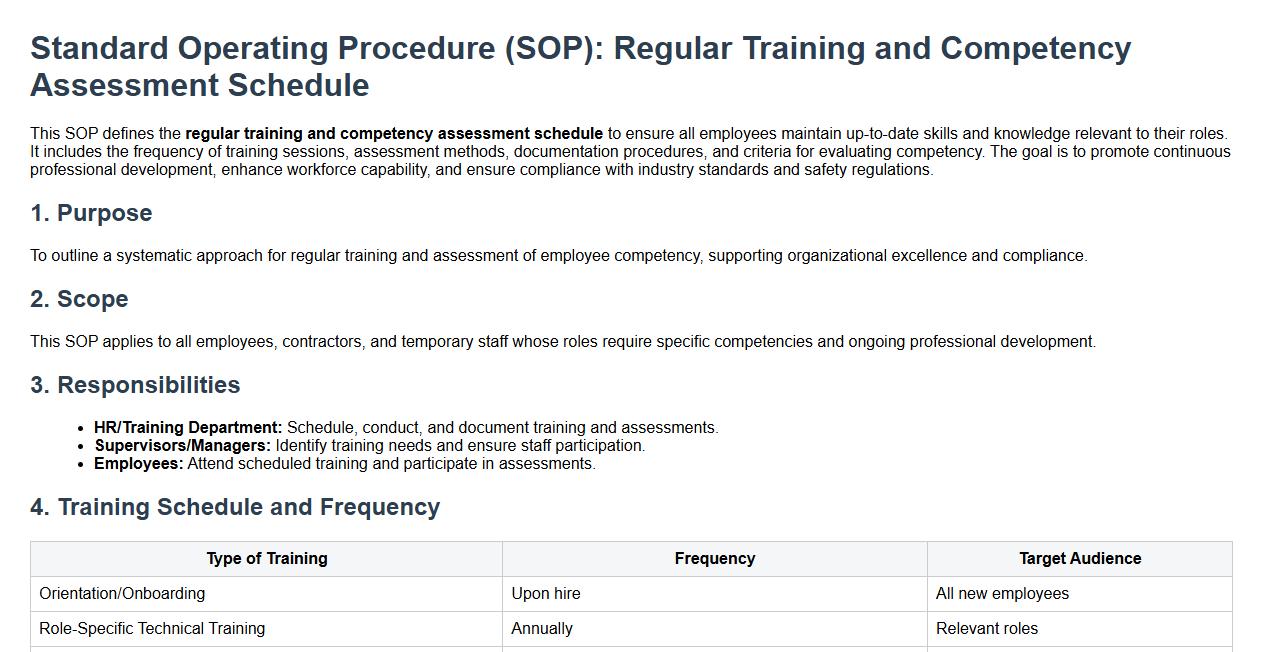
This SOP defines the regular training and competency assessment schedule to ensure all employees maintain up-to-date skills and knowledge relevant to their roles. It includes the frequency of training sessions, assessment methods, documentation procedures, and criteria for evaluating competency. The goal is to promote continuous professional development, enhance workforce capability, and ensure compliance with industry standards and safety regulations.
Continuous improvement and review meetings.
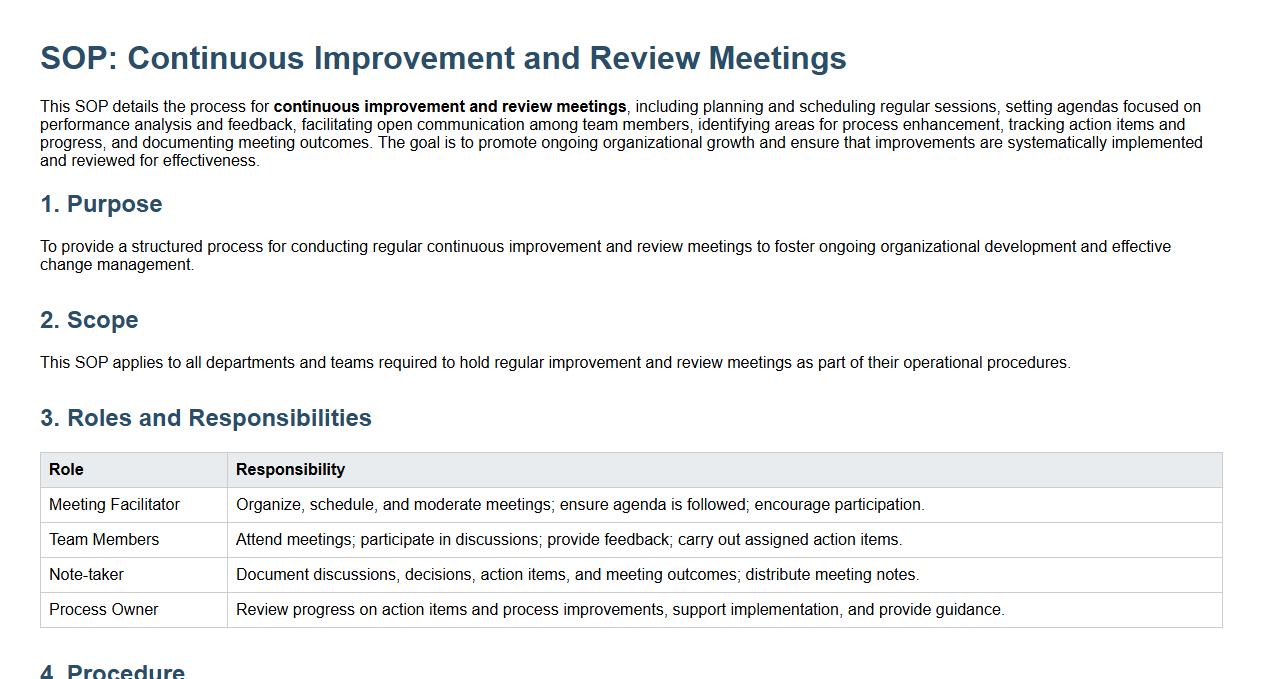
This SOP details the process for continuous improvement and review meetings, including planning and scheduling regular sessions, setting agendas focused on performance analysis and feedback, facilitating open communication among team members, identifying areas for process enhancement, tracking action items and progress, and documenting meeting outcomes. The goal is to promote ongoing organizational growth and ensure that improvements are systematically implemented and reviewed for effectiveness.
What criteria define "service quality" in the context of this SOP?
The service quality in this SOP is defined by specific performance metrics such as accuracy, timeliness, and customer satisfaction. These criteria ensure that all services meet the pre-established standards consistently. Adherence to these benchmarks helps maintain high levels of efficiency and reliability.
Which procedures must be followed to monitor and evaluate service quality performance?
Monitoring and evaluation of service quality performance are conducted through regular audits, feedback analysis, and performance reviews. The SOP mandates systematic data collection and use of key performance indicators for comprehensive assessment. Continuous monitoring enables timely identification of deviations and corrective actions.
What are the key roles and responsibilities outlined for executing service quality assurance measures?
The SOP assigns specific roles and responsibilities to personnel such as quality managers, supervisors, and auditors. Each role is tasked with overseeing adherence to quality protocols and implementing improvement plans. Clear responsibilities ensure accountability throughout the quality assurance process.
What escalation steps are specified in case of non-conformance with service quality standards?
In the event of non-conformance, the SOP outlines a defined escalation process involving immediate reporting to management and triggering corrective actions. The severity of issues determines the level of escalation required to resolve non-compliances. This ensures prompt resolution and minimizes impact on service delivery.
How does the SOP document define the documentation and reporting requirements for quality assurance activities?
The SOP mandates detailed documentation and reporting of all quality assurance activities, including audit findings, corrective actions, and performance metrics. Proper record-keeping facilitates transparency and enables traceability of quality interventions. Regular reports are required to support continual improvement and compliance verification.