

A SOP Template for Staff Training & Development provides a structured framework to standardize employee learning processes, ensuring consistency and efficiency. It outlines detailed procedures for onboarding, skill enhancement, and performance evaluation, facilitating continuous professional growth. This template helps organizations maintain clear guidelines and measurable outcomes in their training programs.
Training needs assessment procedures.
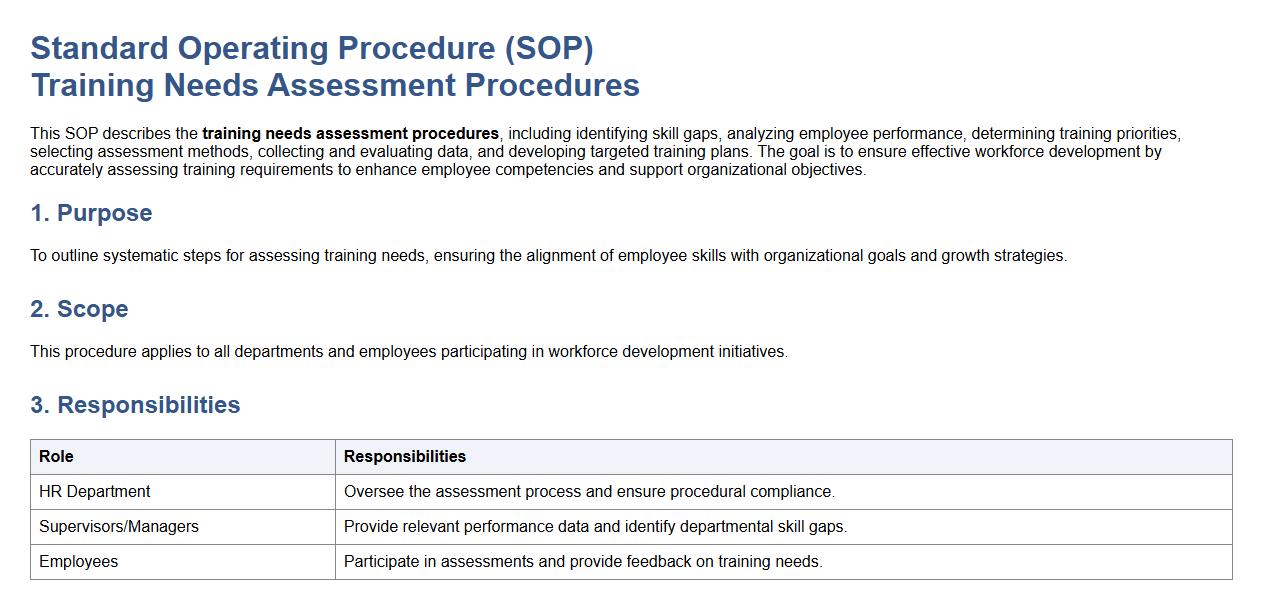
This SOP describes the training needs assessment procedures, including identifying skill gaps, analyzing employee performance, determining training priorities, selecting assessment methods, collecting and evaluating data, and developing targeted training plans. The goal is to ensure effective workforce development by accurately assessing training requirements to enhance employee competencies and support organizational objectives.
Staff induction and onboarding processes.
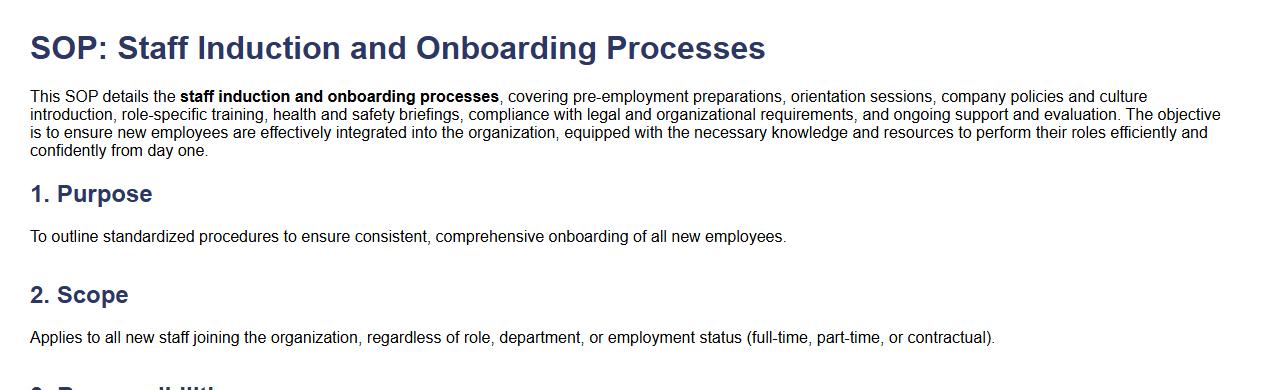
This SOP details the staff induction and onboarding processes, covering pre-employment preparations, orientation sessions, company policies and culture introduction, role-specific training, health and safety briefings, compliance with legal and organizational requirements, and ongoing support and evaluation. The objective is to ensure new employees are effectively integrated into the organization, equipped with the necessary knowledge and resources to perform their roles efficiently and confidently from day one.
Scheduling and documentation of training sessions.
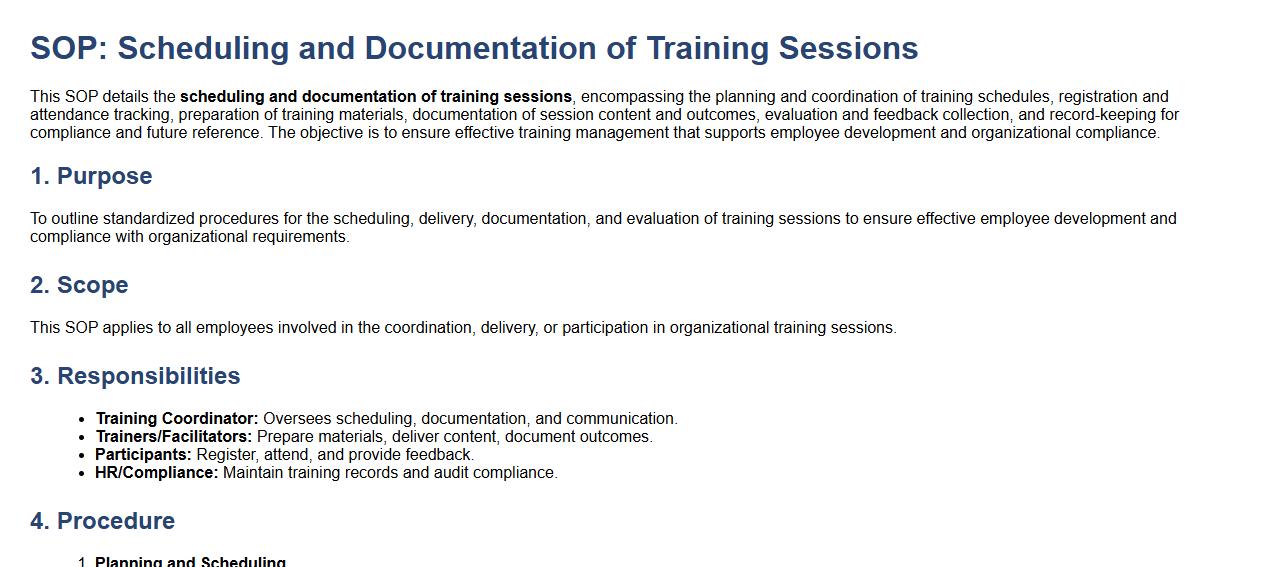
This SOP details the scheduling and documentation of training sessions, encompassing the planning and coordination of training schedules, registration and attendance tracking, preparation of training materials, documentation of session content and outcomes, evaluation and feedback collection, and record-keeping for compliance and future reference. The objective is to ensure effective training management that supports employee development and organizational compliance.
Selection criteria for internal and external trainers.
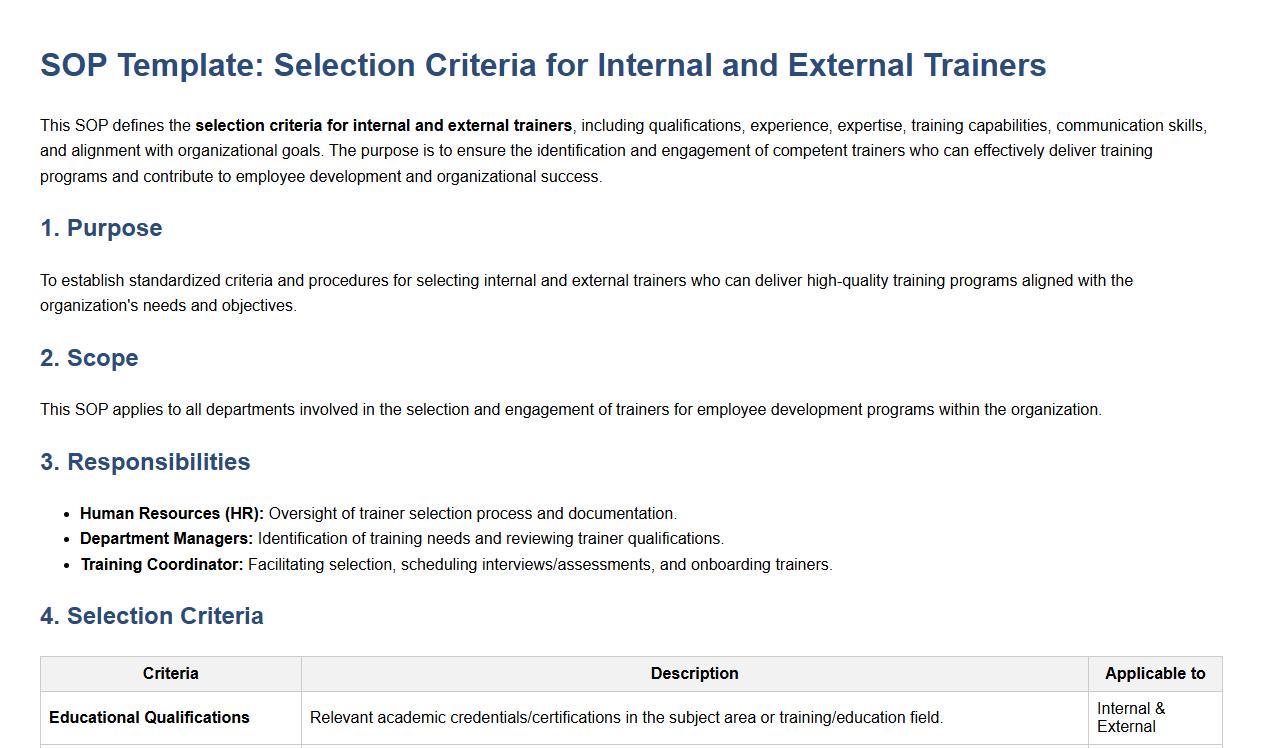
This SOP defines the selection criteria for internal and external trainers, including qualifications, experience, expertise, training capabilities, communication skills, and alignment with organizational goals. The purpose is to ensure the identification and engagement of competent trainers who can effectively deliver training programs and contribute to employee development and organizational success.
Development and approval of training materials.
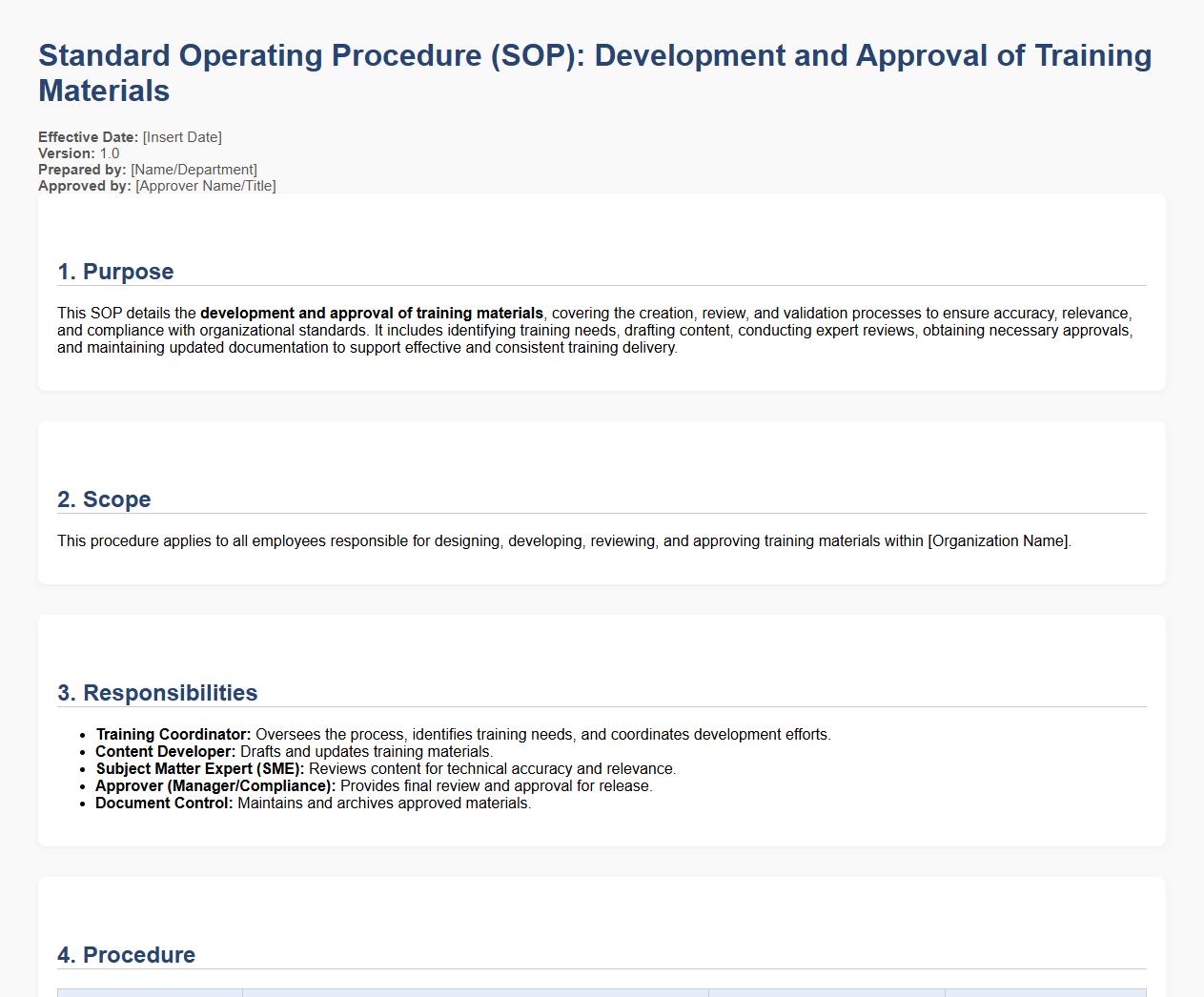
This SOP details the development and approval of training materials, covering the creation, review, and validation processes to ensure accuracy, relevance, and compliance with organizational standards. It includes identifying training needs, drafting content, conducting expert reviews, obtaining necessary approvals, and maintaining updated documentation to support effective and consistent training delivery.
Competency evaluation and skills assessment methods.
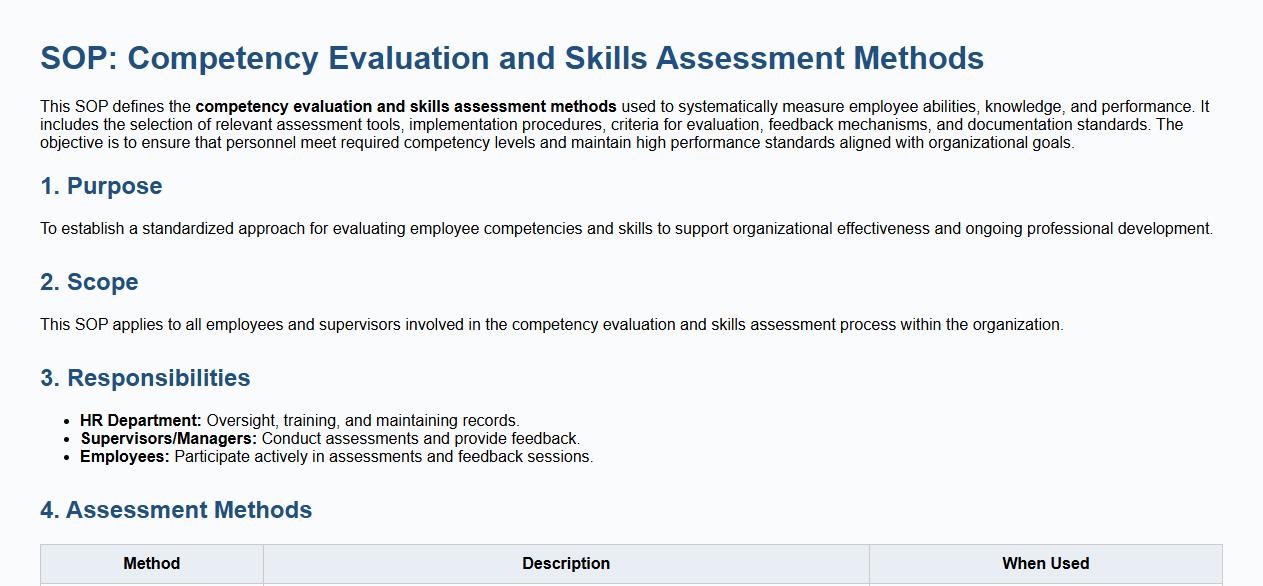
This SOP defines the competency evaluation and skills assessment methods used to systematically measure employee abilities, knowledge, and performance. It includes the selection of relevant assessment tools, implementation procedures, criteria for evaluation, feedback mechanisms, and documentation standards. The objective is to ensure that personnel meet required competency levels and maintain high performance standards aligned with organizational goals.
Post-training assessment and feedback collection.
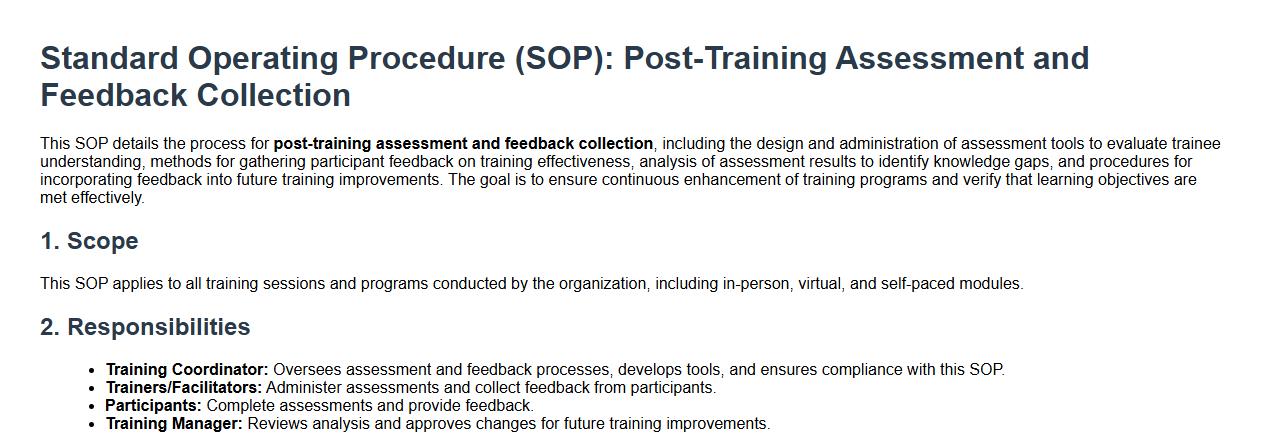
This SOP details the process for post-training assessment and feedback collection, including the design and administration of assessment tools to evaluate trainee understanding, methods for gathering participant feedback on training effectiveness, analysis of assessment results to identify knowledge gaps, and procedures for incorporating feedback into future training improvements. The goal is to ensure continuous enhancement of training programs and verify that learning objectives are met effectively.
Ongoing professional development planning.
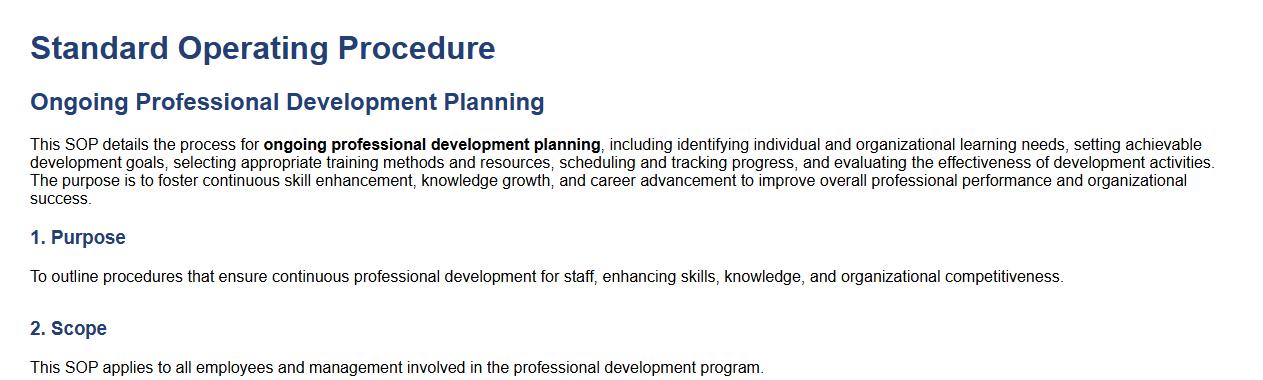
This SOP details the process for ongoing professional development planning, including identifying individual and organizational learning needs, setting achievable development goals, selecting appropriate training methods and resources, scheduling and tracking progress, and evaluating the effectiveness of development activities. The purpose is to foster continuous skill enhancement, knowledge growth, and career advancement to improve overall professional performance and organizational success.
Tracking and documenting training attendance.
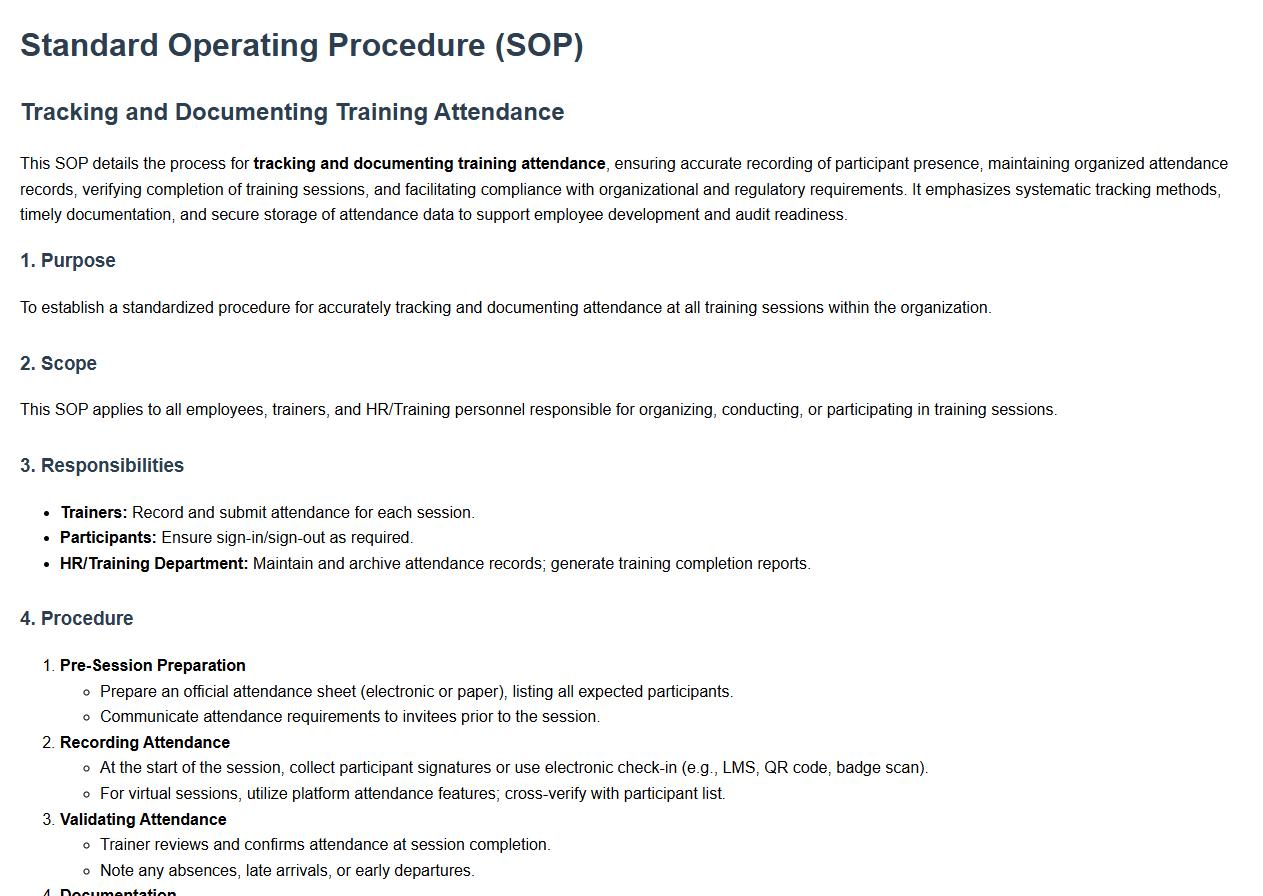
This SOP details the process for tracking and documenting training attendance, ensuring accurate recording of participant presence, maintaining organized attendance records, verifying completion of training sessions, and facilitating compliance with organizational and regulatory requirements. It emphasizes systematic tracking methods, timely documentation, and secure storage of attendance data to support employee development and audit readiness.
Review and update of training and development programs.
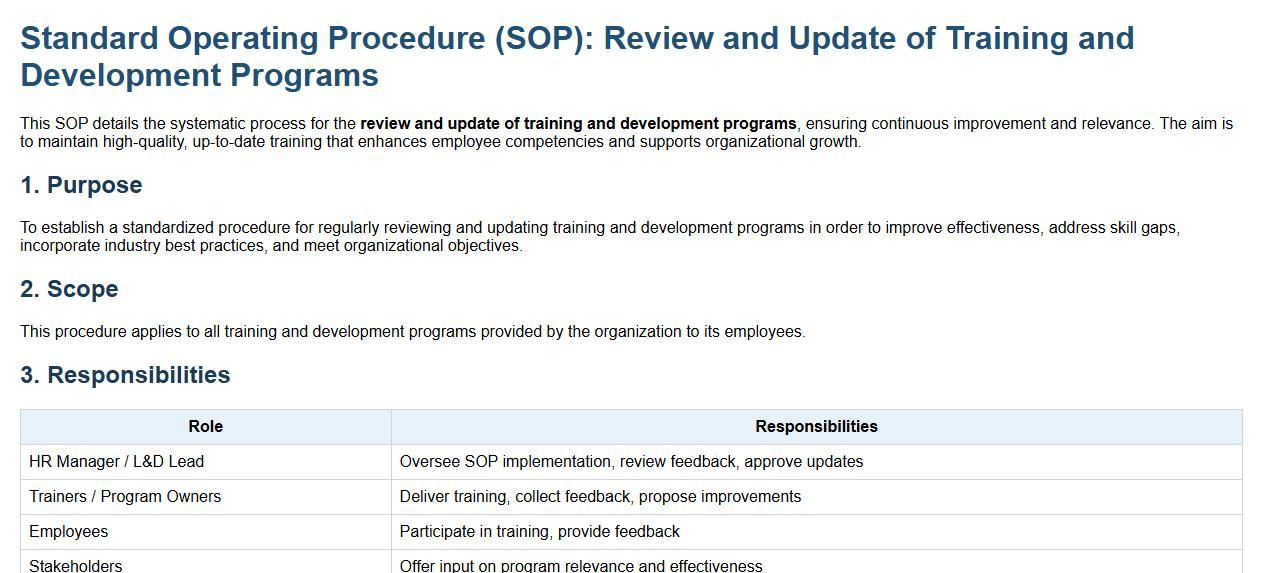
This SOP details the systematic process for the review and update of training and development programs, ensuring continuous improvement and relevance. It covers the evaluation of current training effectiveness, identification of skill gaps, incorporation of new industry standards and technologies, feedback collection from participants and stakeholders, revision of training materials and methods, scheduling of regular program assessments, and approval procedures for updated content. The aim is to maintain high-quality, up-to-date training that enhances employee competencies and supports organizational growth.
What are the primary objectives and scope outlined in the SOP for Staff Training & Development?
The primary objectives of the SOP for Staff Training & Development are to enhance employee skills, improve job performance, and foster continuous professional growth. The scope covers all employees within the organization, spanning various departments and roles. It ensures a standardized approach to training initiatives that align with organizational goals and compliance requirements.
Which roles are responsible for implementing, monitoring, and documenting training activities as per the SOP?
The SOP designates management, HR personnel, and team leaders as key roles responsible for the implementation, monitoring, and documentation of training activities. Managers oversee training execution and provide support, while HR coordinates scheduling and records maintenance. Documentation is maintained to track employee progress and training effectiveness.
What procedures are specified for identifying and assessing staff training needs in the SOP?
The SOP outlines a systematic process for identifying training needs through performance reviews, skill gap analysis, and employee feedback. It mandates regular assessments to pinpoint areas where training can enhance competencies. This ensures targeted development plans tailored to individual and organizational requirements.
How does the SOP define the process for evaluating the effectiveness of training and development programs?
The SOP defines the evaluation process by using feedback surveys, performance metrics, and post-training assessments to measure the impact of training programs. It includes continuous monitoring and review phases to ensure the achievement of training objectives. This approach helps to refine and improve future training interventions.
What documentation and recordkeeping requirements are mandated by the SOP for staff training events?
The SOP mandates detailed documentation including training schedules, attendance records, evaluation results, and certification records. All training activities must be recorded accurately to ensure compliance and facilitate audits. Proper recordkeeping supports transparency and accountability within the training management system.