

A SOP Template for Service Desk Operations provides a structured framework to ensure consistent and efficient handling of customer inquiries and technical issues. It outlines standardized procedures for ticket management, escalation processes, and communication protocols to enhance service quality. Implementing this template helps streamline operations and improve overall customer satisfaction.
Incident logging and ticket creation procedures.
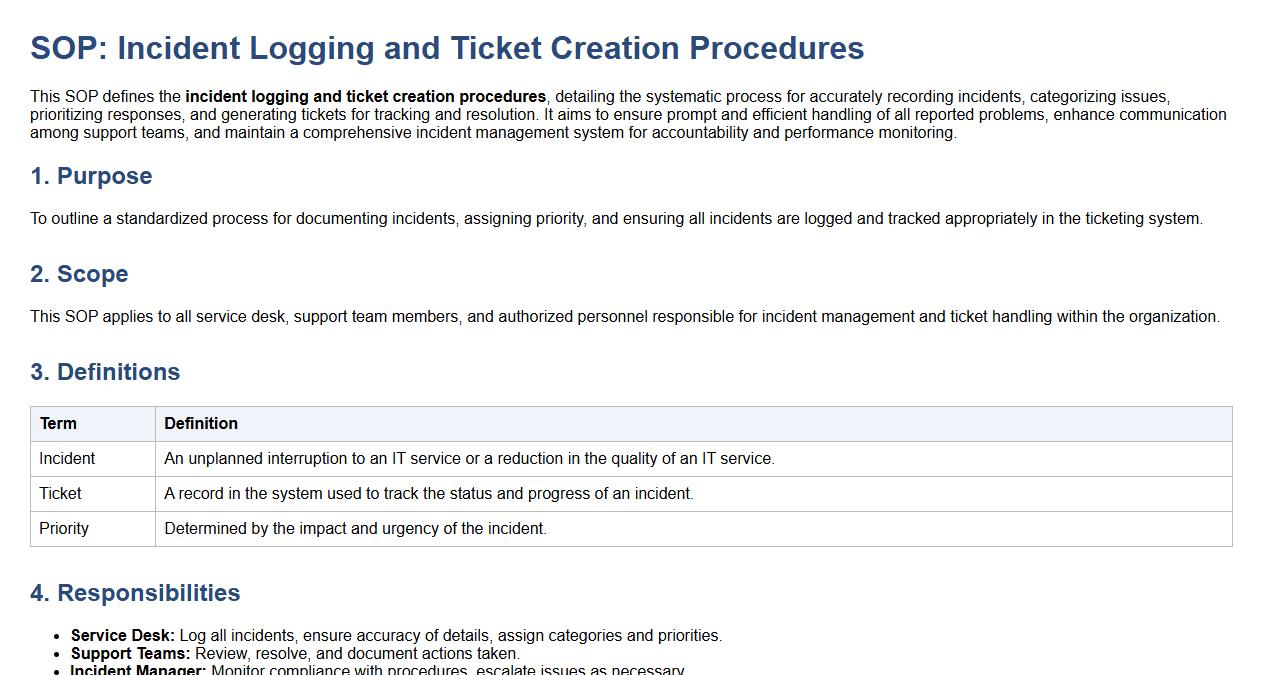
This SOP defines the incident logging and ticket creation procedures, detailing the systematic process for accurately recording incidents, categorizing issues, prioritizing responses, and generating tickets for tracking and resolution. It aims to ensure prompt and efficient handling of all reported problems, enhance communication among support teams, and maintain a comprehensive incident management system for accountability and performance monitoring.
User authentication and request validation steps.
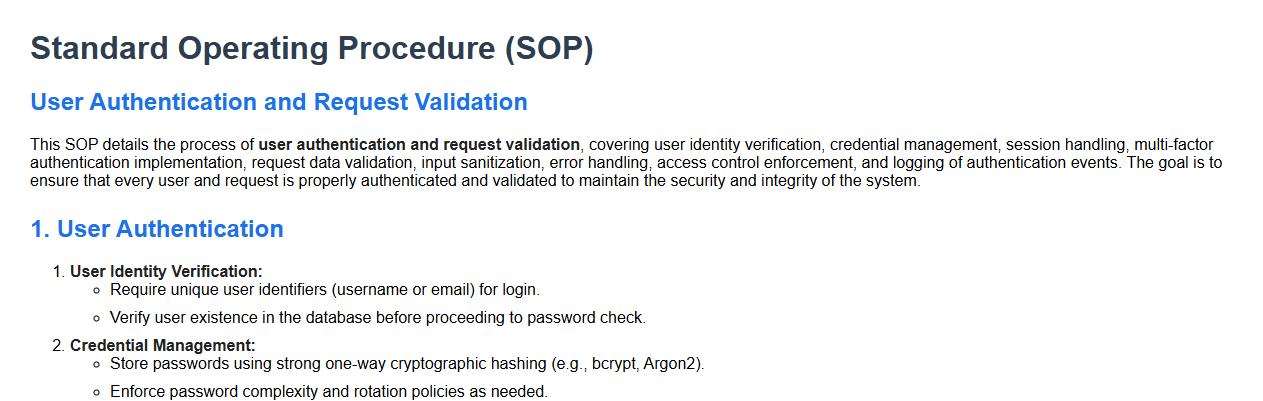
This SOP details the process of user authentication and request validation, covering user identity verification, credential management, session handling, multi-factor authentication implementation, request data validation, input sanitization, error handling, access control enforcement, and logging of authentication events. The goal is to ensure that every user and request is properly authenticated and validated to maintain the security and integrity of the system.
Initial troubleshooting and triage protocols.
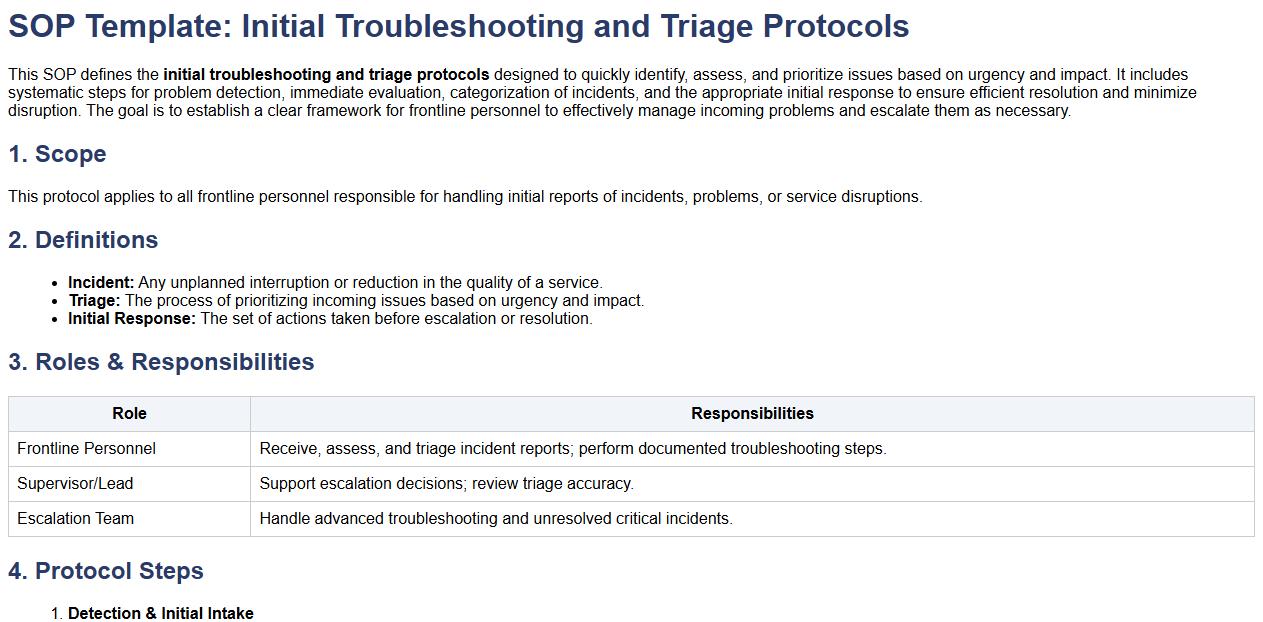
This SOP defines the initial troubleshooting and triage protocols designed to quickly identify, assess, and prioritize issues based on urgency and impact. It includes systematic steps for problem detection, immediate evaluation, categorization of incidents, and the appropriate initial response to ensure efficient resolution and minimize disruption. The goal is to establish a clear framework for frontline personnel to effectively manage incoming problems and escalate them as necessary.
Escalation guidelines for unresolved incidents.
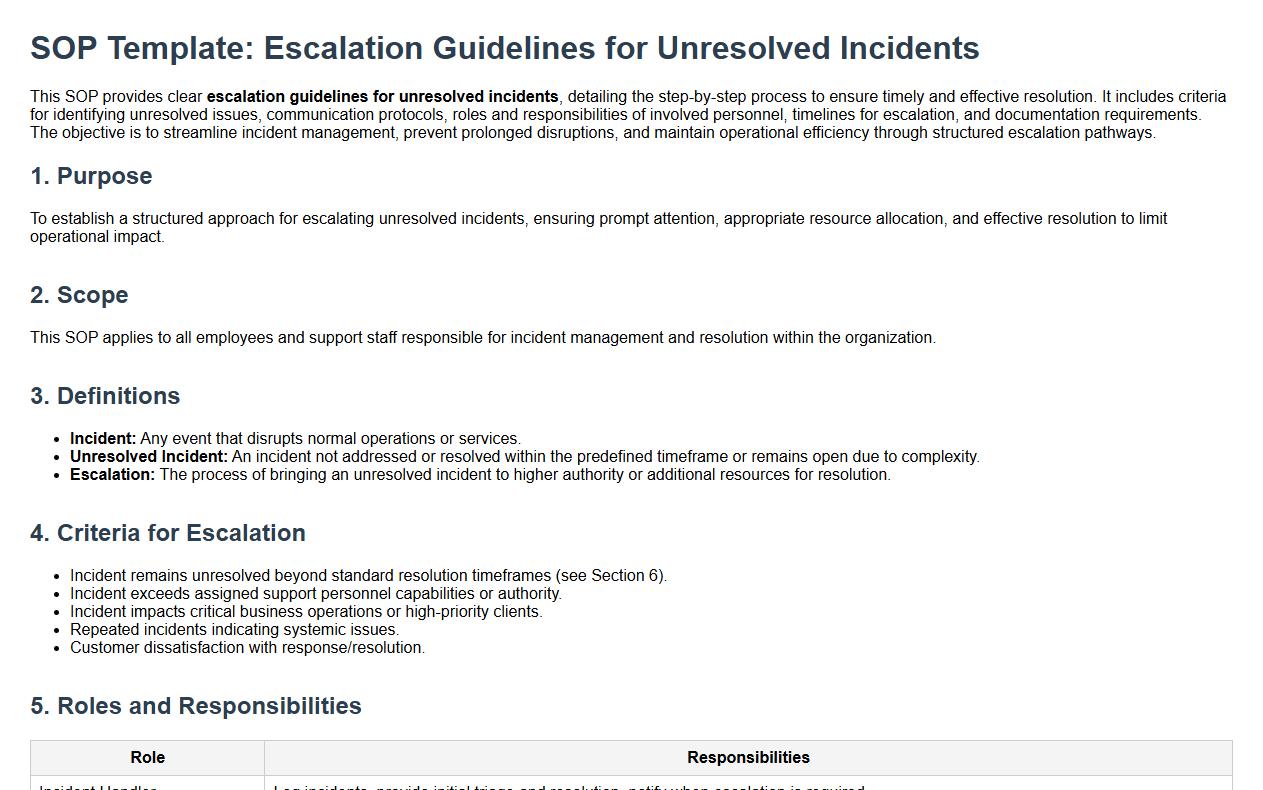
This SOP provides clear escalation guidelines for unresolved incidents, detailing the step-by-step process to ensure timely and effective resolution. It includes criteria for identifying unresolved issues, communication protocols, roles and responsibilities of involved personnel, timelines for escalation, and documentation requirements. The objective is to streamline incident management, prevent prolonged disruptions, and maintain operational efficiency through structured escalation pathways.
Service request fulfillment process.

This SOP details the service request fulfillment process, covering the steps for receiving, verifying, prioritizing, and processing service requests efficiently. It includes guidelines for communication with customers, handling escalation protocols, assigning tasks to appropriate teams, tracking progress, ensuring quality control, and confirming request completion. The objective is to provide a consistent, timely, and effective response to all service requests to enhance customer satisfaction and operational efficiency.
Communication standards with end-users.

This SOP defines the communication standards with end-users, including clear and effective messaging protocols, response time expectations, appropriate communication channels, and professional language guidelines. The objective is to ensure consistent, respectful, and timely interactions that enhance user satisfaction and support productive relationships between the organization and its end-users.
Knowledge base usage and documentation practices.
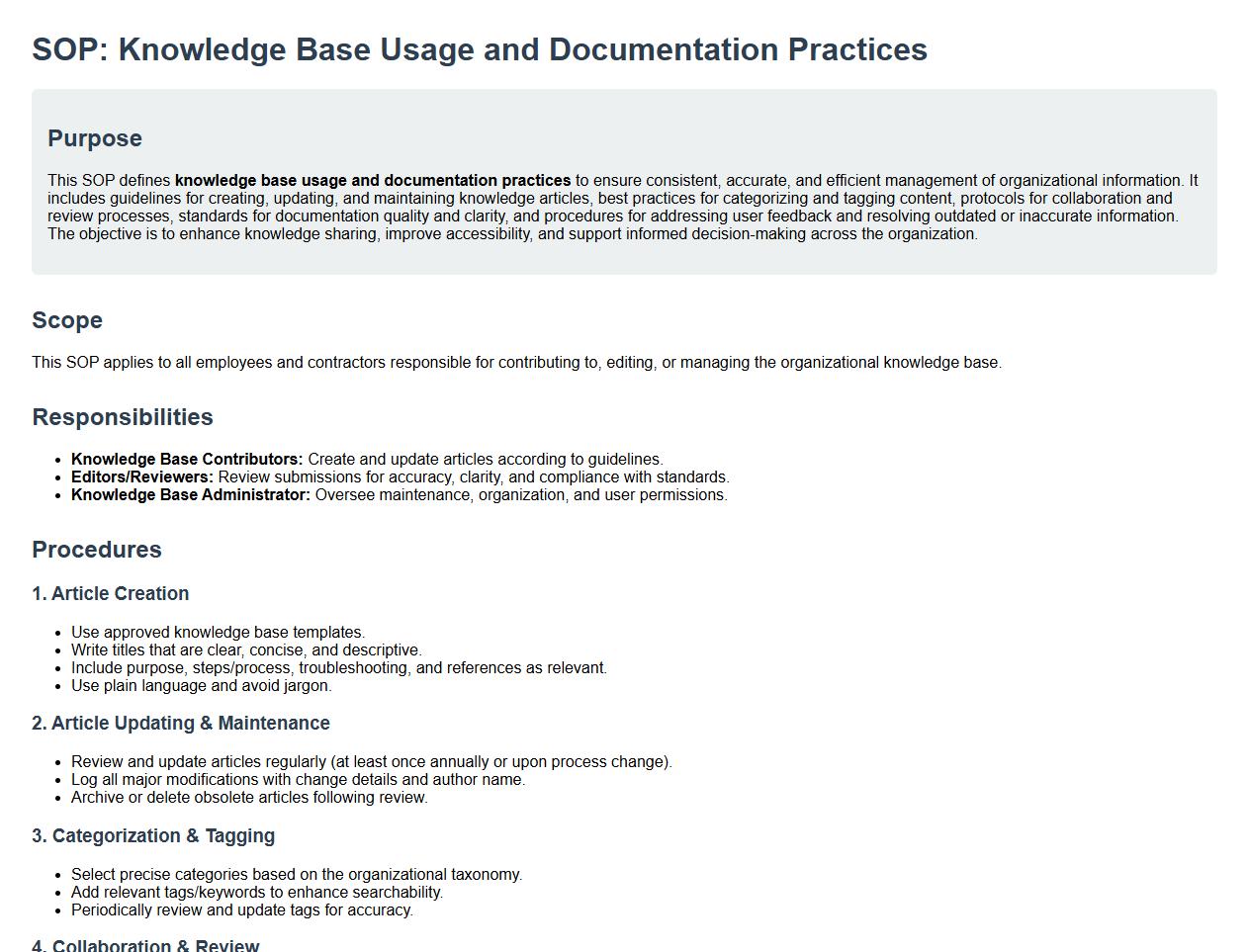
This SOP defines knowledge base usage and documentation practices to ensure consistent, accurate, and efficient management of organizational information. It includes guidelines for creating, updating, and maintaining knowledge articles, best practices for categorizing and tagging content, protocols for collaboration and review processes, standards for documentation quality and clarity, and procedures for addressing user feedback and resolving outdated or inaccurate information. The objective is to enhance knowledge sharing, improve accessibility, and support informed decision-making across the organization.
Priority assignment and Service Level Agreement (SLA) adherence.

This SOP details the process for priority assignment and Service Level Agreement (SLA) adherence, focusing on the classification of service requests based on urgency and impact, ensuring timely and efficient resolution. It covers the criteria for priority levels, response and resolution time targets, escalation procedures, and monitoring mechanisms to meet or exceed SLA commitments. The objective is to enhance customer satisfaction and operational efficiency by consistently managing priorities and adhering to agreed service standards.
Incident resolution and closure validation.
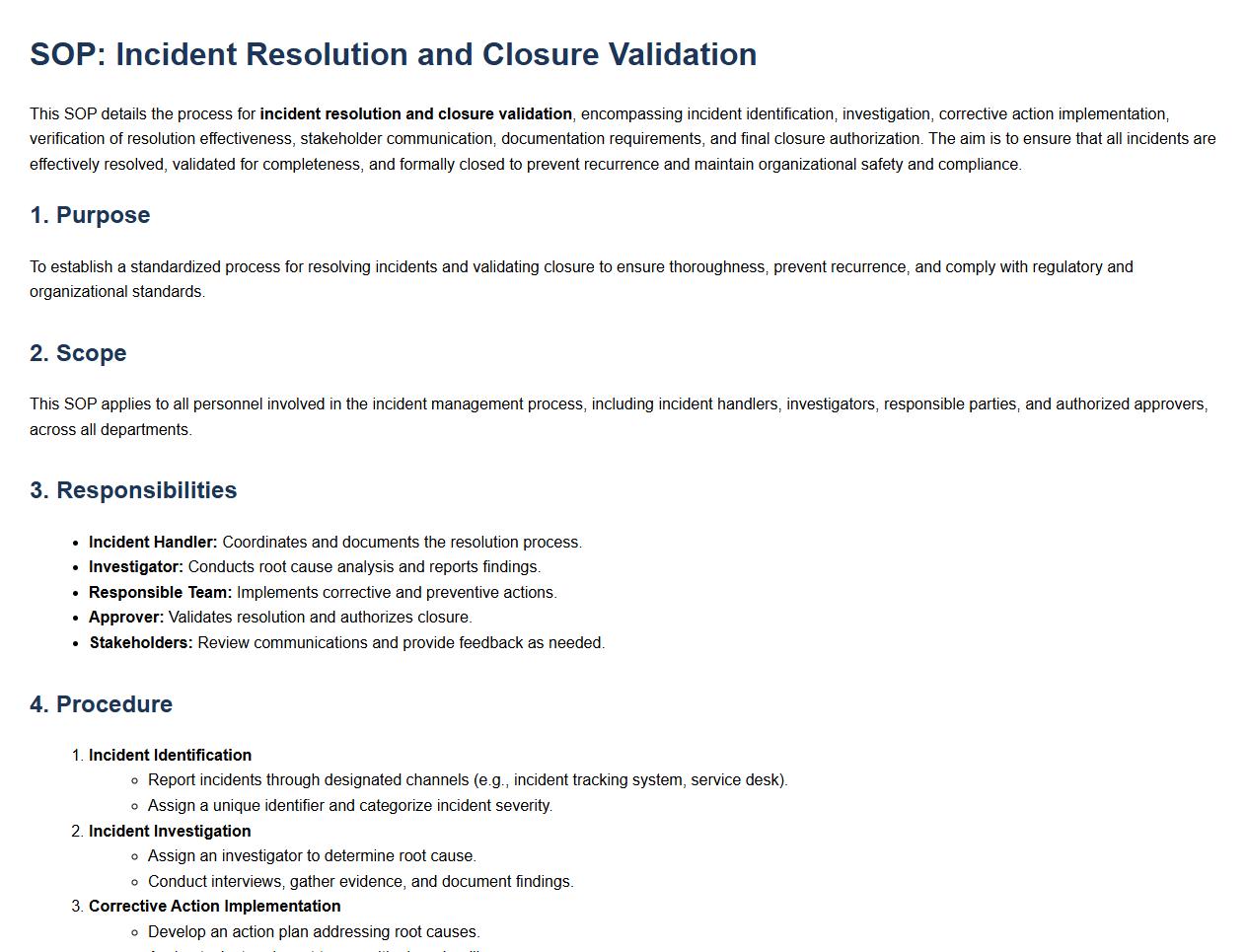
This SOP details the process for incident resolution and closure validation, encompassing incident identification, investigation, corrective action implementation, verification of resolution effectiveness, stakeholder communication, documentation requirements, and final closure authorization. The aim is to ensure that all incidents are effectively resolved, validated for completeness, and formally closed to prevent recurrence and maintain organizational safety and compliance.
Post-incident review and feedback collection.
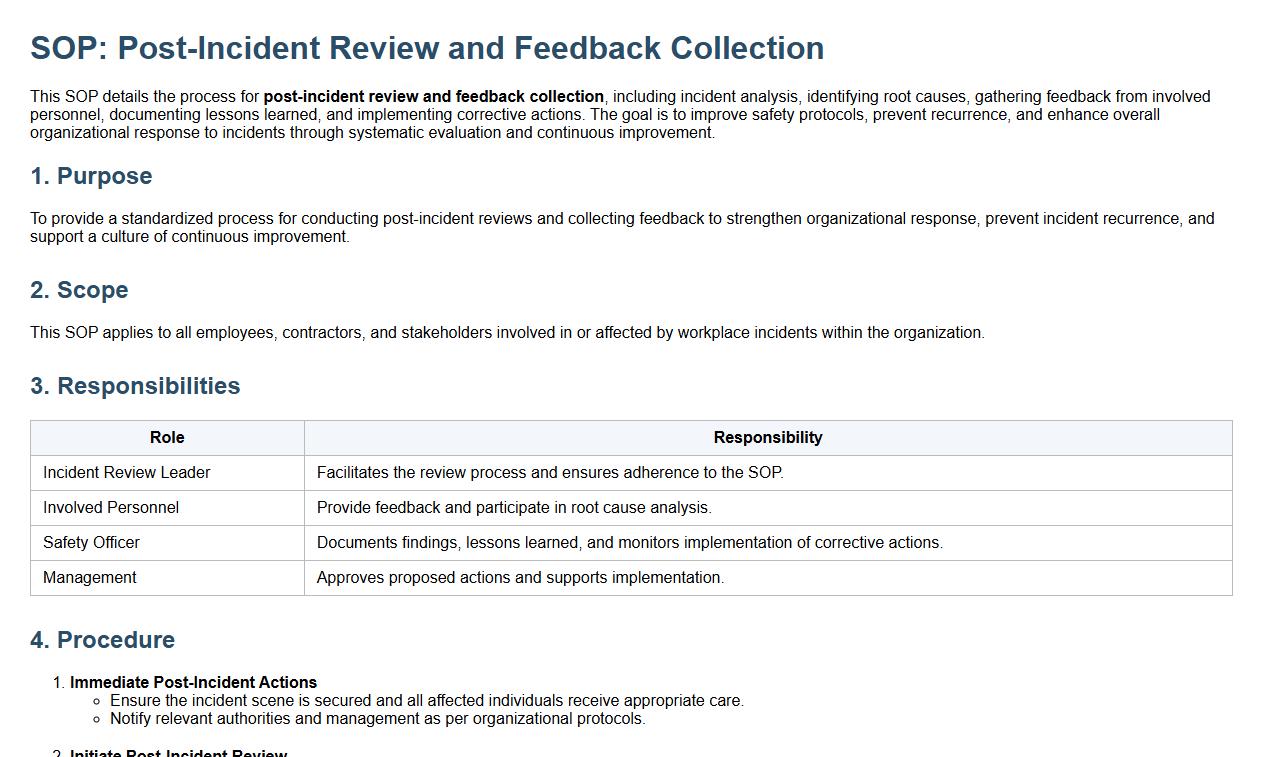
This SOP details the process for post-incident review and feedback collection, including incident analysis, identifying root causes, gathering feedback from involved personnel, documenting lessons learned, and implementing corrective actions. The goal is to improve safety protocols, prevent recurrence, and enhance overall organizational response to incidents through systematic evaluation and continuous improvement.
Key Objectives Outlined in the Service Desk Operations SOP
The key objectives in the Service Desk Operations SOP focus on ensuring efficient and consistent service delivery. It aims to improve incident resolution times and enhance user satisfaction. Additionally, the SOP establishes clear guidelines to maintain operational excellence across support teams.
Stakeholders Responsible for SOP Implementation and Maintenance
The primary stakeholders involved include Service Desk Managers, IT Support Teams, and Quality Assurance personnel. They are accountable for both implementing and continuously maintaining the SOP. Regular collaboration with senior management ensures alignment with organizational goals.
Standard Procedures for Incident Logging and Prioritization
Incidents must be logged promptly in the incident management system with essential details such as user information and issue description. Prioritization is based on impact and urgency following a predefined prioritization matrix. This process ensures critical issues receive immediate attention.
Escalation Paths for Unresolved Service Requests
The SOP defines a structured escalation path for unresolved service requests, escalating issues to higher support tiers based on severity and resolution timeframe. Clear criteria for escalation help avoid delays and ensure accountability. This hierarchy supports timely problem resolution and customer satisfaction.
Compliance and Documentation Requirements for Service Desk Operations
The SOP mandates strict adherence to compliance standards such as data privacy and internal policies. Accurate documentation of all service interactions is required to maintain a reliable audit trail. Proper records improve transparency and support continual service improvement.