
A SOP Template for Property Management Services streamlines operational procedures, ensuring consistent and efficient management of properties. This template outlines clear guidelines for tasks such as tenant communication, maintenance scheduling, and financial reporting. Utilizing a standardized SOP enhances productivity and compliance within property management teams.
Tenant onboarding and lease agreement processing.
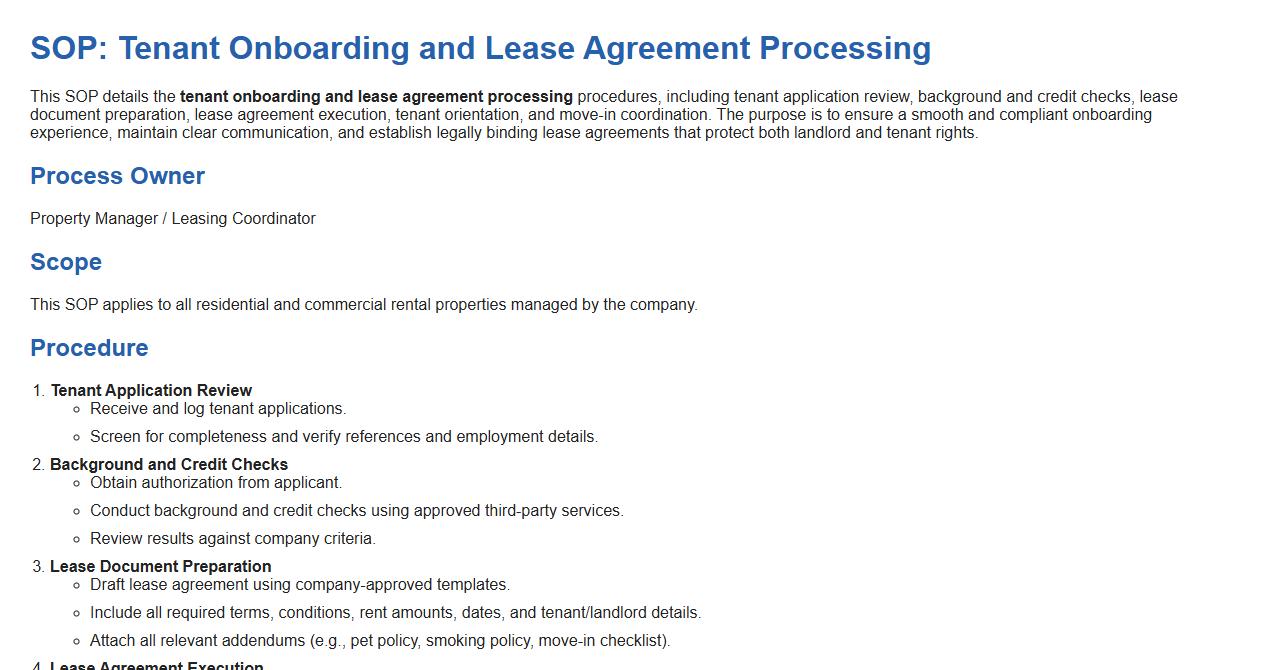
This SOP details the tenant onboarding and lease agreement processing procedures, including tenant application review, background and credit checks, lease document preparation, lease agreement execution, tenant orientation, and move-in coordination. The purpose is to ensure a smooth and compliant onboarding experience, maintain clear communication, and establish legally binding lease agreements that protect both landlord and tenant rights.
Routine property inspections and maintenance scheduling.
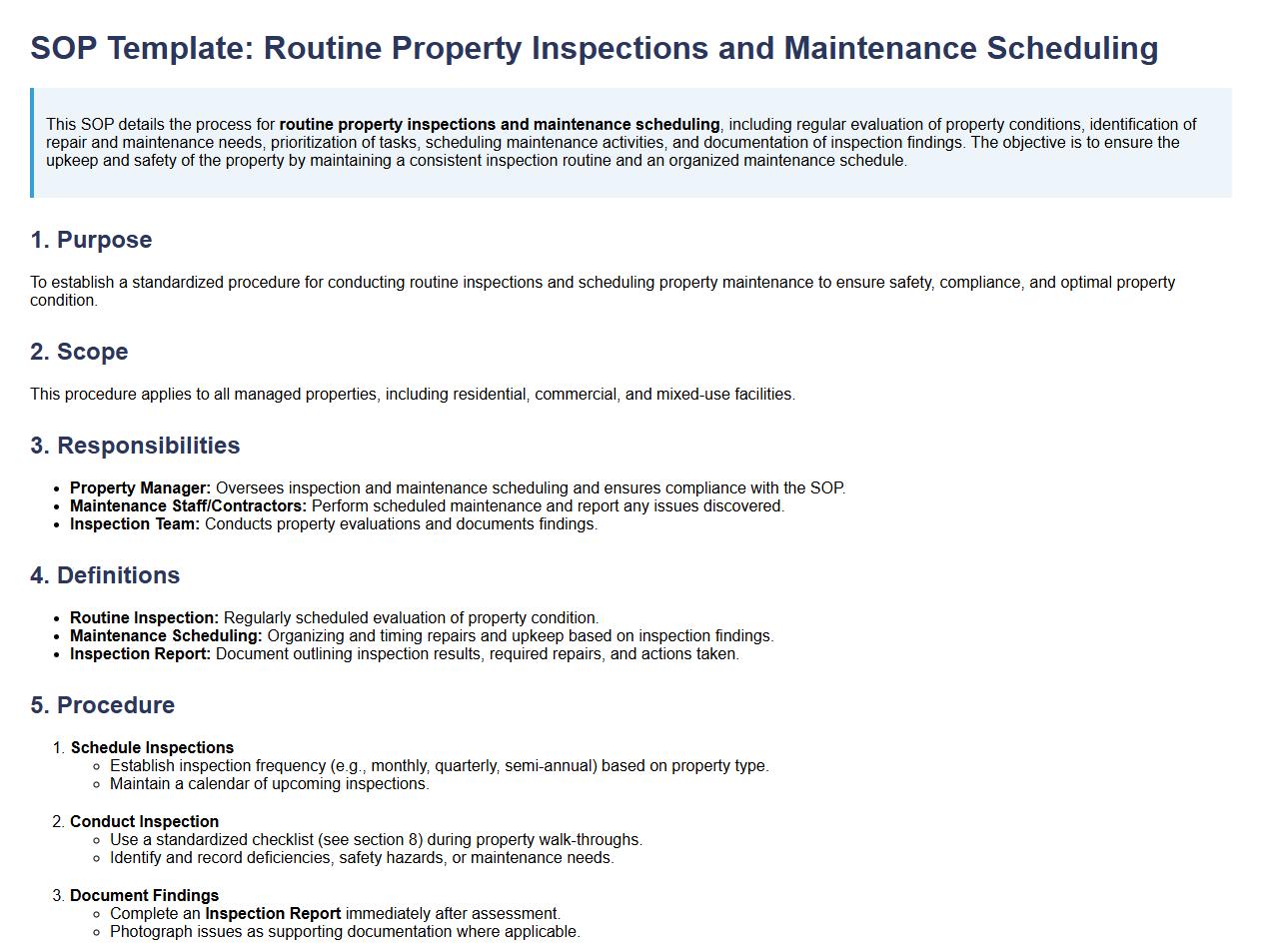
This SOP details the process for routine property inspections and maintenance scheduling, including regular evaluation of property conditions, identification of repair and maintenance needs, prioritization of tasks, scheduling maintenance activities, and documentation of inspection findings. The objective is to ensure the upkeep and safety of the property by maintaining a consistent inspection routine and an organized maintenance schedule.
Rent collection and arrears management procedures.
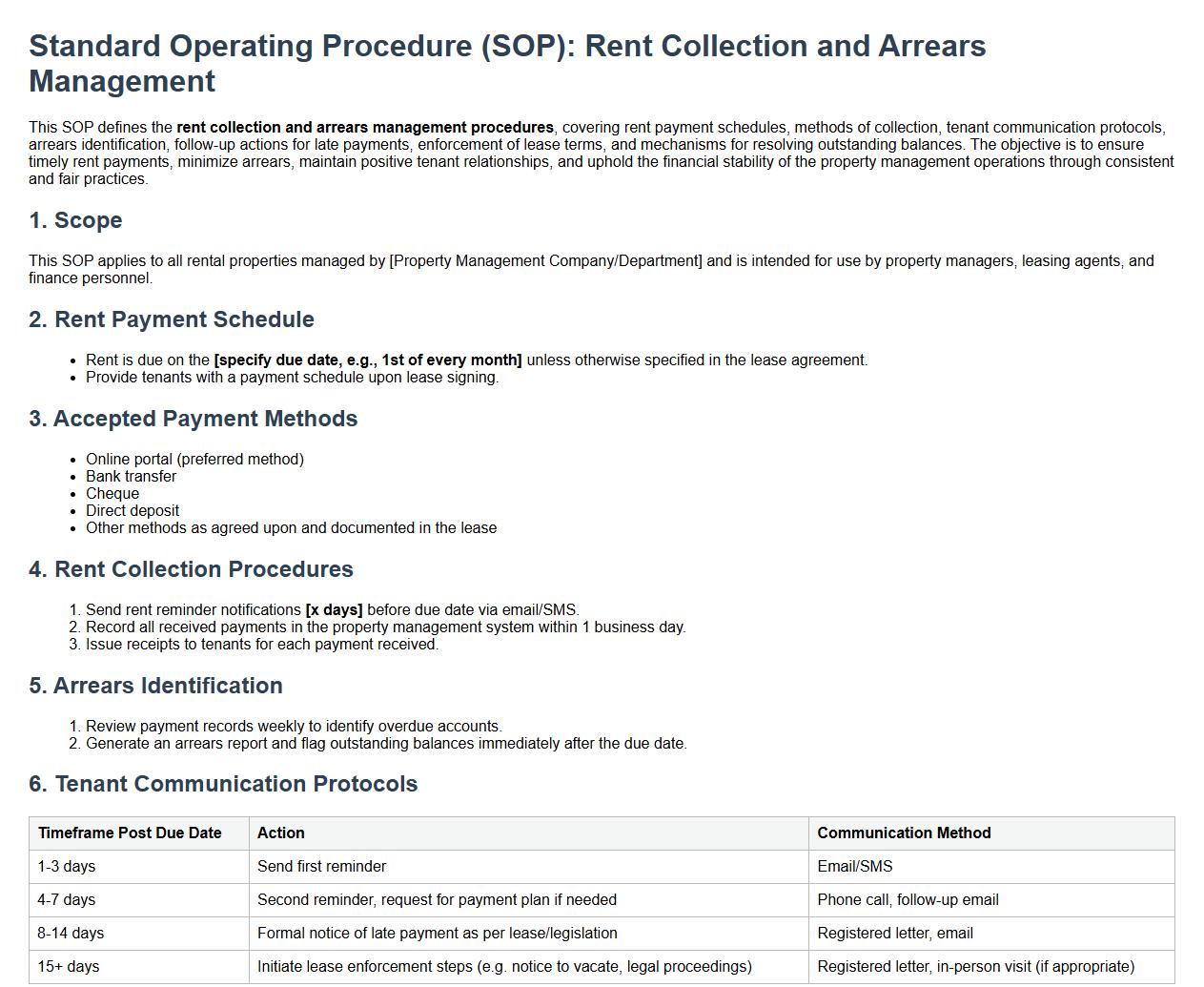
This SOP defines the rent collection and arrears management procedures, covering rent payment schedules, methods of collection, tenant communication protocols, arrears identification, follow-up actions for late payments, enforcement of lease terms, and mechanisms for resolving outstanding balances. The objective is to ensure timely rent payments, minimize arrears, maintain positive tenant relationships, and uphold the financial stability of the property management operations through consistent and fair practices.
Complaint and maintenance request handling workflow.
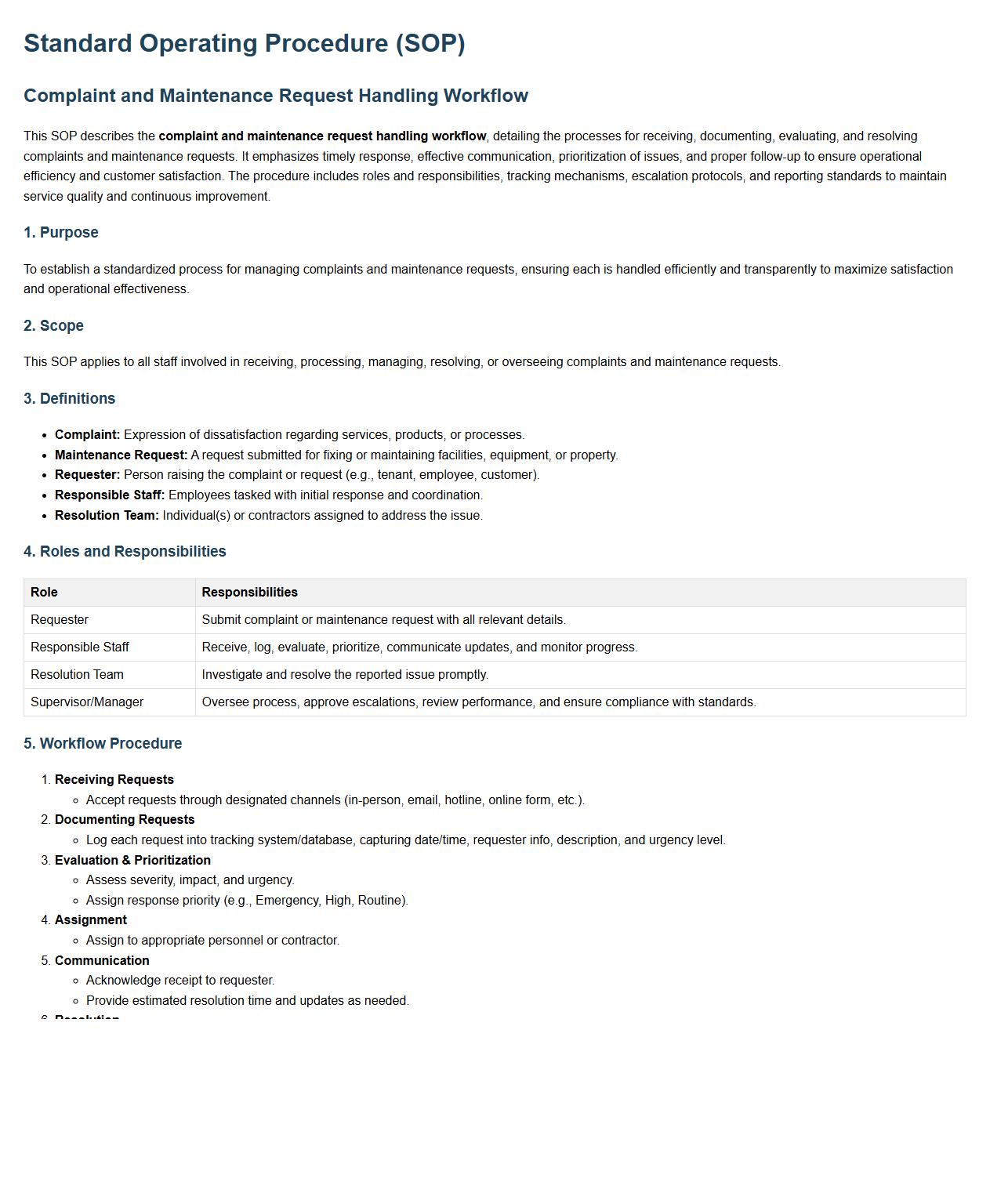
This SOP describes the complaint and maintenance request handling workflow, detailing the processes for receiving, documenting, evaluating, and resolving complaints and maintenance requests. It emphasizes timely response, effective communication, prioritization of issues, and proper follow-up to ensure operational efficiency and customer satisfaction. The procedure includes roles and responsibilities, tracking mechanisms, escalation protocols, and reporting standards to maintain service quality and continuous improvement.
Vacancy advertising and tenant screening protocols.
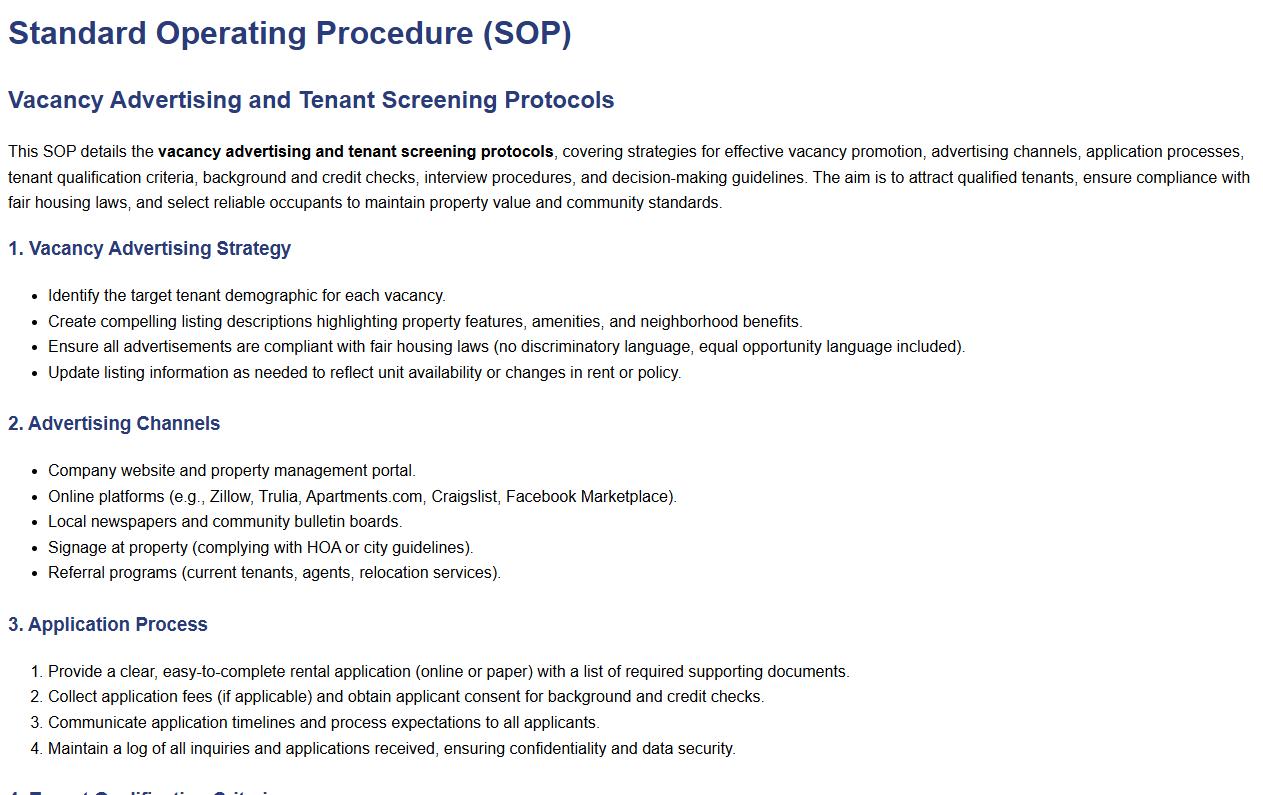
This SOP details the vacancy advertising and tenant screening protocols, covering strategies for effective vacancy promotion, advertising channels, application processes, tenant qualification criteria, background and credit checks, interview procedures, and decision-making guidelines. The aim is to attract qualified tenants, ensure compliance with fair housing laws, and select reliable occupants to maintain property value and community standards.
Move-in and move-out inspection checklists.
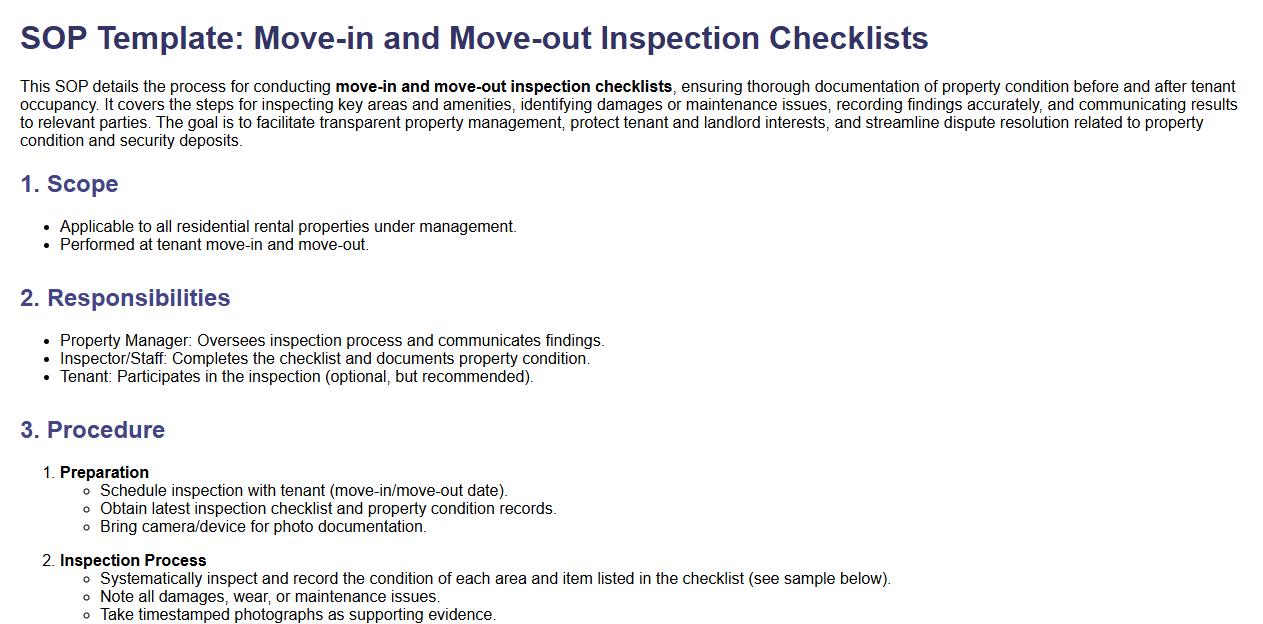
This SOP details the process for conducting move-in and move-out inspection checklists, ensuring thorough documentation of property condition before and after tenant occupancy. It covers the steps for inspecting key areas and amenities, identifying damages or maintenance issues, recording findings accurately, and communicating results to relevant parties. The goal is to facilitate transparent property management, protect tenant and landlord interests, and streamline dispute resolution related to property condition and security deposits.
Emergency repairs and after-hours response protocol.
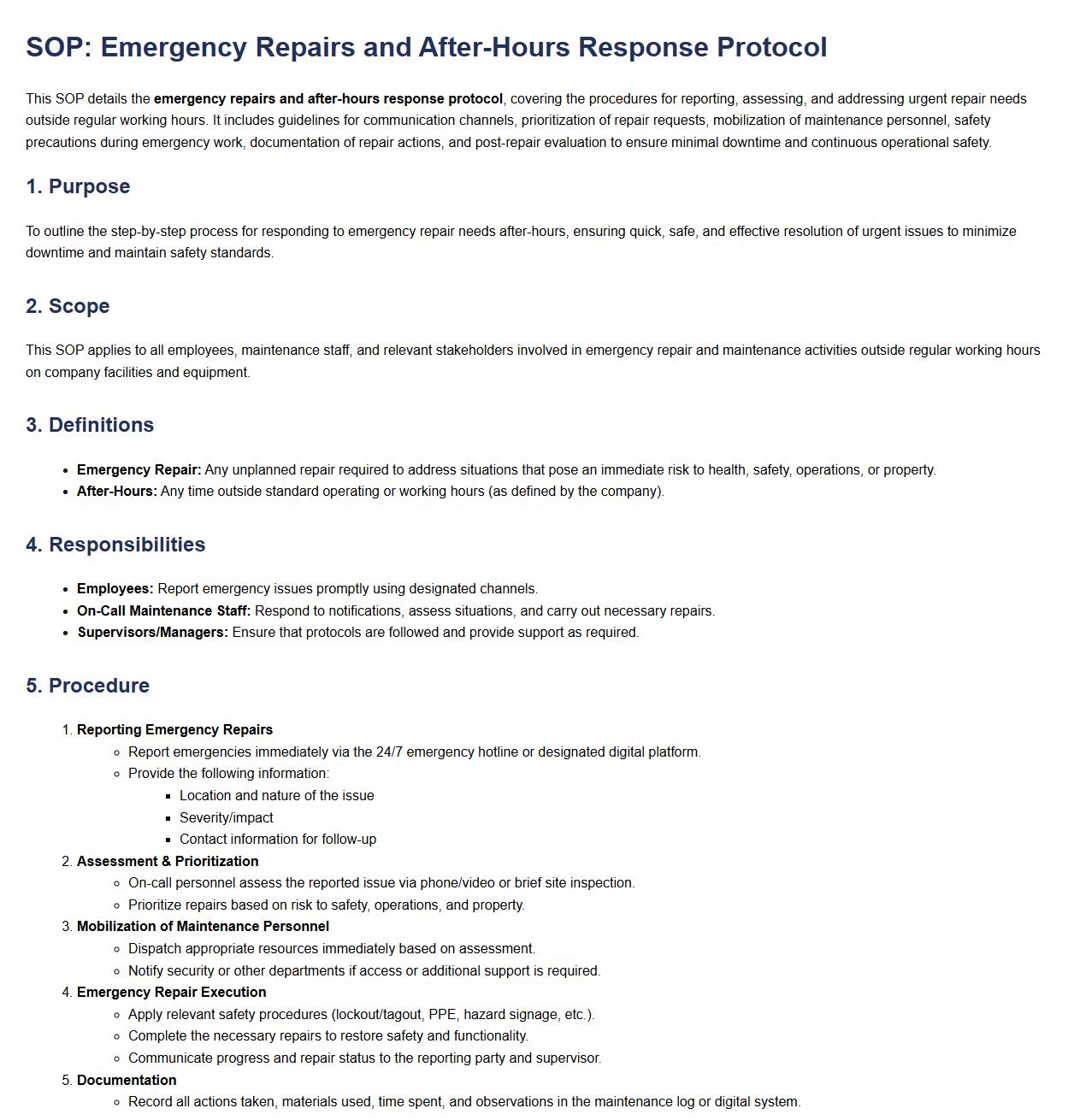
This SOP details the emergency repairs and after-hours response protocol, covering the procedures for reporting, assessing, and addressing urgent repair needs outside regular working hours. It includes guidelines for communication channels, prioritization of repair requests, mobilization of maintenance personnel, safety precautions during emergency work, documentation of repair actions, and post-repair evaluation to ensure minimal downtime and continuous operational safety.
Vendor selection, management, and payment process.
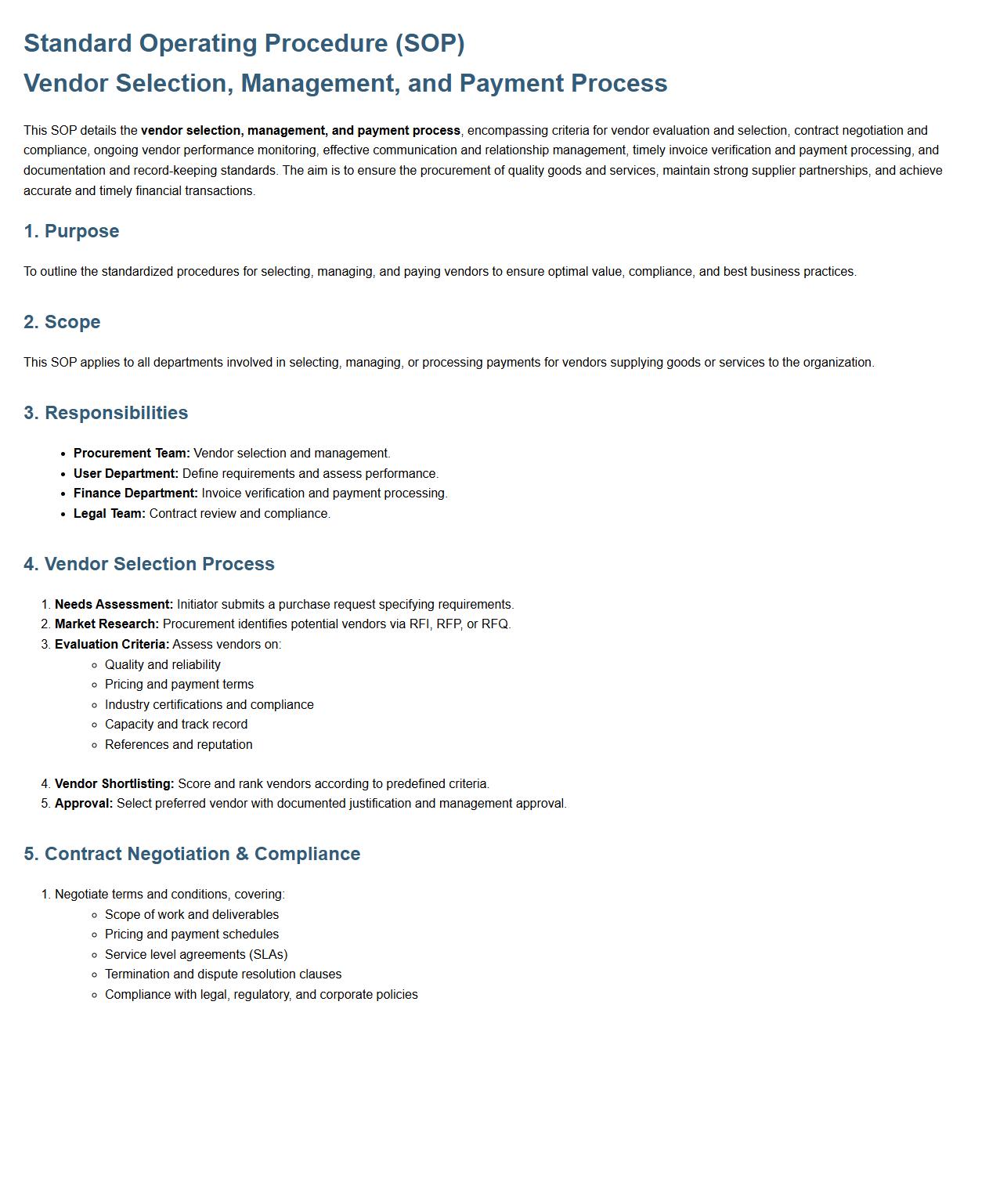
This SOP details the vendor selection, management, and payment process, encompassing criteria for vendor evaluation and selection, contract negotiation and compliance, ongoing vendor performance monitoring, effective communication and relationship management, timely invoice verification and payment processing, and documentation and record-keeping standards. The aim is to ensure the procurement of quality goods and services, maintain strong supplier partnerships, and achieve accurate and timely financial transactions.
Regular cleaning and common area upkeep procedures.
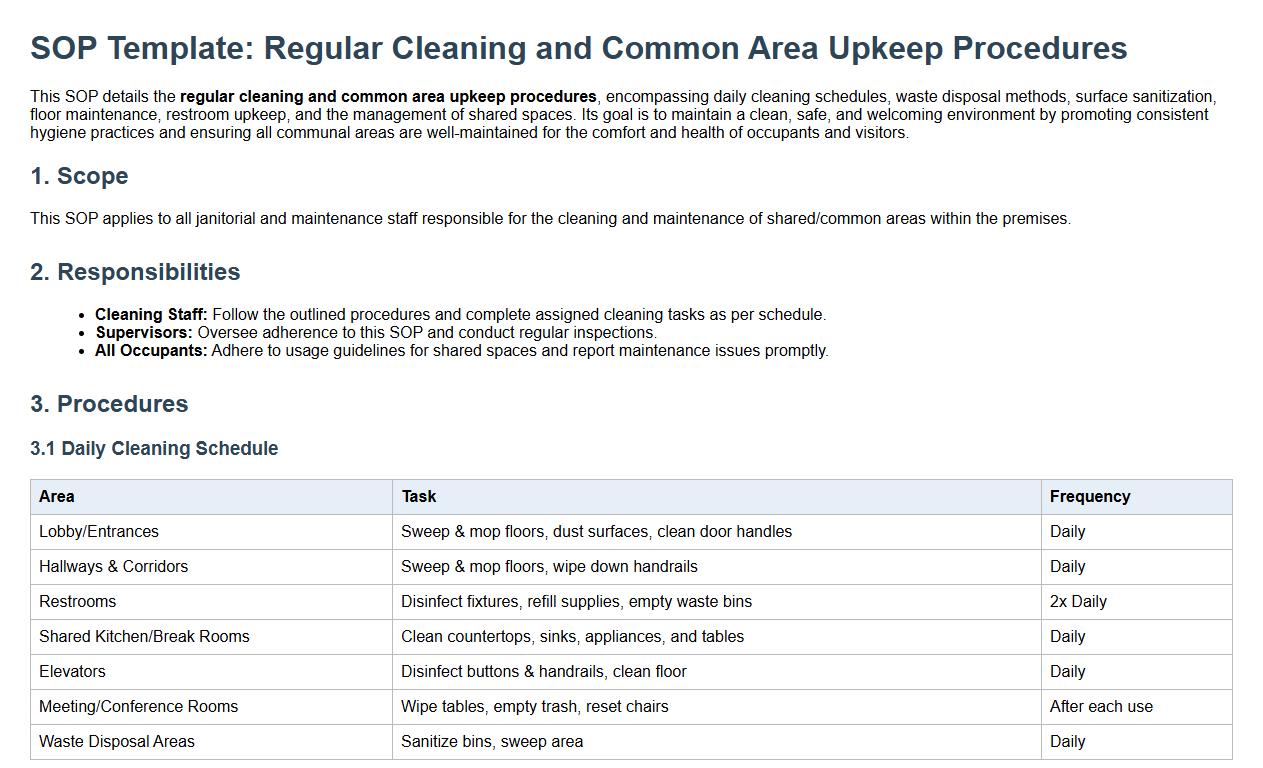
This SOP details the regular cleaning and common area upkeep procedures, encompassing daily cleaning schedules, waste disposal methods, surface sanitization, floor maintenance, restroom upkeep, and the management of shared spaces. Its goal is to maintain a clean, safe, and welcoming environment by promoting consistent hygiene practices and ensuring all communal areas are well-maintained for the comfort and health of occupants and visitors.
Property documentation and records management system.
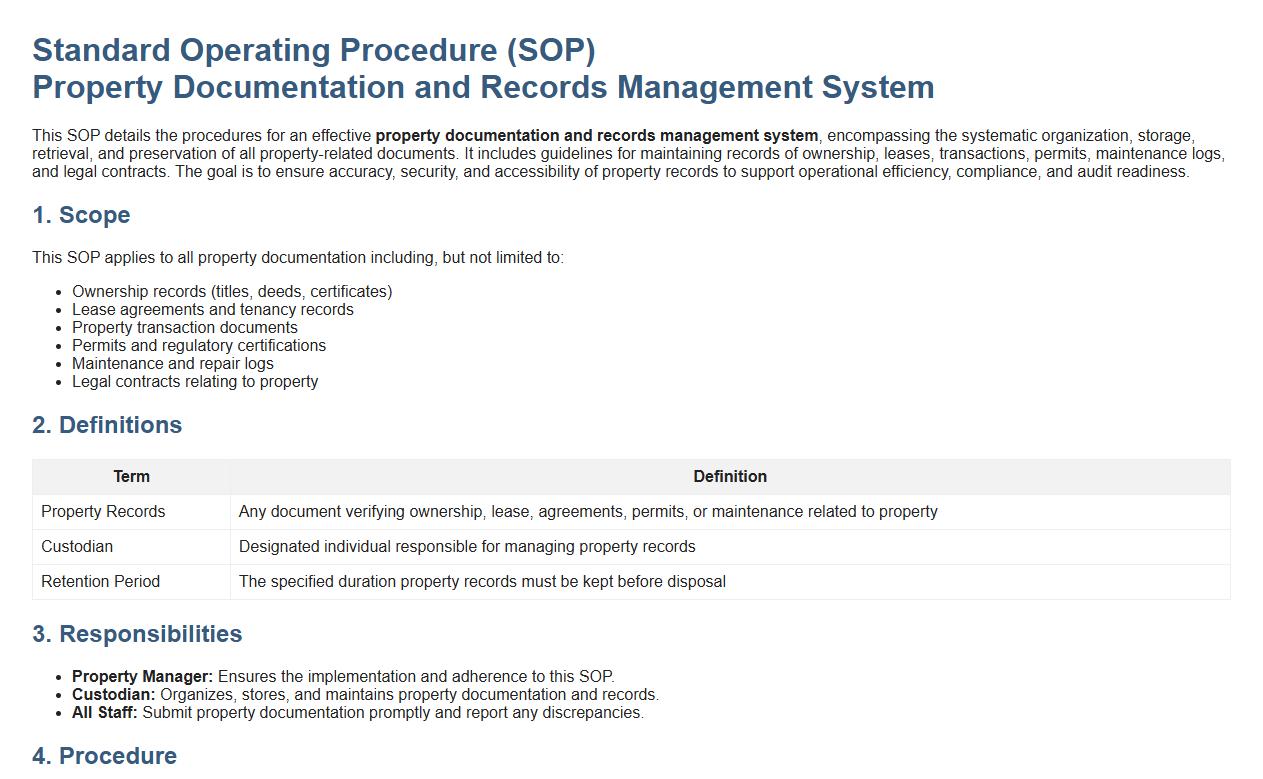
This SOP details the procedures for an effective property documentation and records management system, encompassing the systematic organization, storage, retrieval, and preservation of all property-related documents. It includes guidelines for maintaining records of ownership, leases, transactions, permits, maintenance logs, and legal contracts. The goal is to ensure accuracy, security, and accessibility of property records to support operational efficiency, compliance, and audit readiness.
What are the primary objectives outlined in the SOP for Property Management Services?
The primary objectives of the SOP for Property Management Services focus on ensuring efficient property maintenance, tenant satisfaction, and regulatory compliance. These objectives aim to standardize processes for managing property assets effectively and enhancing operational transparency. Ultimately, the SOP strives to support the seamless coordination between property owners, managers, and tenants.
Which stakeholders are responsible for implementing the procedures described in the SOP?
The key stakeholders responsible for implementing the SOP procedures include property managers, maintenance staff, and administrative personnel. These individuals collaborate to ensure day-to-day operations align with the established standards. Additionally, property owners and tenant representatives play a supportive role in upholding the guidelines.
What are the standard communication and reporting protocols specified in the document?
The SOP specifies communication and reporting protocols that promote timely information flow between stakeholders. Regular reporting intervals and standardized templates are mandated to enhance clarity and accountability. Furthermore, the protocol encourages using digital platforms to maintain accurate communication records.
Which compliance and safety standards must be followed according to the SOP?
The SOP mandates strict adherence to compliance and safety standards such as local building codes, fire safety regulations, and tenant health guidelines. It emphasizes proactive risk management and routine inspections to ensure a safe living environment. Compliance with these standards protects both tenants and property owners from legal and operational risks.
What are the documented procedures for handling tenant complaints and maintenance requests?
The SOP outlines clear, step-by-step procedures for managing tenant complaints and maintenance requests to ensure prompt resolution. It includes logging requests, prioritizing urgent issues, and routine follow-up communications with tenants. These procedures aim to maintain tenant trust and uphold the property's operational quality.